NITRATES 
Demitrost Laloo
What are nitrates? 
 Prodrugs that are sources of nitric oxide (NO) 
 Drugs include: Glyceryl trinitrate 
(nitroglycerin), isosorbide mononitrate and 
isosorbide dinitrate
History 
 Nitroglycerin was first synthesized in 1846 by 
Sobrero 
 Alfred Nobel devised a process to stabilize the 
nitroglycerin and patented a specialized 
detonator in 1863 
 In 1857, T. Lauder Brunton of Edinburgh 
administered amyl nitrite by inhalation and 
noted that anginal pain was relieved within 30- 
60 secs 
 William Murrell surmised that the action of 
nitroglycerin mimicked that of amyl nitrite
Chemistry 
 polyol esters of nitric acid 
 characterized by a sequence of carbon– 
oxygen–nitrogen (—C—O—NO2) 
 Organic nitrates of low molecular mass 
(nitroglycerin) are moderately volatile, oily 
liquids 
 high-molecular-mass nitrate esters 
(e.g.,isosorbide dinitrate, and isosorbide
Mechanism of action 
 Organic nitrates lead to the formation of the 
reactive gaseous free radical NO and related 
NO-containing compounds 
 NO can activate guanylyl cyclase, increase the 
cellular level of cyclic GMP, activate PKG, and 
modulate the activities of cyclic nucleotide 
phosphodiesterases 
 In smooth muscle, the net result is reduced 
phosphorylation of myosin light chain, reduced 
Ca2+ concentration in the cytosol, and 
relaxation
Proposed mechanisms underlying bioactivation of 
organic nitrates
Effects of nitrates 
 promote relaxation of vascular smooth muscle 
 Low concentrations of nitroglycerin 
preferentially dilate veins more than arterioles 
 decreases venous return, leading to a fall in left 
and right ventricular chamber size and end-diastolic 
pressures 
 Systemic arterial pressure may fall slightly
 Higher doses of organic nitrates cause: 
 Further venous pooling and may decrease 
arteriolar resistance as well, thereby decreasing 
blood pressure and cardiac output 
 Causing pallor, weakness, dizziness, and 
activation of compensatory sympathetic reflexes
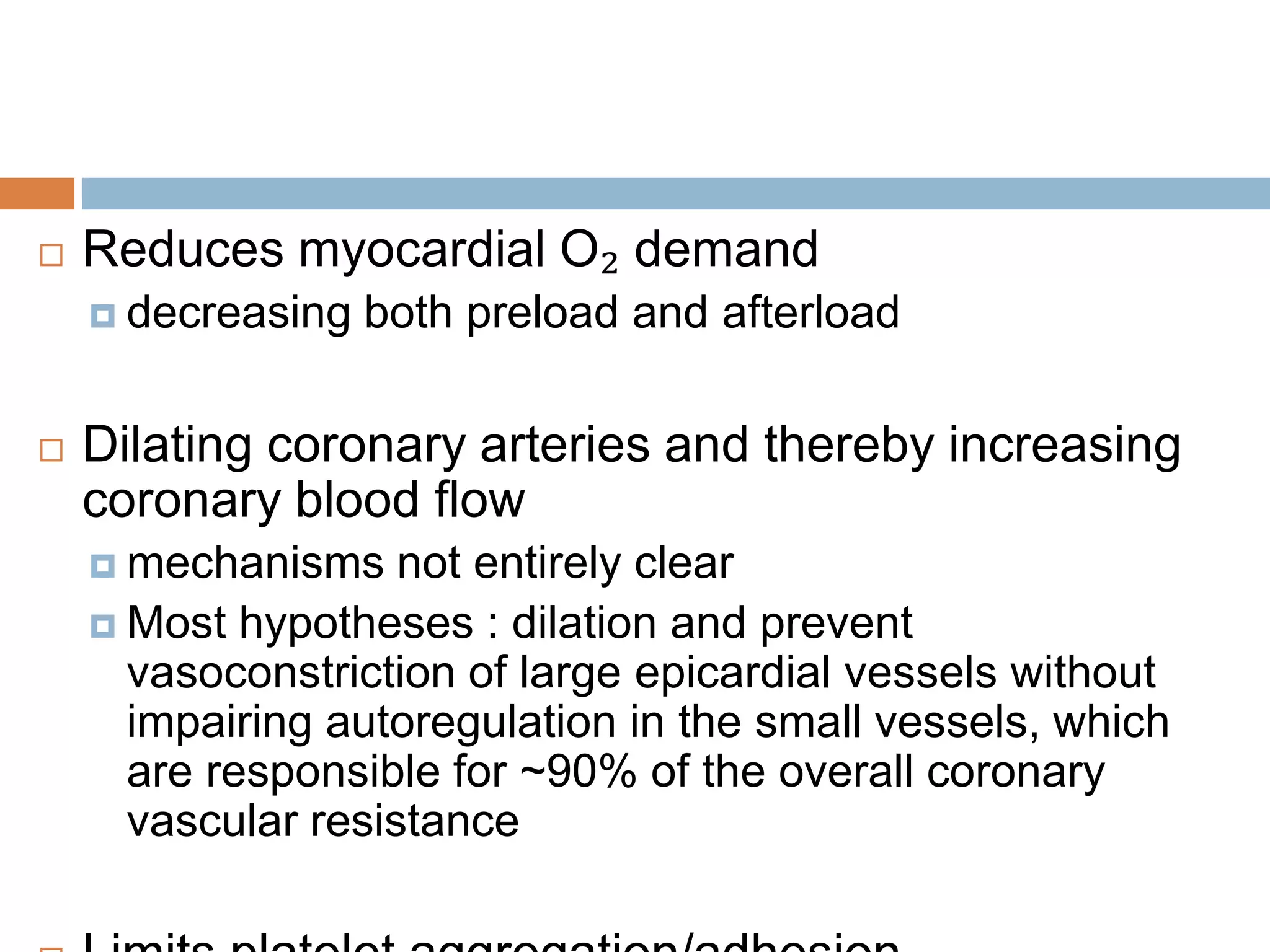
 Reduces myocardial O₂ demand 
 decreasing both preload and afterload 
 Dilating coronary arteries and thereby increasing 
coronary blood flow 
 mechanisms not entirely clear 
 Most hypotheses : dilation and prevent 
vasoconstriction of large epicardial vessels without 
impairing autoregulation in the small vessels, which 
are responsible for ~90% of the overall coronary 
vascular resistance 
 Limits platelet aggregation/adhesion
Other effects 
 Bronchial smooth muscle is relaxed irrespective of 
the preexisting tone 
 The muscles of the biliary tract, including those of 
the gallbladder, biliary ducts, and sphincter of 
Oddi, are effectively relaxed 
 Smooth muscle of the GI tract, including that of the 
esophagus, can be relaxed and its spontaneous 
motility decreased 
 Relaxes ureteral and uterine smooth muscle
Therapeutic uses 
 Mainly used in: 
 Stable angina pectoris 
 CCF 
 Unstable angina pectoris and NSTEMI 
 Acute myocardial infarction 
 Prinzmetal angina 
 Others : 
 Portal hypertension 
 Asthma and as a diuretic (obsolete)
Portal HTN 
 Nitroglycerin has been used in combination with 
vasopressin to control acute variceal bleeding. The 
rate of infusion of nitroglycerin is 50 to 400 μg/min, 
provided that the systolic blood pressure > 90 
mmHg 
 Nitrates are no longer recommended, either alone 
or in combination with a ß blocker, for primary 
prophylaxis to prevent first variceal bleeds 
 For secondary prophylaxis (to prevent variceal 
rebleeding), isosorbide mononitrate may be added 
to a beta blocker if the beta blocker alone has not 
resulted in an appropriate decrease in HVPG
Adverse effects 
 Headache 
 Transient episodes of dizziness, weakness, 
and other manifestations associated with 
postural hypotension may develop 
 High doses of organic nitrates causes postural 
hypotension, facial flushing, and tachycardia 
 Prolonged therapy causes endothelial 
dysfunction
Interactions 
 Phosphodiesterase V inhibitors such as 
sildenafil, tardenafil, and vardenafil potentiate 
the action of the nitrates. 
 To preclude the dangerous hypotension that 
may occur, this combination is contraindicated.
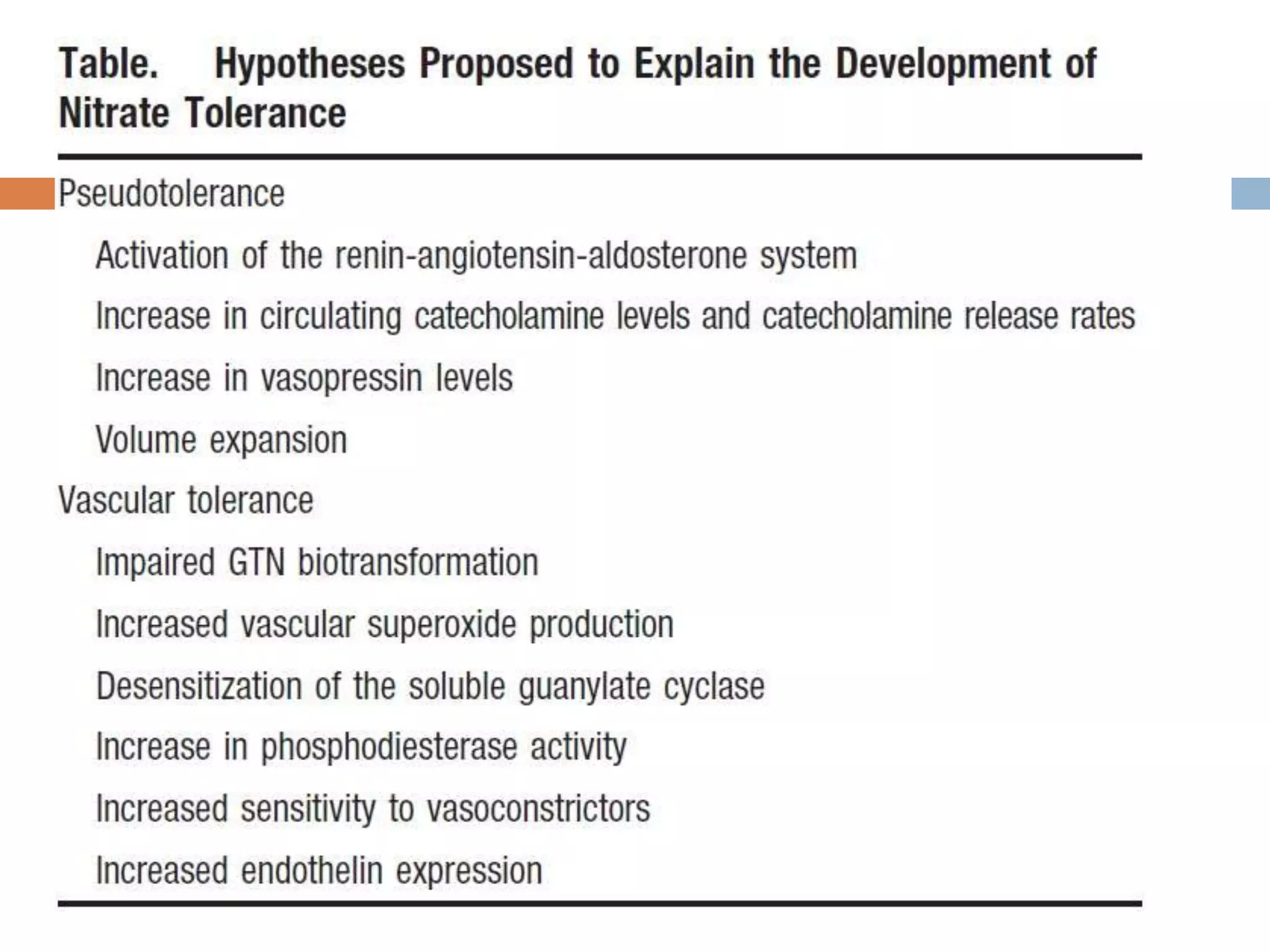
Tolerance 
 Tolerance to the actions of nitrates develops rapidly and blood 
vessels become desensitized to vasodilation 
 Reduced capacity of the vascular smooth muscle to convert 
nitroglycerin to NO: True vascular tolerance 
 Activation of mechanisms extraneous to the vessel wall: 
Pseudotolerance 
 Multiple mechanisms have been proposed to account for 
nitrate tolerance 
 PETN is the only organic nitrate in clinical use, which is devoid 
of induction of oxidative stress and related side-effects such 
as endothelial dysfunction and nitrate tolerance
Strategies to prevent Tolerance 
 Tolerance can be overcome by providing a 
daily “nitrate-free interval” to restore sensitivity 
to the drug 
 This interval is typically 10 to 12 hours, usually 
at night, because demand on the heart is 
decreased at that time
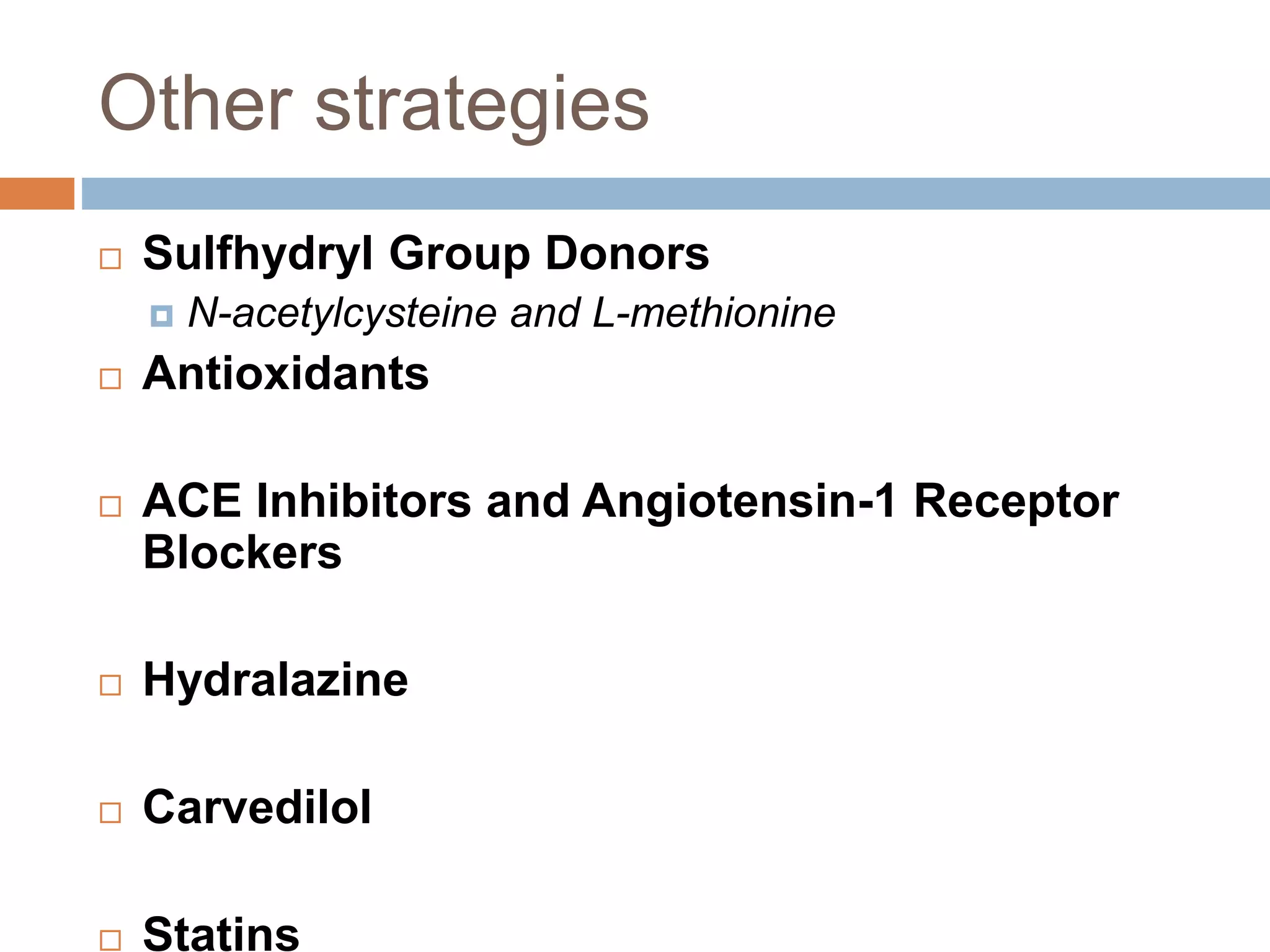
Other strategies 
 Sulfhydryl Group Donors 
 N-acetylcysteine and L-methionine 
 Antioxidants 
 ACE Inhibitors and Angiotensin-1 Receptor 
Blockers 
 Hydralazine 
 Carvedilol 
 Statins
Nitrates is also… 
 Found in groundwater and soil 
 Use as preservatives in processed food 
 Drinking water that contains high levels of nitrates 
can be toxic to humans especially infants 
 Causes Methemoglobinemia , also known as 
‘Baby Blue Syndrome’ in infants 
 Excess nitrates ingestion also implicated in 
cancer, thyroid hypertrophy
THANK YOU

Nitrates

  • 1.
  • 2.
    What are nitrates?  Prodrugs that are sources of nitric oxide (NO)  Drugs include: Glyceryl trinitrate (nitroglycerin), isosorbide mononitrate and isosorbide dinitrate
  • 3.
    History  Nitroglycerinwas first synthesized in 1846 by Sobrero  Alfred Nobel devised a process to stabilize the nitroglycerin and patented a specialized detonator in 1863  In 1857, T. Lauder Brunton of Edinburgh administered amyl nitrite by inhalation and noted that anginal pain was relieved within 30- 60 secs  William Murrell surmised that the action of nitroglycerin mimicked that of amyl nitrite
  • 4.
    Chemistry  polyolesters of nitric acid  characterized by a sequence of carbon– oxygen–nitrogen (—C—O—NO2)  Organic nitrates of low molecular mass (nitroglycerin) are moderately volatile, oily liquids  high-molecular-mass nitrate esters (e.g.,isosorbide dinitrate, and isosorbide
  • 6.
    Mechanism of action  Organic nitrates lead to the formation of the reactive gaseous free radical NO and related NO-containing compounds  NO can activate guanylyl cyclase, increase the cellular level of cyclic GMP, activate PKG, and modulate the activities of cyclic nucleotide phosphodiesterases  In smooth muscle, the net result is reduced phosphorylation of myosin light chain, reduced Ca2+ concentration in the cytosol, and relaxation
  • 7.
    Proposed mechanisms underlyingbioactivation of organic nitrates
  • 8.
    Effects of nitrates  promote relaxation of vascular smooth muscle  Low concentrations of nitroglycerin preferentially dilate veins more than arterioles  decreases venous return, leading to a fall in left and right ventricular chamber size and end-diastolic pressures  Systemic arterial pressure may fall slightly
  • 9.
     Higher dosesof organic nitrates cause:  Further venous pooling and may decrease arteriolar resistance as well, thereby decreasing blood pressure and cardiac output  Causing pallor, weakness, dizziness, and activation of compensatory sympathetic reflexes
  • 10.
     Reduces myocardialO₂ demand  decreasing both preload and afterload  Dilating coronary arteries and thereby increasing coronary blood flow  mechanisms not entirely clear  Most hypotheses : dilation and prevent vasoconstriction of large epicardial vessels without impairing autoregulation in the small vessels, which are responsible for ~90% of the overall coronary vascular resistance  Limits platelet aggregation/adhesion
  • 11.
    Other effects Bronchial smooth muscle is relaxed irrespective of the preexisting tone  The muscles of the biliary tract, including those of the gallbladder, biliary ducts, and sphincter of Oddi, are effectively relaxed  Smooth muscle of the GI tract, including that of the esophagus, can be relaxed and its spontaneous motility decreased  Relaxes ureteral and uterine smooth muscle
  • 12.
    Therapeutic uses Mainly used in:  Stable angina pectoris  CCF  Unstable angina pectoris and NSTEMI  Acute myocardial infarction  Prinzmetal angina  Others :  Portal hypertension  Asthma and as a diuretic (obsolete)
  • 15.
    Portal HTN Nitroglycerin has been used in combination with vasopressin to control acute variceal bleeding. The rate of infusion of nitroglycerin is 50 to 400 μg/min, provided that the systolic blood pressure > 90 mmHg  Nitrates are no longer recommended, either alone or in combination with a ß blocker, for primary prophylaxis to prevent first variceal bleeds  For secondary prophylaxis (to prevent variceal rebleeding), isosorbide mononitrate may be added to a beta blocker if the beta blocker alone has not resulted in an appropriate decrease in HVPG
  • 16.
    Adverse effects Headache  Transient episodes of dizziness, weakness, and other manifestations associated with postural hypotension may develop  High doses of organic nitrates causes postural hypotension, facial flushing, and tachycardia  Prolonged therapy causes endothelial dysfunction
  • 17.
    Interactions  PhosphodiesteraseV inhibitors such as sildenafil, tardenafil, and vardenafil potentiate the action of the nitrates.  To preclude the dangerous hypotension that may occur, this combination is contraindicated.
  • 18.
    Tolerance  Toleranceto the actions of nitrates develops rapidly and blood vessels become desensitized to vasodilation  Reduced capacity of the vascular smooth muscle to convert nitroglycerin to NO: True vascular tolerance  Activation of mechanisms extraneous to the vessel wall: Pseudotolerance  Multiple mechanisms have been proposed to account for nitrate tolerance  PETN is the only organic nitrate in clinical use, which is devoid of induction of oxidative stress and related side-effects such as endothelial dysfunction and nitrate tolerance
  • 20.
    Strategies to preventTolerance  Tolerance can be overcome by providing a daily “nitrate-free interval” to restore sensitivity to the drug  This interval is typically 10 to 12 hours, usually at night, because demand on the heart is decreased at that time
  • 21.
    Other strategies Sulfhydryl Group Donors  N-acetylcysteine and L-methionine  Antioxidants  ACE Inhibitors and Angiotensin-1 Receptor Blockers  Hydralazine  Carvedilol  Statins
  • 22.
    Nitrates is also…  Found in groundwater and soil  Use as preservatives in processed food  Drinking water that contains high levels of nitrates can be toxic to humans especially infants  Causes Methemoglobinemia , also known as ‘Baby Blue Syndrome’ in infants  Excess nitrates ingestion also implicated in cancer, thyroid hypertrophy
  • 23.