PRESENTED BY
MRS. V. BRAHATHA
LECTURER
GANGA COLLEGE OF NURSING
COIMBATORE
OUT LINE
 INTRODUCTION
 HISTORY
 EPIDIMIOLOY
 OUT BREAKS
 LIFE CYCLE
 INCUBATION PERIOD
 ROUTE OF TRANSMISSION
 PATHOPHYSIOLOGY
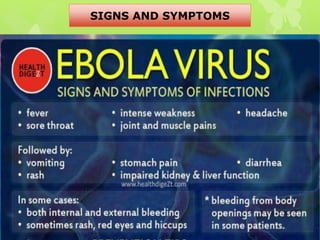
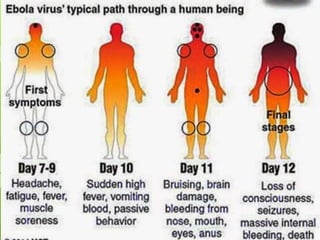
 SIGNS AND SYMPTOMS
 DIAGNOSTIC EVALUATION
 TREATMENT
OUT LINE
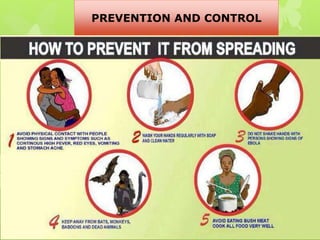
 PREVENTION AND CONTROL
 PROGNOSIS
 COMPLICATION
 DIFFERENTIAL DIAGNOSIS
 DO’S AND DON’TS
 KEY FACTS
 RESEARCH
 Ebola virus disease (EVD) was formerly known as
Ebola hemorrhagic fever.
 It is a severe, often fatal illness in humans
 A notoriously deadly virus that causes fearsome
symptoms.
- High fever
- Internal Bleeding
 It is caused by Ebola viruses
INTRODUCTION
 Ebola virus disease (EVD) first appeared in 1976 in 2
simultaneous outbreaks, one in Nzara, Sudan, and the other in
Yambuku, Democratic Republic of Congo.
 The latter occurred in a village near the Ebola River, from
which the disease takes its name.
 The current outbreak in west Africa, (first cases notified in
March 2014), is the largest and most complex Ebola outbreak
since the Ebola virus was first discovered in 1976.
HISTORY ABOUT EBOLA
 Single stranded RNA
 It contains 7 genes: 3- UTR-NP-VP35-VP40-GP-VP30-
VP24-L-5'-UTR.
 Ebolavirions are filamentous particles that may appear in
the shape of a shepherd's crook, of a "U" or of a "6,"
 They may be coiled, toroid or branched.
 They are 80 Nanometers in width and may be as long as
14,000 nm.
EBOLA VIRUS
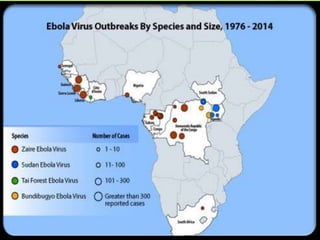
 There are 5 species that have been identified: Zaire,
Bundibugyo, Sudan, Reston and Taï Forest.
 The first 3, Bundibugyo ebolavirus, Zaire ebolavirus, and
Sudan ebolavirus have been associated with large outbreaks in
Africa.
 The virus causing the 2014 west African outbreak belongs to
the Zaire species.
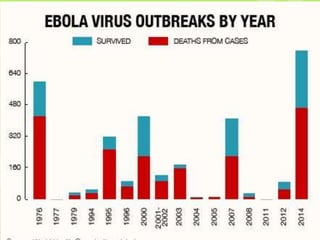
 The disease typically occurs in outbreaks in tropical regions
of Sub-Saharan Africa
 From 1976 through 2013, the World Health Organization
reported 1,716 confirmed cases.
 The largest outbreak to date is the ongoing 2014 West Africa
Ebola virus outbreak, which is affecting Guinea, Sierra
Leone, Liberia, Mali and Nigeria
 As of 30 November 2014, 17,145 suspected cases and 6,405
deaths had been reported.
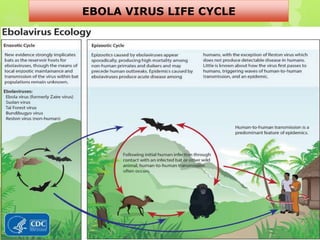
EBOLA VIRUS LIFE CYCLE
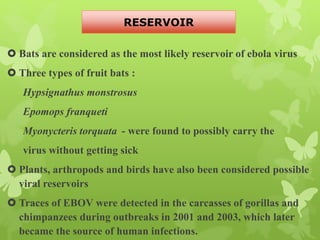
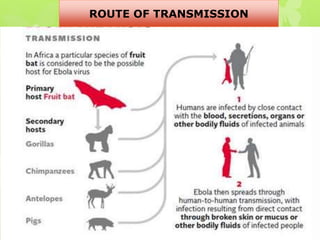
 Bats are considered as the most likely reservoir of ebola virus
 Three types of fruit bats :
Hypsignathus monstrosus
Epomops franqueti
Myonycteris torquata - were found to possibly carry the
virus without getting sick
 Plants, arthropods and birds have also been considered possible
viral reservoirs
 Traces of EBOV were detected in the carcasses of gorillas and
chimpanzees during outbreaks in 2001 and 2003, which later
became the source of human infections.
RESERVOIR
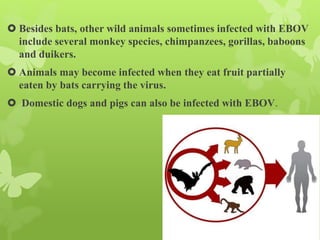
 Besides bats, other wild animals sometimes infected with EBOV
include several monkey species, chimpanzees, gorillas, baboons
and duikers.
 Animals may become infected when they eat fruit partially
eaten by bats carrying the virus.
 Domestic dogs and pigs can also be infected with EBOV.
 2 – 21 DAYS
INCUBATION PERIOD
ROUTE OF TRANSMISSION
 Body fluids that may contain Ebola viruses include saliva, mucus,
vomit, feces, sweat, tears, breast milk, urine and semen.
 Entry points for the virus include the nose, mouth, eyes, open wounds,
cuts and abrasions.
 The virus is able to survive on objects for a few hours in a dried state
and can survive for a few days within body fluids.
 The Ebola virus may be able to persist for up to 8 weeks in the semen of
survivors after they recovered
 Ebola may also occur in the breast milk of women after recovery
 NO EVIDENCE OF AIR- BORNE TRANSMISSION due to low levels
of the virus in the lungs and other parts of the respiratory system of
primates, that are insufficient to cause new infections.
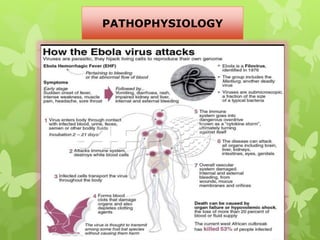
PATHOPHYSIOLOGY
SIGNS AND SYMPTOMS
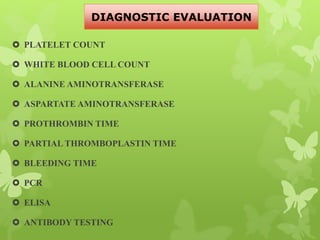
 PLATELET COUNT
 WHITE BLOOD CELL COUNT
 ALANINE AMINOTRANSFERASE
 ASPARTATE AMINOTRANSFERASE
 PROTHROMBIN TIME
 PARTIAL THROMBOPLASTIN TIME
 BLEEDING TIME
 PCR
 ELISA
 ANTIBODY TESTING
DIAGNOSTIC EVALUATION
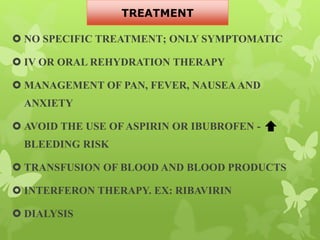
 NO SPECIFIC TREATMENT; ONLY SYMPTOMATIC
 IV OR ORAL REHYDRATION THERAPY
 MANAGEMENT OF PAN, FEVER, NAUSEA AND
ANXIETY
 AVOID THE USE OFASPIRIN OR IBUBROFEN -
BLEEDING RISK
 TRANSFUSION OF BLOOD AND BLOOD PRODUCTS
 INTERFERON THERAPY. EX: RIBAVIRIN
 DIALYSIS
TREATMENT
PREVENTION AND CONTROL
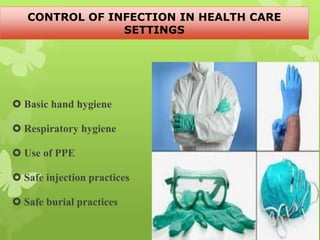
 Basic hand hygiene
 Respiratory hygiene
 Use of PPE
 Safe injection practices
 Safe burial practices
CONTROL OF INFECTION IN HEALTH CARE
SETTINGS
 25 – 90% of the infected are at higher risk for
death
 As of September 2014, the risk of death is 50%
 Death occurs following 6 – 16 days after the
symptoms appear.
 The main cause of death is due to low blood
pressure from fluid loss
PROGNOSIS
 Inflammation of the testicles
 Joint pain
 Hair loss
 Excess tearing
 Light sensitivity
 Iritis
 Iridocyclitis
 Choroiditis
 blindness
COMPLICATIONS
 Typhoid fever
 Shigellosis
 Cholera
 Sepsis
 Leptospirosis
 Dengue
 Plague
 Q fever
DIFFERENTIAL DIAGNOSIS
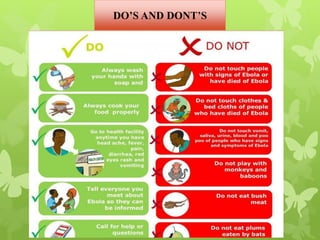
DO’S AND DONT’S
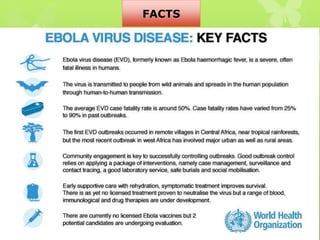
FACTS
 A number of anti- virals like Favipiravir, Lamivudine,
Brincidofovir are being studied for traeating patients with Ebola.
 ANTI – SENSE TECHNOLOGY
 Vaccine for Ebola virus has been under study and clinical trial
Eg: cAd3 – EBOZ
VSV – EBOV
 TRIAZOVERIN is a vaccine developed by Russian Health
Ministry which is found effective and is available for clinical
trials.
RESEARCH
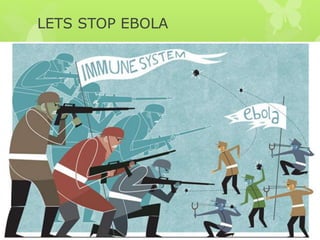
LETS STOP EBOLA
THANK YOU

Ebola br

  • 1.
    PRESENTED BY MRS. V.BRAHATHA LECTURER GANGA COLLEGE OF NURSING COIMBATORE
  • 3.
    OUT LINE  INTRODUCTION HISTORY  EPIDIMIOLOY  OUT BREAKS  LIFE CYCLE  INCUBATION PERIOD  ROUTE OF TRANSMISSION  PATHOPHYSIOLOGY  SIGNS AND SYMPTOMS  DIAGNOSTIC EVALUATION  TREATMENT
  • 4.
    OUT LINE  PREVENTIONAND CONTROL  PROGNOSIS  COMPLICATION  DIFFERENTIAL DIAGNOSIS  DO’S AND DON’TS  KEY FACTS  RESEARCH
  • 5.
     Ebola virusdisease (EVD) was formerly known as Ebola hemorrhagic fever.  It is a severe, often fatal illness in humans  A notoriously deadly virus that causes fearsome symptoms. - High fever - Internal Bleeding  It is caused by Ebola viruses INTRODUCTION
  • 6.
     Ebola virusdisease (EVD) first appeared in 1976 in 2 simultaneous outbreaks, one in Nzara, Sudan, and the other in Yambuku, Democratic Republic of Congo.  The latter occurred in a village near the Ebola River, from which the disease takes its name.  The current outbreak in west Africa, (first cases notified in March 2014), is the largest and most complex Ebola outbreak since the Ebola virus was first discovered in 1976. HISTORY ABOUT EBOLA
  • 7.
     Single strandedRNA  It contains 7 genes: 3- UTR-NP-VP35-VP40-GP-VP30- VP24-L-5'-UTR.  Ebolavirions are filamentous particles that may appear in the shape of a shepherd's crook, of a "U" or of a "6,"  They may be coiled, toroid or branched.  They are 80 Nanometers in width and may be as long as 14,000 nm. EBOLA VIRUS
  • 8.
     There are5 species that have been identified: Zaire, Bundibugyo, Sudan, Reston and Taï Forest.  The first 3, Bundibugyo ebolavirus, Zaire ebolavirus, and Sudan ebolavirus have been associated with large outbreaks in Africa.  The virus causing the 2014 west African outbreak belongs to the Zaire species.
  • 9.
     The diseasetypically occurs in outbreaks in tropical regions of Sub-Saharan Africa  From 1976 through 2013, the World Health Organization reported 1,716 confirmed cases.  The largest outbreak to date is the ongoing 2014 West Africa Ebola virus outbreak, which is affecting Guinea, Sierra Leone, Liberia, Mali and Nigeria  As of 30 November 2014, 17,145 suspected cases and 6,405 deaths had been reported.
  • 12.
  • 13.
     Bats areconsidered as the most likely reservoir of ebola virus  Three types of fruit bats : Hypsignathus monstrosus Epomops franqueti Myonycteris torquata - were found to possibly carry the virus without getting sick  Plants, arthropods and birds have also been considered possible viral reservoirs  Traces of EBOV were detected in the carcasses of gorillas and chimpanzees during outbreaks in 2001 and 2003, which later became the source of human infections. RESERVOIR
  • 14.
     Besides bats,other wild animals sometimes infected with EBOV include several monkey species, chimpanzees, gorillas, baboons and duikers.  Animals may become infected when they eat fruit partially eaten by bats carrying the virus.  Domestic dogs and pigs can also be infected with EBOV.
  • 15.
     2 –21 DAYS INCUBATION PERIOD
  • 16.
  • 17.
     Body fluidsthat may contain Ebola viruses include saliva, mucus, vomit, feces, sweat, tears, breast milk, urine and semen.  Entry points for the virus include the nose, mouth, eyes, open wounds, cuts and abrasions.  The virus is able to survive on objects for a few hours in a dried state and can survive for a few days within body fluids.  The Ebola virus may be able to persist for up to 8 weeks in the semen of survivors after they recovered  Ebola may also occur in the breast milk of women after recovery  NO EVIDENCE OF AIR- BORNE TRANSMISSION due to low levels of the virus in the lungs and other parts of the respiratory system of primates, that are insufficient to cause new infections.
  • 18.
  • 19.
  • 21.
     PLATELET COUNT WHITE BLOOD CELL COUNT  ALANINE AMINOTRANSFERASE  ASPARTATE AMINOTRANSFERASE  PROTHROMBIN TIME  PARTIAL THROMBOPLASTIN TIME  BLEEDING TIME  PCR  ELISA  ANTIBODY TESTING DIAGNOSTIC EVALUATION
  • 22.
     NO SPECIFICTREATMENT; ONLY SYMPTOMATIC  IV OR ORAL REHYDRATION THERAPY  MANAGEMENT OF PAN, FEVER, NAUSEA AND ANXIETY  AVOID THE USE OFASPIRIN OR IBUBROFEN - BLEEDING RISK  TRANSFUSION OF BLOOD AND BLOOD PRODUCTS  INTERFERON THERAPY. EX: RIBAVIRIN  DIALYSIS TREATMENT
  • 23.
  • 24.
     Basic handhygiene  Respiratory hygiene  Use of PPE  Safe injection practices  Safe burial practices CONTROL OF INFECTION IN HEALTH CARE SETTINGS
  • 25.
     25 –90% of the infected are at higher risk for death  As of September 2014, the risk of death is 50%  Death occurs following 6 – 16 days after the symptoms appear.  The main cause of death is due to low blood pressure from fluid loss PROGNOSIS
  • 26.
     Inflammation ofthe testicles  Joint pain  Hair loss  Excess tearing  Light sensitivity  Iritis  Iridocyclitis  Choroiditis  blindness COMPLICATIONS
  • 27.
     Typhoid fever Shigellosis  Cholera  Sepsis  Leptospirosis  Dengue  Plague  Q fever DIFFERENTIAL DIAGNOSIS
  • 28.
  • 29.
  • 30.
     A numberof anti- virals like Favipiravir, Lamivudine, Brincidofovir are being studied for traeating patients with Ebola.  ANTI – SENSE TECHNOLOGY  Vaccine for Ebola virus has been under study and clinical trial Eg: cAd3 – EBOZ VSV – EBOV  TRIAZOVERIN is a vaccine developed by Russian Health Ministry which is found effective and is available for clinical trials. RESEARCH
  • 31.
  • 32.