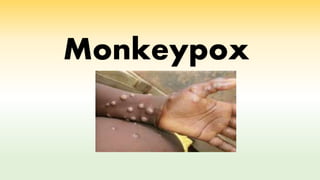
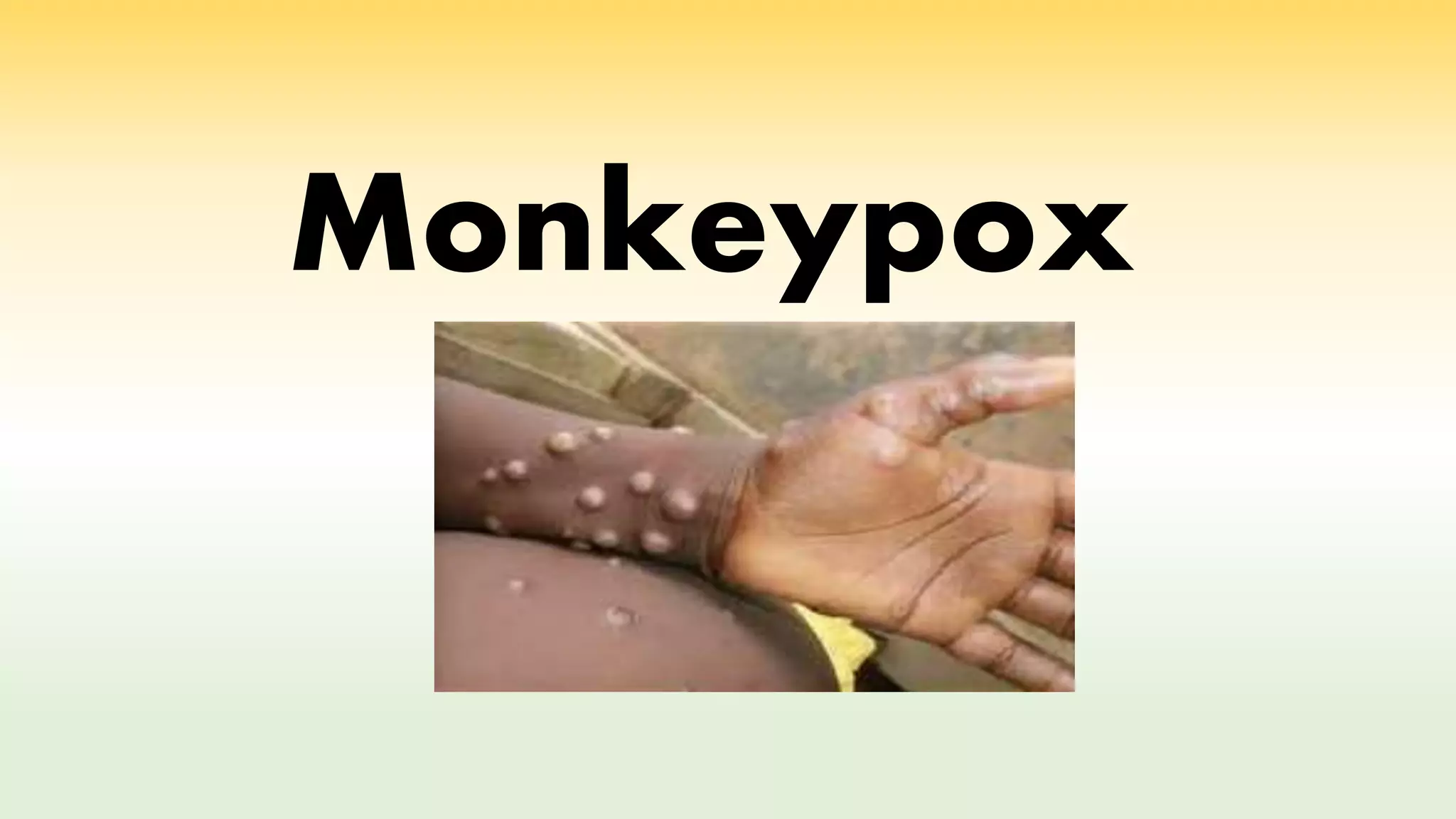
Monkeypox
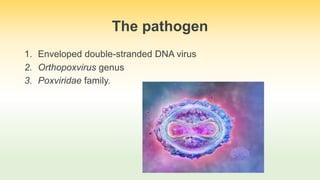
The pathogen
1. Enveloped double-stranded DNA virus
2. Orthopoxvirus genus
3. Poxviridae family.
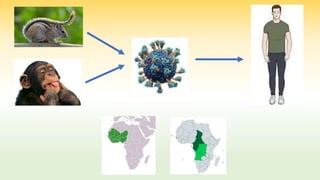
Transmission
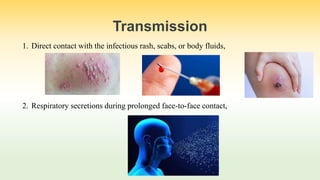
1. Direct contact with the infectious rash, scabs, or body fluids,
2. Respiratory secretions during prolonged face-to-face contact,
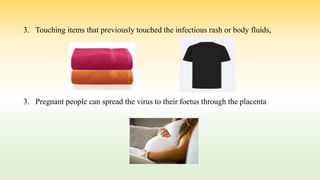
3. Touching items that previously touched the infectious rash or body fluids,
3. Pregnant people can spread the virus to their foetus through the placenta
Signs and symptoms
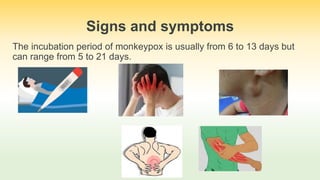
The incubation period of monkeypox is usually from 6 to 13 days but
can range from 5 to 21 days.
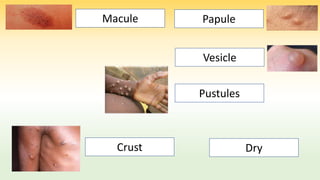
Macule Papule
Vesicle
Pustules
Crust Dry
Diagnosis
• Lymphadenopathy can be a clinical feature to distinguish monkeypox
from chickenpox or smallpox.
• Polymerase chain reaction (PCR) is the preferred laboratory test given its
accuracy and sensitivity.
• As orthopoxviruses are serologically cross-reactive, antigen and antibody
detection methods do not provide monkeypox-specific confirmation.
Therapeutics
• An antiviral developed to treat smallpox tecovirimat, commercialized
as TPOXX has been approved for treatment of monkeypox.
• Other vaccines for smallpox may provide limited protection since
both diseases are from the same family.
• Immune globulin may be recommended for severe cases.
THANK YOU

Monkeypox

  • 1.
  • 3.
    The pathogen 1. Envelopeddouble-stranded DNA virus 2. Orthopoxvirus genus 3. Poxviridae family.
  • 4.
    Transmission 1. Direct contactwith the infectious rash, scabs, or body fluids, 2. Respiratory secretions during prolonged face-to-face contact,
  • 5.
    3. Touching itemsthat previously touched the infectious rash or body fluids, 3. Pregnant people can spread the virus to their foetus through the placenta
  • 6.
    Signs and symptoms Theincubation period of monkeypox is usually from 6 to 13 days but can range from 5 to 21 days.
  • 7.
  • 8.
    Diagnosis • Lymphadenopathy canbe a clinical feature to distinguish monkeypox from chickenpox or smallpox. • Polymerase chain reaction (PCR) is the preferred laboratory test given its accuracy and sensitivity. • As orthopoxviruses are serologically cross-reactive, antigen and antibody detection methods do not provide monkeypox-specific confirmation.
  • 9.
    Therapeutics • An antiviraldeveloped to treat smallpox tecovirimat, commercialized as TPOXX has been approved for treatment of monkeypox. • Other vaccines for smallpox may provide limited protection since both diseases are from the same family. • Immune globulin may be recommended for severe cases.
  • 10.