EUKARYOTIC GENE
STRUCTURE
PRESENTED BY:
MA.NITYA
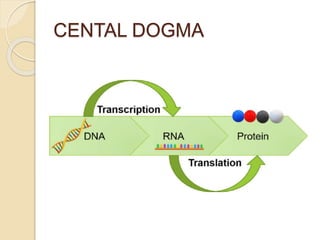
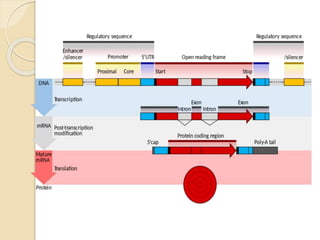
CENTAL DOGMA
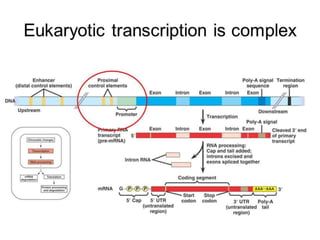
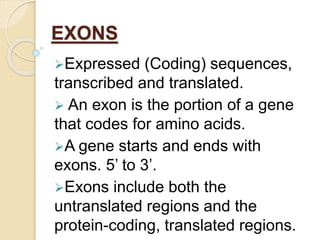
EXONS
Expressed (Coding) sequences,
transcribed and translated.
 An exon is the portion of a gene
that codes for amino acids.
A gene starts and ends with
exons. 5’ to 3’.
Exons include both the
untranslated regions and the
protein-coding, translated regions.
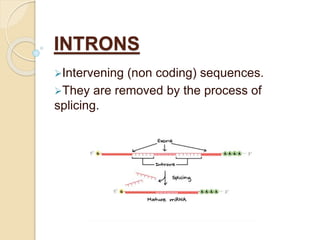
INTRONS
Intervening (non coding) sequences.
They are removed by the process of
splicing.
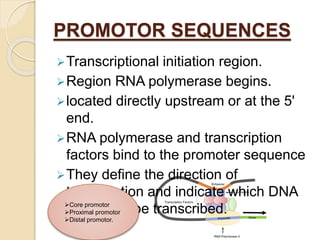
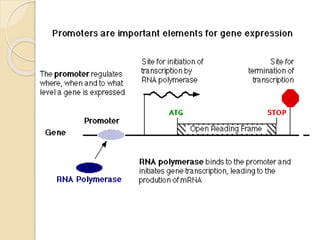
PROMOTOR SEQUENCES
Transcriptional initiation region.
Region RNA polymerase begins.
located directly upstream or at the 5'
end.
RNA polymerase and transcription
factors bind to the promoter sequence
They define the direction of
transcription and indicate which DNA
strand will be transcribed.
Core promotor
Proximal promotor
Distal promotor.
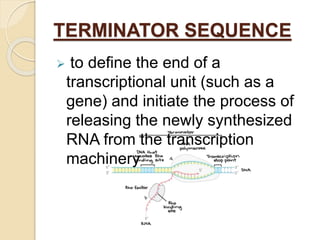
TERMINATOR SEQUENCE
 to define the end of a
transcriptional unit (such as a
gene) and initiate the process of
releasing the newly synthesized
RNA from the transcription
machinery
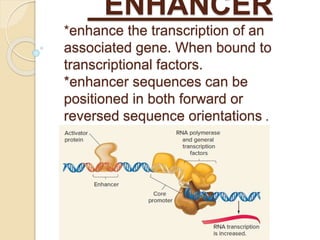
ENHANCER
*enhance the transcription of an
associated gene. When bound to
transcriptional factors.
*enhancer sequences can be
positioned in both forward or
reversed sequence orientations .
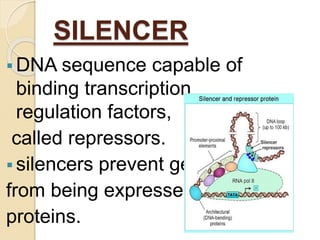
SILENCER
 DNA sequence capable of
binding transcription
regulation factors,
called repressors.
 silencers prevent genes
from being expressed as
proteins.
UPSTREAM
 5’UTR serve several functions
including mRNA transport and
initiation of translation.
 Signal for addition of cap.
DOWNSTREAM
 3’UTR serves to add mRNA
stability and attachment site for
poly a tail.
 Translation termination codon.

EUKARYOTIC GENE STRUCTURE

  • 1.
  • 2.
  • 4.
    EXONS Expressed (Coding) sequences, transcribedand translated.  An exon is the portion of a gene that codes for amino acids. A gene starts and ends with exons. 5’ to 3’. Exons include both the untranslated regions and the protein-coding, translated regions.
  • 5.
    INTRONS Intervening (non coding)sequences. They are removed by the process of splicing.
  • 6.
    PROMOTOR SEQUENCES Transcriptional initiationregion. Region RNA polymerase begins. located directly upstream or at the 5' end. RNA polymerase and transcription factors bind to the promoter sequence They define the direction of transcription and indicate which DNA strand will be transcribed. Core promotor Proximal promotor Distal promotor.
  • 9.
    TERMINATOR SEQUENCE  todefine the end of a transcriptional unit (such as a gene) and initiate the process of releasing the newly synthesized RNA from the transcription machinery
  • 10.
    ENHANCER *enhance the transcriptionof an associated gene. When bound to transcriptional factors. *enhancer sequences can be positioned in both forward or reversed sequence orientations .
  • 11.
    SILENCER  DNA sequencecapable of binding transcription regulation factors, called repressors.  silencers prevent genes from being expressed as proteins.
  • 12.
    UPSTREAM  5’UTR serveseveral functions including mRNA transport and initiation of translation.  Signal for addition of cap. DOWNSTREAM  3’UTR serves to add mRNA stability and attachment site for poly a tail.  Translation termination codon.