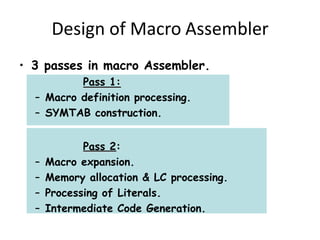
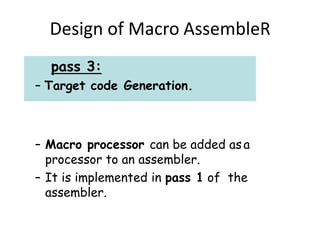
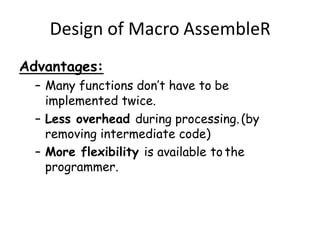
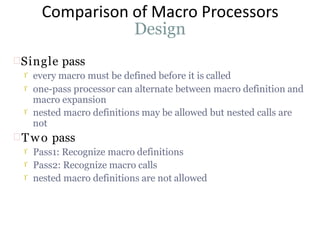
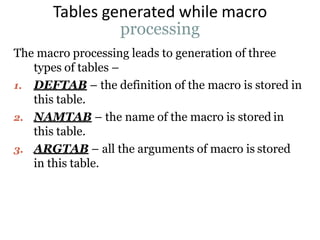
The document outlines the design and functioning of a macro assembler, detailing its three passes: macro definition processing, macro expansion, and target code generation. It discusses the advantages such as reduced overhead and increased flexibility, while also mentioning drawbacks like potential size issues in combined pass 1 and complexity. Additionally, it compares single-pass and two-pass macro processors and describes the tables generated during macro processing.