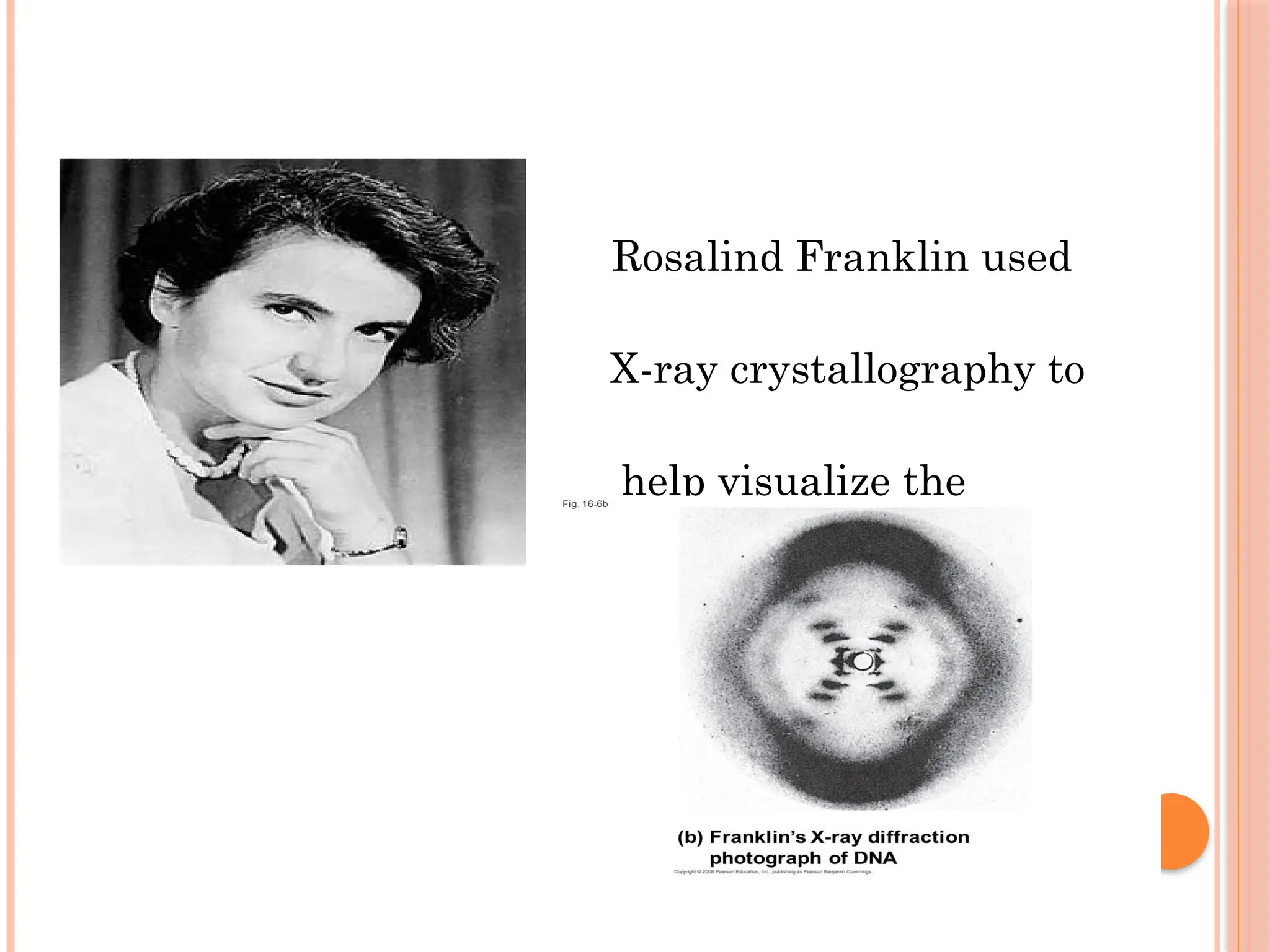
 Rosalind Franklin used
X-ray crystallography to
help visualize the
structure of DNA
 James D. Watson and Francis Crick, co-
originators of the doublehelix model.
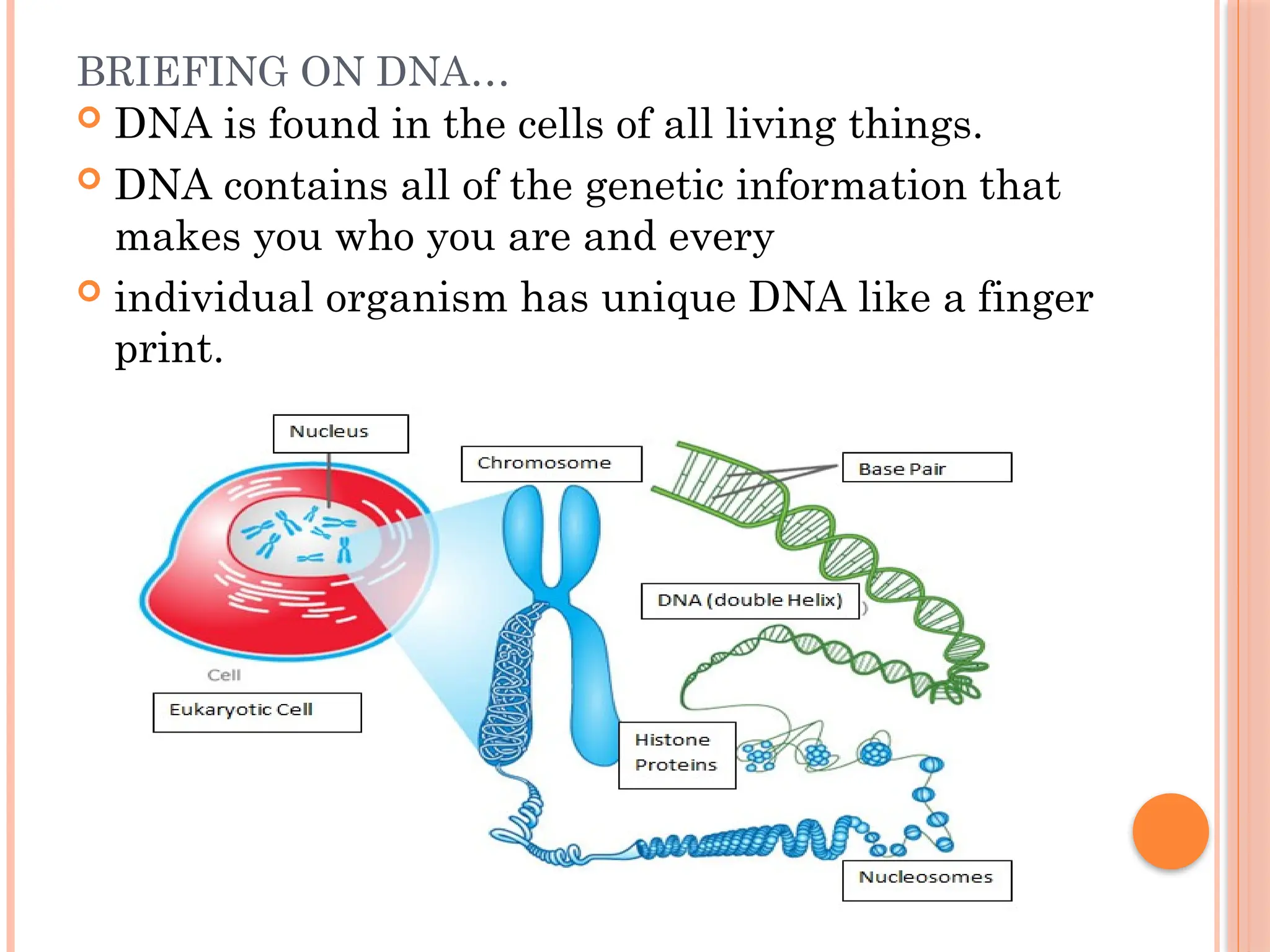
BRIEFING ON DNA…
 DNA is found in the cells of all living things.
 DNA contains all of the genetic information that
makes you who you are and every
 individual organism has unique DNA like a finger
print.
 It contained phosphorus in the form of phosphate
 Deoxyribo nucleic acid
 It is a molecule that encodes the genetic instructions.
 Most DNA molecules are double-stranded helices.
 Each molecule consists of two long biopolymers
made of simpler units called nucleotides—each
nucleotide is composed of a nucleobase recorded
using the letters G, A, T, and C.
 DNA is well-suited for biological information
storage.
 DNA Stands for “DeoxyriboNcleic Acid”.
 Term DNA was given by Zaccharis
 DNA is biopolymer consist of nucleotide as monomeric
unit.
 DNA is double helical structure in eukaryote and
prokaryote, but in virus it may be double stranded or
single stranded and presented as monopartite or
multipartite.
 In eukaryotes, DNA is presented in nucleus
surrounded by nuclear membrane
 In prokaryotes, DNA is presented in nucleoid region
of Cytoplasm without nuclear membrane
 In virus, DNA is presented in the core of virus
surrounded by Protein layer (called as capsid).
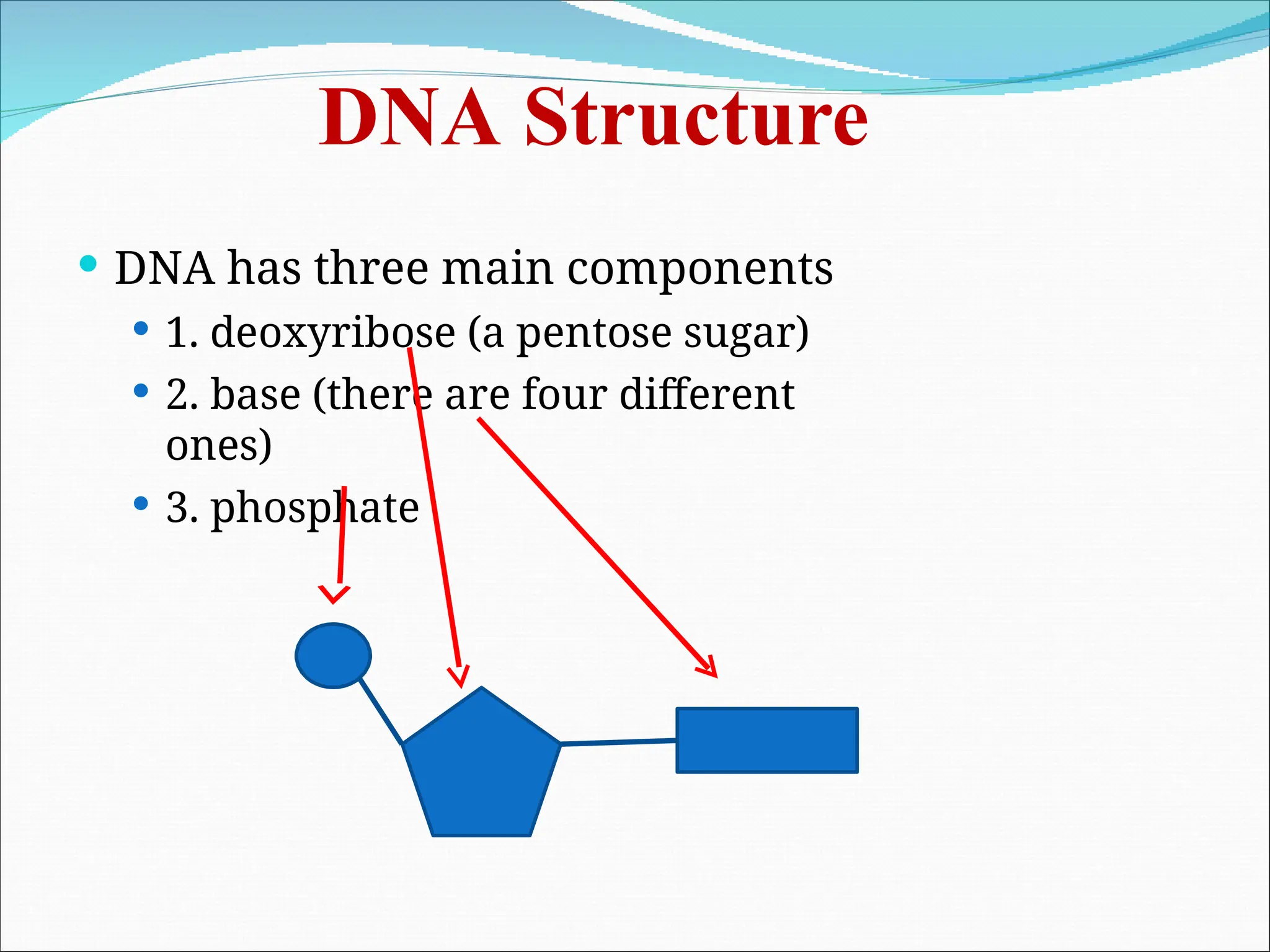
DNA Structure
 DNA has three main components
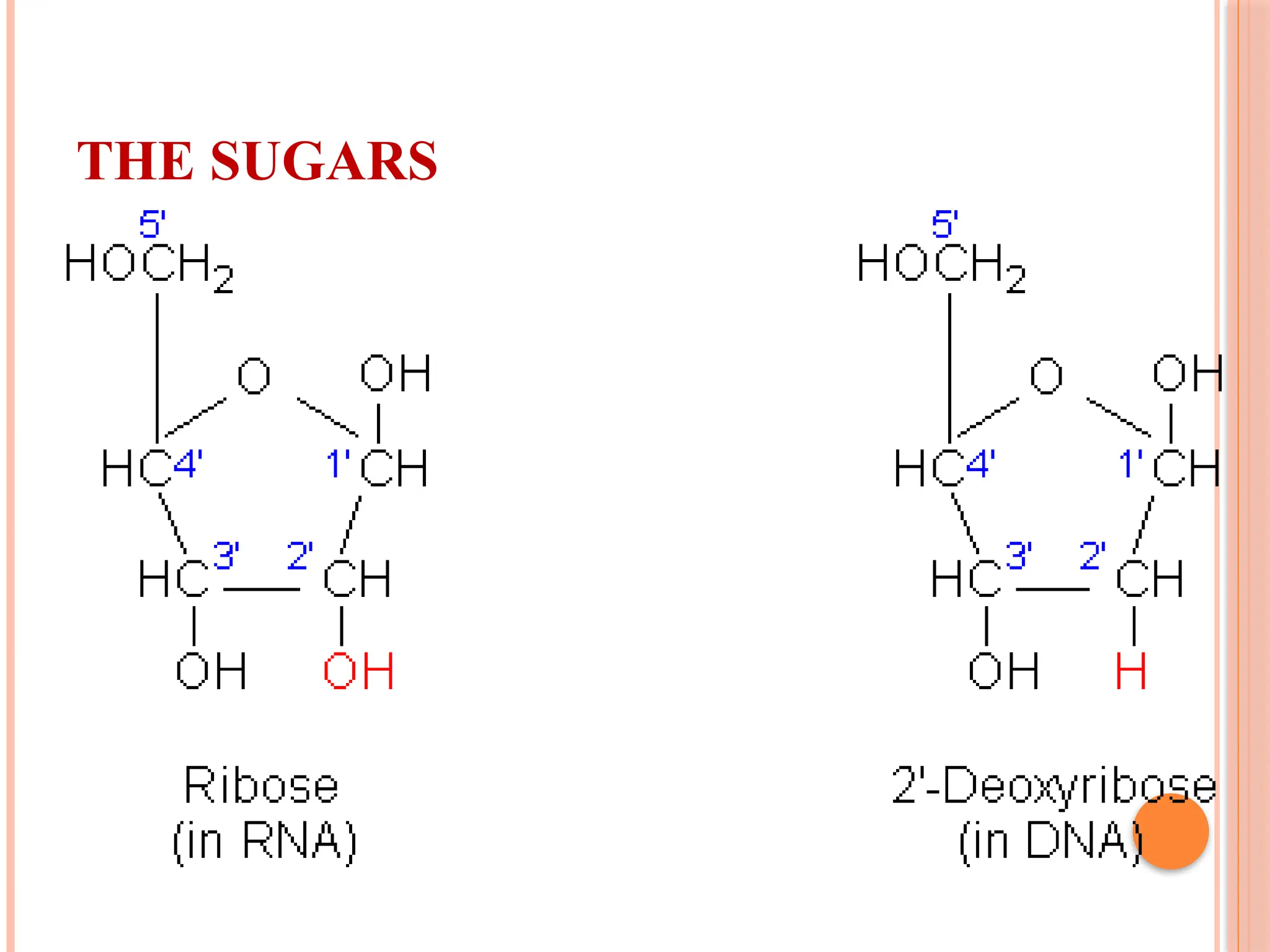
 1. deoxyribose (a pentose sugar)
 2. base (there are four different
ones)
 3. phosphate
THE SUGARS
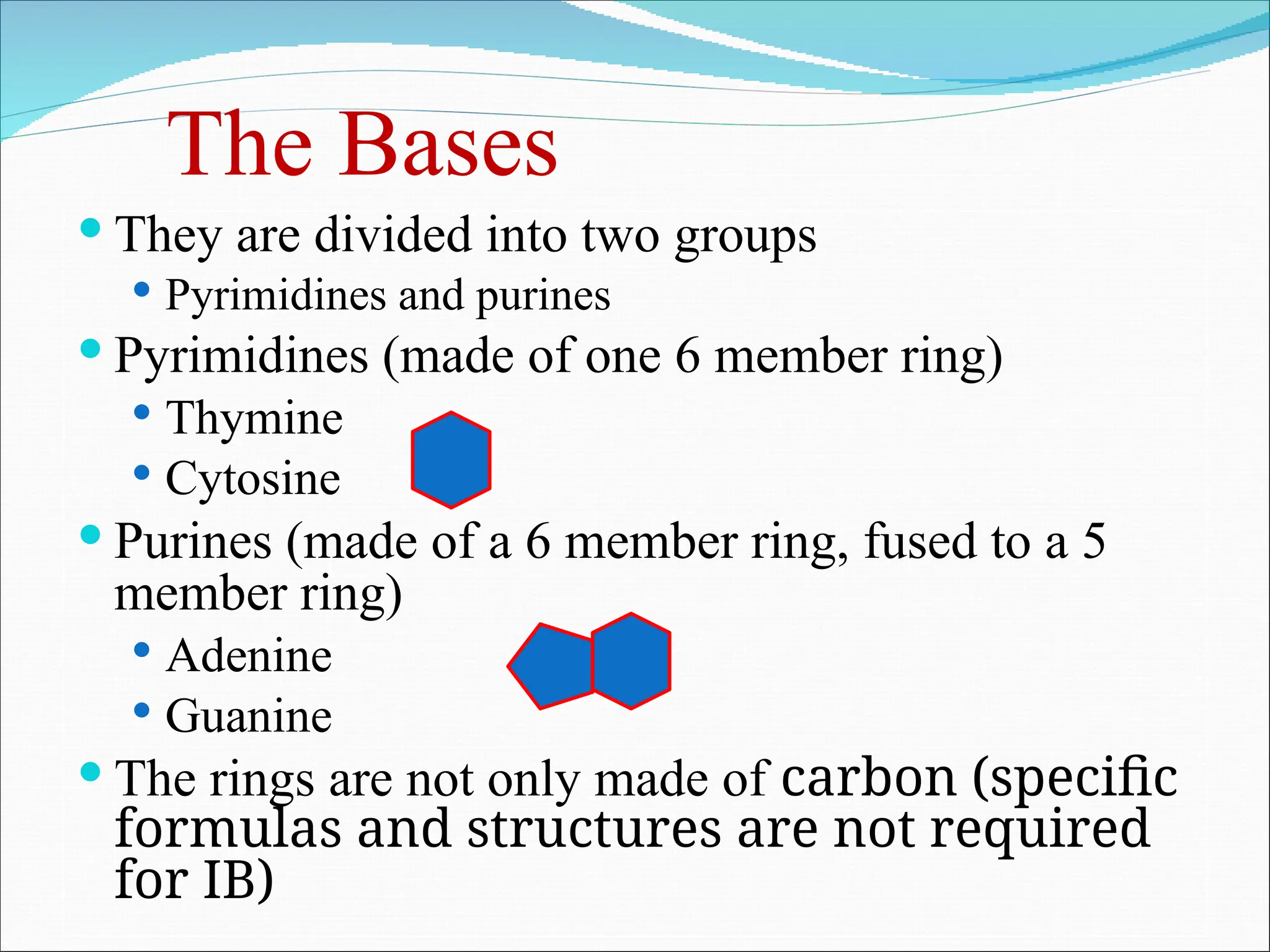
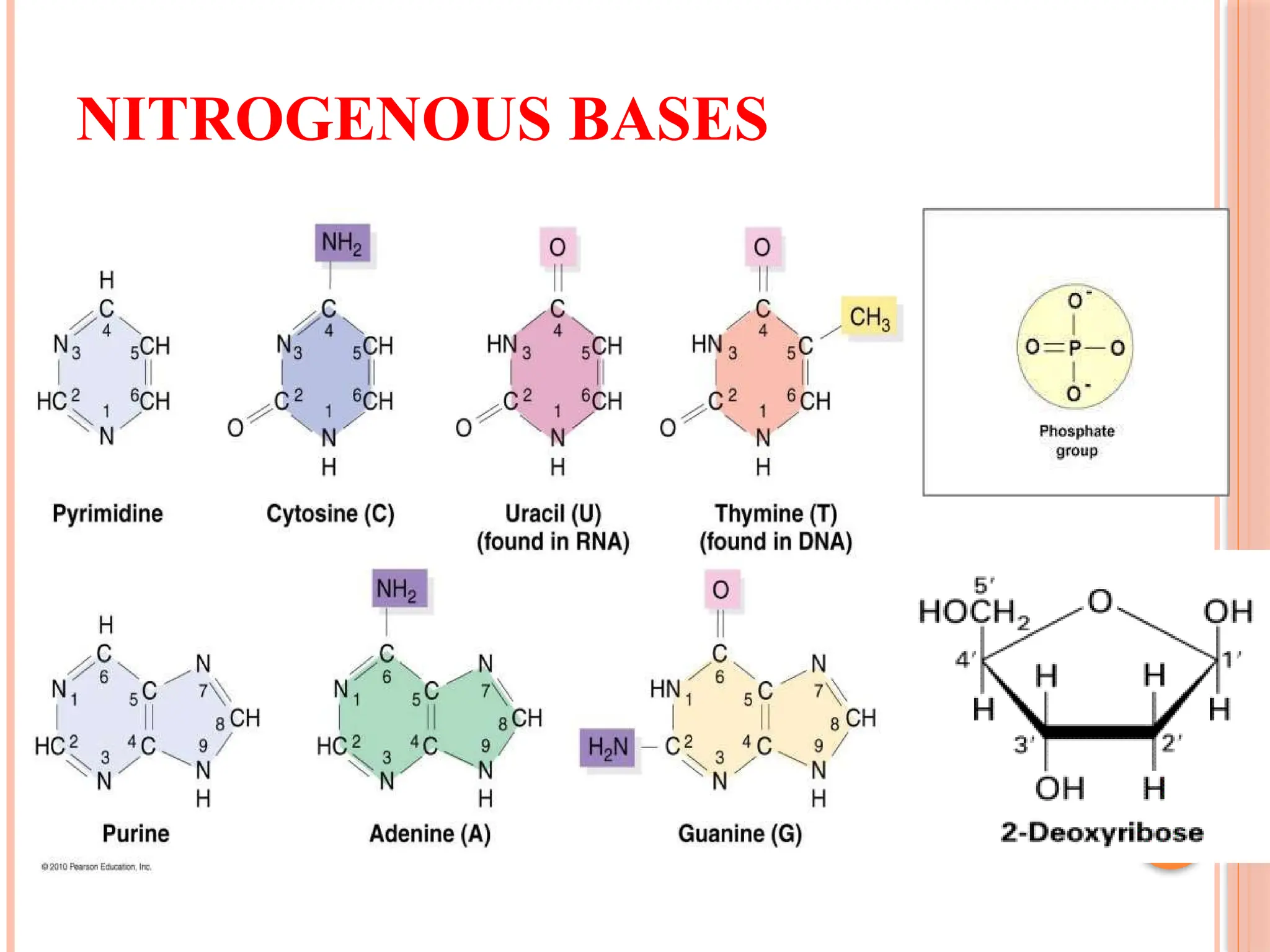
The Bases
 They are divided into two groups
 Pyrimidines and purines
 Pyrimidines (made of one 6 member ring)
 Thymine
 Cytosine
 Purines (made of a 6 member ring, fused to a 5
member ring)
 Adenine
 Guanine
 The rings are not only made of carbon (specific
formulas and structures are not required
for IB)
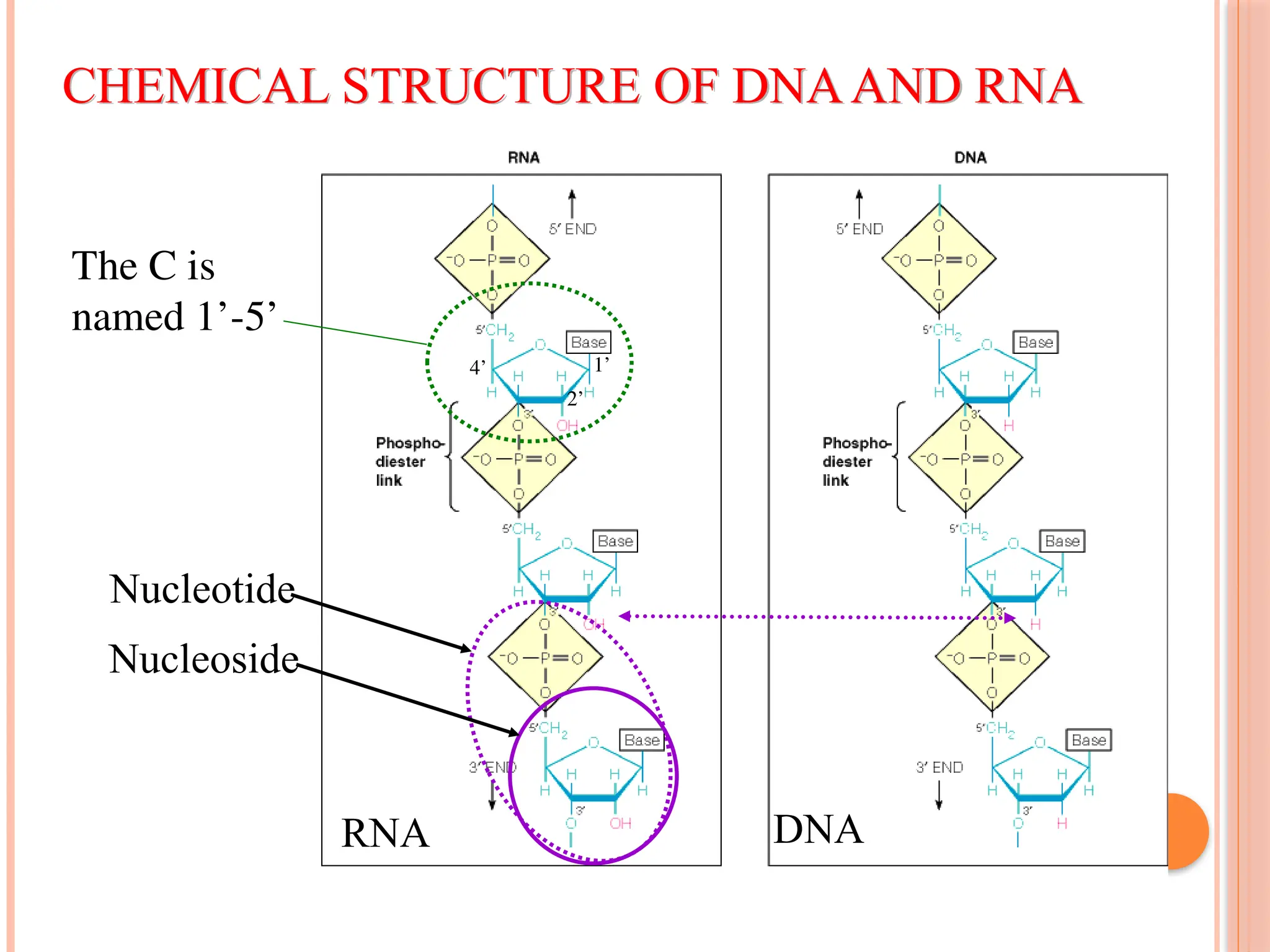
CHEMICAL STRUCTURE OF DNAAND RNA
RNA DNA
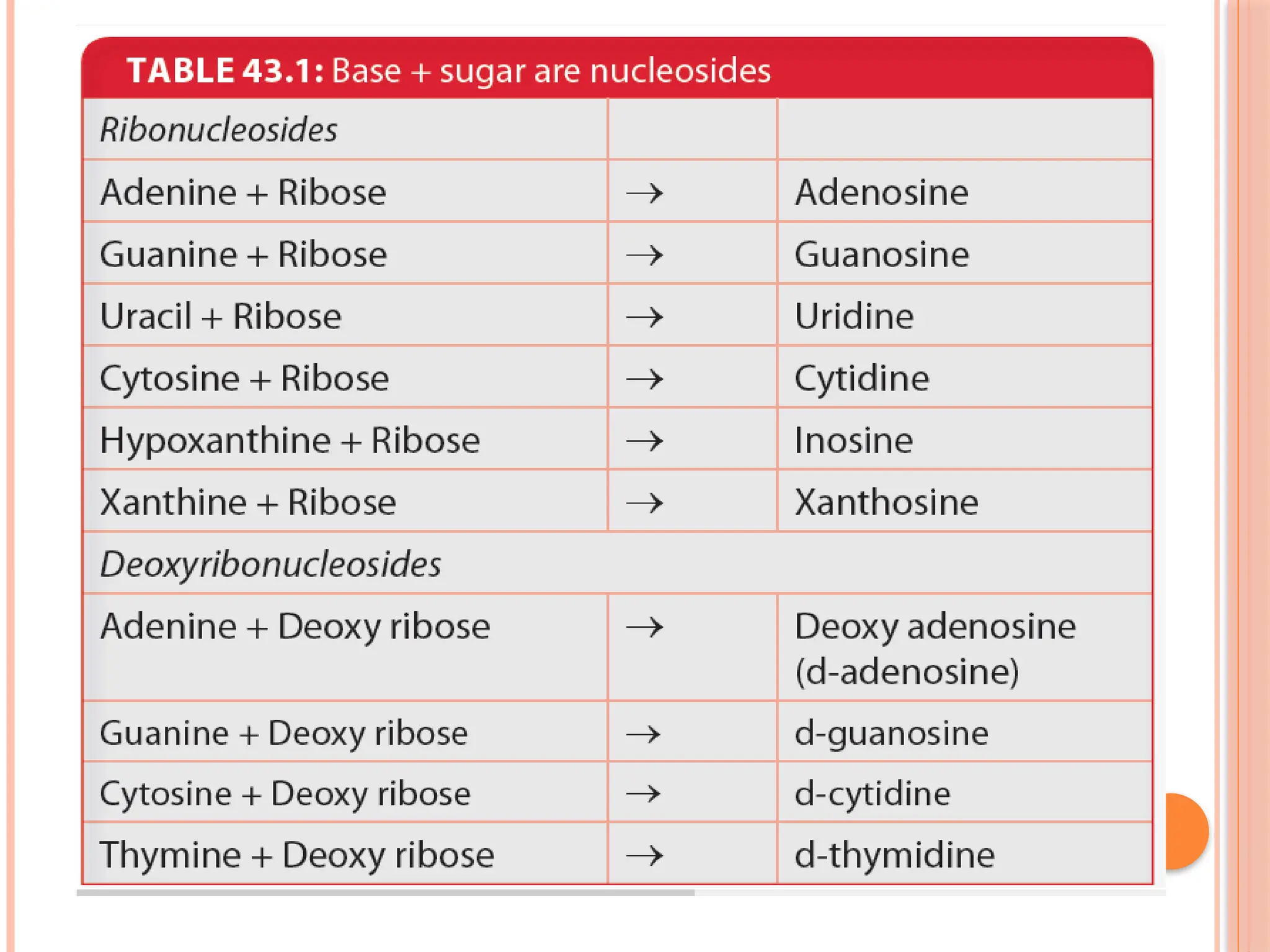
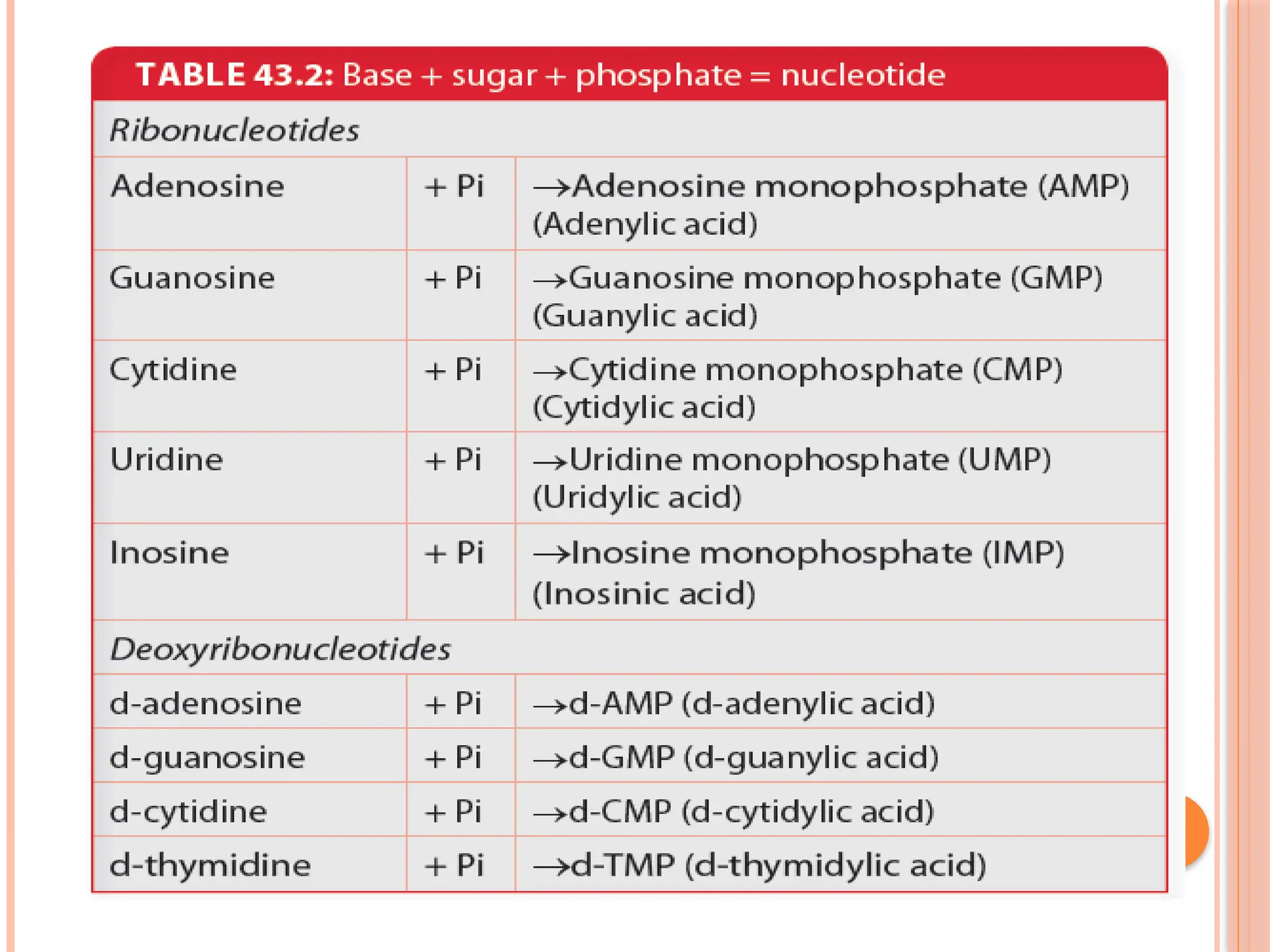
Nucleotide
Nucleoside
1’
2’
4’
The C is
named 1’-5’
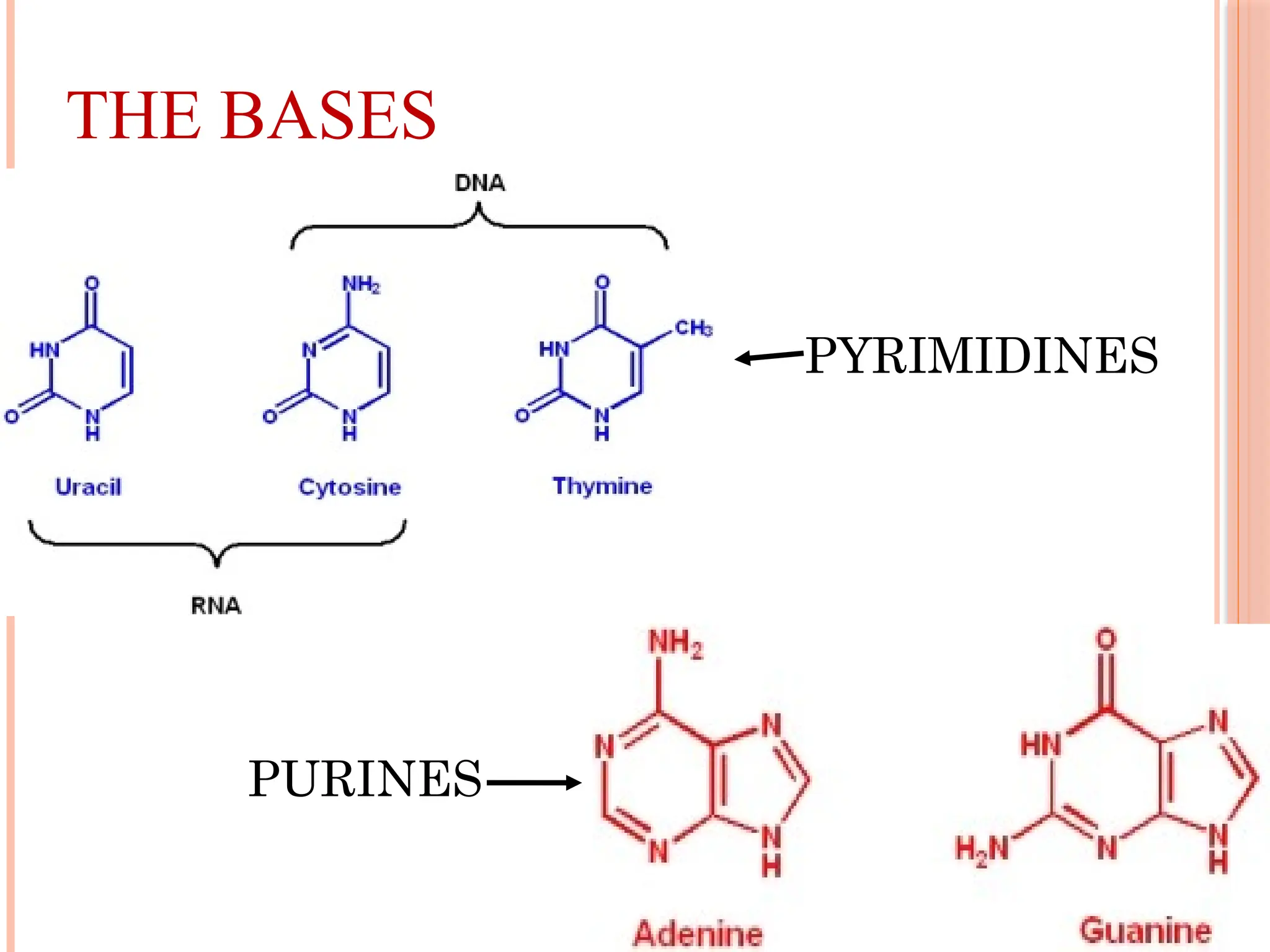
THE BASES
PURINES
PYRIMIDINES
NITROGENOUS BASES
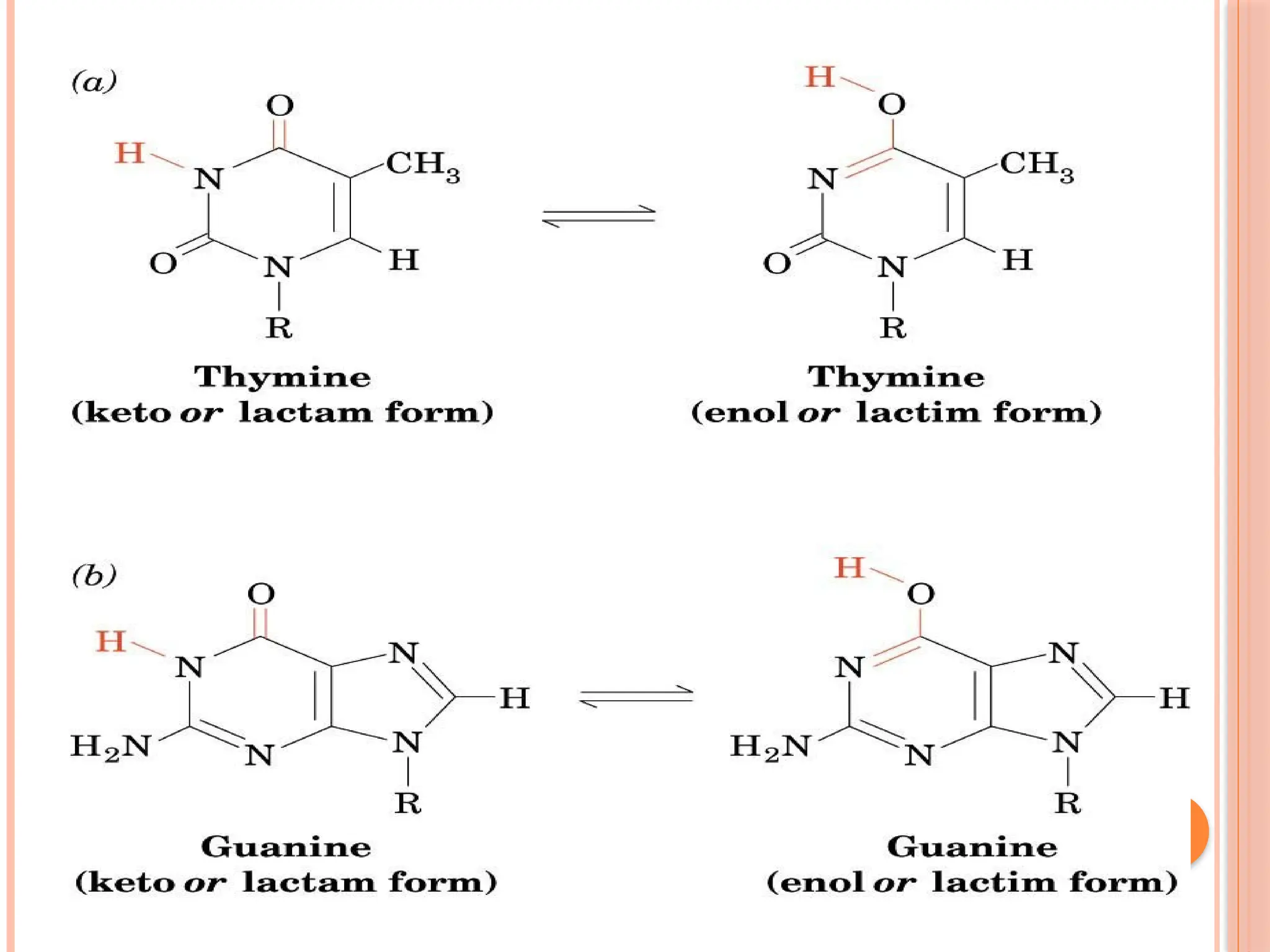
TAUTOMERISM
Tautomers are isomers of a compound
which differ only in the position of the
protons and electrons. ... A reaction which
involves simple proton transfer in an
intramolecular fashion is called
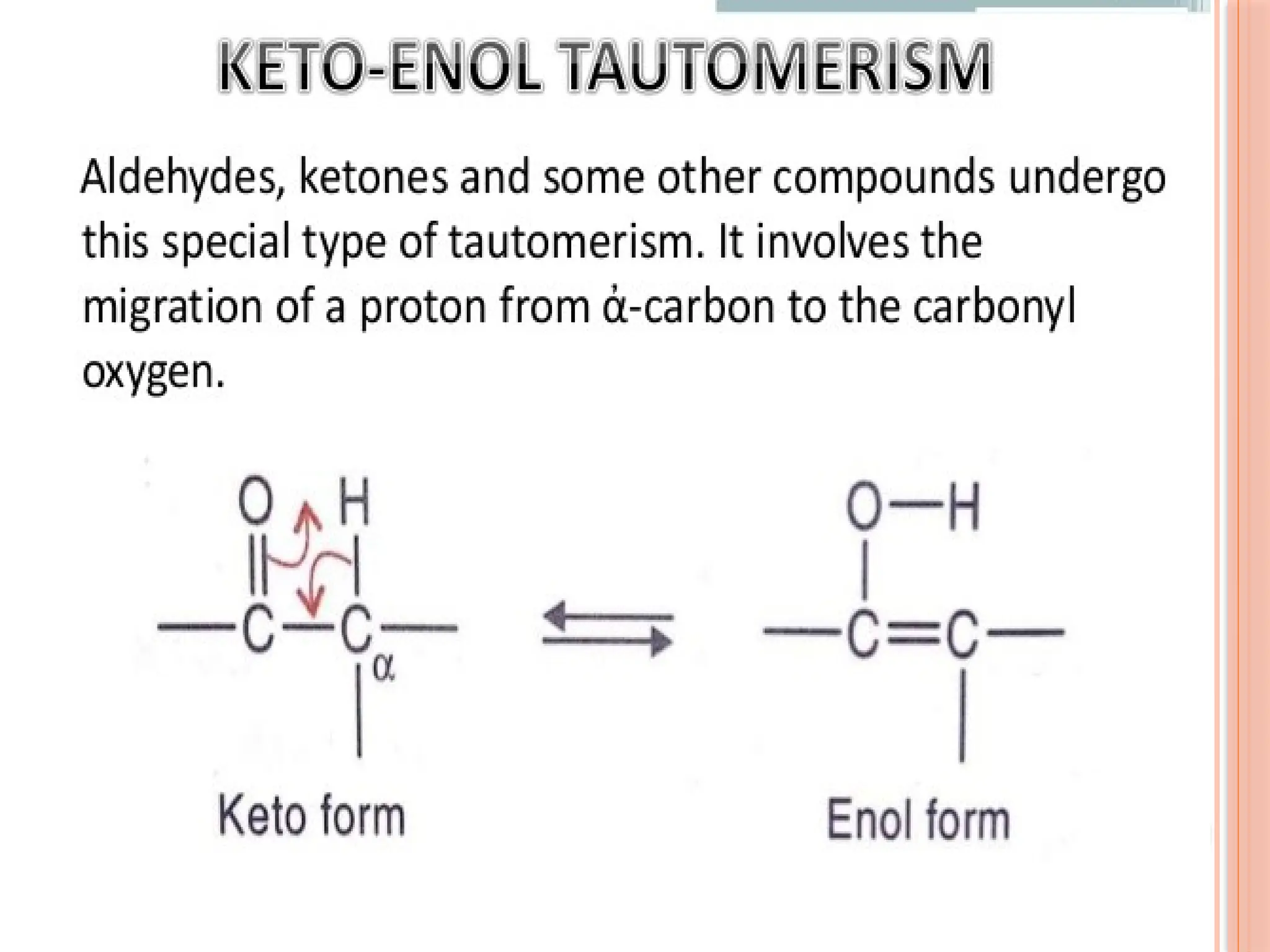
a tautomerism. Keto-
enol tautomerism is a very common
process, and is acid or base catalysed.
DNA STRUCTURE
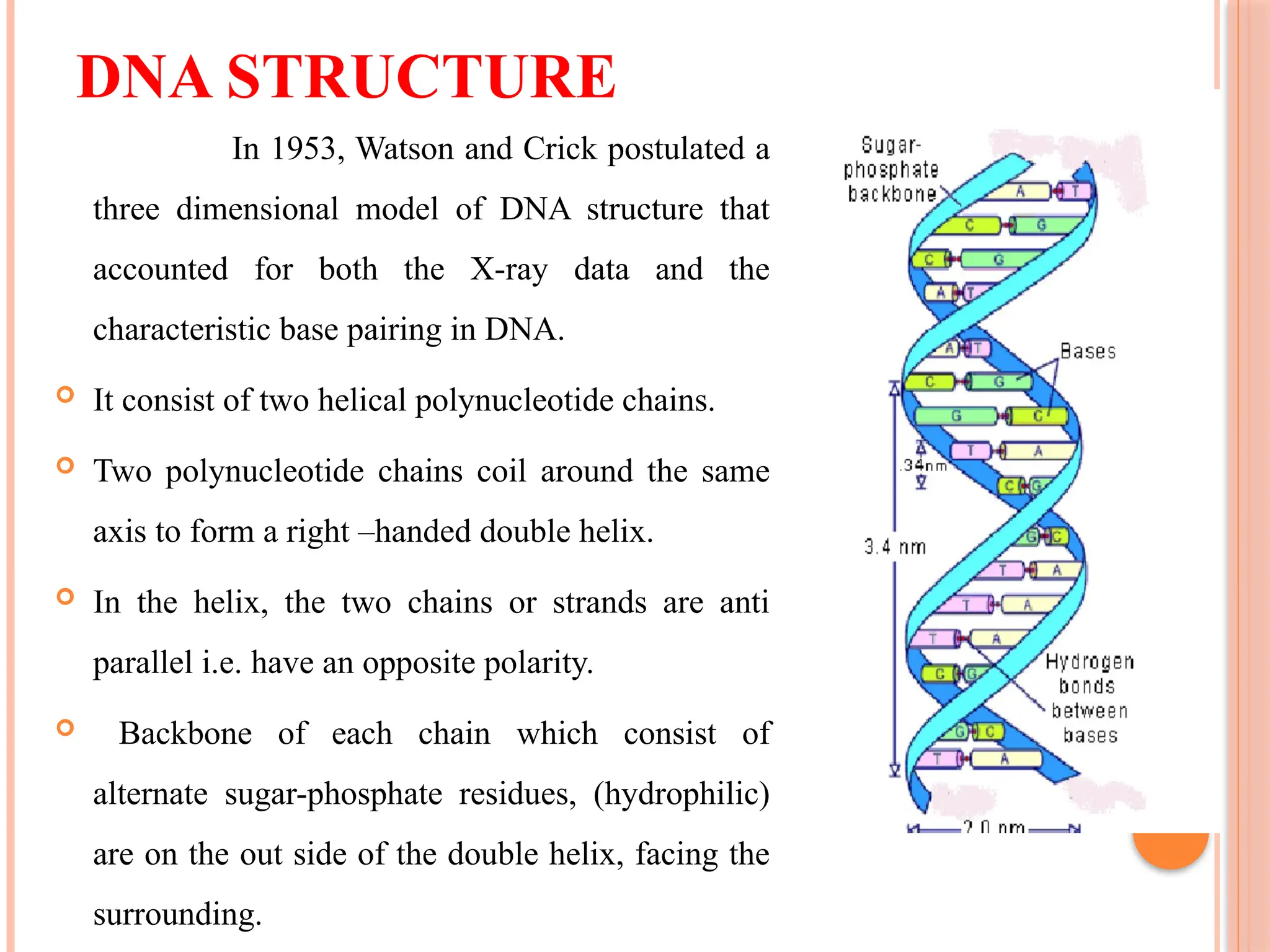
In 1953, Watson and Crick postulated a
three dimensional model of DNA structure that
accounted for both the X-ray data and the
characteristic base pairing in DNA.
 It consist of two helical polynucleotide chains.
 Two polynucleotide chains coil around the same
axis to form a right –handed double helix.
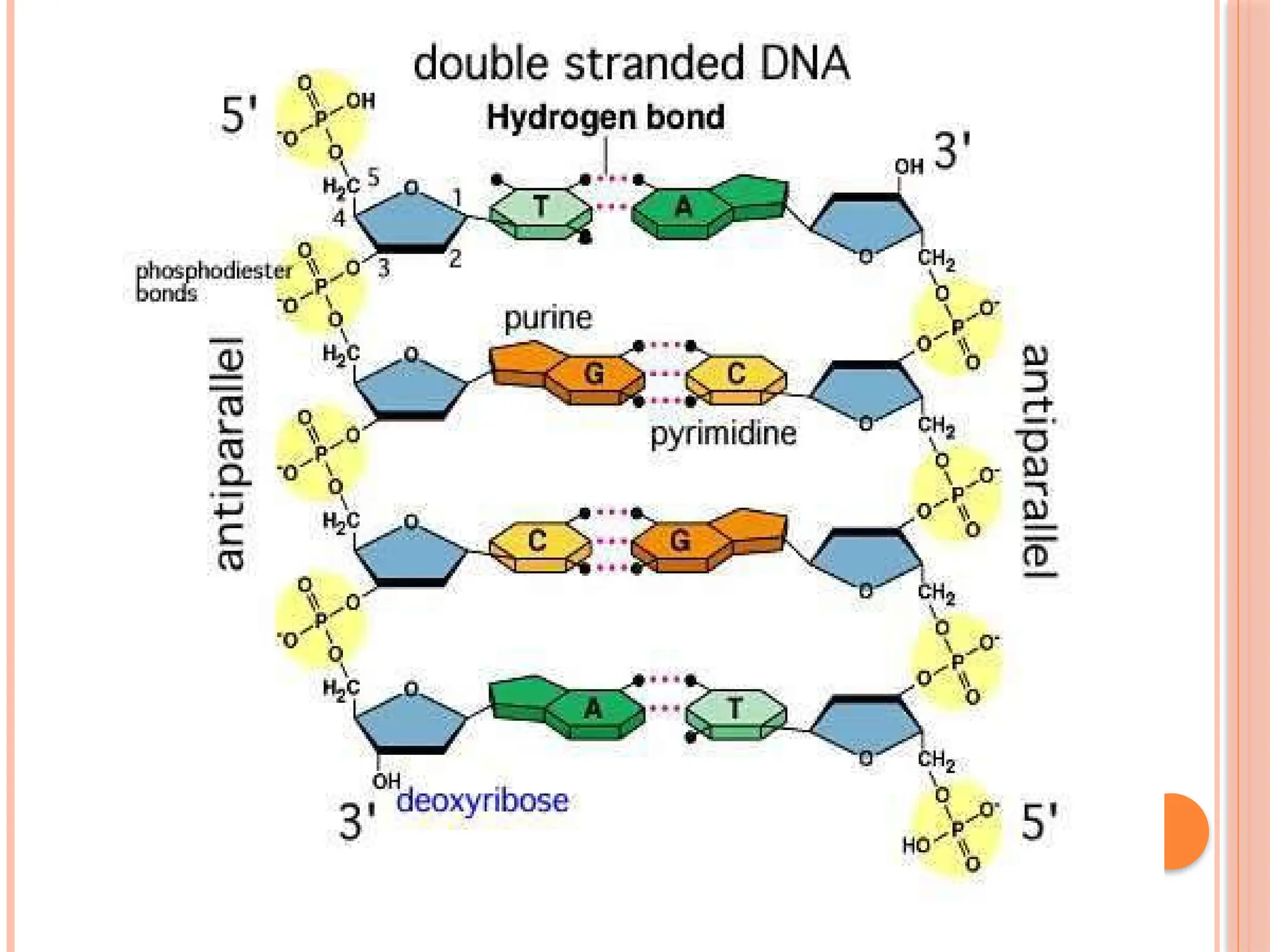
 In the helix, the two chains or strands are anti
parallel i.e. have an opposite polarity.
 Backbone of each chain which consist of
alternate sugar-phosphate residues, (hydrophilic)
are on the out side of the double helix, facing the
surrounding.
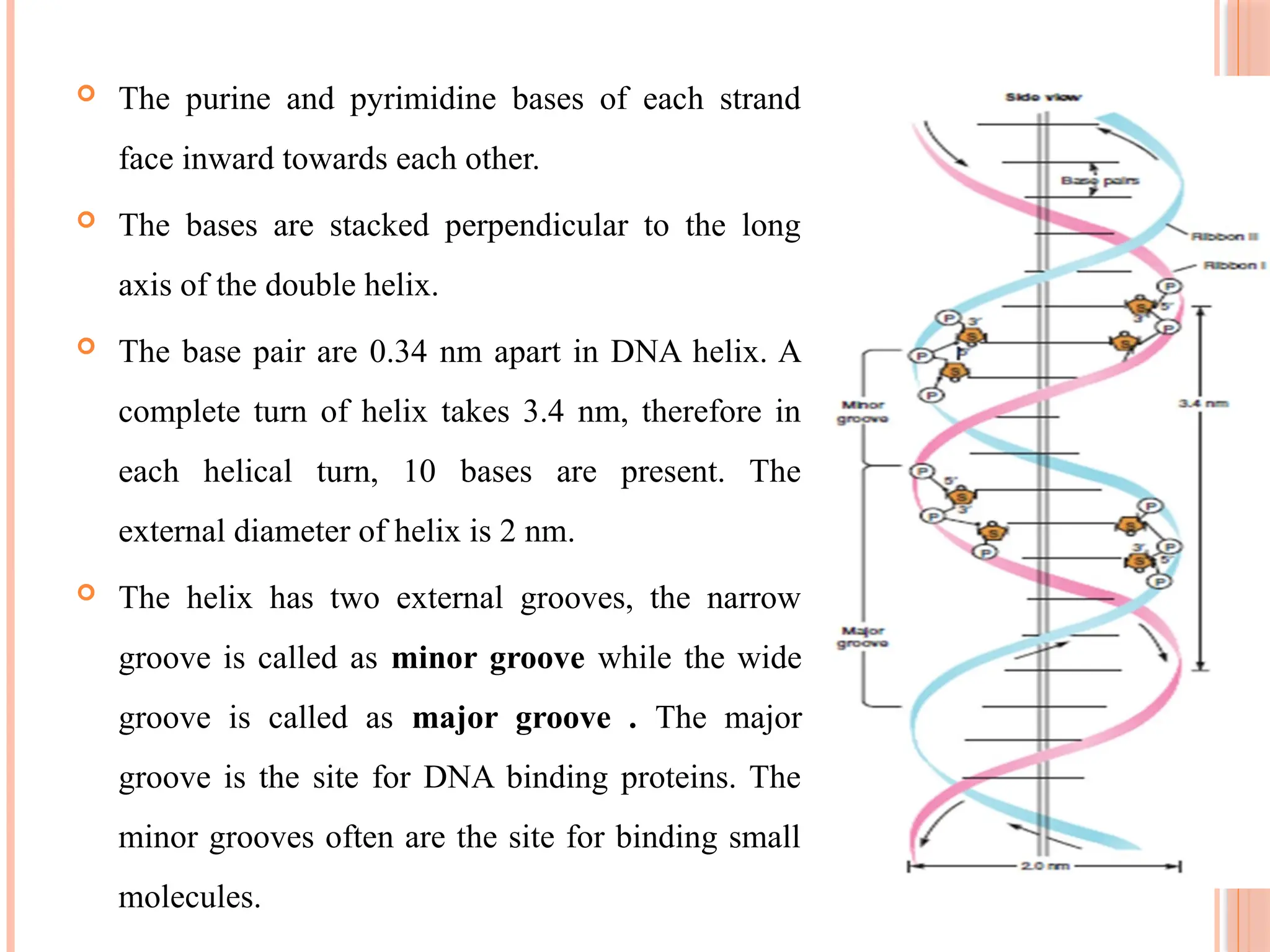
 The purine and pyrimidine bases of each strand
face inward towards each other.
 The bases are stacked perpendicular to the long
axis of the double helix.
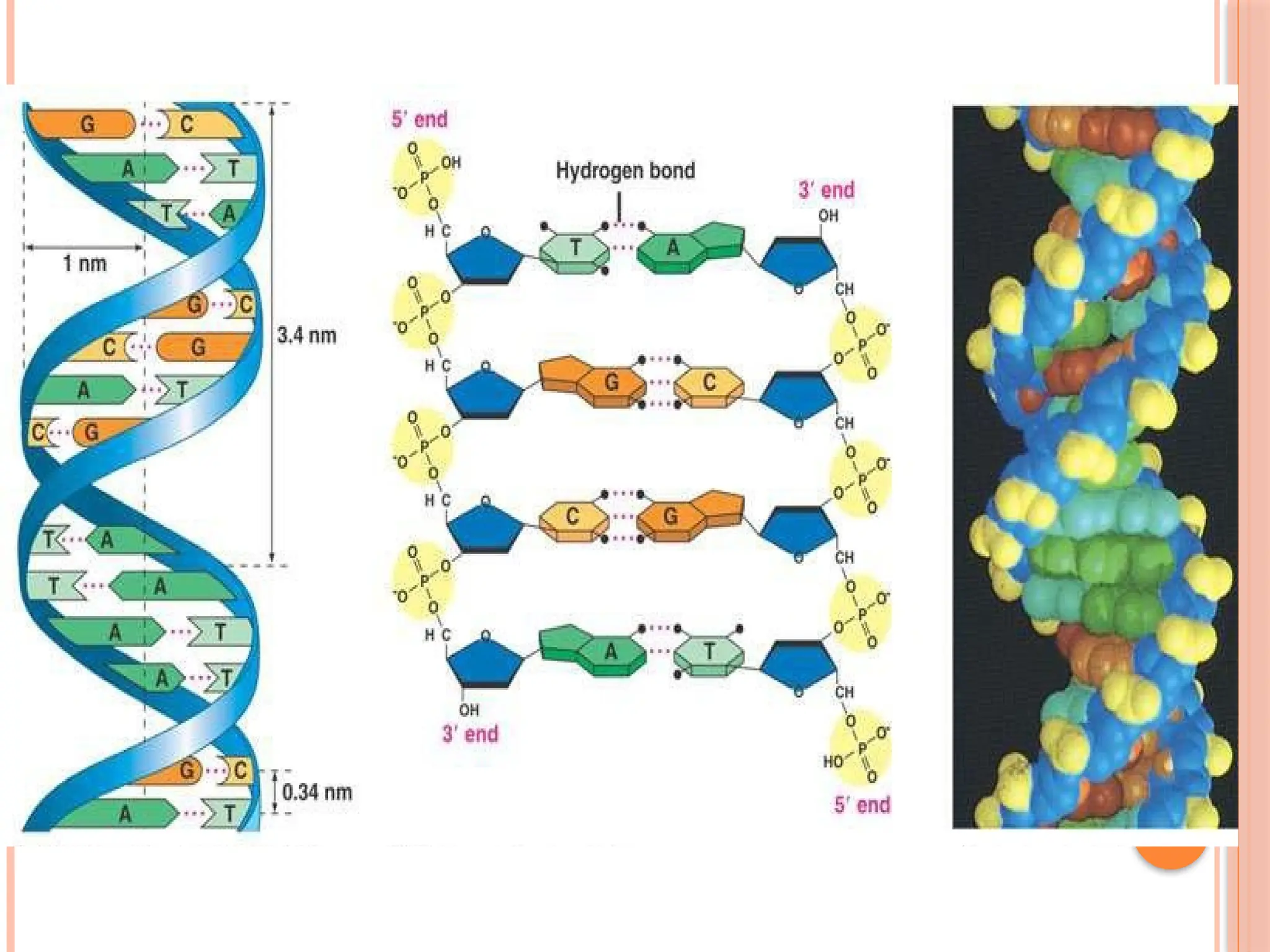
 The base pair are 0.34 nm apart in DNA helix. A
complete turn of helix takes 3.4 nm, therefore in
each helical turn, 10 bases are present. The
external diameter of helix is 2 nm.
 The helix has two external grooves, the narrow
groove is called as minor groove while the wide
groove is called as major groove . The major
groove is the site for DNA binding proteins. The
minor grooves often are the site for binding small
molecules.
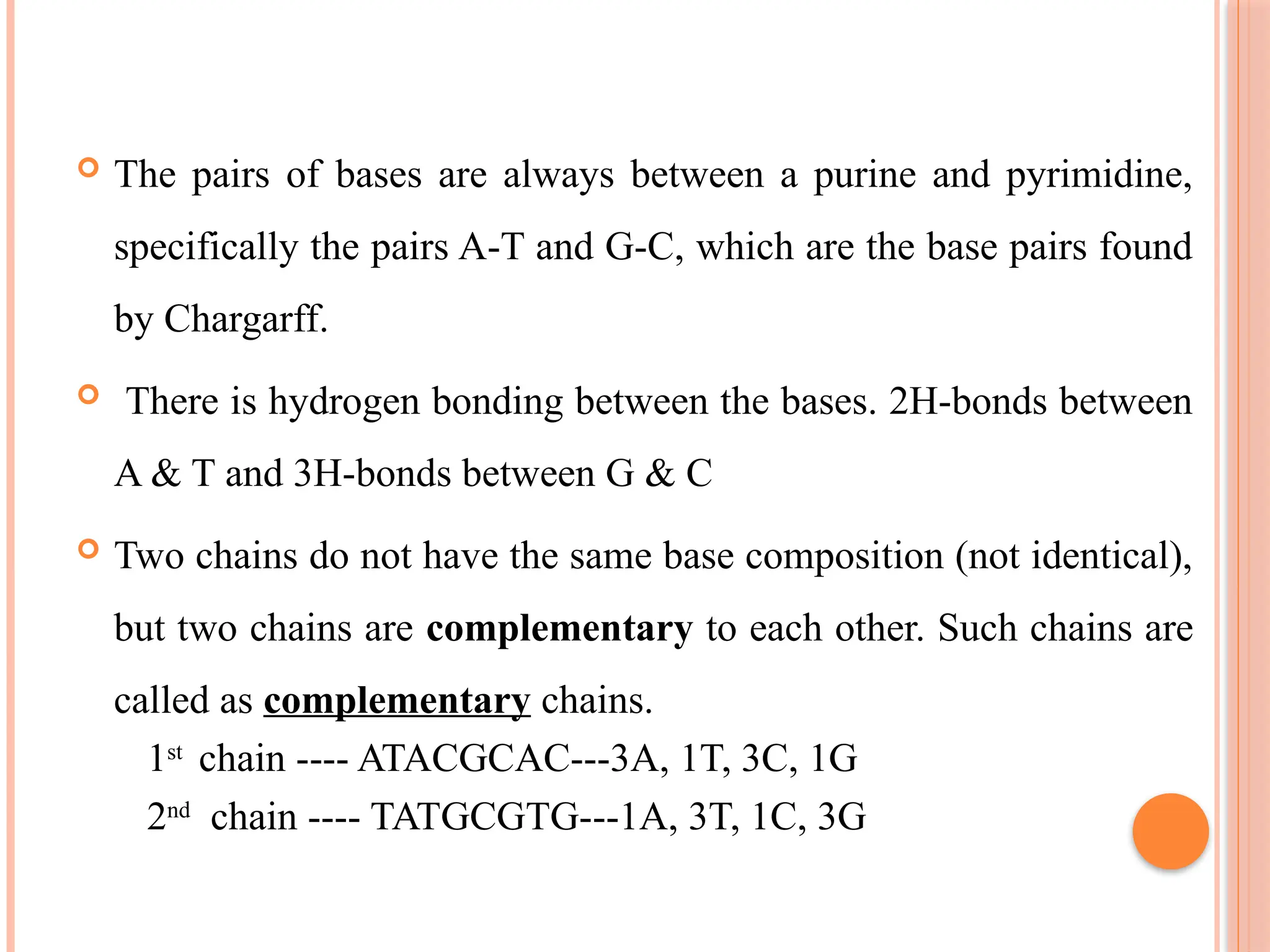
 The pairs of bases are always between a purine and pyrimidine,
specifically the pairs A-T and G-C, which are the base pairs found
by Chargarff.
 There is hydrogen bonding between the bases. 2H-bonds between
A & T and 3H-bonds between G & C
 Two chains do not have the same base composition (not identical),
but two chains are complementary to each other. Such chains are
called as complementary chains.
1st
chain ---- ATACGCAC---3A, 1T, 3C, 1G
2nd
chain ---- TATGCGTG---1A, 3T, 1C, 3G
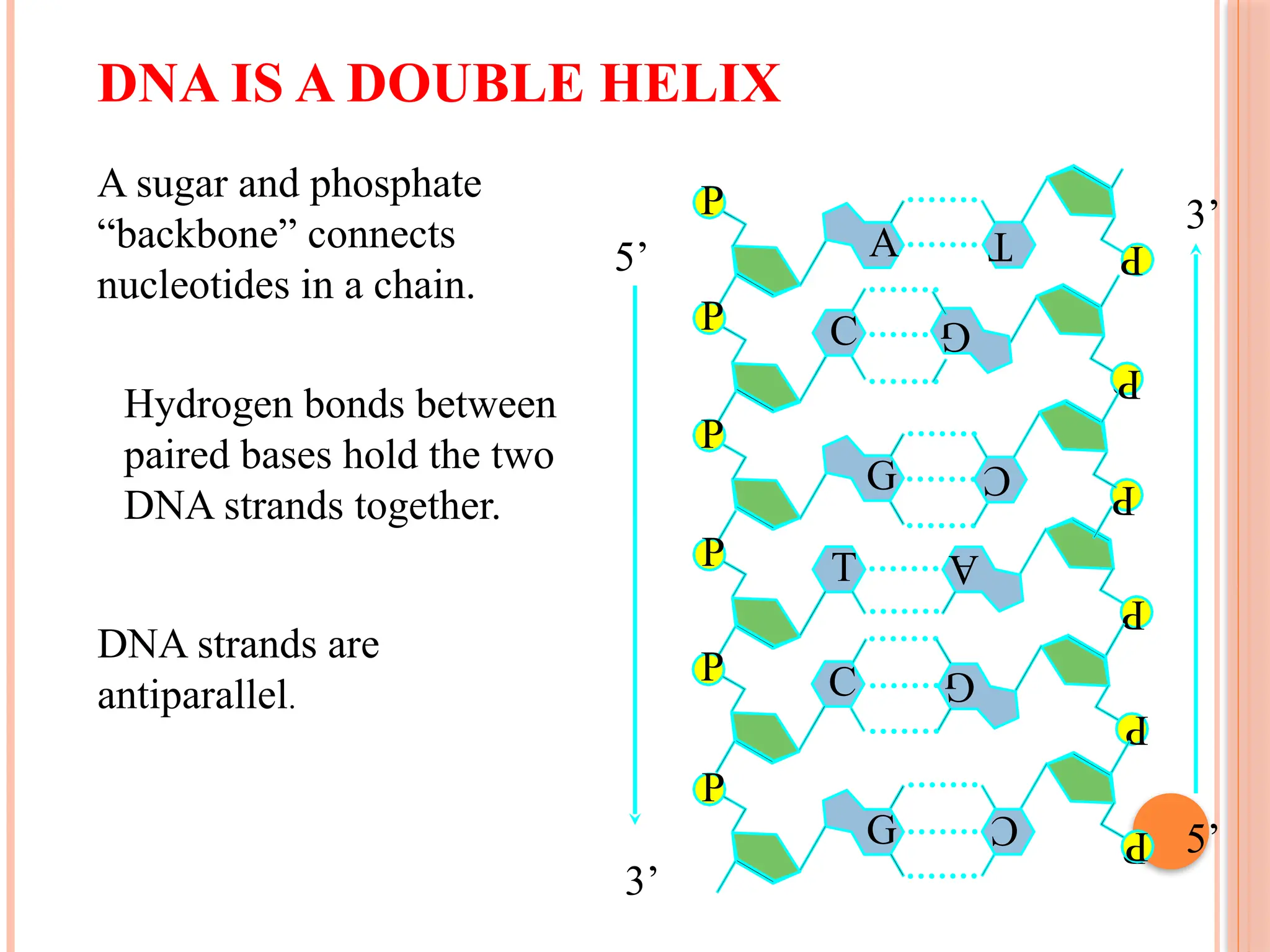
DNA IS A DOUBLE HELIX
P
A
P C
P
G
P T
P C
P
G
P
A
P
C
P
T
G
P
P
C P
A sugar and phosphate
“backbone” connects
nucleotides in a chain.
P
G
P
DNA strands are
antiparallel.
5’
3’
3’
5’
Hydrogen bonds between
paired bases hold the two
DNA strands together.
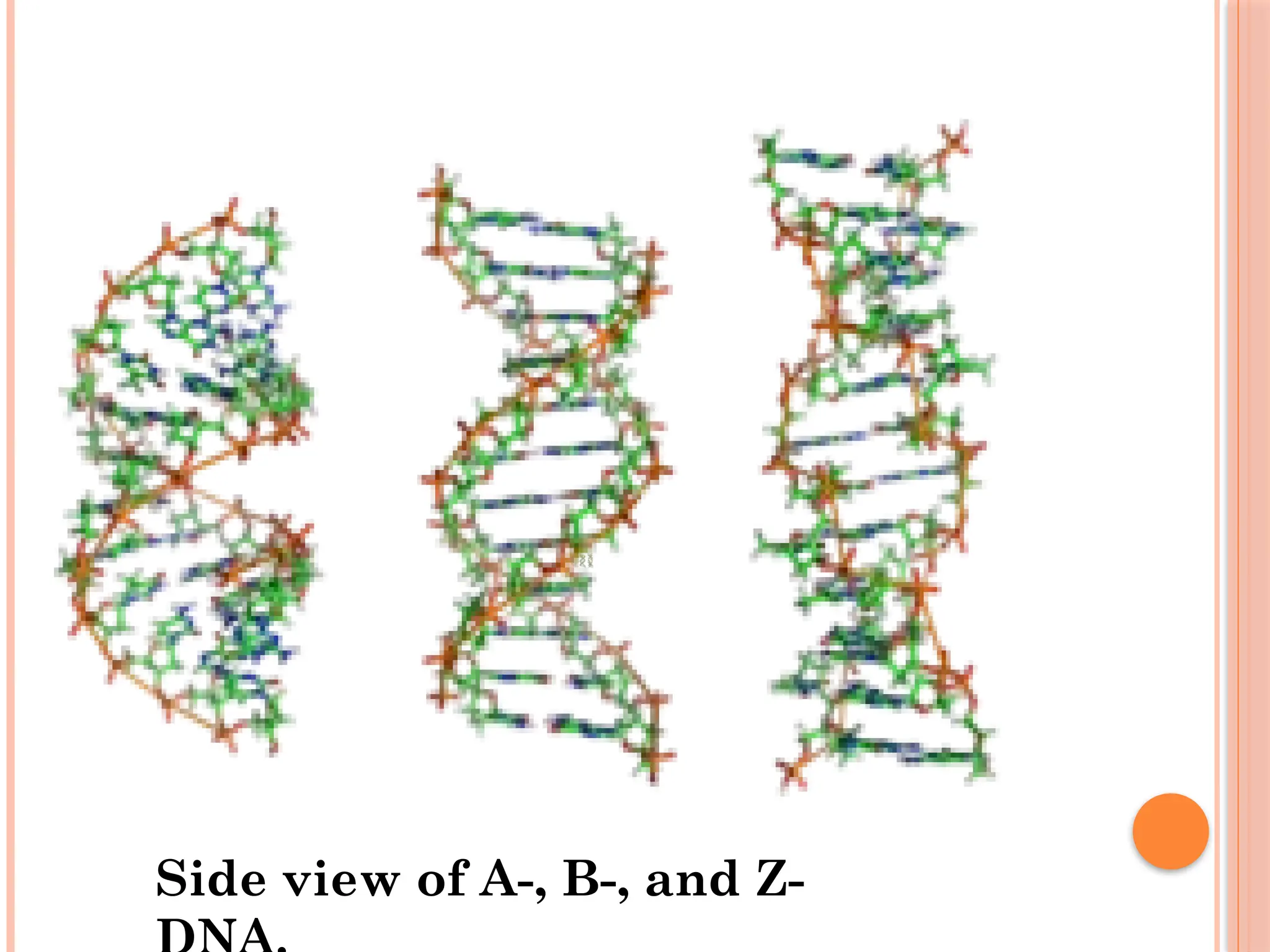
Side view of A-, B-, and Z-
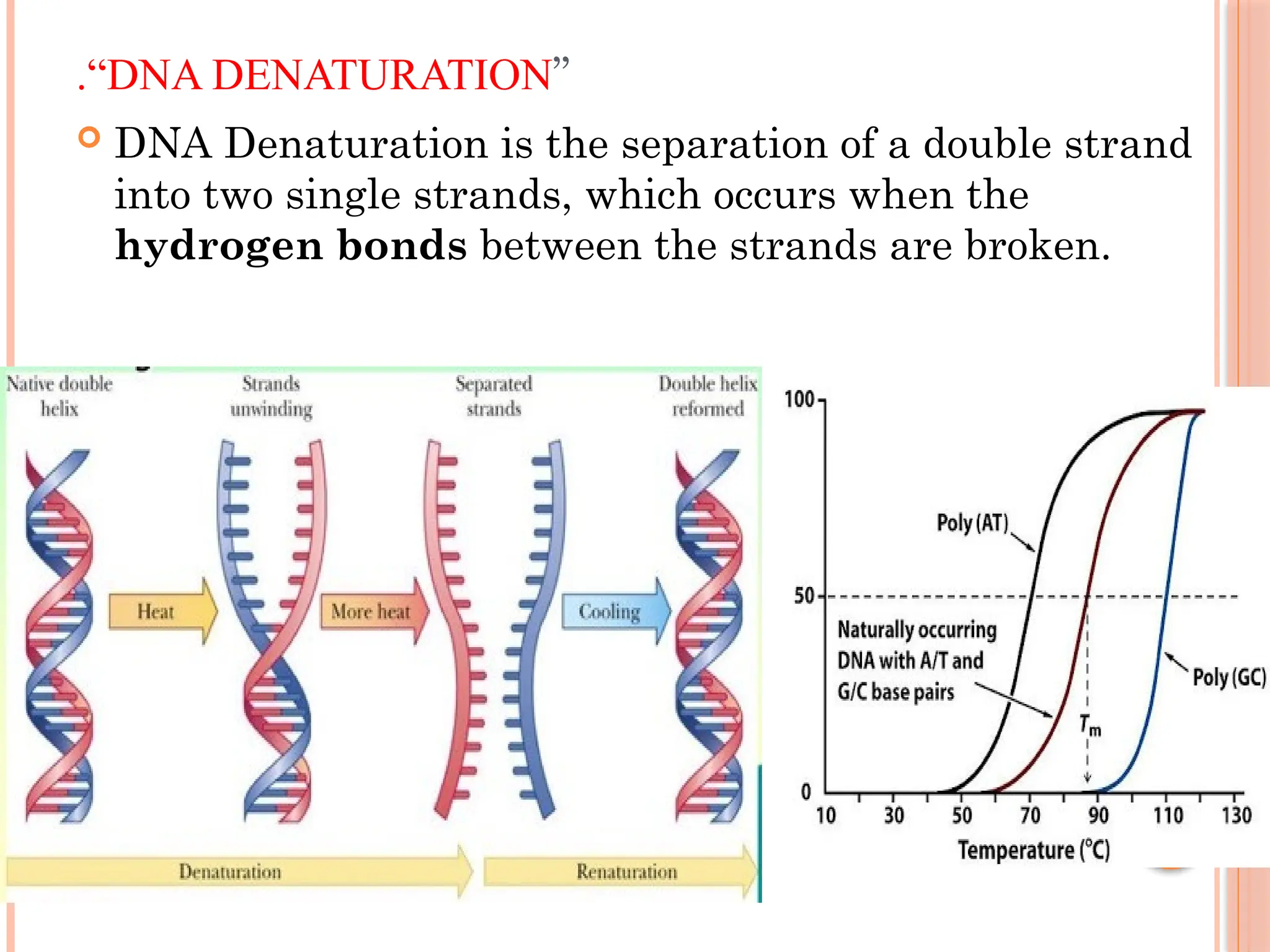
.“DNA DENATURATION”
 DNA Denaturation is the separation of a double strand
into two single strands, which occurs when the
hydrogen bonds between the strands are broken.
DNA Structure and its various components

DNA Structure and its various components

  • 4.
     Rosalind Franklinused X-ray crystallography to help visualize the structure of DNA
  • 5.
     James D.Watson and Francis Crick, co- originators of the doublehelix model.
  • 6.
    BRIEFING ON DNA… DNA is found in the cells of all living things.  DNA contains all of the genetic information that makes you who you are and every  individual organism has unique DNA like a finger print.
  • 7.
     It containedphosphorus in the form of phosphate  Deoxyribo nucleic acid  It is a molecule that encodes the genetic instructions.  Most DNA molecules are double-stranded helices.  Each molecule consists of two long biopolymers made of simpler units called nucleotides—each nucleotide is composed of a nucleobase recorded using the letters G, A, T, and C.  DNA is well-suited for biological information storage.
  • 8.
     DNA Standsfor “DeoxyriboNcleic Acid”.  Term DNA was given by Zaccharis  DNA is biopolymer consist of nucleotide as monomeric unit.  DNA is double helical structure in eukaryote and prokaryote, but in virus it may be double stranded or single stranded and presented as monopartite or multipartite.  In eukaryotes, DNA is presented in nucleus surrounded by nuclear membrane  In prokaryotes, DNA is presented in nucleoid region of Cytoplasm without nuclear membrane  In virus, DNA is presented in the core of virus surrounded by Protein layer (called as capsid).
  • 9.
    DNA Structure  DNAhas three main components  1. deoxyribose (a pentose sugar)  2. base (there are four different ones)  3. phosphate
  • 10.
  • 11.
    The Bases  Theyare divided into two groups  Pyrimidines and purines  Pyrimidines (made of one 6 member ring)  Thymine  Cytosine  Purines (made of a 6 member ring, fused to a 5 member ring)  Adenine  Guanine  The rings are not only made of carbon (specific formulas and structures are not required for IB)
  • 12.
    CHEMICAL STRUCTURE OFDNAAND RNA RNA DNA Nucleotide Nucleoside 1’ 2’ 4’ The C is named 1’-5’
  • 13.
  • 14.
  • 15.
    TAUTOMERISM Tautomers are isomersof a compound which differ only in the position of the protons and electrons. ... A reaction which involves simple proton transfer in an intramolecular fashion is called a tautomerism. Keto- enol tautomerism is a very common process, and is acid or base catalysed.
  • 20.
    DNA STRUCTURE In 1953,Watson and Crick postulated a three dimensional model of DNA structure that accounted for both the X-ray data and the characteristic base pairing in DNA.  It consist of two helical polynucleotide chains.  Two polynucleotide chains coil around the same axis to form a right –handed double helix.  In the helix, the two chains or strands are anti parallel i.e. have an opposite polarity.  Backbone of each chain which consist of alternate sugar-phosphate residues, (hydrophilic) are on the out side of the double helix, facing the surrounding.
  • 21.
     The purineand pyrimidine bases of each strand face inward towards each other.  The bases are stacked perpendicular to the long axis of the double helix.  The base pair are 0.34 nm apart in DNA helix. A complete turn of helix takes 3.4 nm, therefore in each helical turn, 10 bases are present. The external diameter of helix is 2 nm.  The helix has two external grooves, the narrow groove is called as minor groove while the wide groove is called as major groove . The major groove is the site for DNA binding proteins. The minor grooves often are the site for binding small molecules.
  • 22.
     The pairsof bases are always between a purine and pyrimidine, specifically the pairs A-T and G-C, which are the base pairs found by Chargarff.  There is hydrogen bonding between the bases. 2H-bonds between A & T and 3H-bonds between G & C  Two chains do not have the same base composition (not identical), but two chains are complementary to each other. Such chains are called as complementary chains. 1st chain ---- ATACGCAC---3A, 1T, 3C, 1G 2nd chain ---- TATGCGTG---1A, 3T, 1C, 3G
  • 23.
    DNA IS ADOUBLE HELIX P A P C P G P T P C P G P A P C P T G P P C P A sugar and phosphate “backbone” connects nucleotides in a chain. P G P DNA strands are antiparallel. 5’ 3’ 3’ 5’ Hydrogen bonds between paired bases hold the two DNA strands together.
  • 27.
    Side view ofA-, B-, and Z-
  • 28.
    .“DNA DENATURATION”  DNADenaturation is the separation of a double strand into two single strands, which occurs when the hydrogen bonds between the strands are broken.

Editor's Notes

  • #10 A Nucleotide consists of : a nitrogenous base: purine (Adenine (A) or Guanine (G)) or pyrimidine (Cytosine (C) or Thymine (T) (or Uracil (U)in RNA)). a sugar : Deoxyribose (DNA) or Ribose (RNA). a phosphate group A sugar and a base form a Nucleoside. A Nucleotide is a phosphorylated nucleoside. Inter-nucleotide linkages are formed by a phosphodiester bond between a 5'-phosphate group and the 3'-hydroxyl group of the next nucleotide sugar. The nucleotide sequence encodes the information required for constructing proteins.