DNA binding domain
with Helix turn Helix
structures
Naveed asif (MS)
Biochemistry
COMSATS-Islamabad
Pakistan
2013-14
It’s a DOMAIN that binds to DNA
•The proteins that Bind to DNA consist of
fallowing parts
1-Ligend binding Domain
3-Activation or repression
Domain (C-terminal)
2-DNA binding Domain
(N-terminal)
•Presentation constitutes
1-Structure of Helix turns Helix
Domain
2-Its interaction with DNA
3-Its Functions
a-In Activators
b-In Repressors
•1-Sturcture of Helix turn Helix
Domain
Secondary structure (Helix) + Secondarystructure(Helix)

Supersecondary structure (motif)
Mofit + Motif
Domain
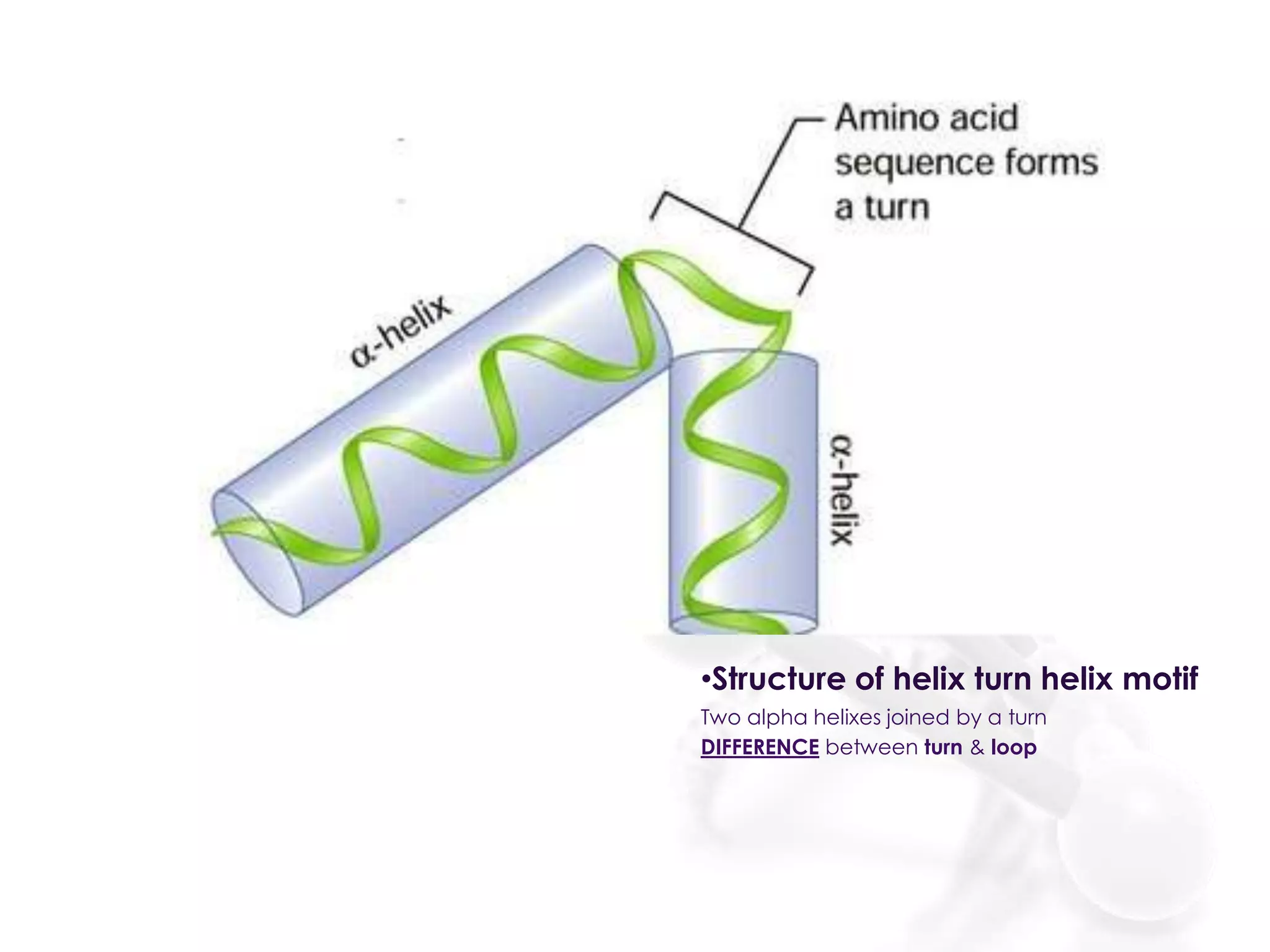
•Structure of helix turn helix motif
Two alpha helixes joined by a turn
DIFFERENCE between turn & loop
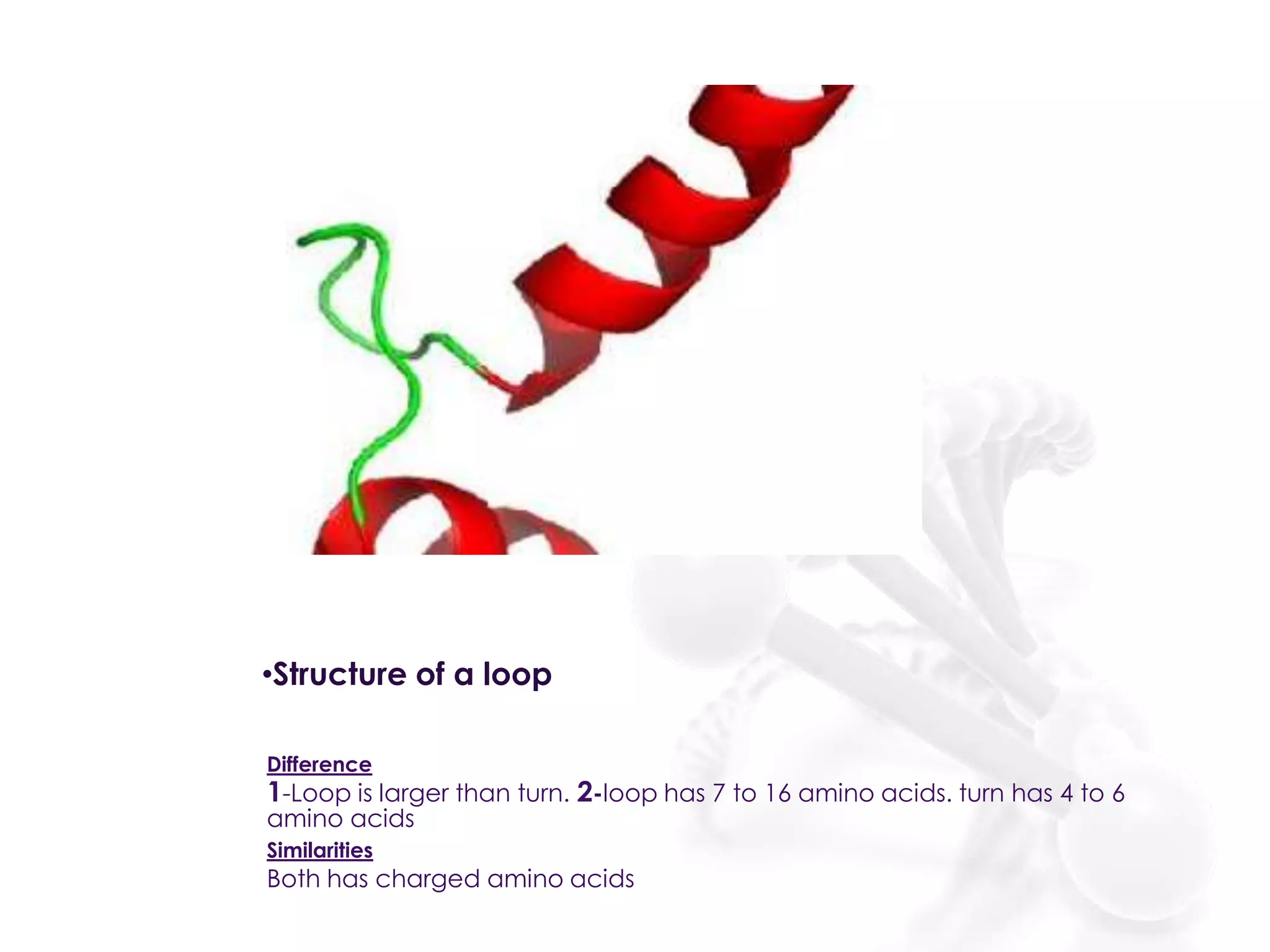
•Structure of a loop
Difference

1-Loop is larger than turn. 2-loop has 7 to 16 amino acids. turn has 4 to 6
amino acids
Similarities

Both has charged amino acids
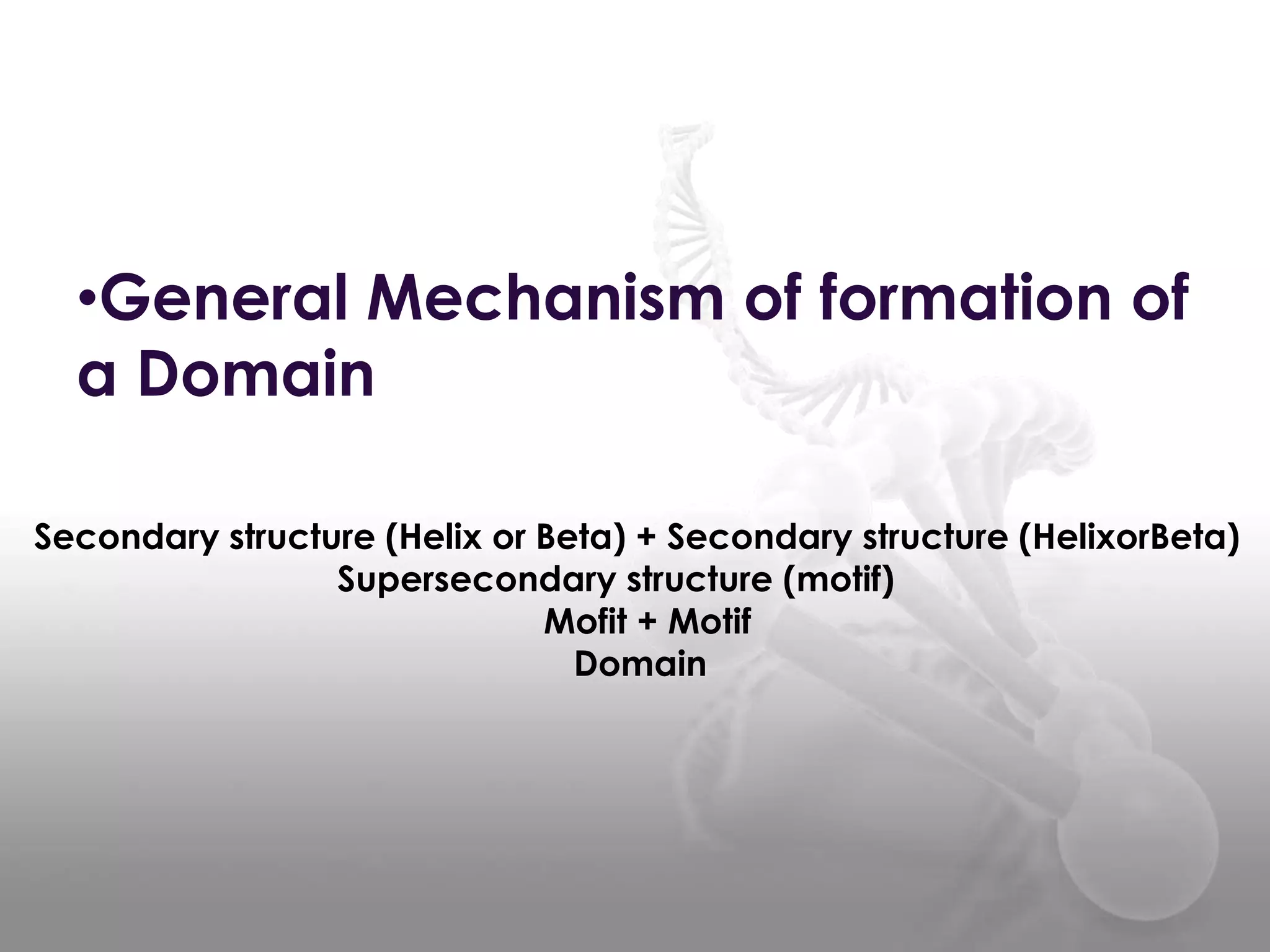
•General Mechanism of formation of
a Domain
Secondary structure (Helix or Beta) + Secondary structure (HelixorBeta)
Supersecondary structure (motif)
Mofit + Motif
Domain
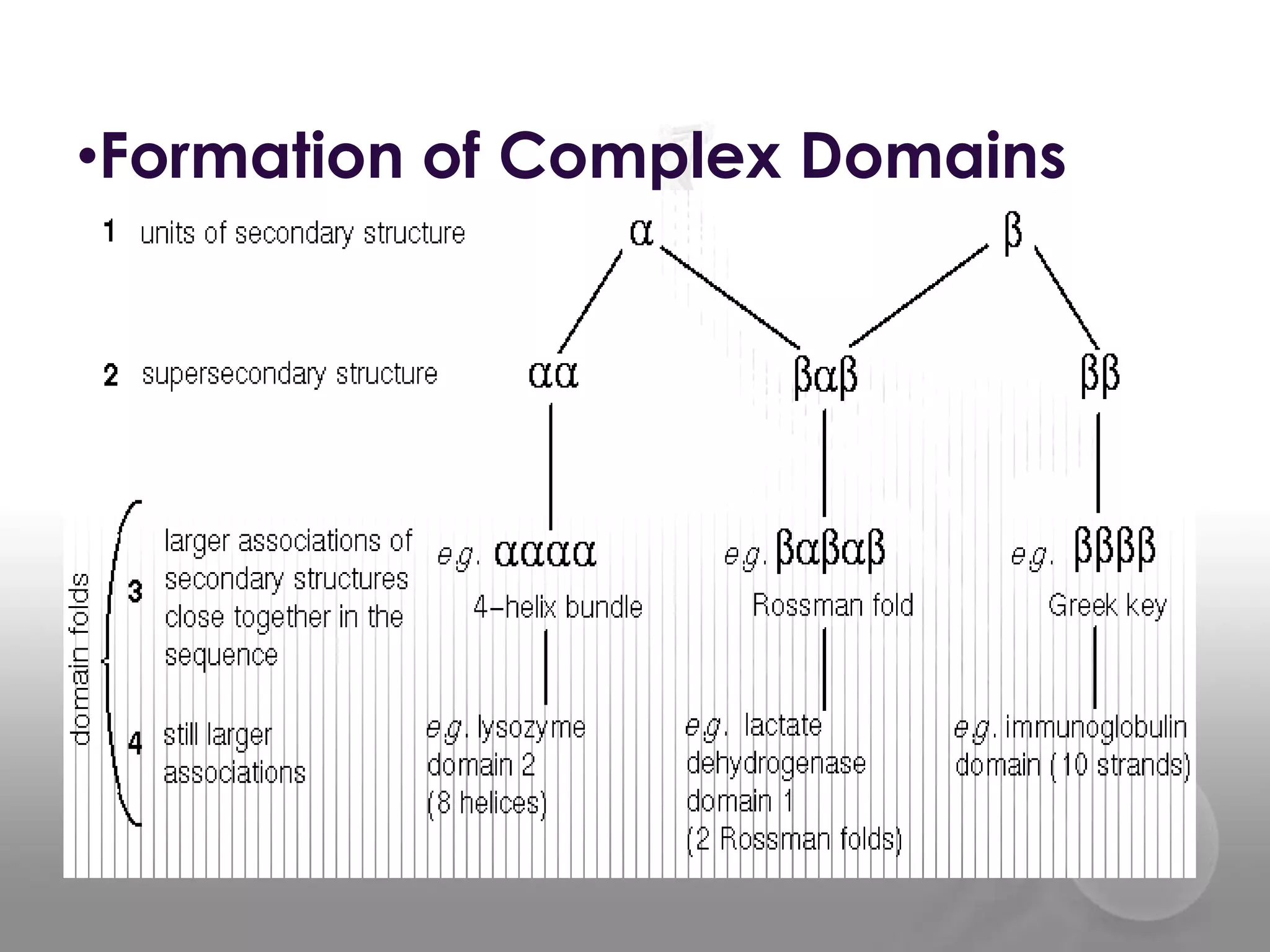
•Formation of Complex Domains
•BACK to helix turn helix motif
e.g. HOMEO-DOMAIN
They are formed by homeoboxes.
Homeoboxes are conserved sequences of
180 base pairs; the proteins formed by these
boxes give rise to domains that are called
homeodomains
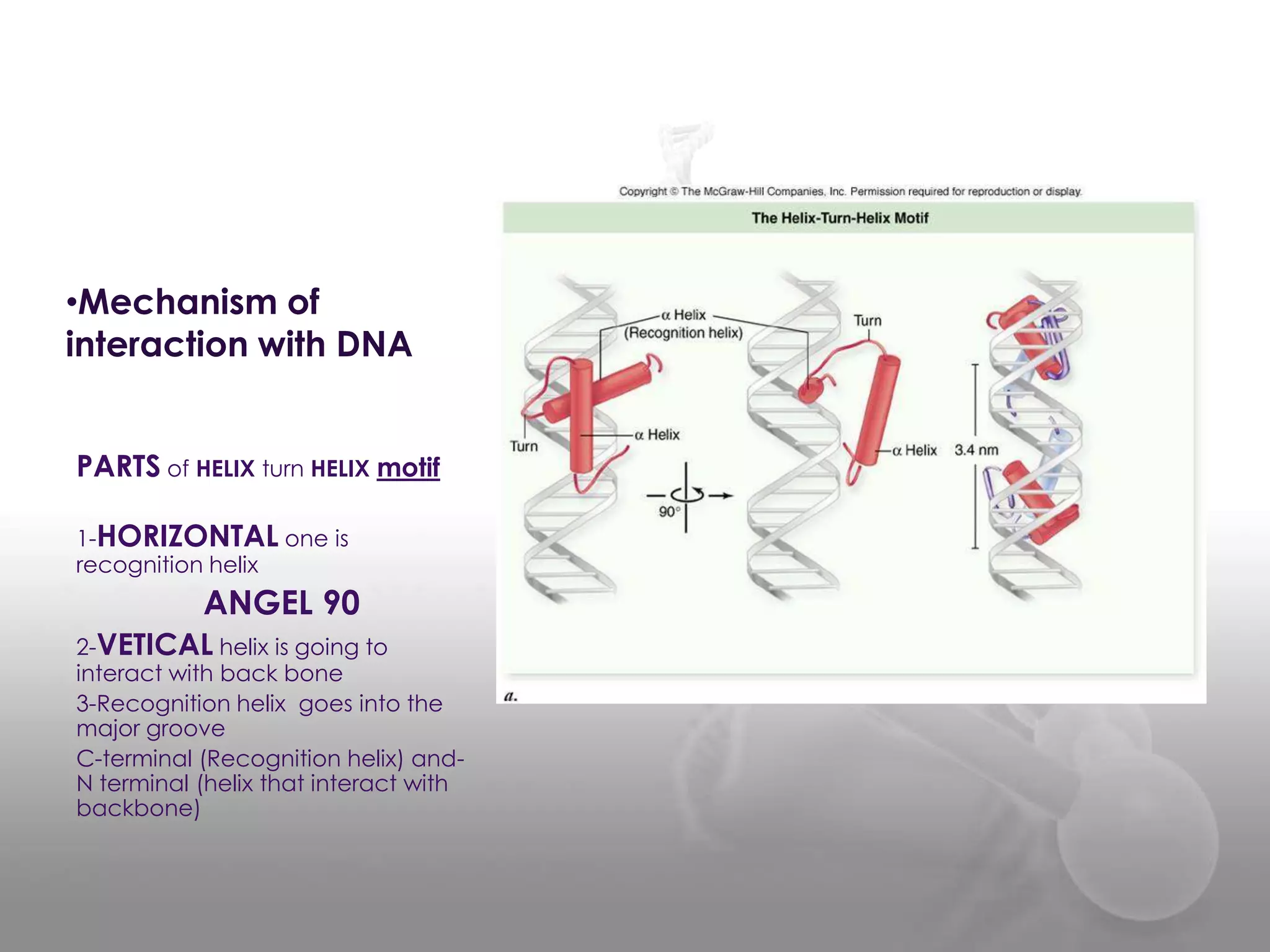
•Mechanism of
interaction with DNA
PARTS of HELIX turn HELIX motif
1-HORIZONTAL one is
recognition helix

ANGEL 90
2-VETICAL helix is going to
interact with back bone
3-Recognition helix goes into the
major groove
C-terminal (Recognition helix) andN terminal (helix that interact with
backbone)
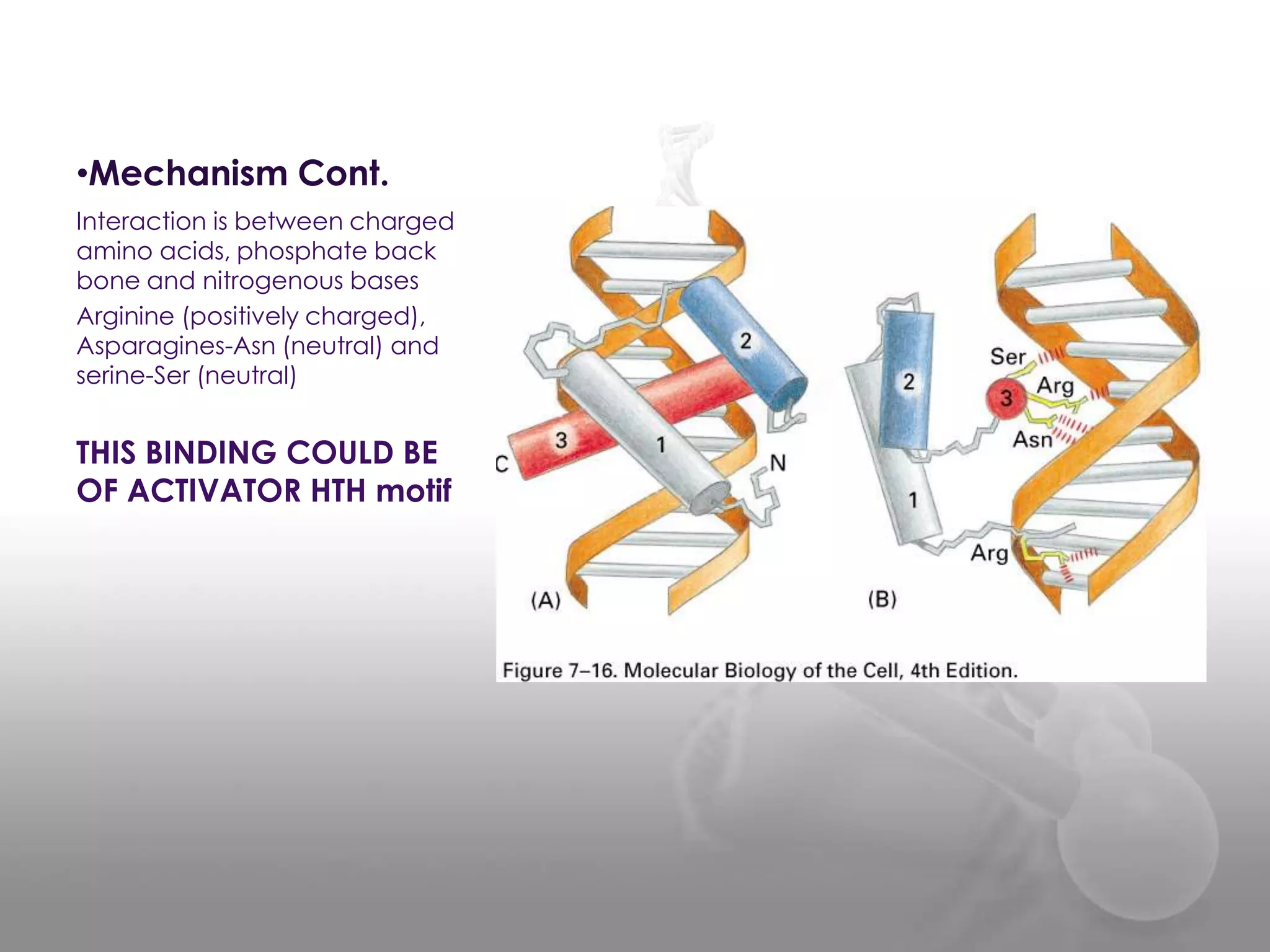
•Mechanism Cont.
Interaction is between charged
amino acids, phosphate back
bone and nitrogenous bases
Arginine (positively charged),
Asparagines-Asn (neutral) and
serine-Ser (neutral)

THIS BINDING COULD BE
OF ACTIVATOR HTH motif
•Mechanism cont.
HTH-Motif(Charge on Amino Acids)
CHARGE on the AMINO ACID plays the key role
Neutral, (--) and (+)
1-This untimely effect the polypeptide polarity
2-this also gives a sequence specific binding between DNA &
Protein
And can be modified
1-Phosphorilation
2-Aceylation
3-methylation
These modifications are very important in activator and
repressor proteins
•Functions

Transcription Repression & Activation
1-Repression function of helix turn helix motif
2-Activation function of helix turn helix motif
e.g.:- Lac repressor &CAP(catabolite activator protein)
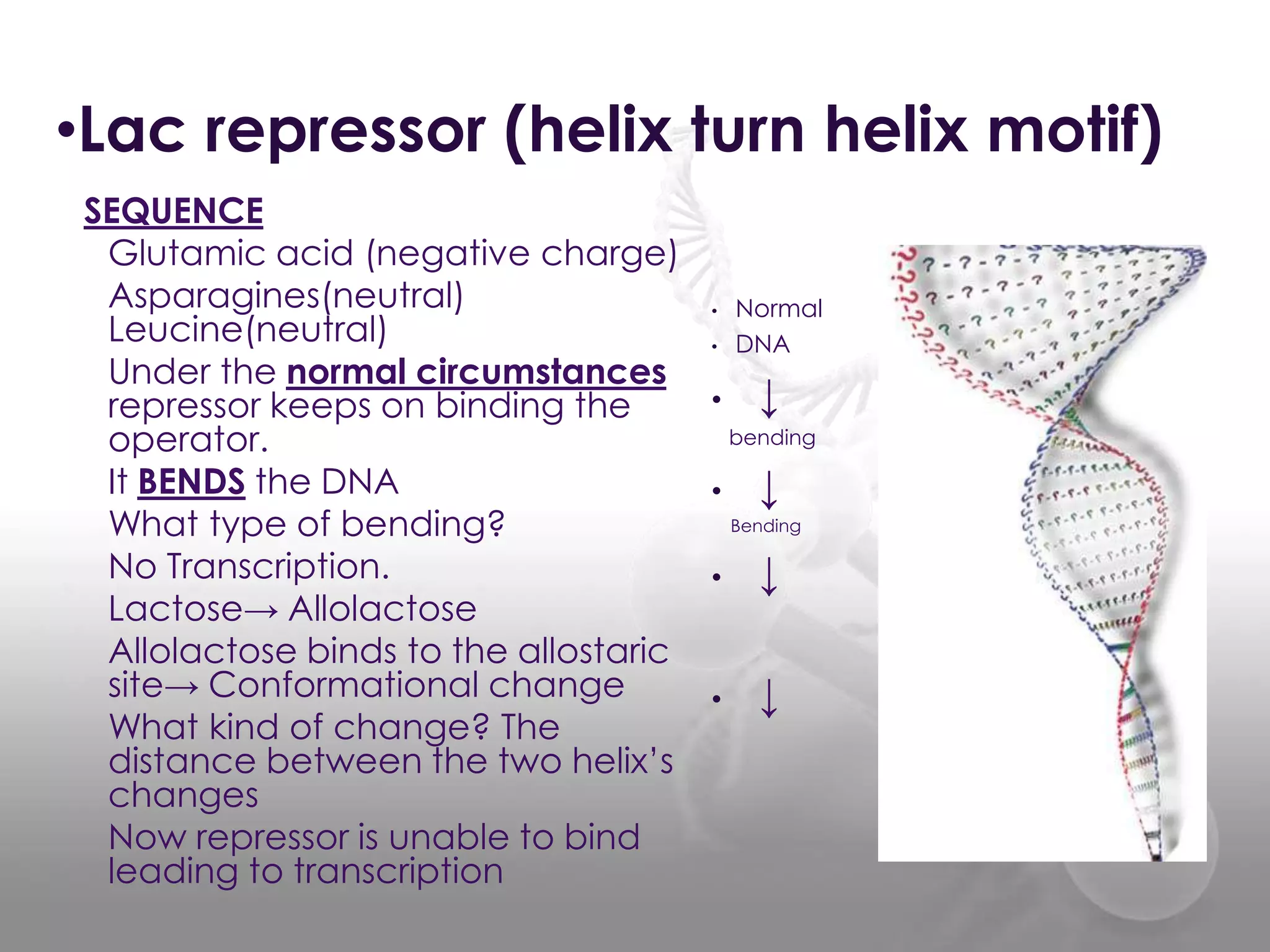
•Lac repressor (helix turn helix motif)
SEQUENCE
Glutamic acid (negative charge)
Asparagines(neutral)
Leucine(neutral)
Under the normal circumstances
repressor keeps on binding the
operator.
It BENDS the DNA
What type of bending?
No Transcription.
Lactose→ Allolactose
Allolactose binds to the allostaric
site→ Conformational change
What kind of change? The
distance between the two helix’s
changes
Now repressor is unable to bind
leading to transcription

•
•

•

Normal
DNA

↓
bending

•

↓
Bending

•

↓

•

↓
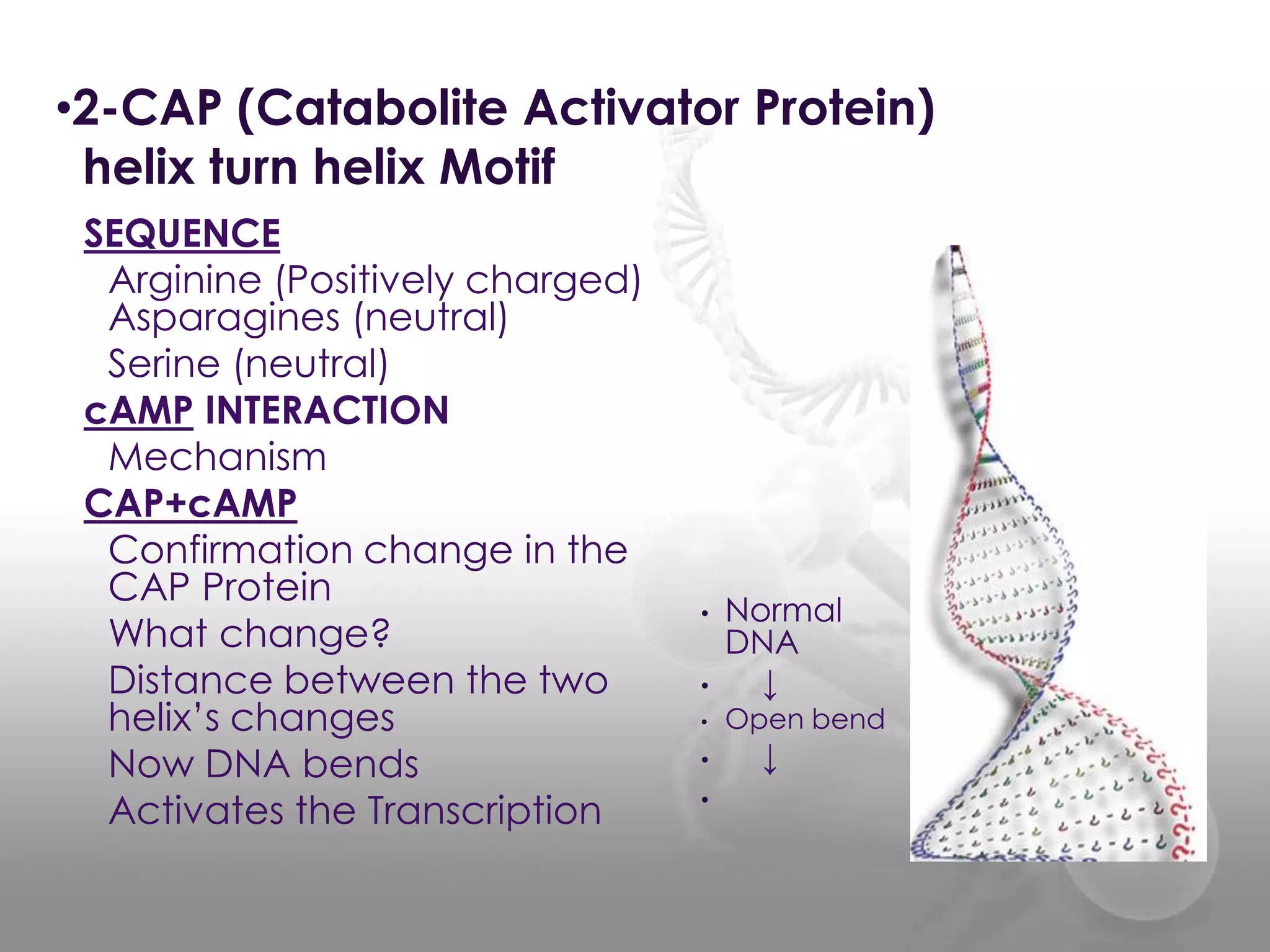
•2-CAP (Catabolite Activator Protein)
helix turn helix Motif
SEQUENCE
Arginine (Positively charged)
Asparagines (neutral)
Serine (neutral)
cAMP INTERACTION
Mechanism
CAP+cAMP
Confirmation change in the
CAP Protein
What change?
Distance between the two
helix’s changes
Now DNA bends
Activates the Transcription

•
•
•

•
•

Normal
DNA
↓

Open bend

↓
Thanks for your
PATEINCE
References
Molecular genetics lectures, Dr. Saeed
COMSATS-Islamabad, Pakistan
Biosciences resource; Massey University, New Zealand
Ishaque P.K , Pondicherry University

DNA binding Domains

  • 1.
    DNA binding domain withHelix turn Helix structures Naveed asif (MS) Biochemistry COMSATS-Islamabad Pakistan 2013-14 It’s a DOMAIN that binds to DNA
  • 2.
    •The proteins thatBind to DNA consist of fallowing parts 1-Ligend binding Domain 3-Activation or repression Domain (C-terminal) 2-DNA binding Domain (N-terminal)
  • 3.
    •Presentation constitutes 1-Structure ofHelix turns Helix Domain 2-Its interaction with DNA 3-Its Functions a-In Activators b-In Repressors
  • 4.
    •1-Sturcture of Helixturn Helix Domain Secondary structure (Helix) + Secondarystructure(Helix) Supersecondary structure (motif) Mofit + Motif Domain
  • 5.
    •Structure of helixturn helix motif Two alpha helixes joined by a turn DIFFERENCE between turn & loop
  • 6.
    •Structure of aloop Difference 1-Loop is larger than turn. 2-loop has 7 to 16 amino acids. turn has 4 to 6 amino acids Similarities Both has charged amino acids
  • 7.
    •General Mechanism offormation of a Domain Secondary structure (Helix or Beta) + Secondary structure (HelixorBeta) Supersecondary structure (motif) Mofit + Motif Domain
  • 8.
  • 9.
    •BACK to helixturn helix motif e.g. HOMEO-DOMAIN They are formed by homeoboxes. Homeoboxes are conserved sequences of 180 base pairs; the proteins formed by these boxes give rise to domains that are called homeodomains
  • 10.
    •Mechanism of interaction withDNA PARTS of HELIX turn HELIX motif 1-HORIZONTAL one is recognition helix ANGEL 90 2-VETICAL helix is going to interact with back bone 3-Recognition helix goes into the major groove C-terminal (Recognition helix) andN terminal (helix that interact with backbone)
  • 11.
    •Mechanism Cont. Interaction isbetween charged amino acids, phosphate back bone and nitrogenous bases Arginine (positively charged), Asparagines-Asn (neutral) and serine-Ser (neutral) THIS BINDING COULD BE OF ACTIVATOR HTH motif
  • 12.
    •Mechanism cont. HTH-Motif(Charge onAmino Acids) CHARGE on the AMINO ACID plays the key role Neutral, (--) and (+) 1-This untimely effect the polypeptide polarity 2-this also gives a sequence specific binding between DNA & Protein And can be modified 1-Phosphorilation 2-Aceylation 3-methylation These modifications are very important in activator and repressor proteins
  • 13.
    •Functions Transcription Repression &Activation 1-Repression function of helix turn helix motif 2-Activation function of helix turn helix motif e.g.:- Lac repressor &CAP(catabolite activator protein)
  • 14.
    •Lac repressor (helixturn helix motif) SEQUENCE Glutamic acid (negative charge) Asparagines(neutral) Leucine(neutral) Under the normal circumstances repressor keeps on binding the operator. It BENDS the DNA What type of bending? No Transcription. Lactose→ Allolactose Allolactose binds to the allostaric site→ Conformational change What kind of change? The distance between the two helix’s changes Now repressor is unable to bind leading to transcription • • • Normal DNA ↓ bending • ↓ Bending • ↓ • ↓
  • 15.
    •2-CAP (Catabolite ActivatorProtein) helix turn helix Motif SEQUENCE Arginine (Positively charged) Asparagines (neutral) Serine (neutral) cAMP INTERACTION Mechanism CAP+cAMP Confirmation change in the CAP Protein What change? Distance between the two helix’s changes Now DNA bends Activates the Transcription • • • • • Normal DNA ↓ Open bend ↓
  • 16.
    Thanks for your PATEINCE References Moleculargenetics lectures, Dr. Saeed COMSATS-Islamabad, Pakistan Biosciences resource; Massey University, New Zealand Ishaque P.K , Pondicherry University