AP Biology
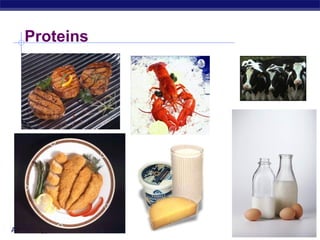
Proteins
AP Biology 2008-2009
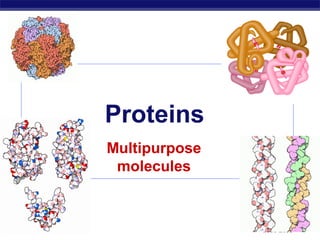
Proteins
Multipurpose
molecules
AP Biology
Proteins
 Most structurally & functionally diverse group
 Function: involved in almost everything
 enzymes (pepsin, DNA polymerase)
 structure (keratin, collagen)
 carriers & transport (hemoglobin)
 cell communication
 signals (insulin & other hormones)
 receptors
 defense (antibodies)
 movement (actin & myosin)
 storage (bean seed proteins)
AP Biology
Proteins
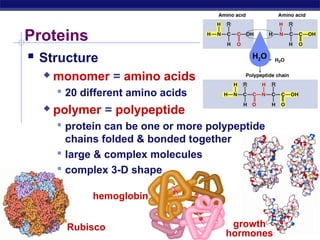
 Structure
 monomer = amino acids
 20 different amino acids
 polymer = polypeptide
 protein can be one or more polypeptide
chains folded & bonded together
 large & complex molecules
 complex 3-D shape
Rubisco
hemoglobin
growth
hormones
H2O
AP Biology
Amino acids
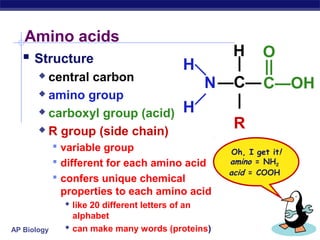
 Structure
 central carbon
 amino group
 carboxyl group (acid)
 R group (side chain)
 variable group
 different for each amino acid
 confers unique chemical
properties to each amino acid
 like 20 different letters of an
alphabet
 can make many words (proteins)
—N—
H
H
C—OH
||
O
R
|
—C—
|
H
Oh, I get it!
amino = NH2
acid = COOH
AP Biology
Effect of different R groups:
Nonpolar amino acids
Why are these nonpolar & hydrophobic?Why are these nonpolar & hydrophobic?
 nonpolar & hydrophobic
AP Biology
Effect of different R groups:
Polar amino acids
 polar or charged & hydrophilic
Why are these polar & hydrophillic?Why are these polar & hydrophillic?
AP Biology
Ionizing in cellular waters H+ donorsH+ donors
AP Biology
Ionizing in cellular waters H+ acceptorsH+ acceptors
AP Biology
Sulfur containing amino acids
 Form disulfide bridges
 covalent cross links betweens sulfhydryls
 stabilizes 3-D structure
You wondered
why perms
smell like
rotten eggs?
H-S – S-HH-S – S-H
AP Biology
Building proteins
 Peptide bonds
 covalent bond between NH2 (amine) of
one amino acid & COOH (carboxyl) of
another
 C–N bond
peptide
bond
dehydration synthesis
H2O
AP Biology
Building proteins
 Polypeptide chains have direction
 N-terminus = NH2 end
 C-terminus = COOH end
 repeated sequence (N-C-C) is the
polypeptide backbone
 can only grow in one direction
AP Biology
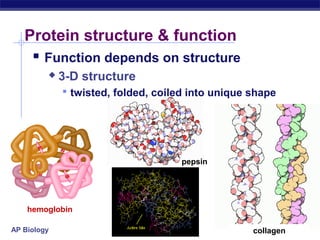
Protein structure & function
hemoglobin
 Function depends on structure
 3-D structure
 twisted, folded, coiled into unique shape
collagen
pepsin
AP Biology
Primary (1°) structure
 Order of amino acids in chain
 amino acid sequence
determined by gene (DNA)
 slight change in amino acid
sequence can affect protein’s
structure & its function
 even just one amino acid change
can make all the difference!
lysozyme: enzyme in
tears & mucus that
kills bacteria
AP Biology
Sickle cell anemia
I’m
hydrophilic!
But I’m
hydrophobic!
Just 1
out of 146
amino acids!
AP Biology
Secondary (2°) structure
 “Local folding”
 folding along short sections of polypeptide
 interactions between
adjacent amino acids
 H bonds
 weak bonds
between R groups
 forms sections of
3-D structure
 α-helix
 β-pleated sheet
AP Biology
Secondary (2°) structure
AP Biology
Tertiary (3°) structure
 “Whole molecule folding”
 interactions between distant amino acids
 hydrophobic interactions
cytoplasm is
water-based
nonpolar amino
acids cluster away
from water
 H bonds & ionic bonds
 disulfide bridges
 covalent bonds between
sulfurs in sulfhydryls (S–H)
 anchors 3-D shape
AP Biology
Quaternary (4°) structure
 More than one polypeptide chain bonded
together
 only then does polypeptide become
functional protein
 hydrophobic interactions
collagen = skin & tendons hemoglobin
AP Biology
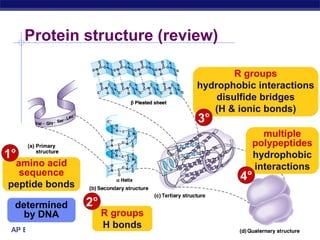
Protein structure (review)
amino acid
sequence
peptide bonds
1°
determined
by DNA R groups
H bonds
R groups
hydrophobic interactions
disulfide bridges
(H & ionic bonds)
3°
multiple
polypeptides
hydrophobic
interactions
4°
2°
AP Biology
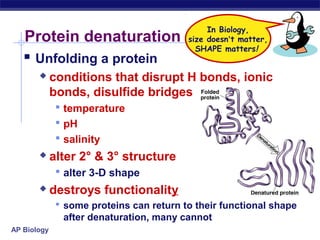
Protein denaturation
 Unfolding a protein
 conditions that disrupt H bonds, ionic
bonds, disulfide bridges
 temperature
 pH
 salinity
 alter 2° & 3° structure
 alter 3-D shape
 destroys functionality
 some proteins can return to their functional shape
after denaturation, many cannot
In Biology,
size doesn’t matter,
SHAPE matters!
AP Biology 2008-2009
Let’s build some
Proteins!
EAT
X

Proteins

  • 1.
  • 2.
  • 3.
    AP Biology Proteins  Moststructurally & functionally diverse group  Function: involved in almost everything  enzymes (pepsin, DNA polymerase)  structure (keratin, collagen)  carriers & transport (hemoglobin)  cell communication  signals (insulin & other hormones)  receptors  defense (antibodies)  movement (actin & myosin)  storage (bean seed proteins)
  • 4.
    AP Biology Proteins  Structure monomer = amino acids  20 different amino acids  polymer = polypeptide  protein can be one or more polypeptide chains folded & bonded together  large & complex molecules  complex 3-D shape Rubisco hemoglobin growth hormones H2O
  • 5.
    AP Biology Amino acids Structure  central carbon  amino group  carboxyl group (acid)  R group (side chain)  variable group  different for each amino acid  confers unique chemical properties to each amino acid  like 20 different letters of an alphabet  can make many words (proteins) —N— H H C—OH || O R | —C— | H Oh, I get it! amino = NH2 acid = COOH
  • 6.
    AP Biology Effect ofdifferent R groups: Nonpolar amino acids Why are these nonpolar & hydrophobic?Why are these nonpolar & hydrophobic?  nonpolar & hydrophobic
  • 7.
    AP Biology Effect ofdifferent R groups: Polar amino acids  polar or charged & hydrophilic Why are these polar & hydrophillic?Why are these polar & hydrophillic?
  • 8.
    AP Biology Ionizing incellular waters H+ donorsH+ donors
  • 9.
    AP Biology Ionizing incellular waters H+ acceptorsH+ acceptors
  • 10.
    AP Biology Sulfur containingamino acids  Form disulfide bridges  covalent cross links betweens sulfhydryls  stabilizes 3-D structure You wondered why perms smell like rotten eggs? H-S – S-HH-S – S-H
  • 11.
    AP Biology Building proteins Peptide bonds  covalent bond between NH2 (amine) of one amino acid & COOH (carboxyl) of another  C–N bond peptide bond dehydration synthesis H2O
  • 12.
    AP Biology Building proteins Polypeptide chains have direction  N-terminus = NH2 end  C-terminus = COOH end  repeated sequence (N-C-C) is the polypeptide backbone  can only grow in one direction
  • 13.
    AP Biology Protein structure& function hemoglobin  Function depends on structure  3-D structure  twisted, folded, coiled into unique shape collagen pepsin
  • 14.
    AP Biology Primary (1°)structure  Order of amino acids in chain  amino acid sequence determined by gene (DNA)  slight change in amino acid sequence can affect protein’s structure & its function  even just one amino acid change can make all the difference! lysozyme: enzyme in tears & mucus that kills bacteria
  • 15.
    AP Biology Sickle cellanemia I’m hydrophilic! But I’m hydrophobic! Just 1 out of 146 amino acids!
  • 16.
    AP Biology Secondary (2°)structure  “Local folding”  folding along short sections of polypeptide  interactions between adjacent amino acids  H bonds  weak bonds between R groups  forms sections of 3-D structure  α-helix  β-pleated sheet
  • 17.
  • 18.
    AP Biology Tertiary (3°)structure  “Whole molecule folding”  interactions between distant amino acids  hydrophobic interactions cytoplasm is water-based nonpolar amino acids cluster away from water  H bonds & ionic bonds  disulfide bridges  covalent bonds between sulfurs in sulfhydryls (S–H)  anchors 3-D shape
  • 19.
    AP Biology Quaternary (4°)structure  More than one polypeptide chain bonded together  only then does polypeptide become functional protein  hydrophobic interactions collagen = skin & tendons hemoglobin
  • 20.
    AP Biology Protein structure(review) amino acid sequence peptide bonds 1° determined by DNA R groups H bonds R groups hydrophobic interactions disulfide bridges (H & ionic bonds) 3° multiple polypeptides hydrophobic interactions 4° 2°
  • 21.
    AP Biology Protein denaturation Unfolding a protein  conditions that disrupt H bonds, ionic bonds, disulfide bridges  temperature  pH  salinity  alter 2° & 3° structure  alter 3-D shape  destroys functionality  some proteins can return to their functional shape after denaturation, many cannot In Biology, size doesn’t matter, SHAPE matters!
  • 22.
    AP Biology 2008-2009 Let’sbuild some Proteins! EAT X

Editor's Notes

  • #3 clockwise: Rubisco — most important protein on the planet? Hemoglobin — a red blooded protein :-) Collagen — strings you together Growth Hormones — working hard in you right now!
  • #4 Storage: beans (seed proteins) Movement: muscle fibers Cell surface proteins: labels that ID cell as self vs. foreign Antibodies: recognize the labels ENZYMES!!!!
  • #5 Rubisco = 16 polypeptide chains Hemoglobin = 4 polypeptide chains (2 alpha, 2 beta)
  • #12 free COOH group on one end is ready to form another peptide bond so they “grow” in one direction from N-terminal to C-terminal
  • #14 Hemoglobin Hemoglobin is the protein that makes blood red. It is composed of four protein chains, two alpha chains and two beta chains, each with a ring-like heme group containing an iron atom. Oxygen binds reversibly to these iron atoms and is transported through blood. Pepsin Pepsin is the first in a series of enzymes in our digestive system that digest proteins. In the stomach, protein chains bind in the deep active site groove of pepsin, seen in the upper illustration (from PDB entry 5pep), and are broken into smaller pieces. Then, a variety of proteases and peptidases in the intestine finish the job. The small fragments--amino acids and dipeptides--are then absorbed by cells for use as metabolic fuel or construction of new proteins. Collagen– Your Most Plentiful Protein About one quarter of all of the protein in your body is collagen. Collagen is a major structural protein, forming molecular cables that strengthen the tendons and vast, resilient sheets that support the skin and internal organs. Bones and teeth are made by adding mineral crystals to collagen. Collagen provides structure to our bodies, protecting and supporting the softer tissues and connecting them with the skeleton. But, in spite of its critical function in the body, collagen is a relatively simple protein.
  • #15 Sickle cell anemia: 1 DNA letter changes 1 amino acid = serious disease Hemoglobin mutation: bends red blood cells out of shape & they clog your veins.
  • #16 glutamic acid is acidic & polar valine is non-polar = tries to “hide” from water of cell by sticking to another hemoglobin molecules.
  • #17 It’s a helix or B sheet within a single region. Can have both in one protein but a specific region is one or another
  • #19 How the whole thing holds together
  • #20 Structure equals function wonderfully illustrated by proteins Collagen is just like rope -- enables your skin to be strong and flexible.
  • #21 sequence determines structure and… structure determines function. Change the sequence & that changes the structure which changes the function.