Distillation &
Azeotropic Mixture
Distillation
 Distillation is a physical method of separating mixtures depending
upon the difference in the boiling point of the component
substances
 Distillation is the process of purification of compounds based on
their volatility.
 This is a physical separation process, not a chemical reaction.
 The working principle of distillation is to heat a mixture at a
specific temperature, collect the hot vapors and condense them
back into liquid form.
Types of Distillation:
There are several methods of distillation depending on the
procedure and the instrument setup. Each distillation type is
used for purification of compounds having different properties.
 Simple distillation
 Fractional distillation
 Steam distillation
 vacuum distillation
Simple distillation
 Simple distillation is practiced for a mixture in which
the boiling point of the components differ by at
least 70° C.
 It is also followed for the mixtures contaminated
with nonvolatile particles (solid or oil) and those
that are nearly pure with less than 10 percent
contamination.
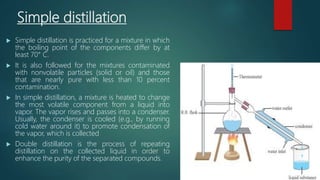
 In simple distillation, a mixture is heated to change
the most volatile component from a liquid into
vapor. The vapor rises and passes into a condenser.
Usually, the condenser is cooled (e.g., by running
cold water around it) to promote condensation of
the vapor, which is collected
 Double distillation is the process of repeating
distillation on the collected liquid in order to
enhance the purity of the separated compounds.
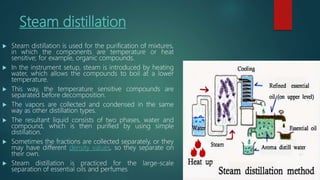
Steam distillation
 Steam distillation is used for the purification of mixtures,
in which the components are temperature or heat
sensitive; for example, organic compounds.
 In the instrument setup, steam is introduced by heating
water, which allows the compounds to boil at a lower
temperature.
 This way, the temperature sensitive compounds are
separated before decomposition.
 The vapors are collected and condensed in the same
way as other distillation types.
 The resultant liquid consists of two phases, water and
compound, which is then purified by using simple
distillation.
 Sometimes the fractions are collected separately, or they
may have different density values, so they separate on
their own.
 Steam distillation is practiced for the large-scale
separation of essential oils and perfumes
Fractional distillation
 Those mixtures, in which the boiling point of the
components is nearly similar or differs by 25° C (at 1
atmosphere pressure), cannot be separated by simple
distillation.
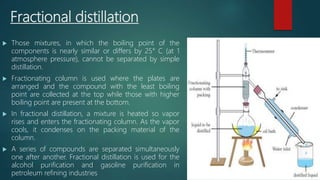
 Fractionating column is used where the plates are
arranged and the compound with the least boiling
point are collected at the top while those with higher
boiling point are present at the bottom.
 In fractional distillation, a mixture is heated so vapor
rises and enters the fractionating column. As the vapor
cools, it condenses on the packing material of the
column.
 A series of compounds are separated simultaneously
one after another. Fractional distillation is used for the
alcohol purification and gasoline purification in
petroleum refining industries
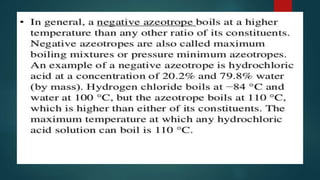
Type of azeotropes
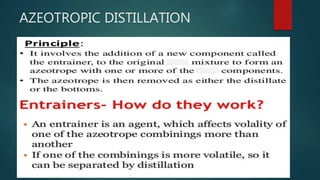
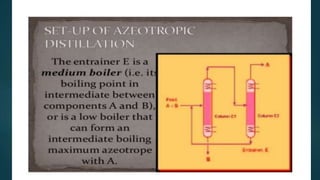
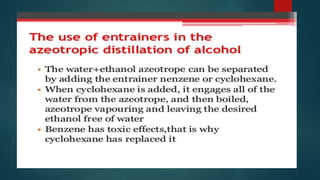
AZEOTROPIC DISTILLATION
Distillation and azeotropic mixture

Distillation and azeotropic mixture

  • 1.
  • 2.
    Distillation  Distillation isa physical method of separating mixtures depending upon the difference in the boiling point of the component substances  Distillation is the process of purification of compounds based on their volatility.  This is a physical separation process, not a chemical reaction.  The working principle of distillation is to heat a mixture at a specific temperature, collect the hot vapors and condense them back into liquid form.
  • 3.
    Types of Distillation: Thereare several methods of distillation depending on the procedure and the instrument setup. Each distillation type is used for purification of compounds having different properties.  Simple distillation  Fractional distillation  Steam distillation  vacuum distillation
  • 4.
    Simple distillation  Simpledistillation is practiced for a mixture in which the boiling point of the components differ by at least 70° C.  It is also followed for the mixtures contaminated with nonvolatile particles (solid or oil) and those that are nearly pure with less than 10 percent contamination.  In simple distillation, a mixture is heated to change the most volatile component from a liquid into vapor. The vapor rises and passes into a condenser. Usually, the condenser is cooled (e.g., by running cold water around it) to promote condensation of the vapor, which is collected  Double distillation is the process of repeating distillation on the collected liquid in order to enhance the purity of the separated compounds.
  • 5.
    Steam distillation  Steamdistillation is used for the purification of mixtures, in which the components are temperature or heat sensitive; for example, organic compounds.  In the instrument setup, steam is introduced by heating water, which allows the compounds to boil at a lower temperature.  This way, the temperature sensitive compounds are separated before decomposition.  The vapors are collected and condensed in the same way as other distillation types.  The resultant liquid consists of two phases, water and compound, which is then purified by using simple distillation.  Sometimes the fractions are collected separately, or they may have different density values, so they separate on their own.  Steam distillation is practiced for the large-scale separation of essential oils and perfumes
  • 6.
    Fractional distillation  Thosemixtures, in which the boiling point of the components is nearly similar or differs by 25° C (at 1 atmosphere pressure), cannot be separated by simple distillation.  Fractionating column is used where the plates are arranged and the compound with the least boiling point are collected at the top while those with higher boiling point are present at the bottom.  In fractional distillation, a mixture is heated so vapor rises and enters the fractionating column. As the vapor cools, it condenses on the packing material of the column.  A series of compounds are separated simultaneously one after another. Fractional distillation is used for the alcohol purification and gasoline purification in petroleum refining industries
  • 8.
  • 10.