BY
M.SWETHA
 Distillation = separates/purifies liquids.
◦ Heat mixture of two or more liquids in a flask.
◦ More volatile liquid vaporizes 1st, vapor passes into a
water-cooled condensing column, it can reverts back
into a liquid (condenses) on the cool glass, then
trickles into a collection flask.
◦ With further heating the less volatile liquids vaporize
and distill at higher temperatures.
Types of Distillation
 Simple Distillation
 Fractional Distillation
◦
 Involves vaporization, condensation, and
collection of the condensate (distillate).
 The temperature of the distillate is
measured by a thermometer placed in the
path of the vapor.
 Distillation—volatile compound
 _ reject solid trace
 Evaporation-volatile oil is let off
 - solid trace is collected
 The apparatus consist of a still ,a
condenser &receiver , chips of
porcelain
 Liquid is taken in still

 heated till B.P
 vapour formed
 condensed-collected in receiver-
 distillate is formed
 Simple distillation is most effective when the
mixture contains only one volatile component.
 More than one….most effective if the boiling
points of the components differ by at least
70 ºC.
 Separate volatile compound
 Purification
 Distilled water preparation
Disadvantages
 Hot water will go out
 TYPES OF WATER
 Water for preparation-
 Purified water
 For inj
 Sterile water
 Vacuum distillation is a method of distillation
whereby the pressure above the liquid mixture to
be distilled is reduced to less than its vapor
pressure (usually less than atmospheric pressure)
causing evaporation of the most volatile liquid(s)
(those with the lowest boiling points).
 This distillation method works on the principle
that boiling occurs when the vapor pressure of a
liquid exceeds the ambient pressure. Vacuum
distillation is used with or without heating the
mixture.
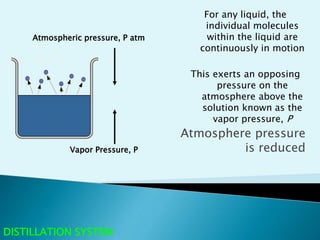
For any liquid, the
individual molecules
within the liquid are
continuously in motion
This exerts an opposing
pressure on the
atmosphere above the
solution known as the
vapor pressure, P
Atmosphere pressure
is reduced
Atmospheric pressure, P atm
Vapor Pressure, P
DISTILLATION SYSTEM
 Distill the liquids which will decompose in the
atmospheric pressure.
 For thermo labile liquids
 Ex: liquid extract of senna, liquid extract
liquorice
 Distillate is collected in fraction not
continuous for that only it is called as
fractional distillation.
 It is used to separate the miscible volatile
liquid having different boiling points
 Based on the difference between the B P
method is going to change .
 Difference is more than 4 0 oc same
equipment for distillation we will use except
collection.
 First we will rise the heat &maintain the same
till first distillate is collected which is
vaporized at the temperature.
 For next distillate collection we will change
the receiver& temperature is increased
&maintained.
Difference is less than 4 0 o c
fractionating column is used.
Utilizes two or more vaporization
condensation cycles, in succession,
to effect separation
The fractionating column causes the
vaporization-condensation cycle to
repeat by providing multiple
surfaces for the cycle to take place
TYPES OF DISTILLATION YSTEM
 Crude alcohol
 Coal tar.
 Volatile oils in one liquid extarct.
 Many organic compounds tend to decompose at high
sustained temperatures. Separation by normal distillation
would then not be an option, so water or steam is introduced
into the distillation apparatus.
 The water vapor carries small amounts of the vaporized
compounds to the condensation flask, where the condensed
liquids phase separate, allowing for easy collection.
 This process effectively allows for distillation at lower
temperatures, reducing the deterioration of the desired
products. If the substances to be distilled are very sensitive to
heat, steam distillation may be applied under reduced
pressure, thereby reducing the operating temperature further.
 After distillation the vapors are condensed as appropriate.
Usually the immediate product is a two-phase system of
water and the organic distillate, allowing for separation of the
components by decantation, partitioning or other suitable
methods.
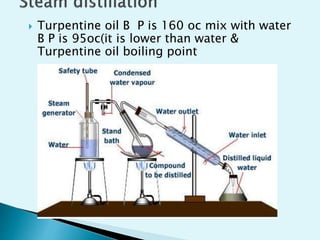
 Turpentine oil B P is 160 oc mix with water
B P is 95oc(it is lower than water &
Turpentine oil boiling point
 Purification of liquids with high boiling point
ex: almond oil.
 Determination of volatile oil in drugs.
 Extracting clove, aniseed eucalyptus
Vapors from the
Distilling flask
This cycle will continue until the top of the
column is reached
•E ach vapor-condensation (or mini-
distillation) cycle is known as one theoretical
plate
•The length of distilation column required to
provide one theoretical plate of separation is
known as the height equivalent theoretical
plate (HETP)
TYPES OF DISTILLATION SYSTEM
Fractional Distillation

Mechanism of Distillation,simple distillation steam &fractional distillation for Bpharm students

  • 1.
  • 2.
     Distillation =separates/purifies liquids. ◦ Heat mixture of two or more liquids in a flask. ◦ More volatile liquid vaporizes 1st, vapor passes into a water-cooled condensing column, it can reverts back into a liquid (condenses) on the cool glass, then trickles into a collection flask. ◦ With further heating the less volatile liquids vaporize and distill at higher temperatures. Types of Distillation  Simple Distillation  Fractional Distillation ◦
  • 3.
     Involves vaporization,condensation, and collection of the condensate (distillate).  The temperature of the distillate is measured by a thermometer placed in the path of the vapor.
  • 4.
     Distillation—volatile compound _ reject solid trace  Evaporation-volatile oil is let off  - solid trace is collected
  • 5.
     The apparatusconsist of a still ,a condenser &receiver , chips of porcelain
  • 6.
     Liquid istaken in still   heated till B.P  vapour formed  condensed-collected in receiver-  distillate is formed
  • 7.
     Simple distillationis most effective when the mixture contains only one volatile component.  More than one….most effective if the boiling points of the components differ by at least 70 ºC.
  • 8.
     Separate volatilecompound  Purification  Distilled water preparation
  • 10.
    Disadvantages  Hot waterwill go out  TYPES OF WATER  Water for preparation-  Purified water  For inj  Sterile water
  • 11.
     Vacuum distillationis a method of distillation whereby the pressure above the liquid mixture to be distilled is reduced to less than its vapor pressure (usually less than atmospheric pressure) causing evaporation of the most volatile liquid(s) (those with the lowest boiling points).  This distillation method works on the principle that boiling occurs when the vapor pressure of a liquid exceeds the ambient pressure. Vacuum distillation is used with or without heating the mixture.
  • 12.
    For any liquid,the individual molecules within the liquid are continuously in motion This exerts an opposing pressure on the atmosphere above the solution known as the vapor pressure, P Atmosphere pressure is reduced Atmospheric pressure, P atm Vapor Pressure, P DISTILLATION SYSTEM
  • 13.
     Distill theliquids which will decompose in the atmospheric pressure.  For thermo labile liquids  Ex: liquid extract of senna, liquid extract liquorice
  • 15.
     Distillate iscollected in fraction not continuous for that only it is called as fractional distillation.  It is used to separate the miscible volatile liquid having different boiling points  Based on the difference between the B P method is going to change .
  • 16.
     Difference ismore than 4 0 oc same equipment for distillation we will use except collection.  First we will rise the heat &maintain the same till first distillate is collected which is vaporized at the temperature.  For next distillate collection we will change the receiver& temperature is increased &maintained.
  • 17.
    Difference is lessthan 4 0 o c fractionating column is used. Utilizes two or more vaporization condensation cycles, in succession, to effect separation The fractionating column causes the vaporization-condensation cycle to repeat by providing multiple surfaces for the cycle to take place TYPES OF DISTILLATION YSTEM
  • 19.
     Crude alcohol Coal tar.  Volatile oils in one liquid extarct.
  • 20.
     Many organiccompounds tend to decompose at high sustained temperatures. Separation by normal distillation would then not be an option, so water or steam is introduced into the distillation apparatus.  The water vapor carries small amounts of the vaporized compounds to the condensation flask, where the condensed liquids phase separate, allowing for easy collection.  This process effectively allows for distillation at lower temperatures, reducing the deterioration of the desired products. If the substances to be distilled are very sensitive to heat, steam distillation may be applied under reduced pressure, thereby reducing the operating temperature further.  After distillation the vapors are condensed as appropriate. Usually the immediate product is a two-phase system of water and the organic distillate, allowing for separation of the components by decantation, partitioning or other suitable methods.
  • 21.
     Turpentine oilB P is 160 oc mix with water B P is 95oc(it is lower than water & Turpentine oil boiling point
  • 22.
     Purification ofliquids with high boiling point ex: almond oil.  Determination of volatile oil in drugs.  Extracting clove, aniseed eucalyptus
  • 23.
    Vapors from the Distillingflask This cycle will continue until the top of the column is reached •E ach vapor-condensation (or mini- distillation) cycle is known as one theoretical plate •The length of distilation column required to provide one theoretical plate of separation is known as the height equivalent theoretical plate (HETP) TYPES OF DISTILLATION SYSTEM Fractional Distillation