Lesions of the ureters
Intraluminal lesions
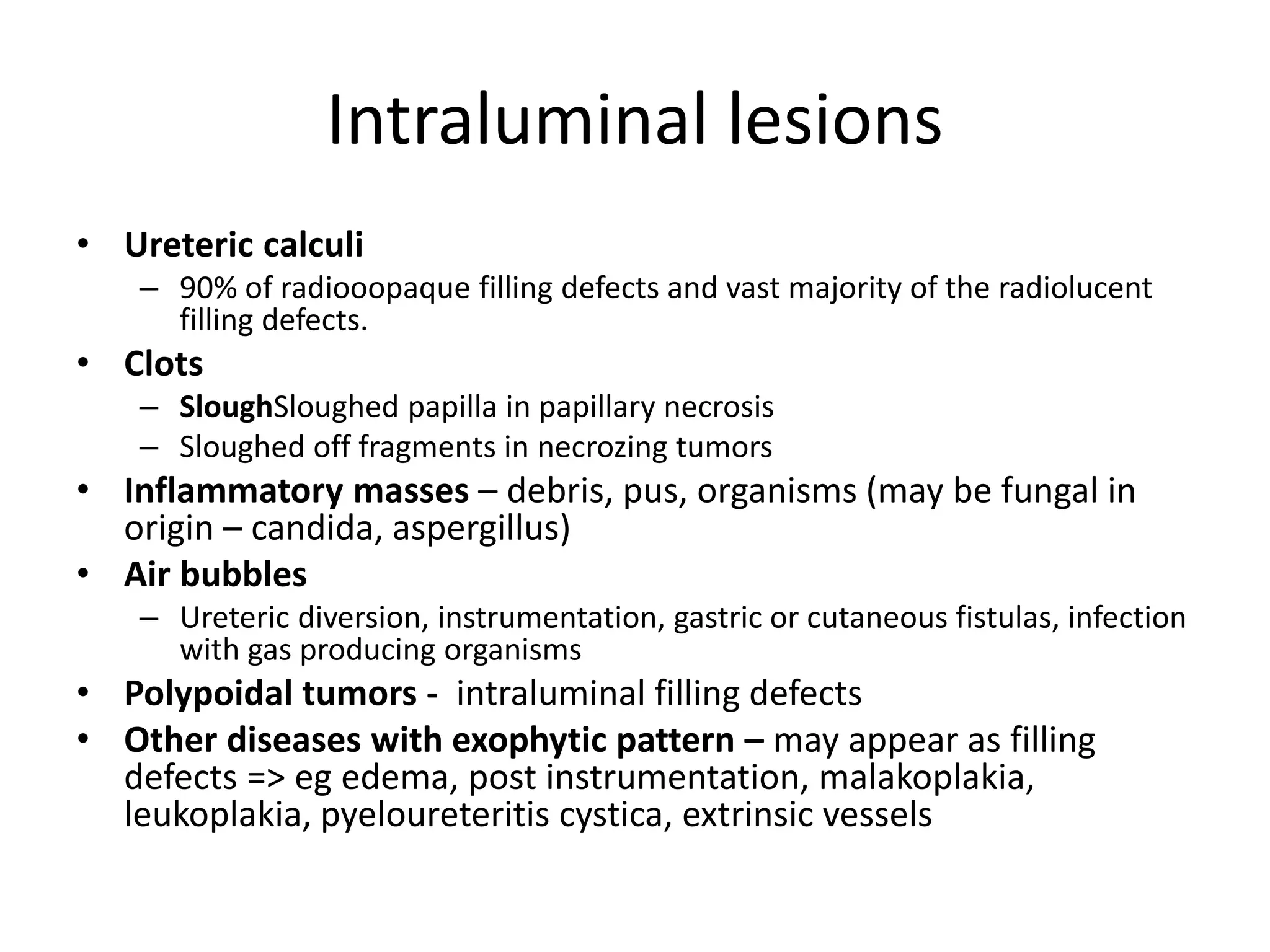
• Ureteric calculi
– 90% of radiooopaque filling defects and vast majority of the radiolucent
filling defects.
• Clots
– SloughSloughed papilla in papillary necrosis
– Sloughed off fragments in necrozing tumors
• Inflammatory masses – debris, pus, organisms (may be fungal in
origin – candida, aspergillus)
• Air bubbles
– Ureteric diversion, instrumentation, gastric or cutaneous fistulas, infection
with gas producing organisms
• Polypoidal tumors - intraluminal filling defects
• Other diseases with exophytic pattern – may appear as filling
defects => eg edema, post instrumentation, malakoplakia,
leukoplakia, pyeloureteritis cystica, extrinsic vessels
Mural lesions
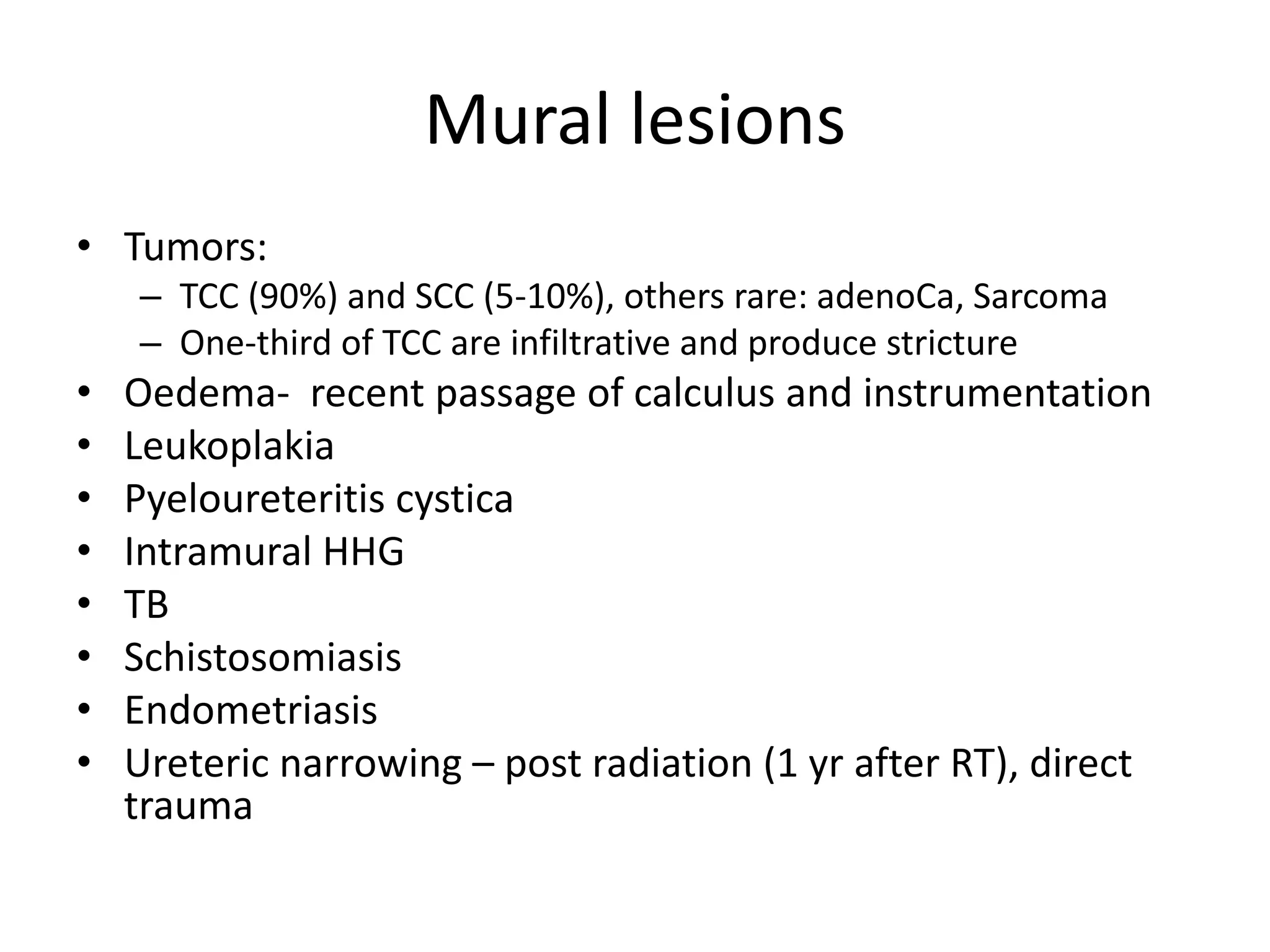
• Tumors:
– TCC (90%) and SCC (5-10%), others rare: adenoCa, Sarcoma
– One-third of TCC are infiltrative and produce stricture
• Oedema- recent passage of calculus and instrumentation
• Leukoplakia
• Pyeloureteritis cystica
• Intramural HHG
• TB
• Schistosomiasis
• Endometriasis
• Ureteric narrowing – post radiation (1 yr after RT), direct
trauma
Extrinsic lesions
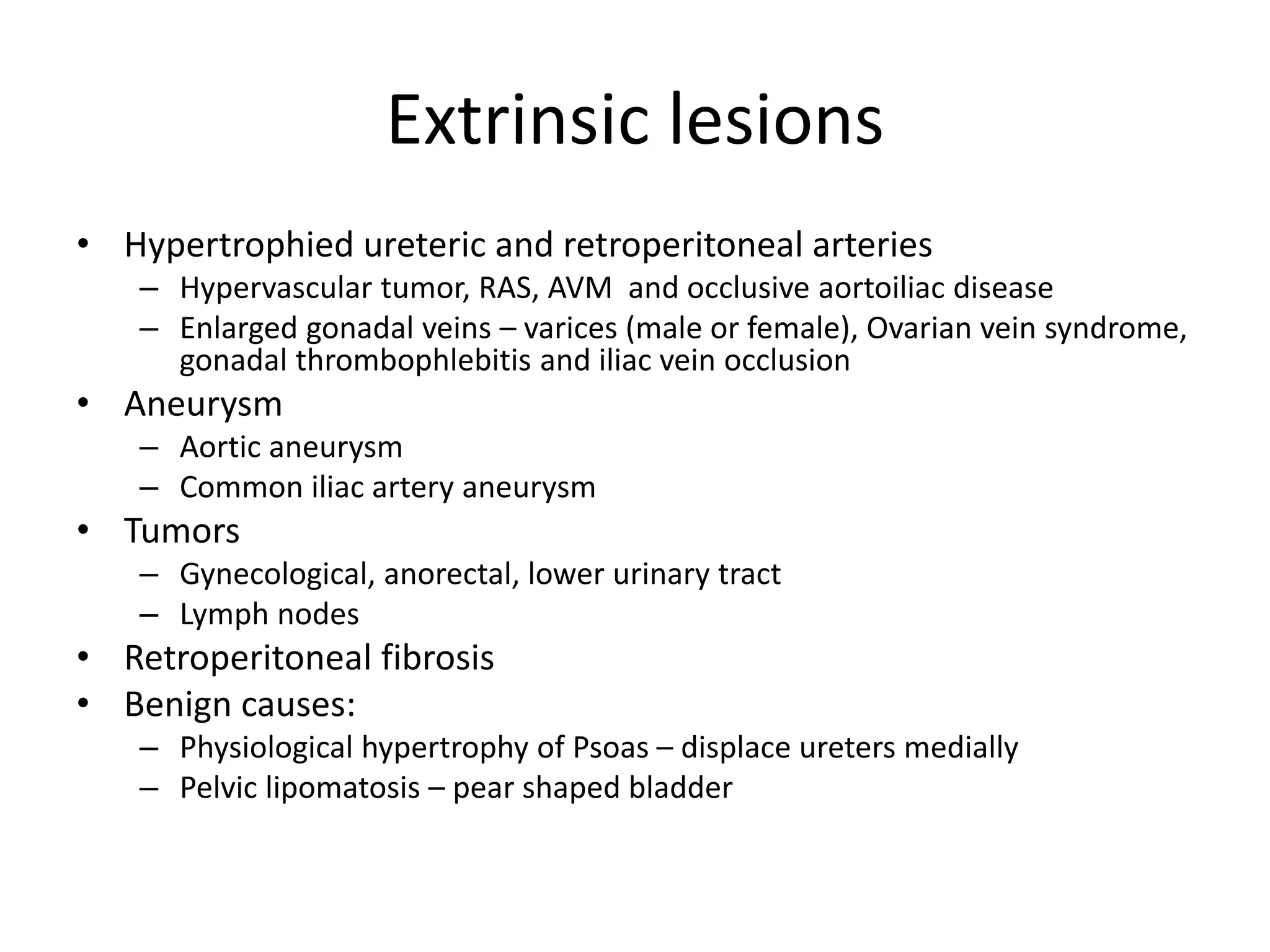
• Hypertrophied ureteric and retroperitoneal arteries
– Hypervascular tumor, RAS, AVM and occlusive aortoiliac disease
– Enlarged gonadal veins – varices (male or female), Ovarian vein syndrome,
gonadal thrombophlebitis and iliac vein occlusion
• Aneurysm
– Aortic aneurysm
– Common iliac artery aneurysm
• Tumors
– Gynecological, anorectal, lower urinary tract
– Lymph nodes
• Retroperitoneal fibrosis
• Benign causes:
– Physiological hypertrophy of Psoas – displace ureters medially
– Pelvic lipomatosis – pear shaped bladder
Retroperitoneal fibrosis
• Fibrosis and chronic inflammatory cell infiltrate of retroperitoneal tissues
• 50% idiopathic
• Other causes: secondary to inflammatory aortic aneurysms, vascular
grafts, retroperitoneal masses, retroperitoneal HHG, abscess, urinoma,
diverticulitis, appendicitis, Crohn disease, drugs (Ergots)
• Associated with inflammatory bowel disease, sclerosing cholangitis and
fibrosing mediastinitis
• Features:
– Starts lateral to the aorta so left ureter is involved first
– Location: M/C L3-L5
– Encases ureters, loss of peristalsis without ureteric invasion
• IVU: medial deviation of ureters
• CT and MRI:
– smooth sheets of tissues around and over aorta and IVC
– Vs Lymphoma: floating aorta sign
• Treatment: surgical lateral displacement of ureters

Diseases of ureters

  • 1.
  • 2.
    Intraluminal lesions • Uretericcalculi – 90% of radiooopaque filling defects and vast majority of the radiolucent filling defects. • Clots – SloughSloughed papilla in papillary necrosis – Sloughed off fragments in necrozing tumors • Inflammatory masses – debris, pus, organisms (may be fungal in origin – candida, aspergillus) • Air bubbles – Ureteric diversion, instrumentation, gastric or cutaneous fistulas, infection with gas producing organisms • Polypoidal tumors - intraluminal filling defects • Other diseases with exophytic pattern – may appear as filling defects => eg edema, post instrumentation, malakoplakia, leukoplakia, pyeloureteritis cystica, extrinsic vessels
  • 3.
    Mural lesions • Tumors: –TCC (90%) and SCC (5-10%), others rare: adenoCa, Sarcoma – One-third of TCC are infiltrative and produce stricture • Oedema- recent passage of calculus and instrumentation • Leukoplakia • Pyeloureteritis cystica • Intramural HHG • TB • Schistosomiasis • Endometriasis • Ureteric narrowing – post radiation (1 yr after RT), direct trauma
  • 4.
    Extrinsic lesions • Hypertrophiedureteric and retroperitoneal arteries – Hypervascular tumor, RAS, AVM and occlusive aortoiliac disease – Enlarged gonadal veins – varices (male or female), Ovarian vein syndrome, gonadal thrombophlebitis and iliac vein occlusion • Aneurysm – Aortic aneurysm – Common iliac artery aneurysm • Tumors – Gynecological, anorectal, lower urinary tract – Lymph nodes • Retroperitoneal fibrosis • Benign causes: – Physiological hypertrophy of Psoas – displace ureters medially – Pelvic lipomatosis – pear shaped bladder
  • 5.
    Retroperitoneal fibrosis • Fibrosisand chronic inflammatory cell infiltrate of retroperitoneal tissues • 50% idiopathic • Other causes: secondary to inflammatory aortic aneurysms, vascular grafts, retroperitoneal masses, retroperitoneal HHG, abscess, urinoma, diverticulitis, appendicitis, Crohn disease, drugs (Ergots) • Associated with inflammatory bowel disease, sclerosing cholangitis and fibrosing mediastinitis • Features: – Starts lateral to the aorta so left ureter is involved first – Location: M/C L3-L5 – Encases ureters, loss of peristalsis without ureteric invasion • IVU: medial deviation of ureters • CT and MRI: – smooth sheets of tissues around and over aorta and IVC – Vs Lymphoma: floating aorta sign • Treatment: surgical lateral displacement of ureters