Presentation on
nephrotic syndrome
SUBMITTED BY:-
Rahul Dhaker , Asst. Professor, PCNMS, Nainital
1
INTRODUCTION
 The nephrotic syndrome is a clinical state
characterized
 proteinuria ,
 hypoalbuminemia ,
 hyperlipidimia and
 edema sometimes accompanied by hematuria,
hypertension and reduced glomerular filtration rate.
2
DEFINITION
Nephrotic syndrome is a group of
symptoms that include protein in the
urine , low blood protein levels in the
blood, high cholesterol levels , high
cholesterol levels, high triglyceride levels,
and swelling.
3
INCIDENCE
Nephrotic syndrome is common among
children in the age of 2-6 years. Mean
age of onset is 2.5 years. It is more
common in males than in females.
4
ETIOLOGY
• Nephrotic syndrome has many causes
and many either be result of a disease
limited to kidney called primary
nephrotic syndrome or a condition that
affects the kidney and other part of the
body called secondary nephrotic
syndrome.
90% of the cause in idiopathic.
5
PRIMARY
GLOMERULONEPHROSIS
Primary causes of nephrotic syndrome are
usually described by their history.
Minimal change disease
Focal segmental glomerulosclerosis
Membranous proliferative glomerolonephritis
(MPGN)
Membranous glomerulonephritis (MGN)
Rapidly progressive glomerulonephritis
6
SECONDARY
GLOMERULONEPHROSIS
Secondary causes of nephrotic syndrome have the
same histological patterns as the primary causes
though they may exhibit same different a suggesting a
secondary cause, such a inclusion bodies.
Diabetic nephropathy
Systemic lupus erythermatous
Sacroidosis
Syphilis
Hepatitis B
HIV
7
• Amyloidosis
• Multi myeloma
• Vasculitis
• Genetic disorder
• Drug
8
CLINICAL MANIFESTATION
The onset is slow, features of nephrotic
syndrome include:
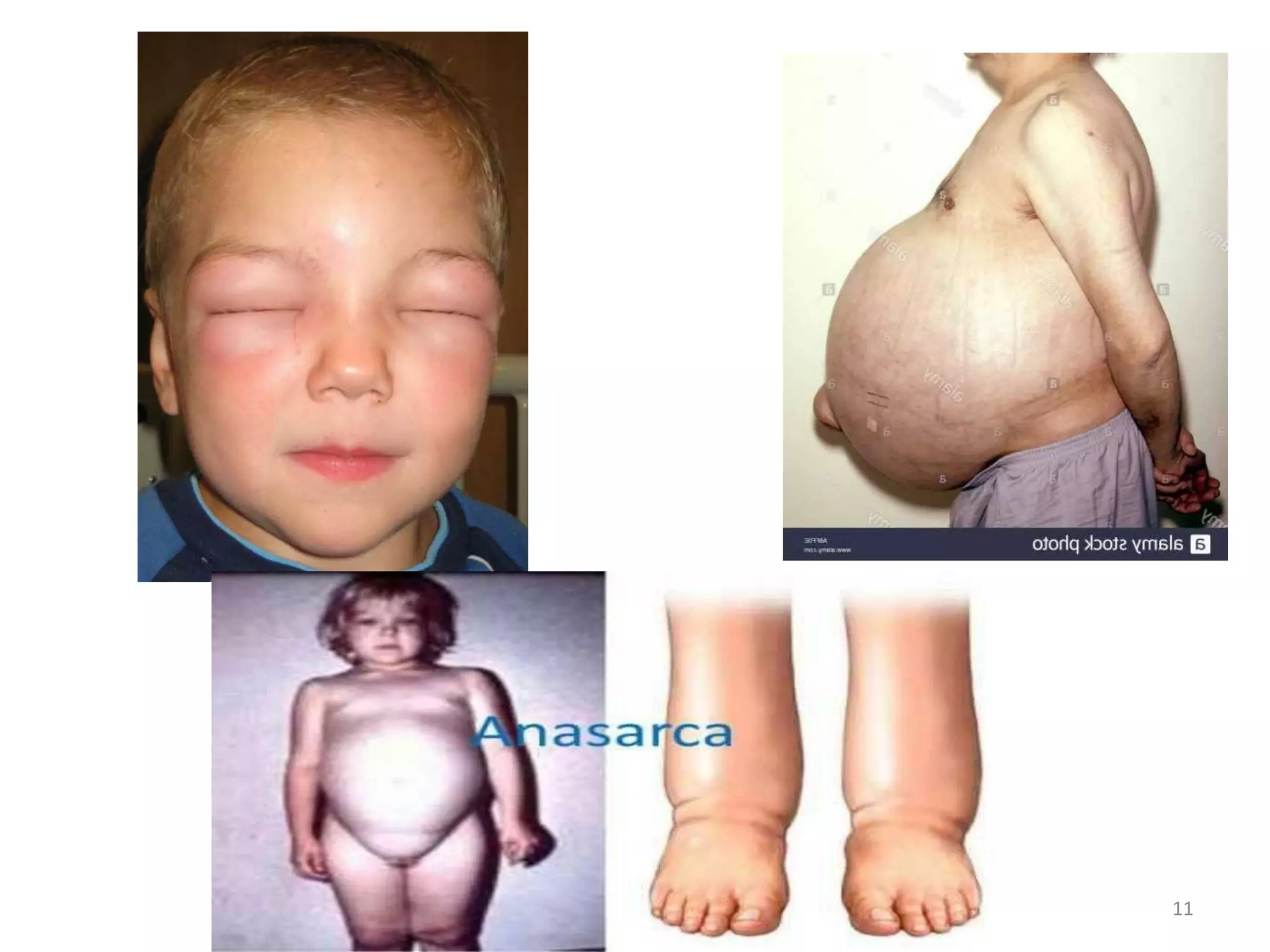
Puffing around the eyes characteristically in the
morning.
Pitting edema over the legs
Fluid in the pleural cavity causing pleural
effusion. More excess fluid is pulmonary
edema.
Generalized edema
Ascites
9
• Hydrothorax and hydrocele
• Hematuria
• Fever , rash and joint pain
• Pallor
• Irritability
• Loss of appetite but weight gain
10
11
DIAGNOSTIC EVALUATION
 URINE ANALYSIS:-
 24 hr urinary total protein estimation- urine
sample show proteinuria(>3.5gper liter per
24hrs) it is also examined for casts, which
are more a feature of active nephritis .
 Comprehensive metabolic panel shows
hypoalbuminiemia albumin level is < 2.5
g/dl(normal level is 3.5-5g/dl)
 Lipid profile show high level of cholesterol .
12
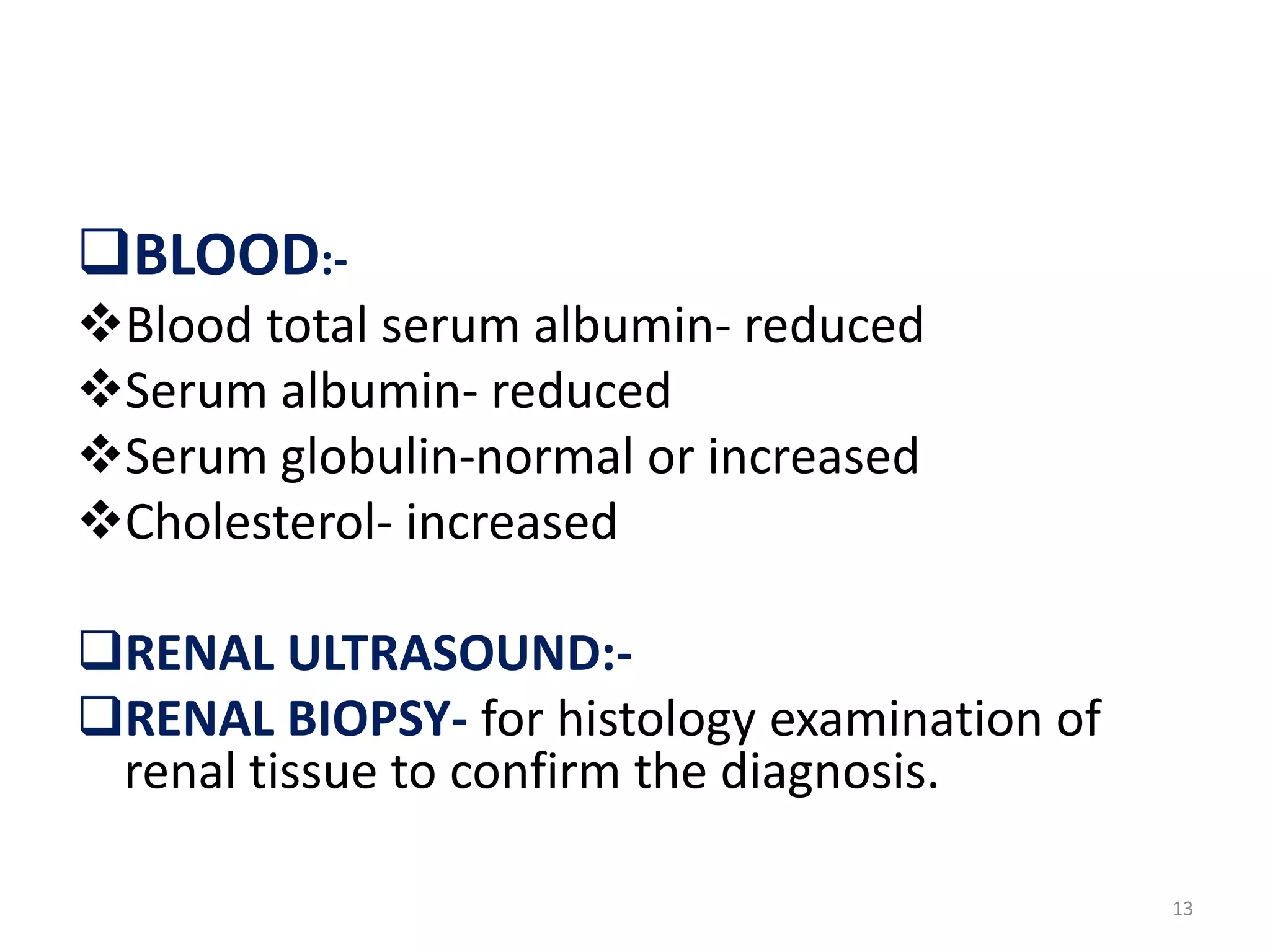
BLOOD:-
Blood total serum albumin- reduced
Serum albumin- reduced
Serum globulin-normal or increased
Cholesterol- increased
RENAL ULTRASOUND:-
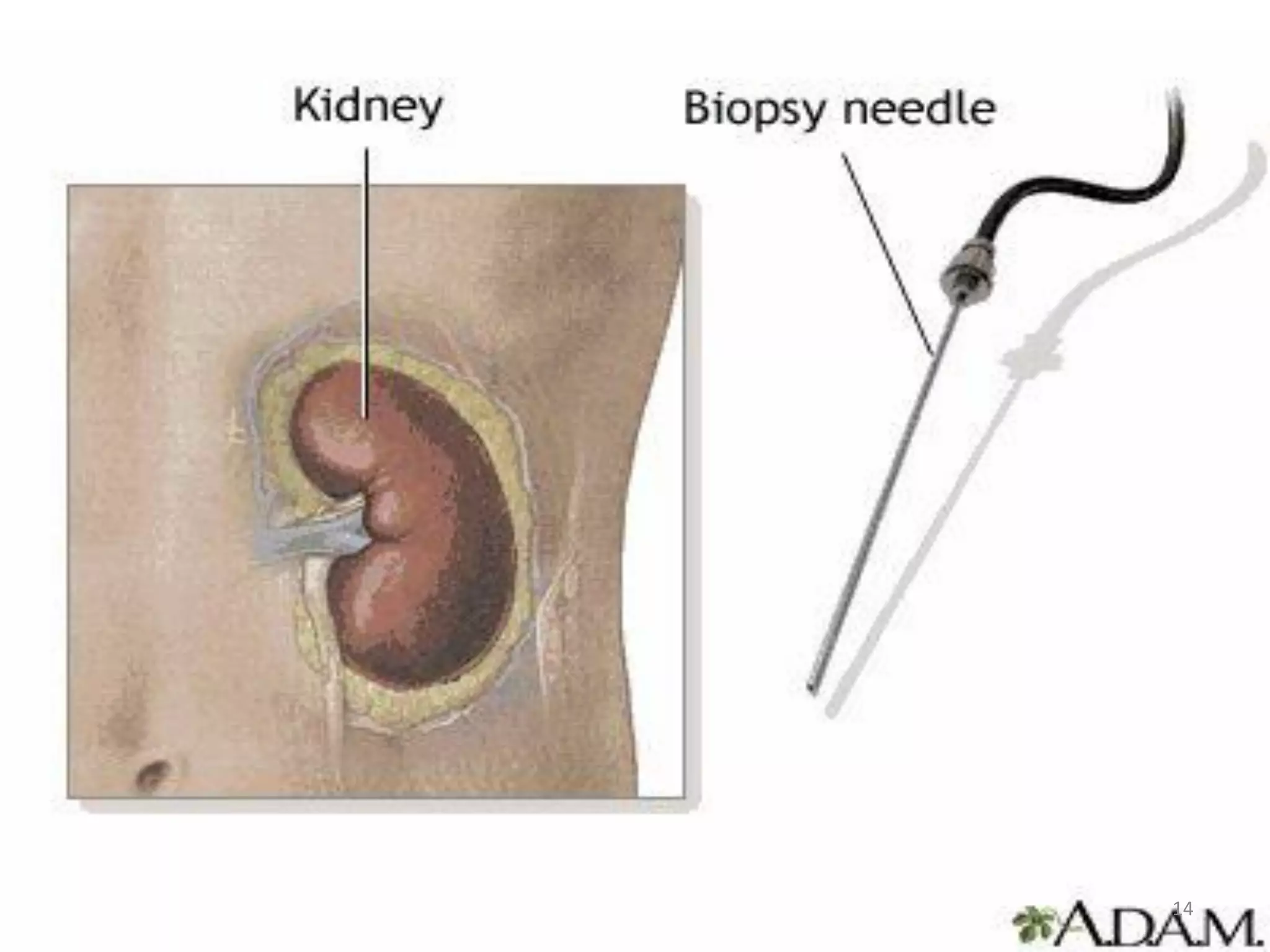
RENAL BIOPSY- for histology examination of
renal tissue to confirm the diagnosis.
13
14
15
MANAGEMENT
The objectives of treatment are:
1. Control of infection
2. Normal adjustment of the disturb process
3. Control of edema
4. Promotion of good nutrition
5. Promotion of good physical and mental
hygiene.
16
MEDICAL MANAGMENT
Corticosteroid therapy
 prednisolone is the drug of choice. Daily dose
of 2mg/kg/day orally in divided doses 6 week
is given, thereafter 1.5mg/kg as single dose an
alternate days. For 6weeks after which
treatment is discontinued.
Frequent relapses are treated by alkylating
agents such as cyclophoshamide( 2mg/kg
daily for 12 week) nitrogen , mustard
cyclosporine or levamisole . 17
• Diuretic and salt albumin may be indicated in
presence of severe edema. Frusemide (1-
44mg/kg/day in 2 divided doses) alone or with
aldosterone antagonist spiroholactone (2-
3mg/kg/day in 2 divided doses) may be
prescribed.
18
NURSING MANAGEMENT
1. Impaired urinary elimination related to Na
and water retention.
2. Excess fluid volume related to edema.
3. Imbalance nutrition less than body
requirement related to damage
metabolism.
4. Anxiety related hospitalization of child and
caring for child with a chronic disease.
19
SURGICAL MANAGEMENT:-
Renal transplant
20
COMPLICATION:
Acute renal failure, renal vein thrombosis.
Atherosclerosis and related heart disease .
Chronic kidney disease.
Fluid overload, congestive heart failure,
pulmonary edema.
Infection including pneumococcal pneumonia
21
BIBLIOGRAPHY
• Sharma Rimple essential of pediatric nursing
published by- Jaypee brothers medical
publishers(P) Edition- first edition , Page no-
465-470.
• Singh& Jacob pediatric nursing published by –
N.R brothers Edition –fourth edition 2009,
page no-318-322.
• Ghai OP Essential pediatric published by- CBS
publishers & distributors edition- 450- 454.
22
23

.nephrotic syndrome- B.Sc. Nursing III yr

  • 1.
    Presentation on nephrotic syndrome SUBMITTEDBY:- Rahul Dhaker , Asst. Professor, PCNMS, Nainital 1
  • 2.
    INTRODUCTION  The nephroticsyndrome is a clinical state characterized  proteinuria ,  hypoalbuminemia ,  hyperlipidimia and  edema sometimes accompanied by hematuria, hypertension and reduced glomerular filtration rate. 2
  • 3.
    DEFINITION Nephrotic syndrome isa group of symptoms that include protein in the urine , low blood protein levels in the blood, high cholesterol levels , high cholesterol levels, high triglyceride levels, and swelling. 3
  • 4.
    INCIDENCE Nephrotic syndrome iscommon among children in the age of 2-6 years. Mean age of onset is 2.5 years. It is more common in males than in females. 4
  • 5.
    ETIOLOGY • Nephrotic syndromehas many causes and many either be result of a disease limited to kidney called primary nephrotic syndrome or a condition that affects the kidney and other part of the body called secondary nephrotic syndrome. 90% of the cause in idiopathic. 5
  • 6.
    PRIMARY GLOMERULONEPHROSIS Primary causes ofnephrotic syndrome are usually described by their history. Minimal change disease Focal segmental glomerulosclerosis Membranous proliferative glomerolonephritis (MPGN) Membranous glomerulonephritis (MGN) Rapidly progressive glomerulonephritis 6
  • 7.
    SECONDARY GLOMERULONEPHROSIS Secondary causes ofnephrotic syndrome have the same histological patterns as the primary causes though they may exhibit same different a suggesting a secondary cause, such a inclusion bodies. Diabetic nephropathy Systemic lupus erythermatous Sacroidosis Syphilis Hepatitis B HIV 7
  • 8.
    • Amyloidosis • Multimyeloma • Vasculitis • Genetic disorder • Drug 8
  • 9.
    CLINICAL MANIFESTATION The onsetis slow, features of nephrotic syndrome include: Puffing around the eyes characteristically in the morning. Pitting edema over the legs Fluid in the pleural cavity causing pleural effusion. More excess fluid is pulmonary edema. Generalized edema Ascites 9
  • 10.
    • Hydrothorax andhydrocele • Hematuria • Fever , rash and joint pain • Pallor • Irritability • Loss of appetite but weight gain 10
  • 11.
  • 12.
    DIAGNOSTIC EVALUATION  URINEANALYSIS:-  24 hr urinary total protein estimation- urine sample show proteinuria(>3.5gper liter per 24hrs) it is also examined for casts, which are more a feature of active nephritis .  Comprehensive metabolic panel shows hypoalbuminiemia albumin level is < 2.5 g/dl(normal level is 3.5-5g/dl)  Lipid profile show high level of cholesterol . 12
  • 13.
    BLOOD:- Blood total serumalbumin- reduced Serum albumin- reduced Serum globulin-normal or increased Cholesterol- increased RENAL ULTRASOUND:- RENAL BIOPSY- for histology examination of renal tissue to confirm the diagnosis. 13
  • 14.
  • 15.
  • 16.
    MANAGEMENT The objectives oftreatment are: 1. Control of infection 2. Normal adjustment of the disturb process 3. Control of edema 4. Promotion of good nutrition 5. Promotion of good physical and mental hygiene. 16
  • 17.
    MEDICAL MANAGMENT Corticosteroid therapy prednisolone is the drug of choice. Daily dose of 2mg/kg/day orally in divided doses 6 week is given, thereafter 1.5mg/kg as single dose an alternate days. For 6weeks after which treatment is discontinued. Frequent relapses are treated by alkylating agents such as cyclophoshamide( 2mg/kg daily for 12 week) nitrogen , mustard cyclosporine or levamisole . 17
  • 18.
    • Diuretic andsalt albumin may be indicated in presence of severe edema. Frusemide (1- 44mg/kg/day in 2 divided doses) alone or with aldosterone antagonist spiroholactone (2- 3mg/kg/day in 2 divided doses) may be prescribed. 18
  • 19.
    NURSING MANAGEMENT 1. Impairedurinary elimination related to Na and water retention. 2. Excess fluid volume related to edema. 3. Imbalance nutrition less than body requirement related to damage metabolism. 4. Anxiety related hospitalization of child and caring for child with a chronic disease. 19
  • 20.
  • 21.
    COMPLICATION: Acute renal failure,renal vein thrombosis. Atherosclerosis and related heart disease . Chronic kidney disease. Fluid overload, congestive heart failure, pulmonary edema. Infection including pneumococcal pneumonia 21
  • 22.
    BIBLIOGRAPHY • Sharma Rimpleessential of pediatric nursing published by- Jaypee brothers medical publishers(P) Edition- first edition , Page no- 465-470. • Singh& Jacob pediatric nursing published by – N.R brothers Edition –fourth edition 2009, page no-318-322. • Ghai OP Essential pediatric published by- CBS publishers & distributors edition- 450- 454. 22
  • 23.