DIGITAL SIGNAL 
PROCESSORS 
-PREM RANJAN 
14ESP003
OVERVIEW 
1. Genaral purpose digital signal processors 
2. Special purpose digital signal processors
OVERVIEW 
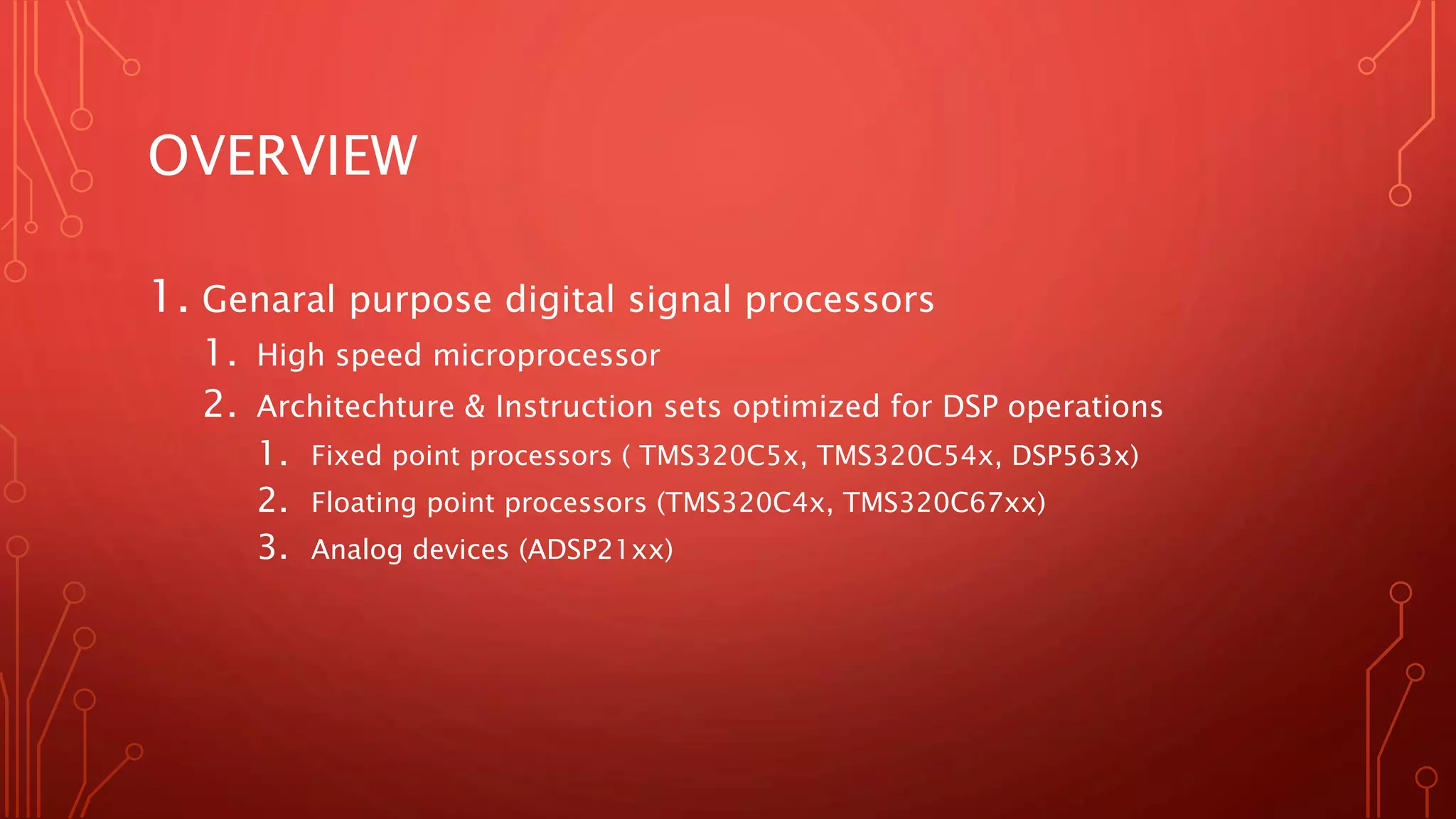
1. Genaral purpose digital signal processors 
1. High speed microprocessor 
2. Architechture & Instruction sets optimized for DSP operations 
1. Fixed point processors ( TMS320C5x, TMS320C54x, DSP563x) 
2. Floating point processors (TMS320C4x, TMS320C67xx) 
3. Analog devices (ADSP21xx)
OVERVIEW 
1. Genaral purpose digital signal processors 
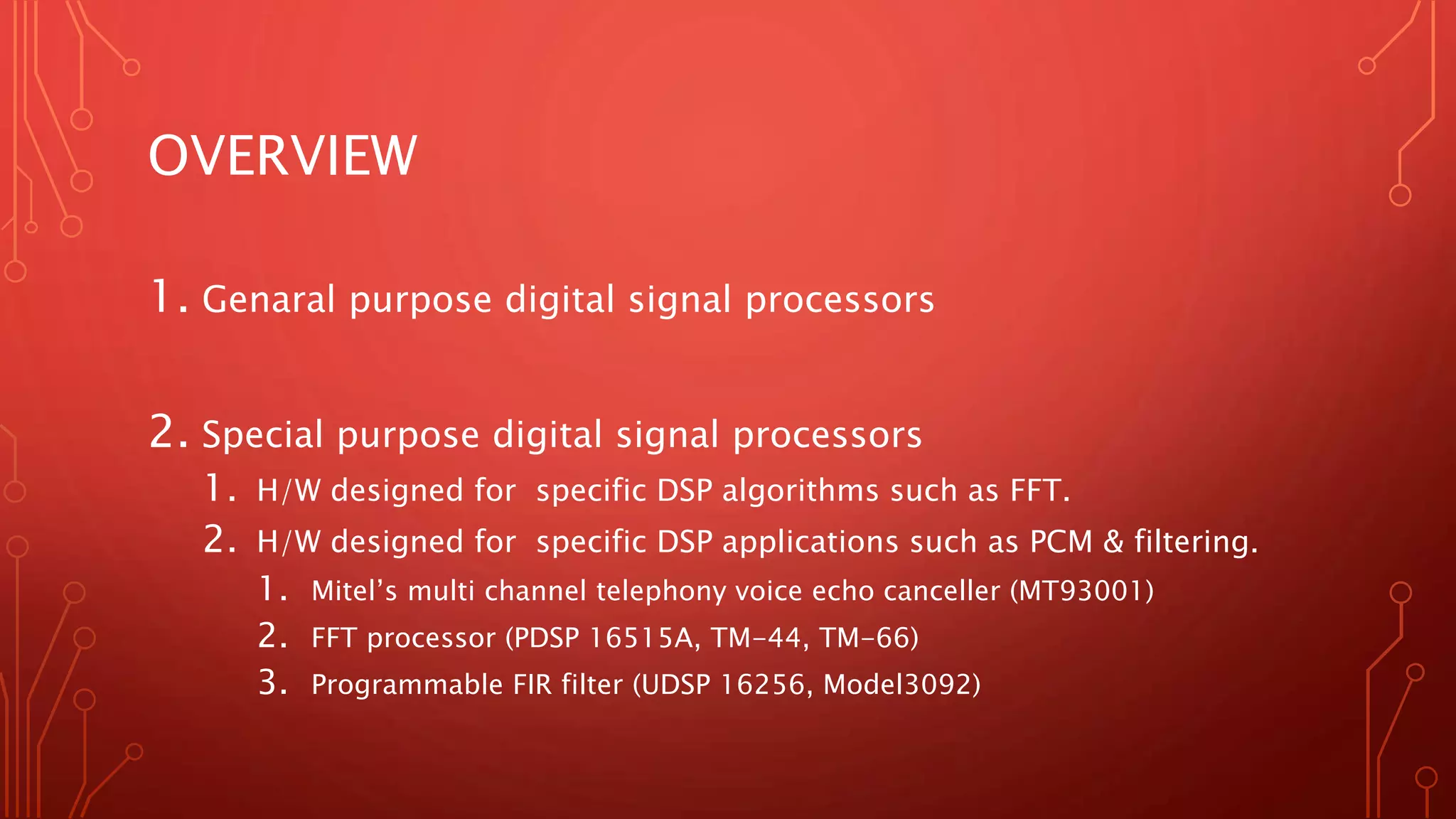
2. Special purpose digital signal processors 
1. H/W designed for specific DSP algorithms such as FFT. 
2. H/W designed for specific DSP applications such as PCM & filtering. 
1. Mitel’s multi channel telephony voice echo canceller (MT93001) 
2. FFT processor (PDSP 16515A, TM-44, TM-66) 
3. Programmable FIR filter (UDSP 16256, Model3092)
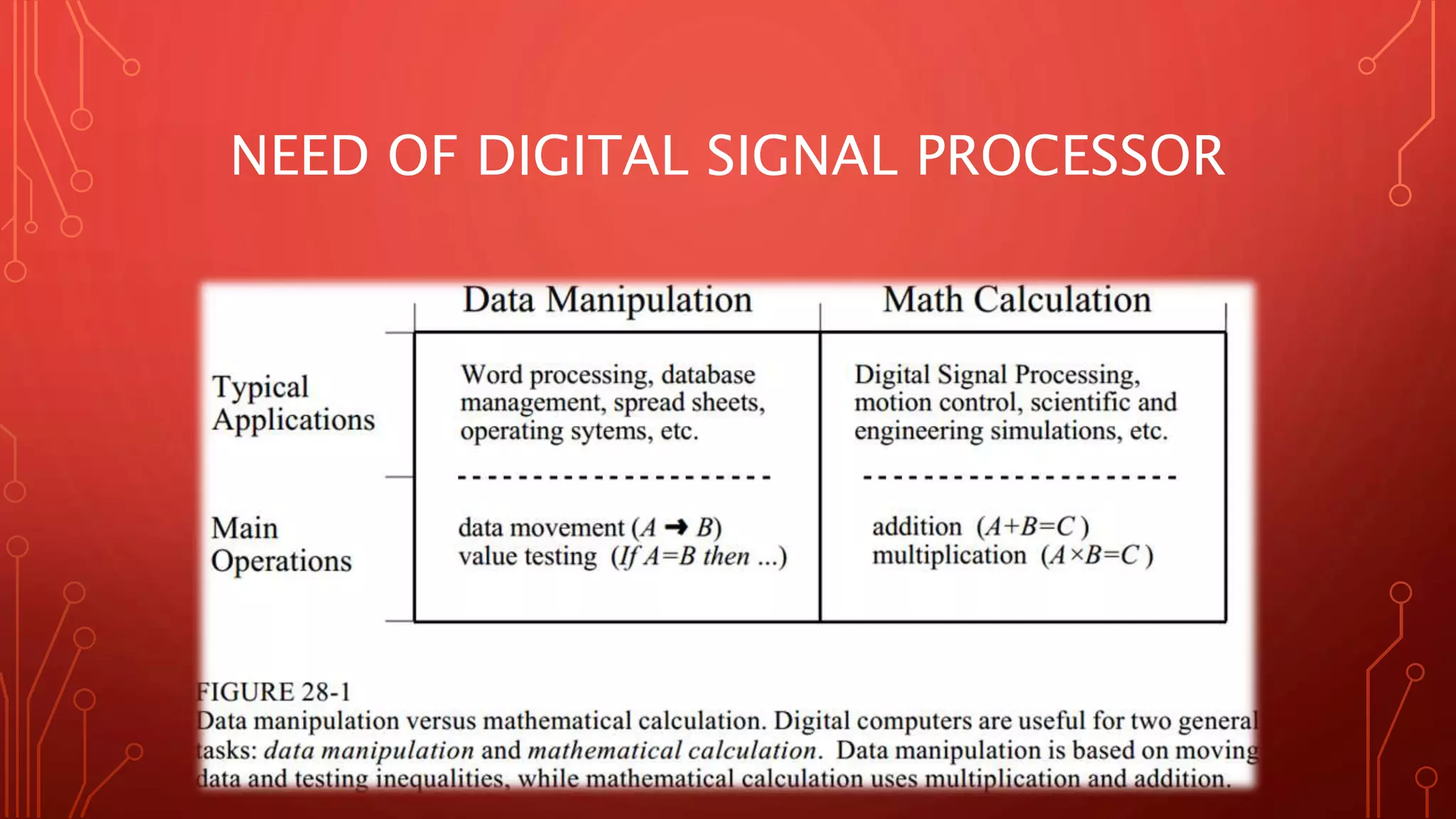
NEED OF DIGITAL SIGNAL PROCESSOR
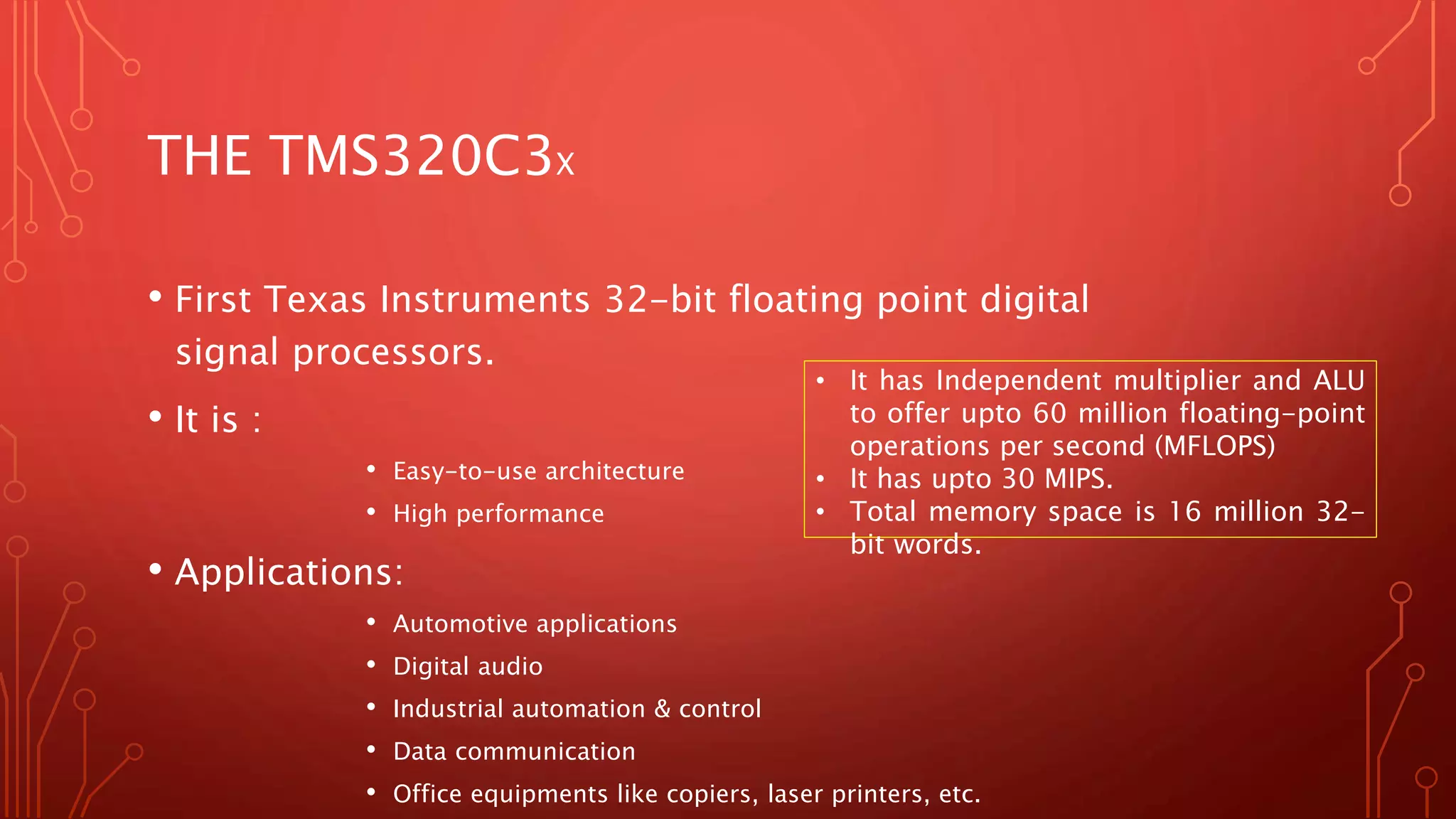
THE TMS320C3X 
• First Texas Instruments 32-bit floating point digital 
signal processors. 
• It is : 
• Easy-to-use architecture 
• High performance 
• Applications: 
• It has Independent multiplier and ALU 
to offer upto 60 million floating-point 
operations per second (MFLOPS) 
• It has upto 30 MIPS. 
• Total memory space is 16 million 32- 
bit words. 
• Automotive applications 
• Digital audio 
• Industrial automation & control 
• Data communication 
• Office equipments like copiers, laser printers, etc.
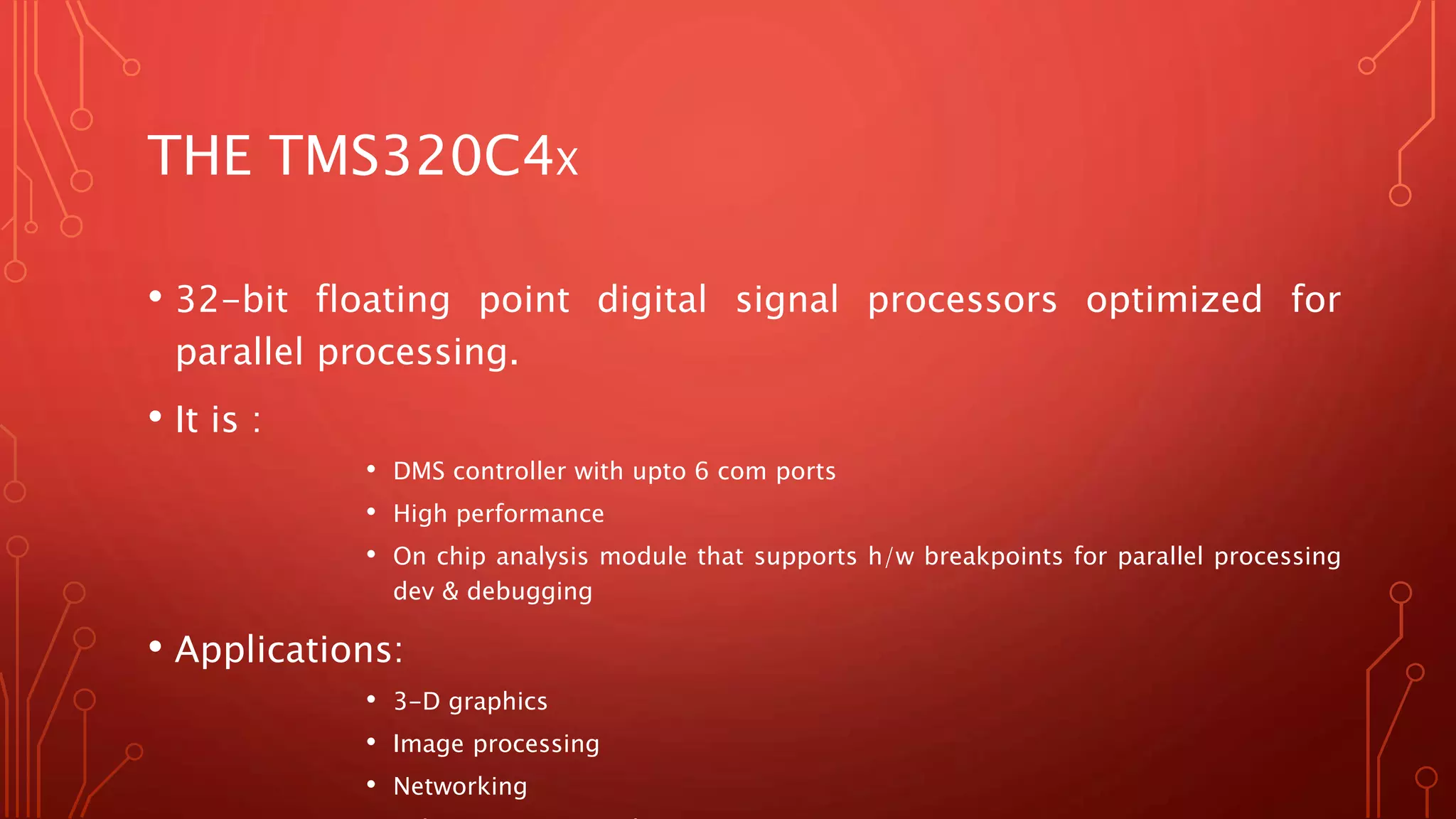
THE TMS320C4X 
• 32-bit floating point digital signal processors optimized for 
parallel processing. 
• It is : 
• DMS controller with upto 6 com ports 
• High performance 
• On chip analysis module that supports h/w breakpoints for parallel processing 
dev & debugging 
• Applications: 
• 3-D graphics 
• Image processing 
• Networking 
• Telecommunication base station
THE TMS320C5X 
• Accepts source code from the ‘C1x, ‘C2x and ‘C2xx generations. 
• It is : 
• Faster cycle times 
• On chip memories 
• A Parallel Logic Unit (PLU) 
• Zero overhead context switching 
• Block repeats differentiate the ‘C5x 
• It has also an ANSI C compiler designed for the ‘C5x, which 
translates the widely used ANSI C language directly into highly 
optimized assembly language for the ‘C5x.
THE TMS320C55X 
• 16-bit fixed-point packaged DSP processor. 
• It can execute upto 2 instructions in parallel (instruction width 8 
– 48 bits) 
• Interfaces directly to SDRAM 
• Used where large memory buffers are needed 
• Application: 
• Digital cameras 
• CD-ROM 
• Audio players
THE TMS320C62XX 
• Fixed-point DSP processor. 
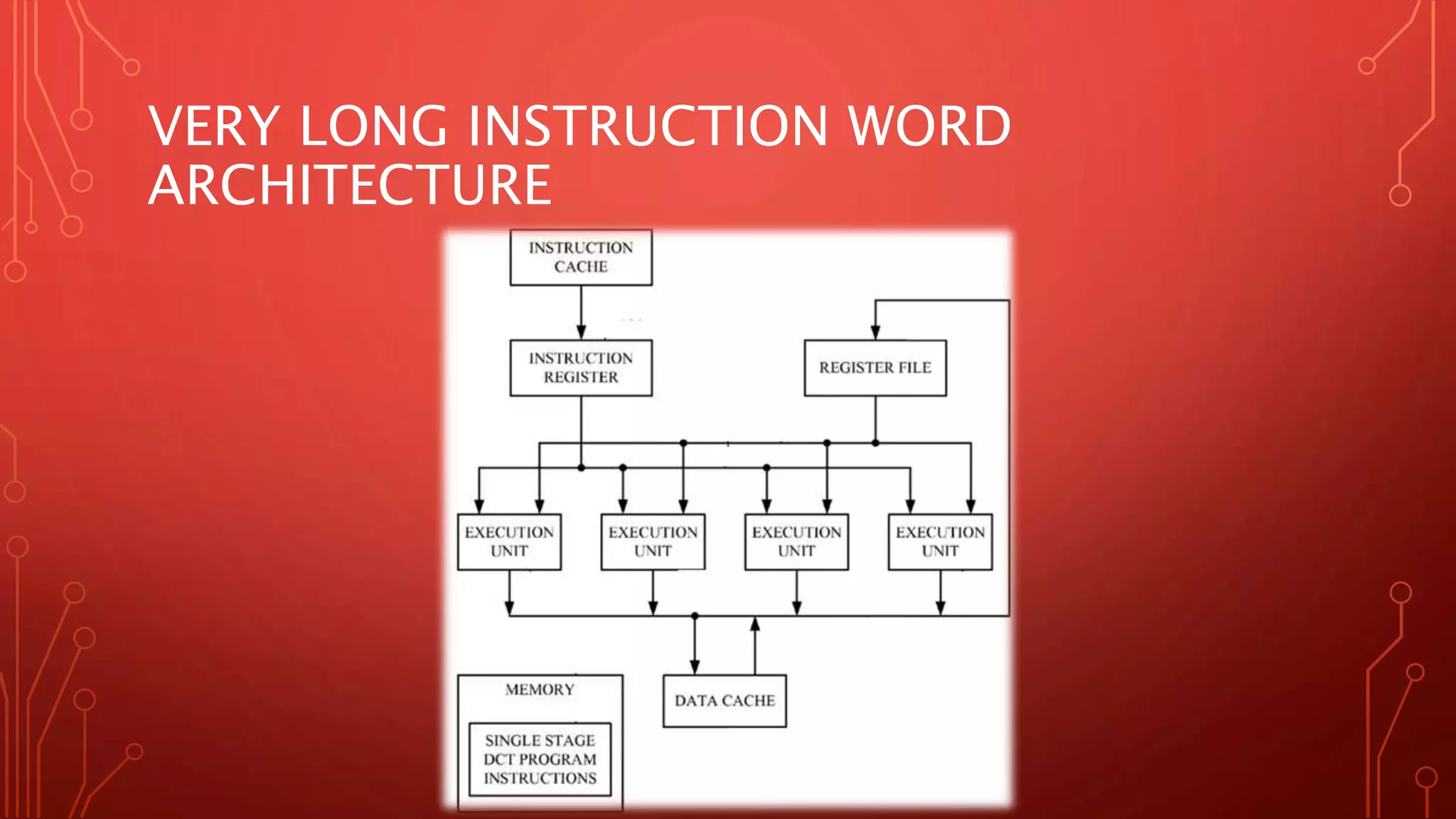
• It is based on VLIW architecture 
• For example: 
• TMS320C62xx works at 200MHz with 1.8V core supply 
• It executes upto 400 millions MACs per second.
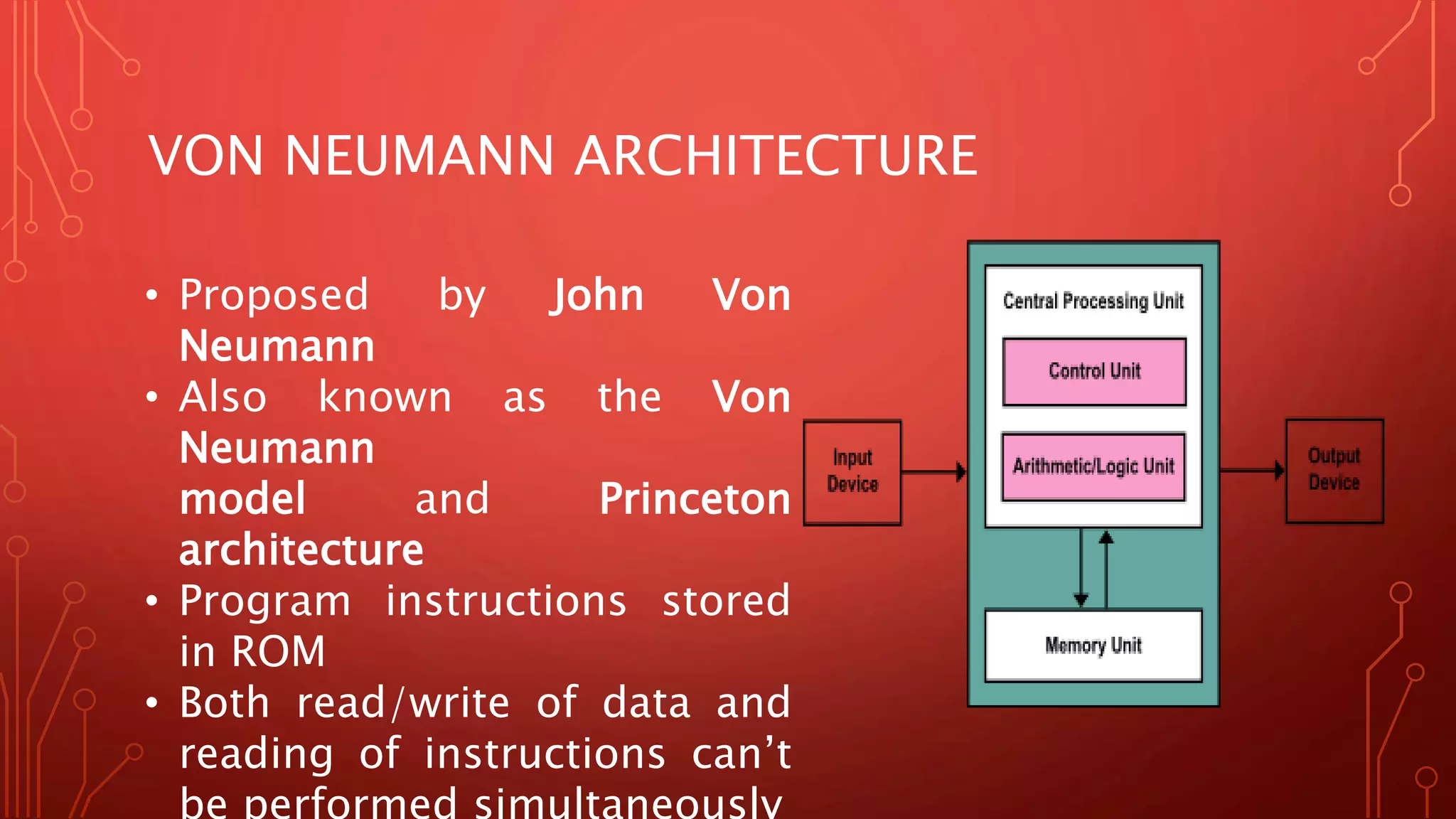
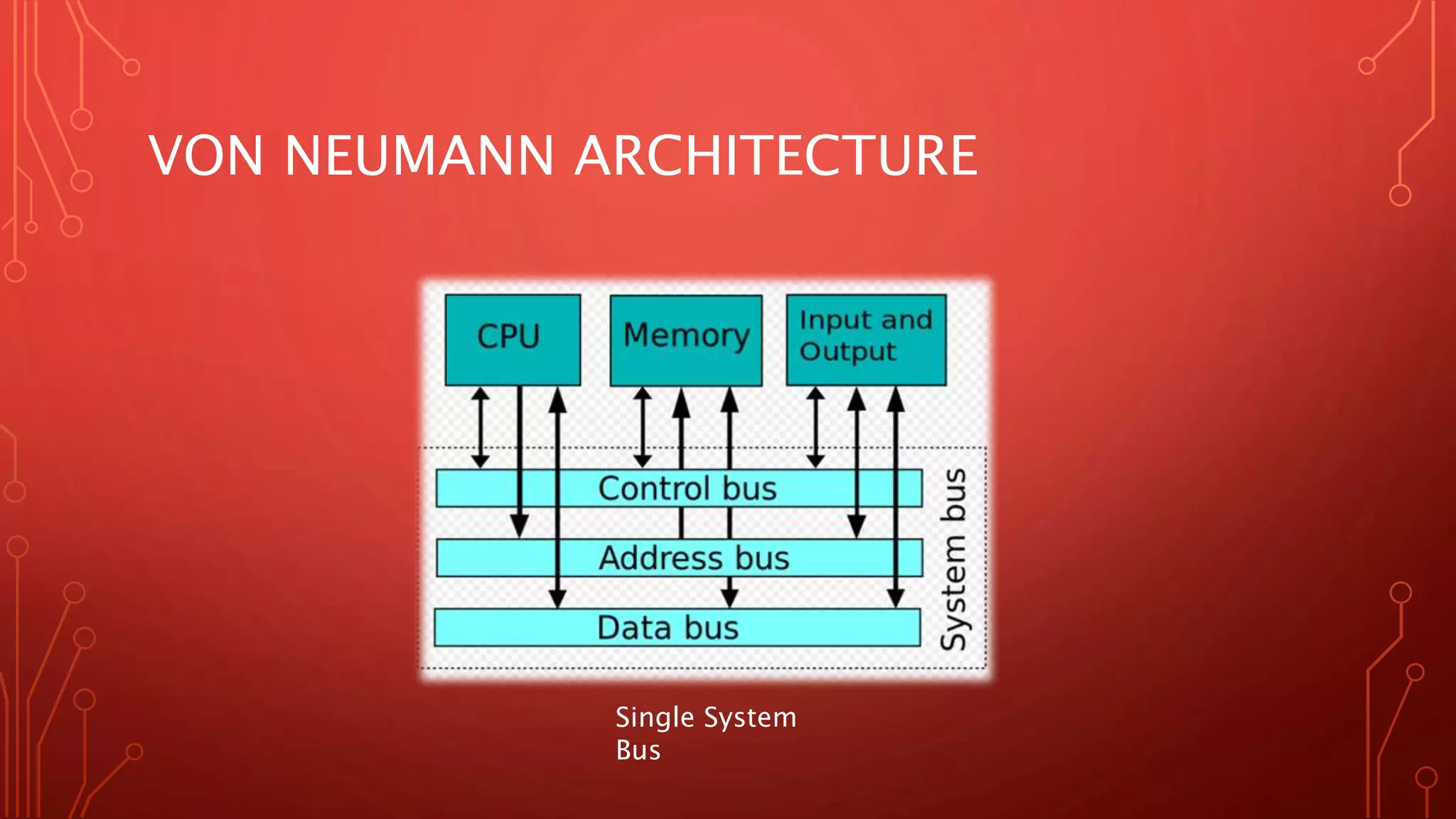
VON NEUMANN ARCHITECTURE 
• Proposed by John Von 
Neumann 
• Also known as the Von 
Neumann 
model and Princeton 
architecture 
• Program instructions stored 
in ROM 
• Both read/write of data and 
reading of instructions can’t 
be performed simultaneously
VON NEUMANN ARCHITECTURE 
Single System 
Bus
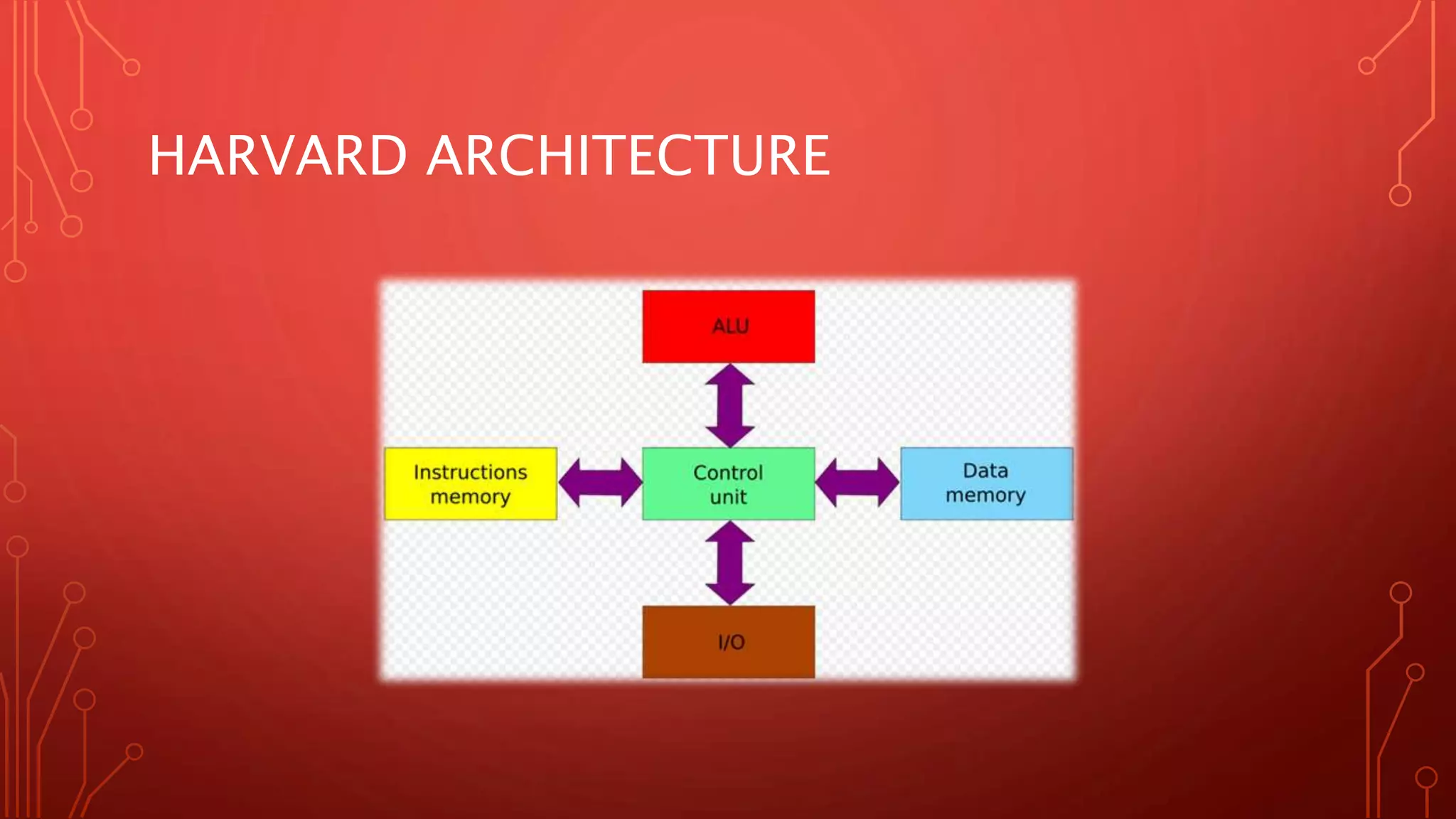
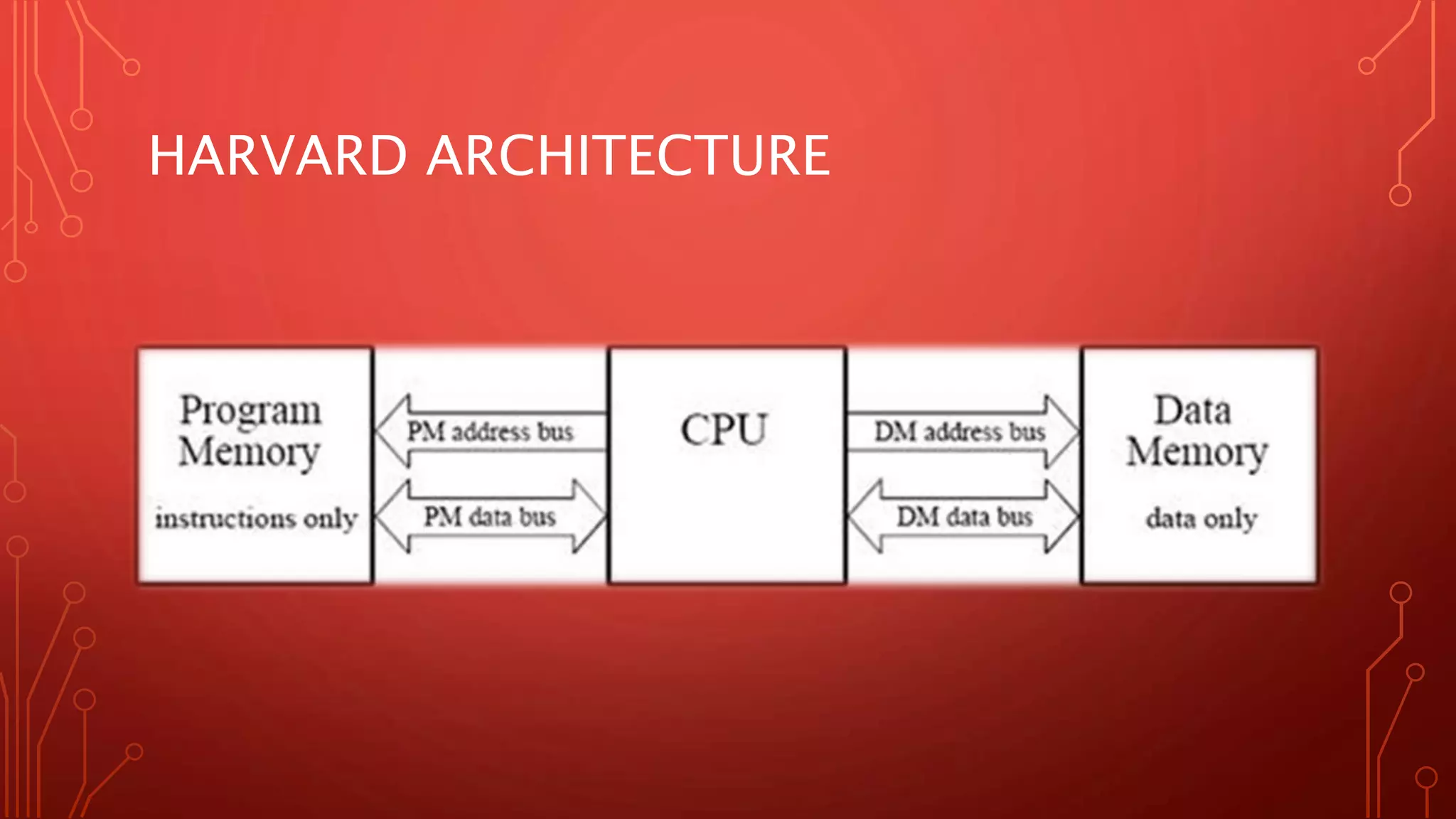
HARVARD ARCHITECTURE
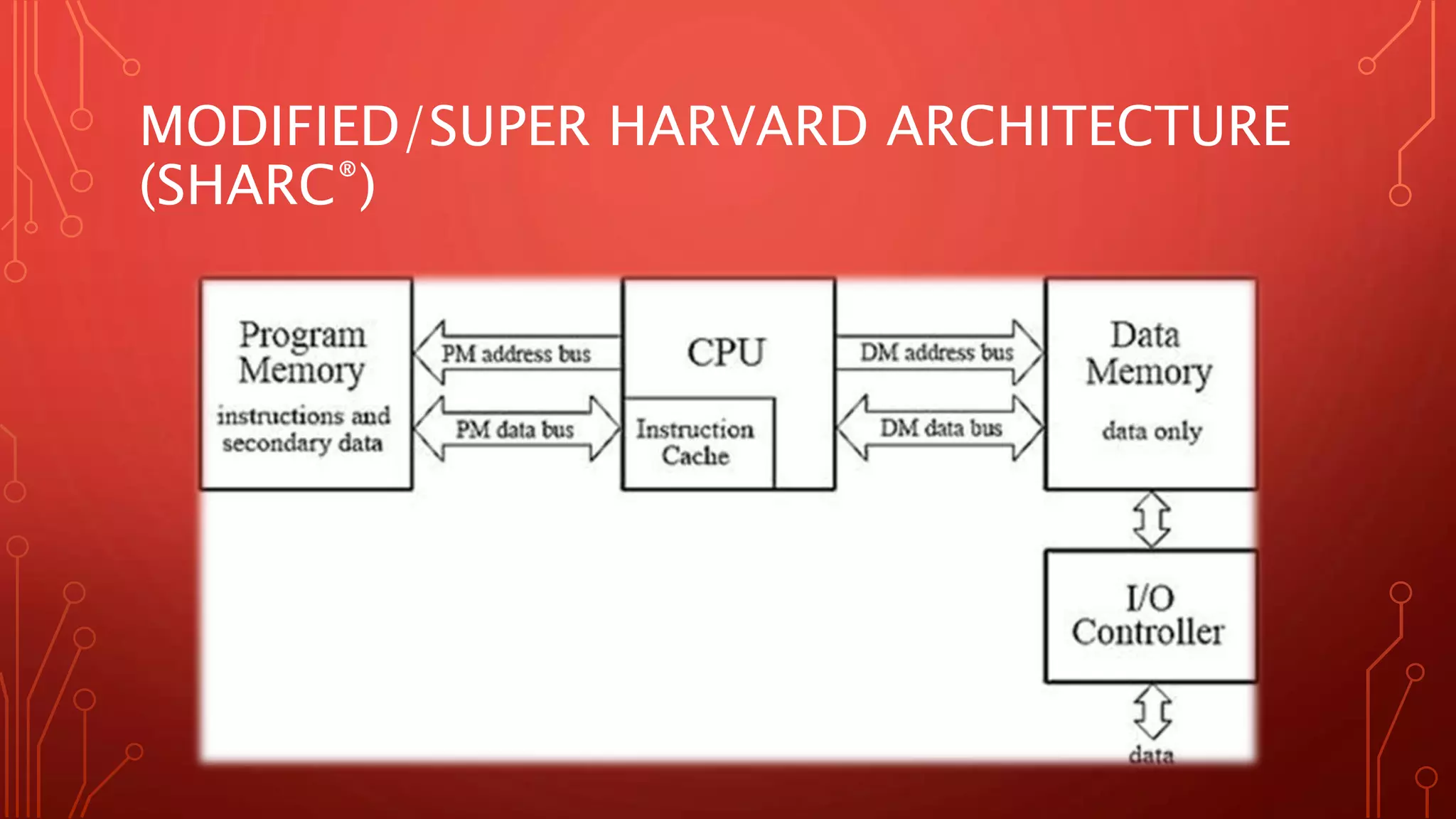
MODIFIED/SUPER HARVARD ARCHITECTURE 
(SHARC®)
VERY LONG INSTRUCTION WORD 
ARCHITECTURE
VERY LONG INSTRUCTION WORD 
ARCHITECTURE 
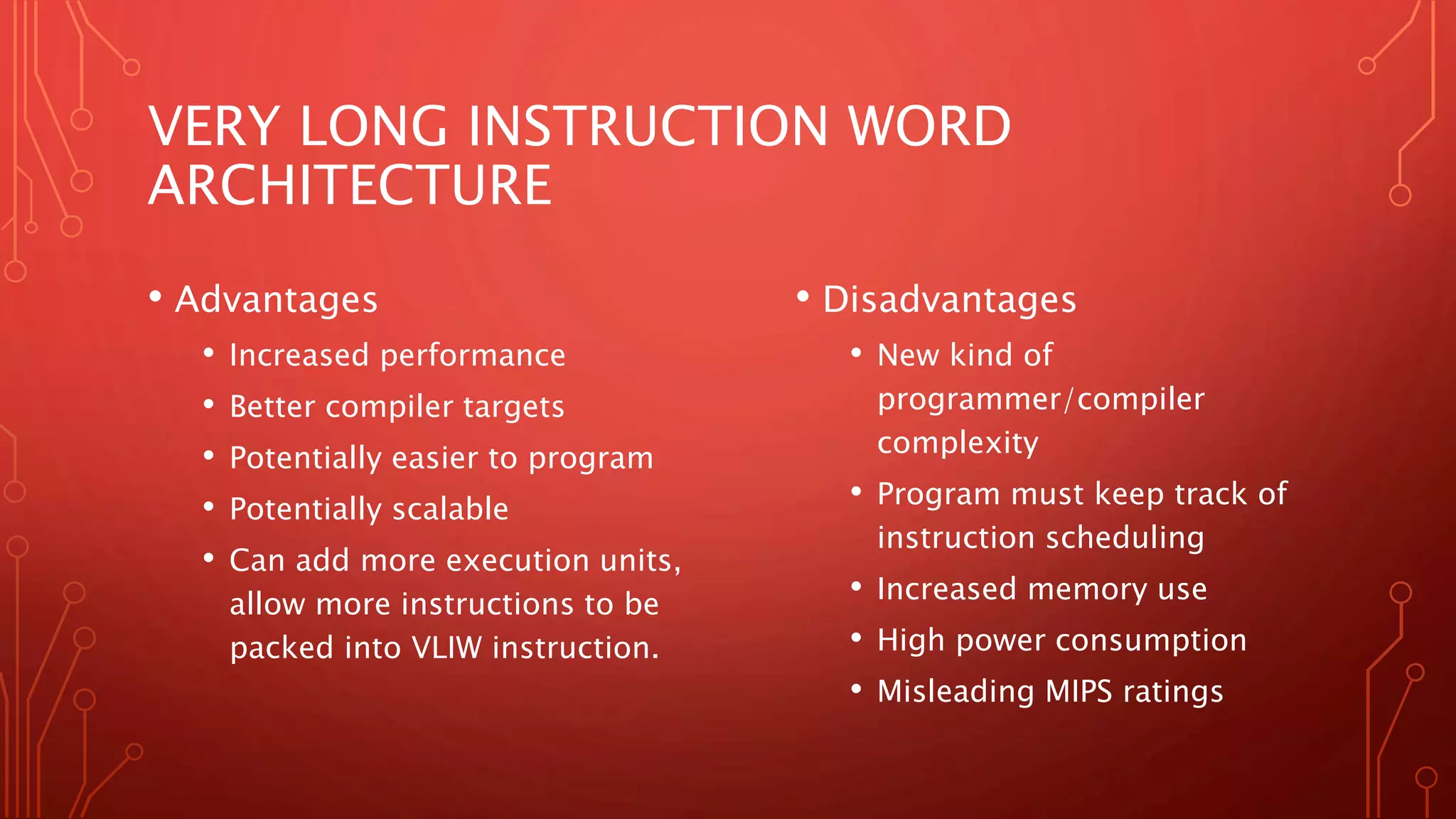
• Advantages 
• Increased performance 
• Better compiler targets 
• Potentially easier to program 
• Potentially scalable 
• Can add more execution units, 
allow more instructions to be 
packed into VLIW instruction. 
• Disadvantages 
• New kind of 
programmer/compiler 
complexity 
• Program must keep track of 
instruction scheduling 
• Increased memory use 
• High power consumption 
• Misleading MIPS ratings
Digital signal processors

Digital signal processors

  • 1.
    DIGITAL SIGNAL PROCESSORS -PREM RANJAN 14ESP003
  • 2.
    OVERVIEW 1. Genaralpurpose digital signal processors 2. Special purpose digital signal processors
  • 3.
    OVERVIEW 1. Genaralpurpose digital signal processors 1. High speed microprocessor 2. Architechture & Instruction sets optimized for DSP operations 1. Fixed point processors ( TMS320C5x, TMS320C54x, DSP563x) 2. Floating point processors (TMS320C4x, TMS320C67xx) 3. Analog devices (ADSP21xx)
  • 4.
    OVERVIEW 1. Genaralpurpose digital signal processors 2. Special purpose digital signal processors 1. H/W designed for specific DSP algorithms such as FFT. 2. H/W designed for specific DSP applications such as PCM & filtering. 1. Mitel’s multi channel telephony voice echo canceller (MT93001) 2. FFT processor (PDSP 16515A, TM-44, TM-66) 3. Programmable FIR filter (UDSP 16256, Model3092)
  • 5.
    NEED OF DIGITALSIGNAL PROCESSOR
  • 7.
    THE TMS320C3X •First Texas Instruments 32-bit floating point digital signal processors. • It is : • Easy-to-use architecture • High performance • Applications: • It has Independent multiplier and ALU to offer upto 60 million floating-point operations per second (MFLOPS) • It has upto 30 MIPS. • Total memory space is 16 million 32- bit words. • Automotive applications • Digital audio • Industrial automation & control • Data communication • Office equipments like copiers, laser printers, etc.
  • 8.
    THE TMS320C4X •32-bit floating point digital signal processors optimized for parallel processing. • It is : • DMS controller with upto 6 com ports • High performance • On chip analysis module that supports h/w breakpoints for parallel processing dev & debugging • Applications: • 3-D graphics • Image processing • Networking • Telecommunication base station
  • 9.
    THE TMS320C5X •Accepts source code from the ‘C1x, ‘C2x and ‘C2xx generations. • It is : • Faster cycle times • On chip memories • A Parallel Logic Unit (PLU) • Zero overhead context switching • Block repeats differentiate the ‘C5x • It has also an ANSI C compiler designed for the ‘C5x, which translates the widely used ANSI C language directly into highly optimized assembly language for the ‘C5x.
  • 10.
    THE TMS320C55X •16-bit fixed-point packaged DSP processor. • It can execute upto 2 instructions in parallel (instruction width 8 – 48 bits) • Interfaces directly to SDRAM • Used where large memory buffers are needed • Application: • Digital cameras • CD-ROM • Audio players
  • 11.
    THE TMS320C62XX •Fixed-point DSP processor. • It is based on VLIW architecture • For example: • TMS320C62xx works at 200MHz with 1.8V core supply • It executes upto 400 millions MACs per second.
  • 12.
    VON NEUMANN ARCHITECTURE • Proposed by John Von Neumann • Also known as the Von Neumann model and Princeton architecture • Program instructions stored in ROM • Both read/write of data and reading of instructions can’t be performed simultaneously
  • 13.
    VON NEUMANN ARCHITECTURE Single System Bus
  • 14.
  • 15.
  • 16.
  • 17.
    VERY LONG INSTRUCTIONWORD ARCHITECTURE
  • 18.
    VERY LONG INSTRUCTIONWORD ARCHITECTURE • Advantages • Increased performance • Better compiler targets • Potentially easier to program • Potentially scalable • Can add more execution units, allow more instructions to be packed into VLIW instruction. • Disadvantages • New kind of programmer/compiler complexity • Program must keep track of instruction scheduling • Increased memory use • High power consumption • Misleading MIPS ratings