Kalyan Kumar Kalita 
M.Tech(ECE) 
Roll No:- 1403206003 
GIMT Azara 
E-mail: kalita.k3@gmail.com 
10/30/2014 1
Dynamic Logic 
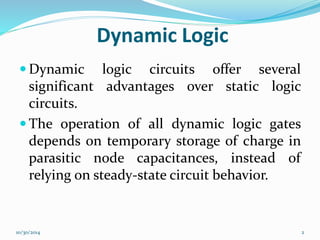
 Dynamic logic circuits offer several 
significant advantages over static logic 
circuits. 
 The operation of all dynamic logic gates 
depends on temporary storage of charge in 
parasitic node capacitances, instead of 
relying on steady-state circuit behavior. 
10/30/2014 2
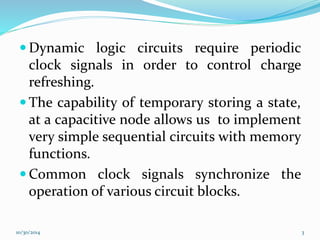
 Dynamic logic circuits require periodic 
clock signals in order to control charge 
refreshing. 
 The capability of temporary storing a state, 
at a capacitive node allows us to implement 
very simple sequential circuits with memory 
functions. 
Common clock signals synchronize the 
operation of various circuit blocks. 
10/30/2014 3
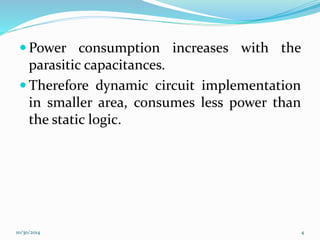
 Power consumption increases with the 
parasitic capacitances. 
 Therefore dynamic circuit implementation 
in smaller area, consumes less power than 
the static logic. 
10/30/2014 4
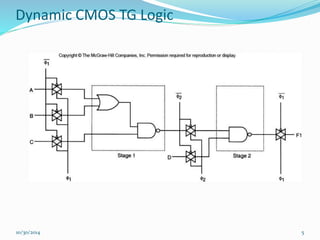
Dynamic CMOS TG Logic 
10/30/2014 5
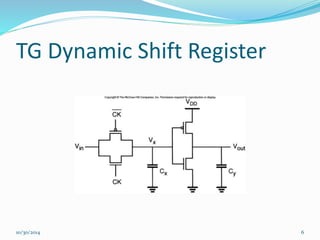
TG Dynamic Shift Register 
10/30/2014 6
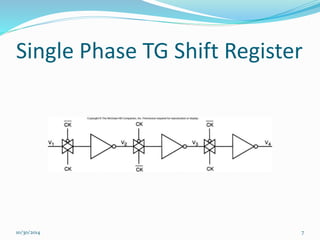
Single Phase TG Shift Register 
10/30/2014 7
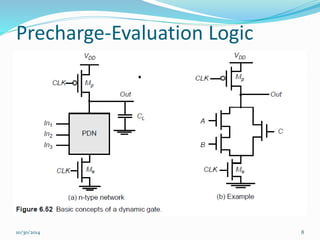
Precharge-Evaluation Logic 
10/30/2014 8
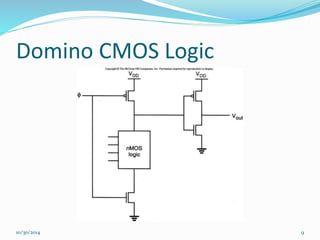
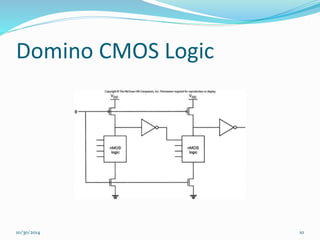
Domino CMOS Logic 
10/30/2014 9
Domino CMOS Logic 
10/30/2014 10
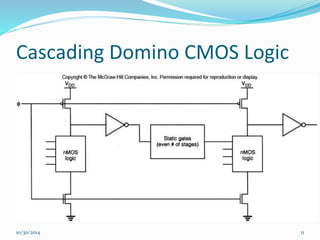
Cascading Domino CMOS Logic 
10/30/2014 11
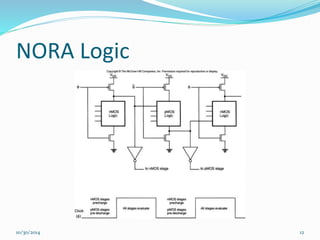
NORA Logic 
10/30/2014 12
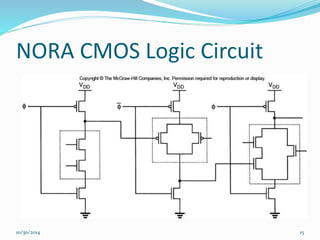
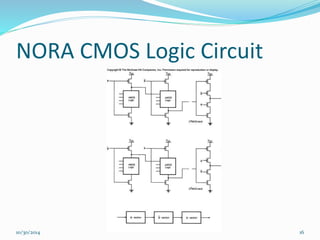
 When the clk signal is low, the output nodes of nMOS 
logic blocks are pre-charged to VDD through the pMOS 
pre-charge transistors, whereas the output nodes of 
pMOS logic blocks are pre-discharged to 0V through 
the nMOS discharge transistors driven by ø. 
10/30/2014 13
 When the clock signal makes a low to high transition, 
where as the inverted signal makes a high-to-low 
transition simultaneously, all cascaded nMOS and 
pMOS logic states evaluate one after the other, much 
like the domino CMOS Logic. 
 The advantage of NORA CMOS logic is that a static 
CMOS inverter is not required at the output of every 
dynamic logic stage. 
10/30/2014 14
NORA CMOS Logic Circuit 
10/30/2014 15
NORA CMOS Logic Circuit 
10/30/2014 16
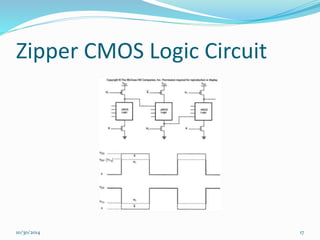
Zipper CMOS Logic Circuit 
10/30/2014 17
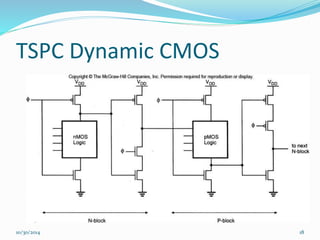
TSPC Dynamic CMOS 
10/30/2014 18
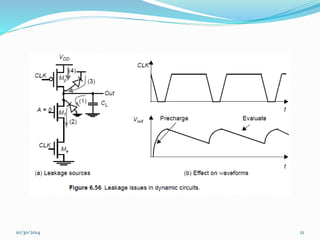
Charge Leakage 
 The operation of a dynamic gate relies on the dynamic 
storage of the output value on a capacitor. If the pull-down 
network is off, the output should remain at the 
precharged state of VDD during the evaluation stage. 
This current gradually leaks away due to leakage 
currents. 
Source 1 and 2 are the reversed-biased diode and 
subthreshold leakage of the NMOS pull-down device 
M1, respectively. The charge stored on CL will slowly 
leak away through these leakage channels. 
10/30/2014 19
Dynamic circuit therefore require a minimal clock rate, 
which is typically on the order of a few kHz. Note that 
the PMOS precharge device also contributes some 
leakage current due to the reverse bias diode and the 
subthreshold conduction. 
Leakage is caused by the high-impedance state of the 
output node during the evaluate mode, when the pull-down 
path is turned off. The leakage problem may be 
counteracted by reducing the output impedance on 
the output node during evaluation. This is often done 
by adding a bleeder transistor. The only function of the 
bleeder –an NMOS style pull-up device. 
10/30/2014 20
10/30/2014 21
Charge Sharing 
10/30/2014 22
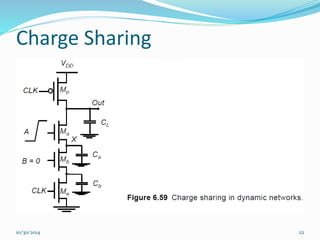
Another important concern in dynamic logic is the 
impact of change sharing. During the precharge phase, 
the output node is precharged to VDD. Assume that all 
inputs are set to 0 during precharge, and that the 
capacitance Ca is discharged. Assume further that 
input B remains at 0 during evaluation, while input A 
makes a 0-1 transition, turning transistor Ma on. The 
change stored originally on capacitor CL is 
redistributed over CL and Ca. This causes a drop in the 
output voltage, which cannot be recovered due to the 
dynamic nature of the circuit. 
10/30/2014 23
Thank U 
10/30/2014 24

Dynamic logic circuits

  • 1.
    Kalyan Kumar Kalita M.Tech(ECE) Roll No:- 1403206003 GIMT Azara E-mail: kalita.k3@gmail.com 10/30/2014 1
  • 2.
    Dynamic Logic Dynamic logic circuits offer several significant advantages over static logic circuits.  The operation of all dynamic logic gates depends on temporary storage of charge in parasitic node capacitances, instead of relying on steady-state circuit behavior. 10/30/2014 2
  • 3.
     Dynamic logiccircuits require periodic clock signals in order to control charge refreshing.  The capability of temporary storing a state, at a capacitive node allows us to implement very simple sequential circuits with memory functions. Common clock signals synchronize the operation of various circuit blocks. 10/30/2014 3
  • 4.
     Power consumptionincreases with the parasitic capacitances.  Therefore dynamic circuit implementation in smaller area, consumes less power than the static logic. 10/30/2014 4
  • 5.
    Dynamic CMOS TGLogic 10/30/2014 5
  • 6.
    TG Dynamic ShiftRegister 10/30/2014 6
  • 7.
    Single Phase TGShift Register 10/30/2014 7
  • 8.
  • 9.
    Domino CMOS Logic 10/30/2014 9
  • 10.
    Domino CMOS Logic 10/30/2014 10
  • 11.
    Cascading Domino CMOSLogic 10/30/2014 11
  • 12.
  • 13.
     When theclk signal is low, the output nodes of nMOS logic blocks are pre-charged to VDD through the pMOS pre-charge transistors, whereas the output nodes of pMOS logic blocks are pre-discharged to 0V through the nMOS discharge transistors driven by ø. 10/30/2014 13
  • 14.
     When theclock signal makes a low to high transition, where as the inverted signal makes a high-to-low transition simultaneously, all cascaded nMOS and pMOS logic states evaluate one after the other, much like the domino CMOS Logic.  The advantage of NORA CMOS logic is that a static CMOS inverter is not required at the output of every dynamic logic stage. 10/30/2014 14
  • 15.
    NORA CMOS LogicCircuit 10/30/2014 15
  • 16.
    NORA CMOS LogicCircuit 10/30/2014 16
  • 17.
    Zipper CMOS LogicCircuit 10/30/2014 17
  • 18.
    TSPC Dynamic CMOS 10/30/2014 18
  • 19.
    Charge Leakage The operation of a dynamic gate relies on the dynamic storage of the output value on a capacitor. If the pull-down network is off, the output should remain at the precharged state of VDD during the evaluation stage. This current gradually leaks away due to leakage currents. Source 1 and 2 are the reversed-biased diode and subthreshold leakage of the NMOS pull-down device M1, respectively. The charge stored on CL will slowly leak away through these leakage channels. 10/30/2014 19
  • 20.
    Dynamic circuit thereforerequire a minimal clock rate, which is typically on the order of a few kHz. Note that the PMOS precharge device also contributes some leakage current due to the reverse bias diode and the subthreshold conduction. Leakage is caused by the high-impedance state of the output node during the evaluate mode, when the pull-down path is turned off. The leakage problem may be counteracted by reducing the output impedance on the output node during evaluation. This is often done by adding a bleeder transistor. The only function of the bleeder –an NMOS style pull-up device. 10/30/2014 20
  • 21.
  • 22.
  • 23.
    Another important concernin dynamic logic is the impact of change sharing. During the precharge phase, the output node is precharged to VDD. Assume that all inputs are set to 0 during precharge, and that the capacitance Ca is discharged. Assume further that input B remains at 0 during evaluation, while input A makes a 0-1 transition, turning transistor Ma on. The change stored originally on capacitor CL is redistributed over CL and Ca. This causes a drop in the output voltage, which cannot be recovered due to the dynamic nature of the circuit. 10/30/2014 23
  • 24.