Downloaded 1,254 times

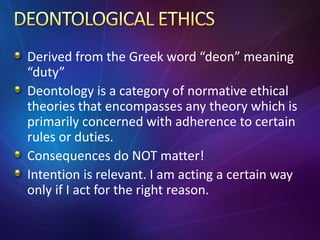

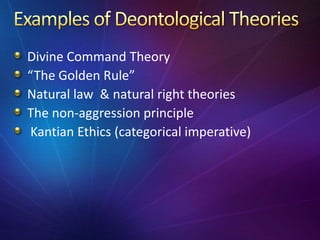



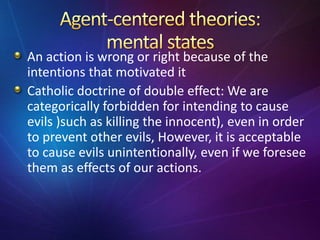





Deontological ethics focuses on adherence to rules of duty, rather than consequences. Actions are judged based on whether they conform to moral norms, regardless of outcomes. Key aspects of deontological ethics include: intentions matter more than consequences; actions can be right or wrong based on adherence to principles like duties, rights, and maxims. Examples of deontological theories include divine command theory and Kantian ethics. Deontological ethics differs from consequentialism, which judges actions based on their outcomes, and virtue ethics, which focuses on character development.


![Ethical theories[1]](https://cdn.slidesharecdn.com/ss_thumbnails/ethicaltheories1-150205060146-conversion-gate01-thumbnail.jpg?width=640&height=640&fit=bounds)


