Downloaded 613 times

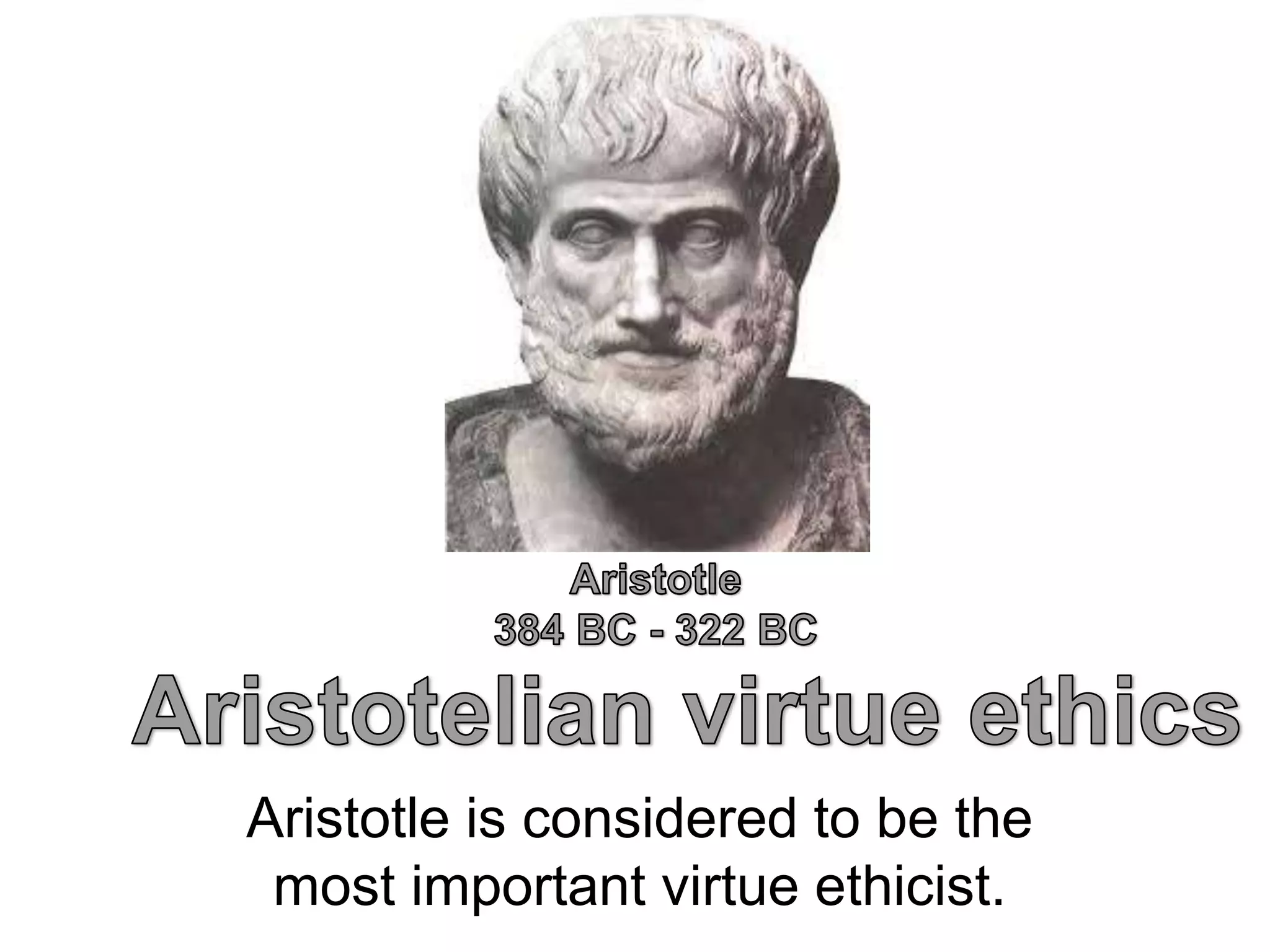
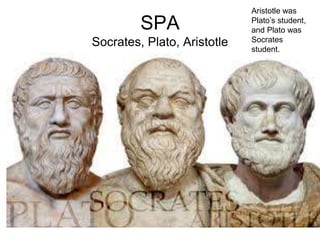
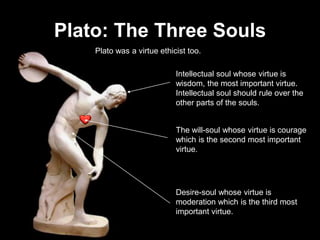
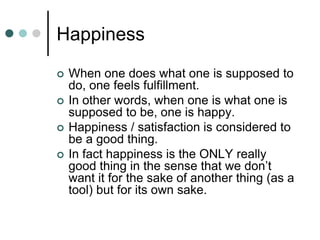

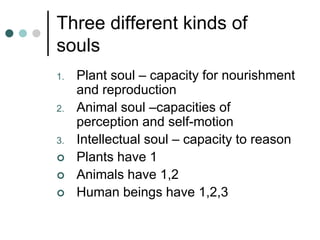
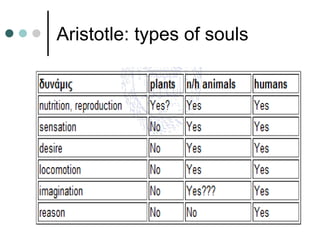
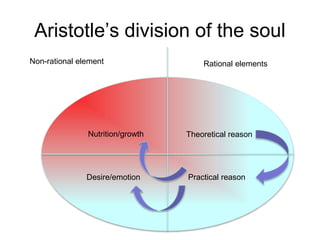
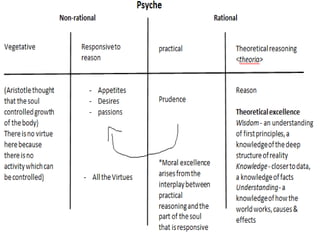

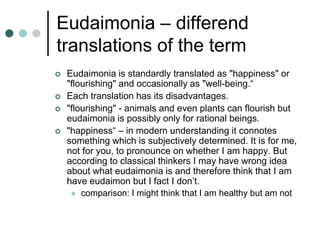
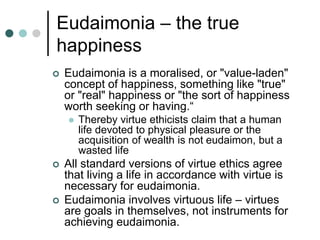




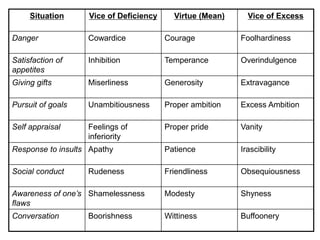
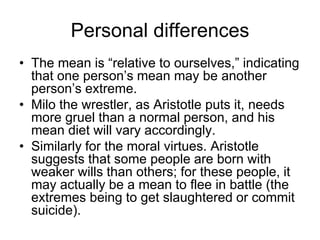








Aristotle is considered the most important virtue ethicist. He argues that happiness, or eudaimonia, consists in living according to virtue. For Aristotle, virtue is a mean between deficiencies and excesses of emotions and actions. The virtuous person feels and acts moderately in various situations. Aristotle identifies several intellectual and moral virtues. Intellectual virtues like practical wisdom can be learned, while moral virtues become ingrained through practice and habit. True happiness is achieved by cultivating moral excellence and using reason to guide our desires toward what is good.


