FREEDOM & MORAL ACTS
ETHICS – LESSON 5
Content
a. The Foundation of Moral Act
b. Freedom and Free will
c. Human Act vs. Acts of Human
The Foundation of Moral Act
Freedom as the foundation of Moral Act
According to Immanuel Kant we can make sense of
moral appraisal and responsibility only by thinking
about human freedom.
Good moral actions make us freer; bad moral
actions make us a slave to our sin.
Freedom and Free will
FREEDOM
According to Oxford Languages, Freedom
is the power or right to act, speak or think
as one wants without hindrance or
restraint.
a measure or condition that keeps someone or something
under control or within limits.
QUESTION
Since Freedom is the power or right to
act, speak or think as one wants without
hindrance or restraint, does it mean
that FREEDOM is NOT bounded with
rules?
To help us analyze this question, let us
take a look at the scenario in the next
slide.
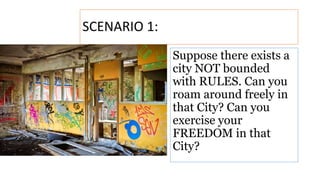
SCENARIO 1:
Suppose there exists a
city NOT bounded
with RULES. Can you
roam around freely in
that City? Can you
exercise your
FREEDOM in that
City?
QUESTION
Is FREEDOM NOT bounded with rules?
FREE WILL
According to Oxford Languages, Free will is the
idea that we are able to have some choice on
how we act and assumes that we are free to
choose our behavior.
Human Act vs Acts of Human
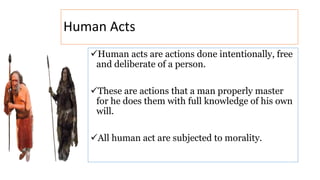
Human Acts
Human acts are actions done intentionally, free
and deliberate of a person.
These are actions that a man properly master
for he does them with full knowledge of his own
will.
All human act are subjected to morality.
Acts of Human
Natural involuntary actions.
Acts of person without the proper use of
reason.
Actions which are performed without the
intervention of the intellect and the free will.
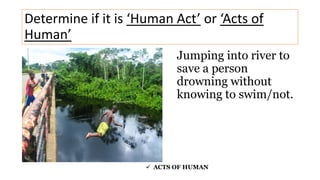
Jumping into river to
save a person
drowning without
knowing to swim/not.
Determine if it is ‘Human Act’ or ‘Acts of
Human’
 ACTS OF HUMAN
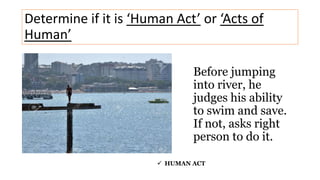
Determine if it is ‘Human Act’ or ‘Acts of
Human’
Before jumping
into river, he
judges his ability
to swim and save.
If not, asks right
person to do it.
 HUMAN ACT
CULTURE & MORALITY
ETHICS – LESSON 6
Culture
• Culture is the patterns of learned and shared
behavior and beliefs of a particular social,
ethnic, or age group. It can also be described
as the complex whole of collective human
beliefs with a structured stage of civilization
that can be specific to a nation or time period.
Humans in turn use culture to adapt and
transform the world they live in.
Give one example of culture.
Culture
QUESTION
Do you think that Culture
can affect the Moral
Development of a person?
The influence of Culture in Moral
Development
Moral development is strongly influenced by
interpersonal factors, such as family, peers, and
culture.
Intrapersonal factors also impact moral
development, such as cognitive changes,
emotions, and even neurodevelopment.
DYNAMICS OF CULTURE
ETHICS – LESSON 7
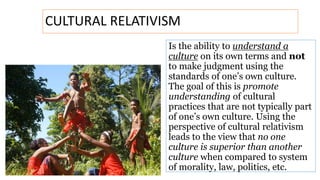
CULTURAL RELATIVISM
Is the ability to understand a
culture on its own terms and not
to make judgment using the
standards of one’s own culture.
The goal of this is promote
understanding of cultural
practices that are not typically part
of one’s own culture. Using the
perspective of cultural relativism
leads to the view that no one
culture is superior than another
culture when compared to system
of morality, law, politics, etc.
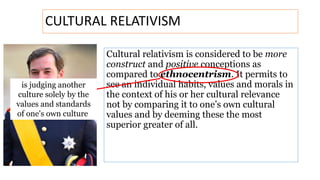
Cultural relativism is considered to be more
construct and positive conceptions as
compared to ethnocentrism. It permits to
see an individual habits, values and morals in
the context of his or her cultural relevance
not by comparing it to one’s own cultural
values and by deeming these the most
superior greater of all.
CULTURAL RELATIVISM
is judging another
culture solely by the
values and standards
of one's own culture
Cultural relativism is widely accepted in modern
anthropology. Cultural relativism believes that all
culture are worthy in their own right and are of
equal value. Diversity of cultures, even those with
conflicting moral beliefs, is not to be considered in
terms of right and wrong or good and bad. Today’s
anthropologist consider all cultures to be equally
legitimate expressions of human existence, to be
studied from a purely neutral perspective.
CULTURAL RELATIVISM
QUESTIONS?
One of the tips to make your Academic Writing
look good – Follow the format
INTRODUCTION – A paragraph, at least, introducing the problem/s, the
situation, or the scenario. You can also start with a ‘saying’ but should be related
with the scenario. Ex. “A stone hitting two birds” is a common … or “The problem
consists of …”
BODY – Your main point or answer for that question. The main reason and
justification of your claim. Use facts to establish a solid support on your claims.
Ex. According to Dela Cruz (2021), …
CONCLUSION – Make a conclusive paragraph or an ending which connects your
introduction and body. A closing statement or a short summary of your point.

FREEDOM & Moral Acts: ETHICS

  • 1.
    FREEDOM & MORALACTS ETHICS – LESSON 5
  • 2.
    Content a. The Foundationof Moral Act b. Freedom and Free will c. Human Act vs. Acts of Human
  • 3.
    The Foundation ofMoral Act Freedom as the foundation of Moral Act According to Immanuel Kant we can make sense of moral appraisal and responsibility only by thinking about human freedom. Good moral actions make us freer; bad moral actions make us a slave to our sin.
  • 4.
    Freedom and Freewill FREEDOM According to Oxford Languages, Freedom is the power or right to act, speak or think as one wants without hindrance or restraint. a measure or condition that keeps someone or something under control or within limits.
  • 5.
    QUESTION Since Freedom isthe power or right to act, speak or think as one wants without hindrance or restraint, does it mean that FREEDOM is NOT bounded with rules? To help us analyze this question, let us take a look at the scenario in the next slide.
  • 6.
    SCENARIO 1: Suppose thereexists a city NOT bounded with RULES. Can you roam around freely in that City? Can you exercise your FREEDOM in that City?
  • 7.
    QUESTION Is FREEDOM NOTbounded with rules?
  • 8.
    FREE WILL According toOxford Languages, Free will is the idea that we are able to have some choice on how we act and assumes that we are free to choose our behavior.
  • 9.
    Human Act vsActs of Human
  • 10.
    Human Acts Human actsare actions done intentionally, free and deliberate of a person. These are actions that a man properly master for he does them with full knowledge of his own will. All human act are subjected to morality.
  • 11.
    Acts of Human Naturalinvoluntary actions. Acts of person without the proper use of reason. Actions which are performed without the intervention of the intellect and the free will.
  • 12.
    Jumping into riverto save a person drowning without knowing to swim/not. Determine if it is ‘Human Act’ or ‘Acts of Human’  ACTS OF HUMAN
  • 13.
    Determine if itis ‘Human Act’ or ‘Acts of Human’ Before jumping into river, he judges his ability to swim and save. If not, asks right person to do it.  HUMAN ACT
  • 14.
  • 15.
    Culture • Culture isthe patterns of learned and shared behavior and beliefs of a particular social, ethnic, or age group. It can also be described as the complex whole of collective human beliefs with a structured stage of civilization that can be specific to a nation or time period. Humans in turn use culture to adapt and transform the world they live in.
  • 16.
    Give one exampleof culture. Culture
  • 17.
    QUESTION Do you thinkthat Culture can affect the Moral Development of a person?
  • 18.
    The influence ofCulture in Moral Development Moral development is strongly influenced by interpersonal factors, such as family, peers, and culture. Intrapersonal factors also impact moral development, such as cognitive changes, emotions, and even neurodevelopment.
  • 19.
  • 20.
    CULTURAL RELATIVISM Is theability to understand a culture on its own terms and not to make judgment using the standards of one’s own culture. The goal of this is promote understanding of cultural practices that are not typically part of one’s own culture. Using the perspective of cultural relativism leads to the view that no one culture is superior than another culture when compared to system of morality, law, politics, etc.
  • 21.
    Cultural relativism isconsidered to be more construct and positive conceptions as compared to ethnocentrism. It permits to see an individual habits, values and morals in the context of his or her cultural relevance not by comparing it to one’s own cultural values and by deeming these the most superior greater of all. CULTURAL RELATIVISM is judging another culture solely by the values and standards of one's own culture
  • 22.
    Cultural relativism iswidely accepted in modern anthropology. Cultural relativism believes that all culture are worthy in their own right and are of equal value. Diversity of cultures, even those with conflicting moral beliefs, is not to be considered in terms of right and wrong or good and bad. Today’s anthropologist consider all cultures to be equally legitimate expressions of human existence, to be studied from a purely neutral perspective. CULTURAL RELATIVISM
  • 23.
  • 24.
    One of thetips to make your Academic Writing look good – Follow the format INTRODUCTION – A paragraph, at least, introducing the problem/s, the situation, or the scenario. You can also start with a ‘saying’ but should be related with the scenario. Ex. “A stone hitting two birds” is a common … or “The problem consists of …” BODY – Your main point or answer for that question. The main reason and justification of your claim. Use facts to establish a solid support on your claims. Ex. According to Dela Cruz (2021), … CONCLUSION – Make a conclusive paragraph or an ending which connects your introduction and body. A closing statement or a short summary of your point.