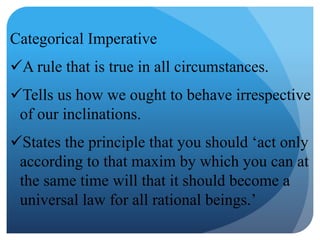
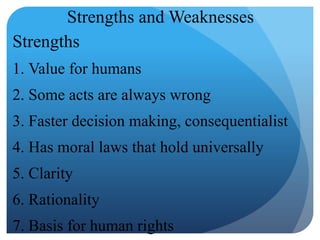
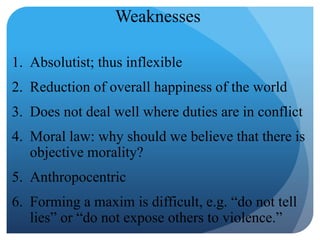
Deontological ethics is a theory that bases the morality of actions on duties and rights rather than the consequences of the actions. It proposes that an action is right if it adheres to a moral rule or duty. Immanuel Kant's theory of deontology is one of the most influential. For Kant, the only intrinsically good thing is a good will. He formulated the Categorical Imperative which states that moral rules must be universal and that people should never be treated merely as a means but always as ends in themselves. Deontological ethics emphasizes adherence to rules and duties over consequences, but it is criticized for being too rigid and not dealing well with conflicts between duties.














![Ethical theories[1]](https://cdn.slidesharecdn.com/ss_thumbnails/ethicaltheories1-150205060146-conversion-gate01-thumbnail.jpg?width=640&height=640&fit=bounds)


