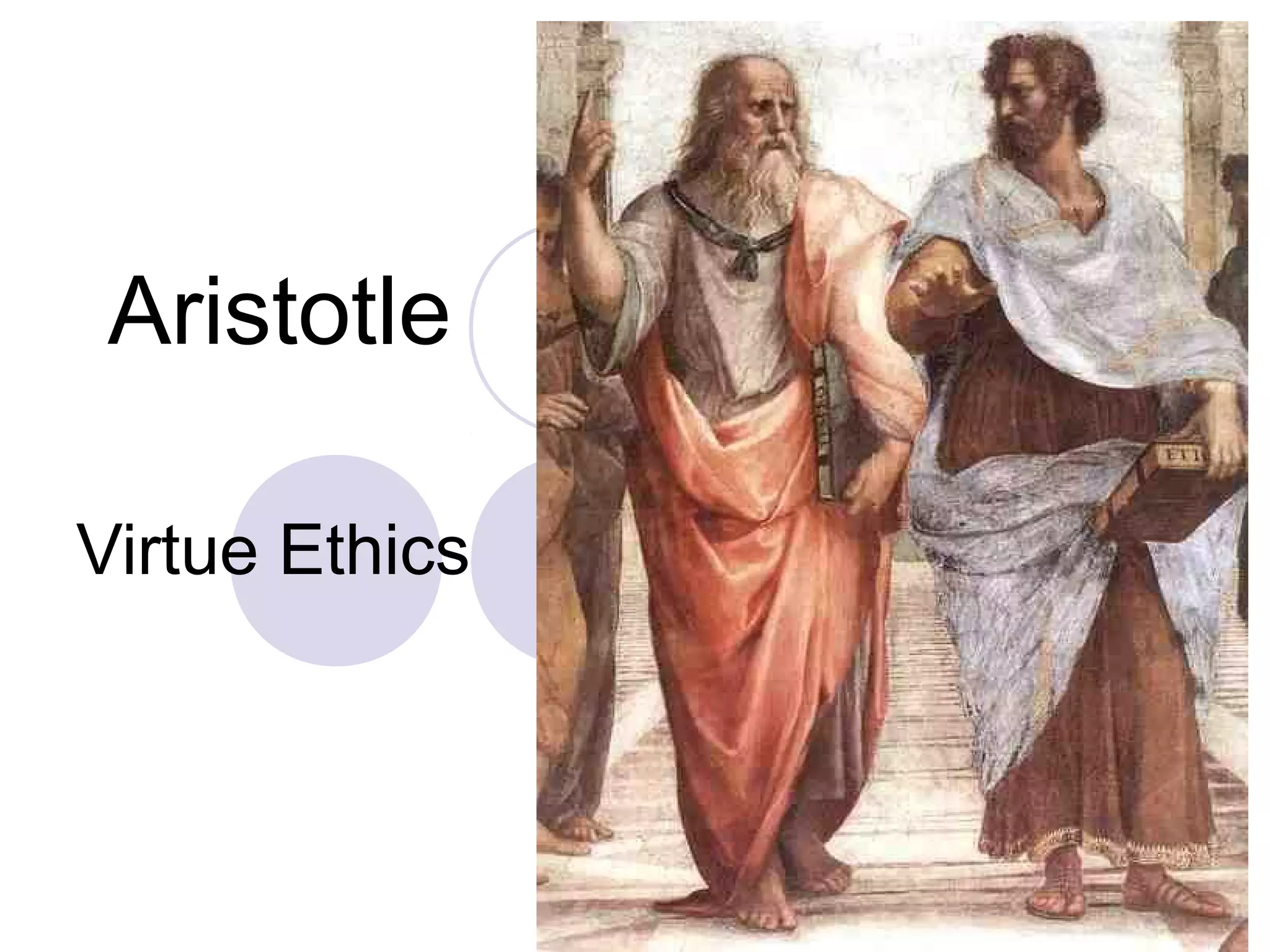
Aristotle
Virtue Ethics
Aristotle
 Born in 384.
 From the
northwestern
edge of the
Greek Empire in
Stagira.
 Father was
physician to
King Amyntas of
Macedonia.
Two Moral Perspectives
The Question of Action:
 What should I do? How ought I to act?
The Question of Character
 What kind of person ought I to be?
Aristotle’s concern is with the question of
character
Aristotle’s Ethics
Good is that at which
all things aim.
The proper function
or excellence of a
things is its arete
(virtue).
The human arete or
virtue is activity of the
soul in accordance
with virtue (over a
lifetime).
Human virtue (Arete)
It can not be simply living and growing—
trees do that as well.
It can not be related to characteristics we
share with animals.
The quality that seems distinctively human
is the use of reason. “The function of man
then is activity of soul [thinking well and
doing well] in accordance with reason.”
Human virtue (arete)
 Humans can have two kinds of virtue:
 Intellectual virtues: these relate particularly to our
professions, i.e., they will differ for a truck driver, cook,
lawyer, farmer, doctor, etc.
 Moral virtues: This virtue is common to all humans, but it
may vary in degree according to our capacities. Moral
virtue “is the outcome of habit; its name, ethike, is derived
from ethos, habit. So the difference between one and
another training in habits in our childhood is not a light
manner, but important, or rather, all important.”
 Both intellectual and moral virtues are needed for
us to achieve happiness (eudaemonia)
Happiness: The Self-sufficient End
Most of the ends (goals) we seek are
instrumental steps toward some ultimate
goal.
Aristotle identifies happiness
(eudaemonia) as that which we seek as a
goal that is an end in itself.
Happiness: The Self-sufficient End
Happiness comes from developing a good
character.
A good character comes from the development
of good habits.
Good Character
People have a natural
capacity for good
character, but it must be
developed through
constant practice. Good
leaders (parent and
civic leaders) are
necessary to guide us in
the development of
good habits.
Happiness
Good Character
Good Habits
Good Actions
Good thoughts
Good Character
Virtuous thoughts lead to good acts
Virtuous acts (following the Mean) can
lead to good habits
Good habits make for a good character
A good character can be happy
Business and Professional Ethics
application: We should ask, “Will this act
help lead me to be the person I should be?
Will I be a person of good character”
Virtue (arete) as the mean, the correct
balance
The mean is the right balance between
two extremes, the extreme of excess and
the extreme of deficiency.
Examples:
 Deficiency Mean Excess
 Cowardliness courage rashness
 Humility pride vanity
 Stingy givingspendthrift
Virtues and Spheres of Existence (Dev.(c) By L.M. Hinman)
SphereofExistence Deficiency Mean Excess
Attitude toward self Servility
Self-deprecation
Proper Self-Love
Proper Pride
Self-Respect
Arrogance
Conceit
Egoism
Narcissism
Vanity
Attitude toward
offenses of others
Ignoring them
Being a Doormat
Anger
Forgiveness
Understanding
Revenge
Grudge
Resentment
Attitude toward
good
deeds of others
Suspicion
Envy
Ignoring them
Gratitude
Admiration
Over
indebtedness
Attitude toward our
own offenses
Indifference
Remorselessness
Downplaying
Agent Regret
Remorse
Making Amends
Learning from them
Self-Forgiveness
Toxic Guilt
Scrupulosity
Shame
Attitude toward
our friends
Indifference Loyalty Obsequiousness
Virtue (arete) as the mean (inbetween)
The mean varies according to individuals
The mean of courage is different for a
marine, a college student, and an eight-
year old child.
The mean of charitable giving is different
for a billionaire, a college teacher, and a
student.
Actions & Emotions Without a Mean
“There are some [actions/emotions] whose
very name implies wickedness.”
For example: “malice, shamelessness,
and envy among the emotions and
adultery, theft, and murder among the
actions.”
The Difficulty of Being Good
“That is why it is so hard to be good; for it
is always hard to find the mean in
anything.”
“That is why goodness is rare and
praiseworthy and noble.”

Aristotle virtueethics

  • 1.
  • 2.
    Aristotle  Born in384.  From the northwestern edge of the Greek Empire in Stagira.  Father was physician to King Amyntas of Macedonia.
  • 3.
    Two Moral Perspectives TheQuestion of Action:  What should I do? How ought I to act? The Question of Character  What kind of person ought I to be? Aristotle’s concern is with the question of character
  • 4.
    Aristotle’s Ethics Good isthat at which all things aim. The proper function or excellence of a things is its arete (virtue). The human arete or virtue is activity of the soul in accordance with virtue (over a lifetime).
  • 5.
    Human virtue (Arete) Itcan not be simply living and growing— trees do that as well. It can not be related to characteristics we share with animals. The quality that seems distinctively human is the use of reason. “The function of man then is activity of soul [thinking well and doing well] in accordance with reason.”
  • 6.
    Human virtue (arete) Humans can have two kinds of virtue:  Intellectual virtues: these relate particularly to our professions, i.e., they will differ for a truck driver, cook, lawyer, farmer, doctor, etc.  Moral virtues: This virtue is common to all humans, but it may vary in degree according to our capacities. Moral virtue “is the outcome of habit; its name, ethike, is derived from ethos, habit. So the difference between one and another training in habits in our childhood is not a light manner, but important, or rather, all important.”  Both intellectual and moral virtues are needed for us to achieve happiness (eudaemonia)
  • 7.
    Happiness: The Self-sufficientEnd Most of the ends (goals) we seek are instrumental steps toward some ultimate goal. Aristotle identifies happiness (eudaemonia) as that which we seek as a goal that is an end in itself.
  • 8.
    Happiness: The Self-sufficientEnd Happiness comes from developing a good character. A good character comes from the development of good habits.
  • 9.
    Good Character People havea natural capacity for good character, but it must be developed through constant practice. Good leaders (parent and civic leaders) are necessary to guide us in the development of good habits. Happiness Good Character Good Habits Good Actions Good thoughts
  • 10.
    Good Character Virtuous thoughtslead to good acts Virtuous acts (following the Mean) can lead to good habits Good habits make for a good character A good character can be happy Business and Professional Ethics application: We should ask, “Will this act help lead me to be the person I should be? Will I be a person of good character”
  • 11.
    Virtue (arete) asthe mean, the correct balance The mean is the right balance between two extremes, the extreme of excess and the extreme of deficiency. Examples:  Deficiency Mean Excess  Cowardliness courage rashness  Humility pride vanity  Stingy givingspendthrift
  • 12.
    Virtues and Spheresof Existence (Dev.(c) By L.M. Hinman) SphereofExistence Deficiency Mean Excess Attitude toward self Servility Self-deprecation Proper Self-Love Proper Pride Self-Respect Arrogance Conceit Egoism Narcissism Vanity Attitude toward offenses of others Ignoring them Being a Doormat Anger Forgiveness Understanding Revenge Grudge Resentment Attitude toward good deeds of others Suspicion Envy Ignoring them Gratitude Admiration Over indebtedness Attitude toward our own offenses Indifference Remorselessness Downplaying Agent Regret Remorse Making Amends Learning from them Self-Forgiveness Toxic Guilt Scrupulosity Shame Attitude toward our friends Indifference Loyalty Obsequiousness
  • 13.
    Virtue (arete) asthe mean (inbetween) The mean varies according to individuals The mean of courage is different for a marine, a college student, and an eight- year old child. The mean of charitable giving is different for a billionaire, a college teacher, and a student.
  • 14.
    Actions & EmotionsWithout a Mean “There are some [actions/emotions] whose very name implies wickedness.” For example: “malice, shamelessness, and envy among the emotions and adultery, theft, and murder among the actions.”
  • 15.
    The Difficulty ofBeing Good “That is why it is so hard to be good; for it is always hard to find the mean in anything.” “That is why goodness is rare and praiseworthy and noble.”

Editor's Notes

  • #13 <number>