Data ModelsGIS I
Data ModelsGIS is an abstraction of reality.A perfect copy of reality cannot be recreated in the computer.We create models – sets of constructs for describing & representing select aspects of the real world in a computer.Models are composed of a mix of raster, vector, and attribute data. Model is tailored to a specific function.
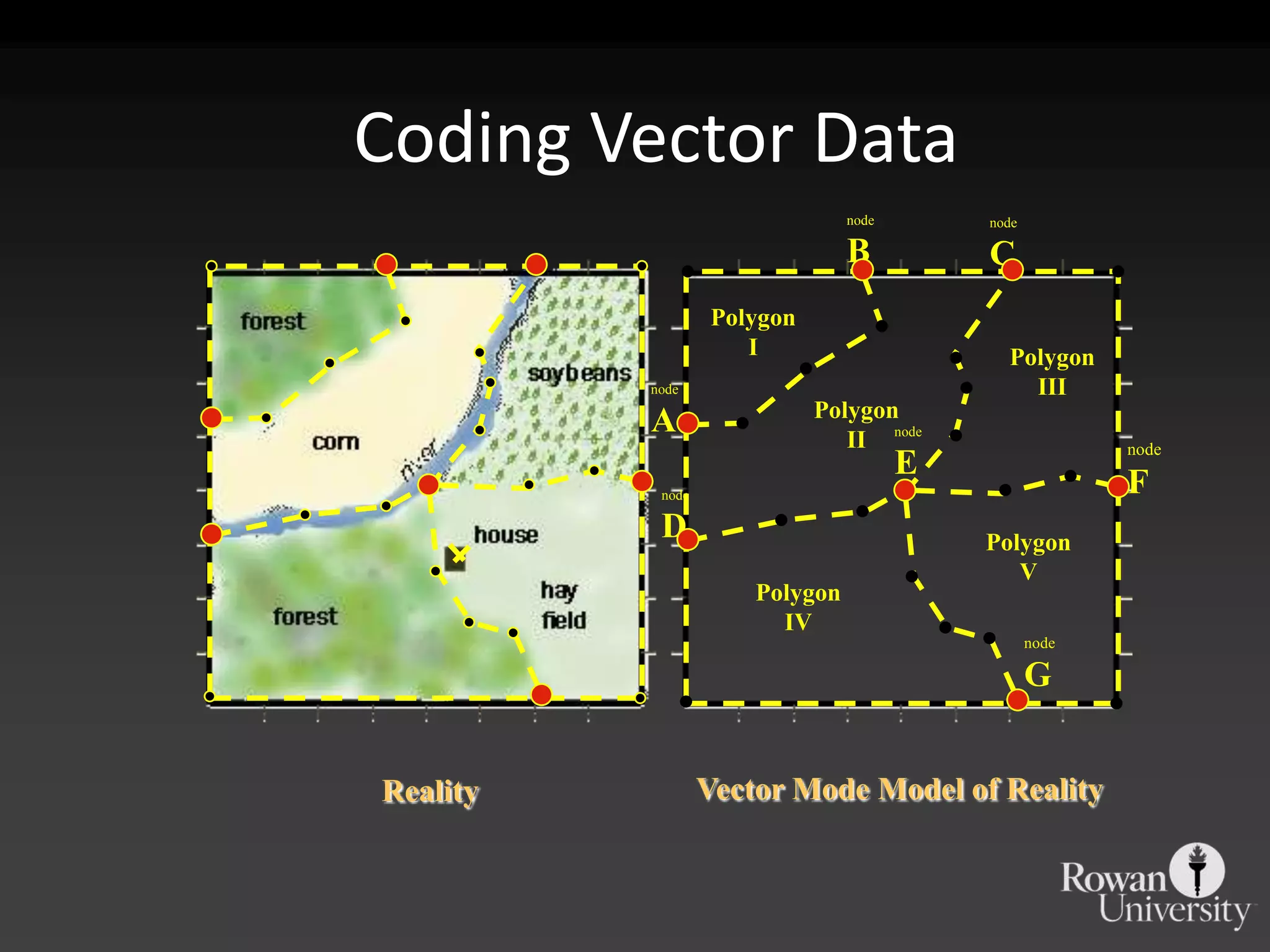
nodeBnodeCPolygonIPolygonIIInodeAPolygonIInodeEnodeFnodeDPolygonVPolygonIVnodeGCoding Vector DataVector Mode Model of RealityReality
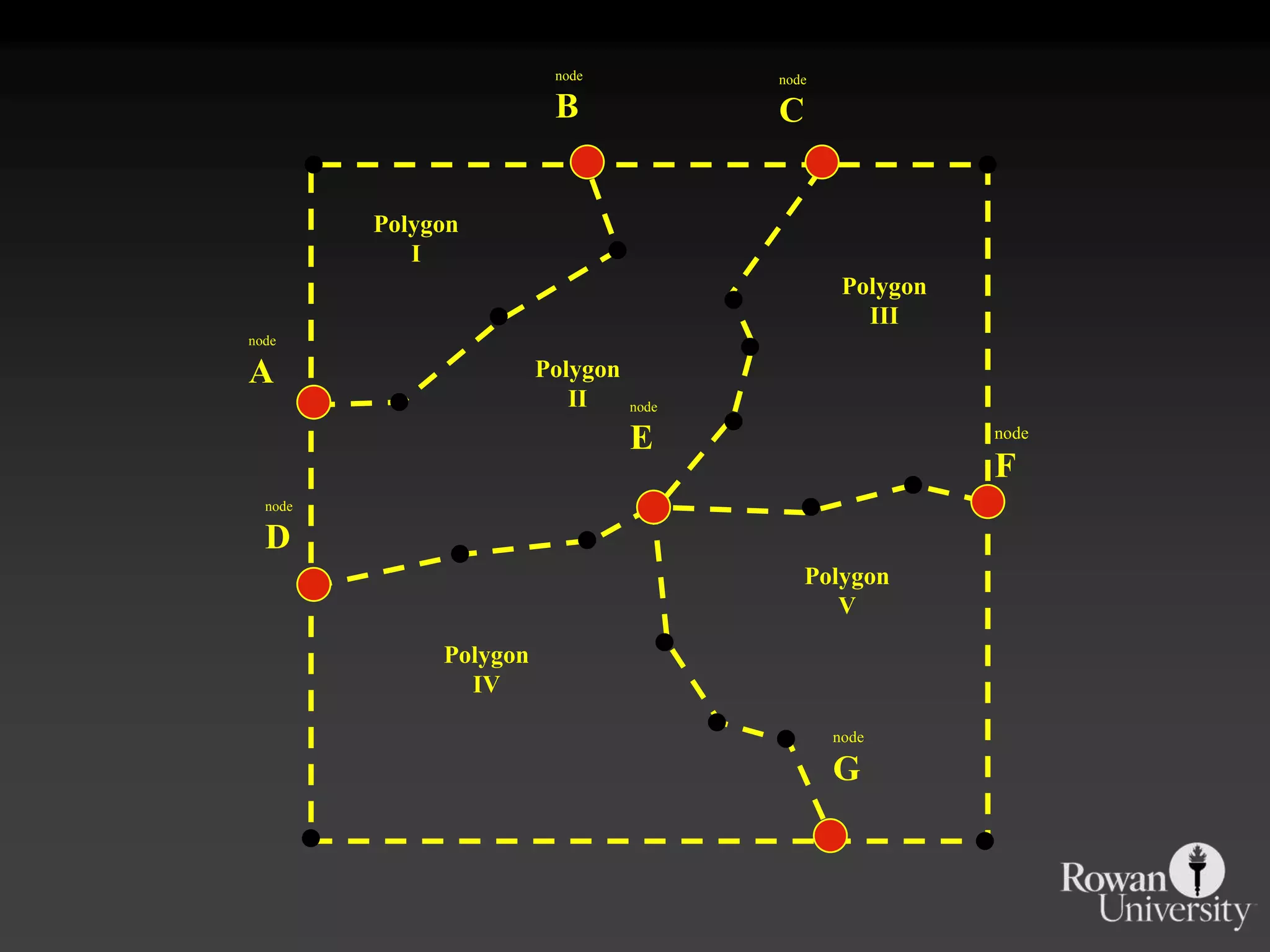
nodeBnodeCPolygonIPolygonIIInodeAPolygonIInodeEnodeFnodeDPolygonVPolygonIVnodeG
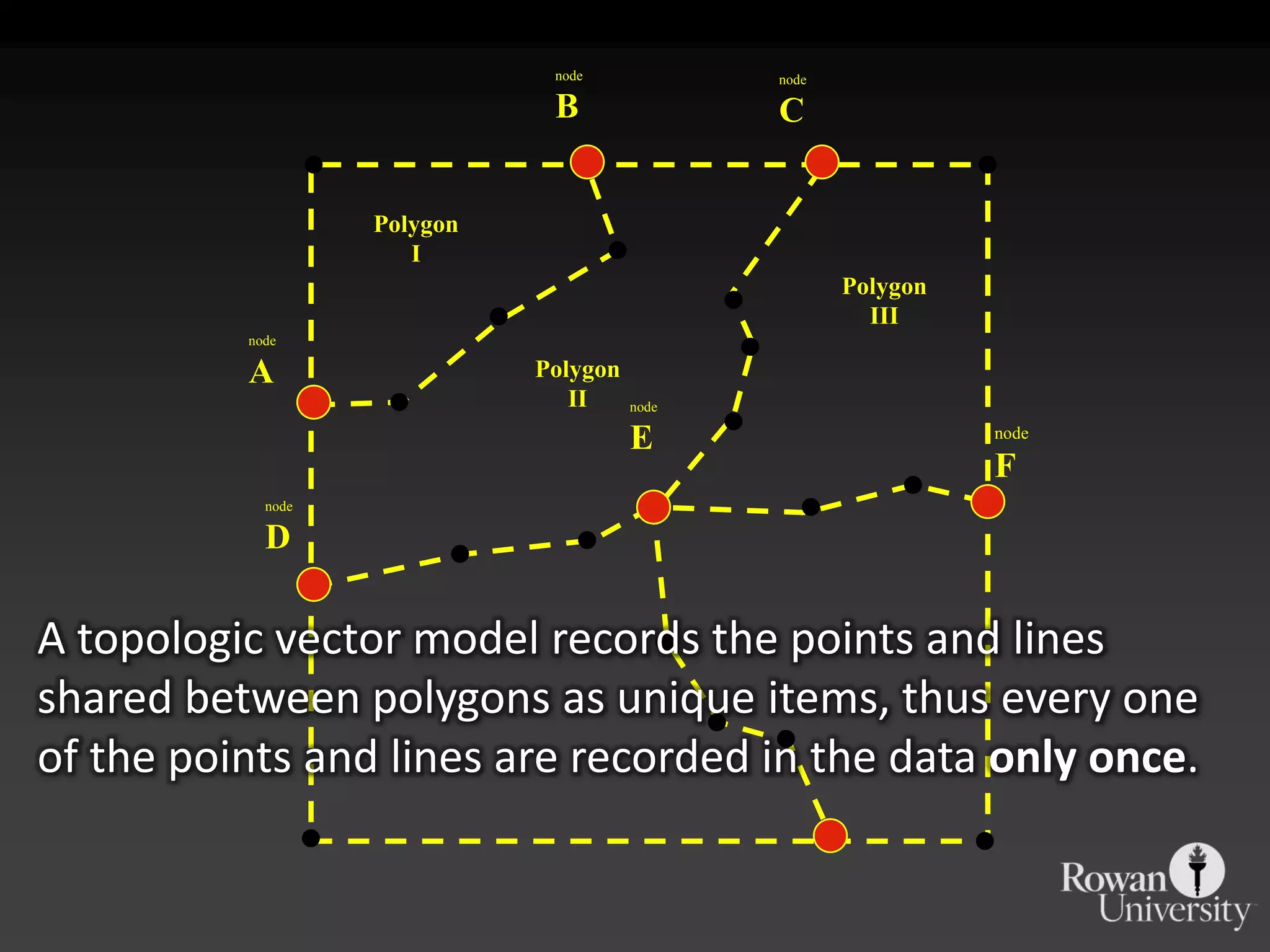
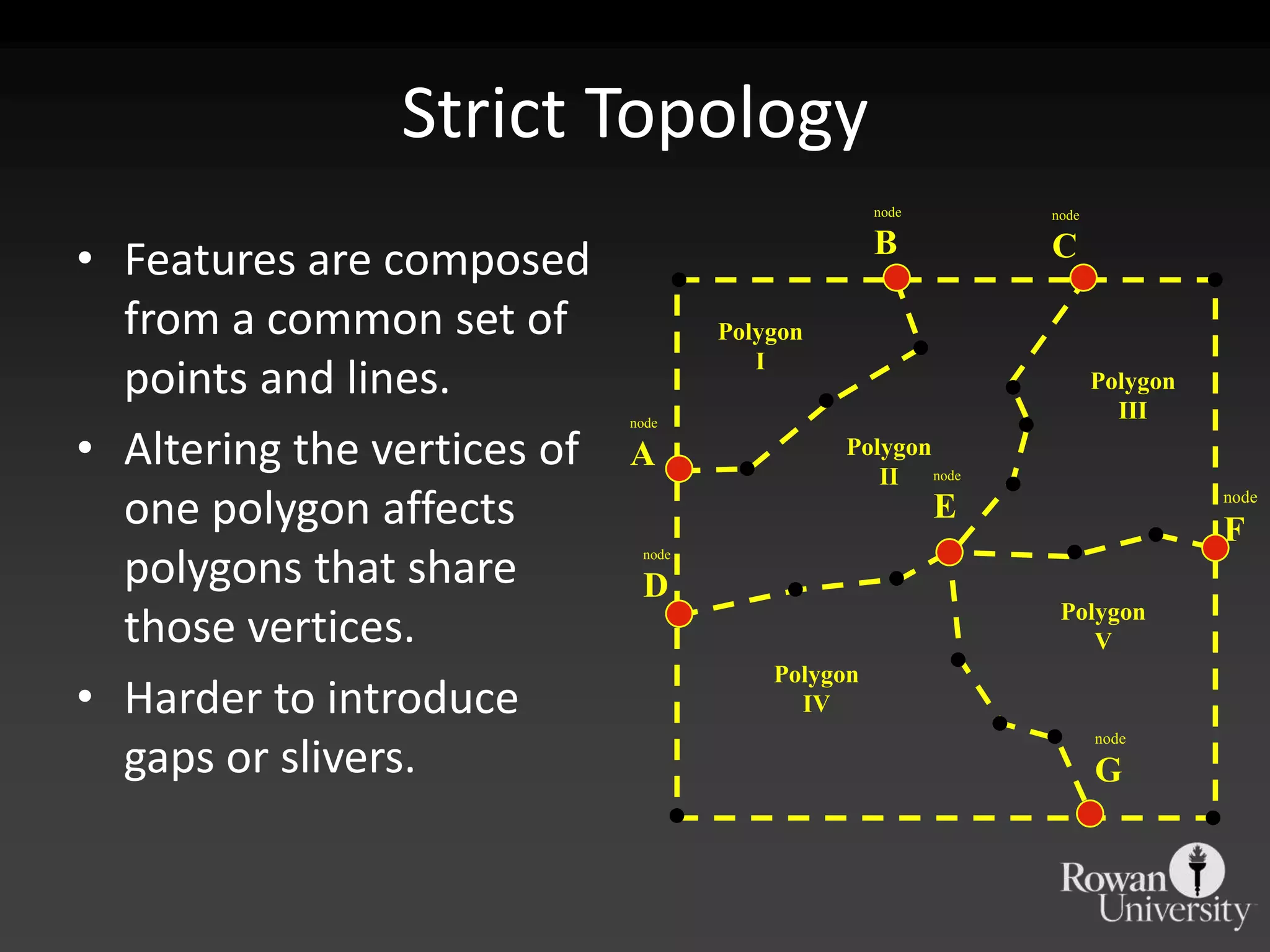
nodeBnodeCPolygonIPolygonIIInodeAPolygonIInodeEnodeFnodeDA topologic vector model records the points and linesshared between polygons as unique items, thus every oneof the points and lines are recorded in the data only once.
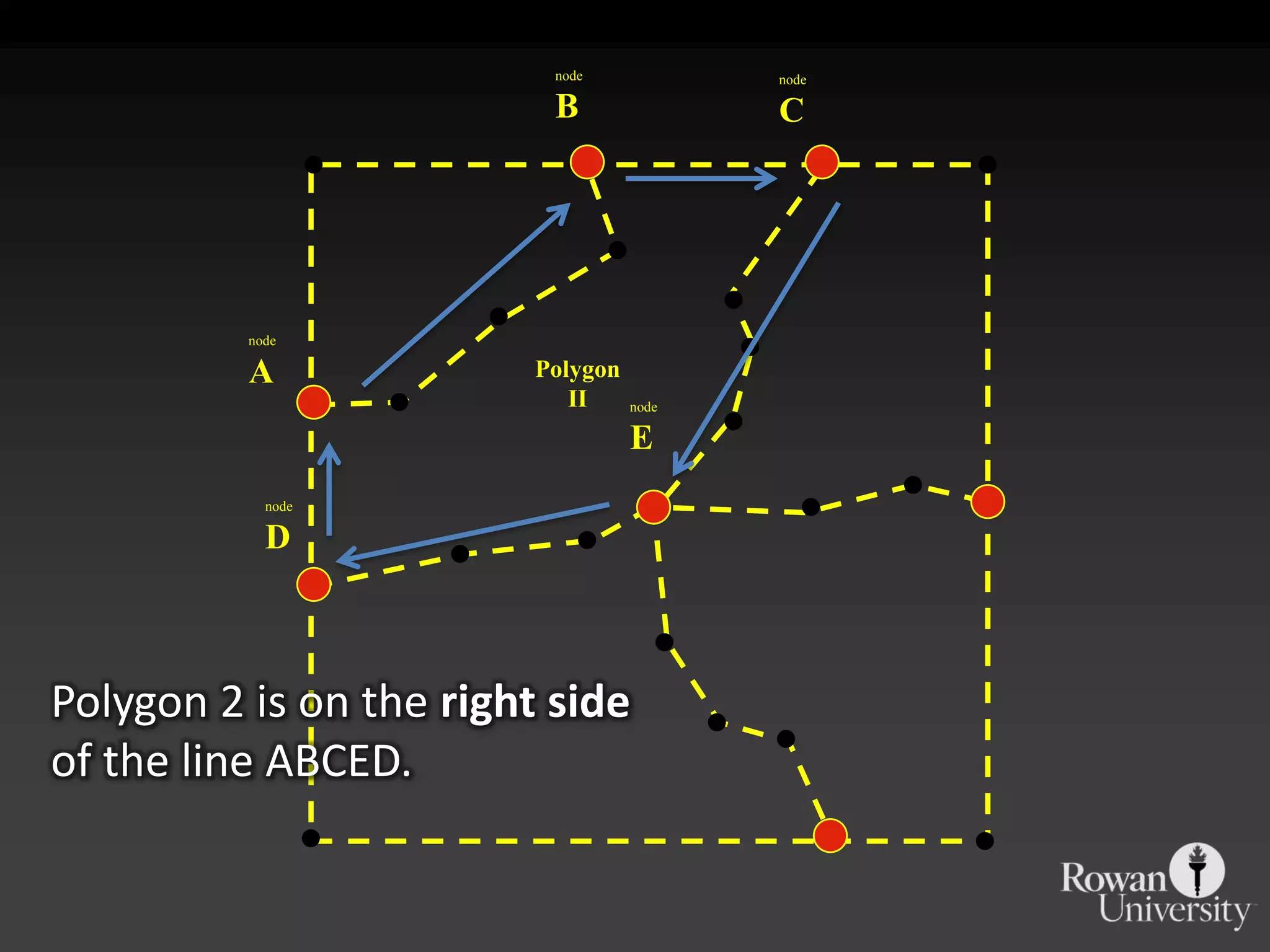
nodeBnodeCnodeAPolygonIInodeEnodeDPolygon 2 is on the right sideof the line ABCED.
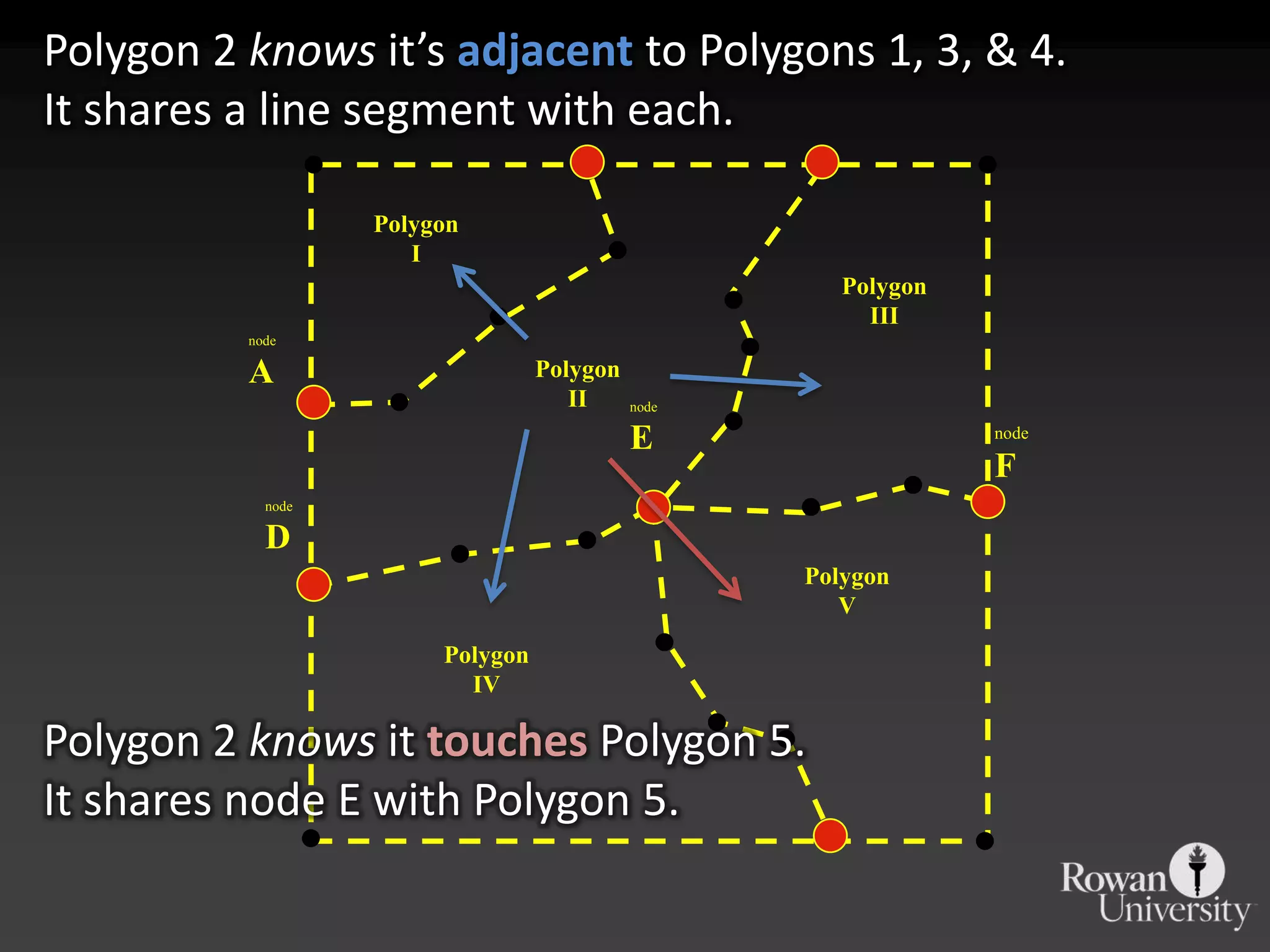
PolygonIPolygonIIInodeAPolygonIInodeEnodeFnodeDPolygonVPolygonIVPolygon 2 knows it’s adjacentto Polygons 1, 3, & 4.It shares a line segment with each. Polygon 2 knows it touchesPolygon 5.It shares node E with Polygon 5.
What is Topology?Shared Geometries, Adjacency and OverlapWhere points, lines, and polygons share individual vertices. Move a point and it moves a vertex in a line/polygon, and vice versa.Two polygons that share vertices are considered adjacent.Overlapping (or non-overlapping) features can be located, and then marked as errors.
nodeBnodeCPolygonIPolygonIIInodeAPolygonIInodeEnodeFnodeDPolygonVPolygonIVnodeGStrict TopologyFeatures are composed from a common set of points and lines.Altering the vertices of one polygon affects polygons that share those vertices. Harder to introduce gaps or slivers.
TopologyCan you think of a reason why topology would be important to model?Where in the real world is this concept important?Let’s take a look at some examples.
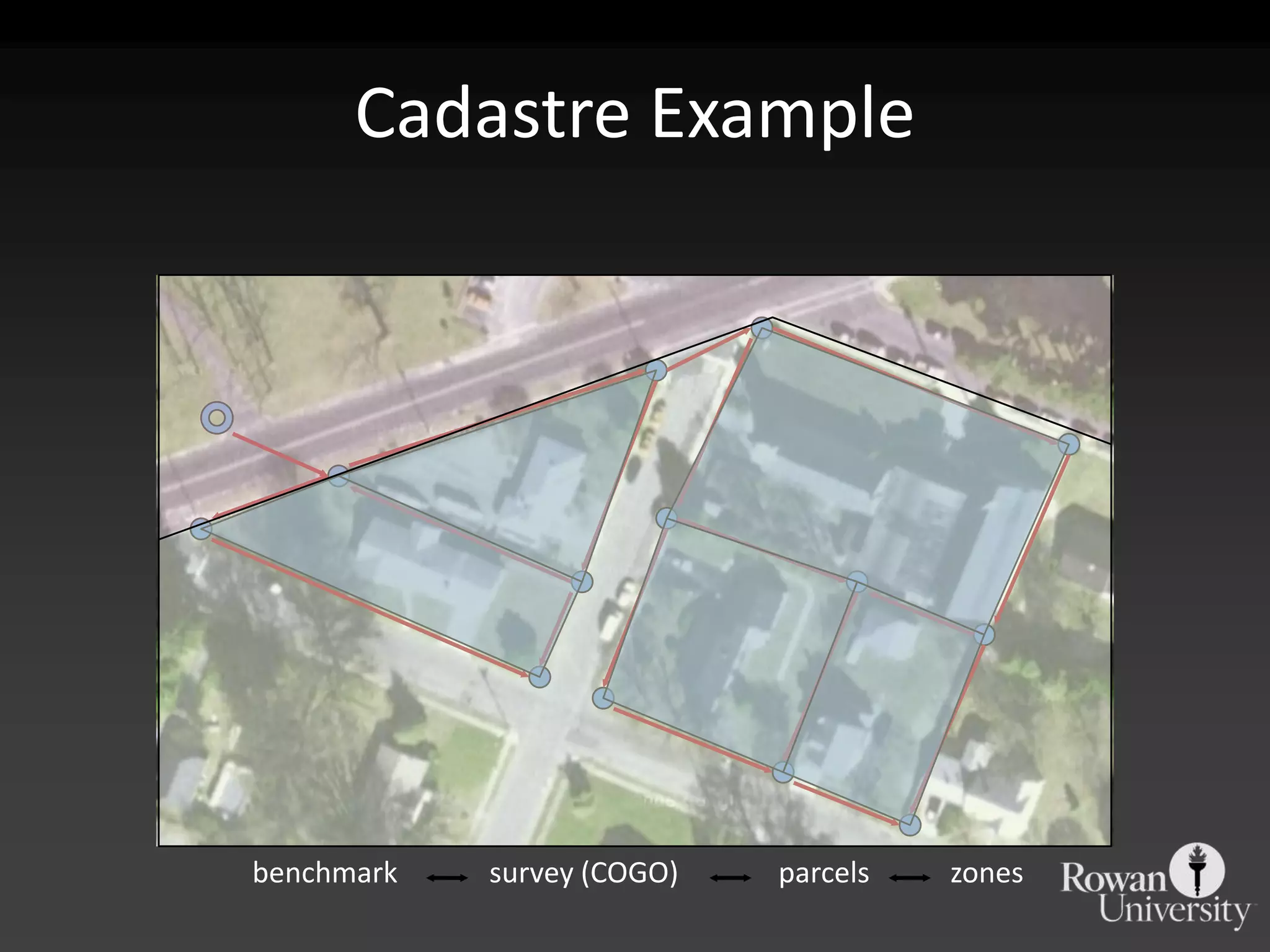
Cadastre Examplesurvey (COGO)parcelszonesbenchmark
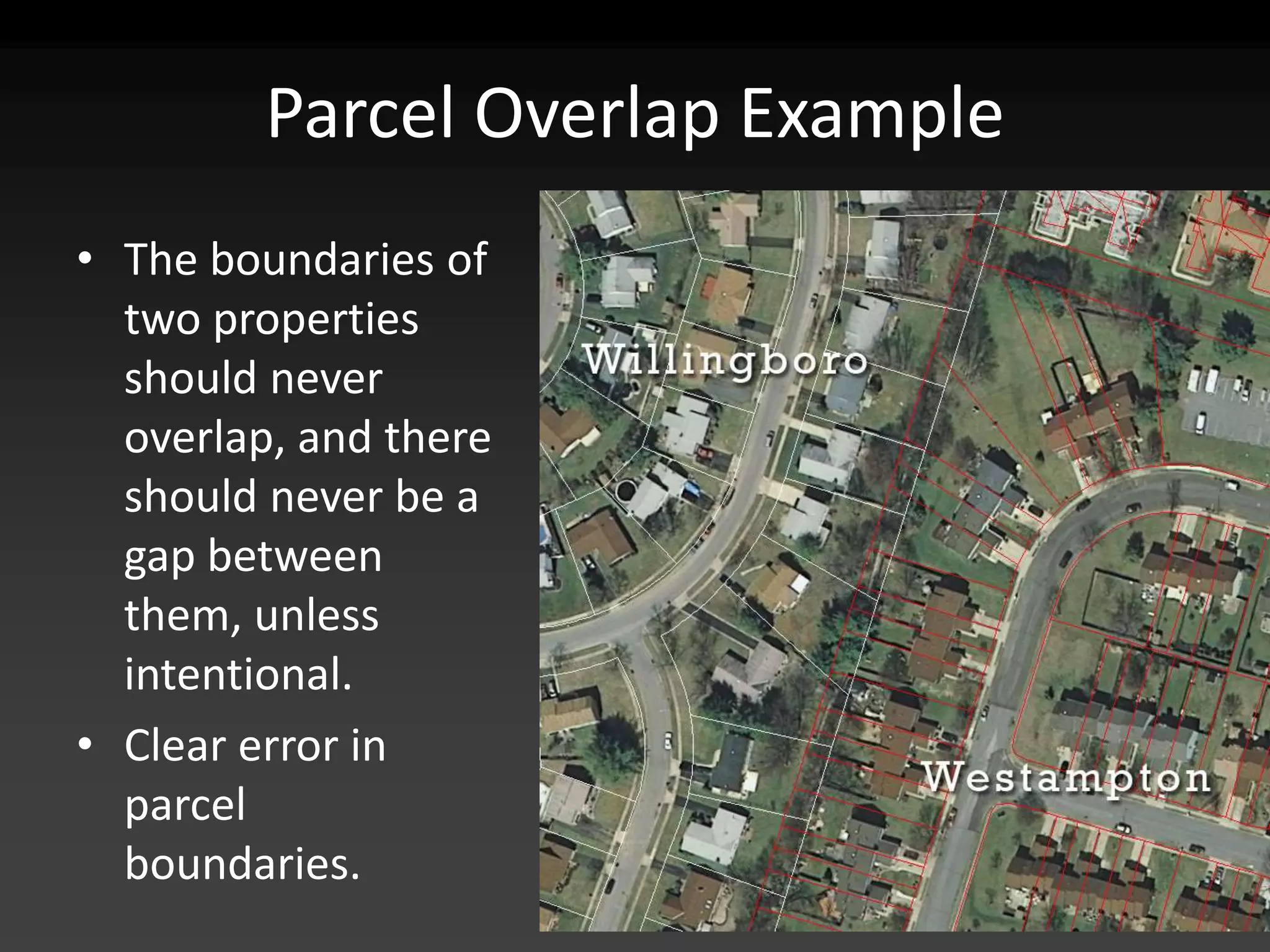
Parcel Overlap ExampleThe boundaries of two properties should never overlap, and there should never be a gap between them, unless intentional. Clear error in parcel boundaries.
Policy-based Topology RulesIn the NJ State Plan, CESs and the Environmentally Sensitive Planning Area both represent areas of environmental importance.Thus, CESs should never be placed on top of the ES Planning Area.In our utility network, poles hold up the transmission lines.The transmission line features must always share a vertex with the utility pole point features.
GIS is extensibleWith modern GIS, a polygon is not just a polygon.Software can be adapted to fit your model of reality.The software can be easily extended to create new data types and perform new analyses. GIS can be adapted to store, model, and display data about any observable phenomenon on the Earth.
ObjectsGIS Features as Objects is a recent method of representing aspects of the real-world in GISExample of the shift from specialty data to DBMS that are spatially-awareNon-planar, temporally shifting, topologically linked, rule-based actionsStill important to check for topology to ensure as a quality control step
Vector Geometry as ObjectsParcelsPlanar geometries with attribute informationParcels as objects in a Cadastral “carpet”Objects with topology rules (“don’toverlap, unless”)Members of “regional” features (zoning, municipality)Composed of surveyed parts (COGO, benchmarks)Keys that link to attribute tables (owner(s), assessments, plans, etc)
Attributes as ObjectsNot only can multiple sets of geospatial features interact with rules, the attributes can be linked with one another, with their own set of rules and actionsOwnership record linked to GIS parcelSearch on multiple owners, recordsRemoval of parcel warns about “orphan” ownerFunctions that can be performed by GIS analyst can be embedded in the actual database
Explore ModelsLet’s take a look at several GIS data models.Take note of the storage method:RasterVector (and vector type: point, line, polygon, etc…)Also take note of the model family:Topological ModelObject ModelBoth
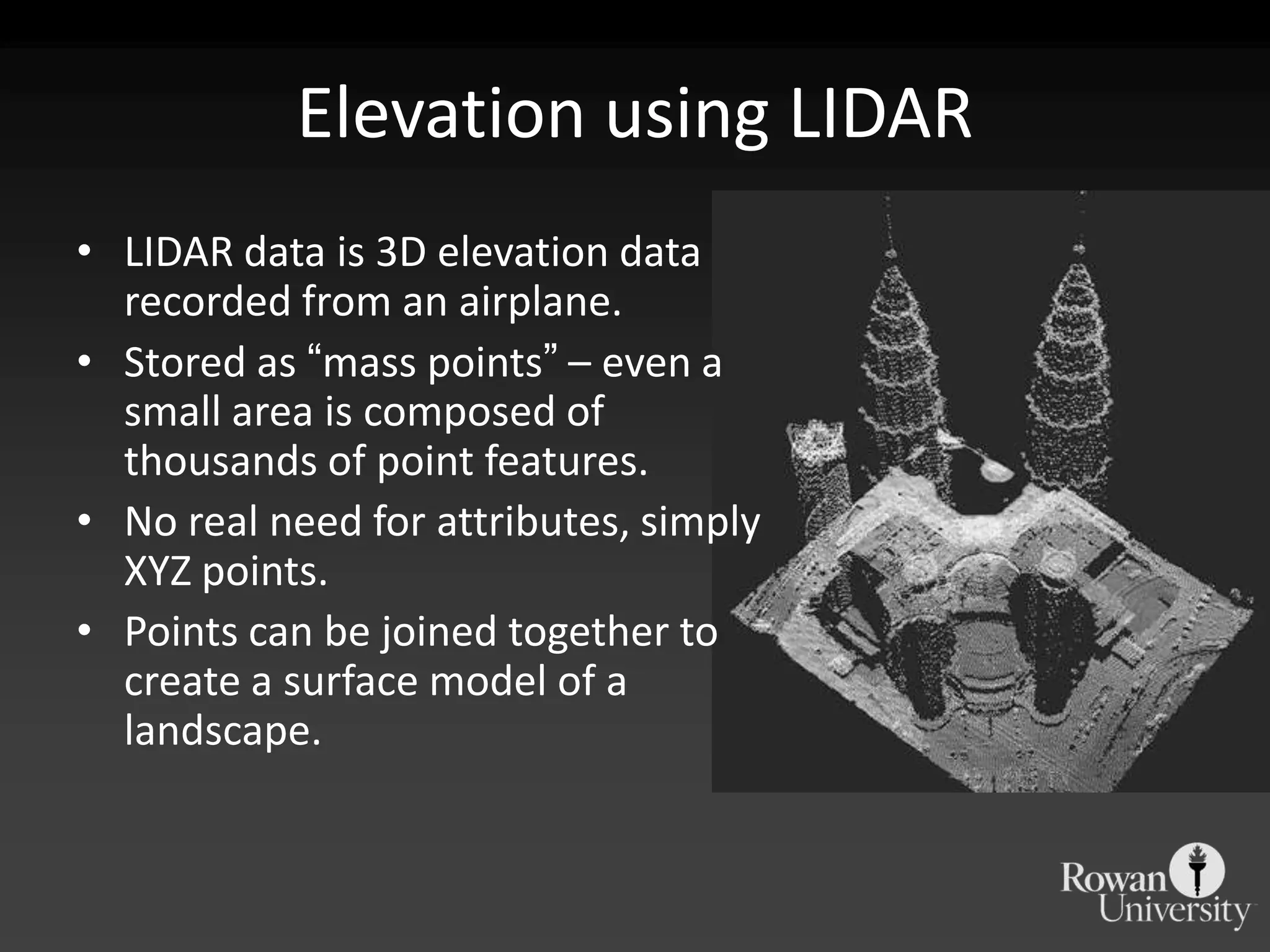
Elevation using LIDARLIDAR data is 3D elevation data recorded from an airplane. Stored as “mass points” – even a small area is composed of thousands of point features.No real need for attributes, simply XYZ points.Points can be joined together to create a surface model of a landscape.
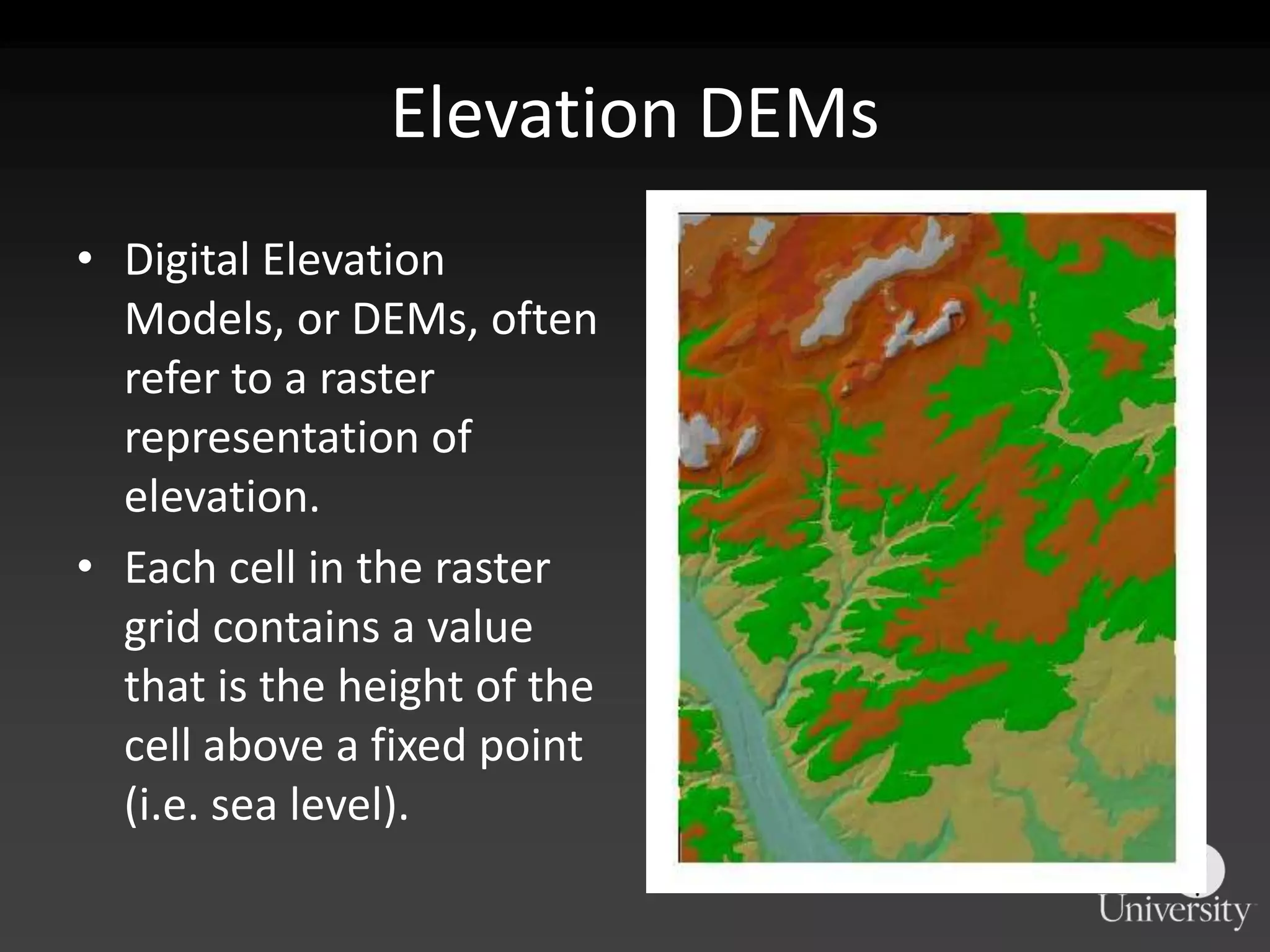
Elevation DEMsDigital Elevation Models, or DEMs, often refer to a raster representation of elevation. Each cell in the raster grid contains a value that is the height of the cell above a fixed point (i.e. sea level).
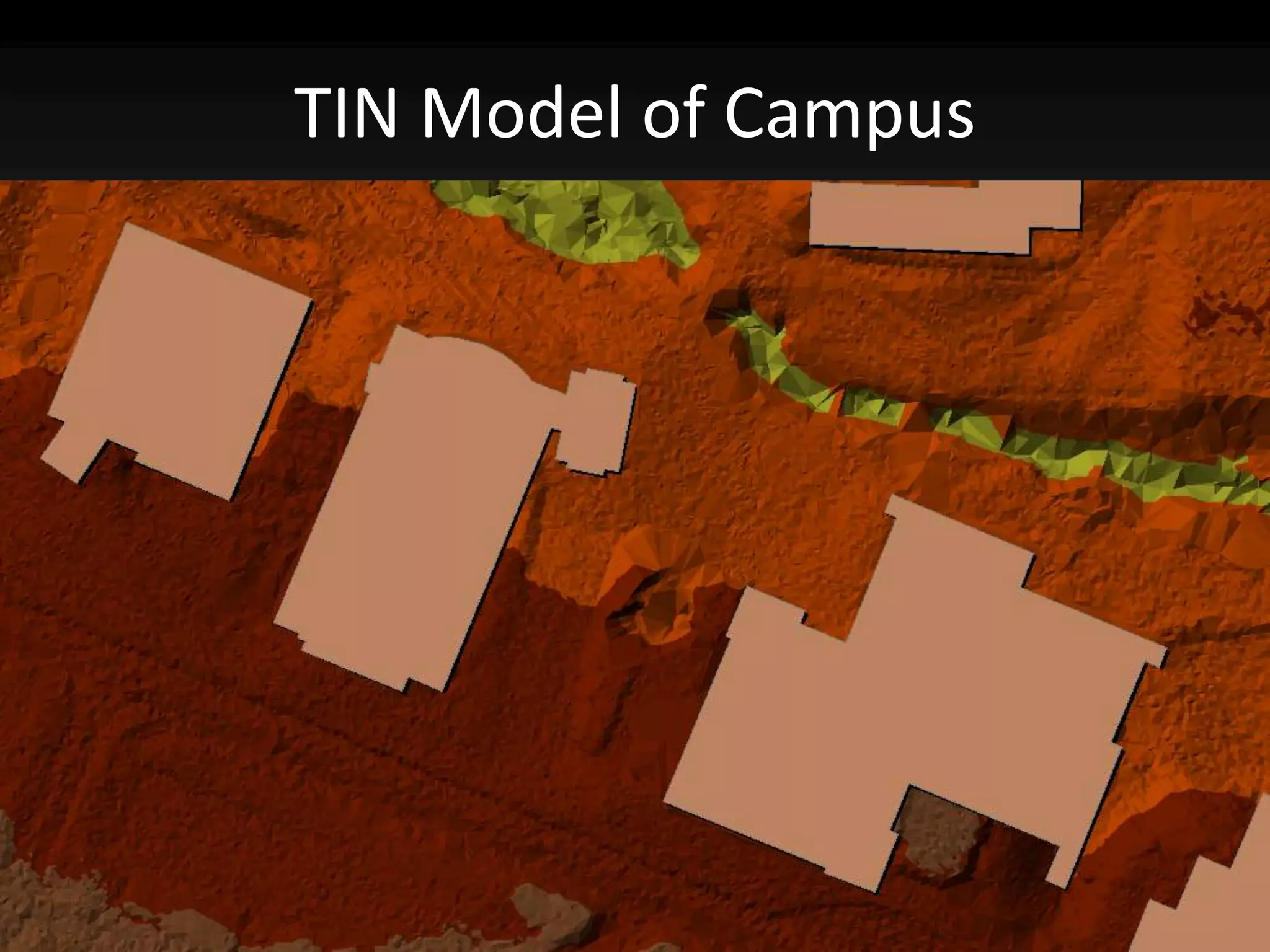
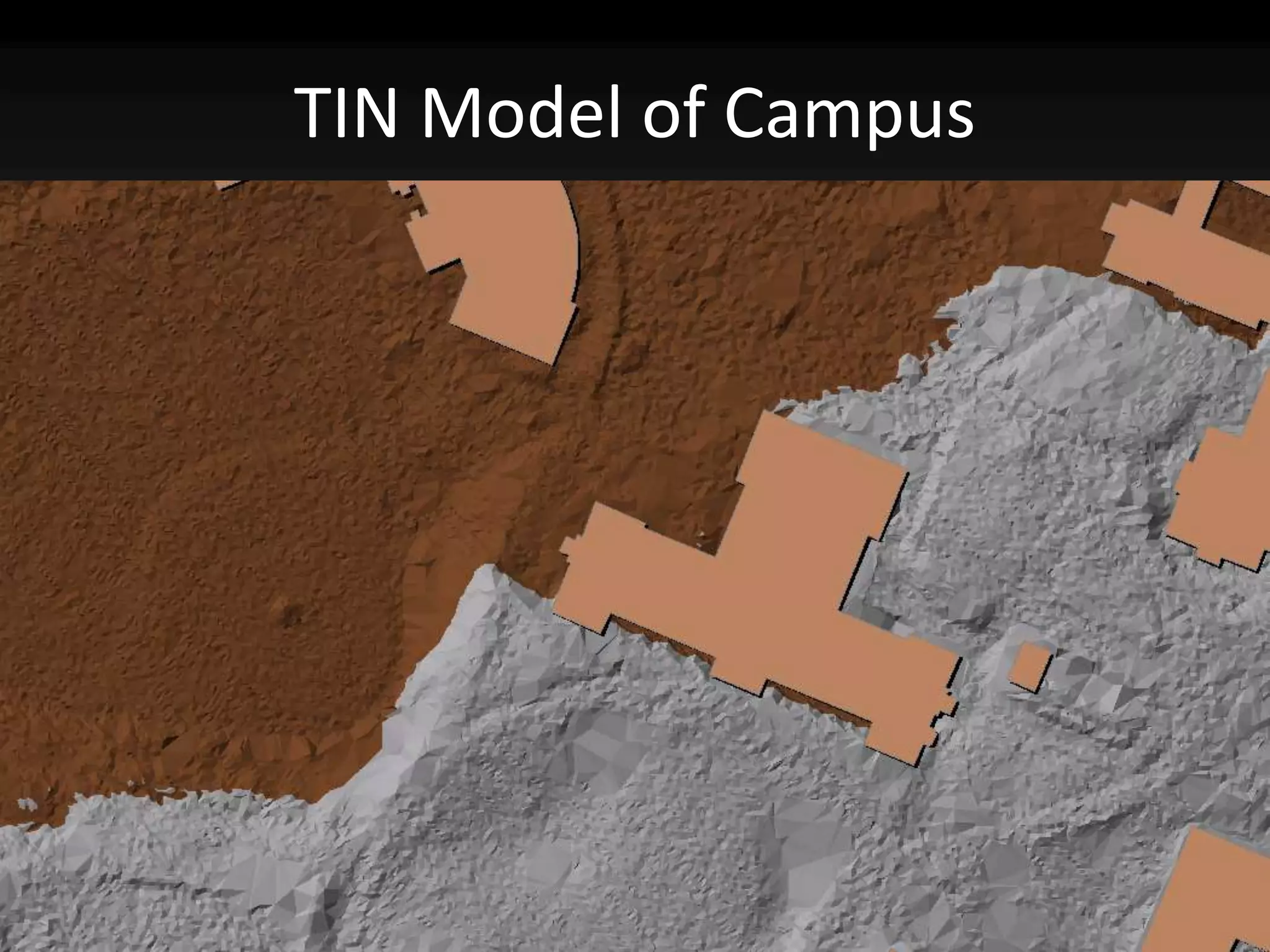
Elevation using TINsTriangulated Irregular Networks, or TINs are vector models that represent elevation.The study area is composed of individual triangles, composed of a network of shared nodes and edgesThe surfaces of the triangles attempt to represent the surface, so in areas of gradual elevation change, there are fewer triangles.
TIN Model of Campus
TIN Model of Campus
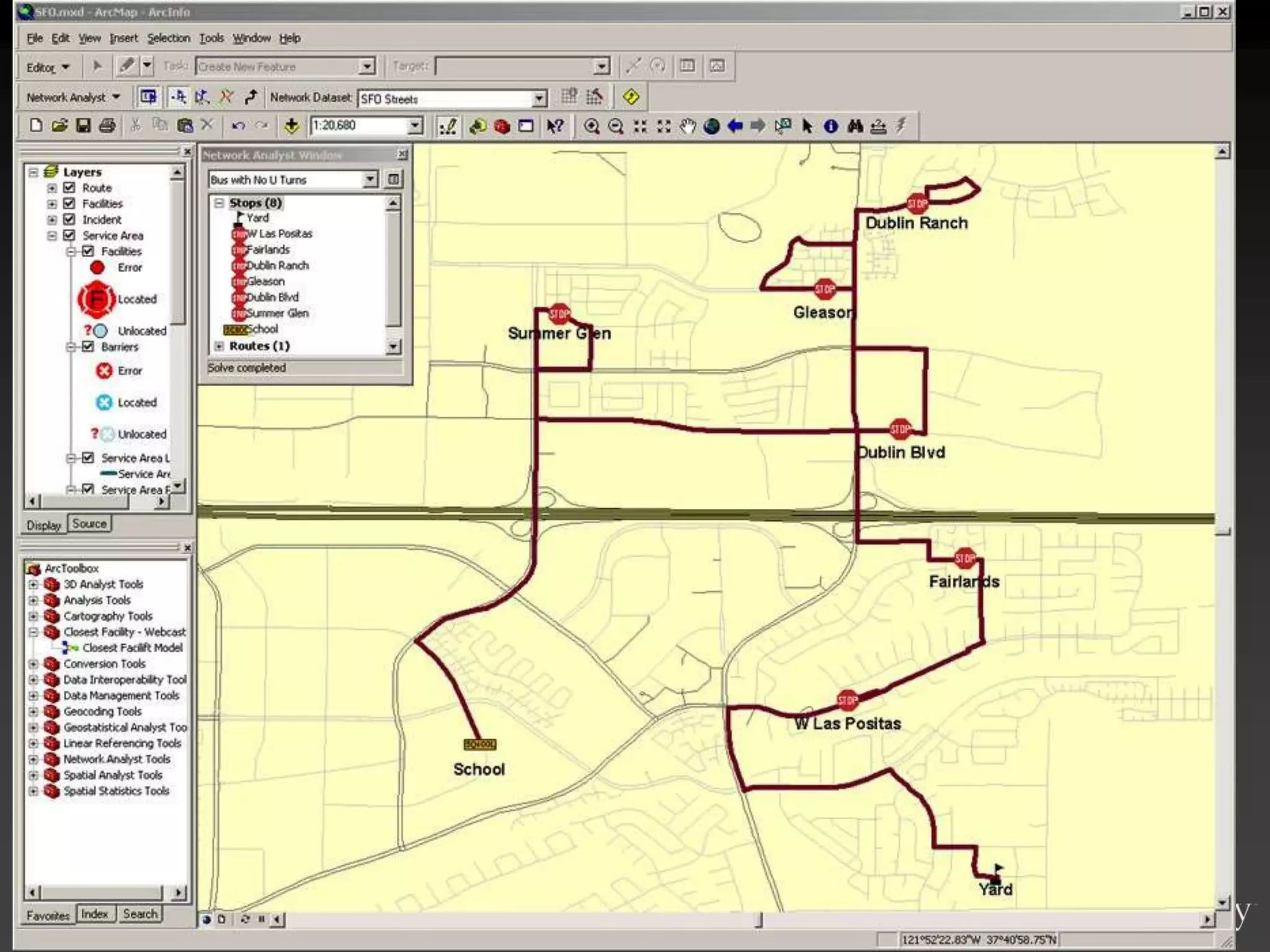
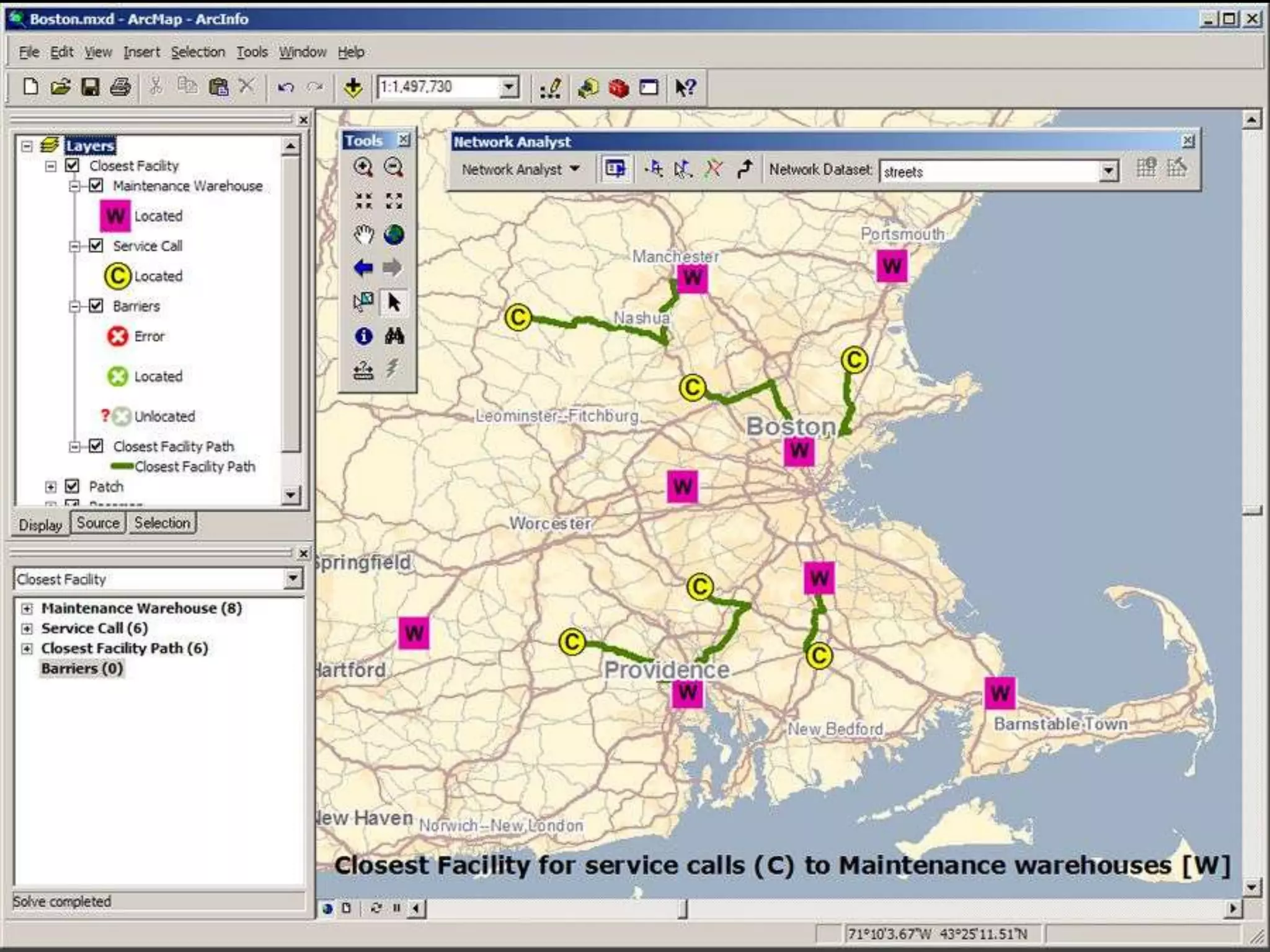
NetworksAnalysis can be performed across a network, represented by a feature dataset of points and lines.Road network or water, sewer, utility, rail, etc…Optimal route – shortest, lowest cost, avoiding left turns, follow height and weight restrictions, time of day restrictions, include real-time traffic…Multi-modal – walk/bike to bus stop, bus to train, walk from train to final destination.
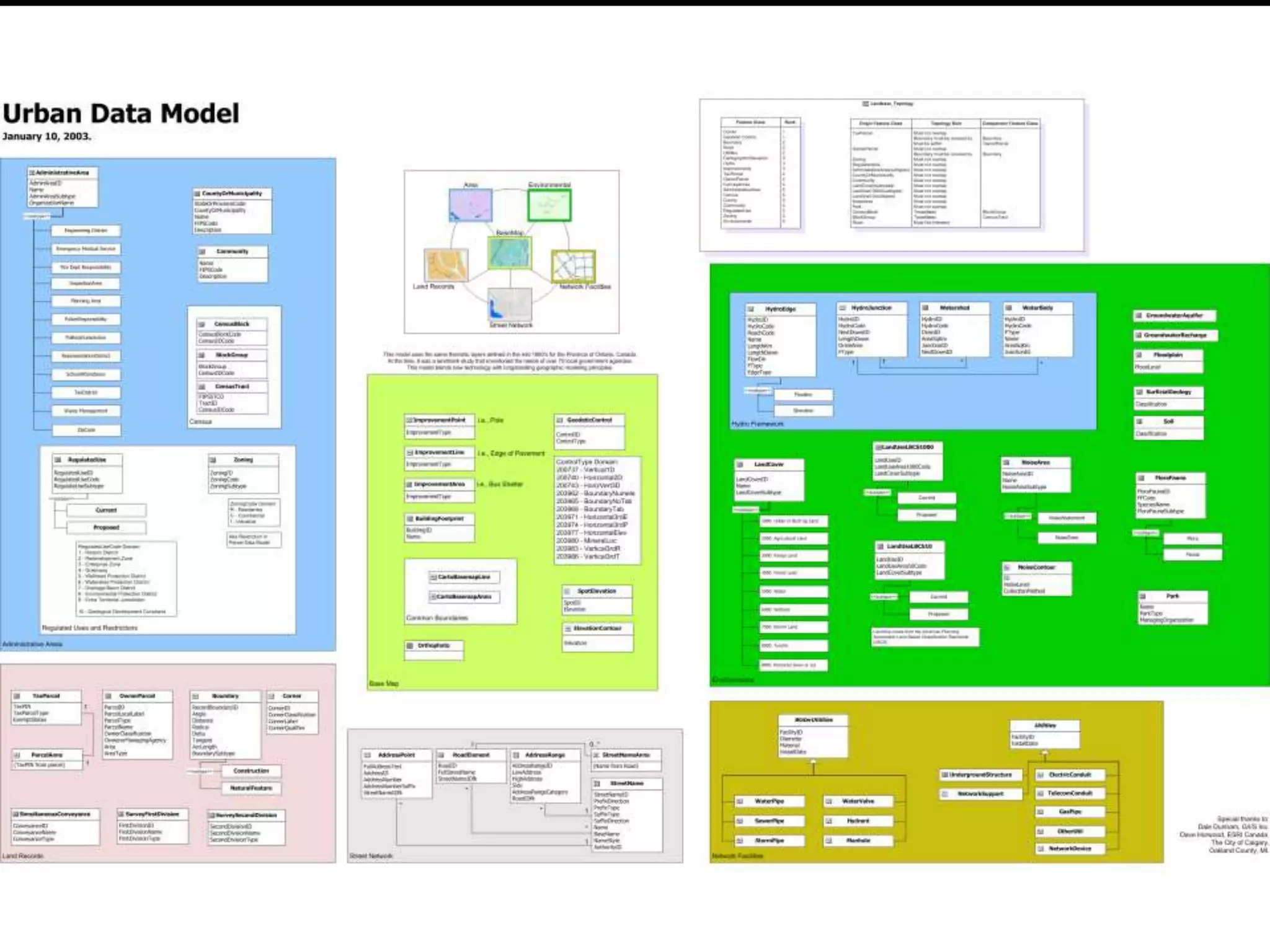
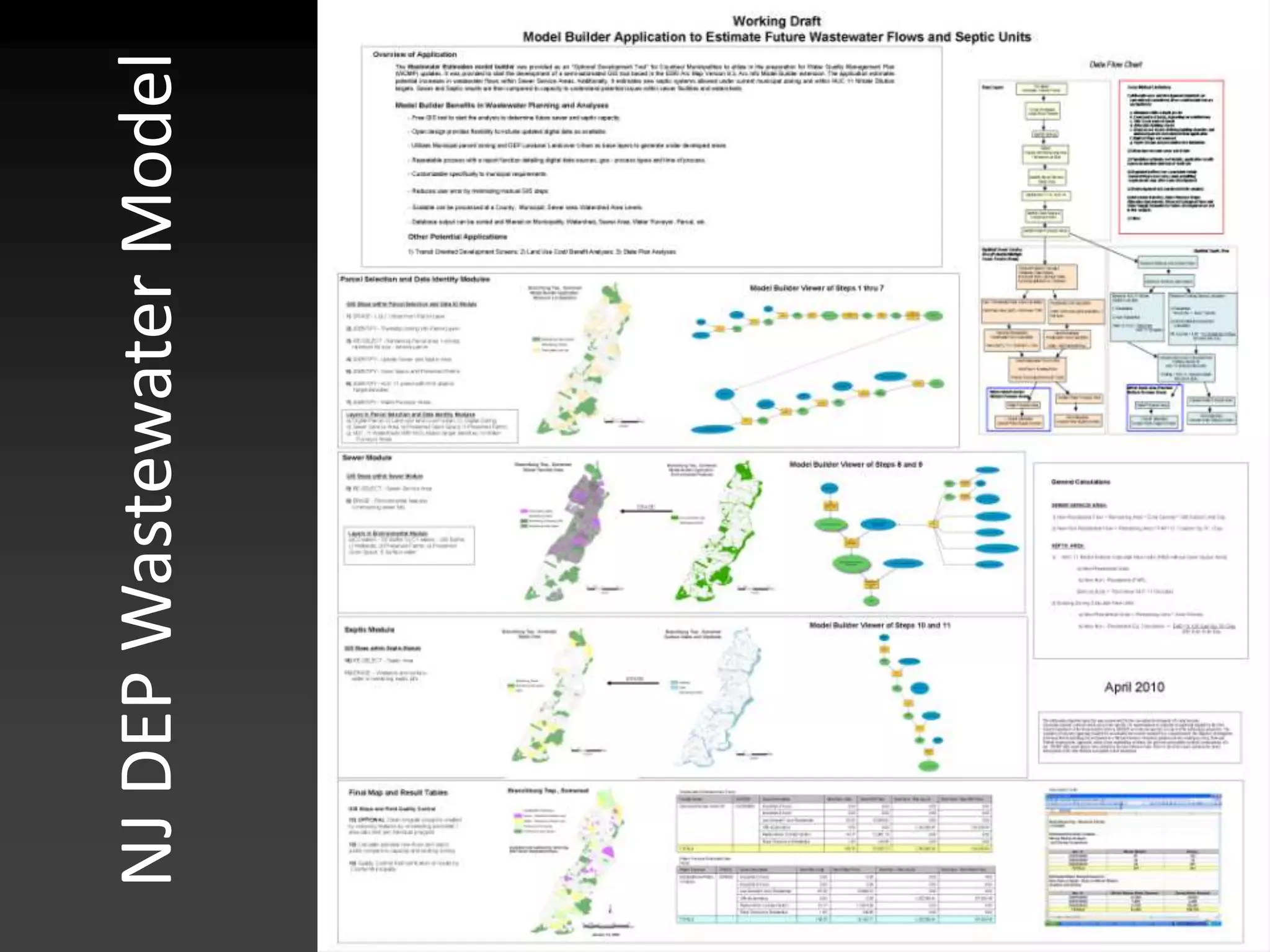
Models DiagrammedGIS models can be depicted in a schematic form, similar to a flow chart.Shows the interconnected nature of the classes that make up the overall model.Some models can be constructed within ArcGIS using ModelBuilder.
NJ DEP Wastewater Model
Creating GIS ModelsAbstractions of reality naturally have shortcomings.Models tailored to a specific task can be used to explore phenomenon or predict effects.Developing a data model to solve a problem is how GIS has become a decision-making platform.Consider how you could study an abstract set of data using GIS to solve real-world issues.

Data Models - GIS I

  • 1.
  • 2.
    Data ModelsGIS isan abstraction of reality.A perfect copy of reality cannot be recreated in the computer.We create models – sets of constructs for describing & representing select aspects of the real world in a computer.Models are composed of a mix of raster, vector, and attribute data. Model is tailored to a specific function.
  • 3.
  • 4.
  • 5.
    nodeBnodeCPolygonIPolygonIIInodeAPolygonIInodeEnodeFnodeDA topologic vectormodel records the points and linesshared between polygons as unique items, thus every oneof the points and lines are recorded in the data only once.
  • 6.
    nodeBnodeCnodeAPolygonIInodeEnodeDPolygon 2 ison the right sideof the line ABCED.
  • 7.
    PolygonIPolygonIIInodeAPolygonIInodeEnodeFnodeDPolygonVPolygonIVPolygon 2 knowsit’s adjacentto Polygons 1, 3, & 4.It shares a line segment with each. Polygon 2 knows it touchesPolygon 5.It shares node E with Polygon 5.
  • 8.
    What is Topology?SharedGeometries, Adjacency and OverlapWhere points, lines, and polygons share individual vertices. Move a point and it moves a vertex in a line/polygon, and vice versa.Two polygons that share vertices are considered adjacent.Overlapping (or non-overlapping) features can be located, and then marked as errors.
  • 9.
    nodeBnodeCPolygonIPolygonIIInodeAPolygonIInodeEnodeFnodeDPolygonVPolygonIVnodeGStrict TopologyFeatures arecomposed from a common set of points and lines.Altering the vertices of one polygon affects polygons that share those vertices. Harder to introduce gaps or slivers.
  • 10.
    TopologyCan you thinkof a reason why topology would be important to model?Where in the real world is this concept important?Let’s take a look at some examples.
  • 11.
  • 12.
    Parcel Overlap ExampleTheboundaries of two properties should never overlap, and there should never be a gap between them, unless intentional. Clear error in parcel boundaries.
  • 13.
    Policy-based Topology RulesInthe NJ State Plan, CESs and the Environmentally Sensitive Planning Area both represent areas of environmental importance.Thus, CESs should never be placed on top of the ES Planning Area.In our utility network, poles hold up the transmission lines.The transmission line features must always share a vertex with the utility pole point features.
  • 14.
    GIS is extensibleWithmodern GIS, a polygon is not just a polygon.Software can be adapted to fit your model of reality.The software can be easily extended to create new data types and perform new analyses. GIS can be adapted to store, model, and display data about any observable phenomenon on the Earth.
  • 15.
    ObjectsGIS Features asObjects is a recent method of representing aspects of the real-world in GISExample of the shift from specialty data to DBMS that are spatially-awareNon-planar, temporally shifting, topologically linked, rule-based actionsStill important to check for topology to ensure as a quality control step
  • 16.
    Vector Geometry asObjectsParcelsPlanar geometries with attribute informationParcels as objects in a Cadastral “carpet”Objects with topology rules (“don’toverlap, unless”)Members of “regional” features (zoning, municipality)Composed of surveyed parts (COGO, benchmarks)Keys that link to attribute tables (owner(s), assessments, plans, etc)
  • 17.
    Attributes as ObjectsNotonly can multiple sets of geospatial features interact with rules, the attributes can be linked with one another, with their own set of rules and actionsOwnership record linked to GIS parcelSearch on multiple owners, recordsRemoval of parcel warns about “orphan” ownerFunctions that can be performed by GIS analyst can be embedded in the actual database
  • 18.
    Explore ModelsLet’s takea look at several GIS data models.Take note of the storage method:RasterVector (and vector type: point, line, polygon, etc…)Also take note of the model family:Topological ModelObject ModelBoth
  • 19.
    Elevation using LIDARLIDARdata is 3D elevation data recorded from an airplane. Stored as “mass points” – even a small area is composed of thousands of point features.No real need for attributes, simply XYZ points.Points can be joined together to create a surface model of a landscape.
  • 20.
    Elevation DEMsDigital ElevationModels, or DEMs, often refer to a raster representation of elevation. Each cell in the raster grid contains a value that is the height of the cell above a fixed point (i.e. sea level).
  • 21.
    Elevation using TINsTriangulatedIrregular Networks, or TINs are vector models that represent elevation.The study area is composed of individual triangles, composed of a network of shared nodes and edgesThe surfaces of the triangles attempt to represent the surface, so in areas of gradual elevation change, there are fewer triangles.
  • 22.
  • 23.
  • 24.
    NetworksAnalysis can beperformed across a network, represented by a feature dataset of points and lines.Road network or water, sewer, utility, rail, etc…Optimal route – shortest, lowest cost, avoiding left turns, follow height and weight restrictions, time of day restrictions, include real-time traffic…Multi-modal – walk/bike to bus stop, bus to train, walk from train to final destination.
  • 27.
    Models DiagrammedGIS modelscan be depicted in a schematic form, similar to a flow chart.Shows the interconnected nature of the classes that make up the overall model.Some models can be constructed within ArcGIS using ModelBuilder.
  • 29.
  • 30.
    Creating GIS ModelsAbstractionsof reality naturally have shortcomings.Models tailored to a specific task can be used to explore phenomenon or predict effects.Developing a data model to solve a problem is how GIS has become a decision-making platform.Consider how you could study an abstract set of data using GIS to solve real-world issues.

Editor's Notes

  • #26 Simple routing, one vehicle, multiple stops
  • #27 Service area routing – Maintenance calls are routed to the closest facility