New Jersey 2007 LULCIn June 2010, the NJ DEP released the 2007 update to the NJ Land Use/Land Cover data.Data now spans 21 years, from 1986 to 2007.Dr. Hasse and Dr. Lathrop from CRSSA (Rutgers) analyzed the data, comparing it to previous time periods to study the urban growth patterns of the overall time period.This is the third iteration of the analysis.
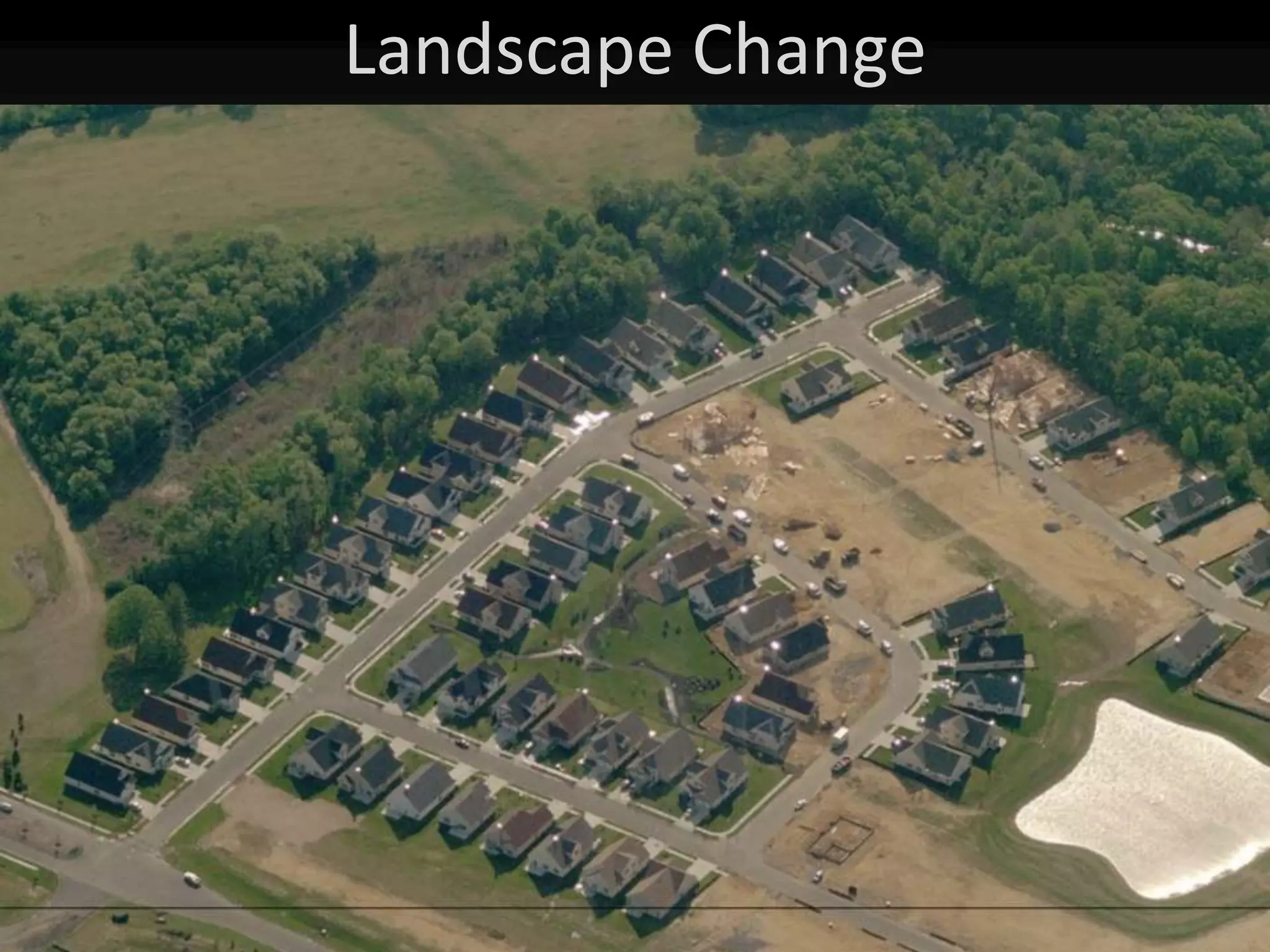
Landscape Change
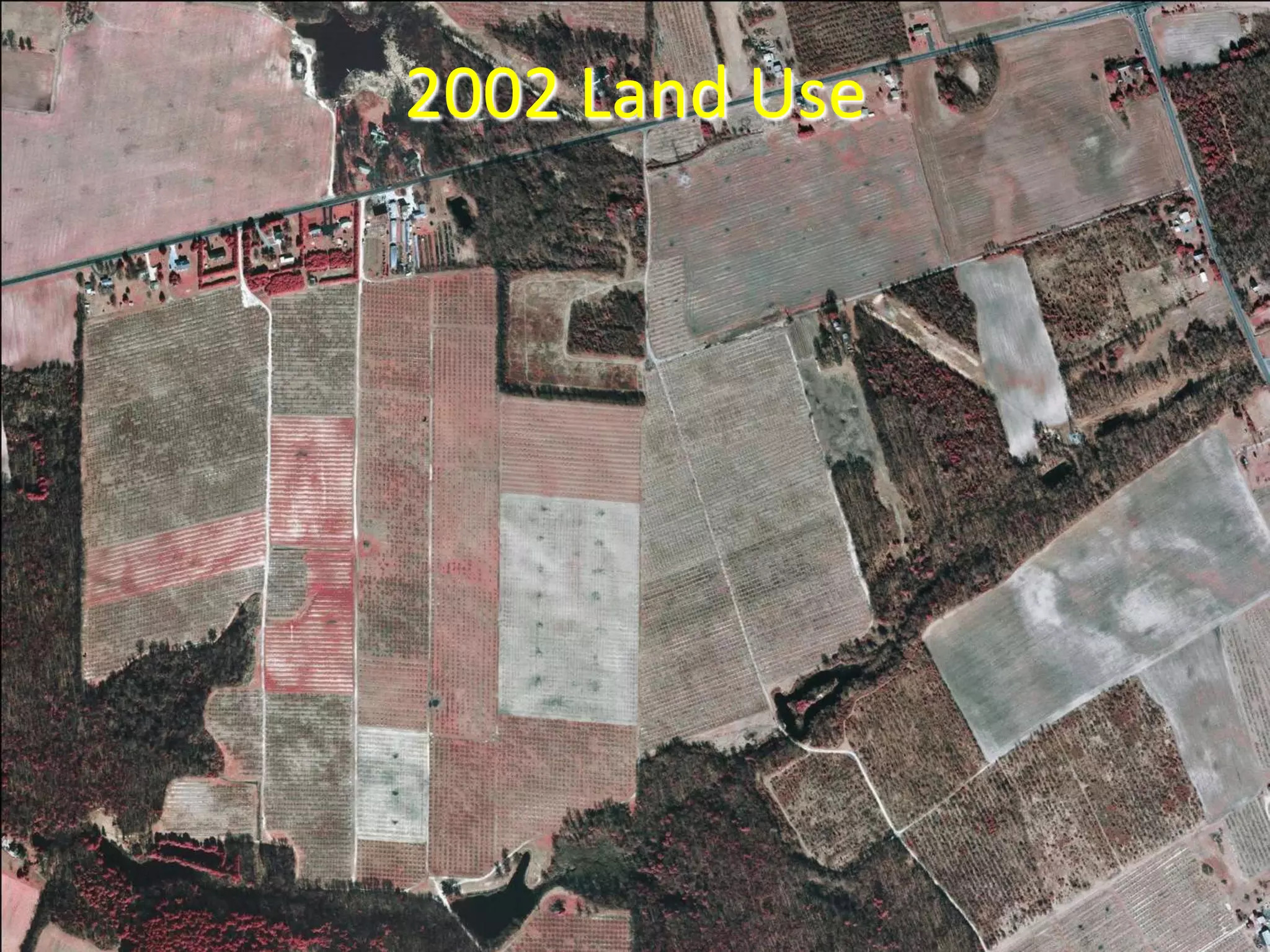
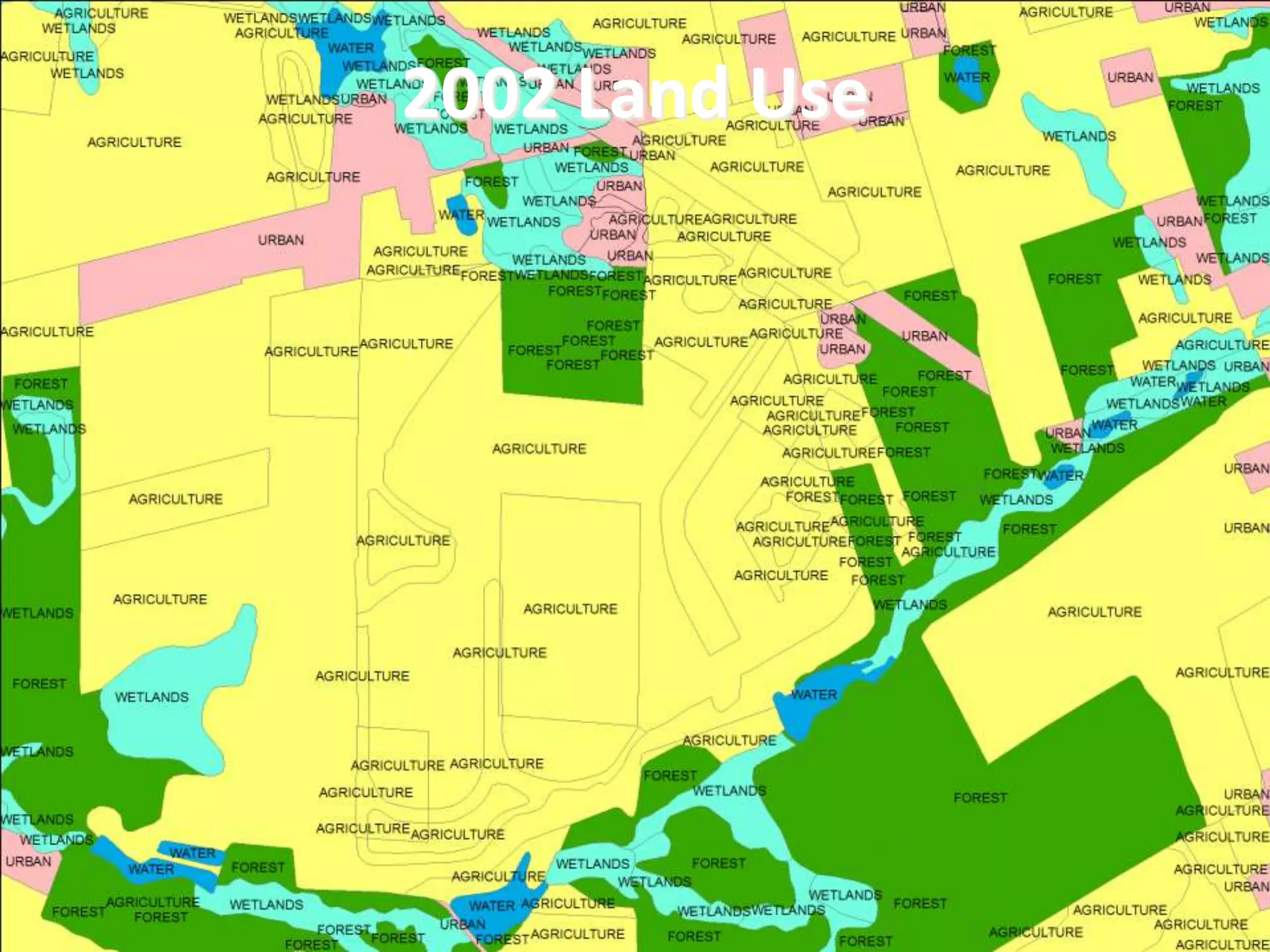
2002 Land Use
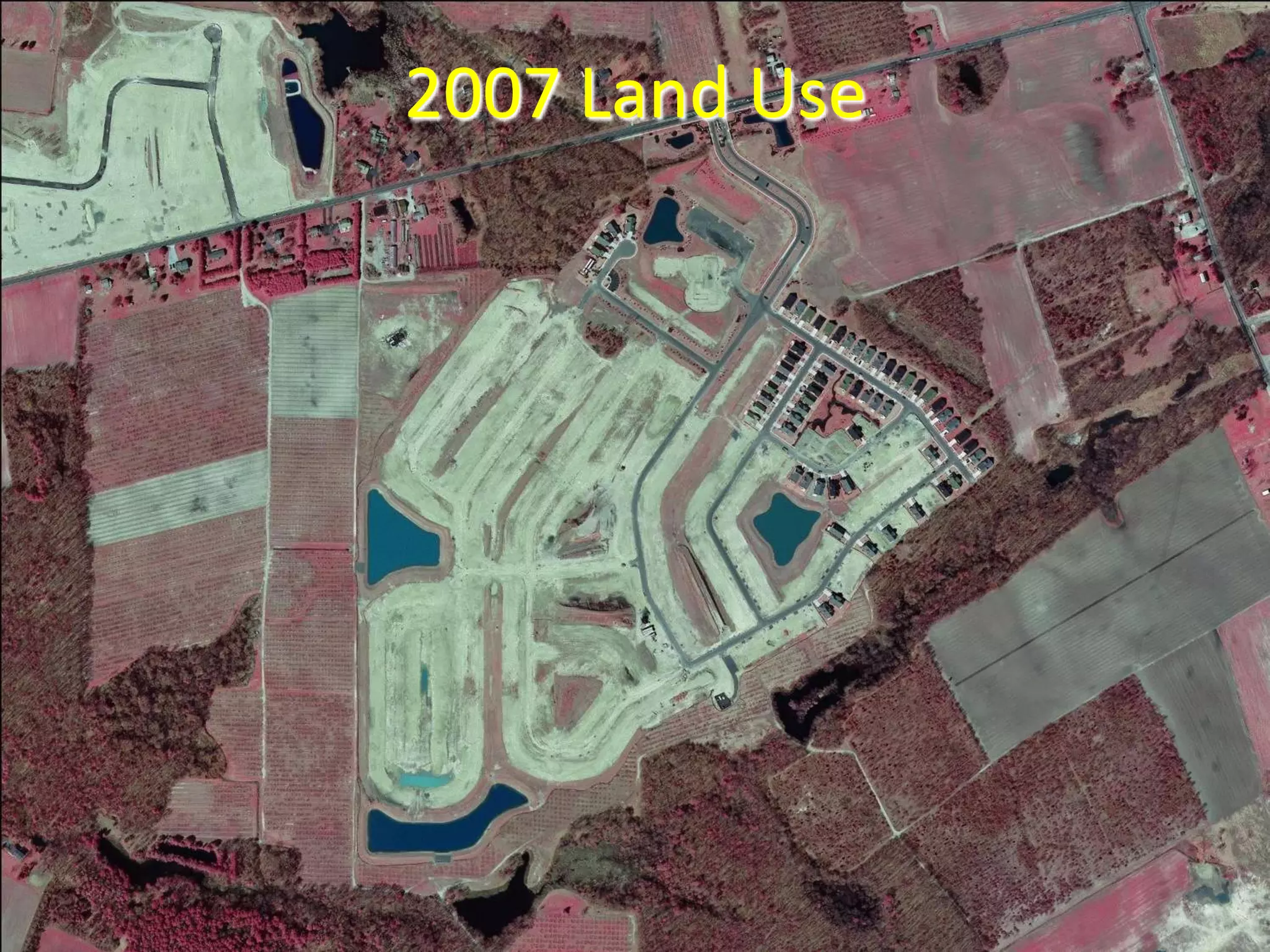
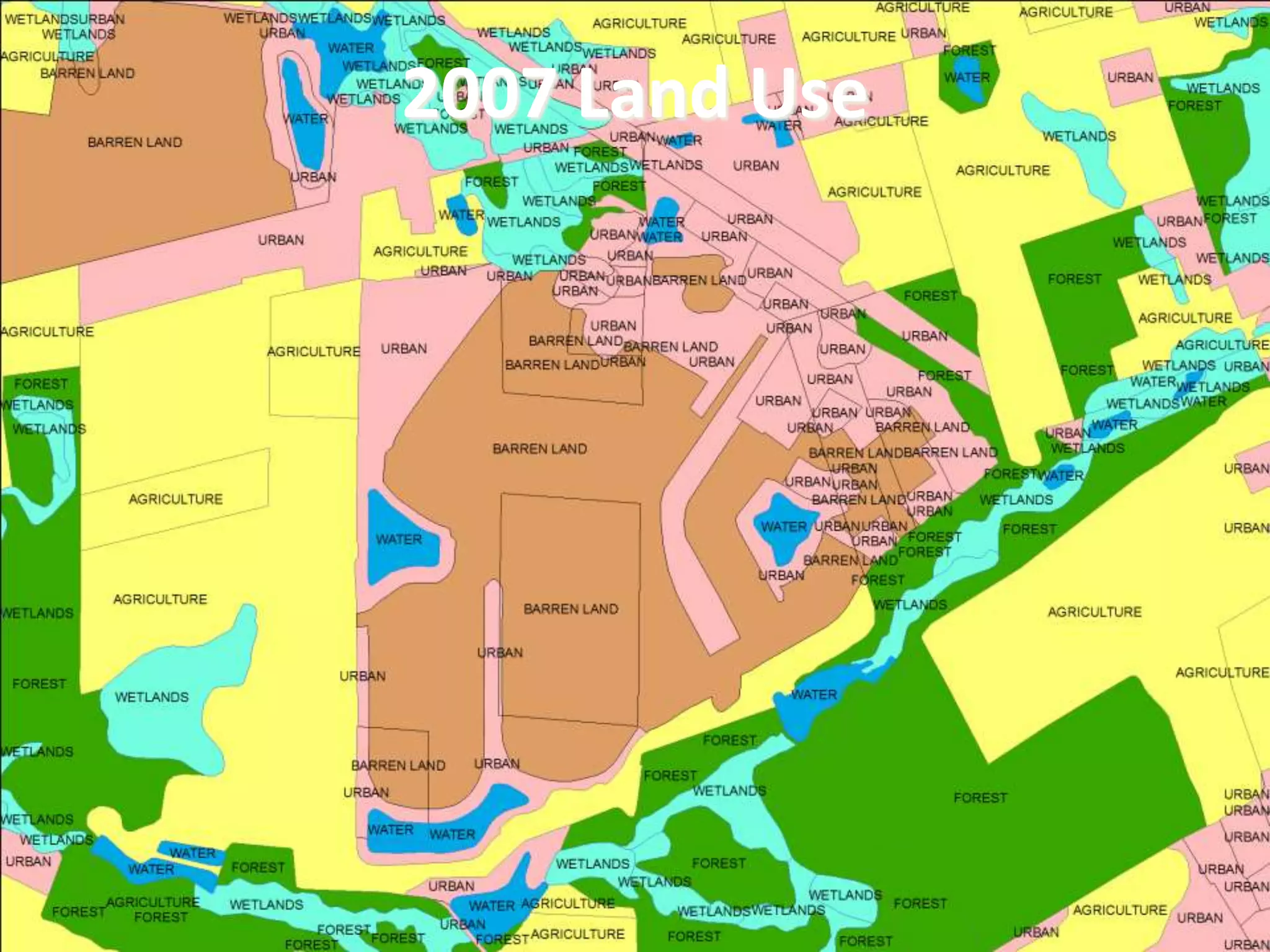
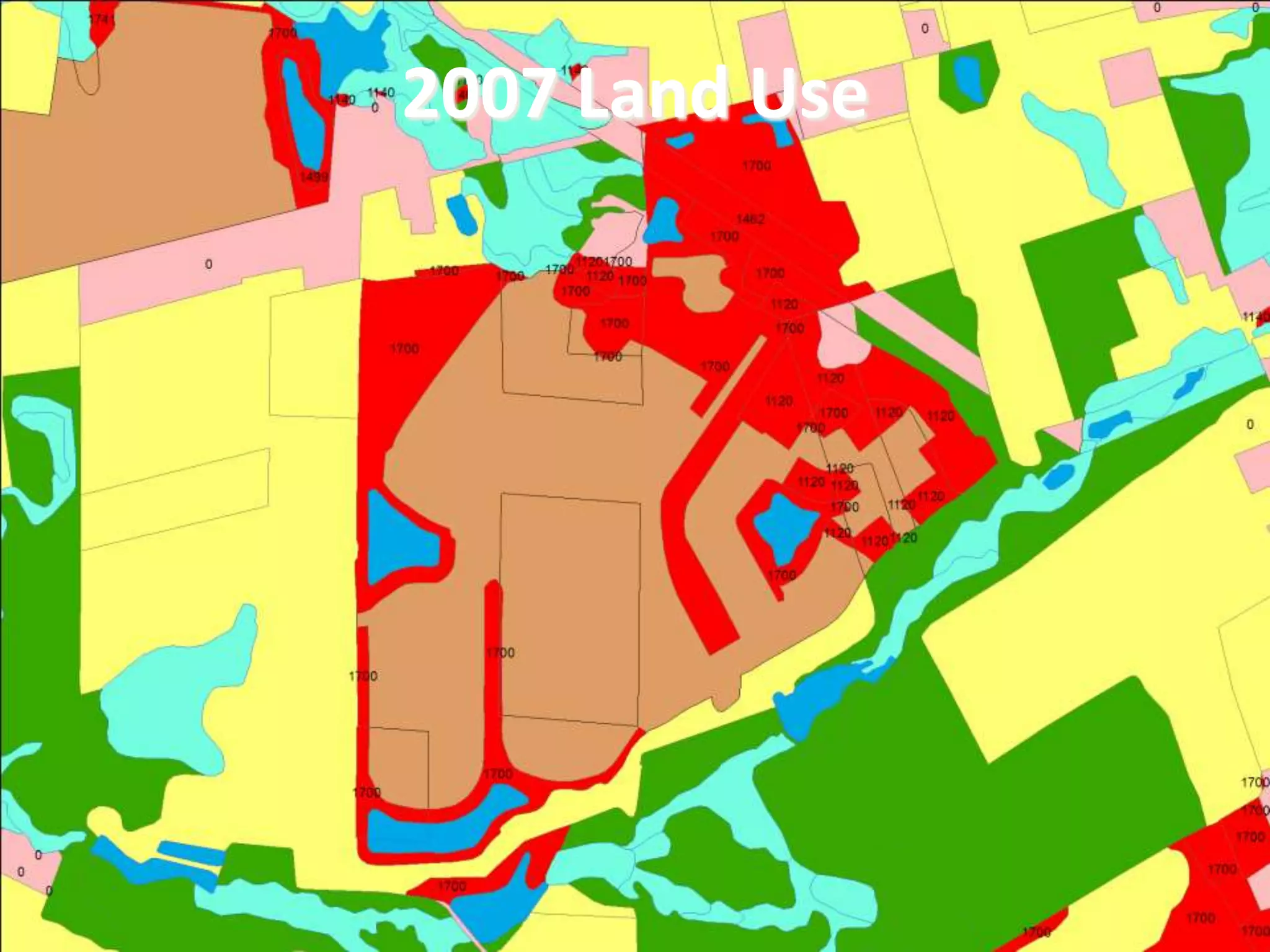
2007 Land Use
2002 Land Use
2007 Land Use
2007 Land Use
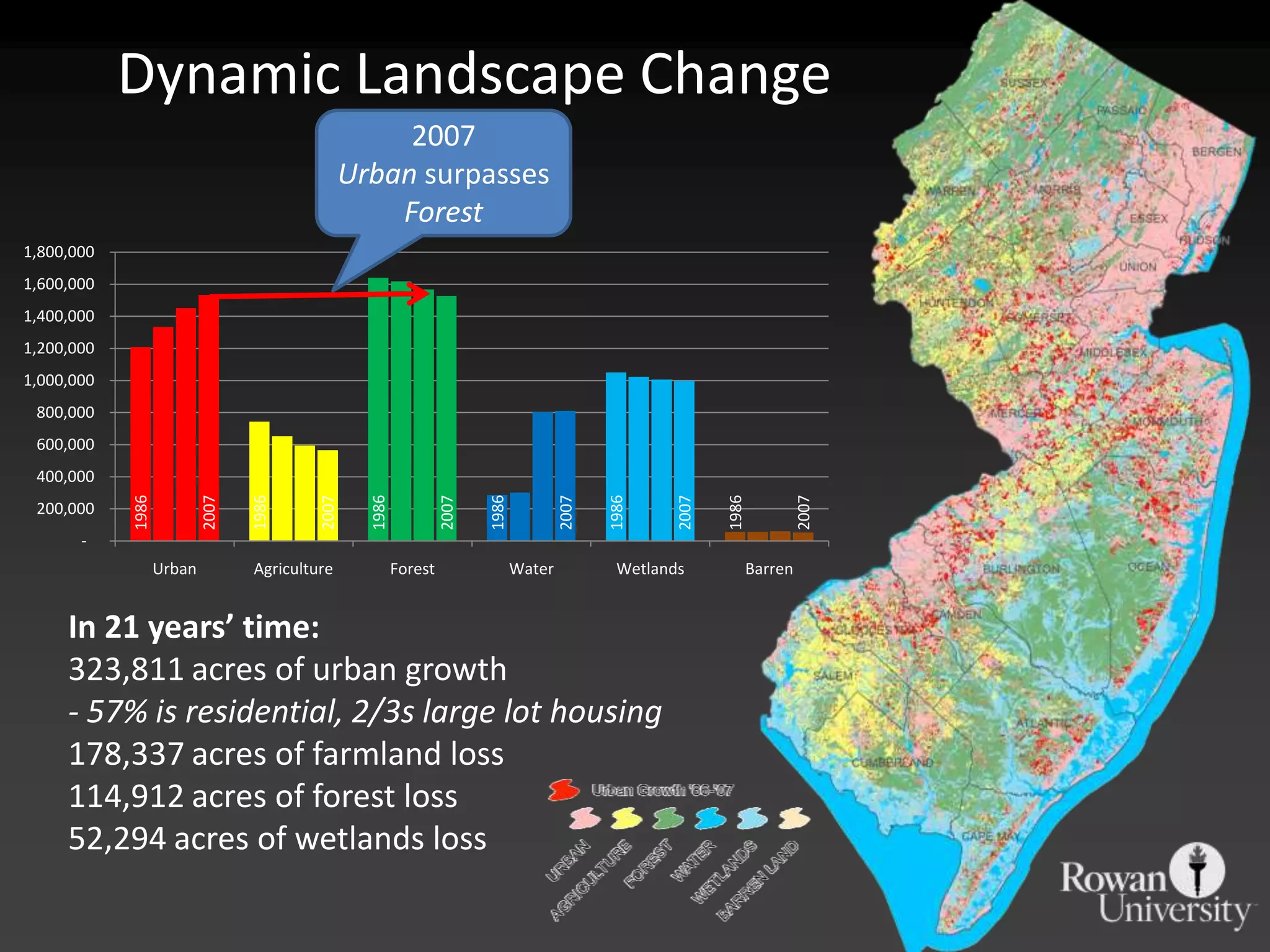
Dynamic Landscape Change2007Urban surpasses ForestIn 21 years’ time:323,811 acres of urban growth- 57% is residential, 2/3s large lot housing178,337 acres of farmland loss114,912 acres of forest loss52,294 acres of wetlands loss
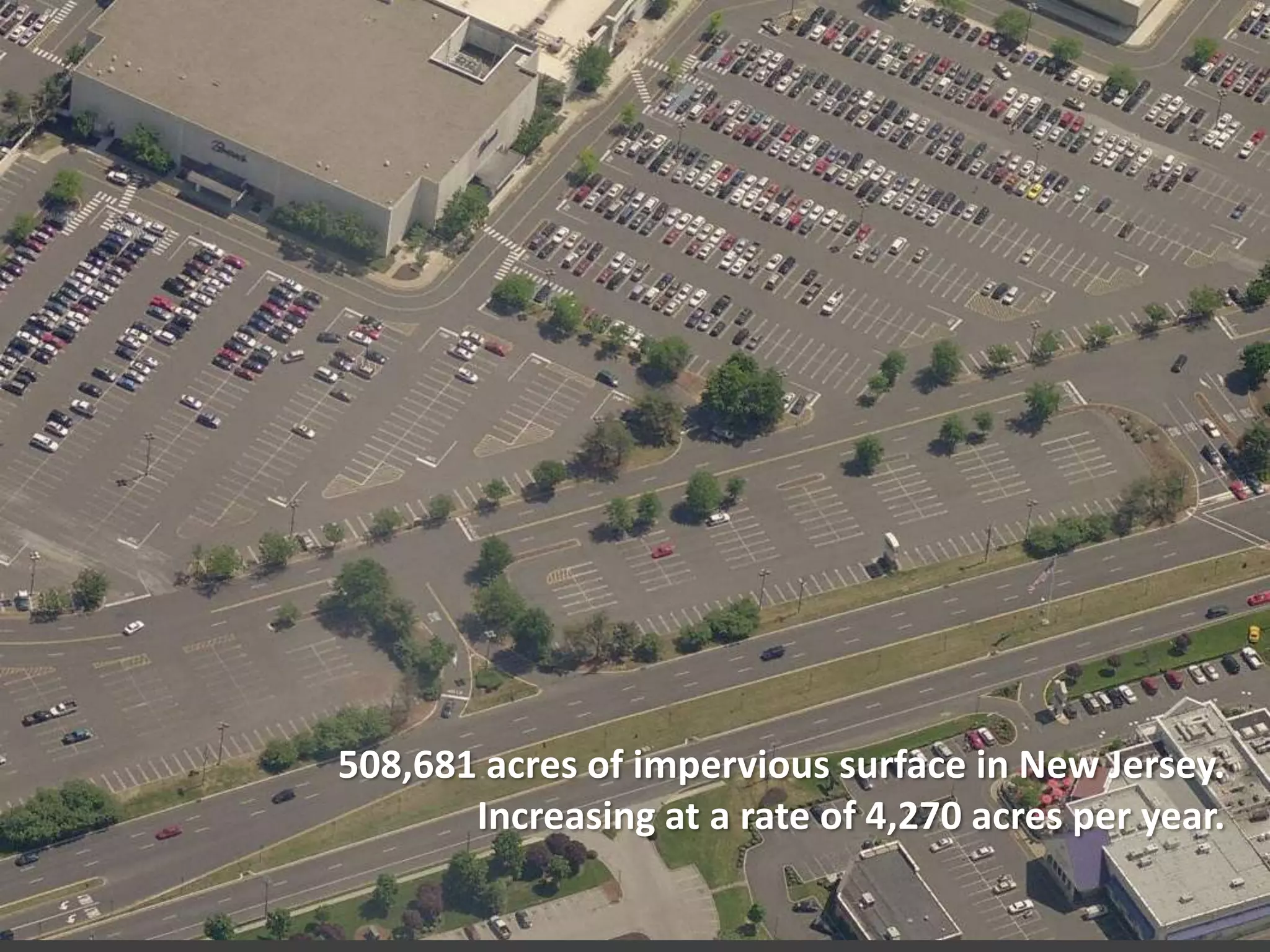
508,681 acres of impervious surface in New Jersey.Increasing at a rate of 4,270 acres per year.
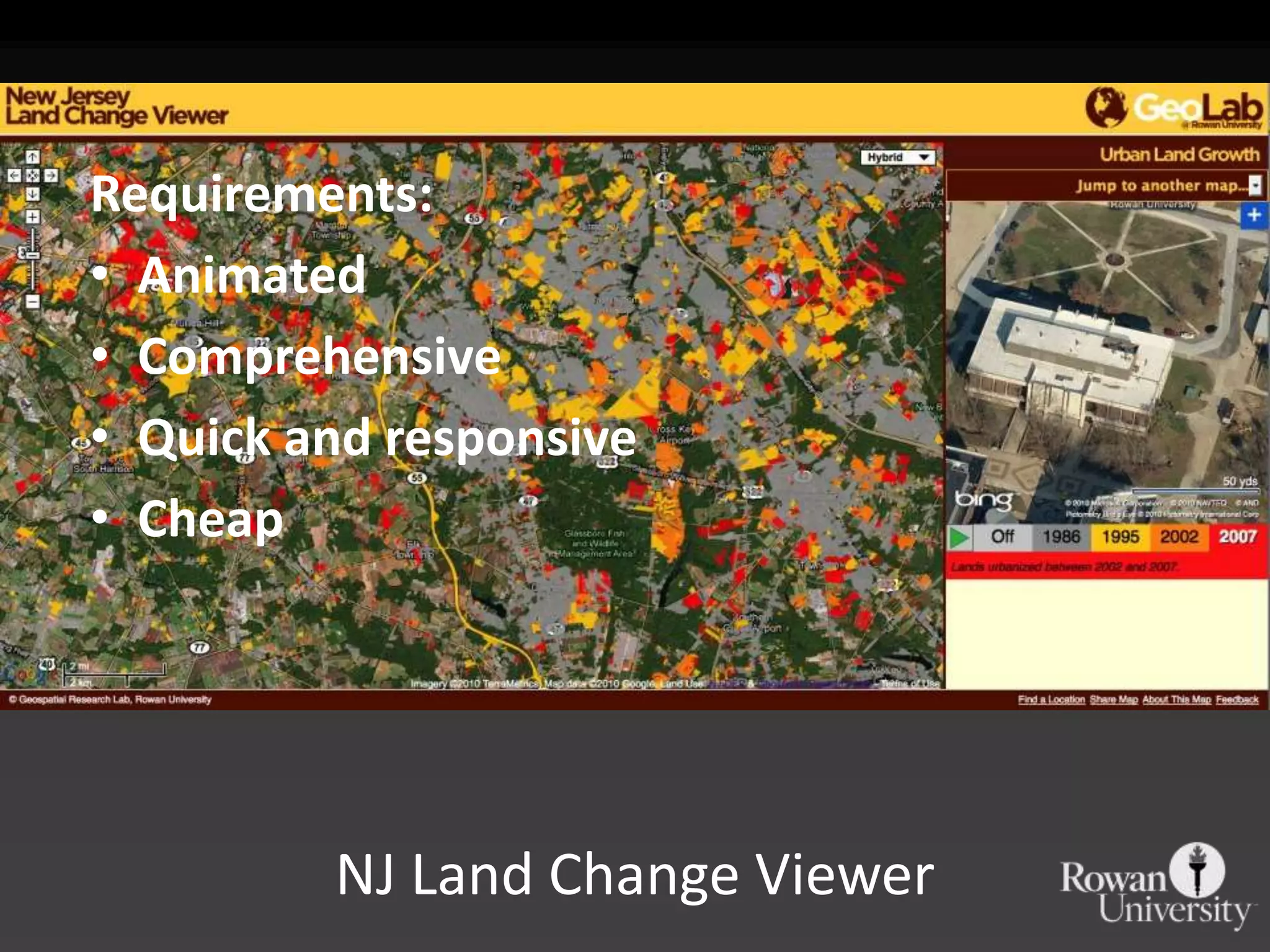
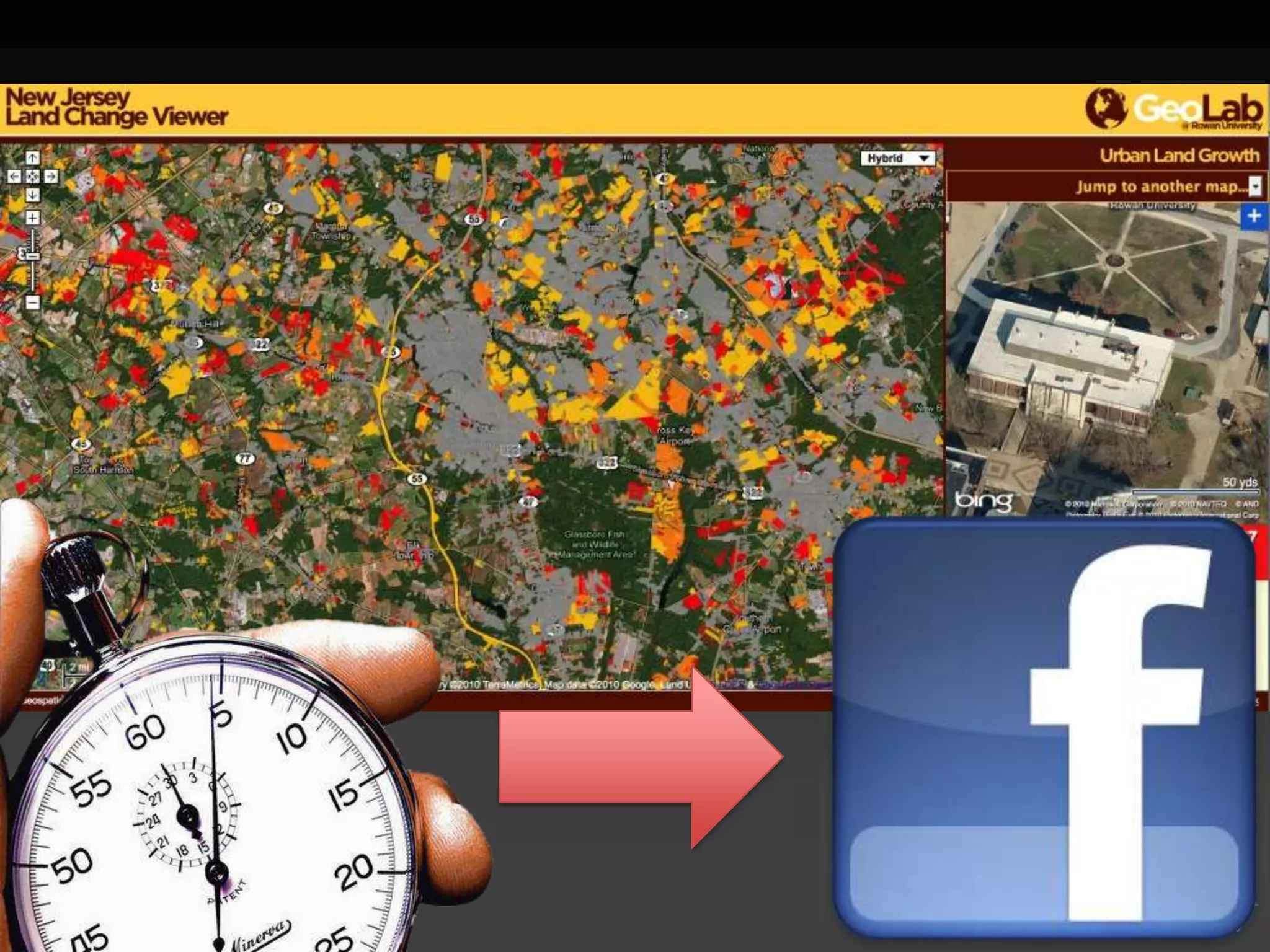
Requirements:AnimatedComprehensiveQuick and responsiveCheapNJ Land Change Viewer
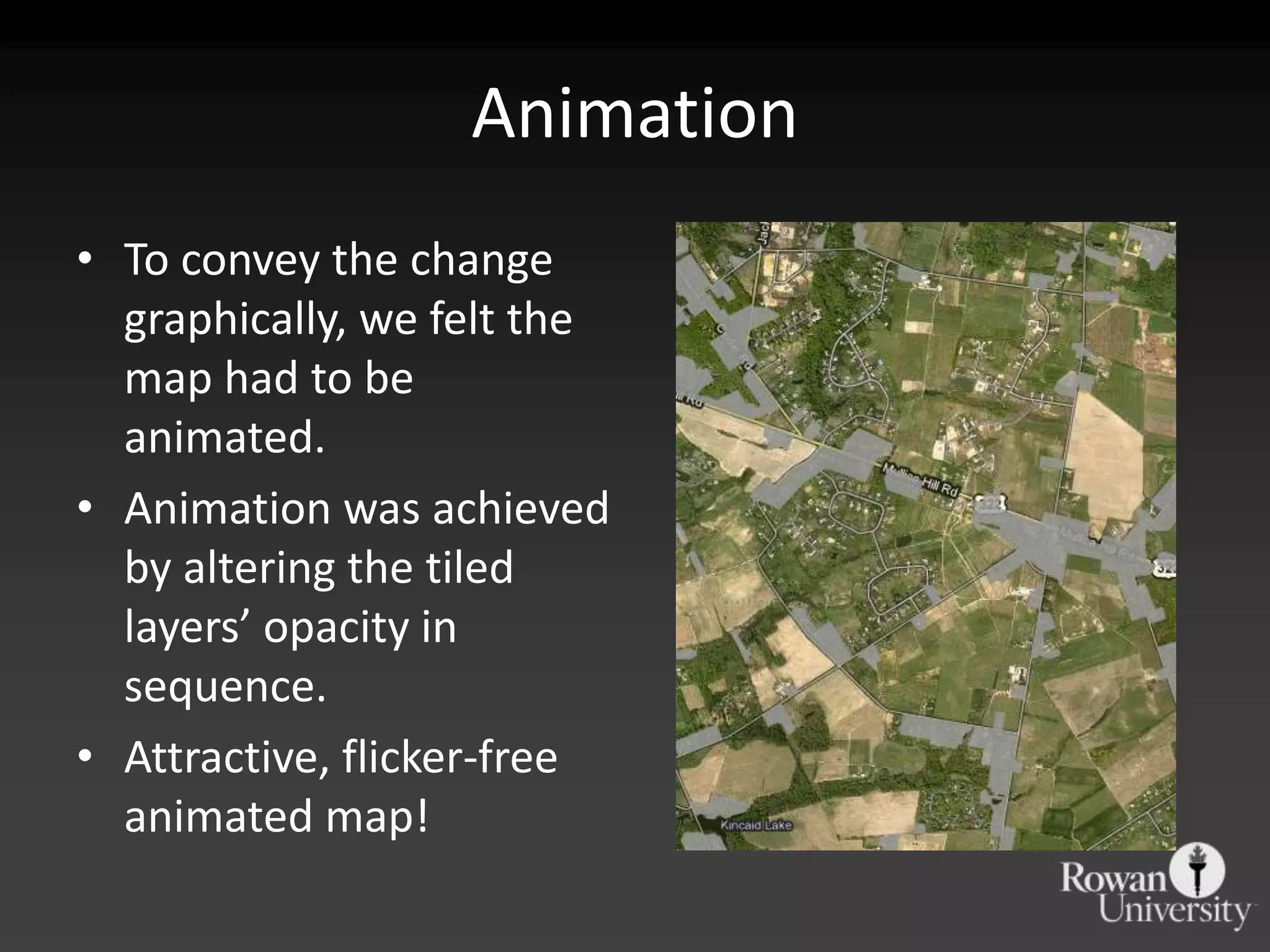
AnimationTo convey the change graphically, we felt the map had to be animated.Animation was achieved by altering the tiled layers’ opacity in sequence.Attractive, flicker-free animated map!
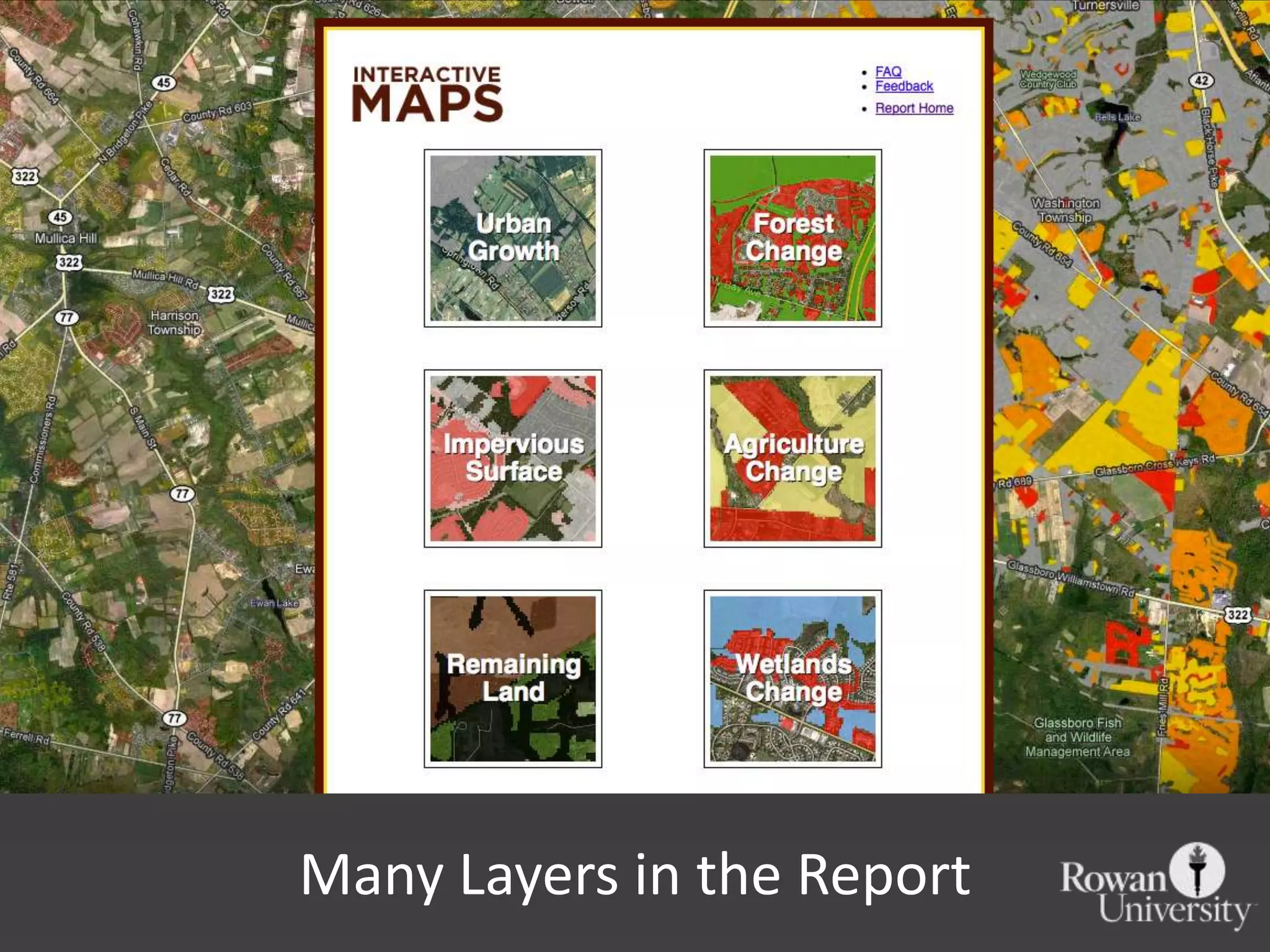
Many Layers in the Report
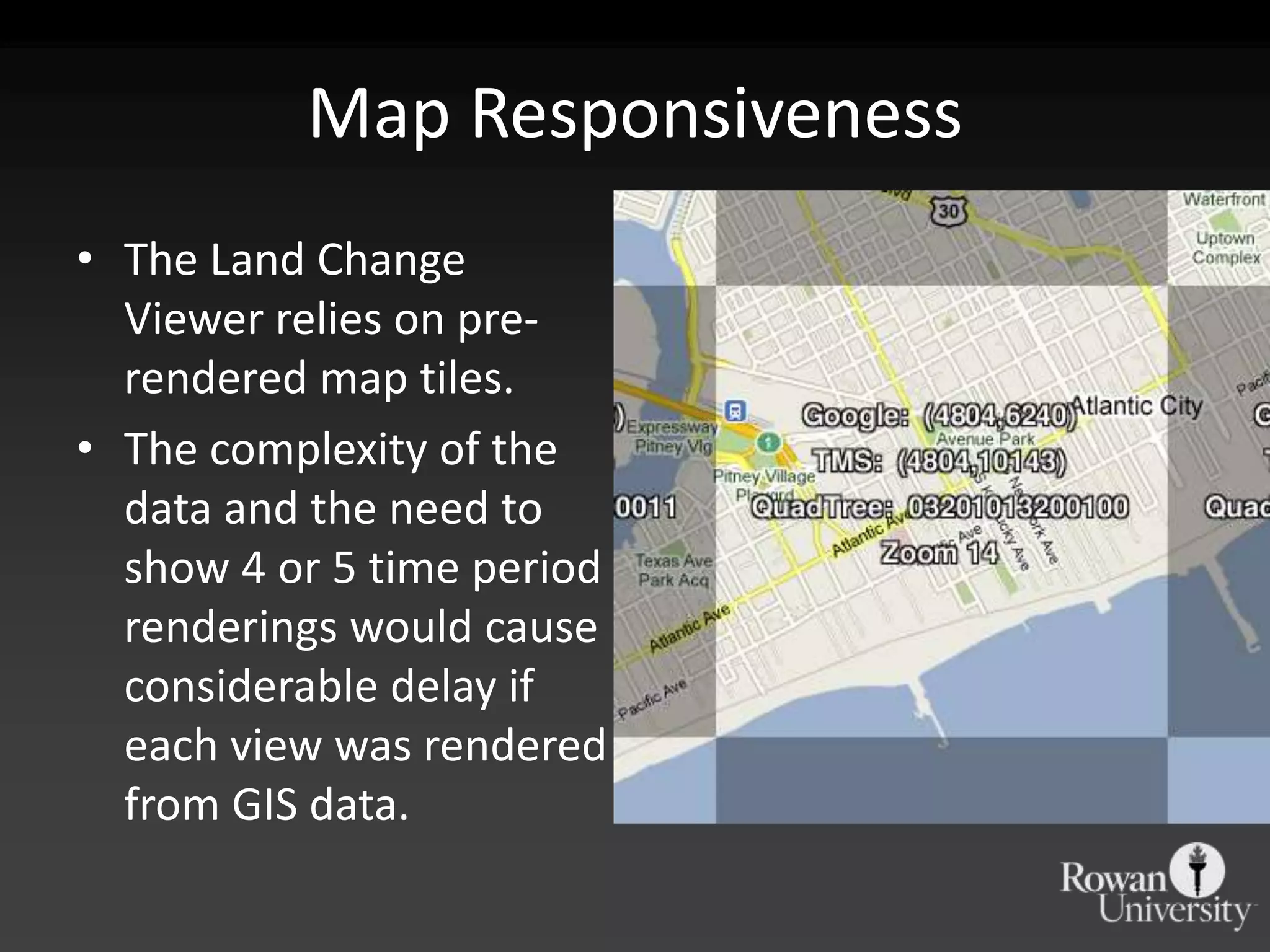
Map ResponsivenessThe Land Change Viewer relies on pre-rendered map tiles.The complexity of the data and the need to show 4 or 5 time period renderings would cause considerable delay if each view was rendered from GIS data.
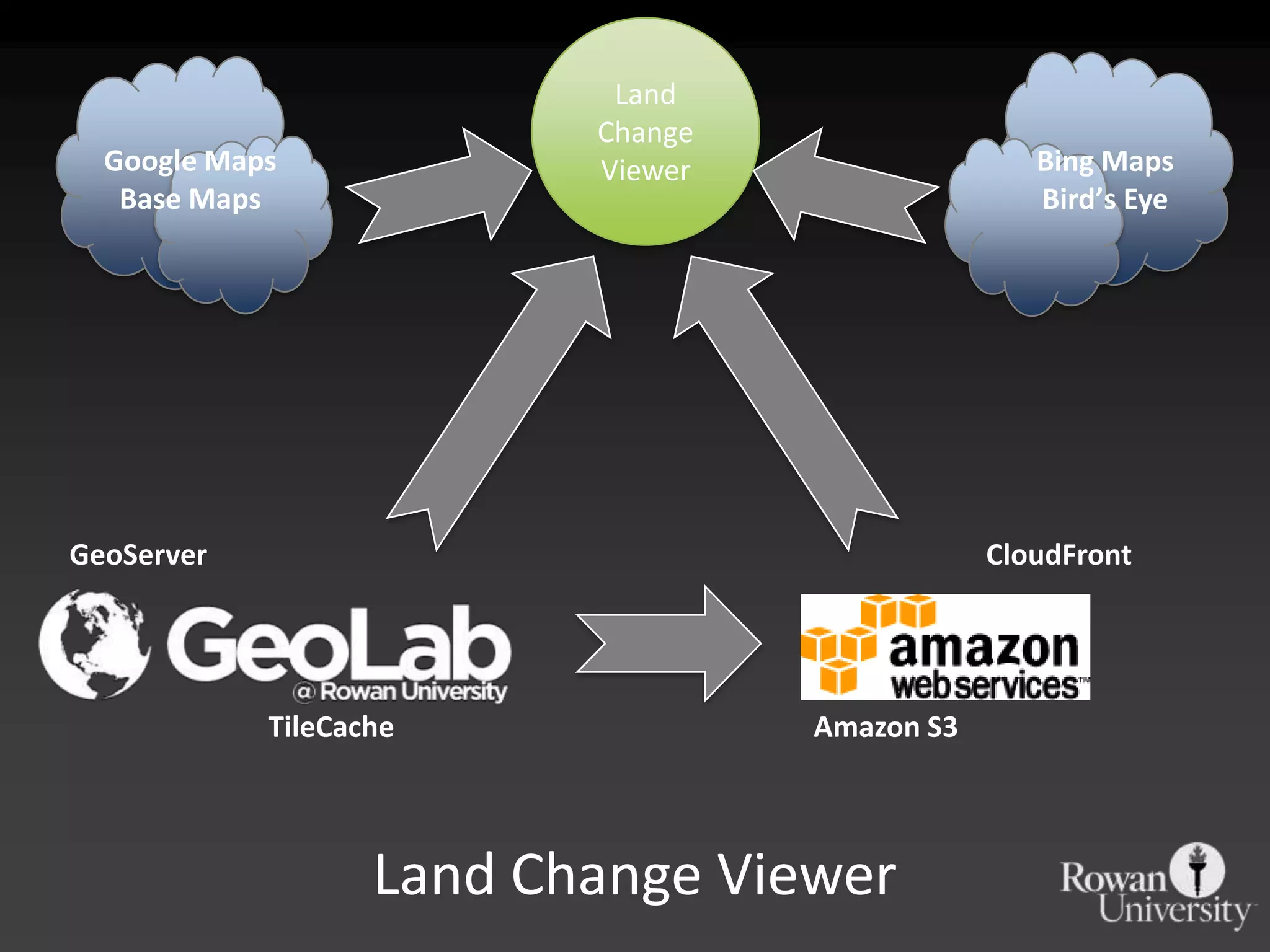
Land Change ViewerGoogle MapsBase MapsBing MapsBird’s EyeCloudFrontGeoServerAmazon S3TileCacheLand Change Viewer
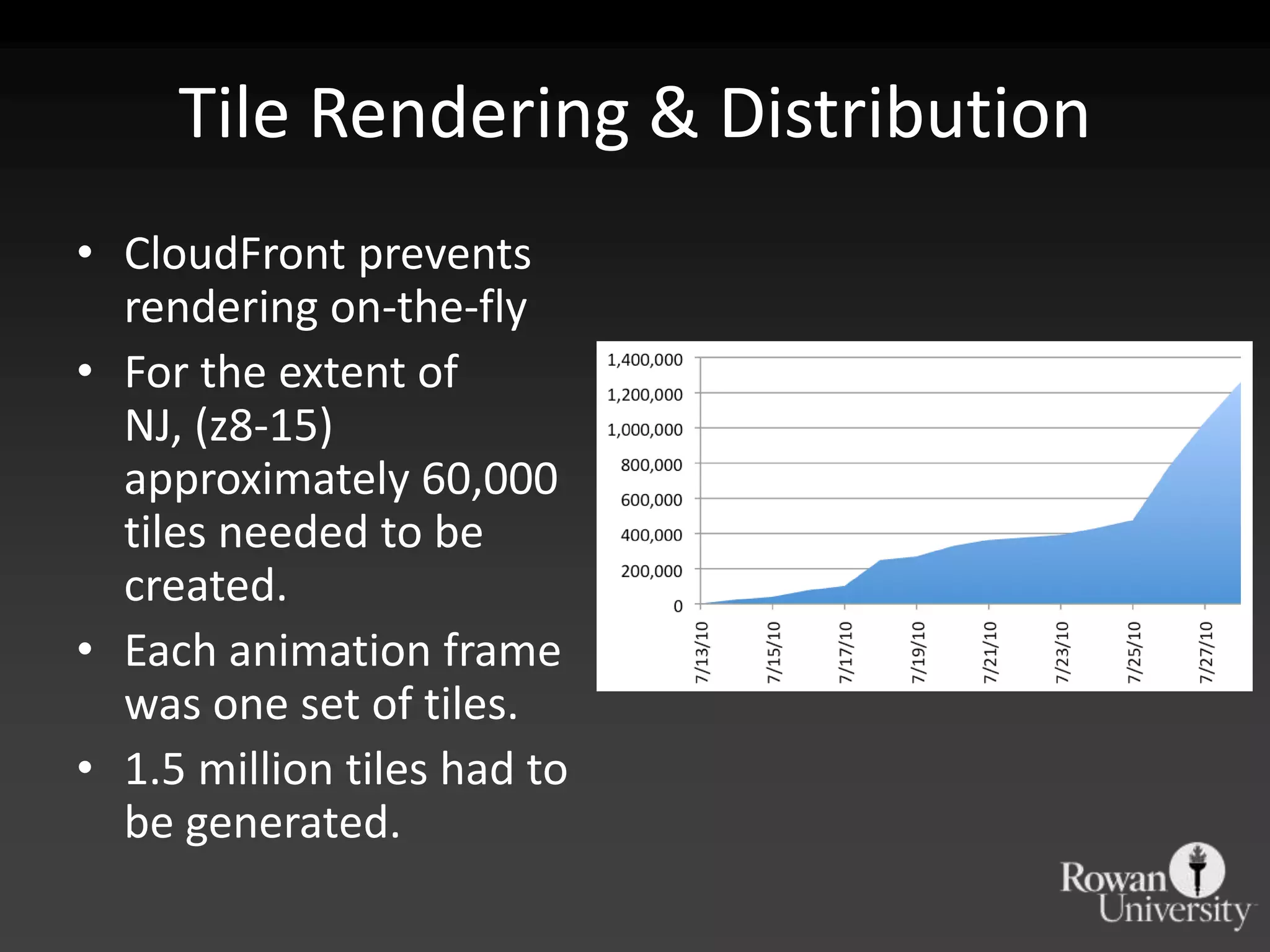
Tile Rendering & DistributionCloudFront prevents rendering on-the-flyFor the extent of NJ, (z8-15) approximately 60,000 tiles needed to be created.Each animation frame was one set of tiles.1.5 million tiles had to be generated.
On the CheapThis iteration of the project had little to no funding.Would not have been possible to implement without Amazon Web Services.AWS bill at the time of release was about $60, and only about $100 by the end of 2010.
Next StepsGeoLab was awarded a $7,500 AWS grant to support further development.Extend the Viewer to include metrics at the County and Municipal level.Reshape the viewer into a tool for aiding local-level planning. Use ArcGIS Server on AWS as a gateway into the data.
“Changing Landscapes”Report & Maps Available onlinehttp://gis.rowan.edu/projects/lucJohn HasseRowan Universityhasse@rowan.eduRick LathropRutgers Universitylathrop@crssa.rutgers.eduJohn ReiserRowan Universityreiser@rowan.edu

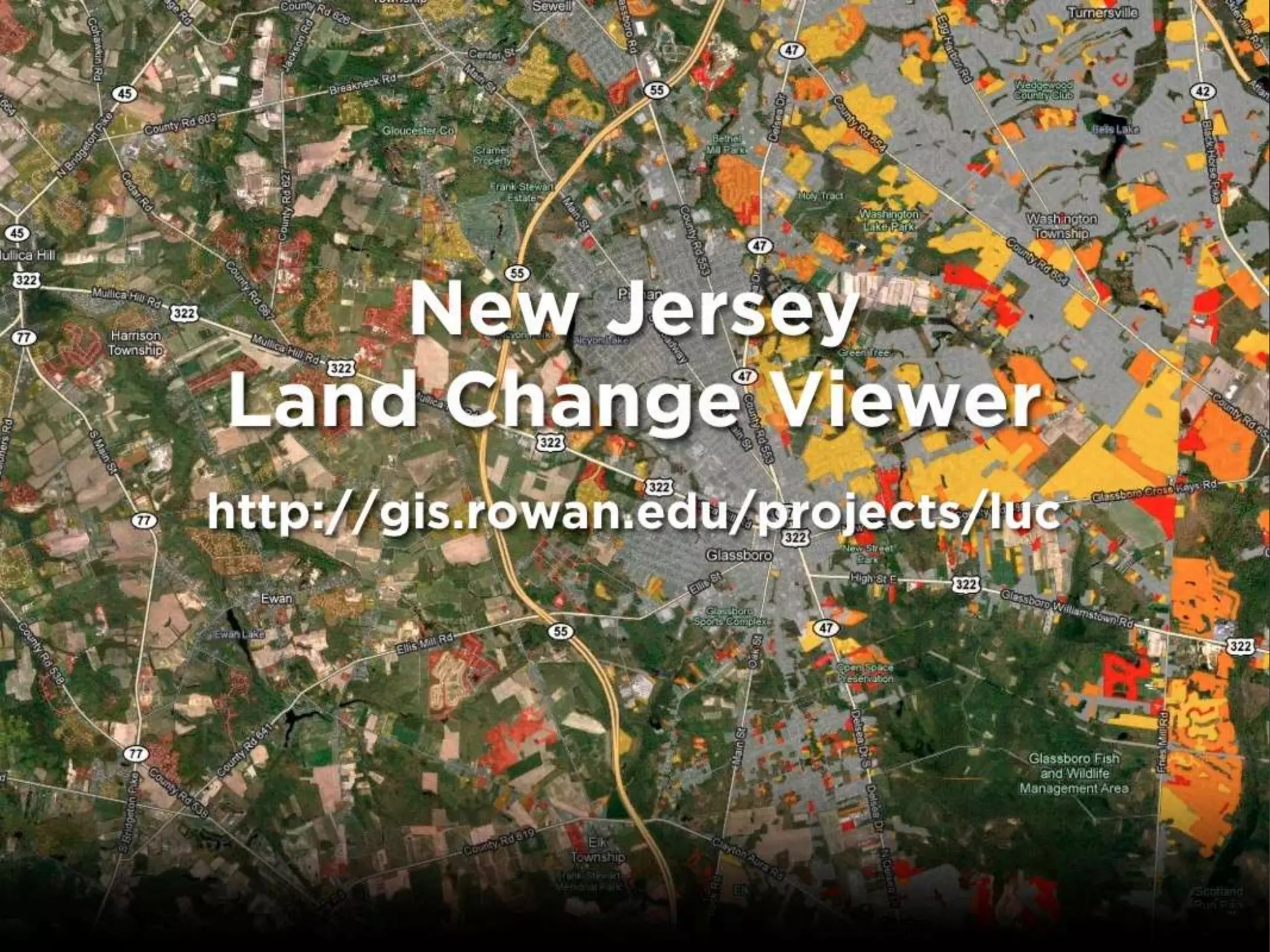
New Jersey Land Change Viewer

  • 2.
    New Jersey 2007LULCIn June 2010, the NJ DEP released the 2007 update to the NJ Land Use/Land Cover data.Data now spans 21 years, from 1986 to 2007.Dr. Hasse and Dr. Lathrop from CRSSA (Rutgers) analyzed the data, comparing it to previous time periods to study the urban growth patterns of the overall time period.This is the third iteration of the analysis.
  • 3.
  • 4.
  • 5.
  • 6.
  • 7.
  • 8.
  • 9.
    Dynamic Landscape Change2007Urbansurpasses ForestIn 21 years’ time:323,811 acres of urban growth- 57% is residential, 2/3s large lot housing178,337 acres of farmland loss114,912 acres of forest loss52,294 acres of wetlands loss
  • 10.
    508,681 acres ofimpervious surface in New Jersey.Increasing at a rate of 4,270 acres per year.
  • 11.
  • 12.
    AnimationTo convey thechange graphically, we felt the map had to be animated.Animation was achieved by altering the tiled layers’ opacity in sequence.Attractive, flicker-free animated map!
  • 13.
    Many Layers inthe Report
  • 15.
    Map ResponsivenessThe LandChange Viewer relies on pre-rendered map tiles.The complexity of the data and the need to show 4 or 5 time period renderings would cause considerable delay if each view was rendered from GIS data.
  • 16.
    Land Change ViewerGoogleMapsBase MapsBing MapsBird’s EyeCloudFrontGeoServerAmazon S3TileCacheLand Change Viewer
  • 17.
    Tile Rendering &DistributionCloudFront prevents rendering on-the-flyFor the extent of NJ, (z8-15) approximately 60,000 tiles needed to be created.Each animation frame was one set of tiles.1.5 million tiles had to be generated.
  • 18.
    On the CheapThisiteration of the project had little to no funding.Would not have been possible to implement without Amazon Web Services.AWS bill at the time of release was about $60, and only about $100 by the end of 2010.
  • 19.
    Next StepsGeoLab wasawarded a $7,500 AWS grant to support further development.Extend the Viewer to include metrics at the County and Municipal level.Reshape the viewer into a tool for aiding local-level planning. Use ArcGIS Server on AWS as a gateway into the data.
  • 20.
    “Changing Landscapes”Report &Maps Available onlinehttp://gis.rowan.edu/projects/lucJohn HasseRowan Universityhasse@rowan.eduRick LathropRutgers Universitylathrop@crssa.rutgers.eduJohn ReiserRowan Universityreiser@rowan.edu