SPATIALANALYSIS AND MODELING
(geographical information system)
Dr. Venkateswarlu Gogana
Spatial Analysis
Most GIS systems are for the purpose of representing and describing features of
the real world. Spatial databases perform this function
 Points, lines, polygons concepts for representation
 Coordinate systems as fundamental properties of spatial data
 geographic file formats for storage
Spatial Analysis involves gaining an understanding of the patterns, and
associated cause and effect processes, underlying the features which have been
described in order to
 Make better decisions
 Understand the phenomena as a goal in itself
Spatial Analysis
Types of Spatial Analysis:
1. Spatial data manipulation:
Classic GIS capabilities - Spatial queries & measurement, buffering, map layer
overlay
2. Spatial data analysis:
Descriptive and exploratory, Visualization through data manipulation and mapping
3. Spatial statistical analysis:
Hypothesis testing; Are data “to be expected” or are they “unexpected” relative to
some statistical model, usually of a random process
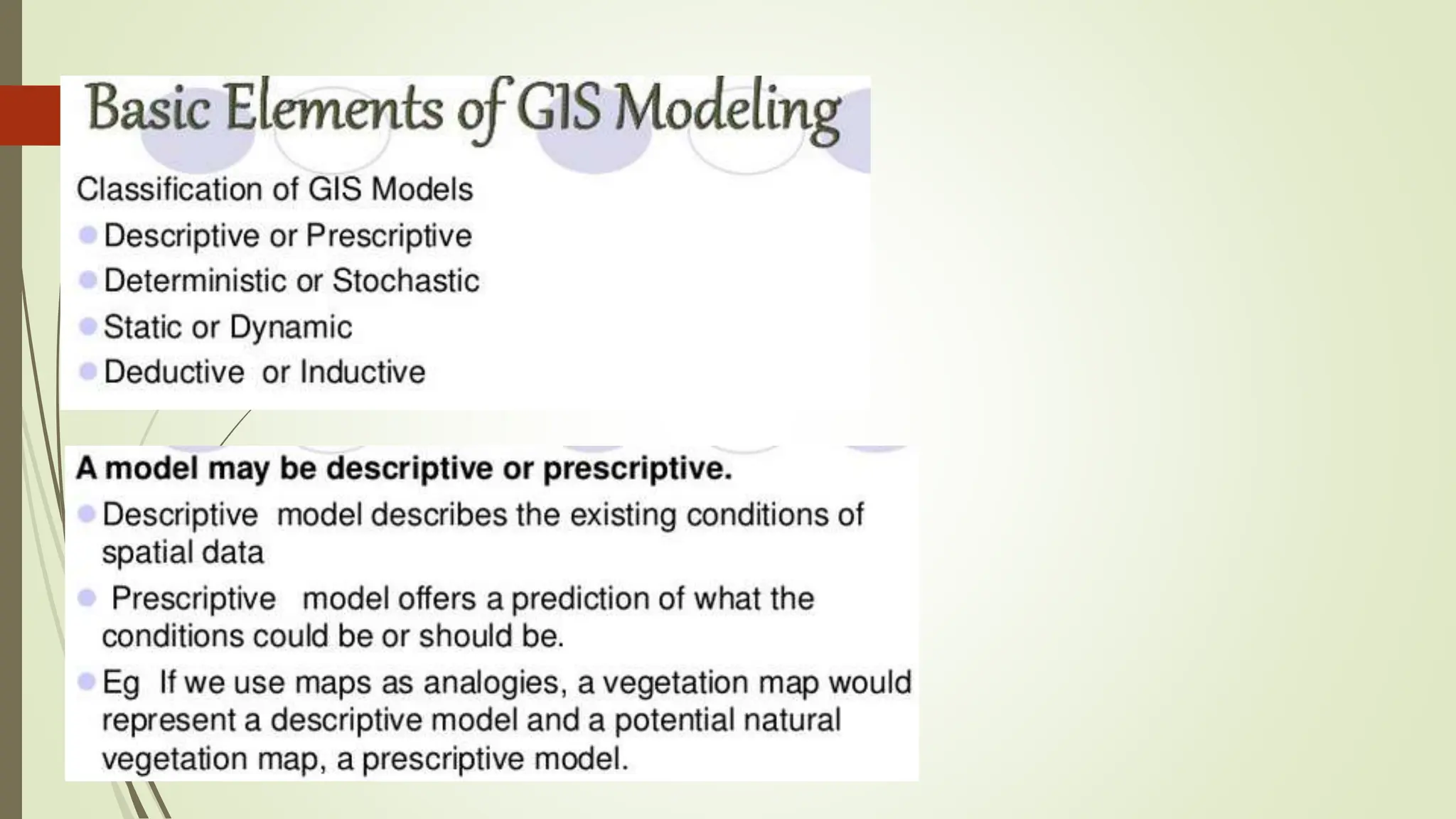
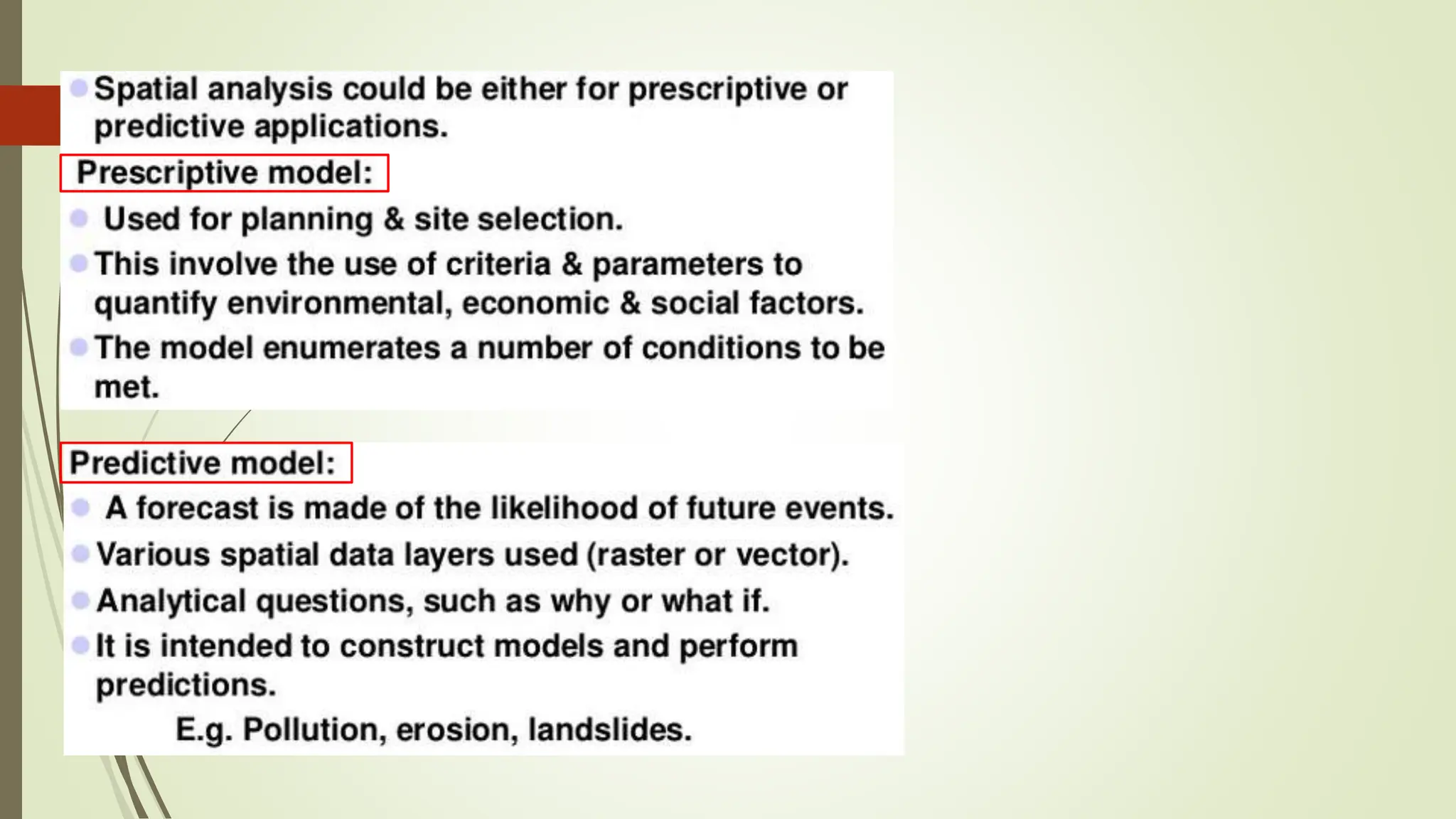
4. Spatial modeling:
Prediction, Constructing models (of processes) to predict spatial outcomes
(patterns) What if analyses
Spatial Analysis
Types of Spatial Analysis:
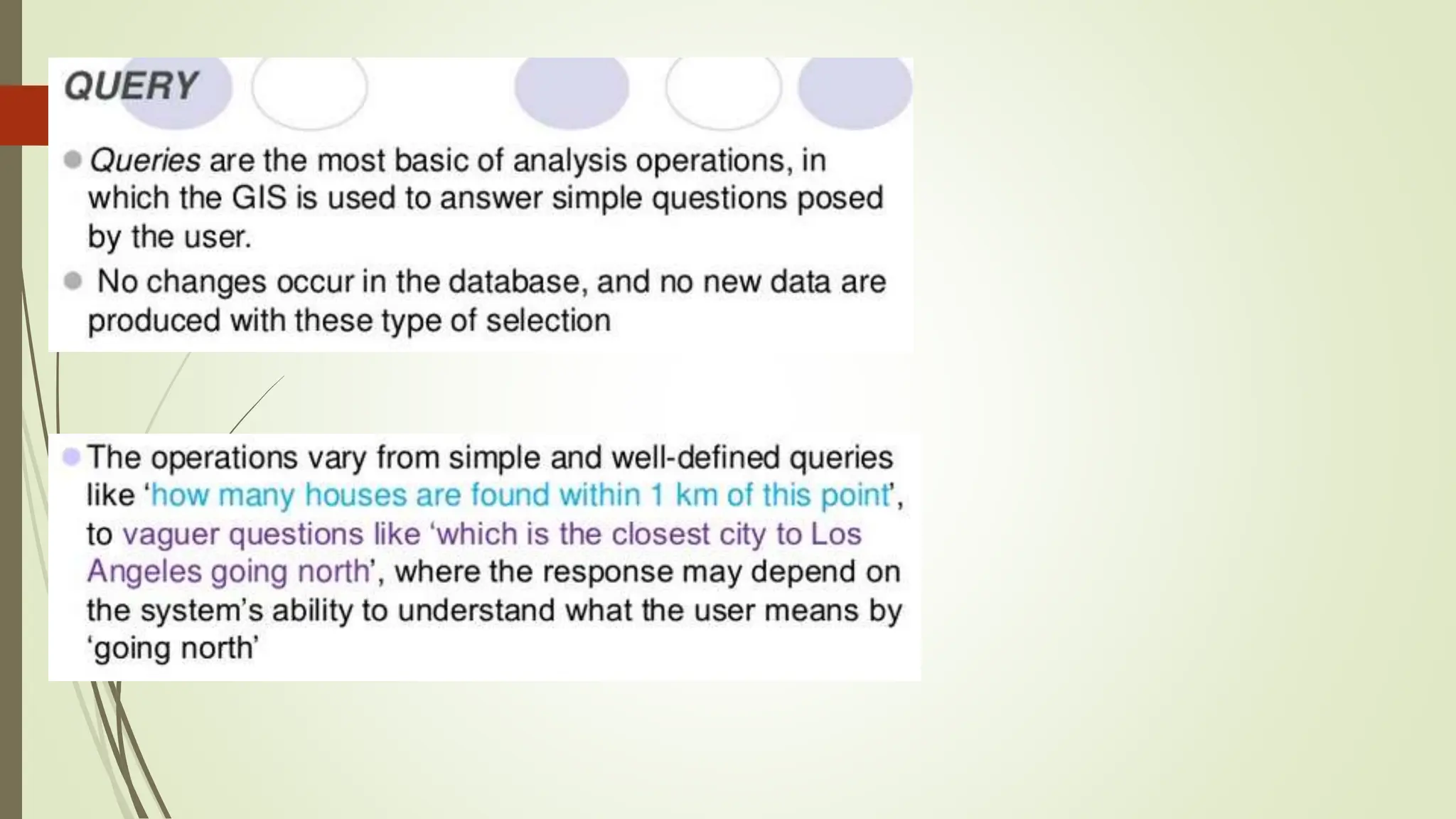
1. Vector Spatial Analysis - Extracting portions of data is an effective means of isolating specific areas for
further processing or data analysis
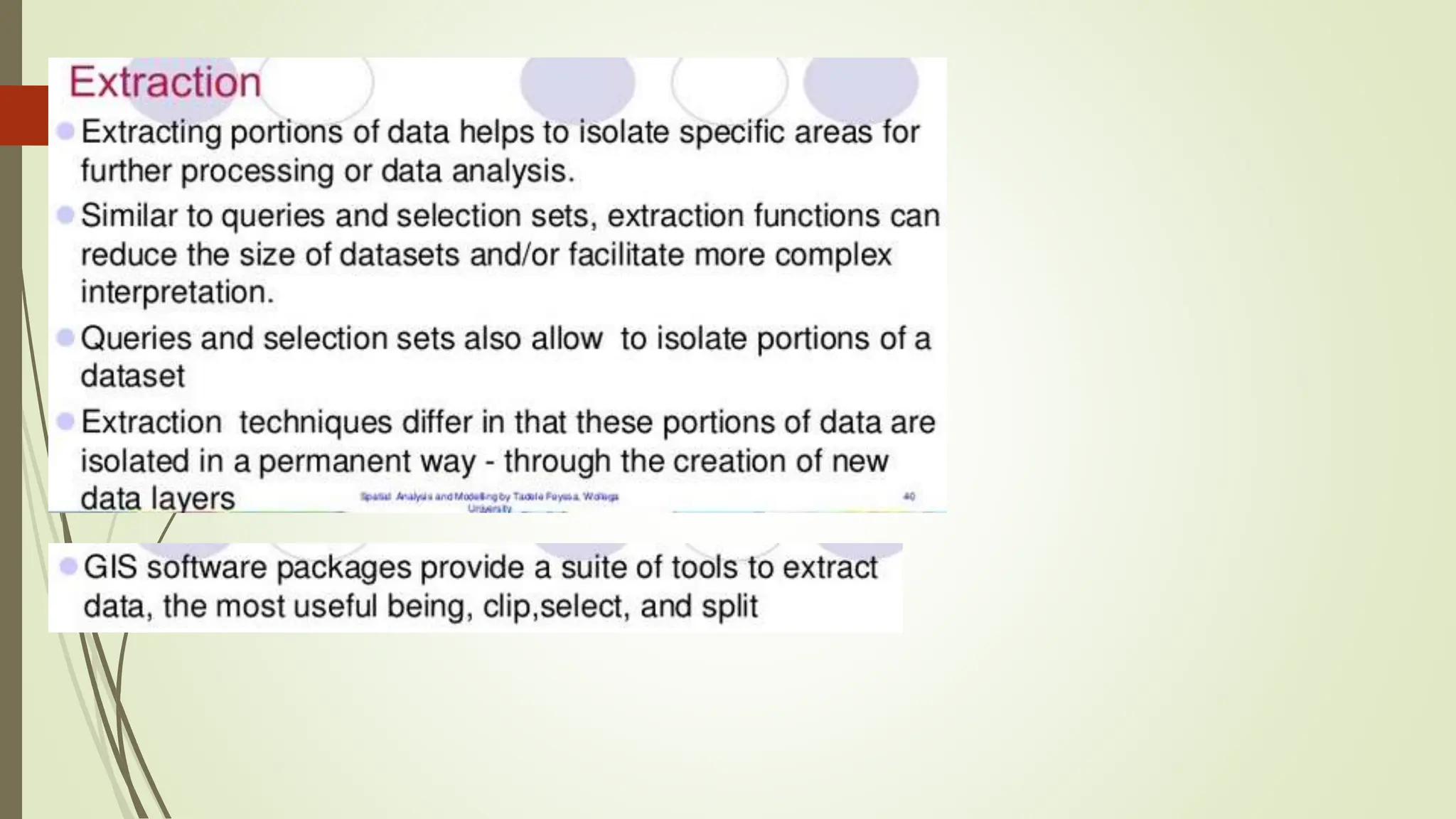
a) Extraction
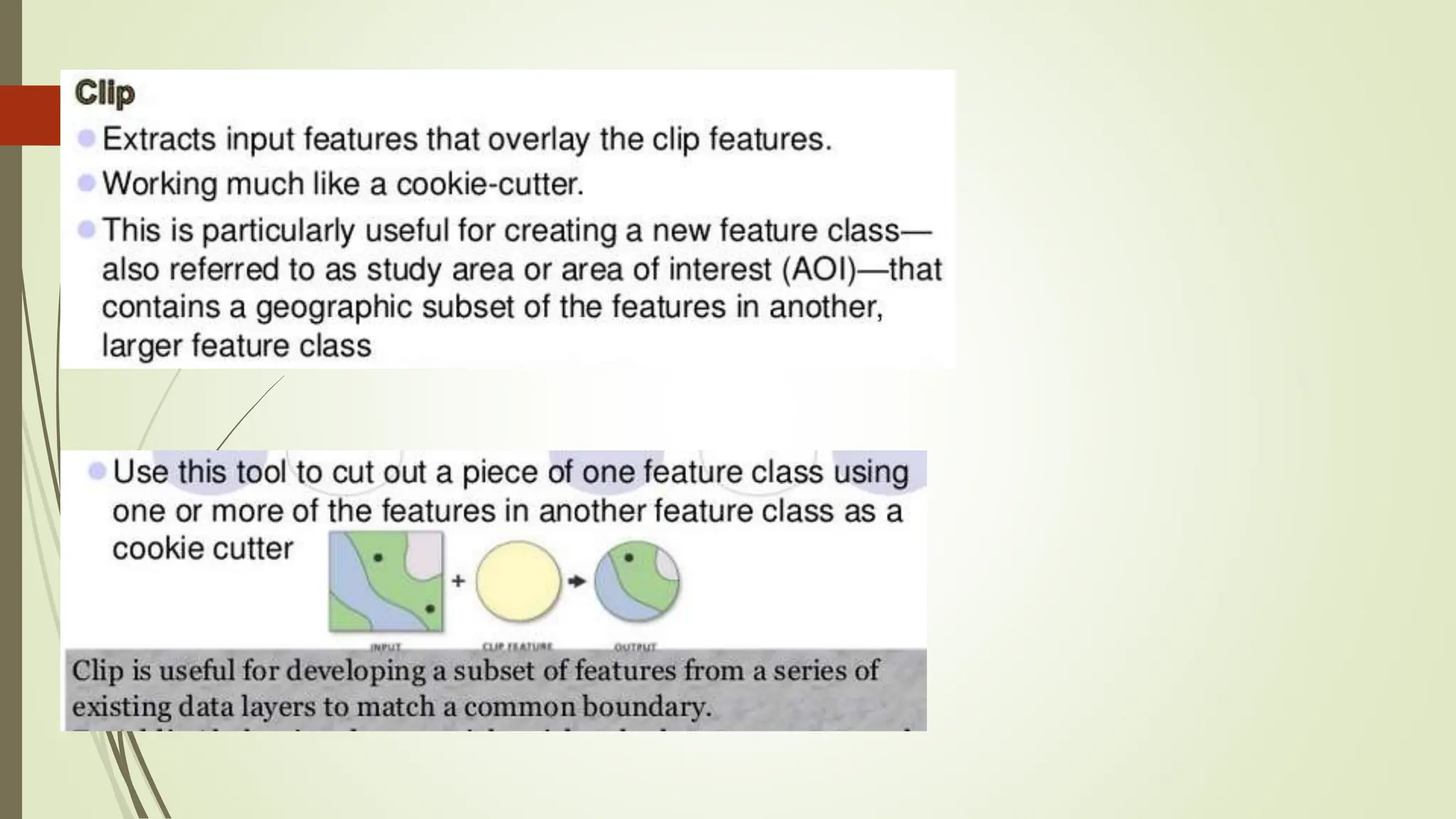
i. Clip
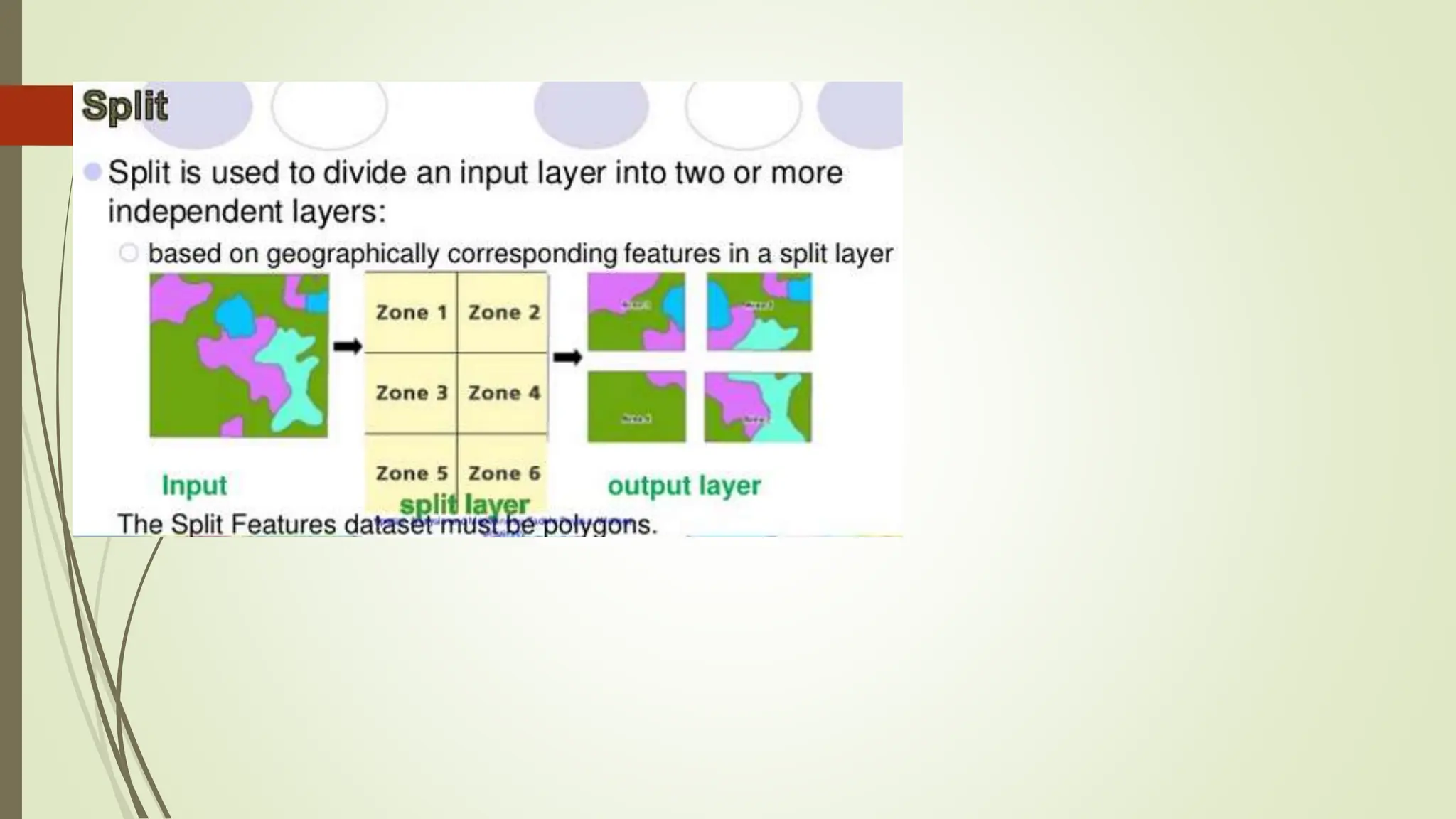
ii. Split
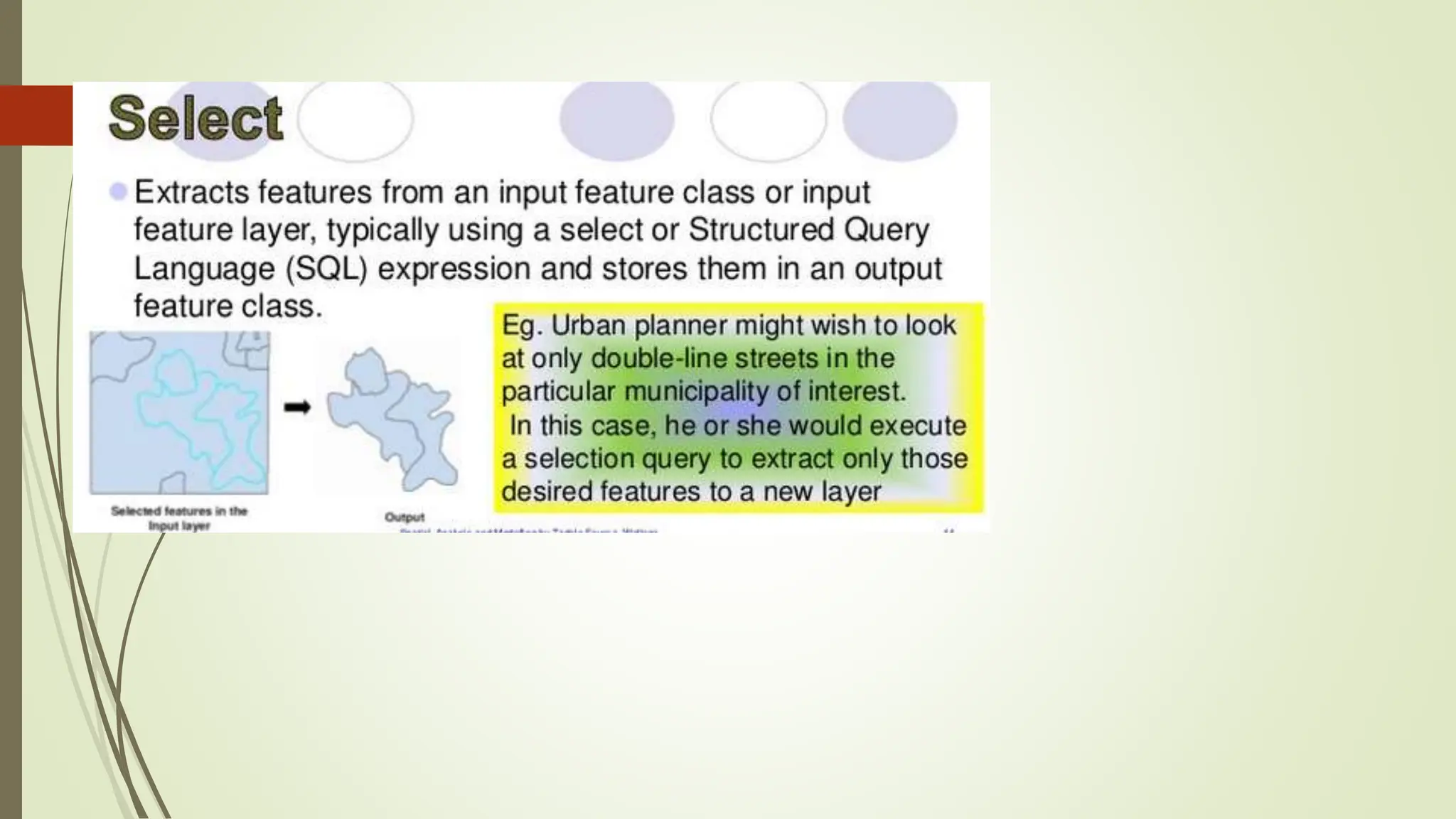
iii. Select
iv. Erase
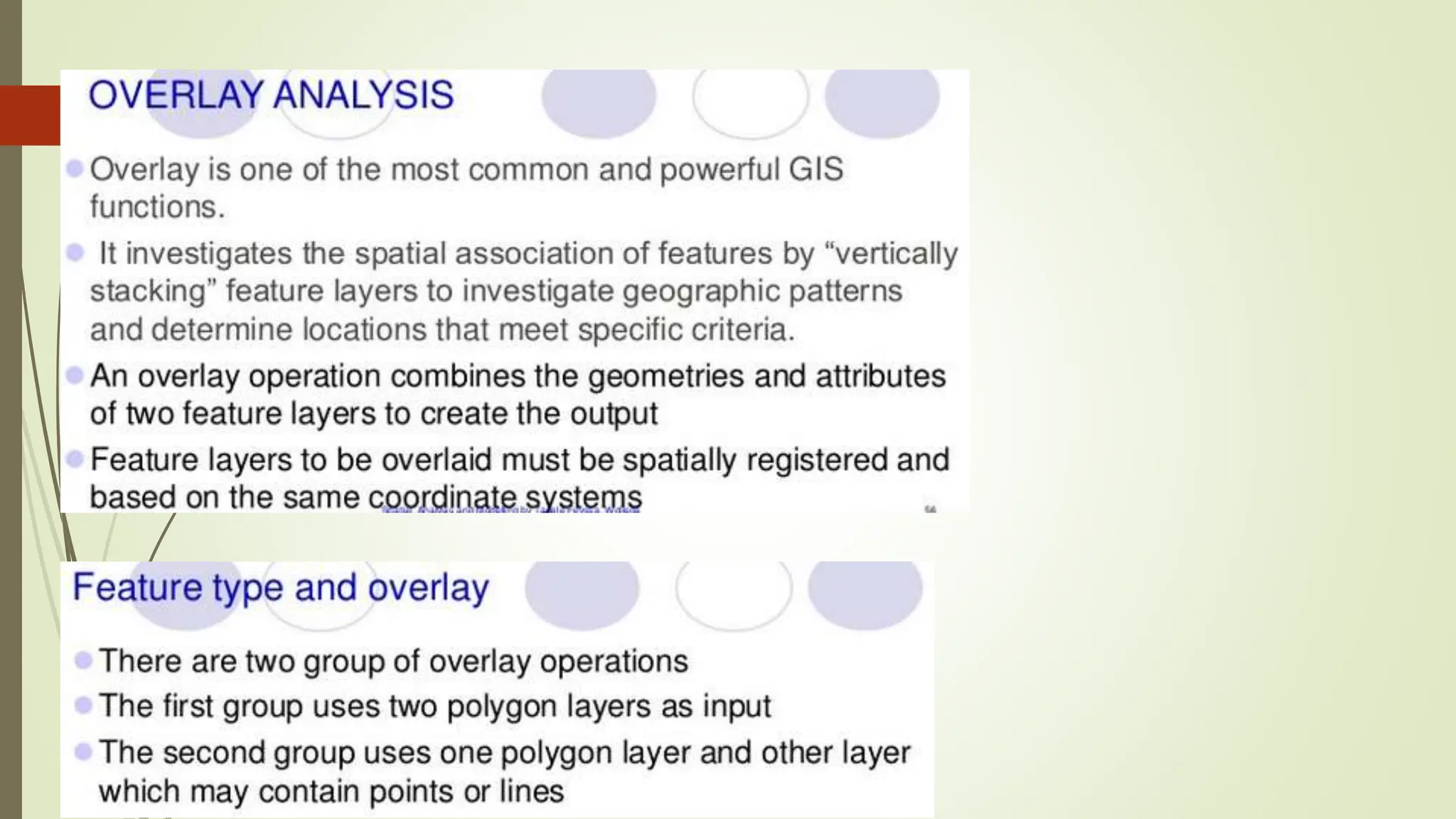
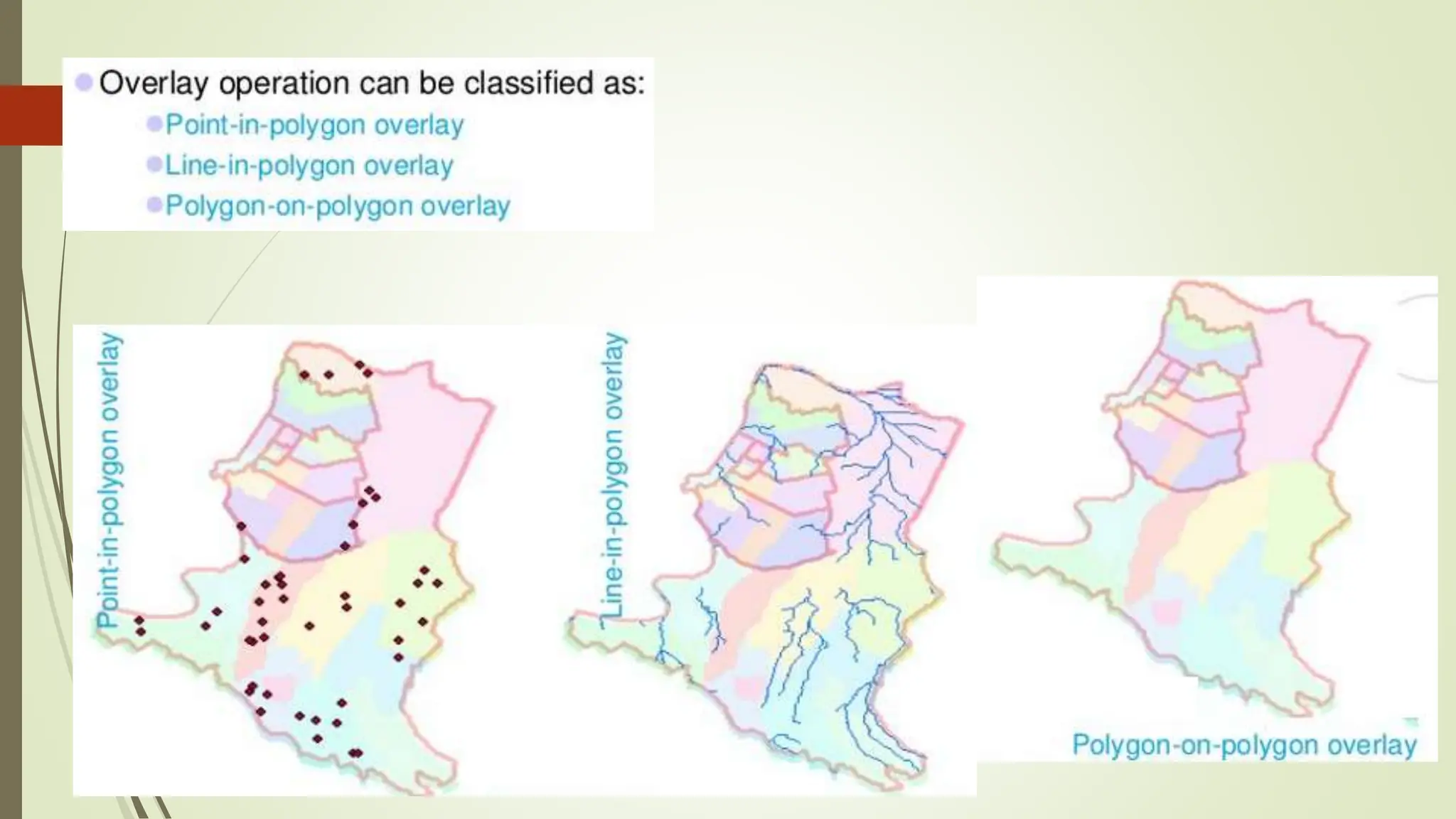
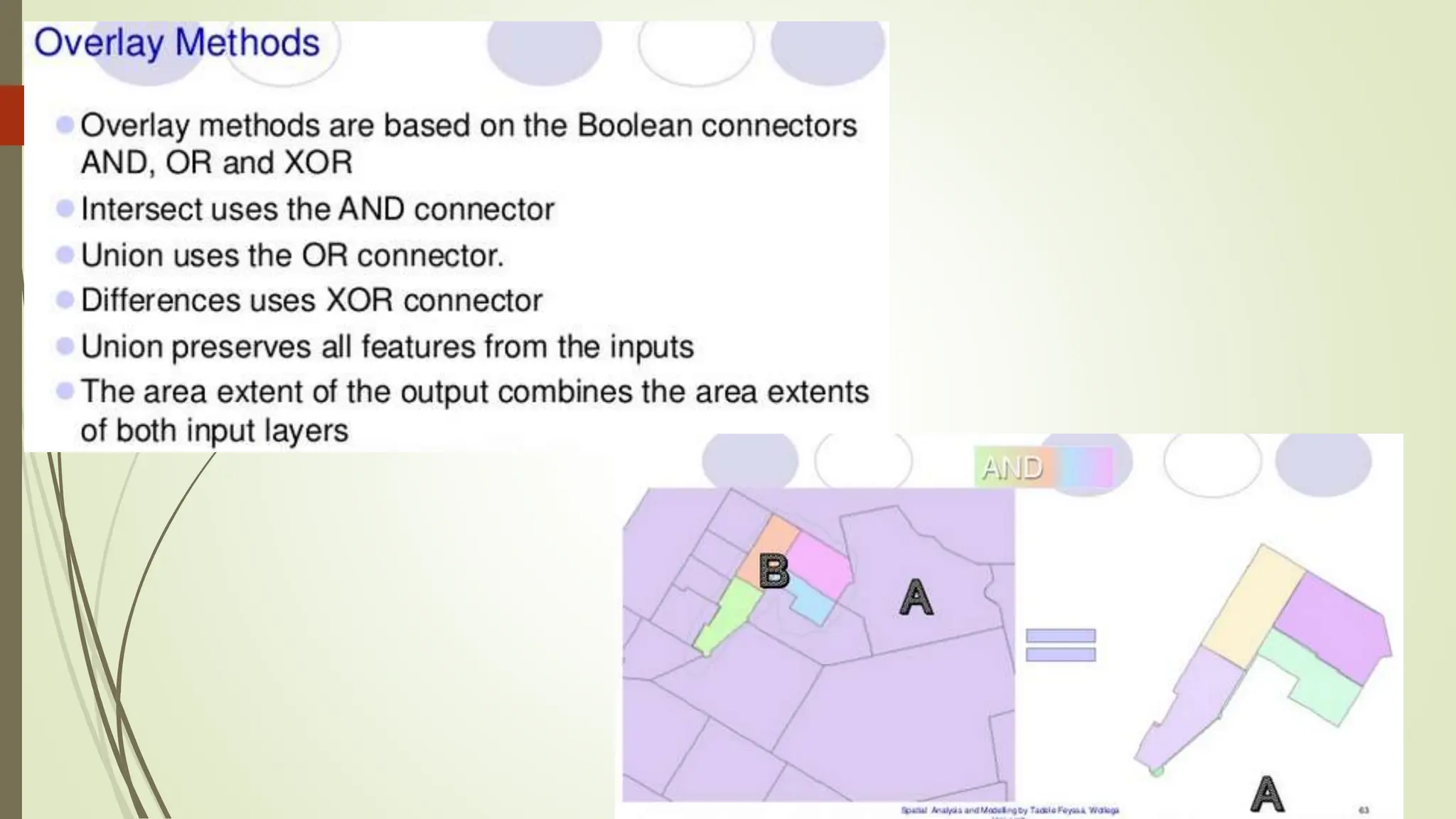
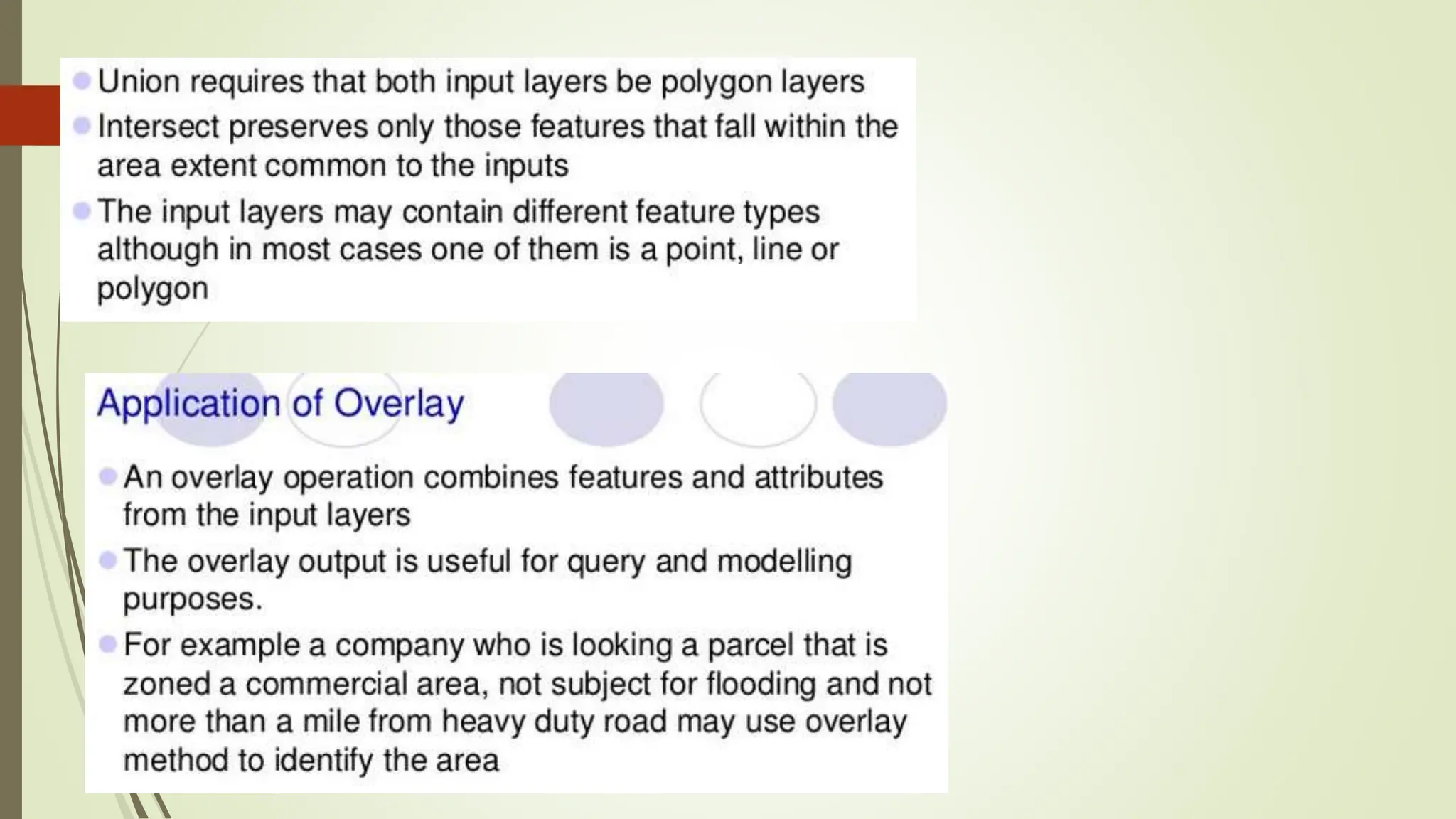
b) Overlay
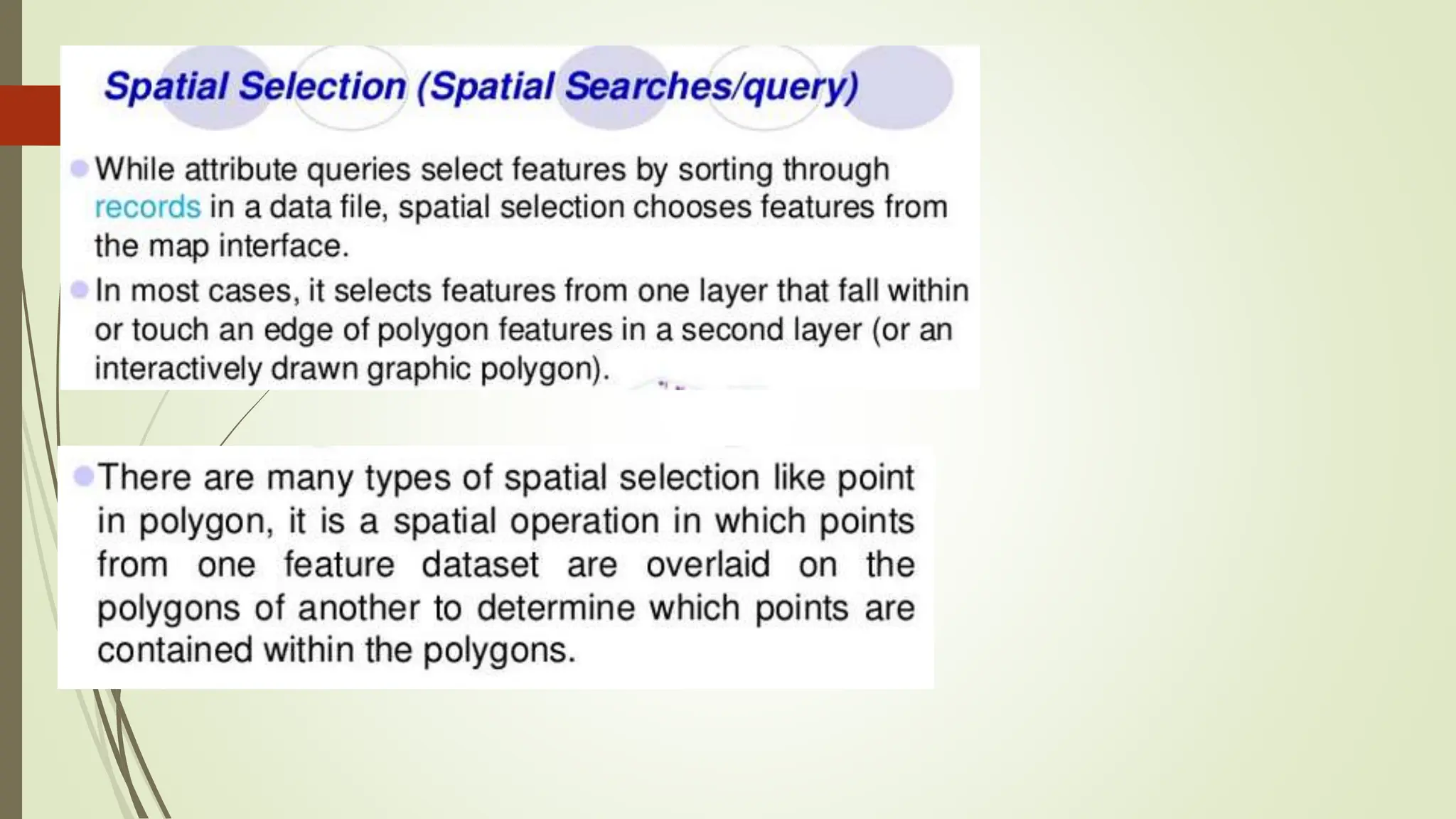
i. Point-in-Polygon
ii. Line-in-Polygon
iii. Polygon-in-Polygon
c) Proximity
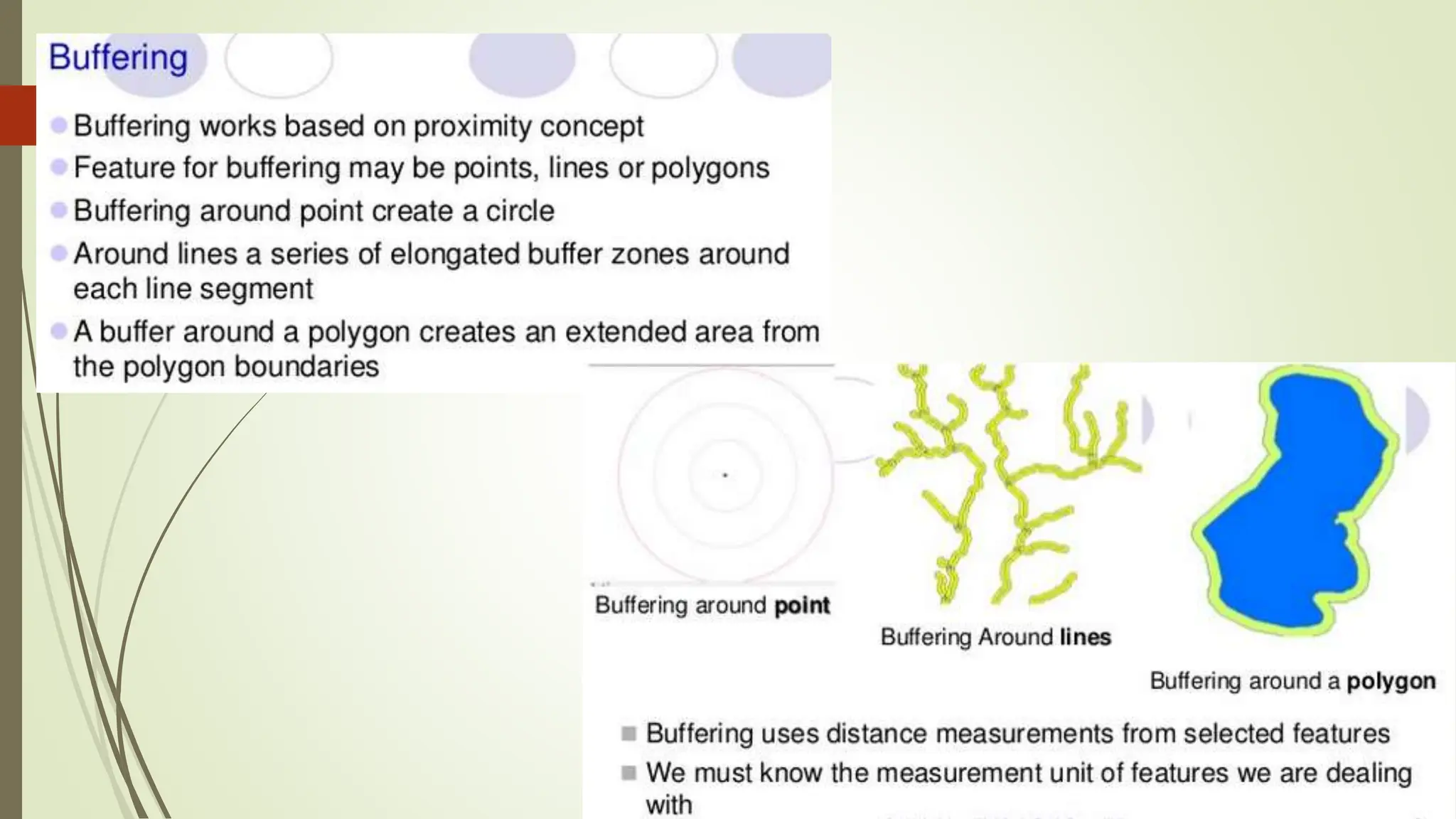
i. Buffer
ii. Near
iii. Point Distance
Spatial Analysis
2. Raster Spatial Analysis
a) Surface Analysis
a) Slope
b) Aspect
c) Contour
d) Hill Shade
e) Viewshed
b) Local Functions and Statistics
c) Neighborhood Functions and Statistics
d) Zonal Functions
a) Distance
b) Straight-line
c) Shortest path
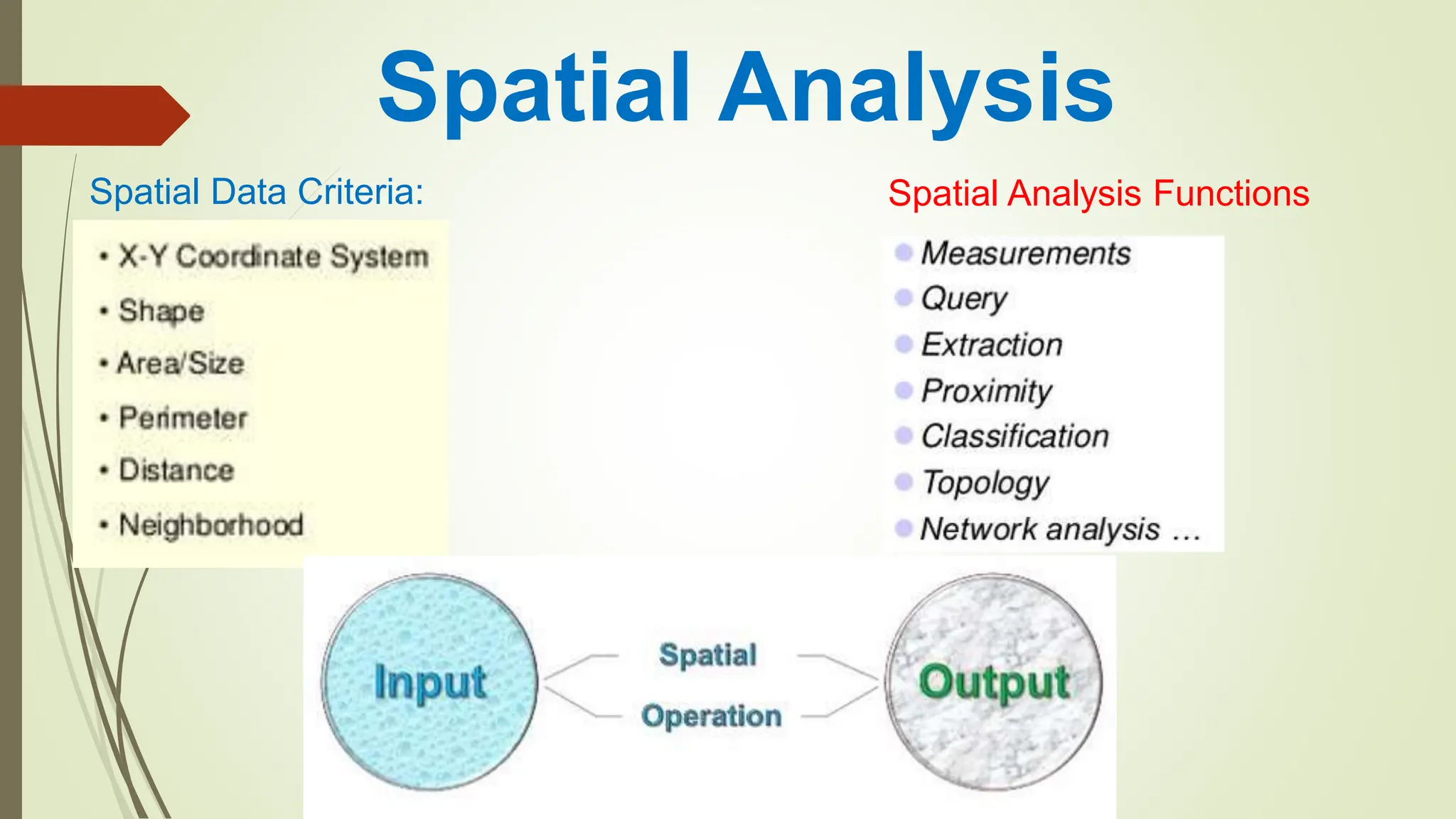
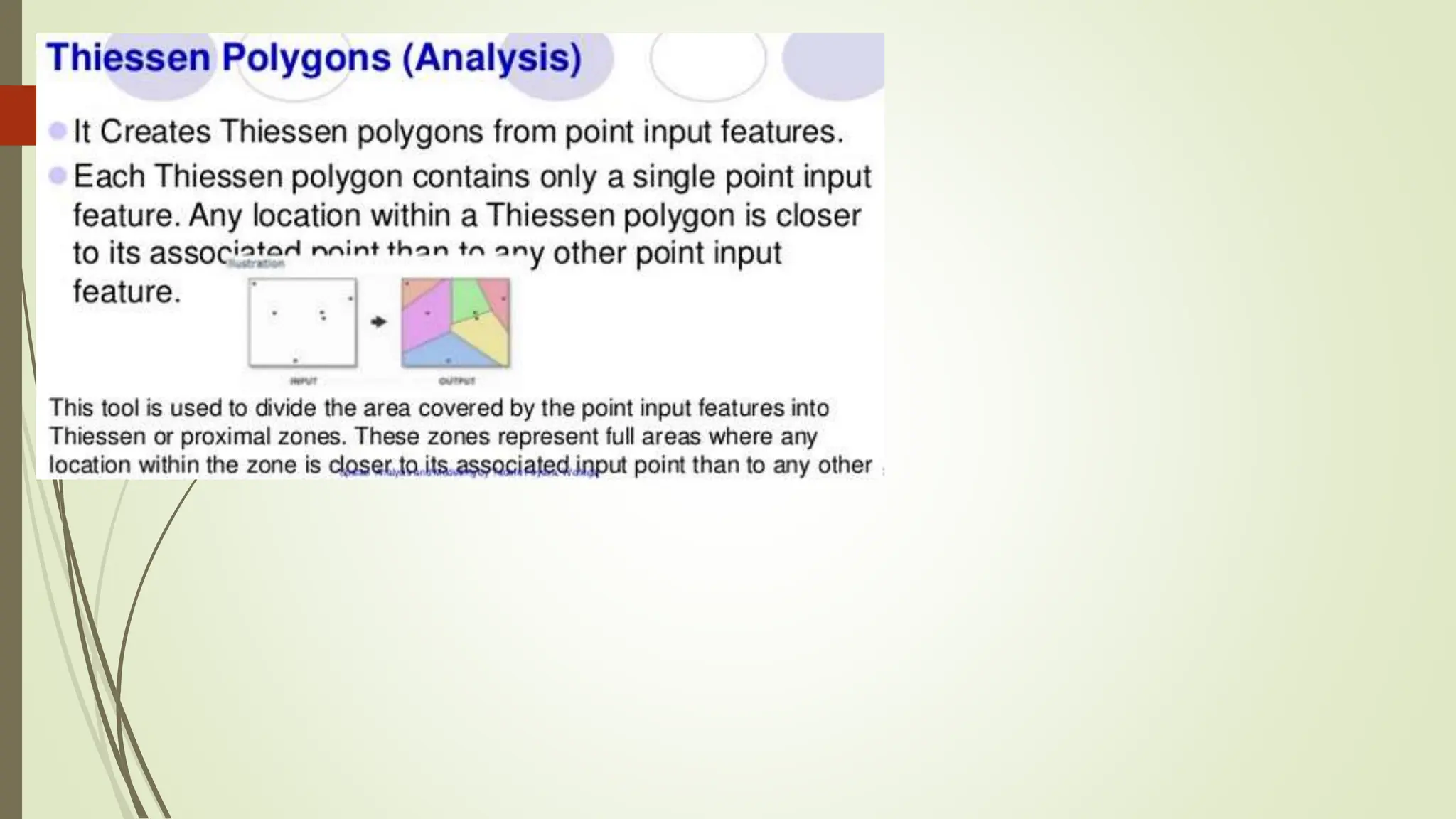
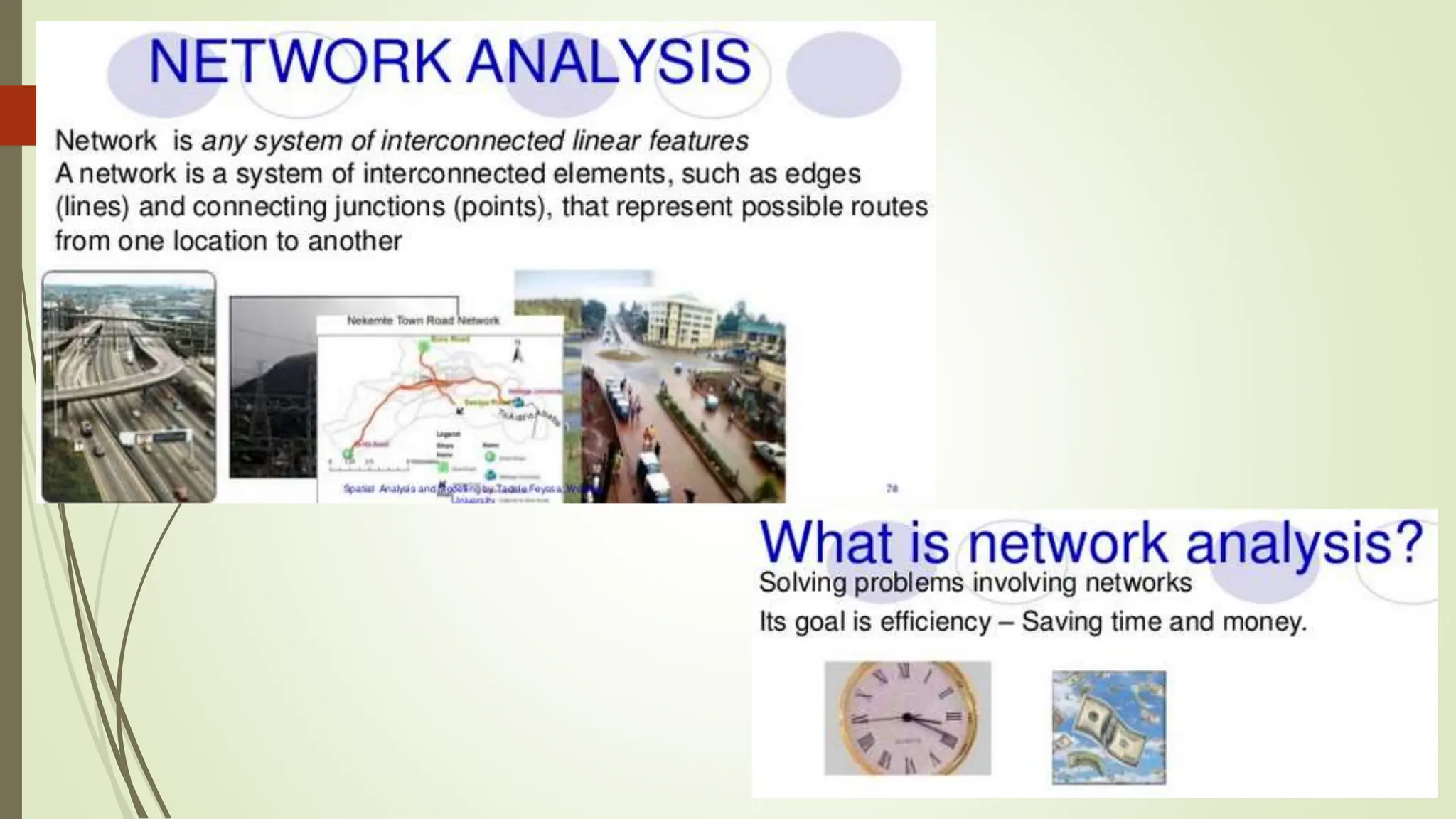
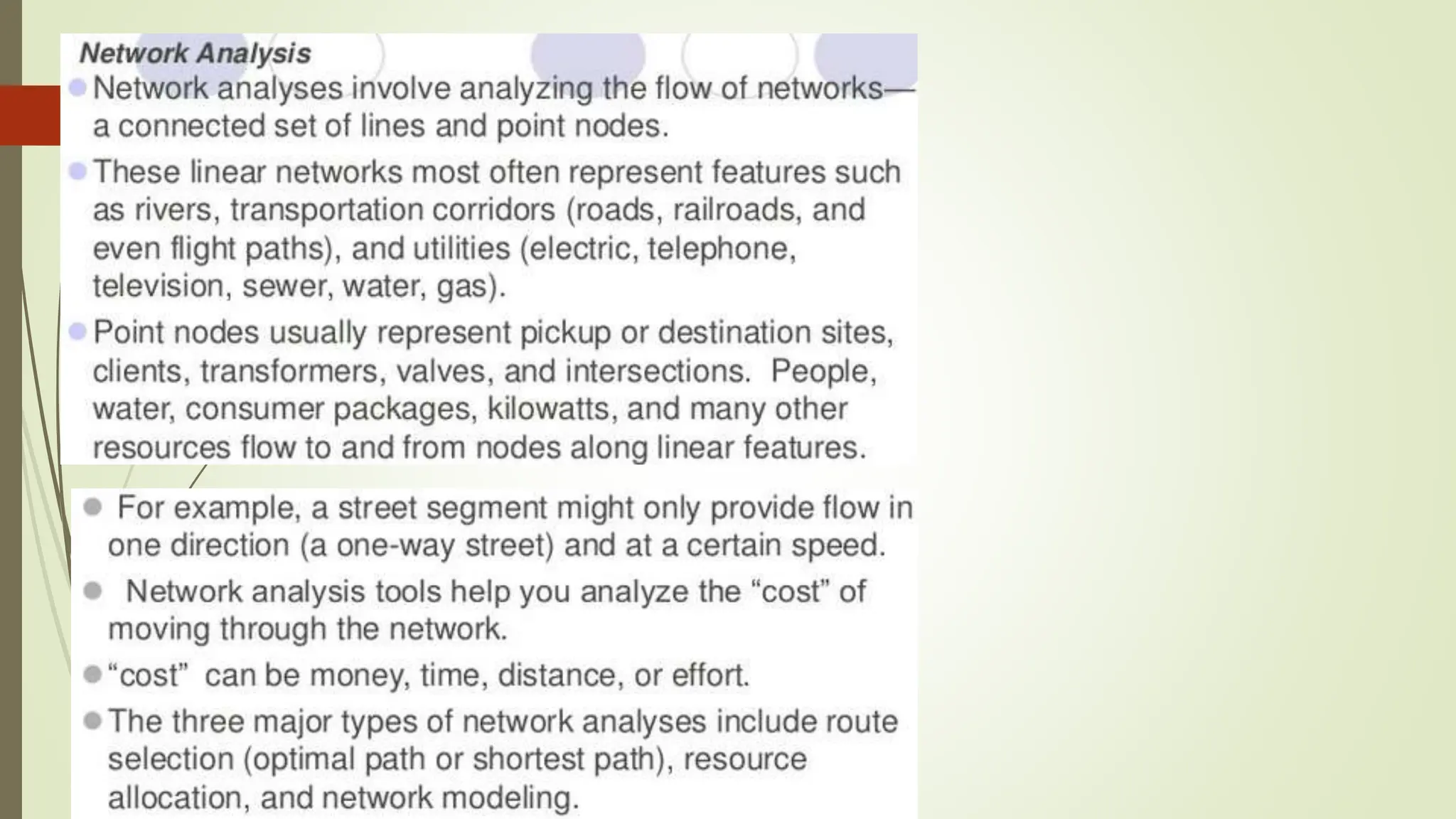
Spatial Data Criteria: Spatial Analysis Functions
Spatial Analysis
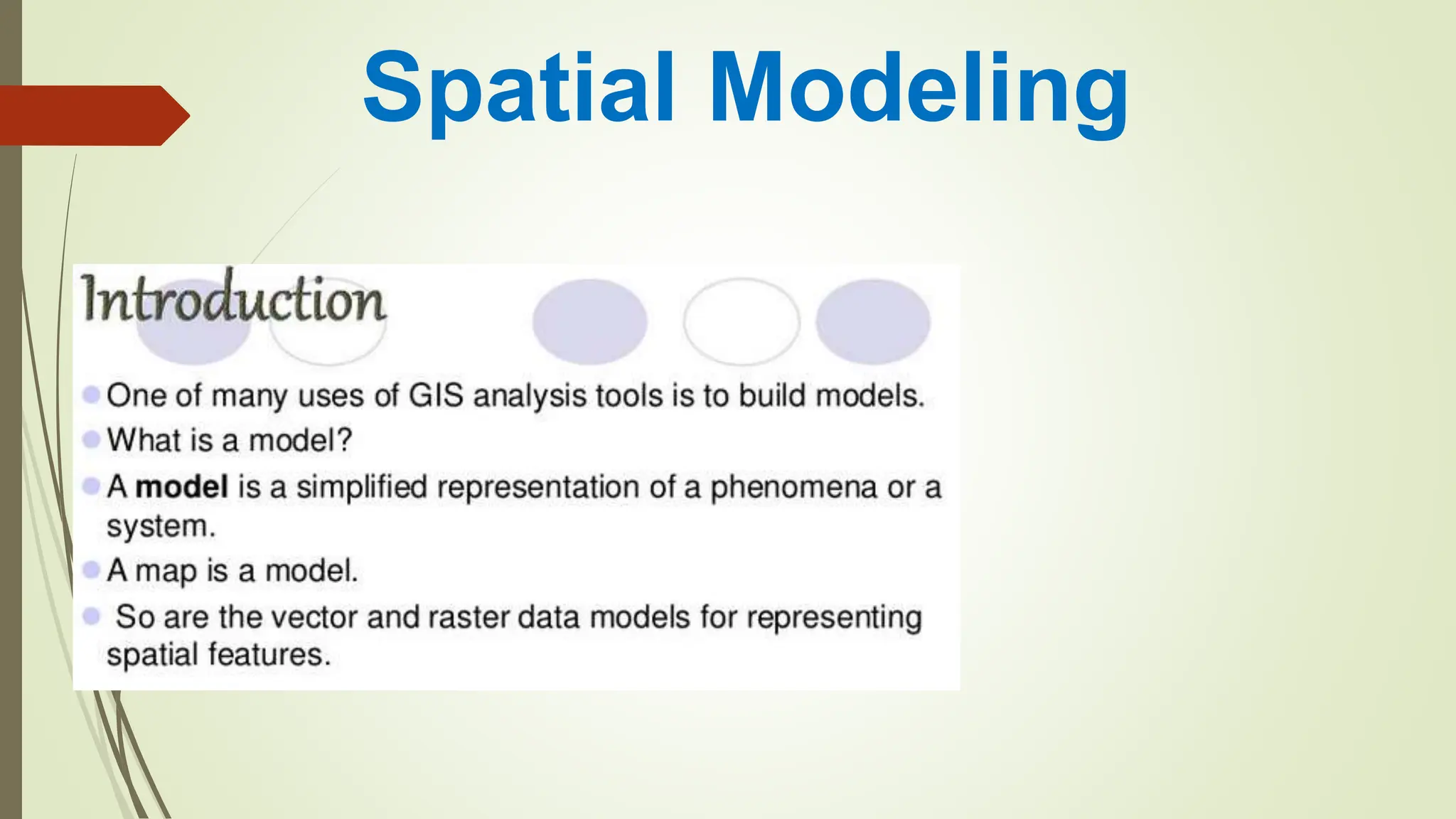
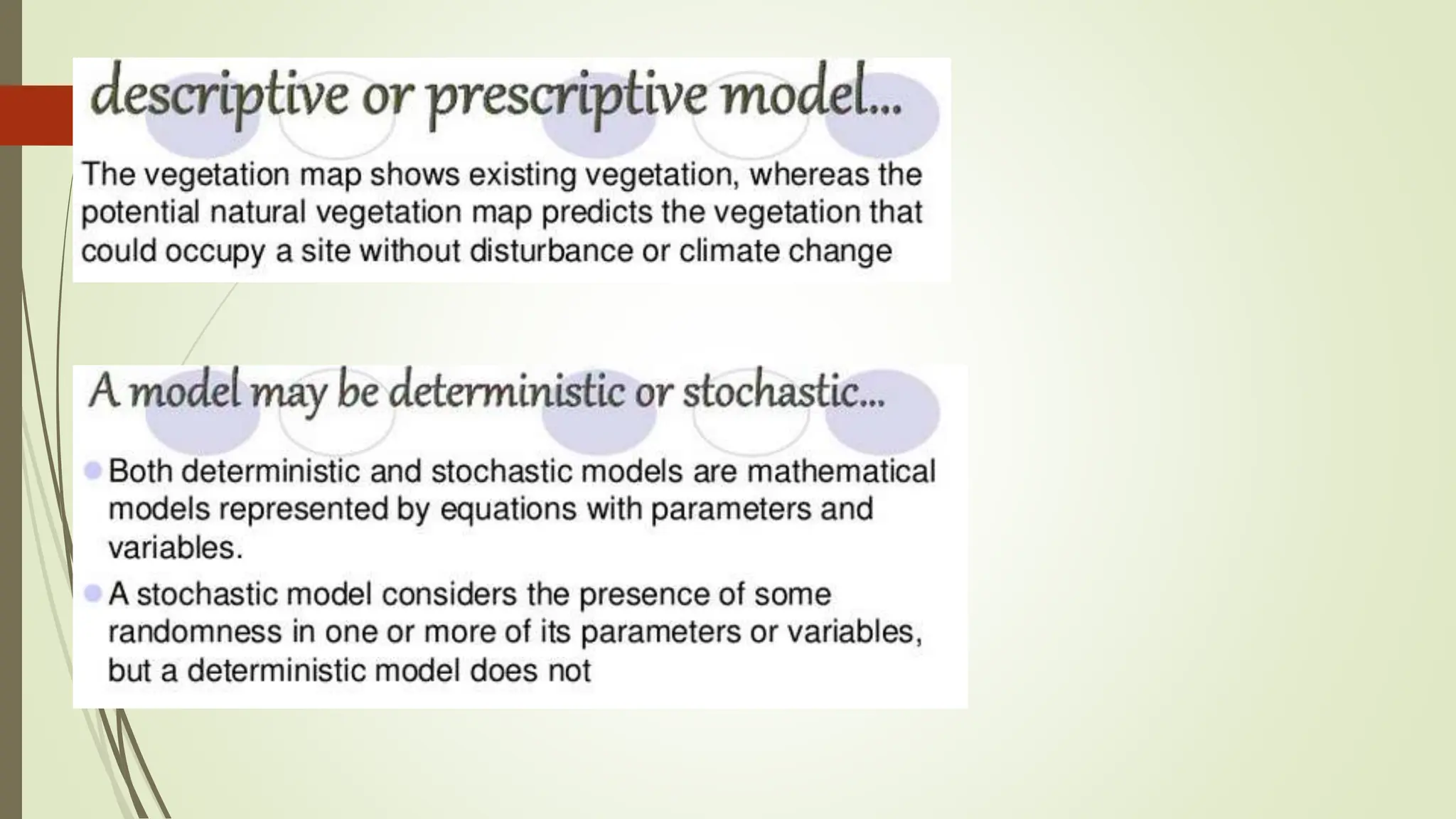
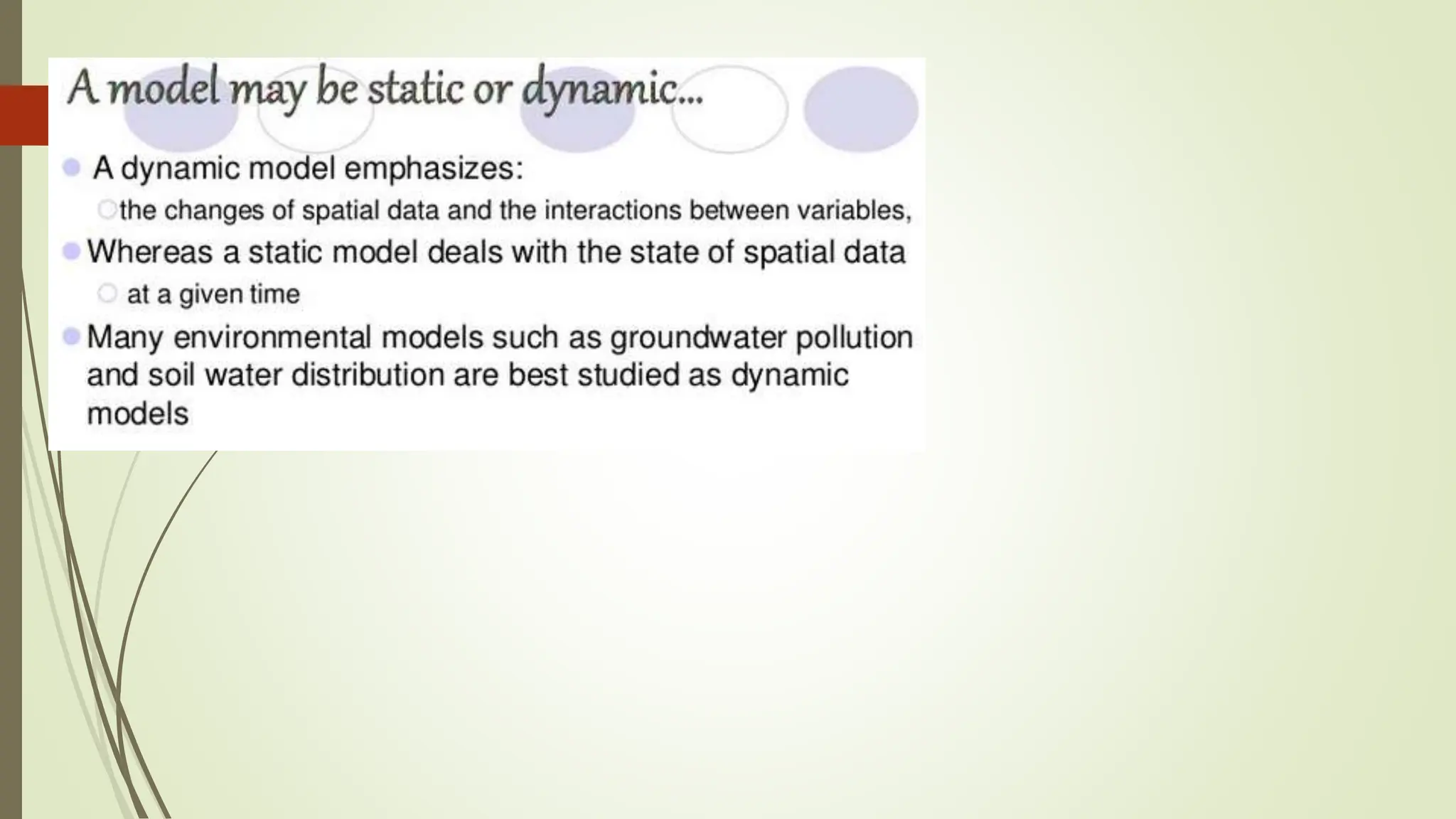
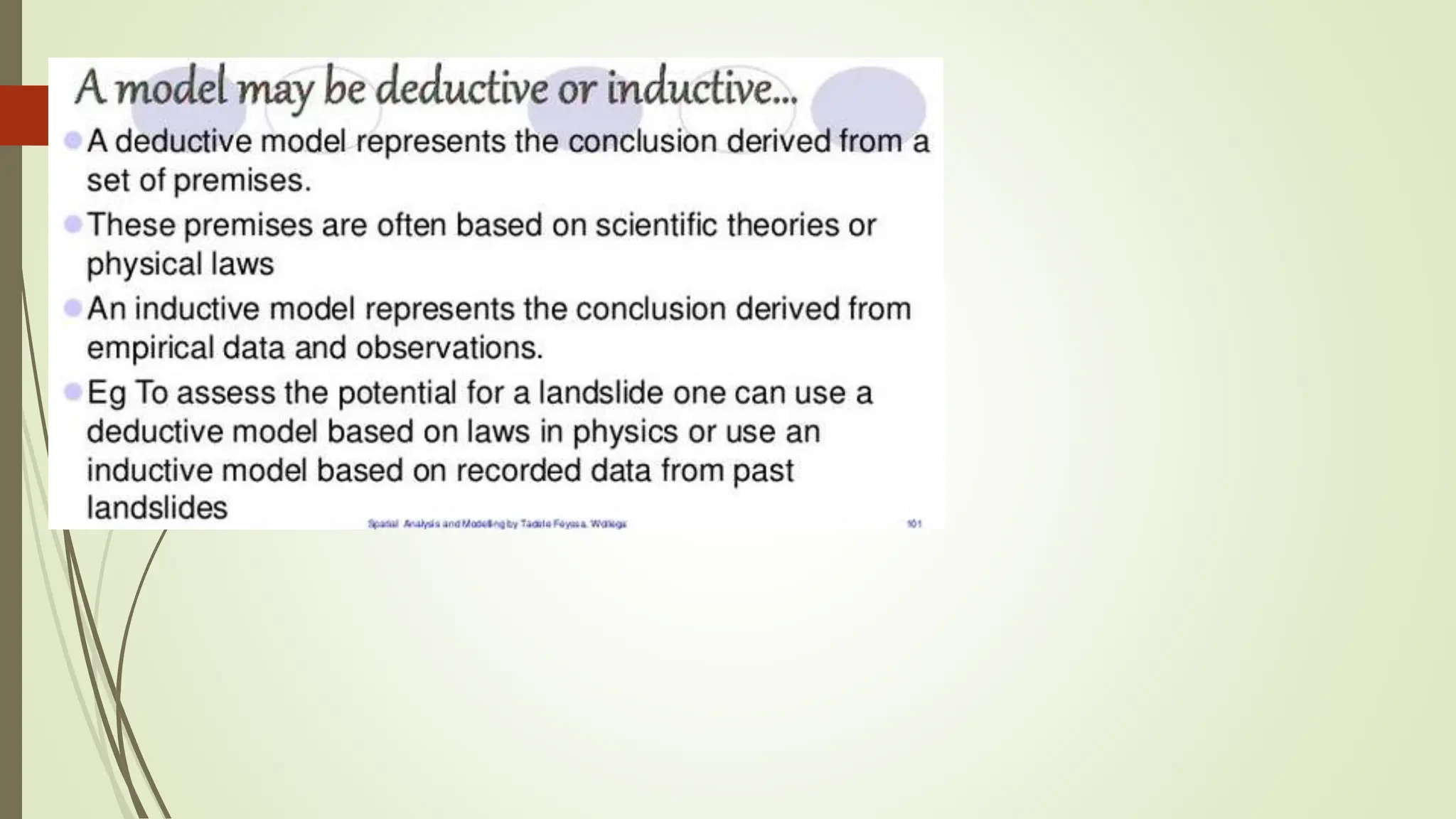
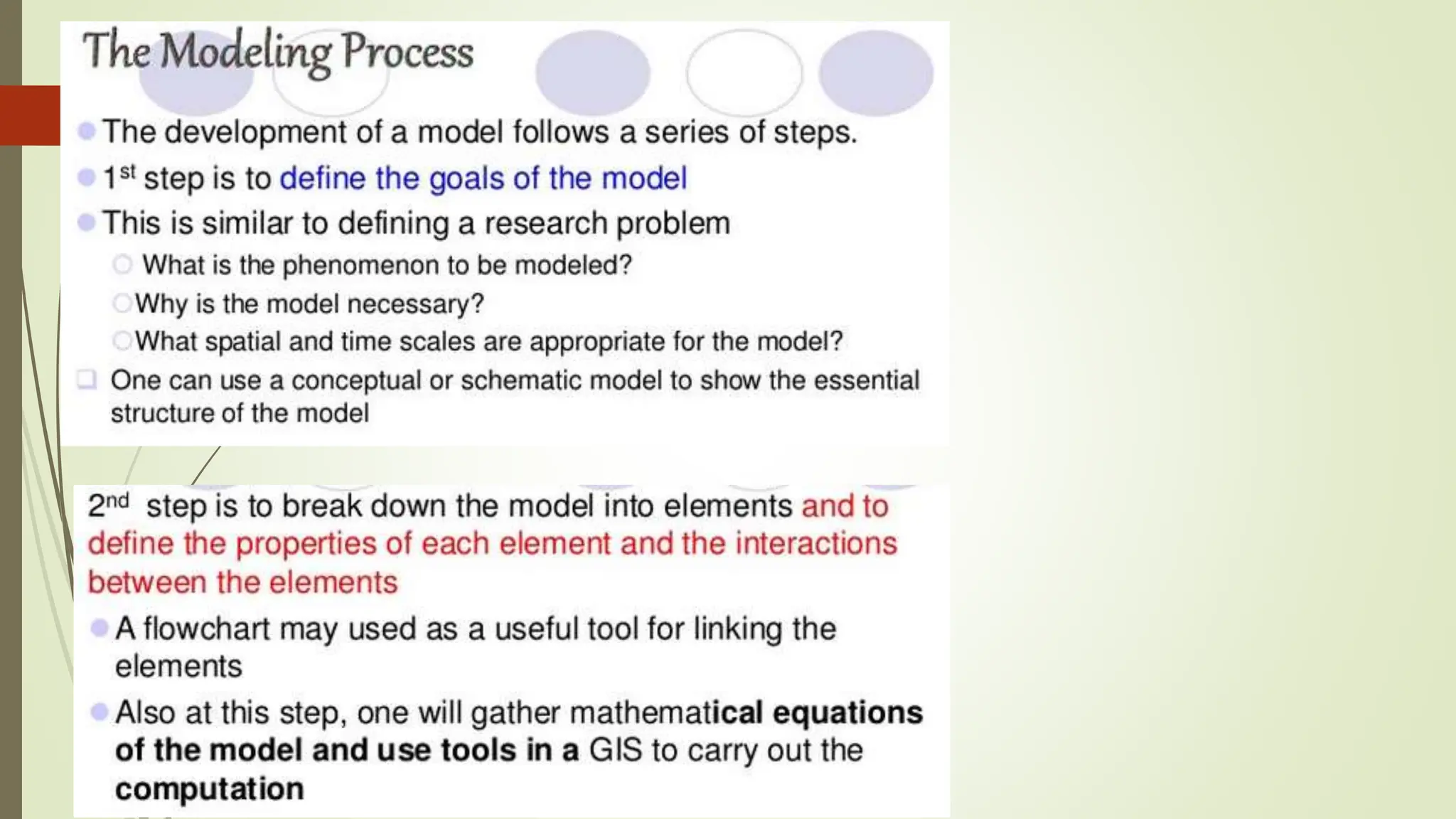
Spatial Modeling
- Spatial Analysis and Modeling.pptx

- Spatial Analysis and Modeling.pptx

  • 1.
    SPATIALANALYSIS AND MODELING (geographicalinformation system) Dr. Venkateswarlu Gogana
  • 2.
    Spatial Analysis Most GISsystems are for the purpose of representing and describing features of the real world. Spatial databases perform this function  Points, lines, polygons concepts for representation  Coordinate systems as fundamental properties of spatial data  geographic file formats for storage Spatial Analysis involves gaining an understanding of the patterns, and associated cause and effect processes, underlying the features which have been described in order to  Make better decisions  Understand the phenomena as a goal in itself
  • 3.
    Spatial Analysis Types ofSpatial Analysis: 1. Spatial data manipulation: Classic GIS capabilities - Spatial queries & measurement, buffering, map layer overlay 2. Spatial data analysis: Descriptive and exploratory, Visualization through data manipulation and mapping 3. Spatial statistical analysis: Hypothesis testing; Are data “to be expected” or are they “unexpected” relative to some statistical model, usually of a random process 4. Spatial modeling: Prediction, Constructing models (of processes) to predict spatial outcomes (patterns) What if analyses
  • 4.
    Spatial Analysis Types ofSpatial Analysis: 1. Vector Spatial Analysis - Extracting portions of data is an effective means of isolating specific areas for further processing or data analysis a) Extraction i. Clip ii. Split iii. Select iv. Erase b) Overlay i. Point-in-Polygon ii. Line-in-Polygon iii. Polygon-in-Polygon c) Proximity i. Buffer ii. Near iii. Point Distance
  • 5.
    Spatial Analysis 2. RasterSpatial Analysis a) Surface Analysis a) Slope b) Aspect c) Contour d) Hill Shade e) Viewshed b) Local Functions and Statistics c) Neighborhood Functions and Statistics d) Zonal Functions a) Distance b) Straight-line c) Shortest path
  • 6.
    Spatial Data Criteria:Spatial Analysis Functions Spatial Analysis
  • 28.