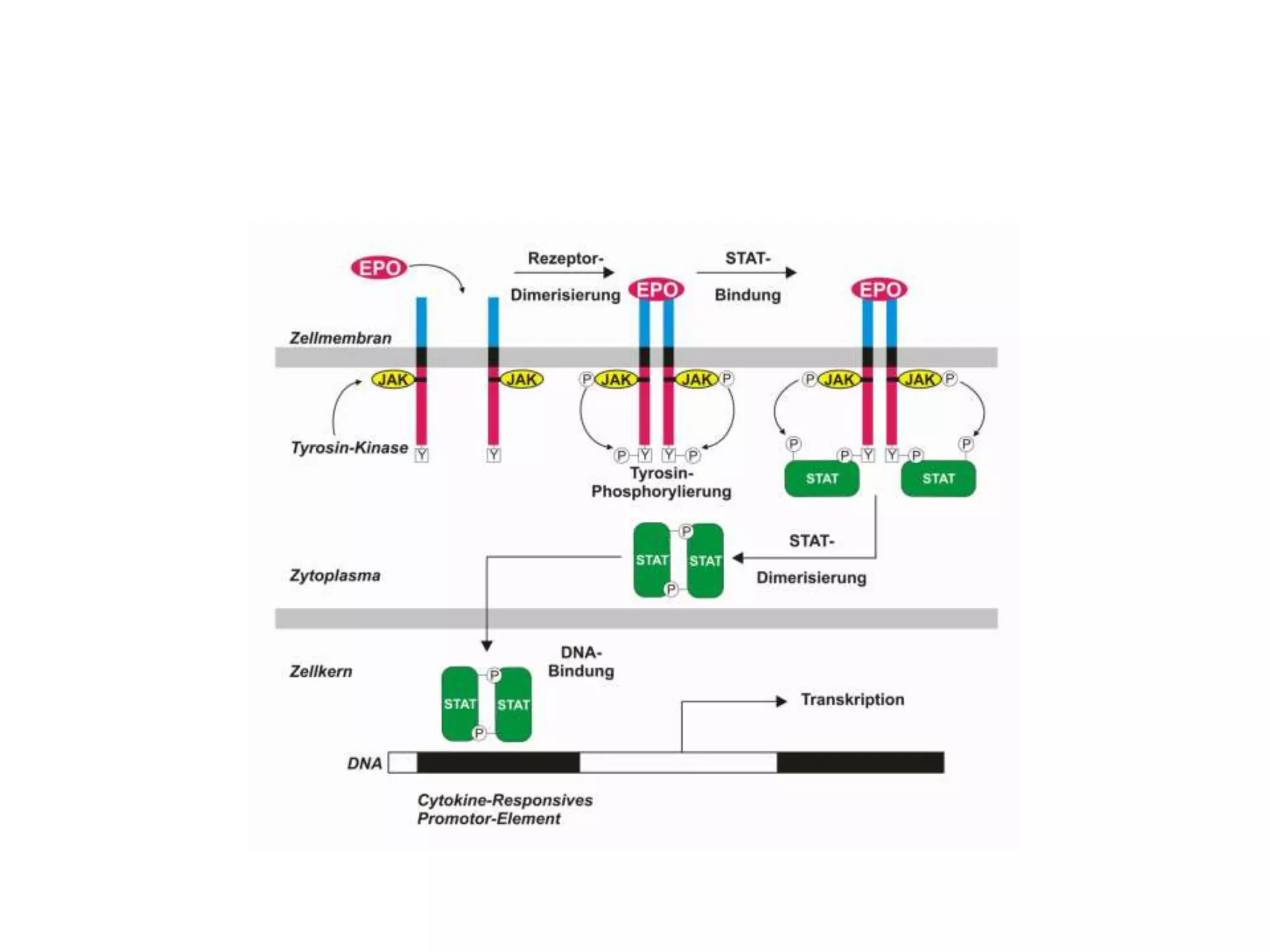
The JAK-STAT signaling pathway transmits signals from extracellular chemical signals to the cell nucleus, which leads to DNA transcription and cellular activity. It consists of receptors, Janus kinases (JAKs), and signal transducers and activators of transcription (STATs). When ligands bind to receptors, JAKs phosphorylate themselves and STATs, causing STAT dimers to enter the nucleus and promote transcription. Disrupted JAK-STAT signaling can cause immune deficiency and cancer. Drugs targeting JAK-STAT are used to reduce immune response and treat disorders like cancer and rheumatoid arthritis.