M pharmacy 1st sem.
Session :- 2020-2021
TOPIC :- Intercellular and intracellular signaling pathway
Subject code :- MPL 103T
Subject name :- Cellular and Molecular Pharmacology
Submitted By :-
Sachin Gulia
(9003)
Submitted To :-
Anuradha ma’am
MAHARSHI DYANAND UNIVERSITY
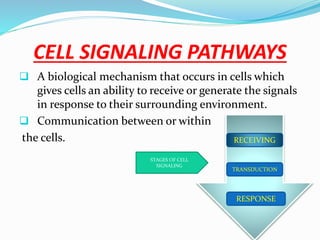
CELL SIGNALING PATHWAYS
 A biological mechanism that occurs in cells which
gives cells an ability to receive or generate the signals
in response to their surrounding environment.
 Communication between or within
the cells. RECEIVING
TRANSDUCTION
RESPONSE
STAGES OF CELL
SIGNALING
CELL SIGNALING PATHWAYS
 Intercellular cell signaling pathway
Or
 Intracellular cell signaling pathway
INTERCELLULAR SIGNALING
 Intercellular signals can travel all throughout the body.
 This allows certain glands within the body to produce
signals which take action on many different tissues
across the body .
 Communication between cells.
TYPES OF INTERCELLULAR
SIGNALING PATHWAYS
 Autocrine signaling
 Paracrine signaling
 Endocrine signaling
 Juxtacrine signaling
AUTOCRINE SIGNALING PATHWAY
 Cells send signals to themselves.
 Cell secretes signals molecules that can bind back to
its own receptors.
 Important during embryonic development.
 Examples :- Tumor cells, cancer cells etc
PARACRINE SIGNALING PATHWAY
 Paracrine signaling depends on local mediators that
are released into the extracellular space and act on
neighboring cells.
 This type of signaling in which cells communicate over
relatively sort distances, is know as paracrine signaling.
 Neurotransmitters represent an example .
ENDOCRINE SIGNALING PATHWAY
 This is type of communication occurring between
distant cells and mediated by hormones.
 The hormones are released by endocrine cells of the
body.
 Signaling molecules (hormones) travel through the
blood and act upon particular target cells.
 The cause slow but long lasting response .
JUXTRACRINE SIGNALING PATHWAY
 When signal molecule remains bound to the cell that
produced it and therefore, will only influence cells that
directly contact it, then this type of intercelluar
signaling is know as contact dependent signaling.
 This type of signaling is very important in the
development of multicellular organism and in the
immune system.
INTRACELLULAR SIGNALING
PATHWAYS
 The chain of molecules that relay inside a cell are
known as intracellular signaling pathways .
 When a ligand binds to a cell-surface receptor , the
receptor’s intracellular domain changes in some way.
STEPS IN INTRACELLULAR
SIGNALING PATHWAY
1. Synthesis of extracellular signal molecule.
2. Release of signaling molecule by the signaling cell.
3. Transport of the signal to the target cell.
4. Detection of the signal by a specific receptor protein.
5. A change in cellular metabolism, function or
development triggered by the receptor-signal
complex.
6. Removal of the signal, which often terminates the
cellular response.
TYPE OF INTRACELLULAR
SIGNALING PATHWAYS
1. G – protein coupled receptor
2. Enzyme-linked receptor
3. Ligand-gated ion channels
 Second messenger signaling pathways
1. Cyclic AMP pathway
2. MAPK signaling
3. The JAK/STAT signaling pathway
G – protein coupled receptor
 Serpentine receptor
 7- pass receptor
 Ligand binding domain – effector domain
 3 sub-units :- alpha, beta, gamma
 Alpha bind with GDP(guanosine diphosphate) and
GTP
 The N- terminus of the protein is exposed to the
extracellular fluid, while the C- terminus resides in the
cytosol .
Enzyme-linked receptor
 Catalytic receptor
 One pass receptor
 Single transmembrane helix.
 Activation – growth factor, cytokines, hormones
 Effect – gene transcription
 Events – cell growth and differentiation
Ligand-gated ion channels
 Open in response to specific ligand molecules
binding to the extracellular domain of the receptor
protein .
 Passive mechanism .
 Two domains
 Extracellularly activated ligand-gated ion channel .
( nicotinic receptors, GABA (a and c) serotonin)
 intracellularly activated ligand-gated ion channel
(Ca activated potassium pump , chloride pump , ATP
sensitive potassium pump)
Cyclic AMP pathway (second
messenger signaling)
 Adenylyl cyclase pathway
 Mechanism:- signal molecule bind to surface receptor.
 Surface receptor activates a G- protein.
 G- protein activates to membrane bound enzyme,
adenylyl cyclase.
 Adenylyl cyclase catalyzes synthesis of cAMP , Which
bind to a target protein.
 Target protein initiates cellular change.

Intercellular and intracellular cell signaling pathway

  • 1.
    M pharmacy 1stsem. Session :- 2020-2021 TOPIC :- Intercellular and intracellular signaling pathway Subject code :- MPL 103T Subject name :- Cellular and Molecular Pharmacology Submitted By :- Sachin Gulia (9003) Submitted To :- Anuradha ma’am MAHARSHI DYANAND UNIVERSITY
  • 2.
    CELL SIGNALING PATHWAYS A biological mechanism that occurs in cells which gives cells an ability to receive or generate the signals in response to their surrounding environment.  Communication between or within the cells. RECEIVING TRANSDUCTION RESPONSE STAGES OF CELL SIGNALING
  • 3.
    CELL SIGNALING PATHWAYS Intercellular cell signaling pathway Or  Intracellular cell signaling pathway
  • 4.
    INTERCELLULAR SIGNALING  Intercellularsignals can travel all throughout the body.  This allows certain glands within the body to produce signals which take action on many different tissues across the body .  Communication between cells.
  • 5.
    TYPES OF INTERCELLULAR SIGNALINGPATHWAYS  Autocrine signaling  Paracrine signaling  Endocrine signaling  Juxtacrine signaling
  • 6.
    AUTOCRINE SIGNALING PATHWAY Cells send signals to themselves.  Cell secretes signals molecules that can bind back to its own receptors.  Important during embryonic development.  Examples :- Tumor cells, cancer cells etc
  • 7.
    PARACRINE SIGNALING PATHWAY Paracrine signaling depends on local mediators that are released into the extracellular space and act on neighboring cells.  This type of signaling in which cells communicate over relatively sort distances, is know as paracrine signaling.  Neurotransmitters represent an example .
  • 8.
    ENDOCRINE SIGNALING PATHWAY This is type of communication occurring between distant cells and mediated by hormones.  The hormones are released by endocrine cells of the body.  Signaling molecules (hormones) travel through the blood and act upon particular target cells.  The cause slow but long lasting response .
  • 9.
    JUXTRACRINE SIGNALING PATHWAY When signal molecule remains bound to the cell that produced it and therefore, will only influence cells that directly contact it, then this type of intercelluar signaling is know as contact dependent signaling.  This type of signaling is very important in the development of multicellular organism and in the immune system.
  • 10.
    INTRACELLULAR SIGNALING PATHWAYS  Thechain of molecules that relay inside a cell are known as intracellular signaling pathways .  When a ligand binds to a cell-surface receptor , the receptor’s intracellular domain changes in some way.
  • 11.
    STEPS IN INTRACELLULAR SIGNALINGPATHWAY 1. Synthesis of extracellular signal molecule. 2. Release of signaling molecule by the signaling cell. 3. Transport of the signal to the target cell. 4. Detection of the signal by a specific receptor protein. 5. A change in cellular metabolism, function or development triggered by the receptor-signal complex. 6. Removal of the signal, which often terminates the cellular response.
  • 12.
    TYPE OF INTRACELLULAR SIGNALINGPATHWAYS 1. G – protein coupled receptor 2. Enzyme-linked receptor 3. Ligand-gated ion channels  Second messenger signaling pathways 1. Cyclic AMP pathway 2. MAPK signaling 3. The JAK/STAT signaling pathway
  • 13.
    G – proteincoupled receptor  Serpentine receptor  7- pass receptor  Ligand binding domain – effector domain  3 sub-units :- alpha, beta, gamma  Alpha bind with GDP(guanosine diphosphate) and GTP  The N- terminus of the protein is exposed to the extracellular fluid, while the C- terminus resides in the cytosol .
  • 14.
    Enzyme-linked receptor  Catalyticreceptor  One pass receptor  Single transmembrane helix.  Activation – growth factor, cytokines, hormones  Effect – gene transcription  Events – cell growth and differentiation
  • 15.
    Ligand-gated ion channels Open in response to specific ligand molecules binding to the extracellular domain of the receptor protein .  Passive mechanism .  Two domains  Extracellularly activated ligand-gated ion channel . ( nicotinic receptors, GABA (a and c) serotonin)  intracellularly activated ligand-gated ion channel (Ca activated potassium pump , chloride pump , ATP sensitive potassium pump)
  • 16.
    Cyclic AMP pathway(second messenger signaling)  Adenylyl cyclase pathway  Mechanism:- signal molecule bind to surface receptor.  Surface receptor activates a G- protein.  G- protein activates to membrane bound enzyme, adenylyl cyclase.  Adenylyl cyclase catalyzes synthesis of cAMP , Which bind to a target protein.  Target protein initiates cellular change.