Download to read offline
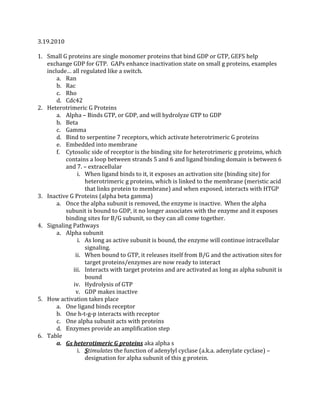
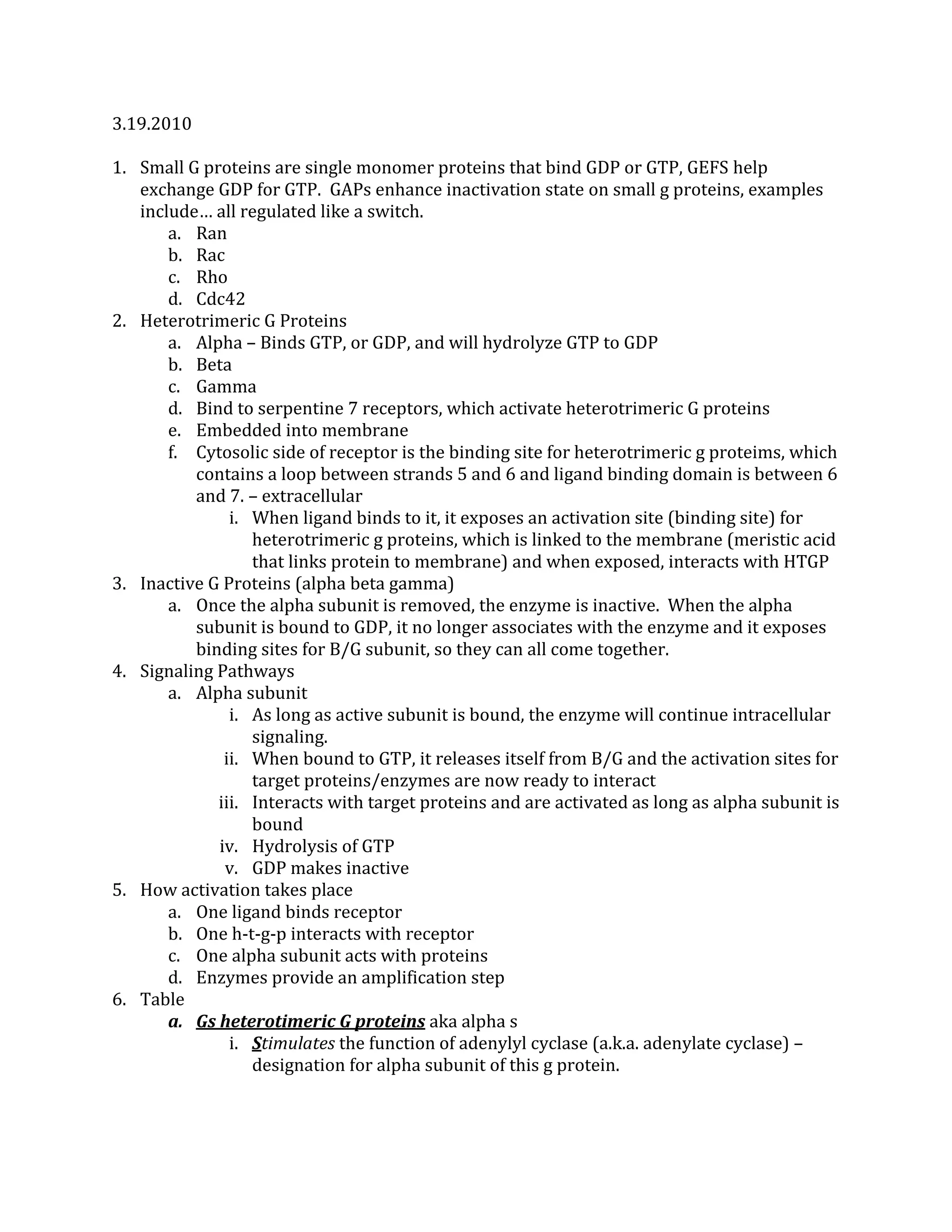
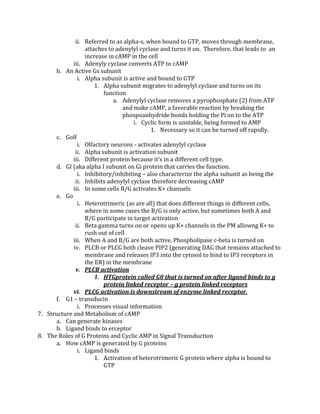
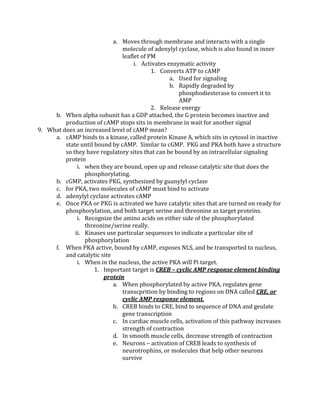

Small G proteins bind either GDP or GTP and function as molecular switches. When bound to GTP, they interact with and activate target proteins. Heterotrimeric G proteins are composed of alpha, beta, and gamma subunits and bind to G protein-coupled receptors in the cell membrane. When a ligand binds the receptor, it activates the G protein, causing the alpha subunit to exchange GDP for GTP. The alpha subunit then activates downstream effector molecules like adenylyl cyclase. Adenylyl cyclase converts ATP to cyclic AMP (cAMP), which activates protein kinase A and triggers phosphorylation of target proteins to elicit cellular responses.


