Endocrine Meeting- Minia university Hospital 12-3-
2019
Dynamic
Endocrine
Testing
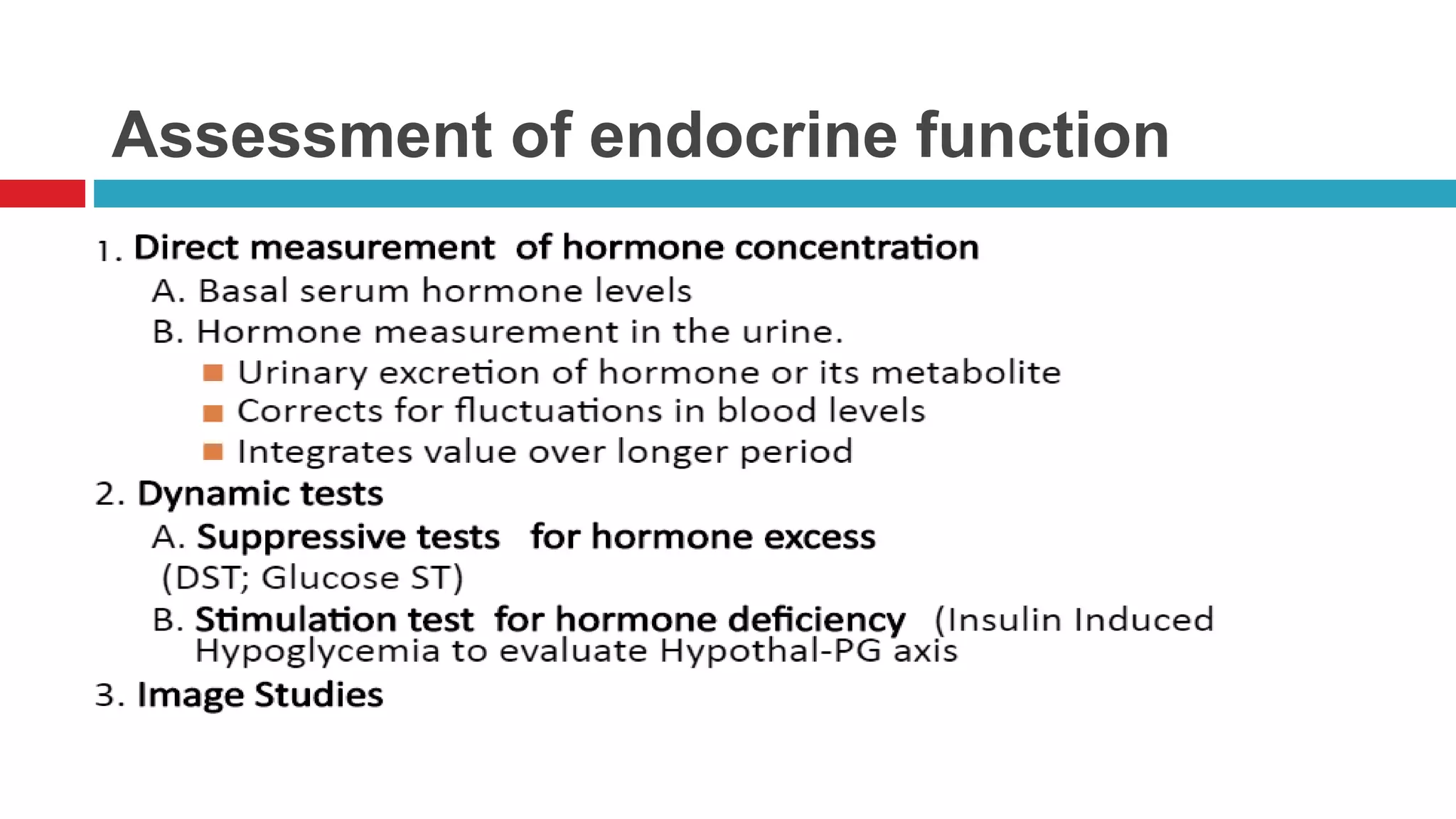
Assessment of endocrine function
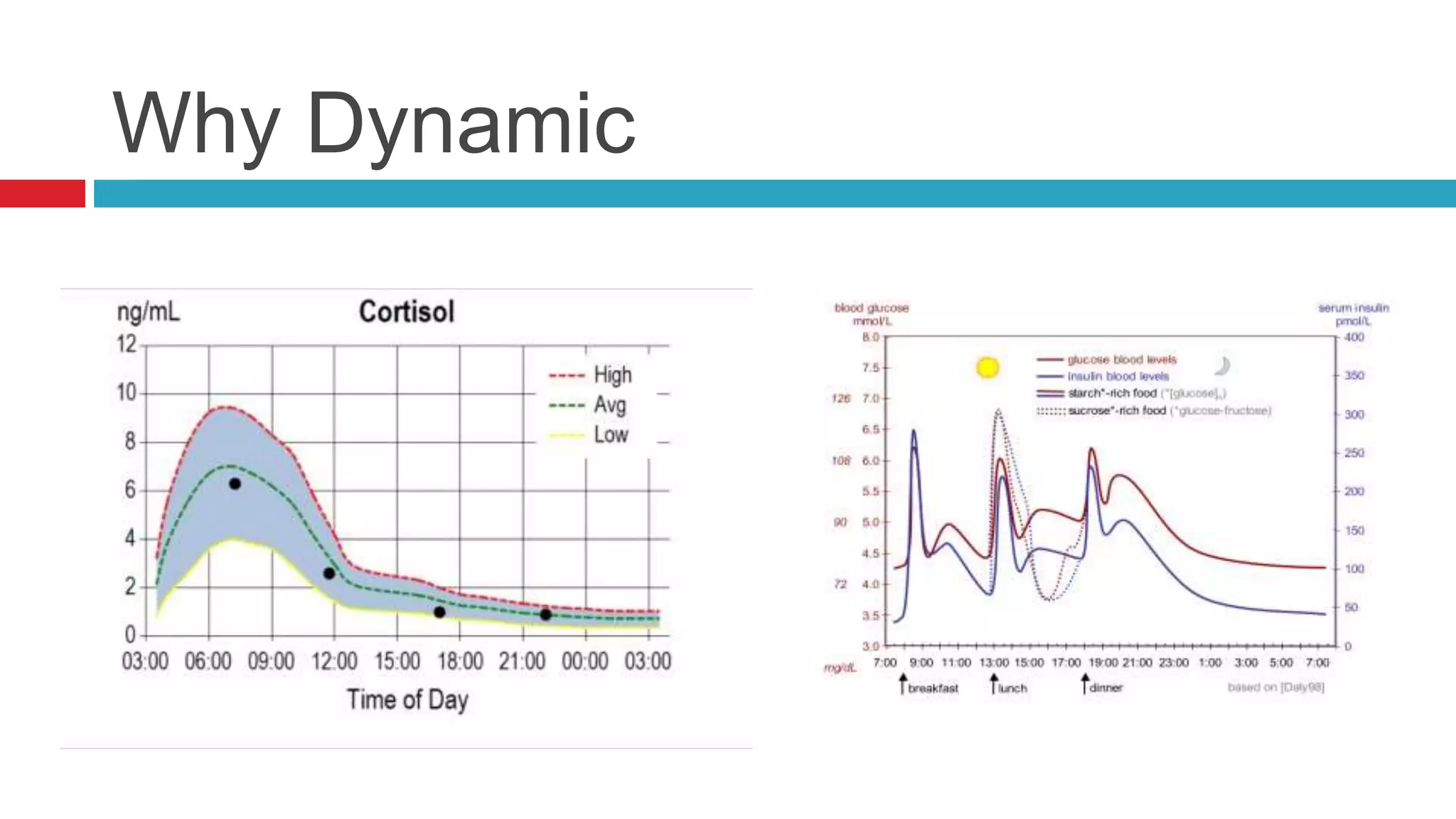
Why Dynamic
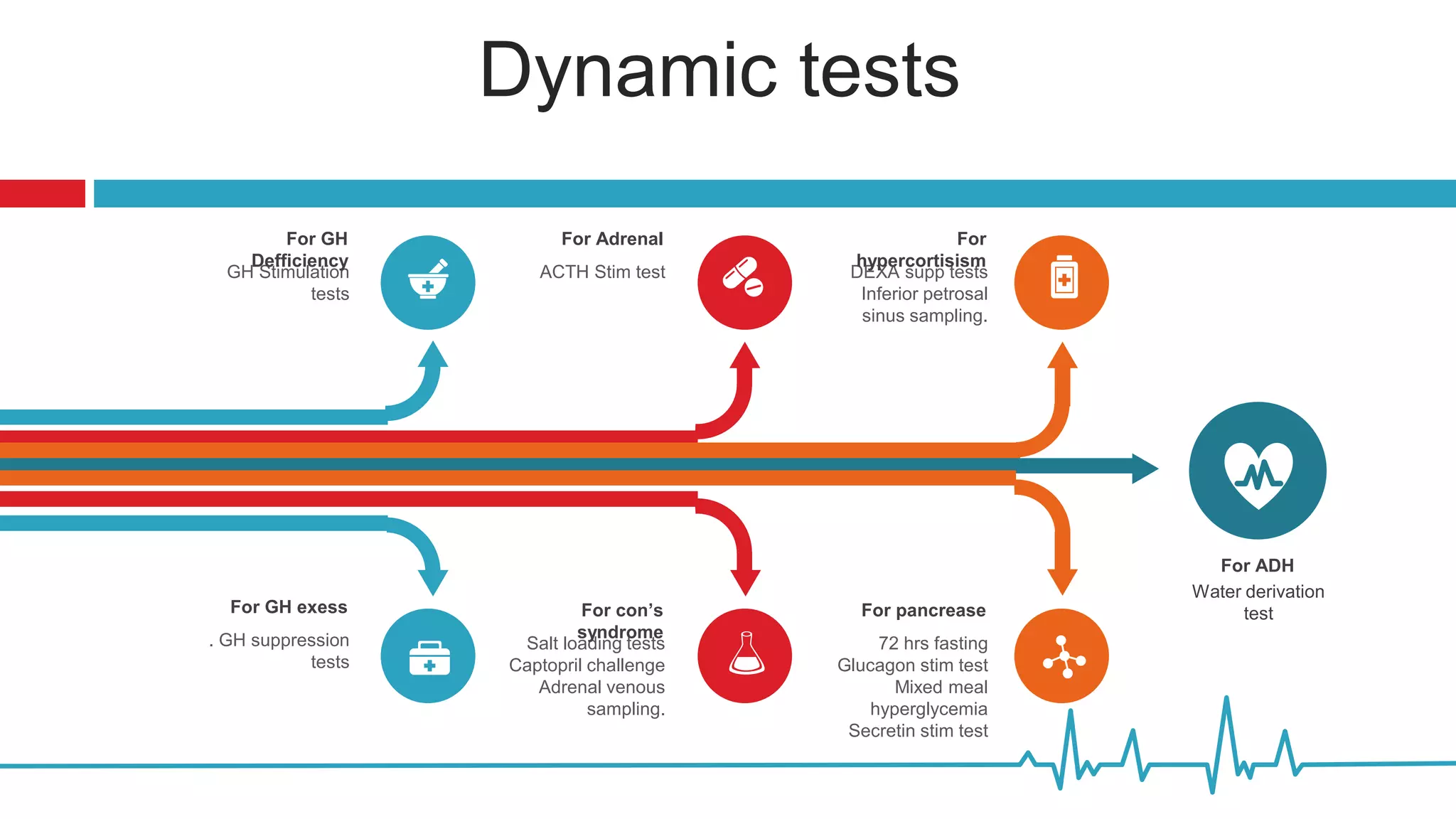
Dynamic tests
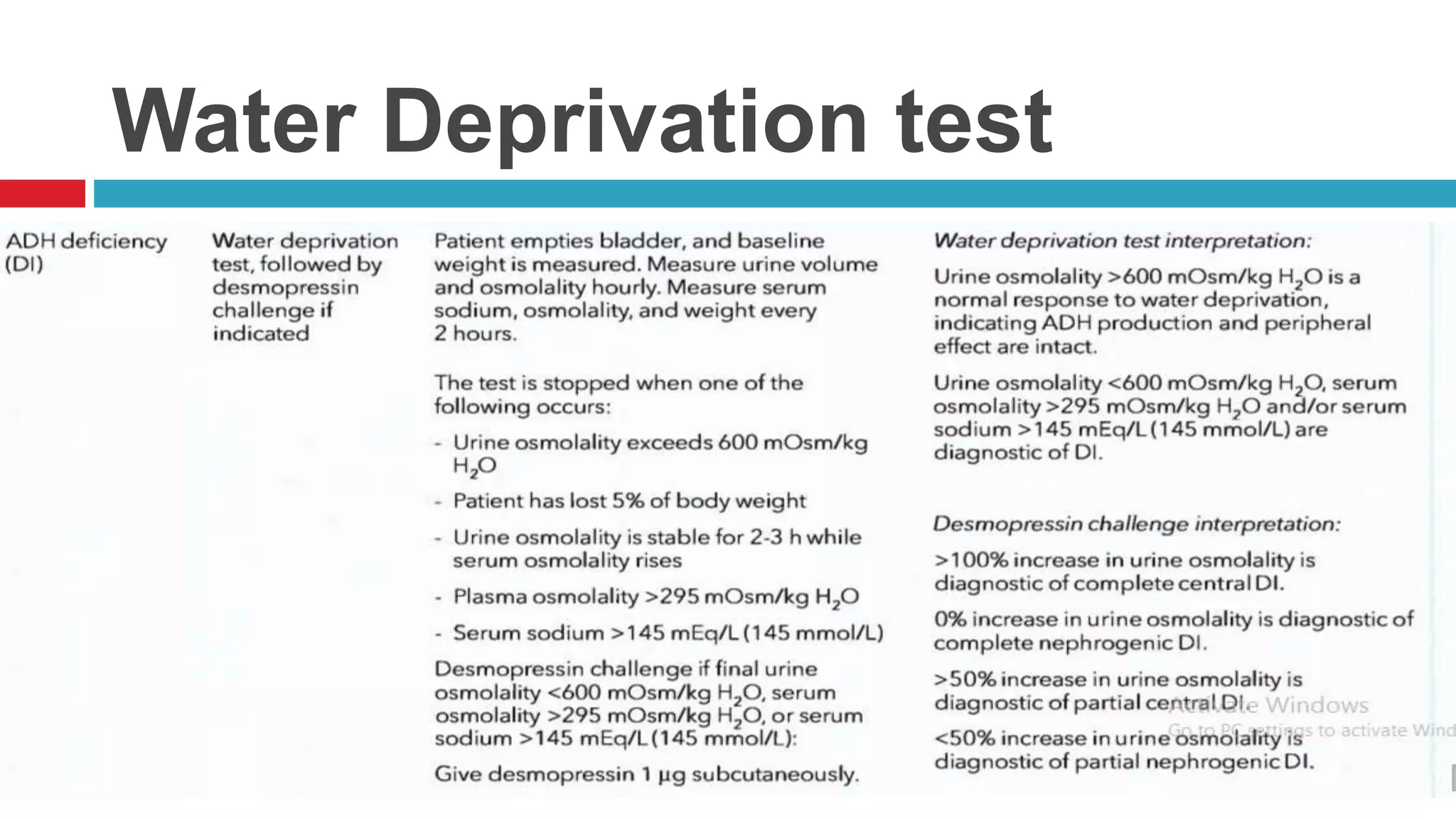
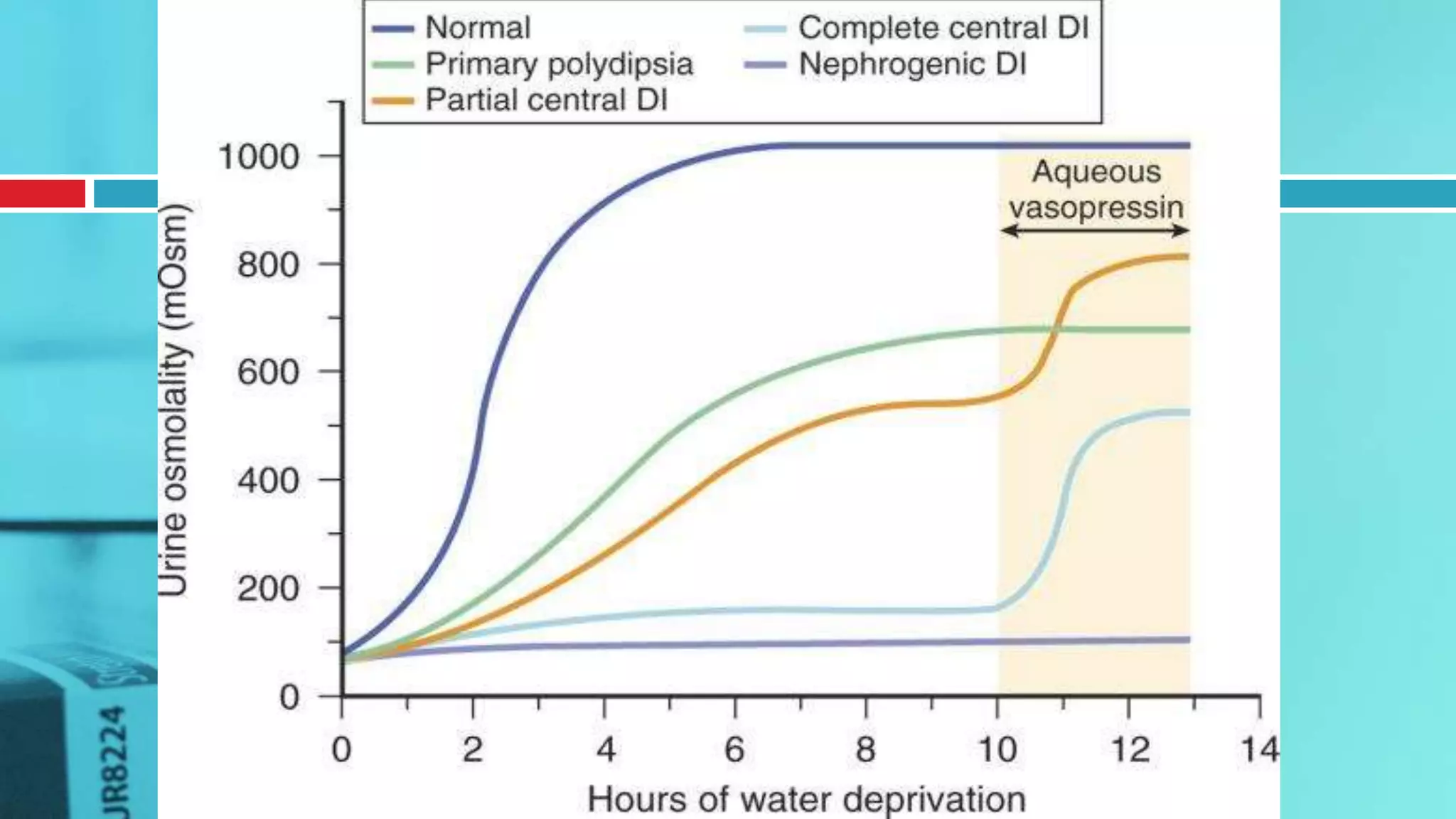
For ADH
Water derivation
test
DEXA supp tests
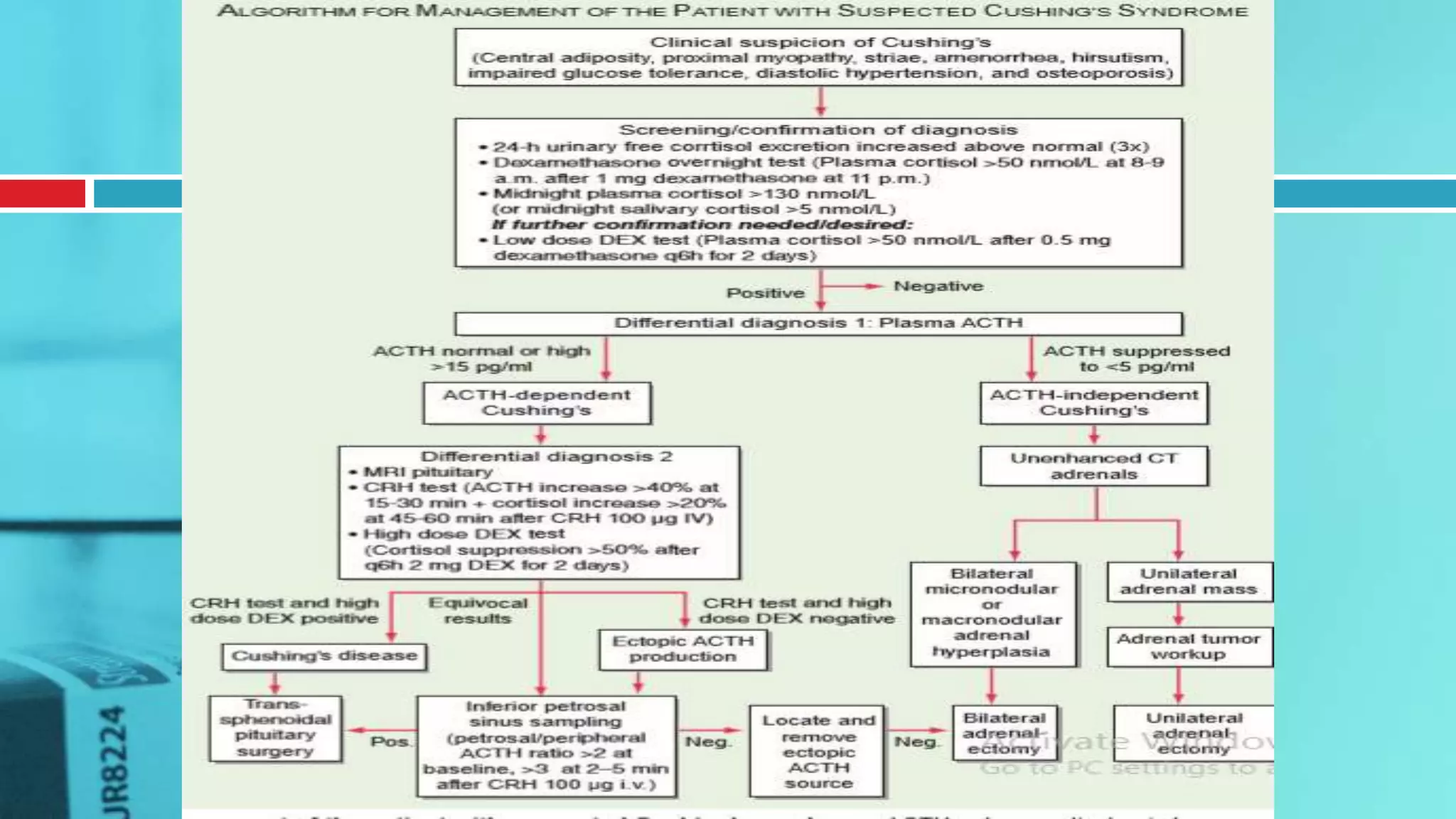
Inferior petrosal
sinus sampling.
For
hypercortisism
ACTH Stim test
For Adrenal
GH Stimulation
tests
For GH
Defficiency
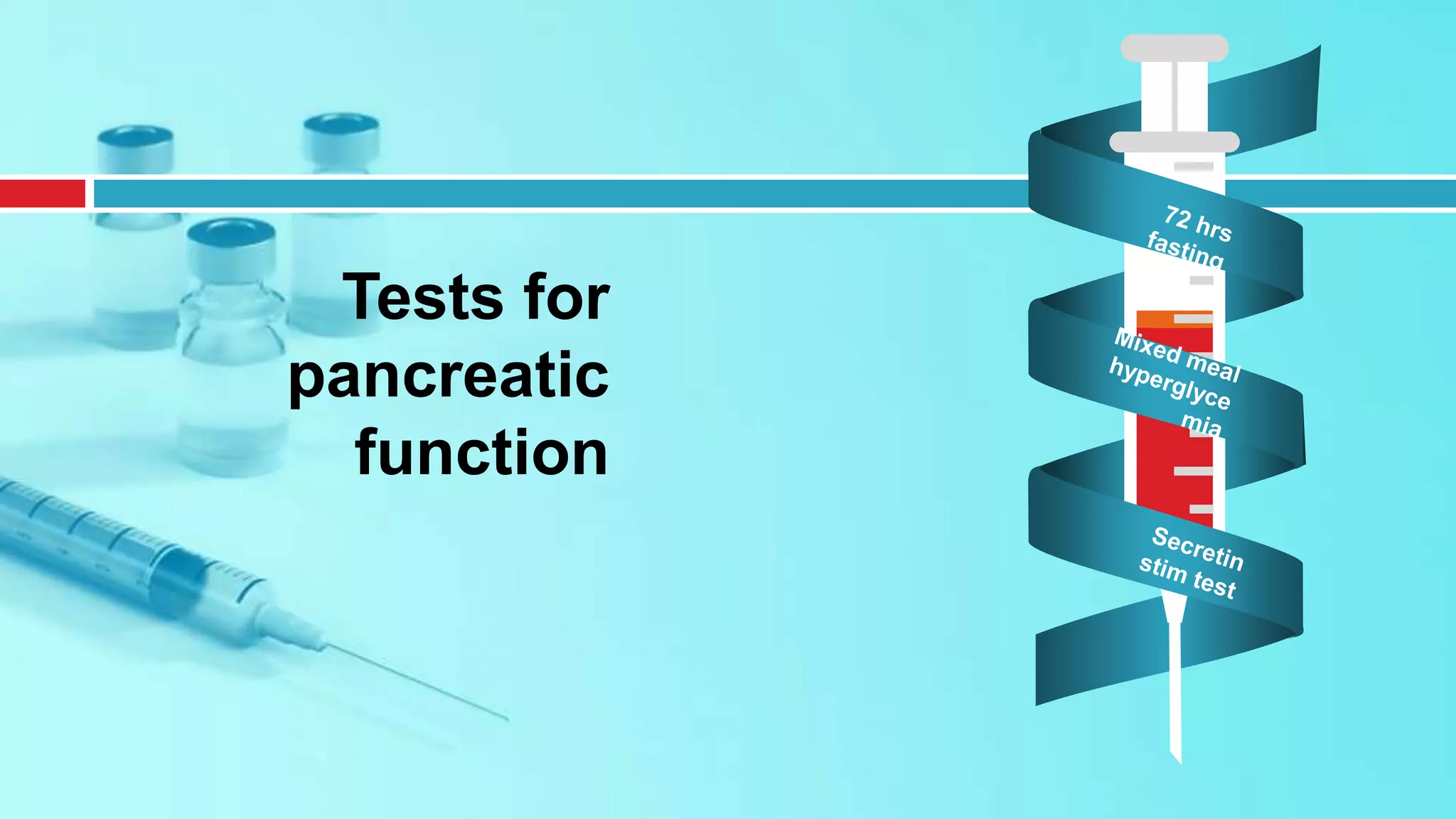
72 hrs fasting
Glucagon stim test
Mixed meal
hyperglycemia
Secretin stim test
For pancrease
Salt loading tests
Captopril challenge
Adrenal venous
sampling.
For con’s
syndrome. GH suppression
tests
For GH exess
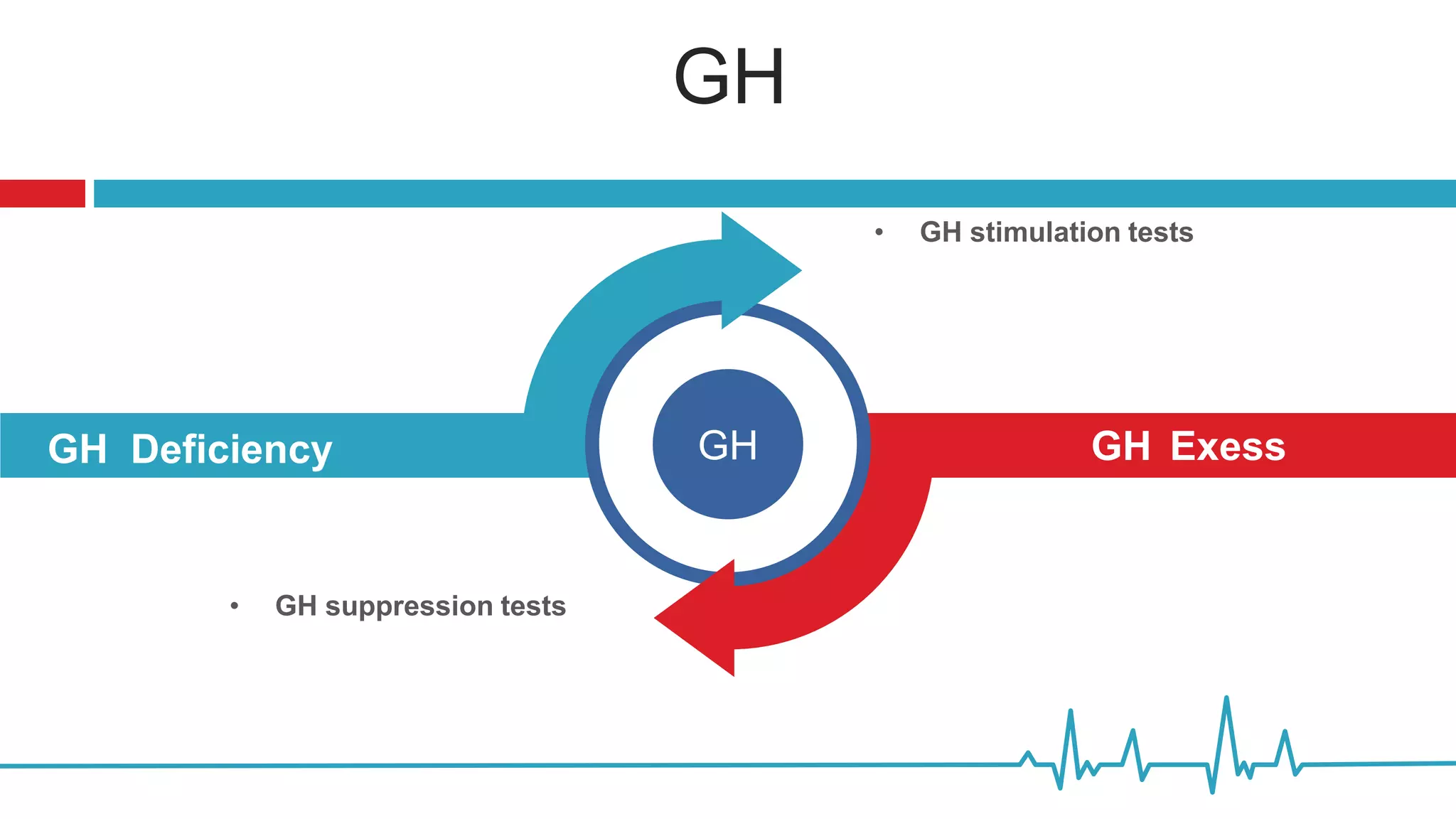
GH
GHGH Deficiency GH Exess
• GH suppression tests
• GH stimulation tests
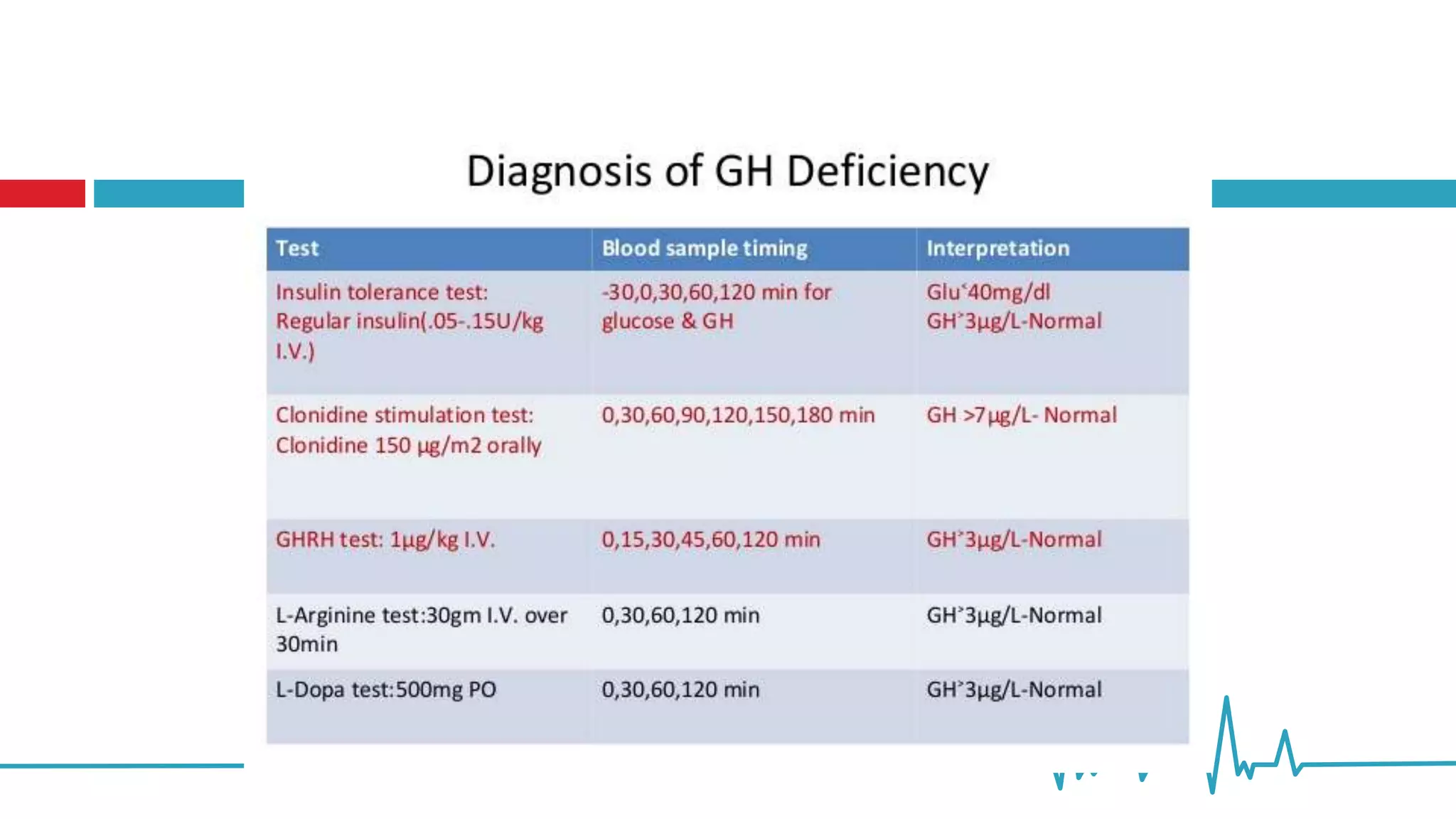
Insulin Tolerance Test (ITT)
Indication: This test is performed to evaluate
patients with suspected hypothalamic-pituitary-
adrenal (HPA) axis or growth hormone (GH) axis
deficiency. Hypoglycemia causes a major stress
response, with an increase in plasma ACTH,
serum cortisol, and growth hormone. Insulin
Tolerance Test (ITT) is considered the gold
standard test to evaluate the integrity of HPA.
Contraindication: History of coronary artery
disease, seizure disorder, or stroke. Age more than
65 is a relative contraindication.
Preparation: NPO except water after midnight and
during test Confirm patient medications and NPO
status with a physician prior to proceeding.
Interpretation:
• A cortisol level <500 nmol/L (18
µg/dL) is consistent with an
abnormal HPA axis [1].
• A serum growth hormone <5
ng/ml (5 mcg/L) is consistent
with severe growth hormone
deficiency].
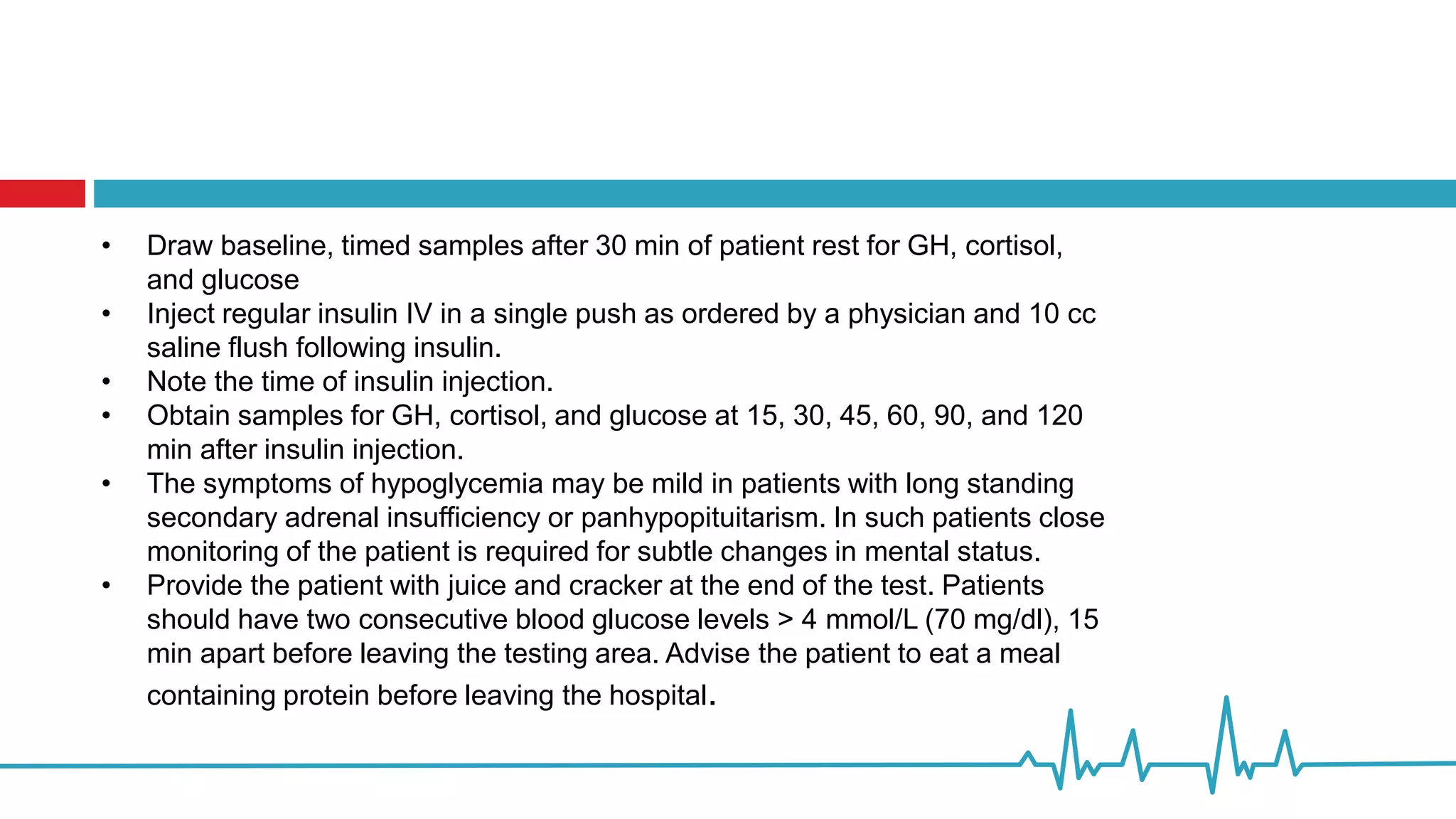
• Draw baseline, timed samples after 30 min of patient rest for GH, cortisol,
and glucose
• Inject regular insulin IV in a single push as ordered by a physician and 10 cc
saline flush following insulin.
• Note the time of insulin injection.
• Obtain samples for GH, cortisol, and glucose at 15, 30, 45, 60, 90, and 120
min after insulin injection.
• The symptoms of hypoglycemia may be mild in patients with long standing
secondary adrenal insufficiency or panhypopituitarism. In such patients close
monitoring of the patient is required for subtle changes in mental status.
• Provide the patient with juice and cracker at the end of the test. Patients
should have two consecutive blood glucose levels > 4 mmol/L (70 mg/dl), 15
min apart before leaving the testing area. Advise the patient to eat a meal
containing protein before leaving the hospital.
Growth Hormone Suppression Test (Post-
Glucose Administration)
 Indication: To establish the diagnosis of acromegaly
when there is modest elevation of IGF-1 (< 2-fold upper
limit of normal) with absent or equivocal clinical features
[1]
 Preparation: 10 h fasting
 Draw baseline growth hormone. 4. Give glucose 75 g
orally (glucose drink). 5. Draw glucose and growth
hormone levels at 30, 60, 90, and 120 min [7]. 6.
(Include insulin levels at baseline, 30, 60, 90, and 120
min only if requested).
 Diagnosis of acromegaly:
Using ultrasensitive
assays, a GH suppression
to < 0.4 ng/ml is
considered the gold
standard test to rule out
acromegaly [2].
 A GH level < 1 ng/mL early
after surgery, in the
absence of presurgical
usage of somatostatin
analogs, predict long-term
remission .
ADH
Water Deprivation test
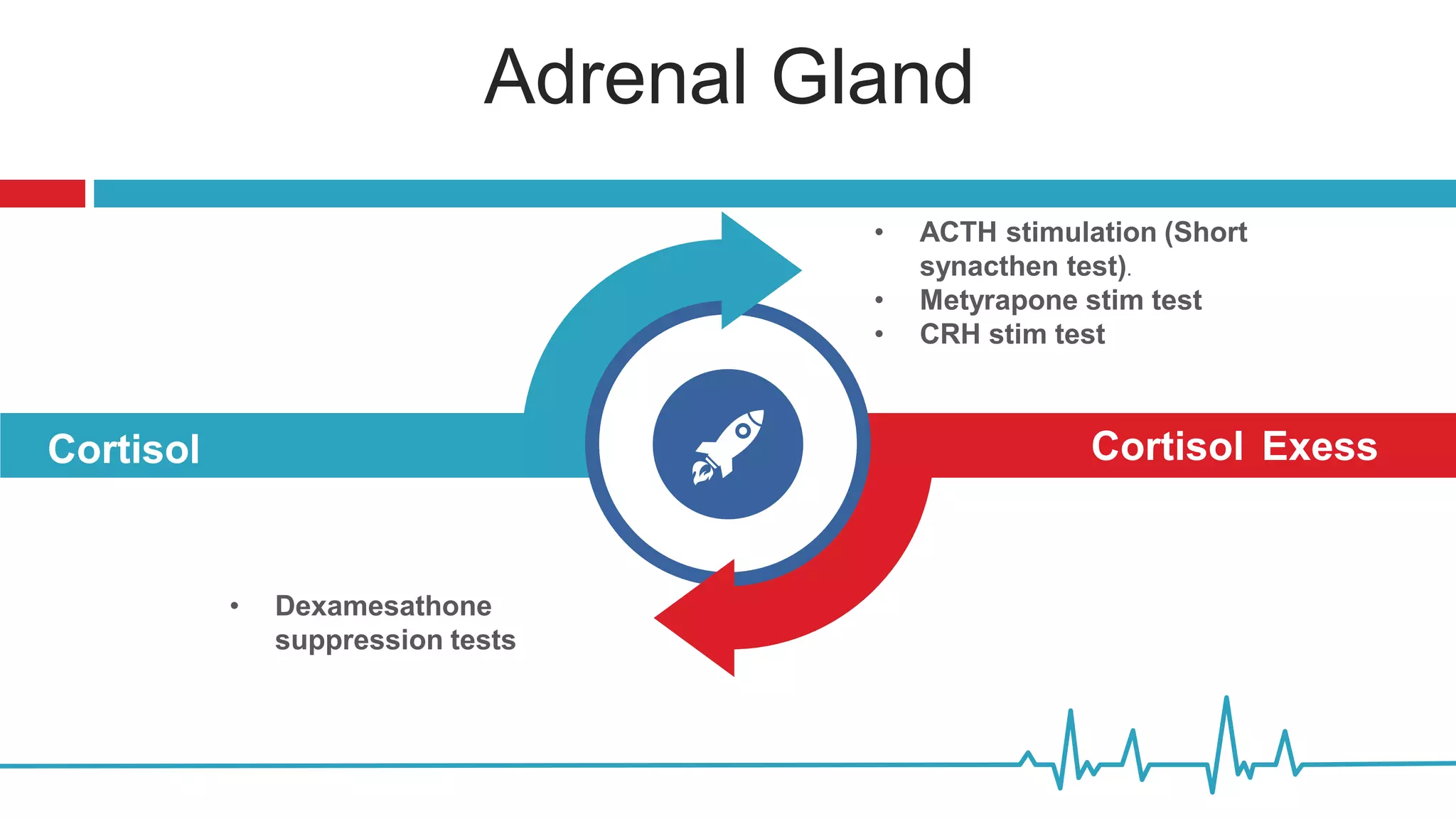
Adrenal Gland
Cortisol
Deficiency
Cortisol Exess
• Dexamesathone
suppression tests
• ACTH stimulation (Short
synacthen test).
• Metyrapone stim test
• CRH stim test
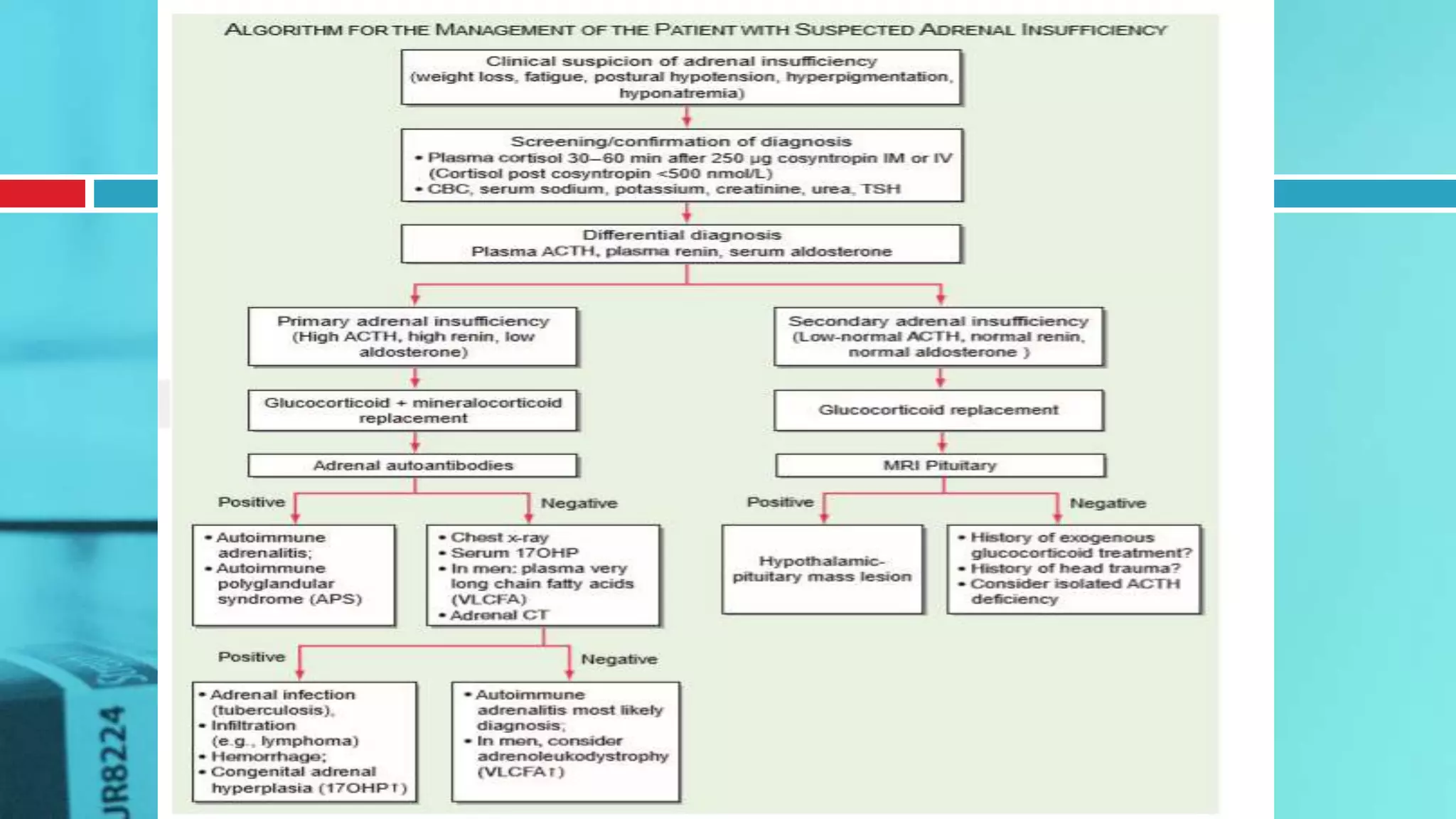
ACTH Stimulation Test for Adrenal
Insufficiency with Total Cortisol Levels
 Indication: to determine whether the adrenal glands can
respond normally to ACTH by producing cortisol.
 Preparation: Patients should be off glucocorticoids that
potentially interfere with the cortisol assay
(hydrocortisone, prednisone) for 24 h pretesting.
Dexamethasone may be used.
 Precautions: Cosyntropin is category C for pregnancy.
 Caveats: • Taking oral estrogen may result in elevation of
the total cortisol level due to increased corticosteroid
binding globulin [3].
 Patients with albumin < 2.5 gr/dL may have a low cortisol
level [4]. •
 Sensitivity for the test is limited in secondary adrenal
insufficiency. Specificity is > 95 %, thus a positive
cosyntropin test result substantially increases the
likelihood that the patient has secondary adrenal
insufficiency.
 Normal response:
Peak stimulated
cortisol value > 18
mcg/dl at 30 min
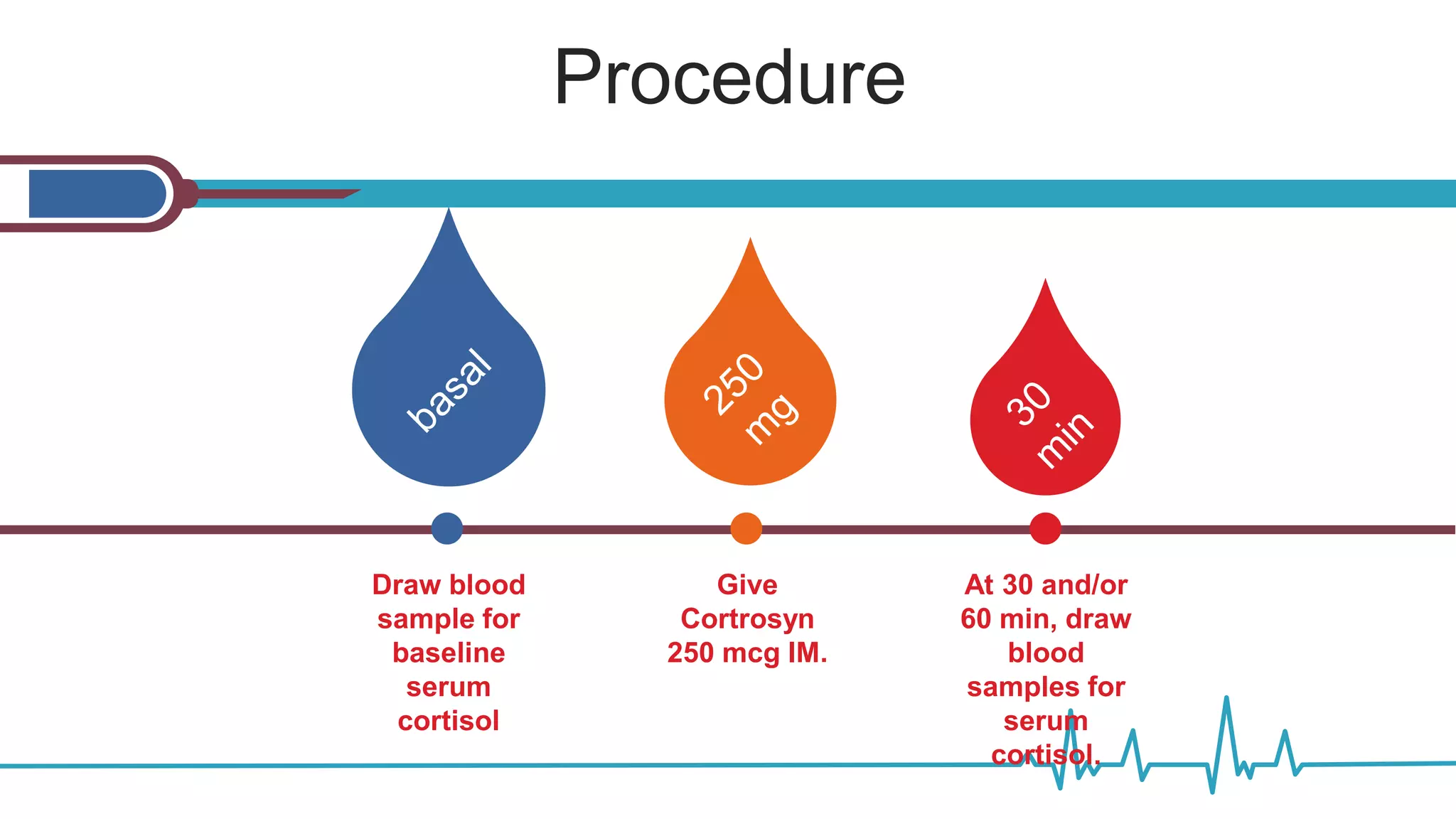
Procedure
Draw blood
sample for
baseline
serum
cortisol
Give
Cortrosyn
250 mcg IM.
At 30 and/or
60 min, draw
blood
samples for
serum
cortisol.
ACTH Stimulation Test for Adrenal
Insufficiency with Free Cortisol Levels
 IndicationThis test is particularly helpful in patient with
albumin < 2.5 mg/dL or low CBG.
 Caveats: This cut-off value may not apply to ICU
patients. Further studies are needed to establish
appropriate levels in such patients.
 Benefit from glucocorticoid therapy may be beyond
adrenal function status in patients with septic shock
 Free cortisol index (FCI) may be used as an alternative
to this dynamic test, if free cortisol assay is not available.
•
 FCI: Total cortisol (nmol/L)/CBG (mg/dl) < 12 suggests
adrenal insufficiency [5]. Total cortisol should be
measured in the morning between 8–10 am.
 Normal response:
Peak stimulated
cortisol value >
1.2 mcg/dl at 30 or
60 min
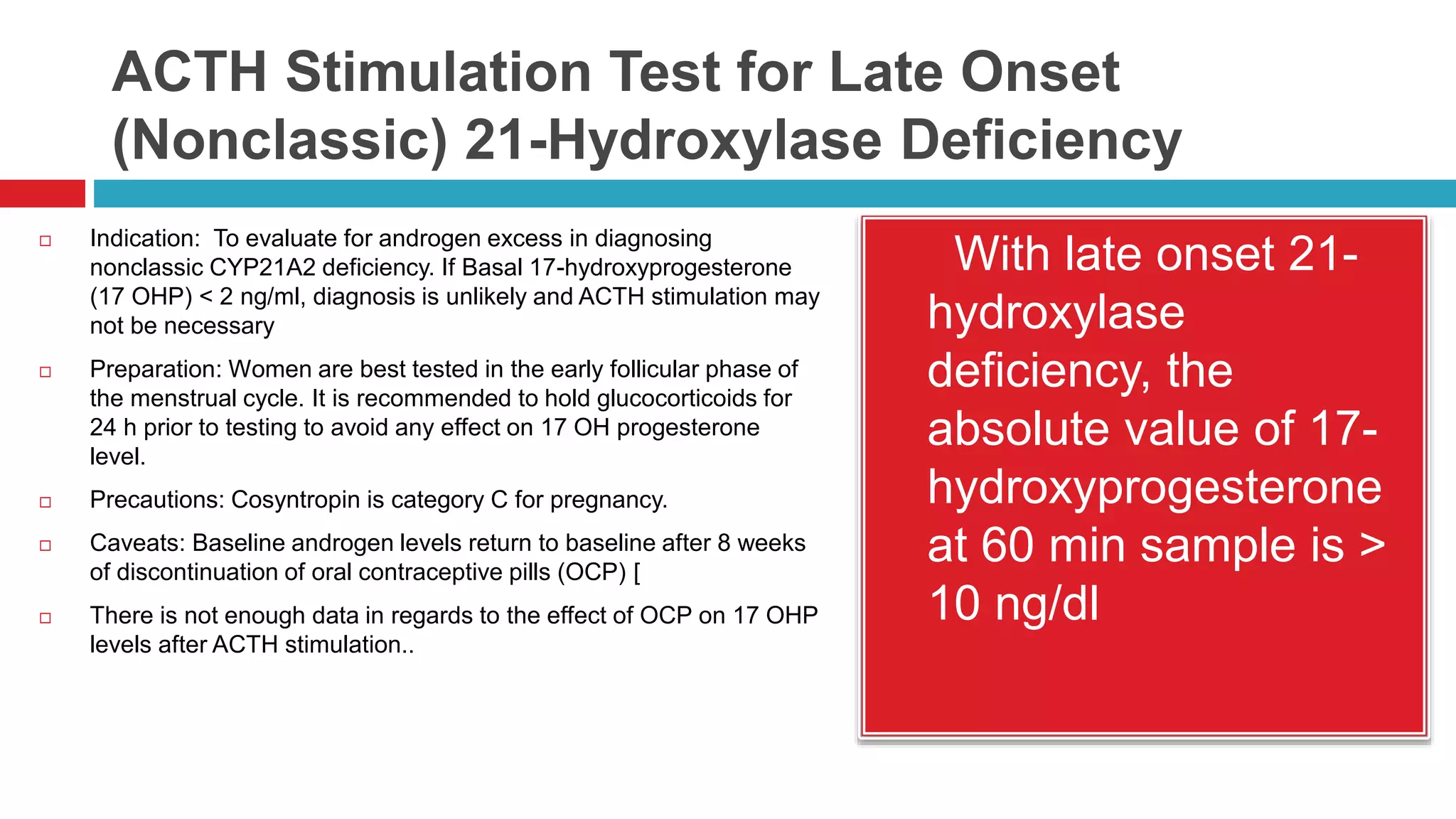
ACTH Stimulation Test for Late Onset
(Nonclassic) 21-Hydroxylase Deficiency
 Indication: To evaluate for androgen excess in diagnosing
nonclassic CYP21A2 deficiency. If Basal 17-hydroxyprogesterone
(17 OHP) < 2 ng/ml, diagnosis is unlikely and ACTH stimulation may
not be necessary
 Preparation: Women are best tested in the early follicular phase of
the menstrual cycle. It is recommended to hold glucocorticoids for
24 h prior to testing to avoid any effect on 17 OH progesterone
level.
 Precautions: Cosyntropin is category C for pregnancy.
 Caveats: Baseline androgen levels return to baseline after 8 weeks
of discontinuation of oral contraceptive pills (OCP) [
 There is not enough data in regards to the effect of OCP on 17 OHP
levels after ACTH stimulation..
 With late onset 21-
hydroxylase
deficiency, the
absolute value of 17-
hydroxyprogesterone
at 60 min sample is >
10 ng/dl
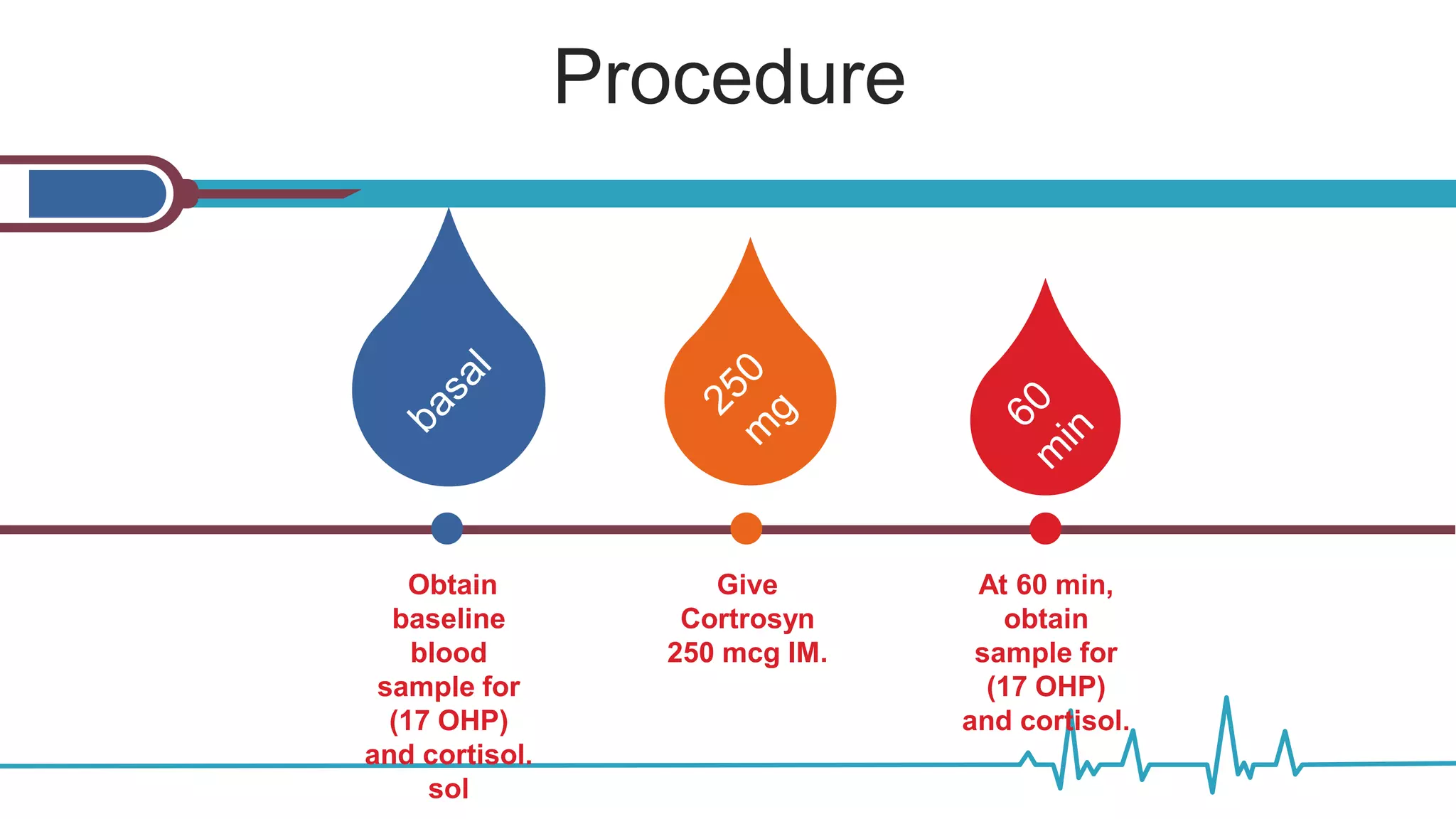
Procedure
Obtain
baseline
blood
sample for
(17 OHP)
and cortisol.
sol
Give
Cortrosyn
250 mcg IM.
At 60 min,
obtain
sample for
(17 OHP)
and cortisol.
Overnight Low Dose Dexamethasone
Suppression Test—1 mg
 Indication: To evaluate for Cushing’s syndrome,
to evaluate adrenal incidentaloma for subclinical
Cushing’s syndrome [1]. Preparation: None.
 Caveats: • At the 1.8 µg/dL cutoff, the sensitivity
is high (> 95 %) with specificity rates of 80 %.
Specificity increases to greater than 95 % if the
diagnostic threshold is raised to 5 µg/dL [3]. •
 Do not use this test if patient is on estrogens as
they increase CBG resulting in falsely elevated
cortisol levels [4]. •
 Drugs, such as phenytoin, phenobarbital,
carbamazepine, rifampicin, and alcohol, induce
hepatic enzymatic clearance of dexamethasone,
mediated through CYP 3A4, thereby reducing the
plasma dexamethasone concentrations and may
be associated with a false positive result
 Interpretation: Normal
response: Early
morning cortisol < 1.8
µg/dL [2]. Normal
response in adrenal
incidentaloma can be
set at < 3–5 µg/dL if
clinical significance and
increased specificity
are to be pursued
 Patient takes
dexamethasone
between 11 pm and
midnight.
 The next morning, the
patient has serum
cortisol drawn at
laboratory at 8 am
(fasting).
Two Day Low Dose Dexamethasone
Suppression Test
 Indication: To assess
suppressibility of cortisol
in patients with an
equivocal screening test
such as overnight 1 mg
dexamethasone
suppression test, 24 h
urinary free cortisol,
and/or late night salivary
cortisol.
 Interpretation:
Serum cortisol
concentration > 1.4–
1.8 µg/dl after 2 day
low dose dex is
strongly suggestive
of Cushing’s
syndrome
 Use of the 2 mg 2-day test has greater specificity
at high sensitivity compared to the 1 mg overnight
test. However, it requires more patience on the
part of the patient [2, 3]. • We do not recommend
24 h urine cortisol measurement during 2 mg
dexamethasone suppression test (DST) because
measurement of serum cortisol concentration
during the low dose dexamethasone test is
simpler and more reliable than measurements of
urinary steroids [3]. • Do not use this test if the
patient is on estrogens which increase cortisol
binding globulin (CBG) and falsely elevate cortisol
levels [4]. • Drugs such as phenytoin,
phenobarbital, phenobarbitone, carbamazepine,
rifampicin, and alcohol induce hepatic enzymatic
clearance of dexamethasone, mediated through
CYP 3A4, thereby reducing the plasma
dexamethasone concentrations and may be
associated with a false positive result [5].
 Instruct patient to begin
dexamethasone tablets.
Patient takes one tablet every
6 h for a total of 8 doses (8
am, 2 pm, 8 pm, and 2 am).
Some clinicians prefer a
different schedule such as 6
am, 12 pm, 6 pm, and 12 am
as a more convenient
alternative. Studies were
performed in the former
schedule. 2. 6 h after the last
dose, draw blood for cortisol
(8 am).
Dexamethasone Suppression Test—
8 mg
 Indication: 1. To help differentiate
Cushing’s disease from ectopic ACTH
syndrome (EAS) in patients with ACTH-
dependent Cushing’s syndrome.
 2. To help differentiate Cushing’s disease
from adrenal Cushing’s in patients with low
normal plasma ACTH levels.
 Preparation: Overnight fast is
recommended..
 Interpretation: The basis for the high-dose
suppression tests is the fact that ACTH
secretion in Cushing’s disease is only
relatively resistant to glucocorticoid
negative feedback inhibition. Cortisol
levels will not suppress normally with
overnight 1 mg but will suppress with 8 mg
high dose dexamethasone suppression
test
 • Serum cortisol concentration at 8 am
is < 5 mcg/dL (140 nmol/L) in most
patients with Cushing’s disease, and is
usually undetectable in normal
individuals. •
 A more than 50 % decrease in cortisol
on the day after taking 8-mg
dexamethasone supports a diagnosis
of Cushing’s disease.
 A lack of suppression of cortisol by
more than 50 % in patients with low
normal ACTH levels (5–20 pg/ml)
suggests an adrenal etiology because
adrenal tumors do not depend on
ACTH for cortisol secretion.
Ovine Corticotropin-Releasing Hormone
(oCRH) Stimulation Test
 To differentiate Cushing’s
disease from ectopic and
adrenal Cushing’s
syndrome.
 Patient Preparation:
Patient to fast or abstain
from eating for at least 4 h
before the test since there
may be a physiologic
increase in cortisol levels
after a meal .
 Interpretation: • Cushing’s
syndrome due to pituitary
tumors causing Cushing’s
disease usually responds to
CRH with increased ACTH
and/or cortisol; whereas
ectopic ACTH-secreting
tumors and adrenal tumors
usually do not. • More than
35–50 % increase in the
basal plasma ACTH
concentration or a more than
20 % increase in the basal
serum cortisol concentration
suggests Cushing’s disease
 Precautions: Monitor blood pressure
and pulse rate if the patient is
symptomatic, since episodes of
hypotension and tachycardia have
rarely been reported. Flushing of
face, neck, and upper chest and the
urge to take a deep breath have also
been noted. All signs and symptoms
could be reduced by administering
the drug over 30 s instead of bolus
injection. The use of a heparin
solution to maintain IV cannula
patency during the
corticotrophinreleasing hormone
(CRH test) is not recommended. An
interaction between CRH and
heparin may cause a hypotensive
reaction (see drug label
Ovine Corticotropin-Releasing Hormone
(oCRH) Stimulation Test
 Indication: To differentiate
Cushing’s disease from
ectopic and adrenal
Cushing’s syndrome.
Patient Preparation:
Patient to fast or abstain
from eating for at least 4 h
before the test since there
may be a physiologic
increase in cortisol levels
after a meal .
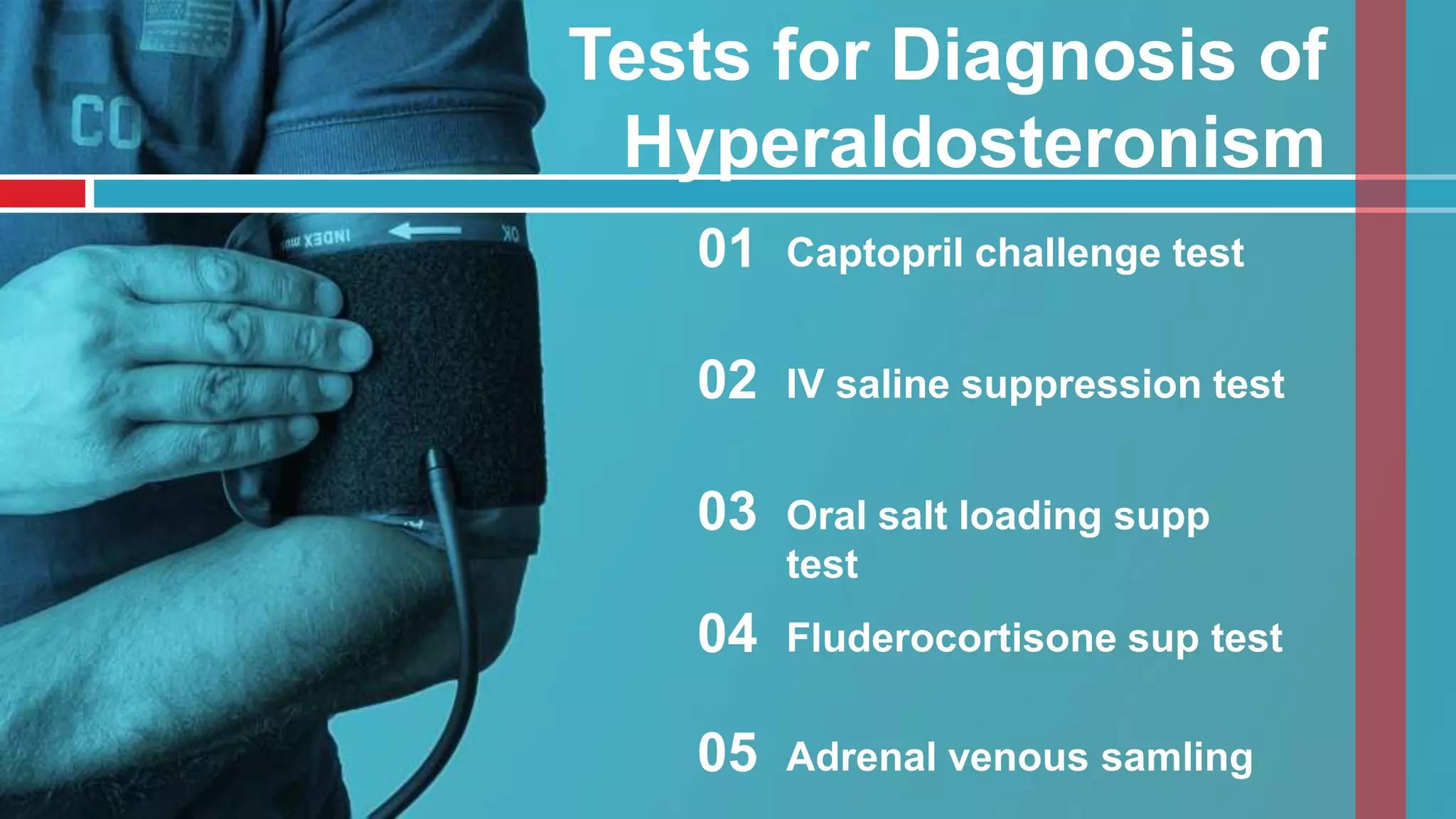
Tests for Diagnosis of
Hyperaldosteronism
Captopril challenge test01
IV saline suppression test02
Oral salt loading supp
test
03
Adrenal venous samling05
Fluderocortisone sup test04
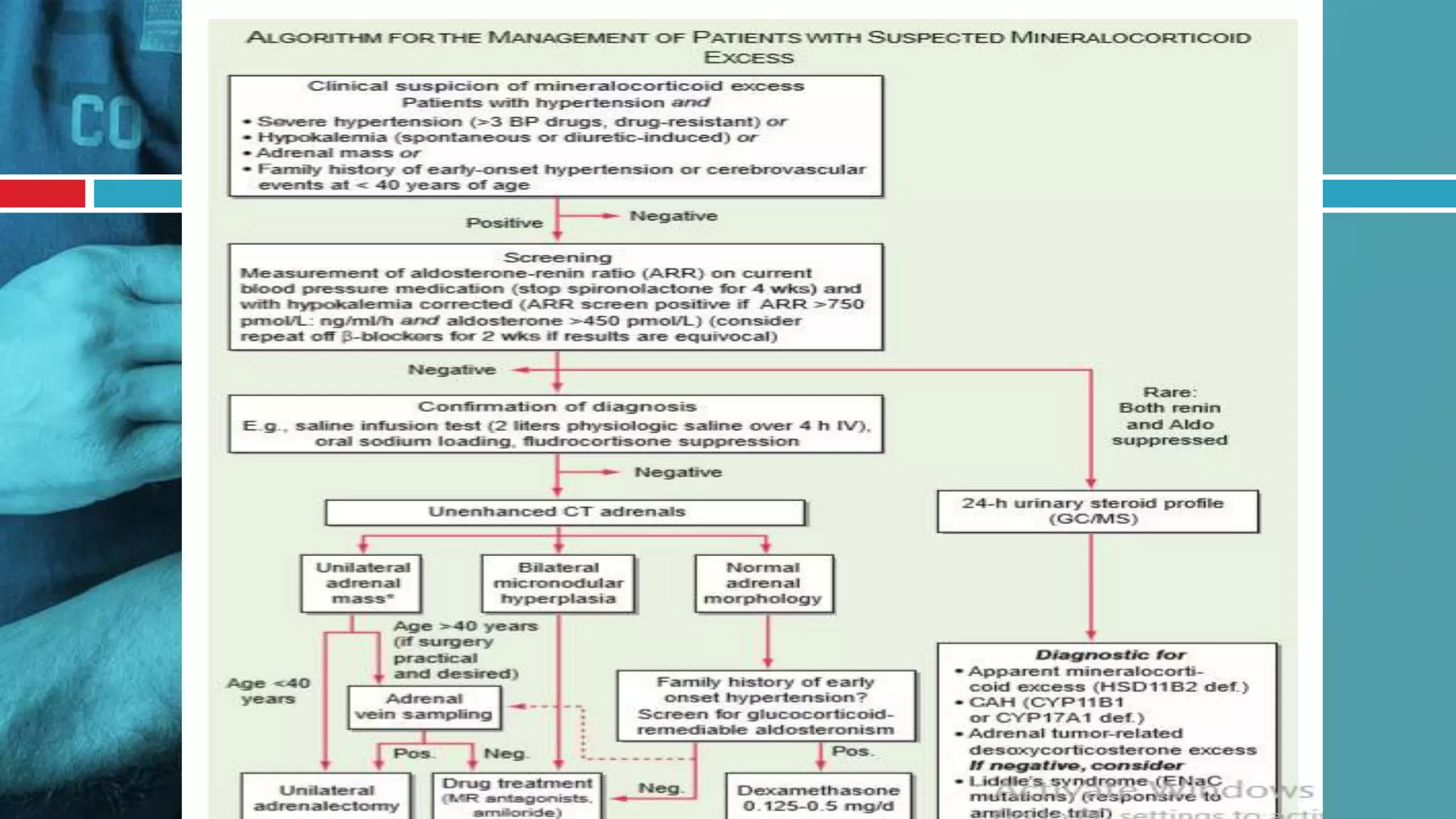
Laboratory Testing Used in the
Diagnosis of Hyperaldosteronism
Adrenal Venous Sampling
 Indication: In order to distinguish between unilateral and
bilateral adrenal disease in patients with primary
aldosteronism.
 Preparation: Patient should be in fasting state. The test
should be done in the morning, with the patient in the
supine position for at least 1 h before sampling . Patient
should be normokalemic prior to procedure. .
 Precautions: At centers with experience with AVS, the
complication rate is 2.5 % or less
 Caveats:
 We do not recommend AVS testing without cosyntropin
stimulation due to high false positive rates .
 • Medications that may increase renin secretion (e.g.,
mineralocorticoid receptor (MR) antagonists
[spironolactone and eplerenone], high-dose amiloride
[i.e., > 5 mg/day], ACE inhibitors, ARBs, and renin
inhibitors [e.g., aliskiren]) should be discontinued for at
least 4 weeks before AVS until more data on the
 ]. It is plausible that keeping a patient
with a history of severe uncontrolled
hypertension and/or hypokalemia on
these agents may be allowed in the
presence of low renin (< 1 ng/ml.hr)
levels. However, wherever possible,
MR antagonists should be avoided
because they have the potential to
allow a rise in renin secretion, which
can stimulate aldosterone secretion
from the unaffected side, thus
minimizing the lateralization. Such an
approach is in line with our institutional
experience. • Preferably, extended
release verapamil, peripheral alpha
adrenergic receptor antagonists (e.g.
doxazosin, terazosin and prazosin), and
hydralazine should be used for blood
pressure control prior to AVS.
 Interpretation: 1. Confirm
successful catheterization With
cosyntropin infusion, the adrenal
vein (right and left) to IVC cortisol
ratio is typically more than 10:1;
a ratio of at least 3:1 is required
to be confident that the adrenal
veins were successfully
catheterized [4]. When
cosyntropin infusion is not used,
an adrenal vein to IVC cortisol
gradient of more than 2:1 is
recommended [5, 6]. Most
institutions perform AVS with
cosyntropin stimulation. 2.
 Correct aldosterone levels for cortisol
and interpret A/C ratios in order to
localize the tumor side. Dividing the
right and left adrenal vein plasma
aldosterone concentrations by same-
sided cortisol concentrations (A/C
ratio) corrects for the dilutional effect
of the inferior phrenic vein flow into
the left adrenal vein; these are
termed cortisol-corrected ratios (A/C
ratio). When cosyntropin infusion
used criteria for localization is a
cutoff for the cortisol–corrected
aldosterone ratio (A/C) from high side
to low side of more than 4:1 to
indicate unilateral aldosterone
excess [2], the true positive rate is 88
% [6].
 at An A/C ratio less than 3.0 is
consistent with bilateral
aldosterone hypersecretion. •
Ratios between 3 and 4.0
represent a zone of overlap. If
the A/C ratio of low side is less
than the IVC A/C ratio, the tumor
will be on the contralateral site in
93 % of patients with surgically
confirmed APA [4]. This criterion
may be particularly helpful in
patients with only unilateral
successful adrenal vein
catheterization.
Procedure
Draw blood
sample for
baseline
serum
cortisol
Give
Cortrosyn
250 mcg IM.
At 30 and/or
60 min, draw
blood
samples for
serum
cortisol.
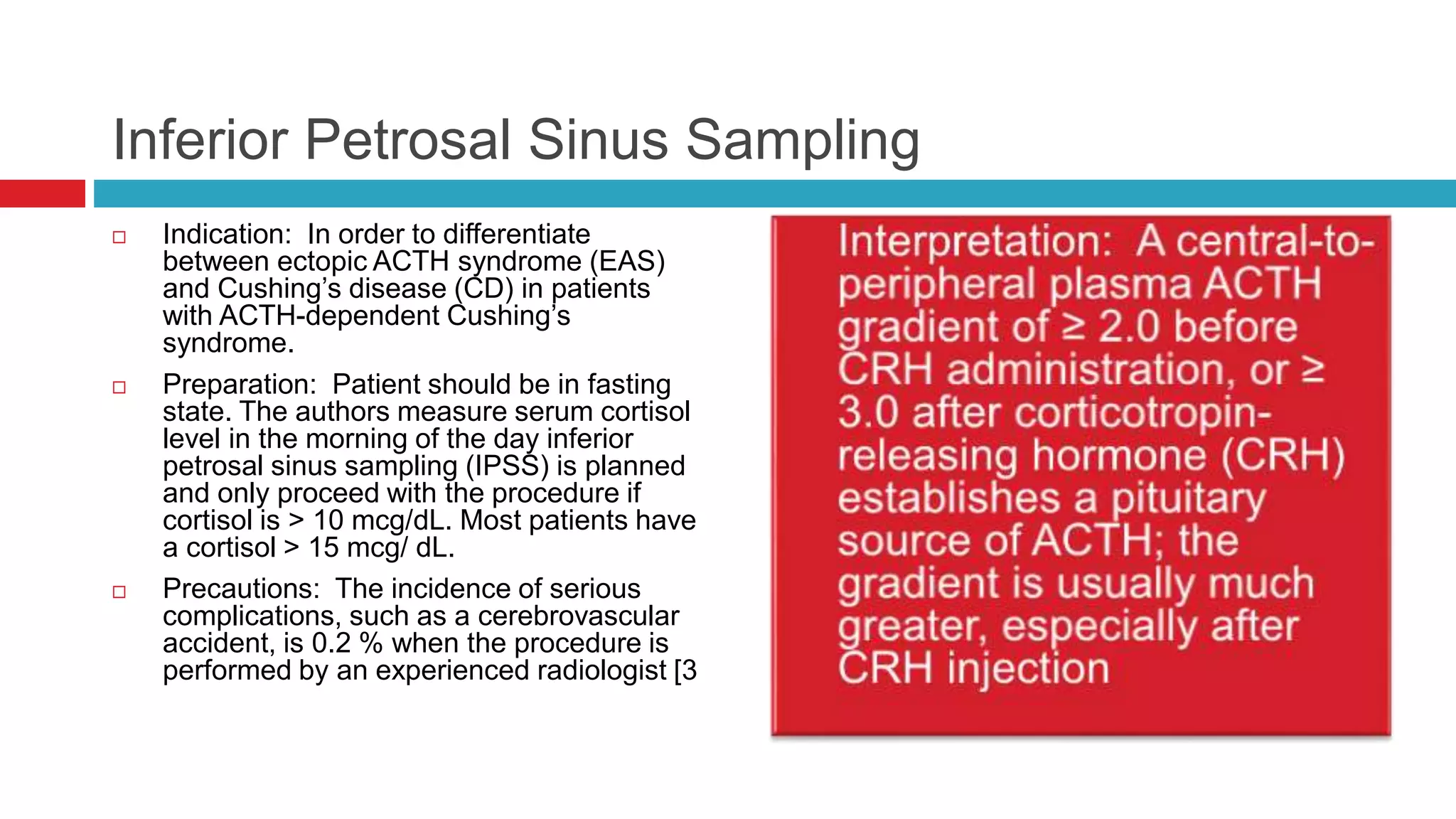
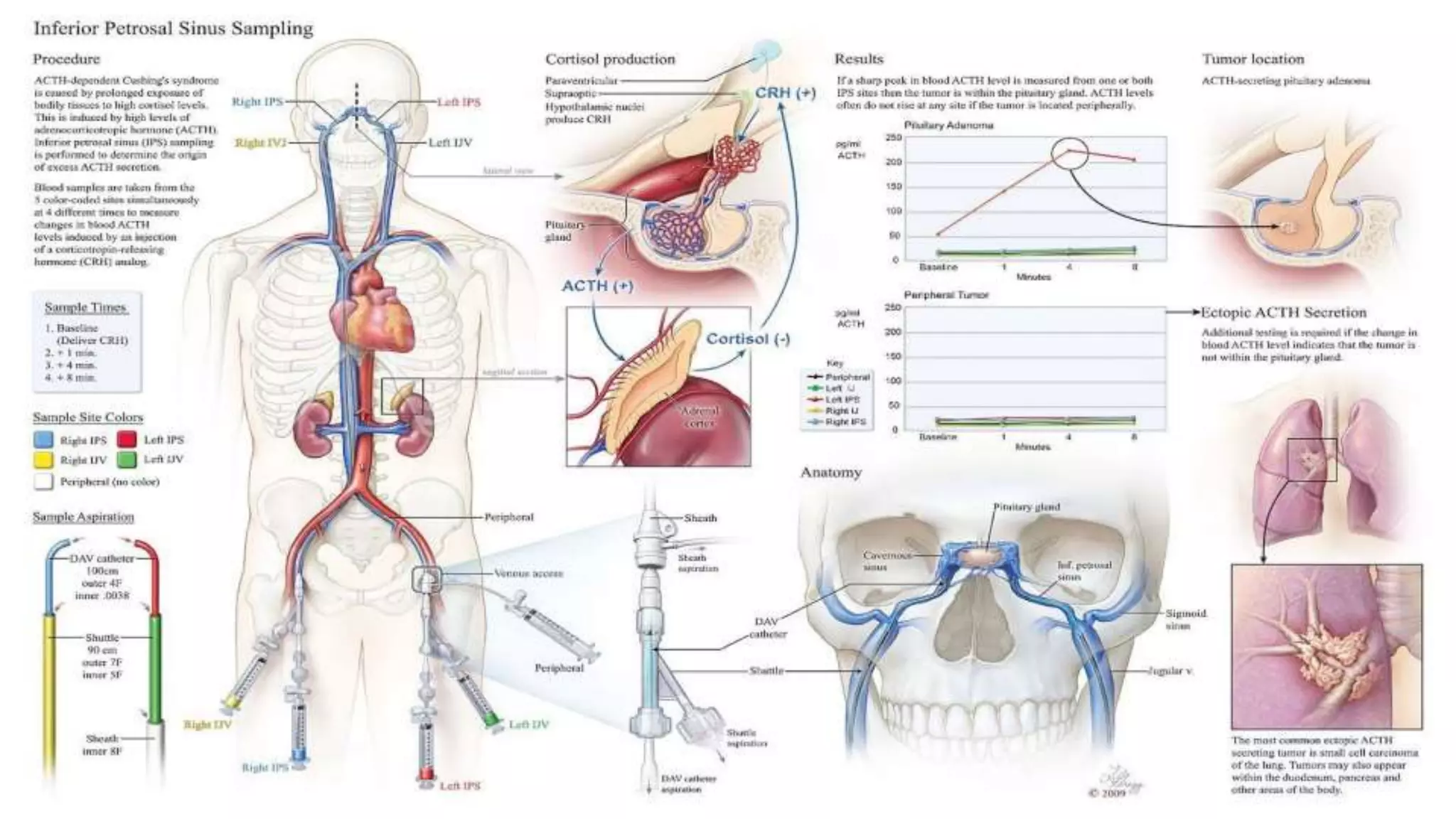
Inferior Petrosal Sinus Sampling
 Indication: In order to differentiate
between ectopic ACTH syndrome (EAS)
and Cushing’s disease (CD) in patients
with ACTH-dependent Cushing’s
syndrome.
 Preparation: Patient should be in fasting
state. The authors measure serum cortisol
level in the morning of the day inferior
petrosal sinus sampling (IPSS) is planned
and only proceed with the procedure if
cortisol is > 10 mcg/dL. Most patients have
a cortisol > 15 mcg/ dL.
 Precautions: The incidence of serious
complications, such as a cerebrovascular
accident, is 0.2 % when the procedure is
performed by an experienced radiologist [3
 Caveats: • Sensitivity and specificity of
IPSS is > 88 % and close to 100 % after
CRH administration respectively [1]. • In
cases where the IPS to peripheral (IPS:P)
ACTH gradient is not consistent with a
pituitary source, peripheral ACTH
response (> 35 %) to CRH administration
suggests central etiology rather than
ectopic source [5]. • Radiologic
confirmation of placement of catheter tip in
IPS may not be reliable [4]. • IPS:P
prolactin ratios greater than 1.8, confirm
accurate catheterization [2]. Most patients
with appropriate IPS catheterization have a
gradient > 1.3 [5]. Prolactin may be
measured routinely during IPSS, or in
order to cut back on the cost, be stored
and measured later on if IPS:P ACTH ratio
is not consistent with a pituitary source. •
 In the absence of appropriate bilateral IPS
catheterization, which may be confirmed
by measurement of IPS:P prolactin ratio, a
lack of significant IPS:P ACTH gradient
does not rule a pituitary source as the
underlying etiology for Cushing’s
syndrome. In addition, confirmation of
accurate venous sampling in only one IPS
may not rule out a pituitary source in the
contralateral side of the pituitary gland due
to variable venous drainage [4]. • Petrosal
sinus sampling is of limited value in
distinguishing between patients with
Cushing’s syndrome and normal
individuals or those with pseudo-Cushing’s
states. Therefore, a diagnosis of ACTH-
dependent Cushing’s syndrome should be
established before referring a patient for
IPSS [6].
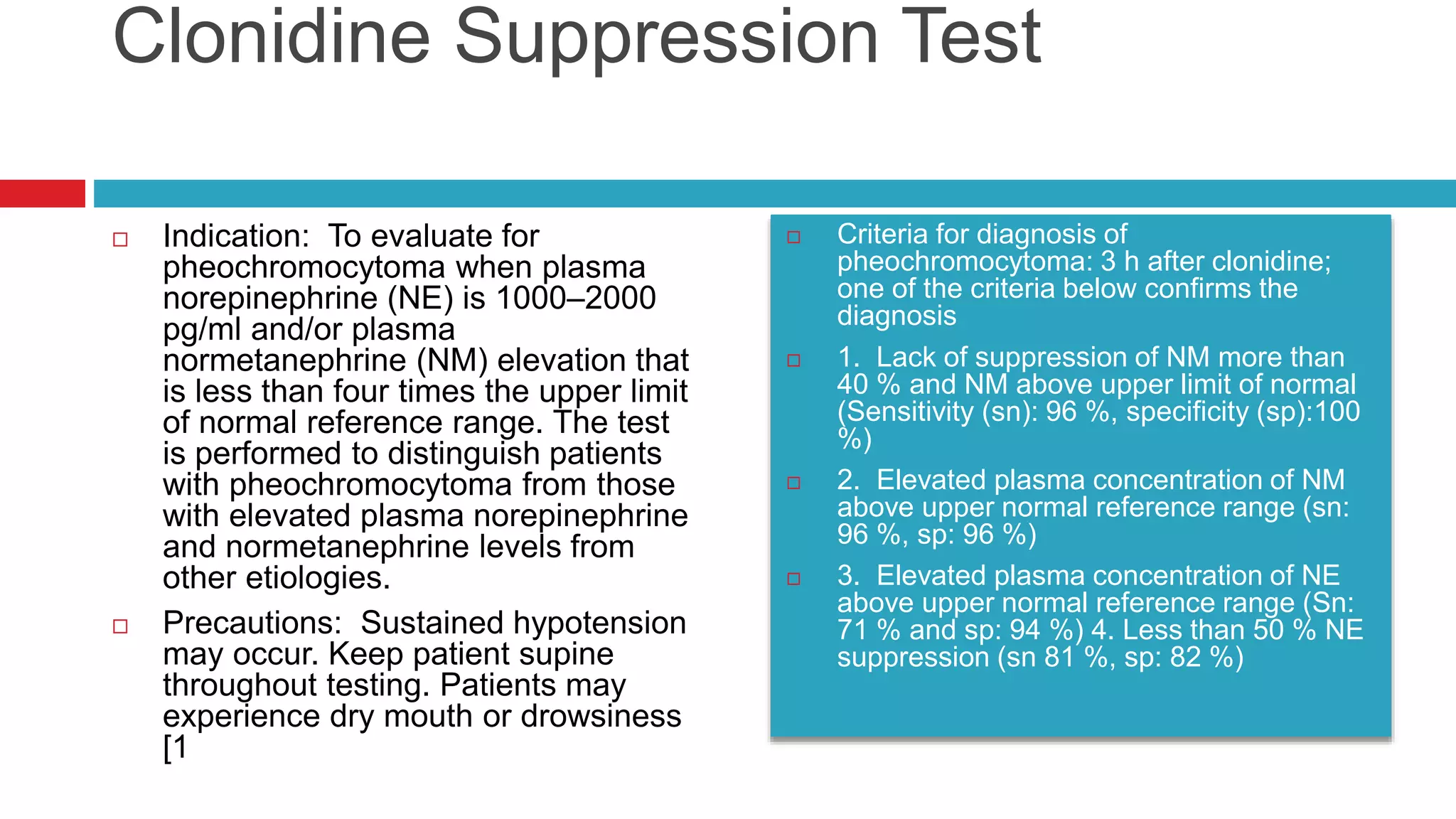
Clonidine Suppression Test
 Indication: To evaluate for
pheochromocytoma when plasma
norepinephrine (NE) is 1000–2000
pg/ml and/or plasma
normetanephrine (NM) elevation that
is less than four times the upper limit
of normal reference range. The test
is performed to distinguish patients
with pheochromocytoma from those
with elevated plasma norepinephrine
and normetanephrine levels from
other etiologies.
 Precautions: Sustained hypotension
may occur. Keep patient supine
throughout testing. Patients may
experience dry mouth or drowsiness
[1
 Criteria for diagnosis of
pheochromocytoma: 3 h after clonidine;
one of the criteria below confirms the
diagnosis
 1. Lack of suppression of NM more than
40 % and NM above upper limit of normal
(Sensitivity (sn): 96 %, specificity (sp):100
%)
 2. Elevated plasma concentration of NM
above upper normal reference range (sn:
96 %, sp: 96 %)
 3. Elevated plasma concentration of NE
above upper normal reference range (Sn:
71 % and sp: 94 %) 4. Less than 50 % NE
suppression (sn 81 %, sp: 82 %)
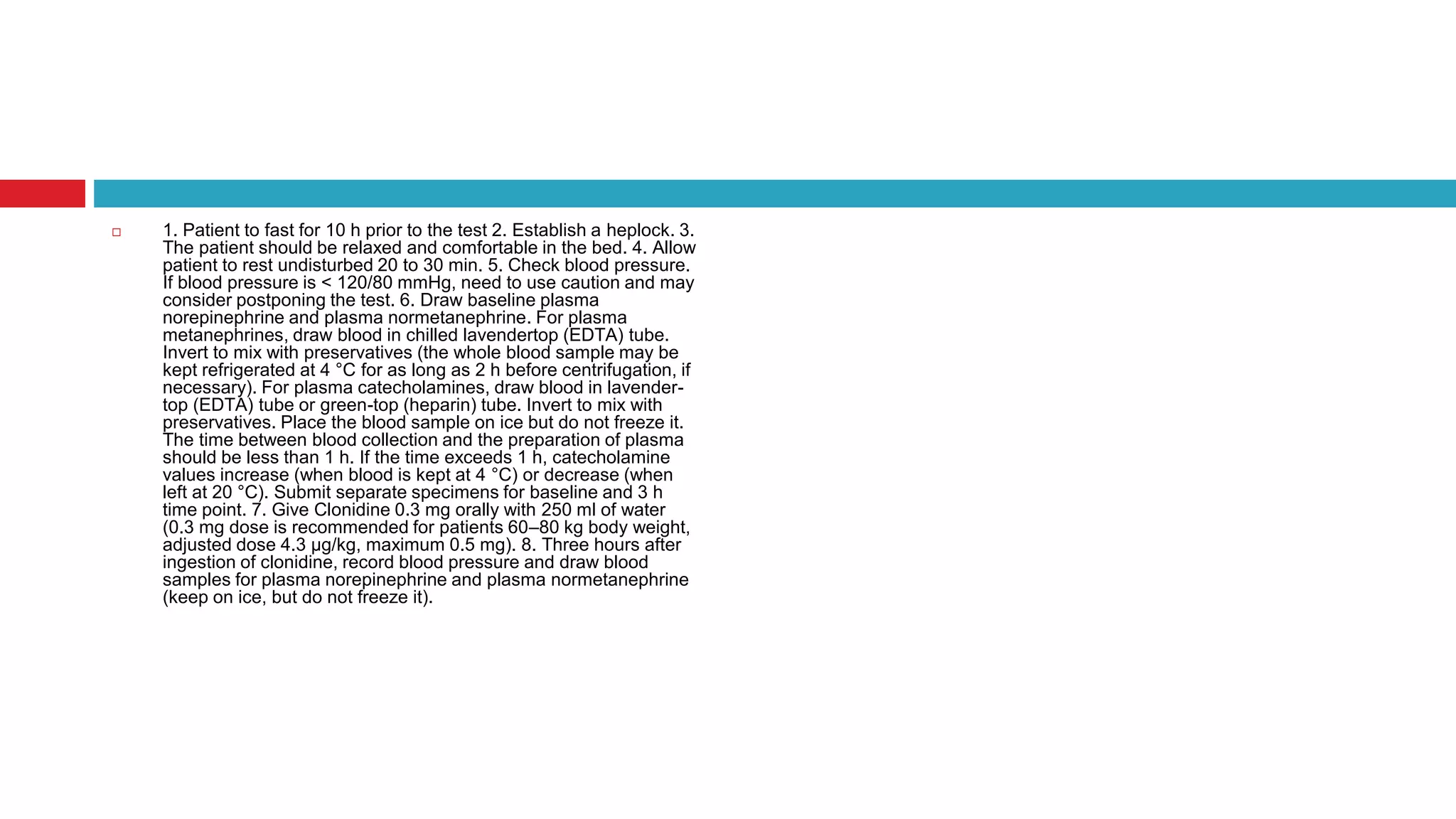
 1. Patient to fast for 10 h prior to the test 2. Establish a heplock. 3.
The patient should be relaxed and comfortable in the bed. 4. Allow
patient to rest undisturbed 20 to 30 min. 5. Check blood pressure.
If blood pressure is < 120/80 mmHg, need to use caution and may
consider postponing the test. 6. Draw baseline plasma
norepinephrine and plasma normetanephrine. For plasma
metanephrines, draw blood in chilled lavendertop (EDTA) tube.
Invert to mix with preservatives (the whole blood sample may be
kept refrigerated at 4 °C for as long as 2 h before centrifugation, if
necessary). For plasma catecholamines, draw blood in lavender-
top (EDTA) tube or green-top (heparin) tube. Invert to mix with
preservatives. Place the blood sample on ice but do not freeze it.
The time between blood collection and the preparation of plasma
should be less than 1 h. If the time exceeds 1 h, catecholamine
values increase (when blood is kept at 4 °C) or decrease (when
left at 20 °C). Submit separate specimens for baseline and 3 h
time point. 7. Give Clonidine 0.3 mg orally with 250 ml of water
(0.3 mg dose is recommended for patients 60–80 kg body weight,
adjusted dose 4.3 µg/kg, maximum 0.5 mg). 8. Three hours after
ingestion of clonidine, record blood pressure and draw blood
samples for plasma norepinephrine and plasma normetanephrine
(keep on ice, but do not freeze it).
Tests for
pancreatic
function
Indication: Assessment of beta cell reserve.
Preparation [1:] NPO except water after midnight
and during the test. Ten hours after the last dose of
short-acting or intermediate-acting insulin, metformin
or thiazolidinedione. At least 24 h after a dose of
sulfonylurea or long-acting insulin (glargine or
detemir).
Glucagon Stimulation
Interpretation: Beta Cell
functional reserve was defined
as preserved if the peak C-
peptide response to glucagon is
at least 1.5 ng/ dL (0.5 nmol/L)
or fasting C-peptide
concentration of at least 1 ng/dL
(0.33 nmol/L). Beta cell
functional reserve is defined as
absent if the glucagon
stimulated or fasting C-peptide
concentrations do not meet
these criteria [1]..
72 hrs fasting
Indication: To confirm and determine the
cause of suspected spontaneous
hypoglycemia. Contraindication:
Pregnancy, liver or kidney failure, unstable
angina. Preparation: No special
preparation is needed. Patient can have
breakfast on the day of testing if
hypoglycemia develops frequently.
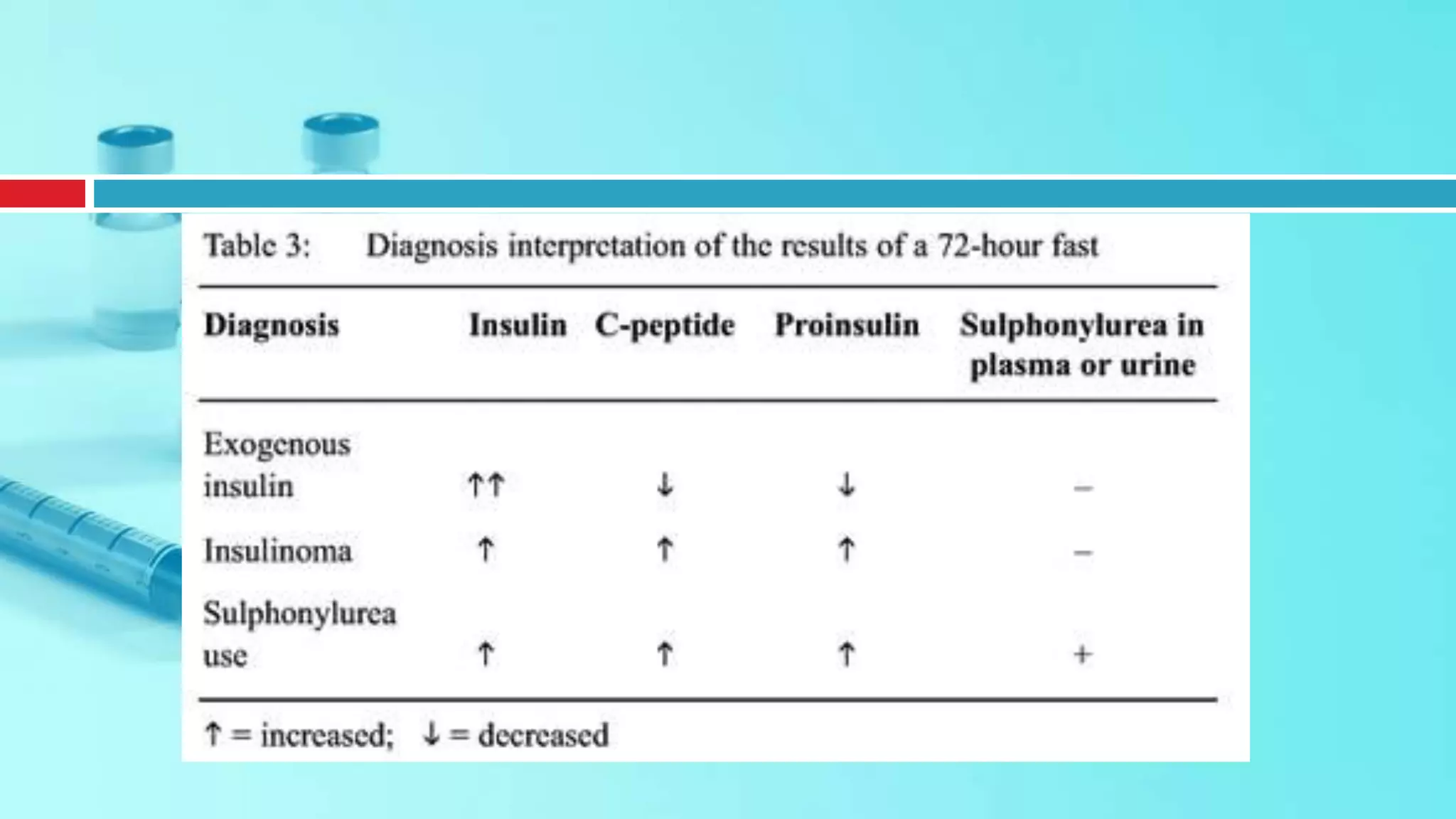
Procedure:
1. Date the last ingestion of calories. 2. Document the baseline vital signs. 3. Stop all
foods and drinks except calorie free and caffeine free beverages and water. 4. Ensure that
the patient is active during waking hours. 5. Insert heplock. 6. Flush heplock with 3–10 cc
ml normal saline as needed. 7. Draw blood for baseline labs for 5 tests: insulin, pro-insulin,
C-peptide, fasting glucose, beta hydroxybutyrate. 8. Check finger stick blood sugar every 2
h until BG is 60 mg/dl or less. 9. Check finger stick blood sugar every 1 h after BG is 60
mg/dl or less. 10. Send stat blood for the 5 tests as above after fingerstick BG is less than
60 mg/dl and then every 1 h (insulin, glucose, c-peptide, beta hydroxy butyrate). Samples
should be analyzed only in those samples in which the plasma glucose concentration is
less than 45 mg/dl ( 2.5 mmol/L). Important note: The decision to end the fast must not be
made on the basis of a fingerstick BG value. If it is judged necessary to treat urgently
because of severe symptoms, obtain samples for all the tests noted above before
administering carbohydrates. Recommend to draw blood twice a day regardless of BG
levels. In some cases the trend in the levels can help clinicians with interpretation, 11. End
the fasting when: • plasma glucose concentration is ≤ 45 mg/dL (2.5 mmol/L) in plasma
(not in fingestick) in an asymtopmatic patient after careful evaluation (see caveats) or •
patient has symptoms or signs of hypoglycemia when BG is ≤ 45 mg/dL in plasma or •
plasma glucose concentration is less than 55 mg/dL (3 mmol/L) if Whipple’s triad was
documented on a prior occasion or • 72 h have elapsed
23 Seventy Two Hours Fast for Insulinoma98
After ending the test send blood samples STAT for the following: Insulin, pro-insulin, C-
peptide, fasting glucose, beta hydroxybutyrate, and hypoglycemia panel that include
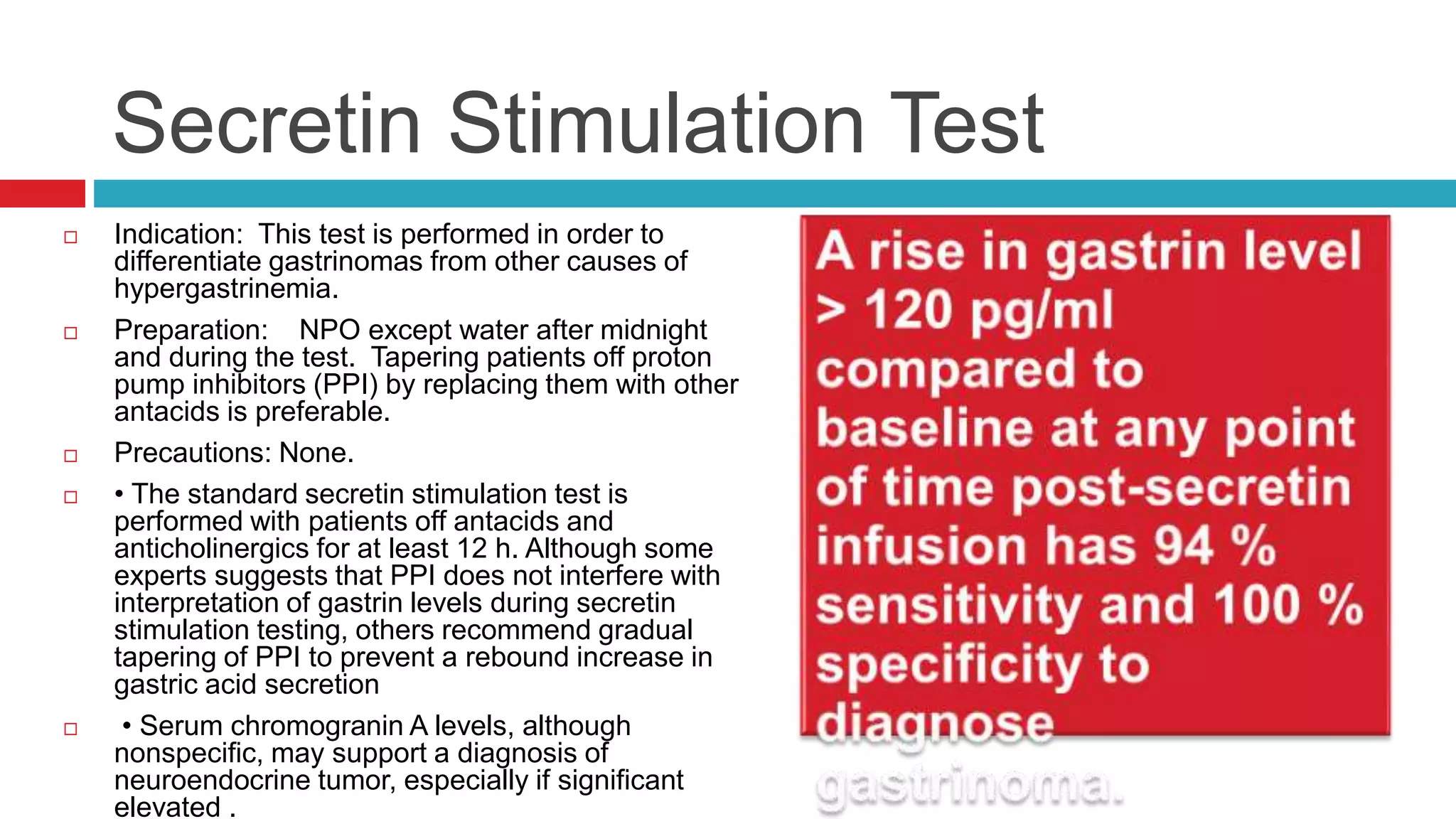
Secretin Stimulation Test
 Indication: This test is performed in order to
differentiate gastrinomas from other causes of
hypergastrinemia.
 Preparation: NPO except water after midnight
and during the test. Tapering patients off proton
pump inhibitors (PPI) by replacing them with other
antacids is preferable.
 Precautions: None.
 • The standard secretin stimulation test is
performed with patients off antacids and
anticholinergics for at least 12 h. Although some
experts suggests that PPI does not interfere with
interpretation of gastrin levels during secretin
stimulation testing, others recommend gradual
tapering of PPI to prevent a rebound increase in
gastric acid secretion
 • Serum chromogranin A levels, although
nonspecific, may support a diagnosis of
neuroendocrine tumor, especially if significant
elevated .
• Thyroid Cancer Follow-Up: Withdrawal
Protocol
• Thyroid Cancer Follow-Up: Thyrogen
Injection with No Scan
• Thyroid Cancer Follow-Up: Thyrogen
Injection with Scan With/Without
Treatment
• Levothyroxine Absorption Test
Dynamic Tests in
Thyroid Disorders
Thank you

Dynamic endocrine tests

  • 1.
    Endocrine Meeting- Miniauniversity Hospital 12-3- 2019 Dynamic Endocrine Testing
  • 2.
  • 3.
  • 4.
    Dynamic tests For ADH Waterderivation test DEXA supp tests Inferior petrosal sinus sampling. For hypercortisism ACTH Stim test For Adrenal GH Stimulation tests For GH Defficiency 72 hrs fasting Glucagon stim test Mixed meal hyperglycemia Secretin stim test For pancrease Salt loading tests Captopril challenge Adrenal venous sampling. For con’s syndrome. GH suppression tests For GH exess
  • 5.
    GH GHGH Deficiency GHExess • GH suppression tests • GH stimulation tests
  • 7.
    Insulin Tolerance Test(ITT) Indication: This test is performed to evaluate patients with suspected hypothalamic-pituitary- adrenal (HPA) axis or growth hormone (GH) axis deficiency. Hypoglycemia causes a major stress response, with an increase in plasma ACTH, serum cortisol, and growth hormone. Insulin Tolerance Test (ITT) is considered the gold standard test to evaluate the integrity of HPA. Contraindication: History of coronary artery disease, seizure disorder, or stroke. Age more than 65 is a relative contraindication. Preparation: NPO except water after midnight and during test Confirm patient medications and NPO status with a physician prior to proceeding. Interpretation: • A cortisol level <500 nmol/L (18 µg/dL) is consistent with an abnormal HPA axis [1]. • A serum growth hormone <5 ng/ml (5 mcg/L) is consistent with severe growth hormone deficiency].
  • 8.
    • Draw baseline,timed samples after 30 min of patient rest for GH, cortisol, and glucose • Inject regular insulin IV in a single push as ordered by a physician and 10 cc saline flush following insulin. • Note the time of insulin injection. • Obtain samples for GH, cortisol, and glucose at 15, 30, 45, 60, 90, and 120 min after insulin injection. • The symptoms of hypoglycemia may be mild in patients with long standing secondary adrenal insufficiency or panhypopituitarism. In such patients close monitoring of the patient is required for subtle changes in mental status. • Provide the patient with juice and cracker at the end of the test. Patients should have two consecutive blood glucose levels > 4 mmol/L (70 mg/dl), 15 min apart before leaving the testing area. Advise the patient to eat a meal containing protein before leaving the hospital.
  • 9.
    Growth Hormone SuppressionTest (Post- Glucose Administration)  Indication: To establish the diagnosis of acromegaly when there is modest elevation of IGF-1 (< 2-fold upper limit of normal) with absent or equivocal clinical features [1]  Preparation: 10 h fasting  Draw baseline growth hormone. 4. Give glucose 75 g orally (glucose drink). 5. Draw glucose and growth hormone levels at 30, 60, 90, and 120 min [7]. 6. (Include insulin levels at baseline, 30, 60, 90, and 120 min only if requested).  Diagnosis of acromegaly: Using ultrasensitive assays, a GH suppression to < 0.4 ng/ml is considered the gold standard test to rule out acromegaly [2].  A GH level < 1 ng/mL early after surgery, in the absence of presurgical usage of somatostatin analogs, predict long-term remission .
  • 10.
  • 11.
  • 13.
    Adrenal Gland Cortisol Deficiency Cortisol Exess •Dexamesathone suppression tests • ACTH stimulation (Short synacthen test). • Metyrapone stim test • CRH stim test
  • 15.
    ACTH Stimulation Testfor Adrenal Insufficiency with Total Cortisol Levels  Indication: to determine whether the adrenal glands can respond normally to ACTH by producing cortisol.  Preparation: Patients should be off glucocorticoids that potentially interfere with the cortisol assay (hydrocortisone, prednisone) for 24 h pretesting. Dexamethasone may be used.  Precautions: Cosyntropin is category C for pregnancy.  Caveats: • Taking oral estrogen may result in elevation of the total cortisol level due to increased corticosteroid binding globulin [3].  Patients with albumin < 2.5 gr/dL may have a low cortisol level [4]. •  Sensitivity for the test is limited in secondary adrenal insufficiency. Specificity is > 95 %, thus a positive cosyntropin test result substantially increases the likelihood that the patient has secondary adrenal insufficiency.  Normal response: Peak stimulated cortisol value > 18 mcg/dl at 30 min
  • 16.
    Procedure Draw blood sample for baseline serum cortisol Give Cortrosyn 250mcg IM. At 30 and/or 60 min, draw blood samples for serum cortisol.
  • 17.
    ACTH Stimulation Testfor Adrenal Insufficiency with Free Cortisol Levels  IndicationThis test is particularly helpful in patient with albumin < 2.5 mg/dL or low CBG.  Caveats: This cut-off value may not apply to ICU patients. Further studies are needed to establish appropriate levels in such patients.  Benefit from glucocorticoid therapy may be beyond adrenal function status in patients with septic shock  Free cortisol index (FCI) may be used as an alternative to this dynamic test, if free cortisol assay is not available. •  FCI: Total cortisol (nmol/L)/CBG (mg/dl) < 12 suggests adrenal insufficiency [5]. Total cortisol should be measured in the morning between 8–10 am.  Normal response: Peak stimulated cortisol value > 1.2 mcg/dl at 30 or 60 min
  • 18.
    ACTH Stimulation Testfor Late Onset (Nonclassic) 21-Hydroxylase Deficiency  Indication: To evaluate for androgen excess in diagnosing nonclassic CYP21A2 deficiency. If Basal 17-hydroxyprogesterone (17 OHP) < 2 ng/ml, diagnosis is unlikely and ACTH stimulation may not be necessary  Preparation: Women are best tested in the early follicular phase of the menstrual cycle. It is recommended to hold glucocorticoids for 24 h prior to testing to avoid any effect on 17 OH progesterone level.  Precautions: Cosyntropin is category C for pregnancy.  Caveats: Baseline androgen levels return to baseline after 8 weeks of discontinuation of oral contraceptive pills (OCP) [  There is not enough data in regards to the effect of OCP on 17 OHP levels after ACTH stimulation..  With late onset 21- hydroxylase deficiency, the absolute value of 17- hydroxyprogesterone at 60 min sample is > 10 ng/dl
  • 19.
    Procedure Obtain baseline blood sample for (17 OHP) andcortisol. sol Give Cortrosyn 250 mcg IM. At 60 min, obtain sample for (17 OHP) and cortisol.
  • 21.
    Overnight Low DoseDexamethasone Suppression Test—1 mg  Indication: To evaluate for Cushing’s syndrome, to evaluate adrenal incidentaloma for subclinical Cushing’s syndrome [1]. Preparation: None.  Caveats: • At the 1.8 µg/dL cutoff, the sensitivity is high (> 95 %) with specificity rates of 80 %. Specificity increases to greater than 95 % if the diagnostic threshold is raised to 5 µg/dL [3]. •  Do not use this test if patient is on estrogens as they increase CBG resulting in falsely elevated cortisol levels [4]. •  Drugs, such as phenytoin, phenobarbital, carbamazepine, rifampicin, and alcohol, induce hepatic enzymatic clearance of dexamethasone, mediated through CYP 3A4, thereby reducing the plasma dexamethasone concentrations and may be associated with a false positive result  Interpretation: Normal response: Early morning cortisol < 1.8 µg/dL [2]. Normal response in adrenal incidentaloma can be set at < 3–5 µg/dL if clinical significance and increased specificity are to be pursued
  • 22.
     Patient takes dexamethasone between11 pm and midnight.  The next morning, the patient has serum cortisol drawn at laboratory at 8 am (fasting).
  • 23.
    Two Day LowDose Dexamethasone Suppression Test  Indication: To assess suppressibility of cortisol in patients with an equivocal screening test such as overnight 1 mg dexamethasone suppression test, 24 h urinary free cortisol, and/or late night salivary cortisol.  Interpretation: Serum cortisol concentration > 1.4– 1.8 µg/dl after 2 day low dose dex is strongly suggestive of Cushing’s syndrome
  • 24.
     Use ofthe 2 mg 2-day test has greater specificity at high sensitivity compared to the 1 mg overnight test. However, it requires more patience on the part of the patient [2, 3]. • We do not recommend 24 h urine cortisol measurement during 2 mg dexamethasone suppression test (DST) because measurement of serum cortisol concentration during the low dose dexamethasone test is simpler and more reliable than measurements of urinary steroids [3]. • Do not use this test if the patient is on estrogens which increase cortisol binding globulin (CBG) and falsely elevate cortisol levels [4]. • Drugs such as phenytoin, phenobarbital, phenobarbitone, carbamazepine, rifampicin, and alcohol induce hepatic enzymatic clearance of dexamethasone, mediated through CYP 3A4, thereby reducing the plasma dexamethasone concentrations and may be associated with a false positive result [5].  Instruct patient to begin dexamethasone tablets. Patient takes one tablet every 6 h for a total of 8 doses (8 am, 2 pm, 8 pm, and 2 am). Some clinicians prefer a different schedule such as 6 am, 12 pm, 6 pm, and 12 am as a more convenient alternative. Studies were performed in the former schedule. 2. 6 h after the last dose, draw blood for cortisol (8 am).
  • 25.
    Dexamethasone Suppression Test— 8mg  Indication: 1. To help differentiate Cushing’s disease from ectopic ACTH syndrome (EAS) in patients with ACTH- dependent Cushing’s syndrome.  2. To help differentiate Cushing’s disease from adrenal Cushing’s in patients with low normal plasma ACTH levels.  Preparation: Overnight fast is recommended..  Interpretation: The basis for the high-dose suppression tests is the fact that ACTH secretion in Cushing’s disease is only relatively resistant to glucocorticoid negative feedback inhibition. Cortisol levels will not suppress normally with overnight 1 mg but will suppress with 8 mg high dose dexamethasone suppression test  • Serum cortisol concentration at 8 am is < 5 mcg/dL (140 nmol/L) in most patients with Cushing’s disease, and is usually undetectable in normal individuals. •  A more than 50 % decrease in cortisol on the day after taking 8-mg dexamethasone supports a diagnosis of Cushing’s disease.  A lack of suppression of cortisol by more than 50 % in patients with low normal ACTH levels (5–20 pg/ml) suggests an adrenal etiology because adrenal tumors do not depend on ACTH for cortisol secretion.
  • 26.
    Ovine Corticotropin-Releasing Hormone (oCRH)Stimulation Test  To differentiate Cushing’s disease from ectopic and adrenal Cushing’s syndrome.  Patient Preparation: Patient to fast or abstain from eating for at least 4 h before the test since there may be a physiologic increase in cortisol levels after a meal .  Interpretation: • Cushing’s syndrome due to pituitary tumors causing Cushing’s disease usually responds to CRH with increased ACTH and/or cortisol; whereas ectopic ACTH-secreting tumors and adrenal tumors usually do not. • More than 35–50 % increase in the basal plasma ACTH concentration or a more than 20 % increase in the basal serum cortisol concentration suggests Cushing’s disease
  • 27.
     Precautions: Monitorblood pressure and pulse rate if the patient is symptomatic, since episodes of hypotension and tachycardia have rarely been reported. Flushing of face, neck, and upper chest and the urge to take a deep breath have also been noted. All signs and symptoms could be reduced by administering the drug over 30 s instead of bolus injection. The use of a heparin solution to maintain IV cannula patency during the corticotrophinreleasing hormone (CRH test) is not recommended. An interaction between CRH and heparin may cause a hypotensive reaction (see drug label
  • 28.
    Ovine Corticotropin-Releasing Hormone (oCRH)Stimulation Test  Indication: To differentiate Cushing’s disease from ectopic and adrenal Cushing’s syndrome. Patient Preparation: Patient to fast or abstain from eating for at least 4 h before the test since there may be a physiologic increase in cortisol levels after a meal .
  • 29.
    Tests for Diagnosisof Hyperaldosteronism Captopril challenge test01 IV saline suppression test02 Oral salt loading supp test 03 Adrenal venous samling05 Fluderocortisone sup test04
  • 31.
    Laboratory Testing Usedin the Diagnosis of Hyperaldosteronism
  • 32.
    Adrenal Venous Sampling Indication: In order to distinguish between unilateral and bilateral adrenal disease in patients with primary aldosteronism.  Preparation: Patient should be in fasting state. The test should be done in the morning, with the patient in the supine position for at least 1 h before sampling . Patient should be normokalemic prior to procedure. .  Precautions: At centers with experience with AVS, the complication rate is 2.5 % or less  Caveats:  We do not recommend AVS testing without cosyntropin stimulation due to high false positive rates .  • Medications that may increase renin secretion (e.g., mineralocorticoid receptor (MR) antagonists [spironolactone and eplerenone], high-dose amiloride [i.e., > 5 mg/day], ACE inhibitors, ARBs, and renin inhibitors [e.g., aliskiren]) should be discontinued for at least 4 weeks before AVS until more data on the  ]. It is plausible that keeping a patient with a history of severe uncontrolled hypertension and/or hypokalemia on these agents may be allowed in the presence of low renin (< 1 ng/ml.hr) levels. However, wherever possible, MR antagonists should be avoided because they have the potential to allow a rise in renin secretion, which can stimulate aldosterone secretion from the unaffected side, thus minimizing the lateralization. Such an approach is in line with our institutional experience. • Preferably, extended release verapamil, peripheral alpha adrenergic receptor antagonists (e.g. doxazosin, terazosin and prazosin), and hydralazine should be used for blood pressure control prior to AVS.
  • 33.
     Interpretation: 1.Confirm successful catheterization With cosyntropin infusion, the adrenal vein (right and left) to IVC cortisol ratio is typically more than 10:1; a ratio of at least 3:1 is required to be confident that the adrenal veins were successfully catheterized [4]. When cosyntropin infusion is not used, an adrenal vein to IVC cortisol gradient of more than 2:1 is recommended [5, 6]. Most institutions perform AVS with cosyntropin stimulation. 2.  Correct aldosterone levels for cortisol and interpret A/C ratios in order to localize the tumor side. Dividing the right and left adrenal vein plasma aldosterone concentrations by same- sided cortisol concentrations (A/C ratio) corrects for the dilutional effect of the inferior phrenic vein flow into the left adrenal vein; these are termed cortisol-corrected ratios (A/C ratio). When cosyntropin infusion used criteria for localization is a cutoff for the cortisol–corrected aldosterone ratio (A/C) from high side to low side of more than 4:1 to indicate unilateral aldosterone excess [2], the true positive rate is 88 % [6].
  • 34.
     at AnA/C ratio less than 3.0 is consistent with bilateral aldosterone hypersecretion. • Ratios between 3 and 4.0 represent a zone of overlap. If the A/C ratio of low side is less than the IVC A/C ratio, the tumor will be on the contralateral site in 93 % of patients with surgically confirmed APA [4]. This criterion may be particularly helpful in patients with only unilateral successful adrenal vein catheterization.
  • 35.
    Procedure Draw blood sample for baseline serum cortisol Give Cortrosyn 250mcg IM. At 30 and/or 60 min, draw blood samples for serum cortisol.
  • 36.
    Inferior Petrosal SinusSampling  Indication: In order to differentiate between ectopic ACTH syndrome (EAS) and Cushing’s disease (CD) in patients with ACTH-dependent Cushing’s syndrome.  Preparation: Patient should be in fasting state. The authors measure serum cortisol level in the morning of the day inferior petrosal sinus sampling (IPSS) is planned and only proceed with the procedure if cortisol is > 10 mcg/dL. Most patients have a cortisol > 15 mcg/ dL.  Precautions: The incidence of serious complications, such as a cerebrovascular accident, is 0.2 % when the procedure is performed by an experienced radiologist [3
  • 37.
     Caveats: •Sensitivity and specificity of IPSS is > 88 % and close to 100 % after CRH administration respectively [1]. • In cases where the IPS to peripheral (IPS:P) ACTH gradient is not consistent with a pituitary source, peripheral ACTH response (> 35 %) to CRH administration suggests central etiology rather than ectopic source [5]. • Radiologic confirmation of placement of catheter tip in IPS may not be reliable [4]. • IPS:P prolactin ratios greater than 1.8, confirm accurate catheterization [2]. Most patients with appropriate IPS catheterization have a gradient > 1.3 [5]. Prolactin may be measured routinely during IPSS, or in order to cut back on the cost, be stored and measured later on if IPS:P ACTH ratio is not consistent with a pituitary source. •  In the absence of appropriate bilateral IPS catheterization, which may be confirmed by measurement of IPS:P prolactin ratio, a lack of significant IPS:P ACTH gradient does not rule a pituitary source as the underlying etiology for Cushing’s syndrome. In addition, confirmation of accurate venous sampling in only one IPS may not rule out a pituitary source in the contralateral side of the pituitary gland due to variable venous drainage [4]. • Petrosal sinus sampling is of limited value in distinguishing between patients with Cushing’s syndrome and normal individuals or those with pseudo-Cushing’s states. Therefore, a diagnosis of ACTH- dependent Cushing’s syndrome should be established before referring a patient for IPSS [6].
  • 39.
    Clonidine Suppression Test Indication: To evaluate for pheochromocytoma when plasma norepinephrine (NE) is 1000–2000 pg/ml and/or plasma normetanephrine (NM) elevation that is less than four times the upper limit of normal reference range. The test is performed to distinguish patients with pheochromocytoma from those with elevated plasma norepinephrine and normetanephrine levels from other etiologies.  Precautions: Sustained hypotension may occur. Keep patient supine throughout testing. Patients may experience dry mouth or drowsiness [1  Criteria for diagnosis of pheochromocytoma: 3 h after clonidine; one of the criteria below confirms the diagnosis  1. Lack of suppression of NM more than 40 % and NM above upper limit of normal (Sensitivity (sn): 96 %, specificity (sp):100 %)  2. Elevated plasma concentration of NM above upper normal reference range (sn: 96 %, sp: 96 %)  3. Elevated plasma concentration of NE above upper normal reference range (Sn: 71 % and sp: 94 %) 4. Less than 50 % NE suppression (sn 81 %, sp: 82 %)
  • 40.
     1. Patientto fast for 10 h prior to the test 2. Establish a heplock. 3. The patient should be relaxed and comfortable in the bed. 4. Allow patient to rest undisturbed 20 to 30 min. 5. Check blood pressure. If blood pressure is < 120/80 mmHg, need to use caution and may consider postponing the test. 6. Draw baseline plasma norepinephrine and plasma normetanephrine. For plasma metanephrines, draw blood in chilled lavendertop (EDTA) tube. Invert to mix with preservatives (the whole blood sample may be kept refrigerated at 4 °C for as long as 2 h before centrifugation, if necessary). For plasma catecholamines, draw blood in lavender- top (EDTA) tube or green-top (heparin) tube. Invert to mix with preservatives. Place the blood sample on ice but do not freeze it. The time between blood collection and the preparation of plasma should be less than 1 h. If the time exceeds 1 h, catecholamine values increase (when blood is kept at 4 °C) or decrease (when left at 20 °C). Submit separate specimens for baseline and 3 h time point. 7. Give Clonidine 0.3 mg orally with 250 ml of water (0.3 mg dose is recommended for patients 60–80 kg body weight, adjusted dose 4.3 µg/kg, maximum 0.5 mg). 8. Three hours after ingestion of clonidine, record blood pressure and draw blood samples for plasma norepinephrine and plasma normetanephrine (keep on ice, but do not freeze it).
  • 41.
  • 42.
    Indication: Assessment ofbeta cell reserve. Preparation [1:] NPO except water after midnight and during the test. Ten hours after the last dose of short-acting or intermediate-acting insulin, metformin or thiazolidinedione. At least 24 h after a dose of sulfonylurea or long-acting insulin (glargine or detemir). Glucagon Stimulation Interpretation: Beta Cell functional reserve was defined as preserved if the peak C- peptide response to glucagon is at least 1.5 ng/ dL (0.5 nmol/L) or fasting C-peptide concentration of at least 1 ng/dL (0.33 nmol/L). Beta cell functional reserve is defined as absent if the glucagon stimulated or fasting C-peptide concentrations do not meet these criteria [1]..
  • 43.
    72 hrs fasting Indication:To confirm and determine the cause of suspected spontaneous hypoglycemia. Contraindication: Pregnancy, liver or kidney failure, unstable angina. Preparation: No special preparation is needed. Patient can have breakfast on the day of testing if hypoglycemia develops frequently.
  • 44.
    Procedure: 1. Date thelast ingestion of calories. 2. Document the baseline vital signs. 3. Stop all foods and drinks except calorie free and caffeine free beverages and water. 4. Ensure that the patient is active during waking hours. 5. Insert heplock. 6. Flush heplock with 3–10 cc ml normal saline as needed. 7. Draw blood for baseline labs for 5 tests: insulin, pro-insulin, C-peptide, fasting glucose, beta hydroxybutyrate. 8. Check finger stick blood sugar every 2 h until BG is 60 mg/dl or less. 9. Check finger stick blood sugar every 1 h after BG is 60 mg/dl or less. 10. Send stat blood for the 5 tests as above after fingerstick BG is less than 60 mg/dl and then every 1 h (insulin, glucose, c-peptide, beta hydroxy butyrate). Samples should be analyzed only in those samples in which the plasma glucose concentration is less than 45 mg/dl ( 2.5 mmol/L). Important note: The decision to end the fast must not be made on the basis of a fingerstick BG value. If it is judged necessary to treat urgently because of severe symptoms, obtain samples for all the tests noted above before administering carbohydrates. Recommend to draw blood twice a day regardless of BG levels. In some cases the trend in the levels can help clinicians with interpretation, 11. End the fasting when: • plasma glucose concentration is ≤ 45 mg/dL (2.5 mmol/L) in plasma (not in fingestick) in an asymtopmatic patient after careful evaluation (see caveats) or • patient has symptoms or signs of hypoglycemia when BG is ≤ 45 mg/dL in plasma or • plasma glucose concentration is less than 55 mg/dL (3 mmol/L) if Whipple’s triad was documented on a prior occasion or • 72 h have elapsed 23 Seventy Two Hours Fast for Insulinoma98 After ending the test send blood samples STAT for the following: Insulin, pro-insulin, C- peptide, fasting glucose, beta hydroxybutyrate, and hypoglycemia panel that include
  • 46.
    Secretin Stimulation Test Indication: This test is performed in order to differentiate gastrinomas from other causes of hypergastrinemia.  Preparation: NPO except water after midnight and during the test. Tapering patients off proton pump inhibitors (PPI) by replacing them with other antacids is preferable.  Precautions: None.  • The standard secretin stimulation test is performed with patients off antacids and anticholinergics for at least 12 h. Although some experts suggests that PPI does not interfere with interpretation of gastrin levels during secretin stimulation testing, others recommend gradual tapering of PPI to prevent a rebound increase in gastric acid secretion  • Serum chromogranin A levels, although nonspecific, may support a diagnosis of neuroendocrine tumor, especially if significant elevated .
  • 47.
    • Thyroid CancerFollow-Up: Withdrawal Protocol • Thyroid Cancer Follow-Up: Thyrogen Injection with No Scan • Thyroid Cancer Follow-Up: Thyrogen Injection with Scan With/Without Treatment • Levothyroxine Absorption Test Dynamic Tests in Thyroid Disorders
  • 48.