Classification of Matter

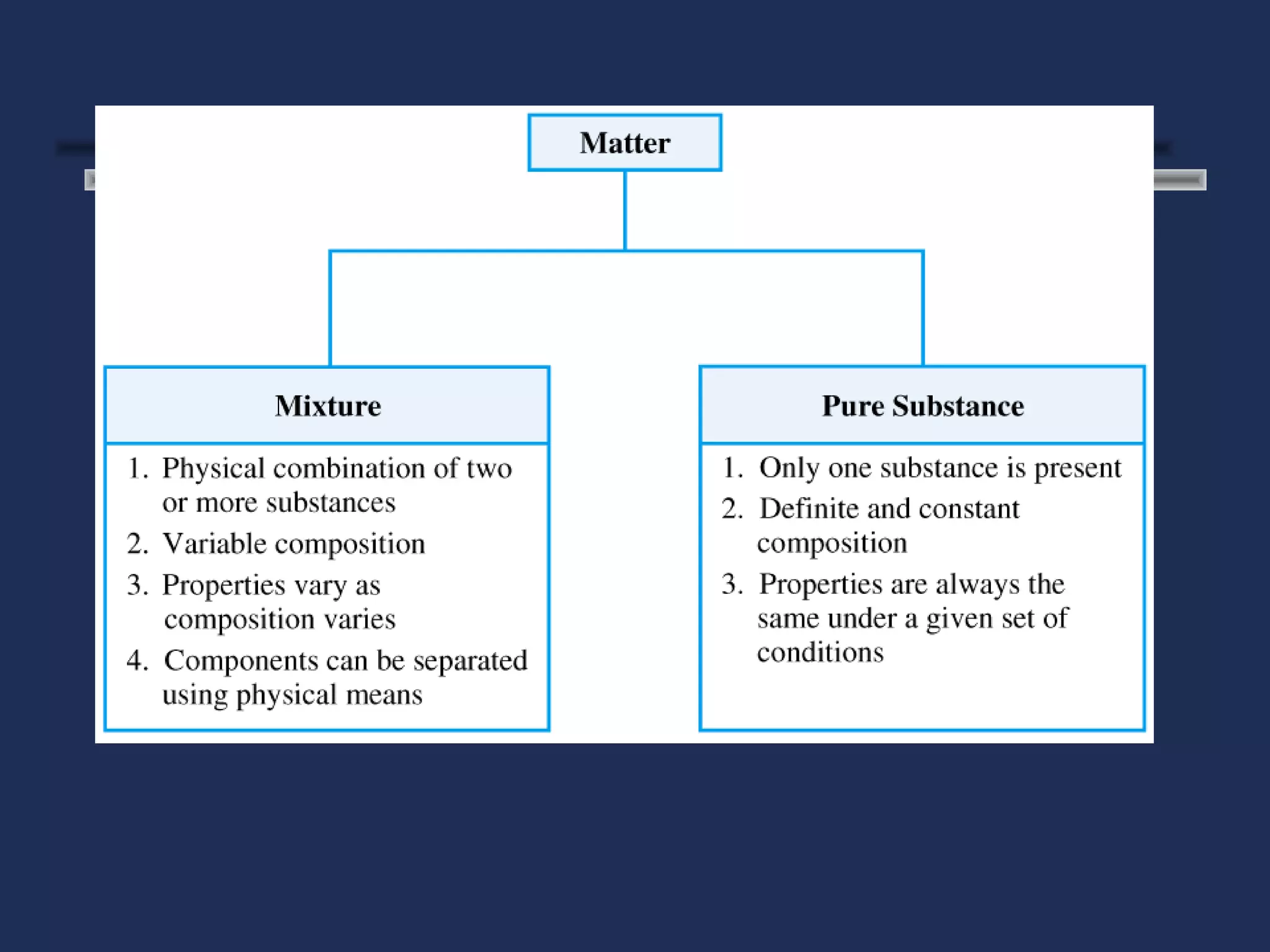
              Matter
Stuff of which all materials are
made: anything that has mass and
takes up space.
Define
Atoms- Extremely small building blocks of
   matter
 All matter is composed of atoms
 Atoms cannot be broken down into smaller
   pieces by chemical means
 The smallest distinct units in a sample of
   matter
Elements are made up the same atoms.
 Elements cannot be decomposed into other
   substances.
B. Pure Substances
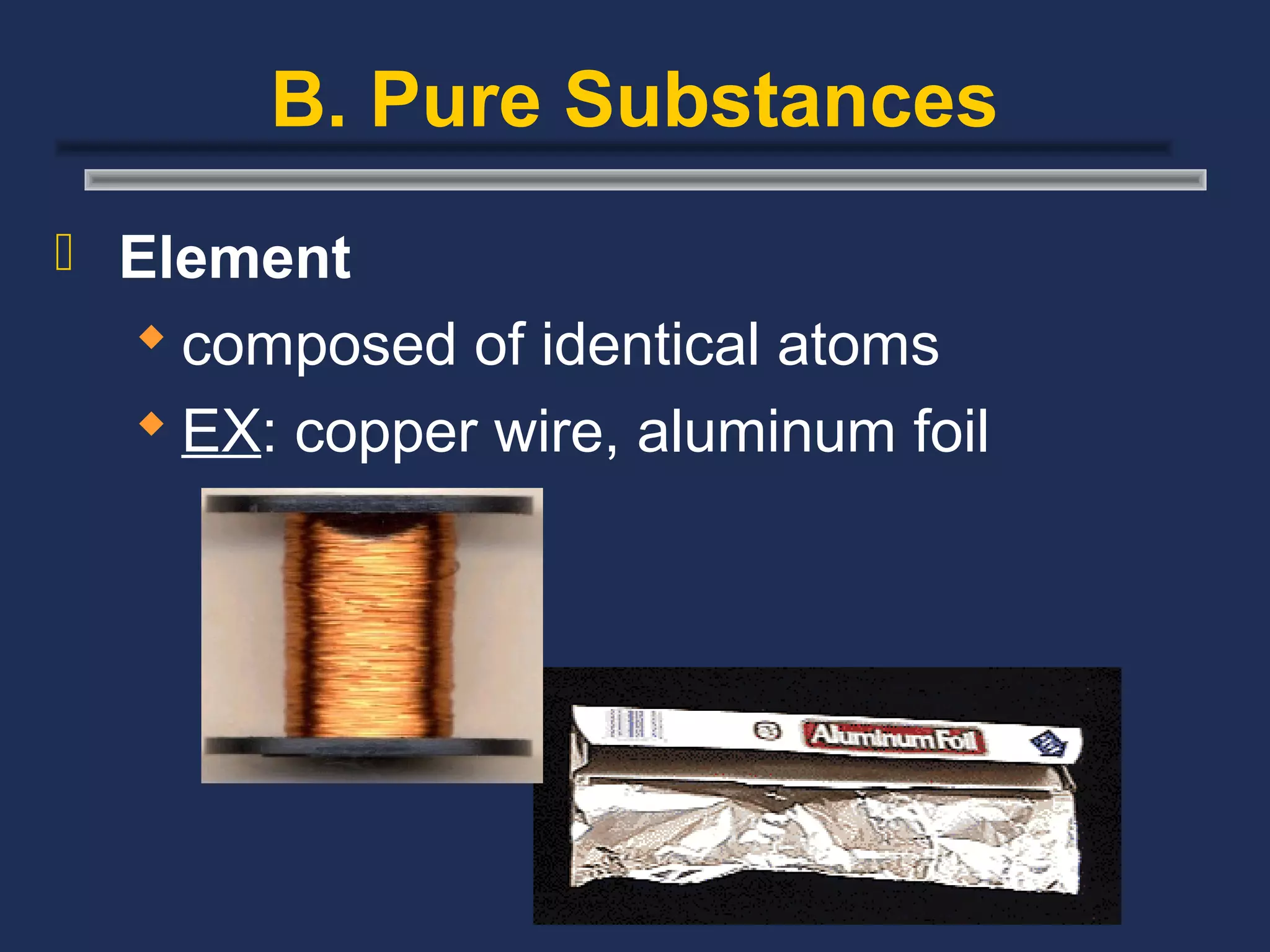
 Element
   composed of identical atoms
   EX: copper wire, aluminum foil
Define


 Molecule – a combination of 2 0r more
  atoms (same or different) that are
  covalently bonded.
 A molecule is the smallest particle of a
  substance which exhibits the physical
  and chemical characteristics of the
  substance.
 Diatomic molecules of elements :
     H2 O2 Cl2 N2 F2 Br2 I2
Define

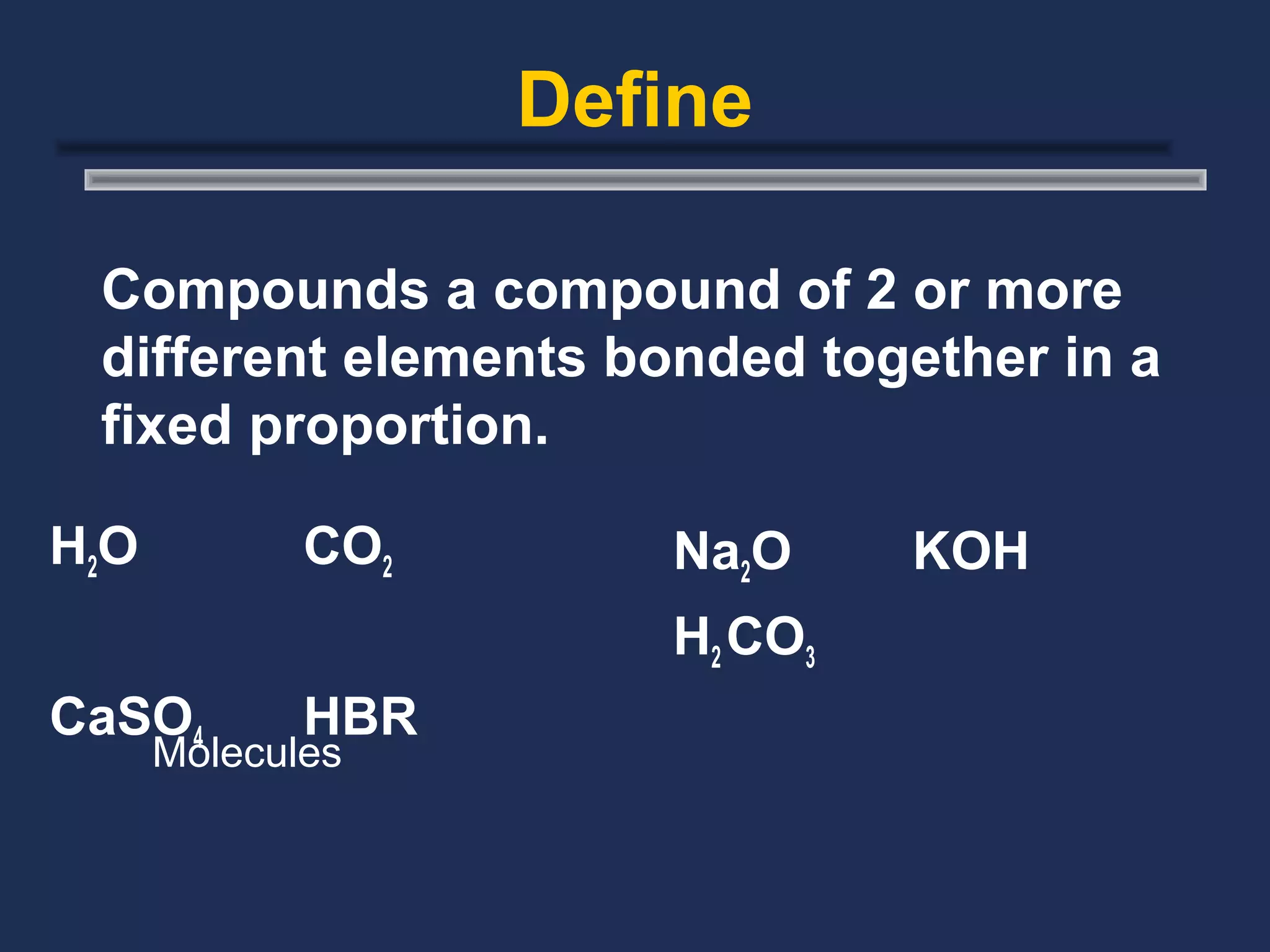
 Compounds a compound of 2 or more
 different elements bonded together in a
 fixed proportion.

H2O          CO2      Na2O     KOH
                      H2 CO3
CaSO4        HBR
      Molecules
B. Pure Substances
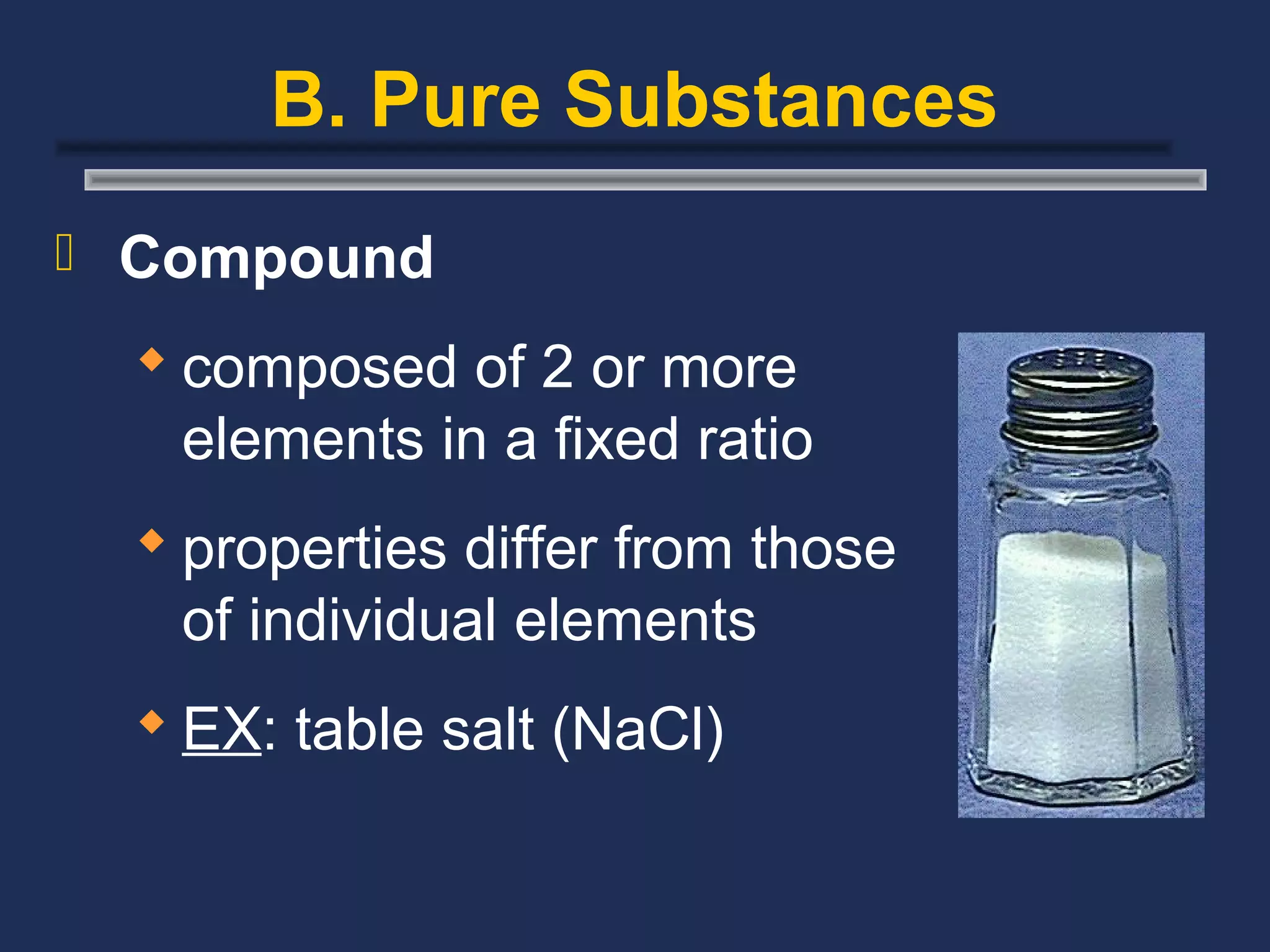
 Compound

   composed of 2 or more
    elements in a fixed ratio
   properties differ from those
    of individual elements
   EX: table salt (NaCl)
B. Pure Substances
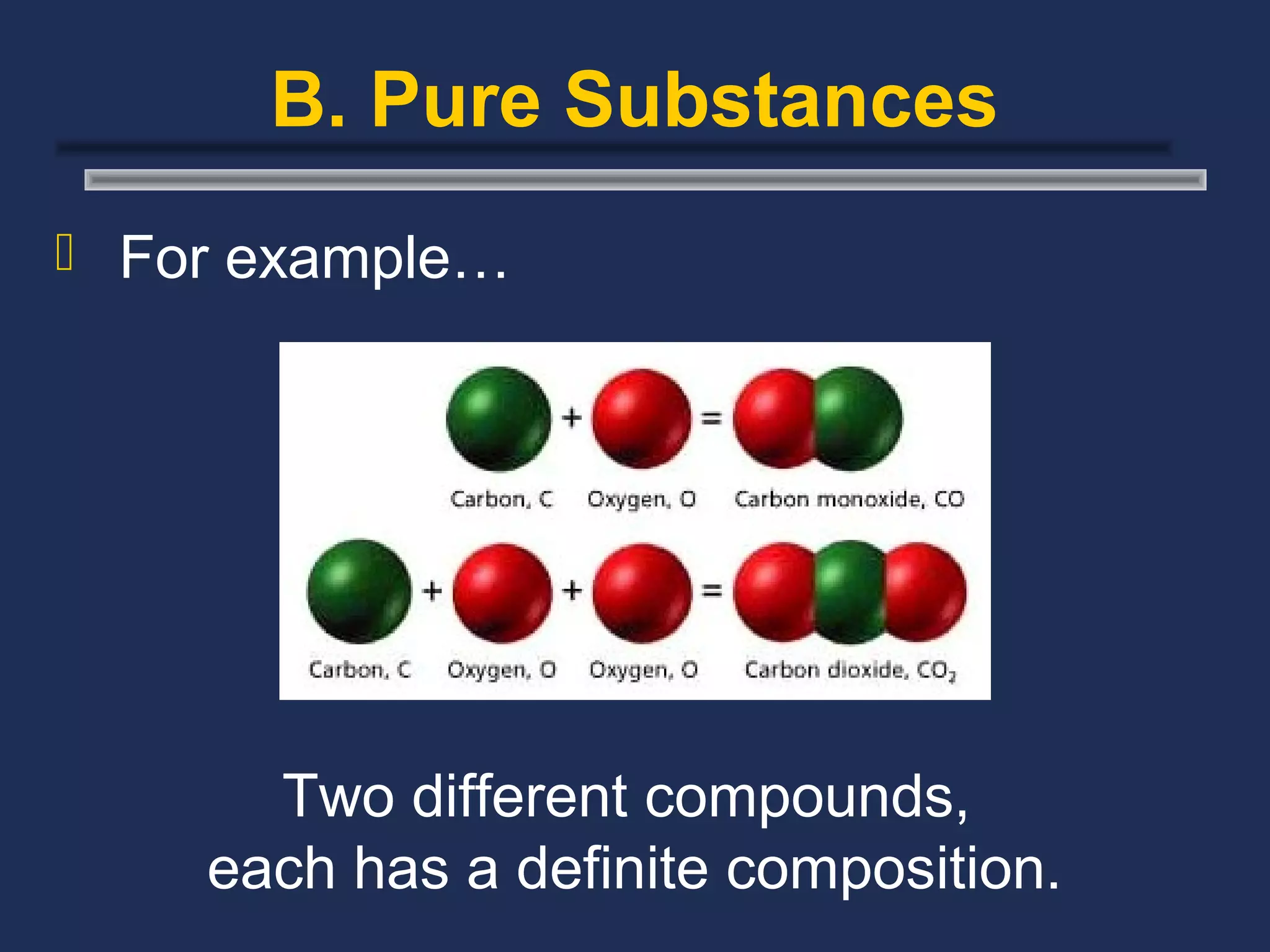
 For example…


      Two different compounds,
    each has a definite composition.
Compounds


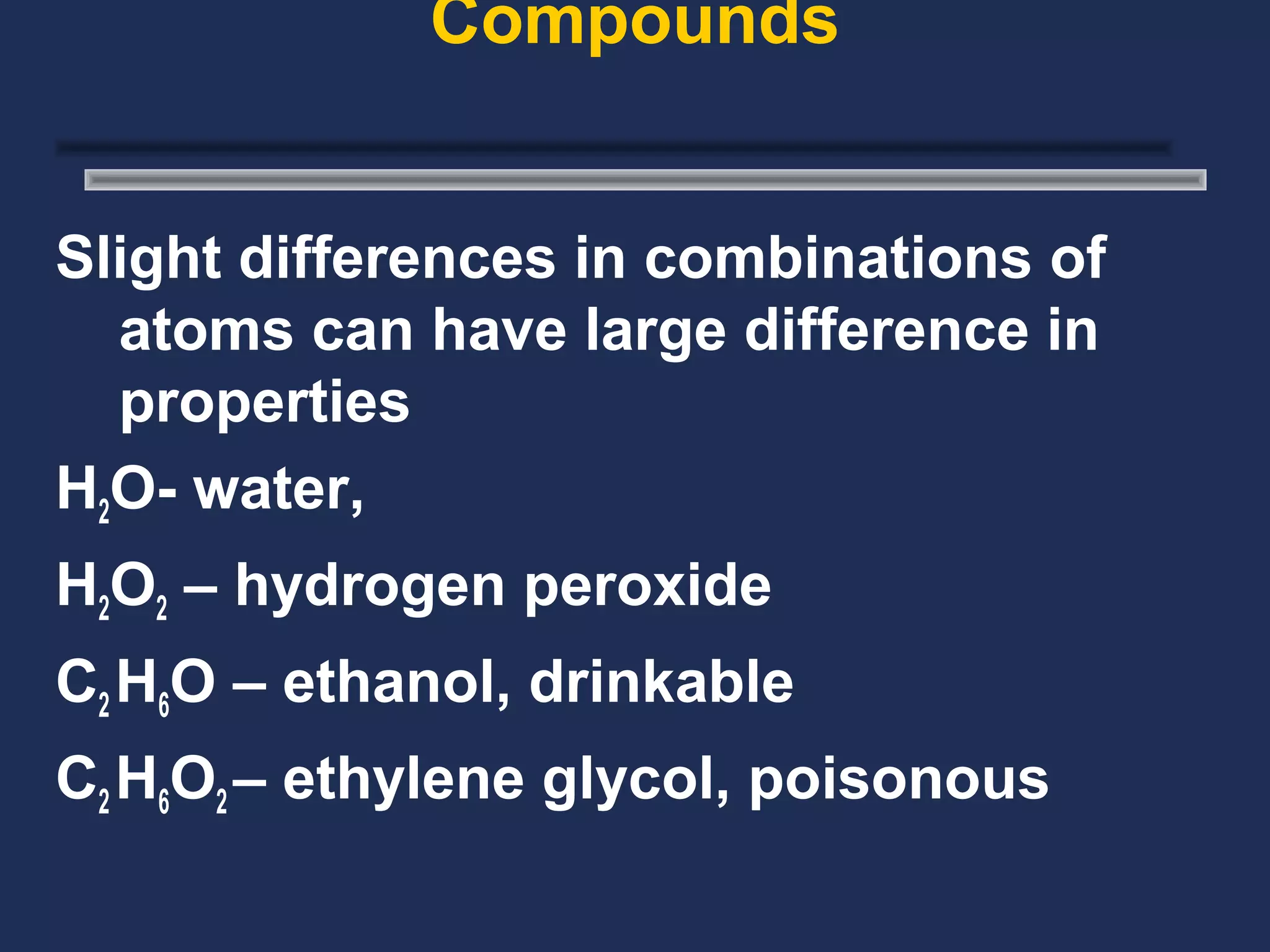
Slight differences in combinations of
  atoms can have large difference in
  properties
H2O- water,
H2O2 – hydrogen peroxide
C2 H6O – ethanol, drinkable
C2 H6O2 – ethylene glycol, poisonous
Compounds
 Law of Definite Composition

   A given compound always contains
    the same, fixed ratio of elements.

 Law of Multiple Proportions

   Elements can combine in different
    ratios to form different compounds.
Pure Substances

     Same kind of particles throughout

    Compounds                            Elements

Can be decomposed             cannot be
  into simpler                  decomposed into
  substances by                 simpler
  chemical changes,             substances by
  always in a definite          chemical changes
  ration
Mixture
 Mixtures are two or more substance
    that are not chemically combined.
   Mixtures do not have a fixed
    composition
   Mixtures do not have constant boiling
    points or melting points
   Variable composition
   Components retain their
    characteristic properties
Mixture
 May be separated into pure
  substances by physical methods
 Mixtures of different compositions
  may have widely different properties.
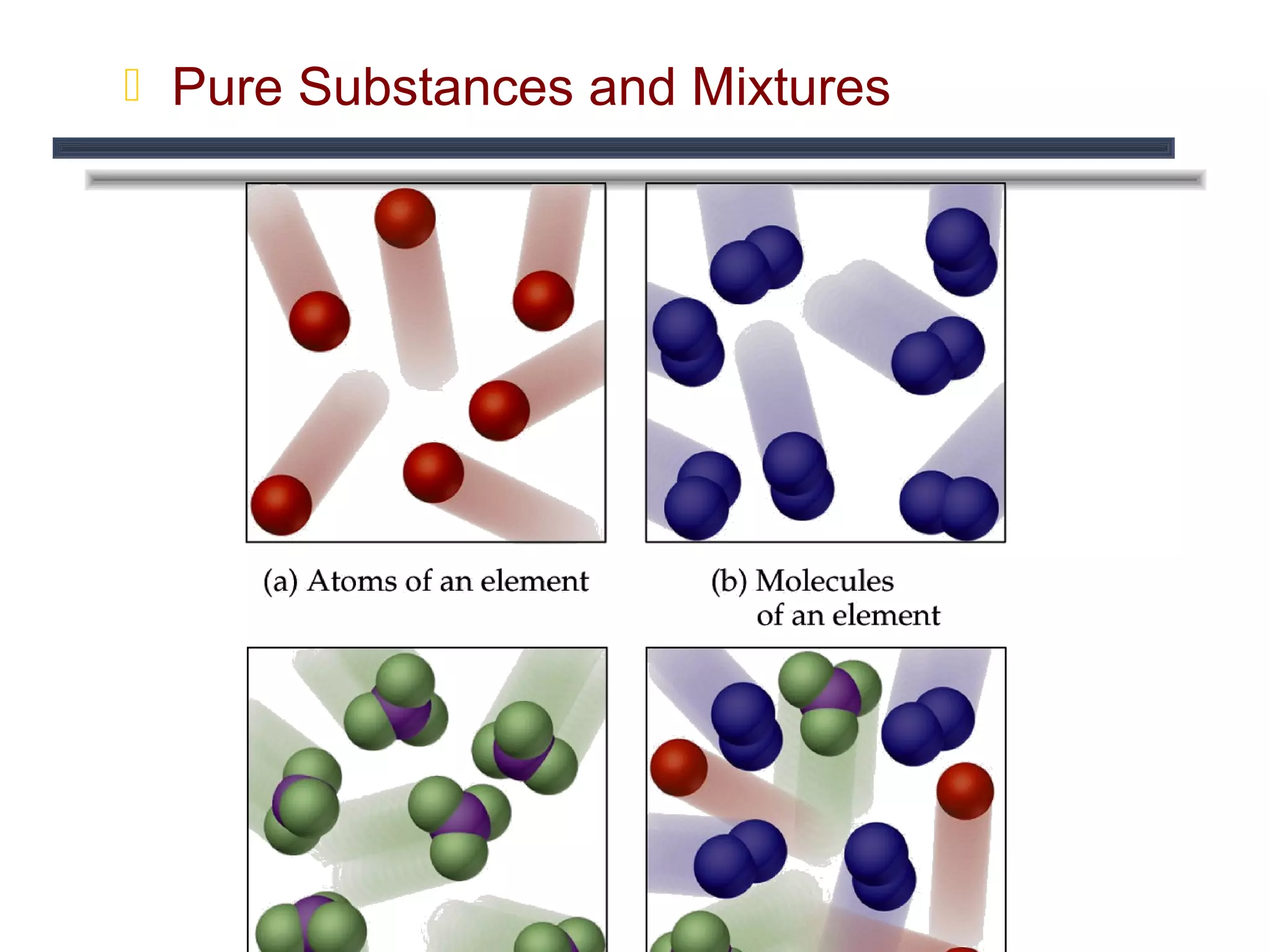
 Pure Substances and Mixtures
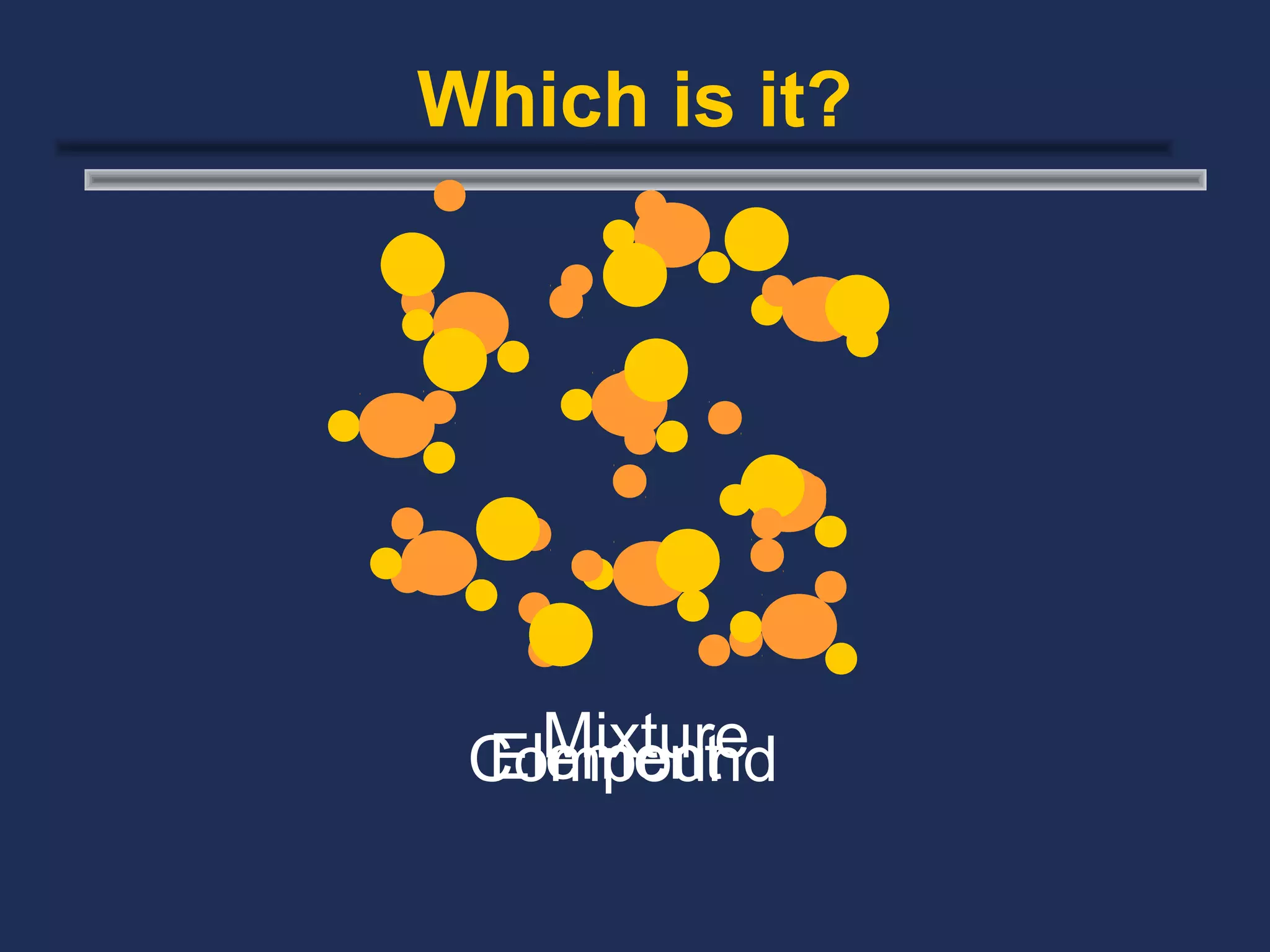
Which is it?


   Mixture
 Element
 Compound
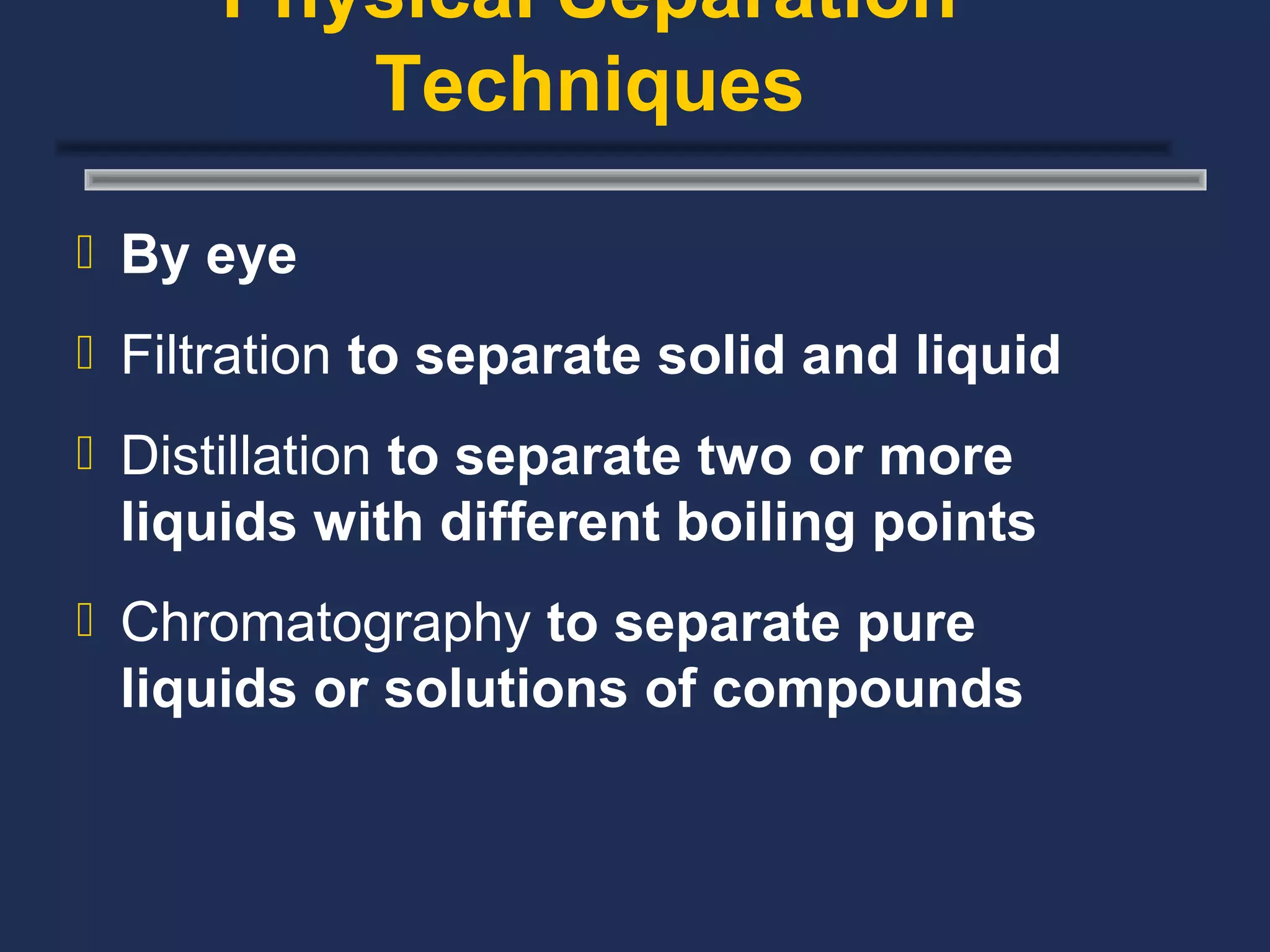
Physical Separation
         Techniques

 By eye

 Filtration to separate solid and liquid

 Distillation to separate two or more
 liquids with different boiling points
 Chromatography to separate pure
 liquids or solutions of compounds
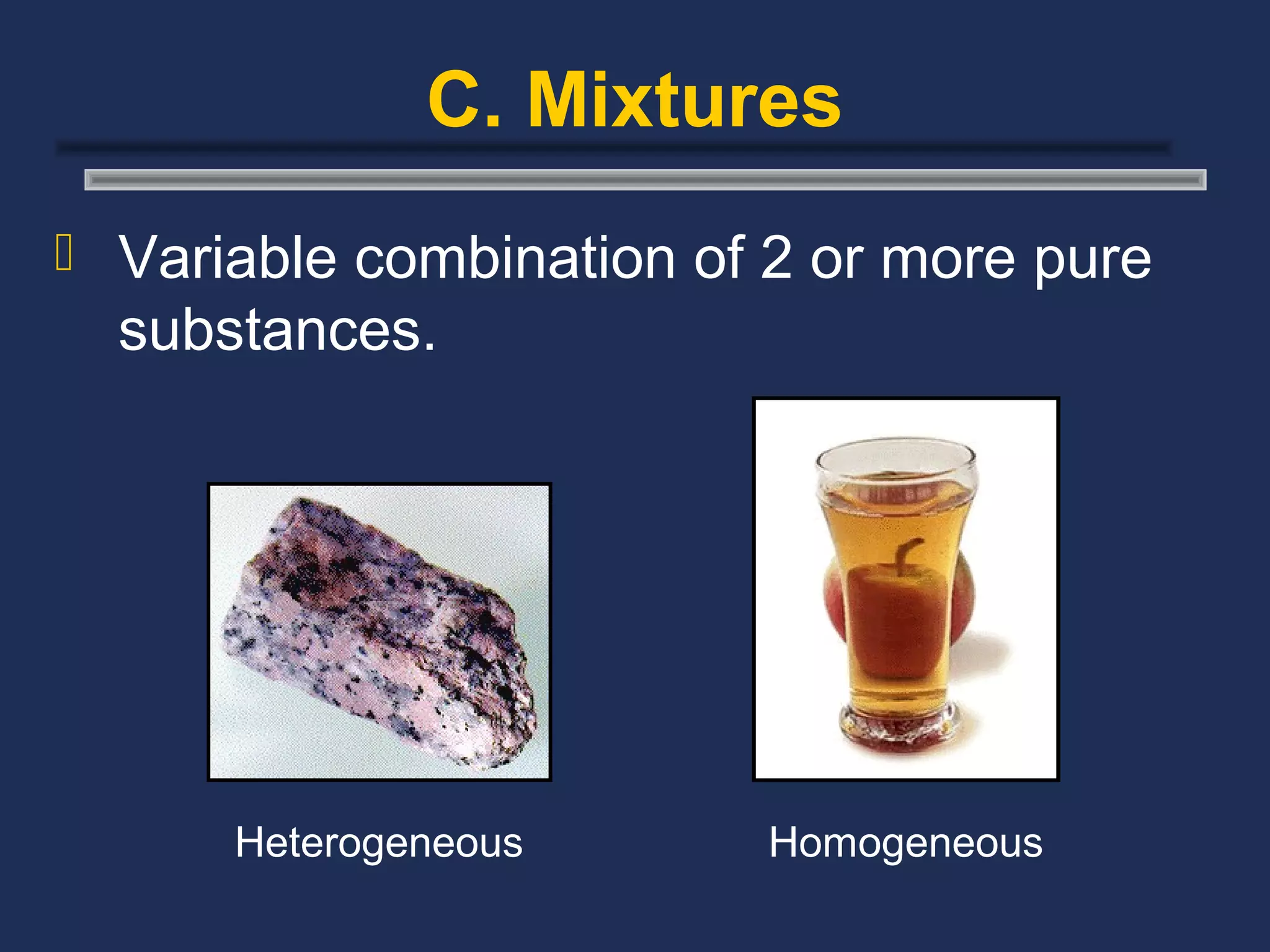
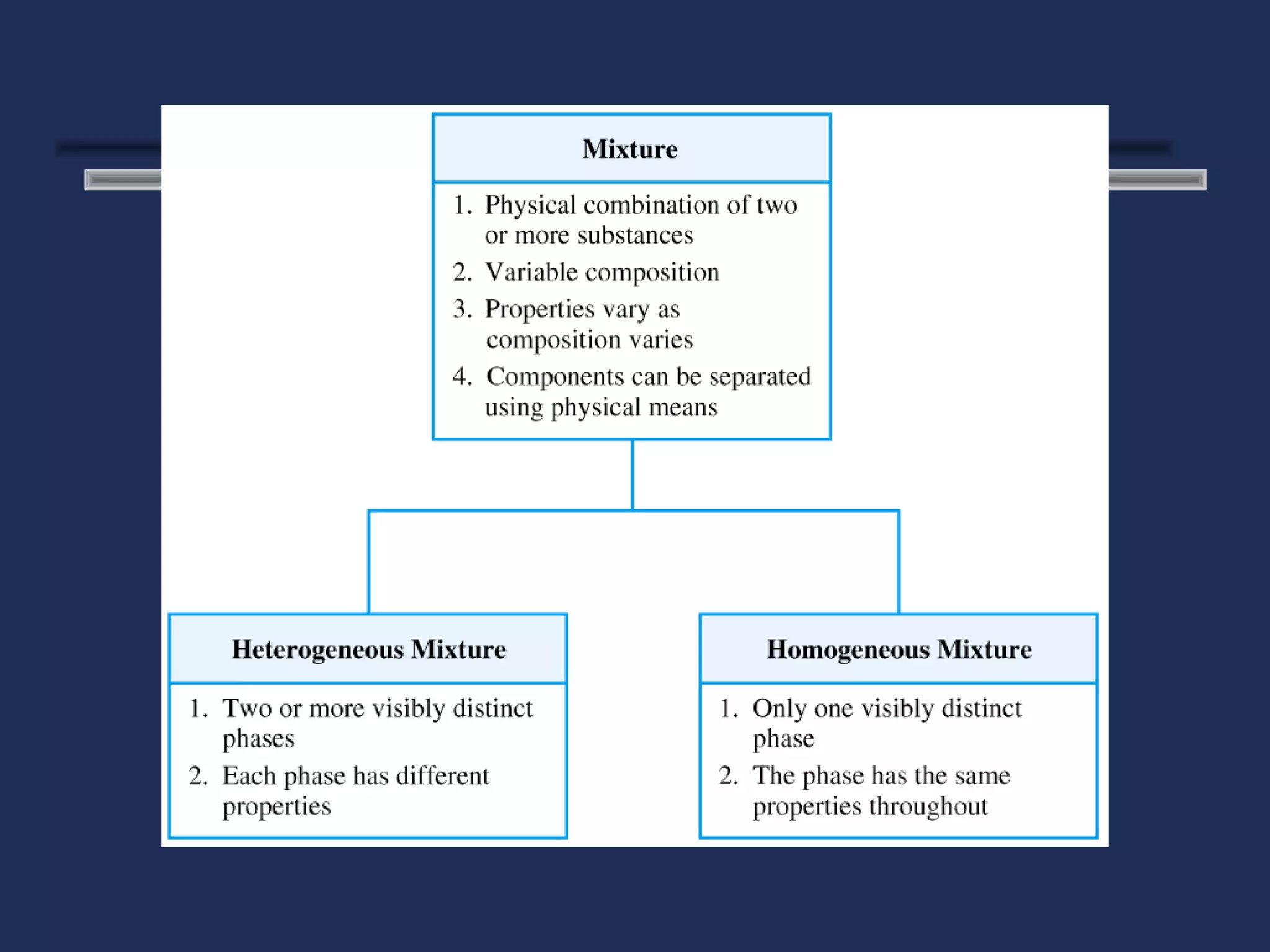
C. Mixtures
 Variable combination of 2 or more pure
  substances.


      Heterogeneous      Homogeneous
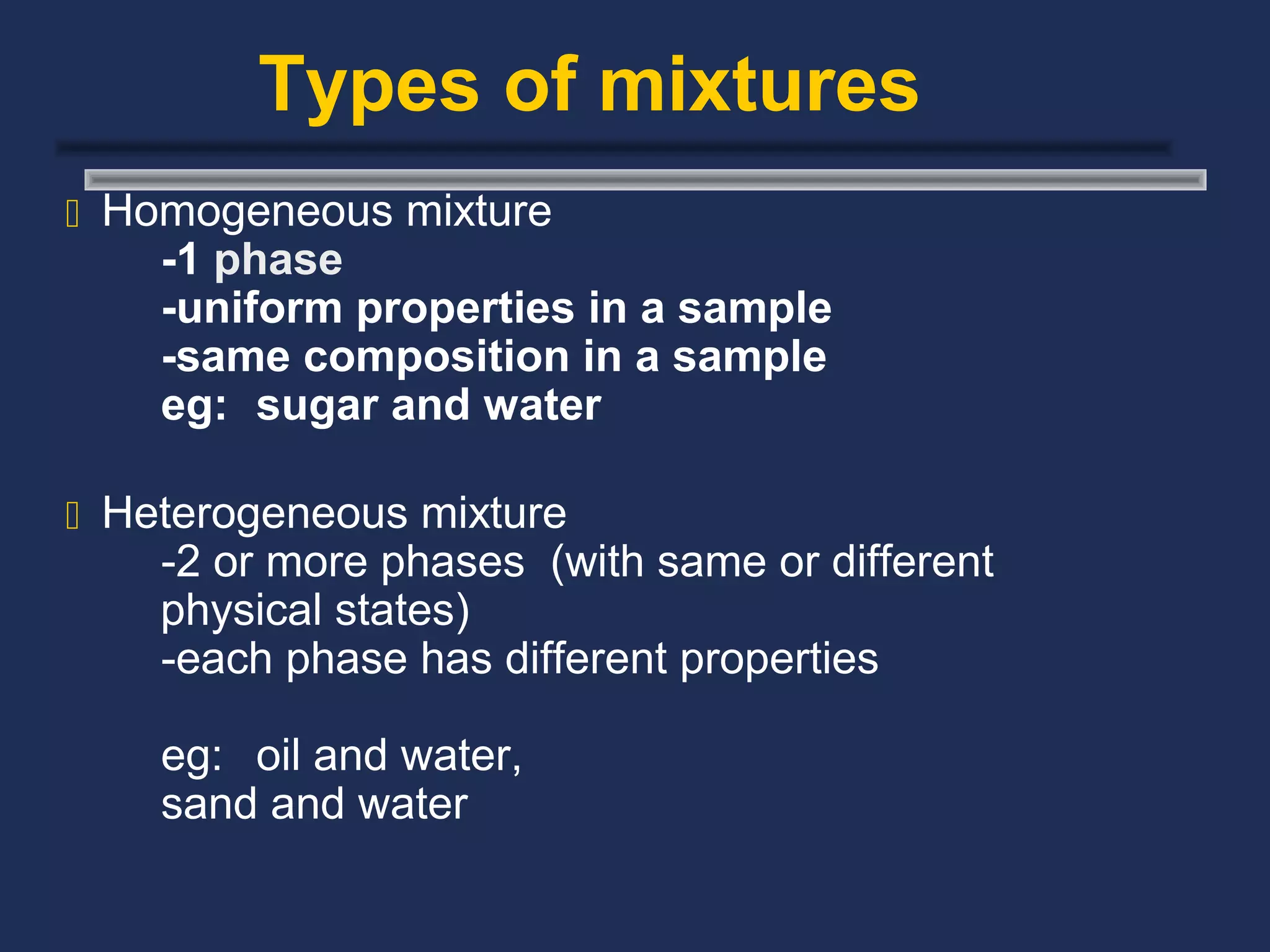
Types of mixtures
 Homogeneous mixture
    -1 phase
    -uniform properties in a sample
    -same composition in a sample
    eg: sugar and water

 Heterogeneous mixture
    -2 or more phases (with same or different
    physical states)
    -each phase has different properties

    eg: oil and water,
    sand and water
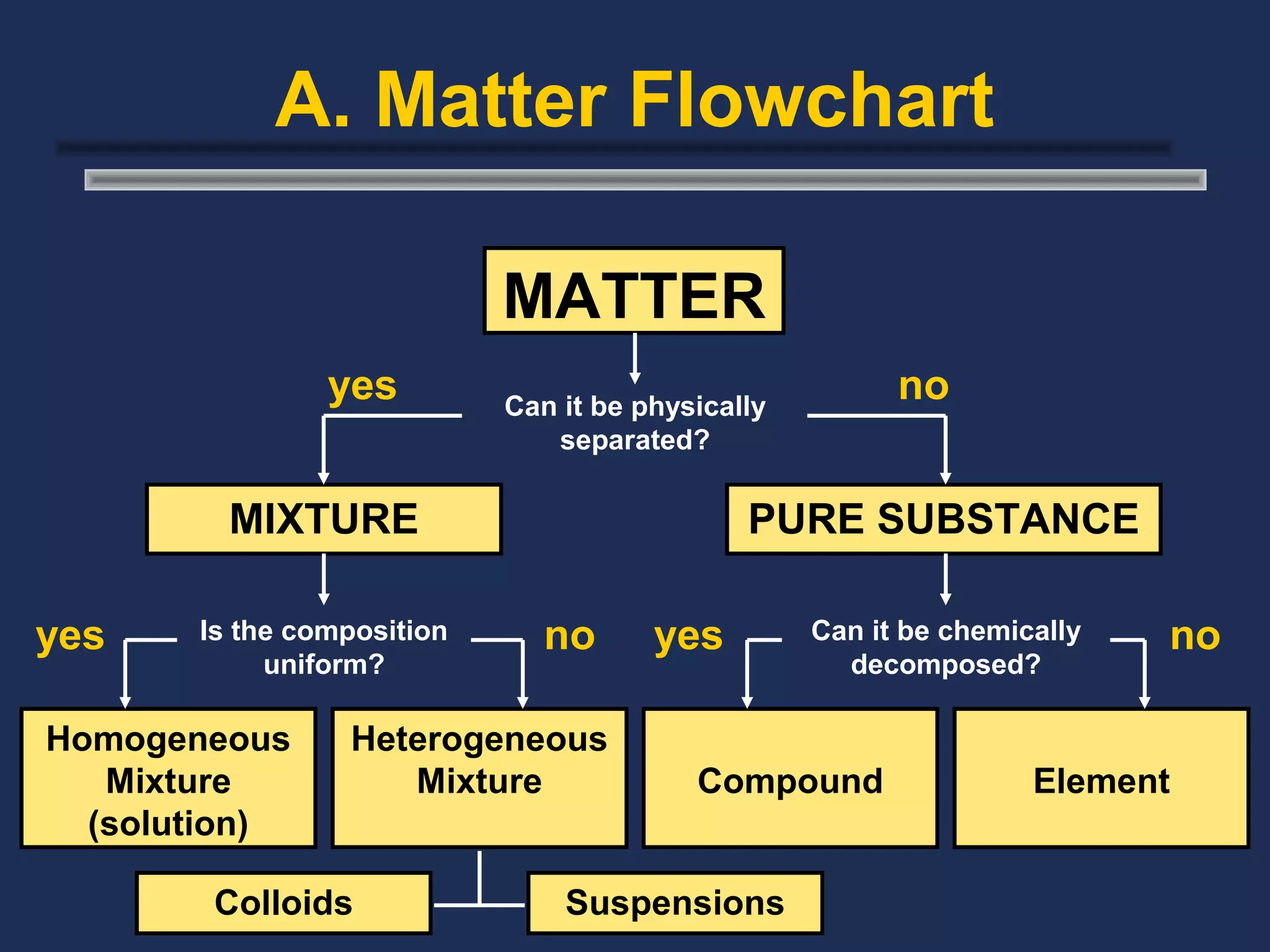
A. Matter Flowchart

                            MATTER
                yes         Can it be physically
                                                         no
                               separated?

         MIXTURE                              PURE SUBSTANCE

yes    Is the composition      no      yes         Can it be chemically   no
            uniform?                                 decomposed?

Homogeneous      Heterogeneous
   Mixture          Mixture               Compound                 Element
  (solution)

        Colloids                Suspensions
C. Mixtures
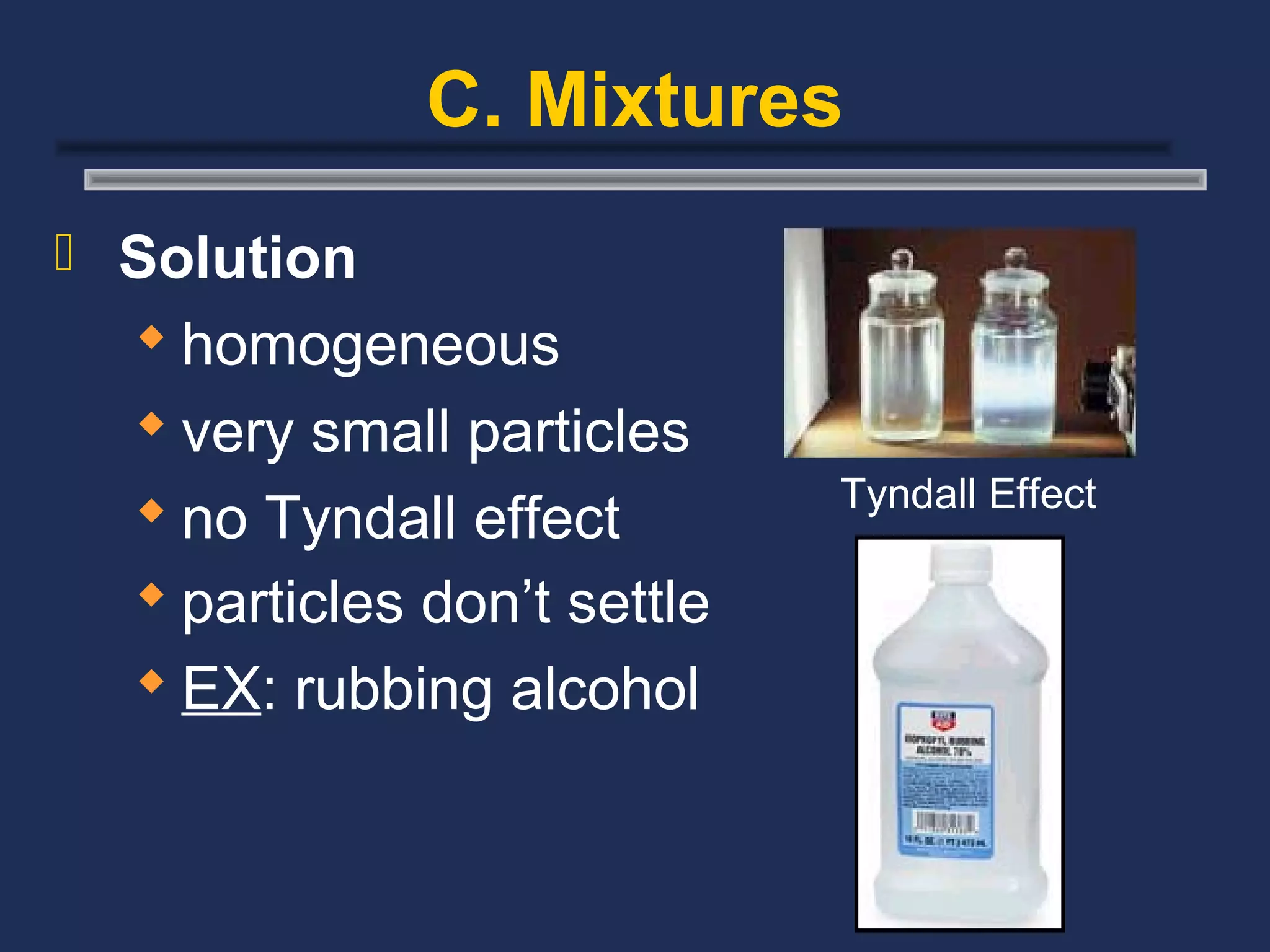
 Solution
   homogeneous
   very small particles
                             Tyndall Effect
   no Tyndall effect
   particles don’t settle
   EX: rubbing alcohol
C. Mixtures
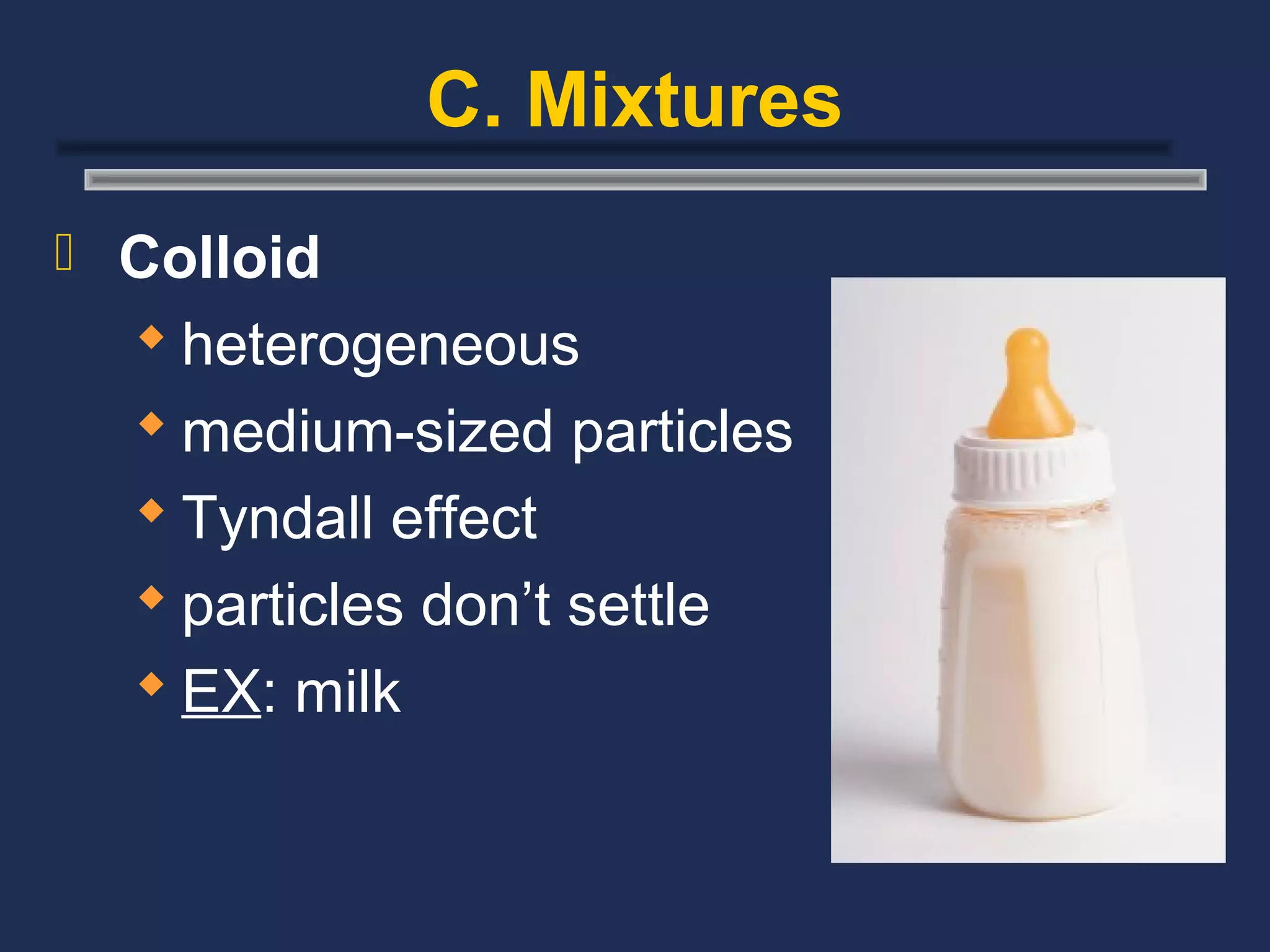
 Colloid
   heterogeneous
   medium-sized particles
   Tyndall effect
   particles don’t settle
   EX: milk
C. Mixtures
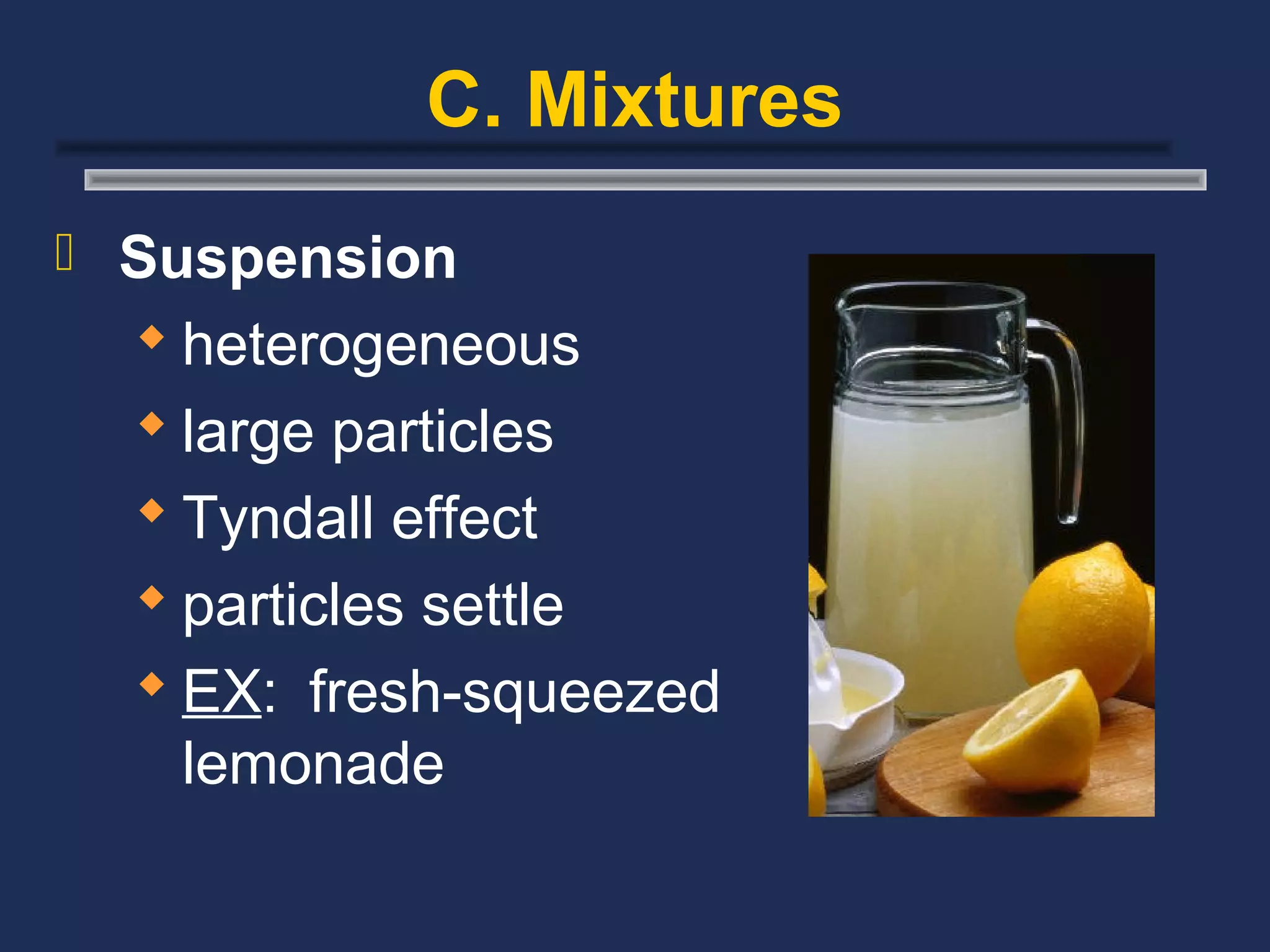
 Suspension
   heterogeneous
   large particles
   Tyndall effect
   particles settle
   EX: fresh-squeezed
    lemonade
C. Mixtures
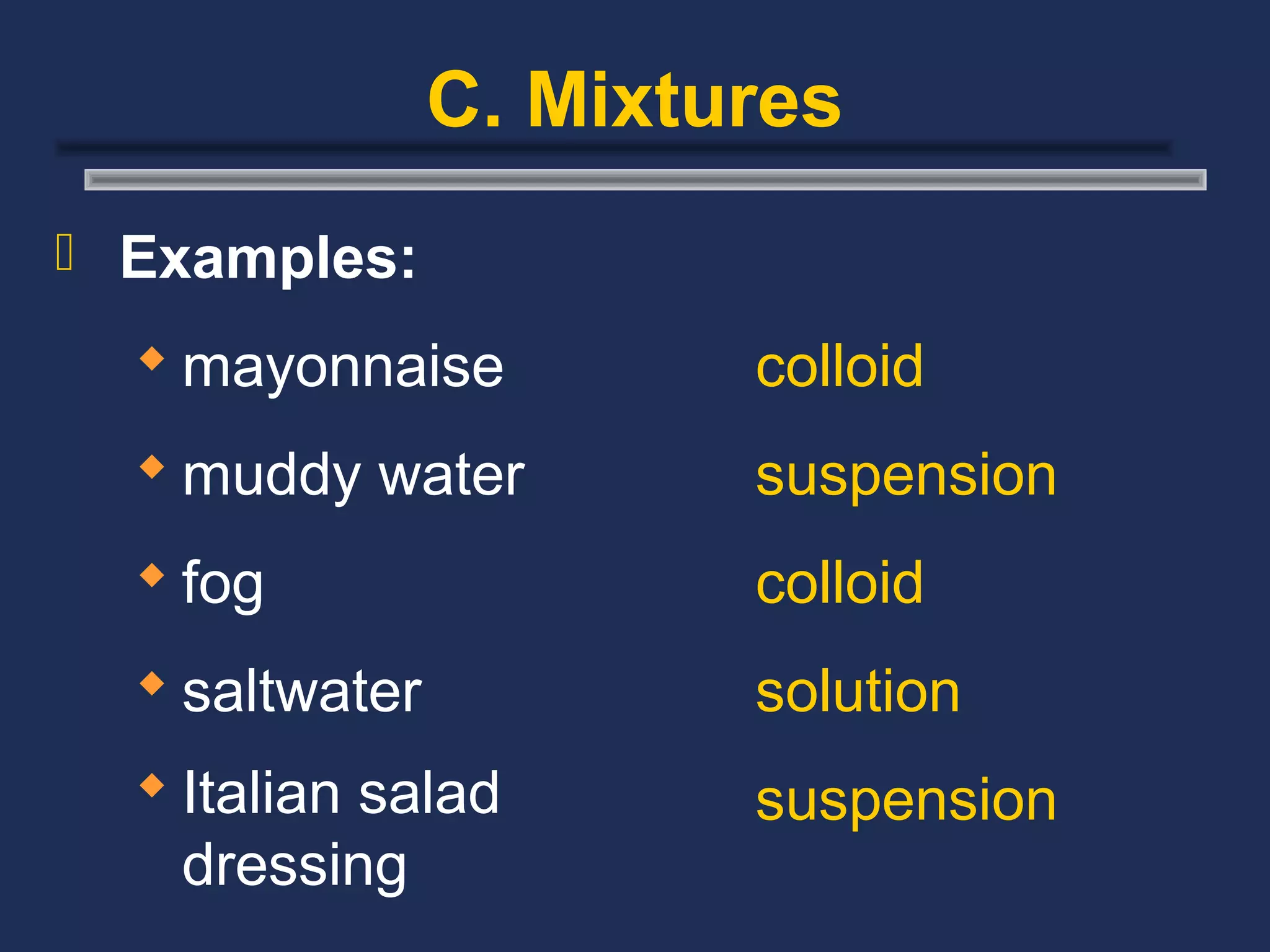
 Examples:

   mayonnaise          colloid
   muddy water         suspension
   fog                 colloid
   saltwater           solution
   Italian salad       suspension
    dressing
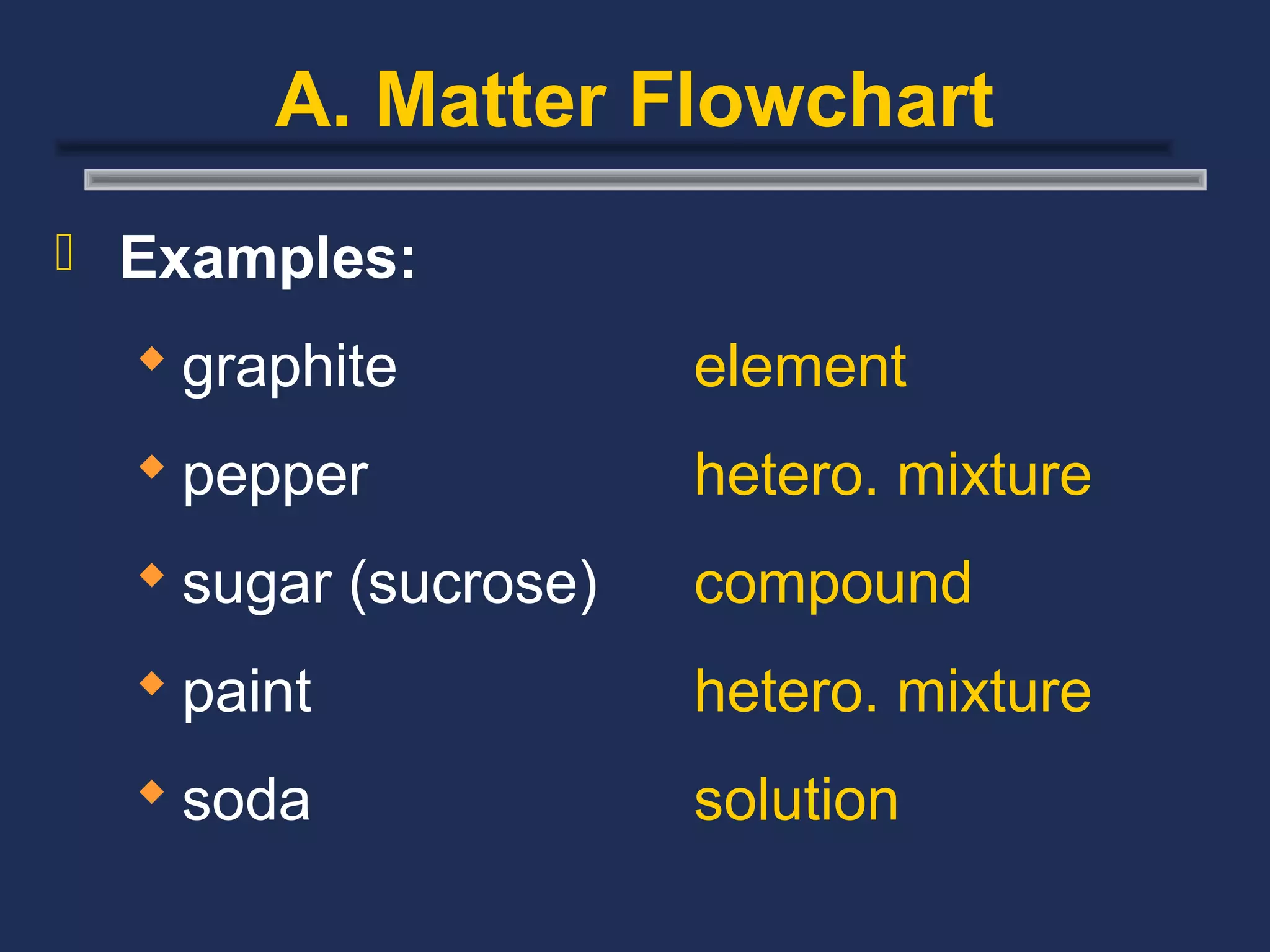
A. Matter Flowchart
 Examples:

   graphite          element
   pepper            hetero. mixture
   sugar (sucrose)   compound
   paint             hetero. mixture
   soda              solution
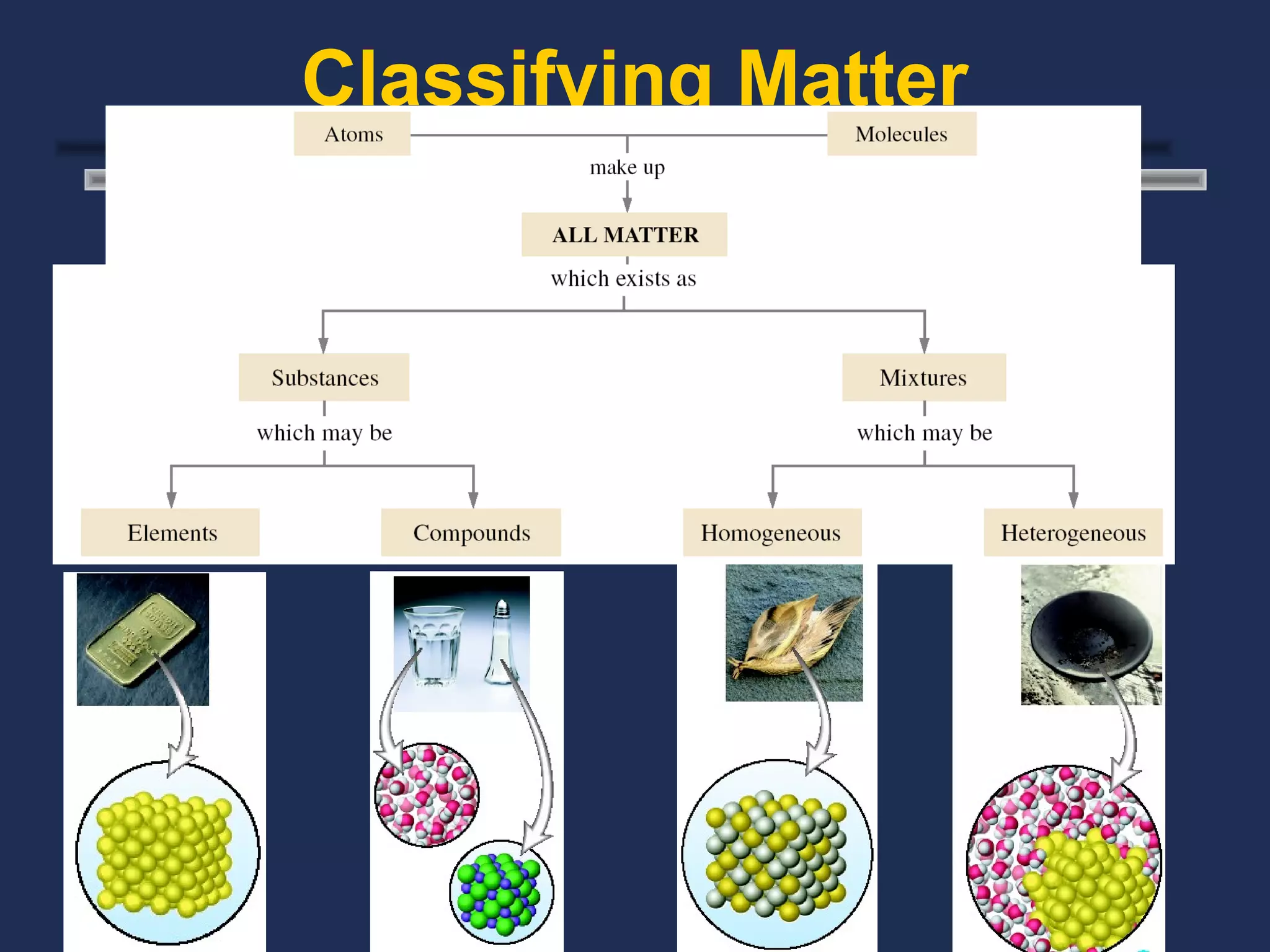
Classifying Matter
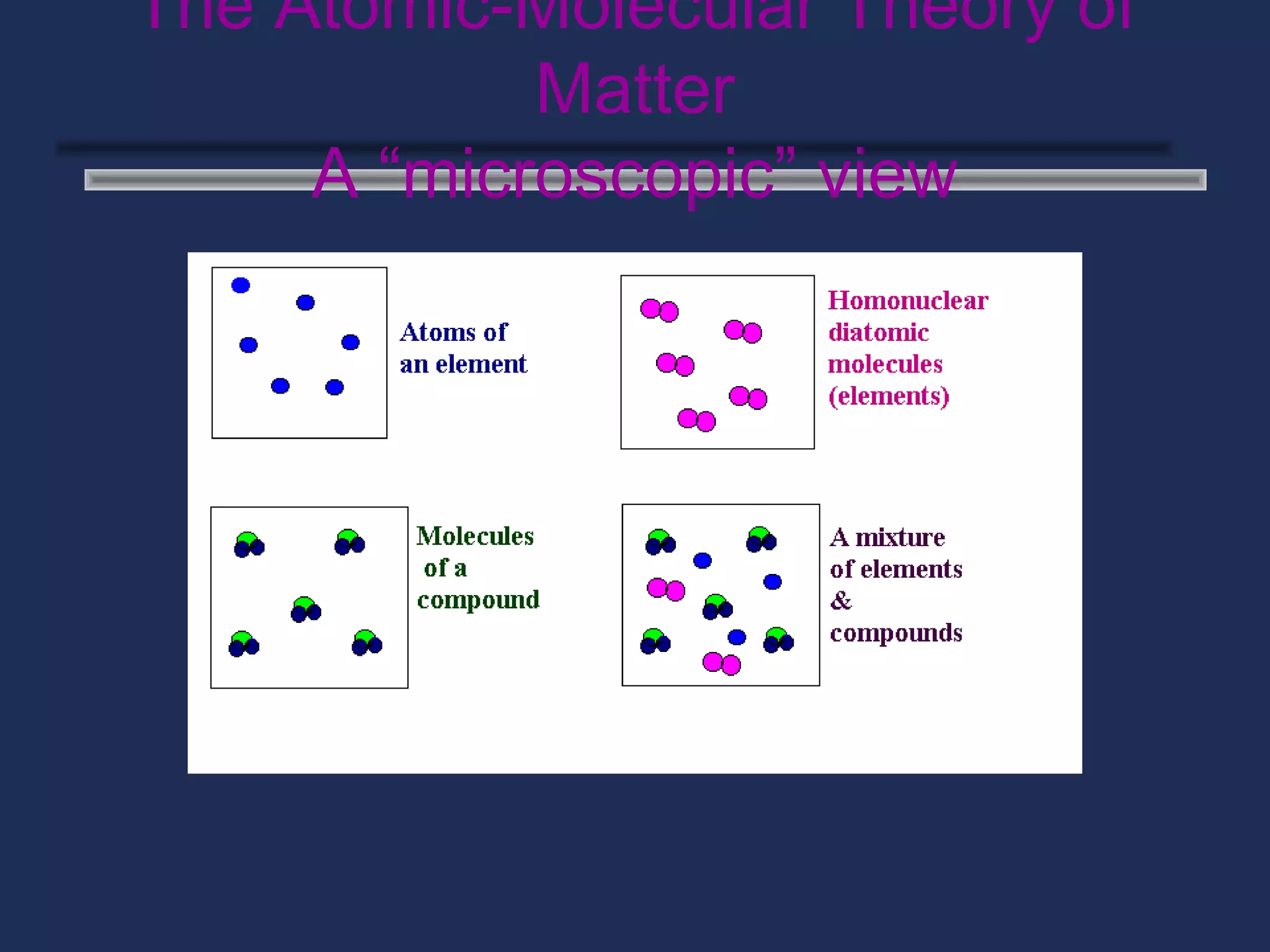
The Atomic-Molecular Theory of
            Matter
     A “microscopic” view
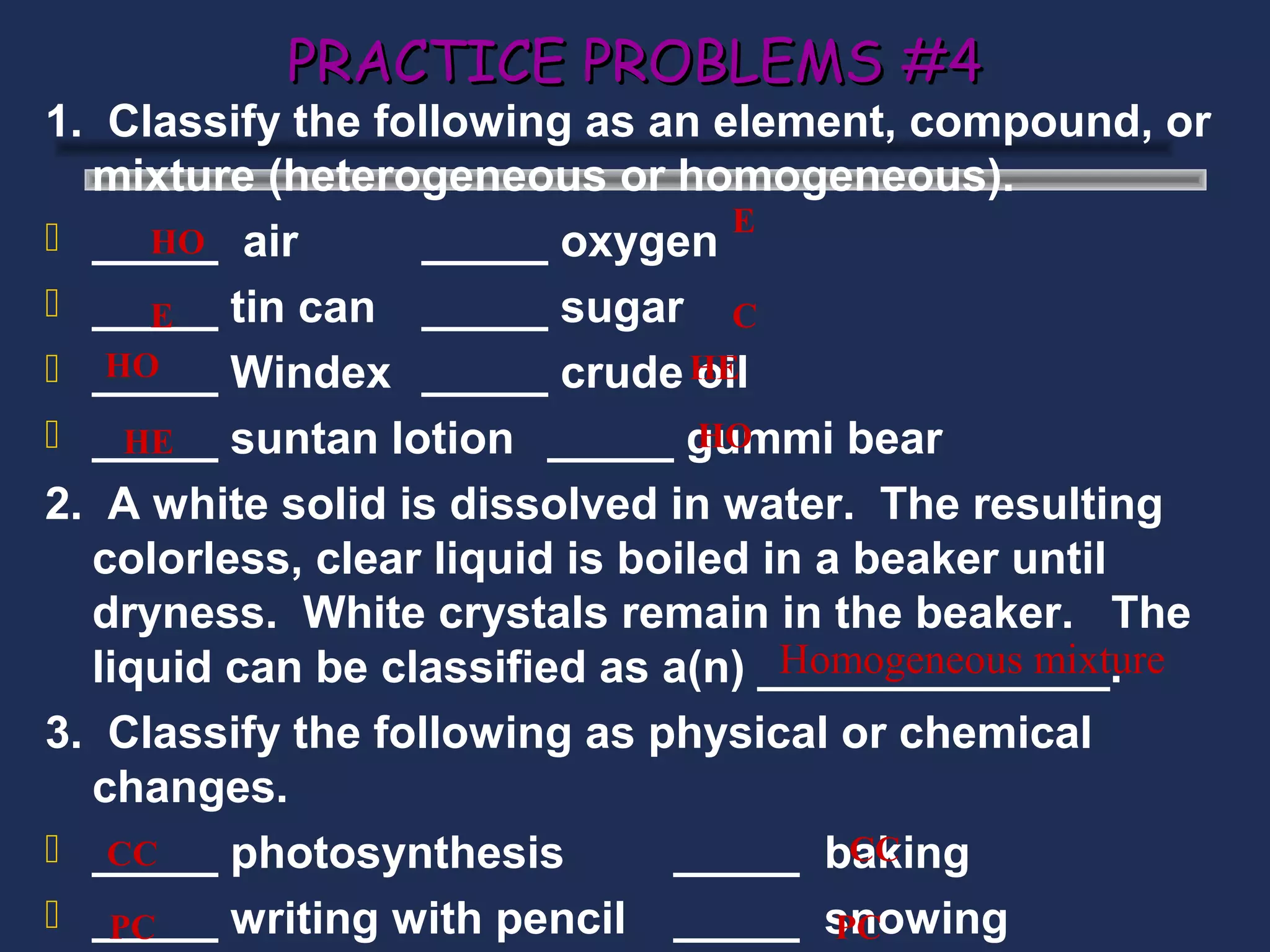
PRACTICE PROBLEMS #4
1. Classify the following as an element, compound, or
  mixture (heterogeneous or homogeneous).
                                   E
 _____ air
     HO           _____ oxygen
 _____ tin can _____ sugar C
     E
   HO
 _____ Windex _____ crude HE    oil
 _____ suntan lotion _____ gummi bear
    HE                           HO

2. A white solid is dissolved in water. The resulting
  colorless, clear liquid is boiled in a beaker until
  dryness. White crystals remain in the beaker. The
                                     Homogeneous mixture
  liquid can be classified as a(n) ______________.
3. Classify the following as physical or chemical
  changes.
 _____ photosynthesis
   CC                          _____ baking
                                         CC
 _____ writing with pencil _____ snowing
   PC                                   PC
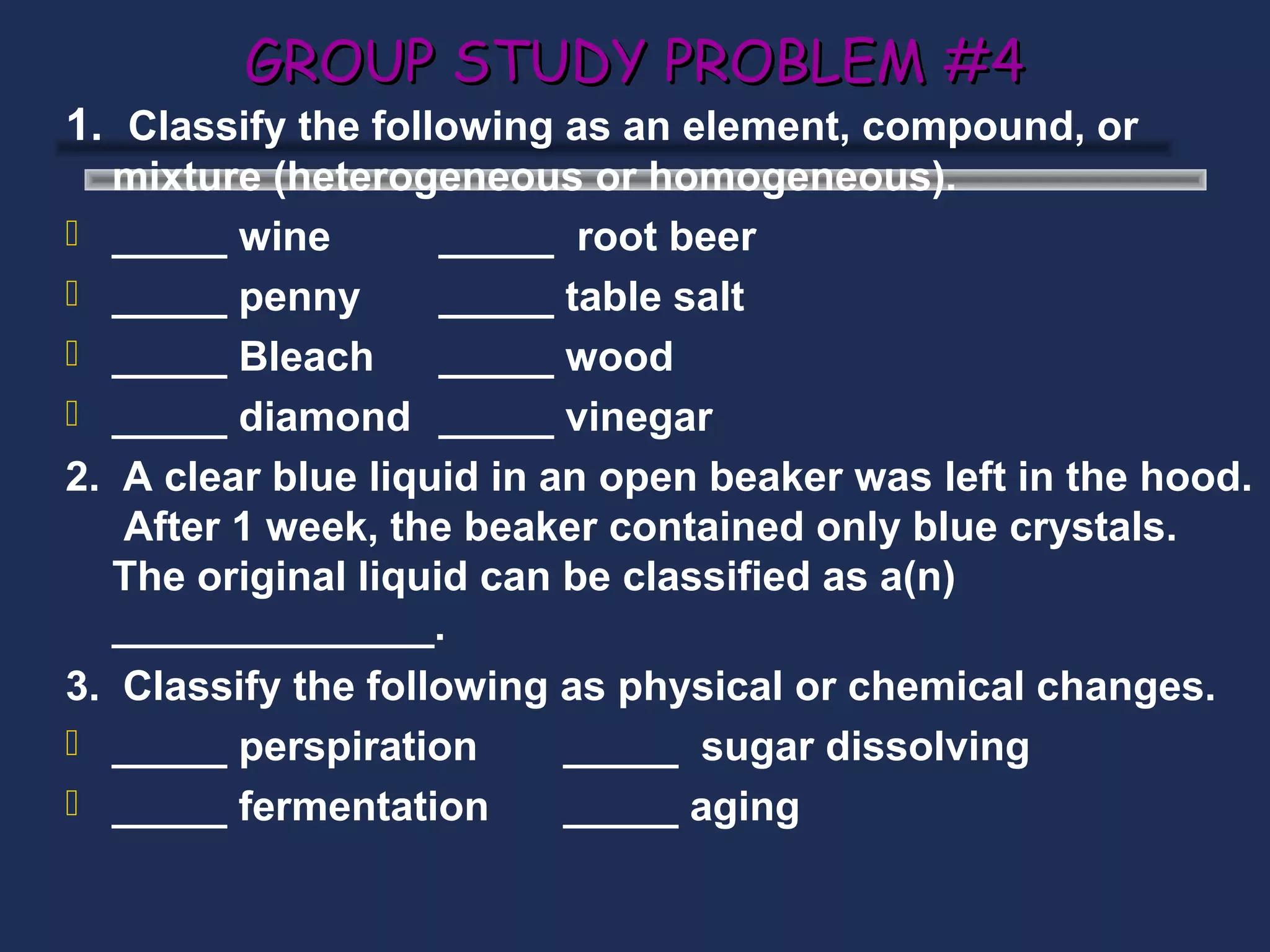
GROUP STUDY PROBLEM #4
1. Classify the following as an element, compound, or
   mixture (heterogeneous or homogeneous).
 _____ wine         _____ root beer
 _____ penny        _____ table salt
 _____ Bleach       _____ wood
 _____ diamond _____ vinegar
2. A clear blue liquid in an open beaker was left in the hood.
   After 1 week, the beaker contained only blue crystals.
   The original liquid can be classified as a(n)
   ______________.
3. Classify the following as physical or chemical changes.
 _____ perspiration       _____ sugar dissolving
 _____ fermentation       _____ aging

Compoundsmixtures versi lain

  • 1.
    Classification of Matter Matter Stuff of which all materials are made: anything that has mass and takes up space.
  • 2.
    Define Atoms- Extremely smallbuilding blocks of matter  All matter is composed of atoms  Atoms cannot be broken down into smaller pieces by chemical means  The smallest distinct units in a sample of matter Elements are made up the same atoms.  Elements cannot be decomposed into other substances.
  • 3.
    B. Pure Substances Element  composed of identical atoms  EX: copper wire, aluminum foil
  • 4.
    Define  Molecule –a combination of 2 0r more atoms (same or different) that are covalently bonded.  A molecule is the smallest particle of a substance which exhibits the physical and chemical characteristics of the substance.  Diatomic molecules of elements : H2 O2 Cl2 N2 F2 Br2 I2
  • 5.
    Define Compounds acompound of 2 or more different elements bonded together in a fixed proportion. H2O CO2 Na2O KOH H2 CO3 CaSO4 HBR Molecules
  • 6.
    B. Pure Substances Compound  composed of 2 or more elements in a fixed ratio  properties differ from those of individual elements  EX: table salt (NaCl)
  • 7.
    B. Pure Substances For example… Two different compounds, each has a definite composition.
  • 8.
    Compounds Slight differences incombinations of atoms can have large difference in properties H2O- water, H2O2 – hydrogen peroxide C2 H6O – ethanol, drinkable C2 H6O2 – ethylene glycol, poisonous
  • 9.
    Compounds  Law ofDefinite Composition  A given compound always contains the same, fixed ratio of elements.  Law of Multiple Proportions  Elements can combine in different ratios to form different compounds.
  • 10.
    Pure Substances Same kind of particles throughout Compounds Elements Can be decomposed cannot be into simpler decomposed into substances by simpler chemical changes, substances by always in a definite chemical changes ration
  • 11.
    Mixture  Mixtures aretwo or more substance that are not chemically combined.  Mixtures do not have a fixed composition  Mixtures do not have constant boiling points or melting points  Variable composition  Components retain their characteristic properties
  • 12.
    Mixture  May beseparated into pure substances by physical methods  Mixtures of different compositions may have widely different properties.
  • 13.
     Pure Substancesand Mixtures
  • 14.
    Which is it? Mixture Element Compound
  • 15.
    Physical Separation Techniques  By eye  Filtration to separate solid and liquid  Distillation to separate two or more liquids with different boiling points  Chromatography to separate pure liquids or solutions of compounds
  • 16.
    C. Mixtures  Variablecombination of 2 or more pure substances. Heterogeneous Homogeneous
  • 19.
    Types of mixtures Homogeneous mixture -1 phase -uniform properties in a sample -same composition in a sample eg: sugar and water  Heterogeneous mixture -2 or more phases (with same or different physical states) -each phase has different properties eg: oil and water, sand and water
  • 20.
    A. Matter Flowchart MATTER yes Can it be physically no separated? MIXTURE PURE SUBSTANCE yes Is the composition no yes Can it be chemically no uniform? decomposed? Homogeneous Heterogeneous Mixture Mixture Compound Element (solution) Colloids Suspensions
  • 21.
    C. Mixtures  Solution  homogeneous  very small particles Tyndall Effect  no Tyndall effect  particles don’t settle  EX: rubbing alcohol
  • 22.
    C. Mixtures  Colloid  heterogeneous  medium-sized particles  Tyndall effect  particles don’t settle  EX: milk
  • 23.
    C. Mixtures  Suspension  heterogeneous  large particles  Tyndall effect  particles settle  EX: fresh-squeezed lemonade
  • 24.
    C. Mixtures  Examples:  mayonnaise colloid  muddy water suspension  fog colloid  saltwater solution  Italian salad suspension dressing
  • 25.
    A. Matter Flowchart Examples:  graphite element  pepper hetero. mixture  sugar (sucrose) compound  paint hetero. mixture  soda solution
  • 26.
  • 27.
    The Atomic-Molecular Theoryof Matter A “microscopic” view
  • 28.
    PRACTICE PROBLEMS #4 1.Classify the following as an element, compound, or mixture (heterogeneous or homogeneous). E  _____ air HO _____ oxygen  _____ tin can _____ sugar C E HO  _____ Windex _____ crude HE oil  _____ suntan lotion _____ gummi bear HE HO 2. A white solid is dissolved in water. The resulting colorless, clear liquid is boiled in a beaker until dryness. White crystals remain in the beaker. The Homogeneous mixture liquid can be classified as a(n) ______________. 3. Classify the following as physical or chemical changes.  _____ photosynthesis CC _____ baking CC  _____ writing with pencil _____ snowing PC PC
  • 29.
    GROUP STUDY PROBLEM#4 1. Classify the following as an element, compound, or mixture (heterogeneous or homogeneous).  _____ wine _____ root beer  _____ penny _____ table salt  _____ Bleach _____ wood  _____ diamond _____ vinegar 2. A clear blue liquid in an open beaker was left in the hood. After 1 week, the beaker contained only blue crystals. The original liquid can be classified as a(n) ______________. 3. Classify the following as physical or chemical changes.  _____ perspiration _____ sugar dissolving  _____ fermentation _____ aging