CLASSIFICATION
OF MATTER
CHEMICAL COMPOSITION OF
MATTER
PURE SUBSTANCE
A sample of matter, either an
element or a compound, that consists of
only one component with definite
physical and chemical properties and a
definite composition.
CHEMICAL COMPOSITION OF
MATTER
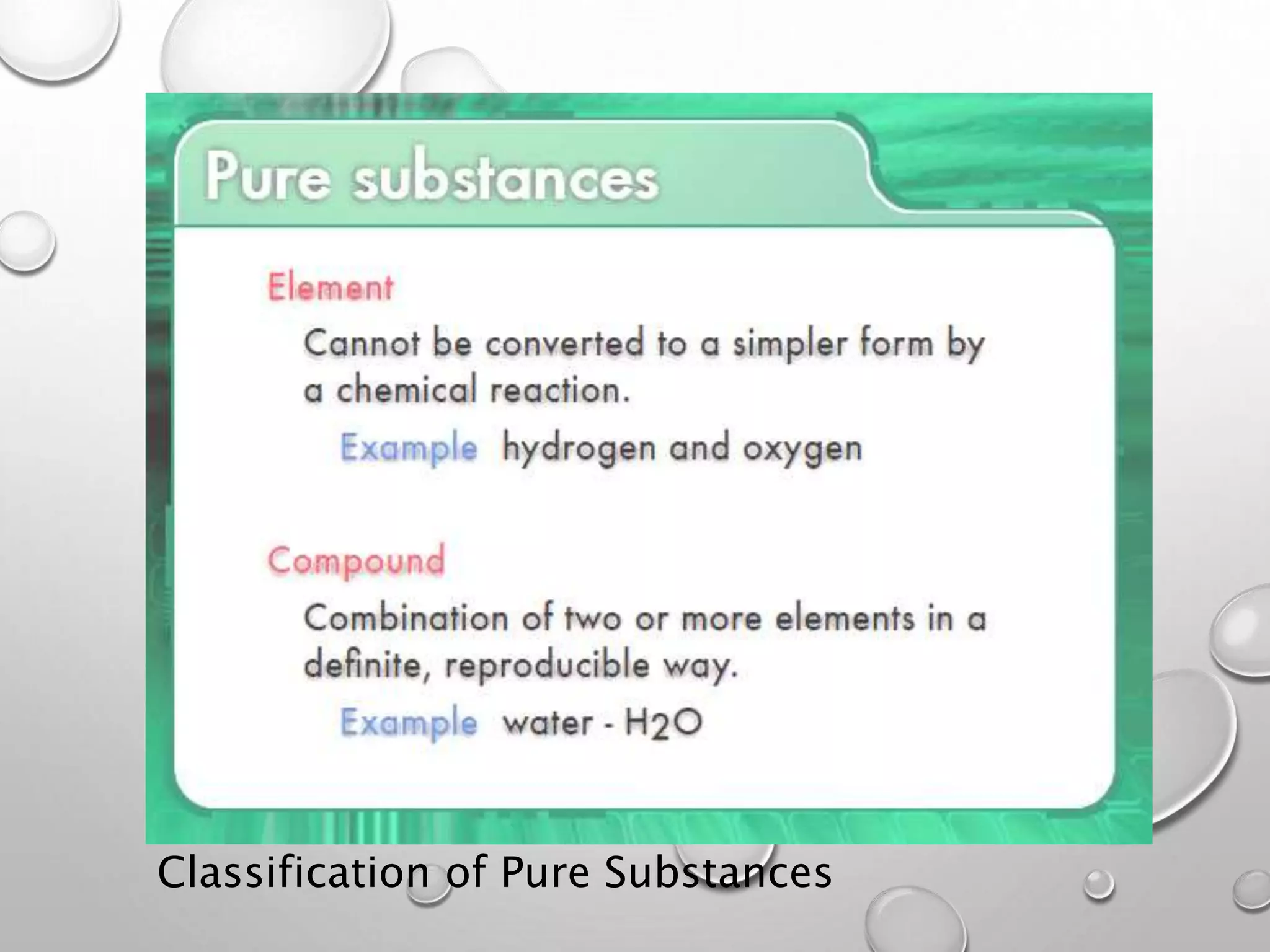
Classification of Pure Substances
CHEMICAL COMPOSITION OF
MATTER
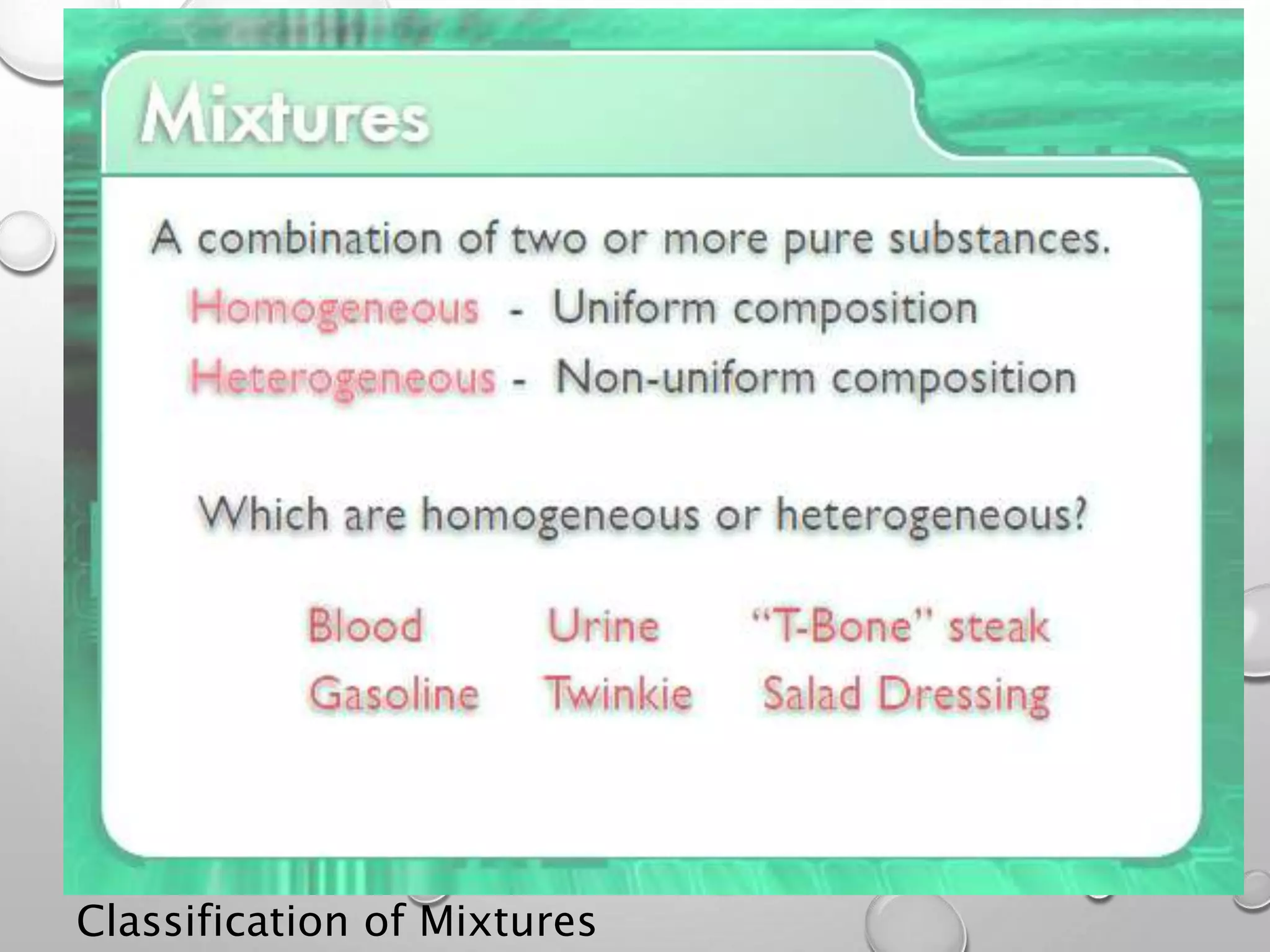
Classification of Mixtures
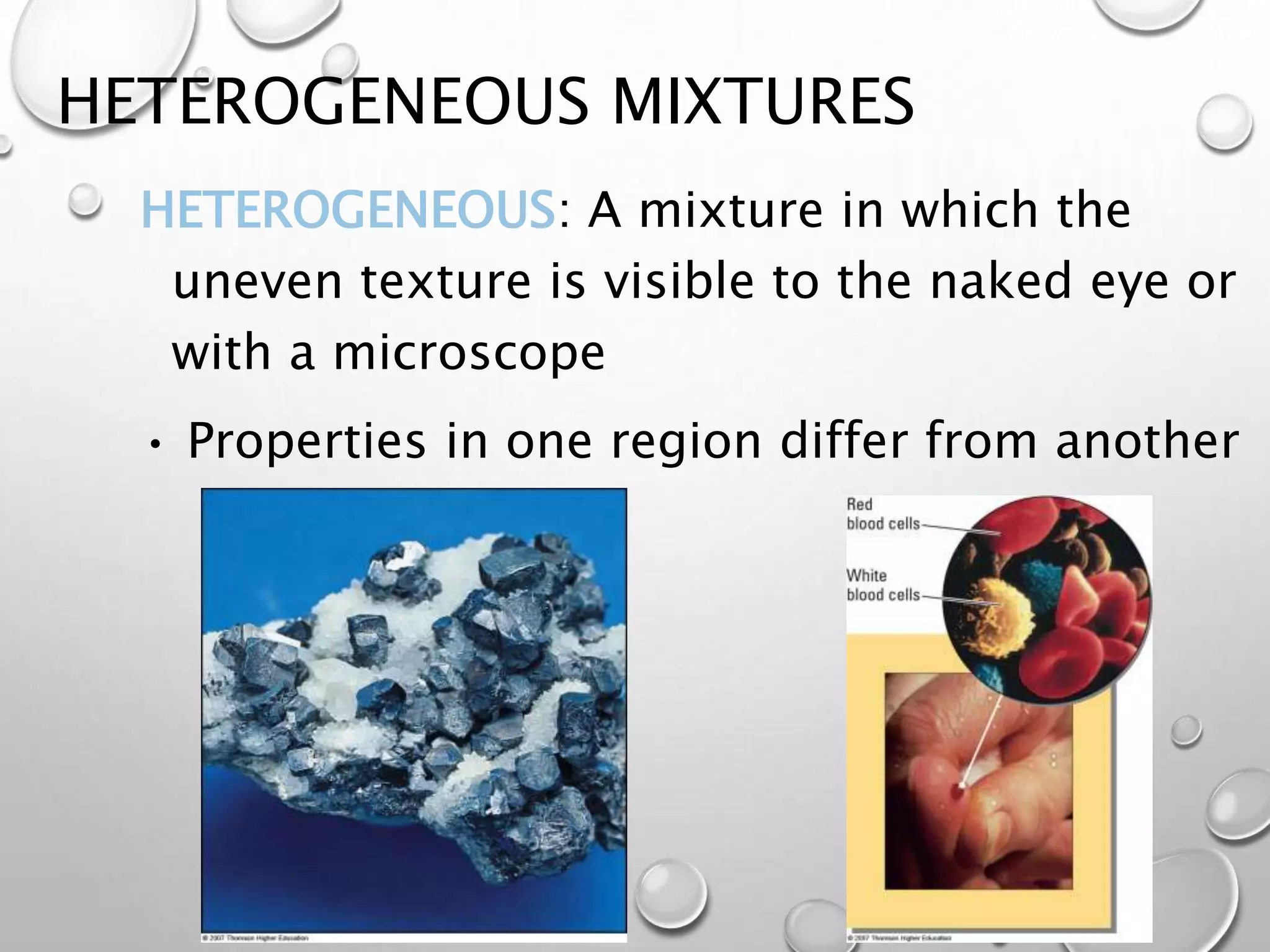
HETEROGENEOUS MIXTURES
HETEROGENEOUS: A mixture in which the
uneven texture is visible to the naked eye or
with a microscope
• Properties in one region differ from another
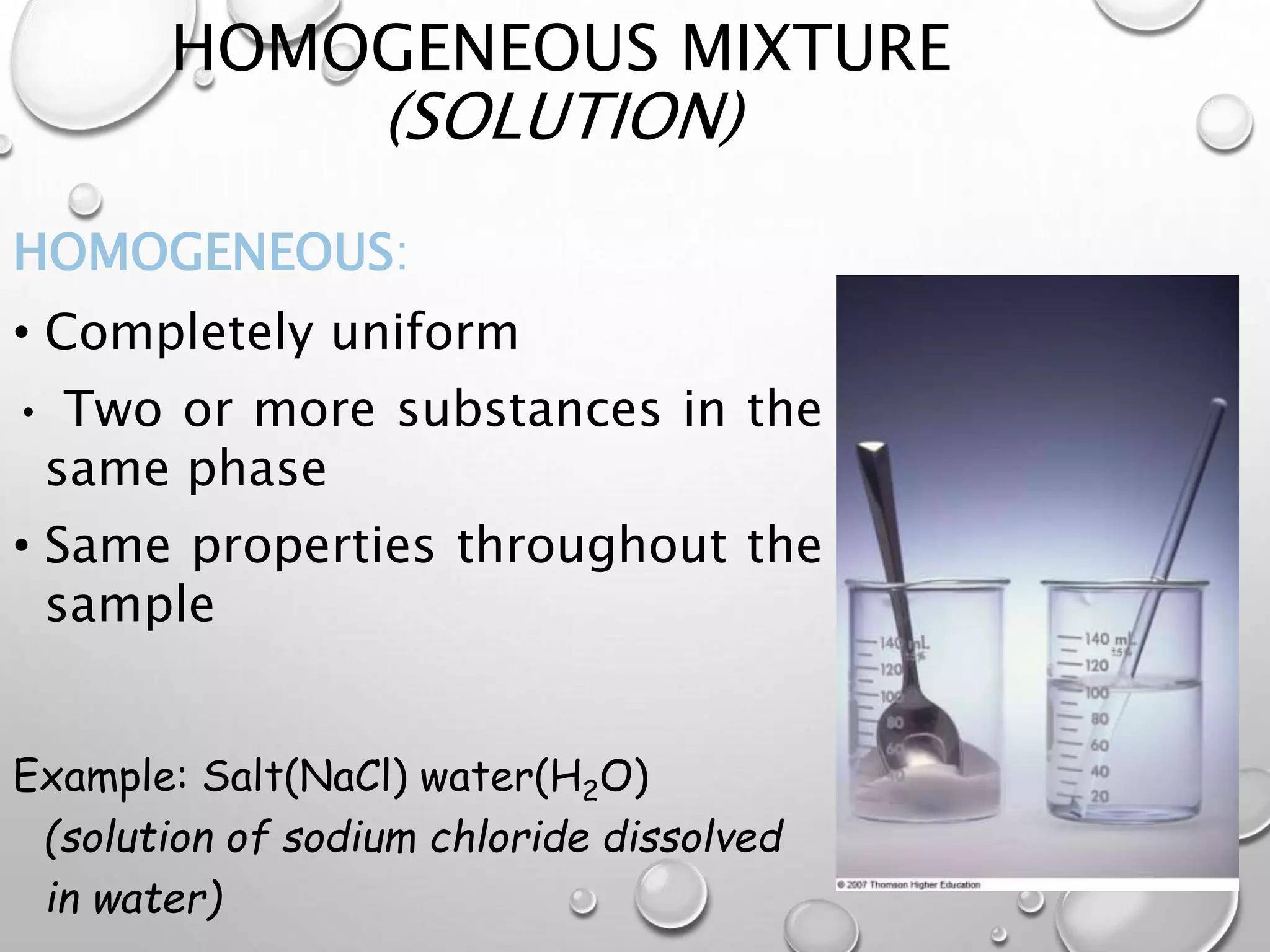
HOMOGENEOUS MIXTURE
(SOLUTION)
HOMOGENEOUS:
• Completely uniform
• Two or more substances in the
same phase
• Same properties throughout the
sample
Example: Salt(NaCl) water(H2O)
(solution of sodium chloride dissolved
in water)
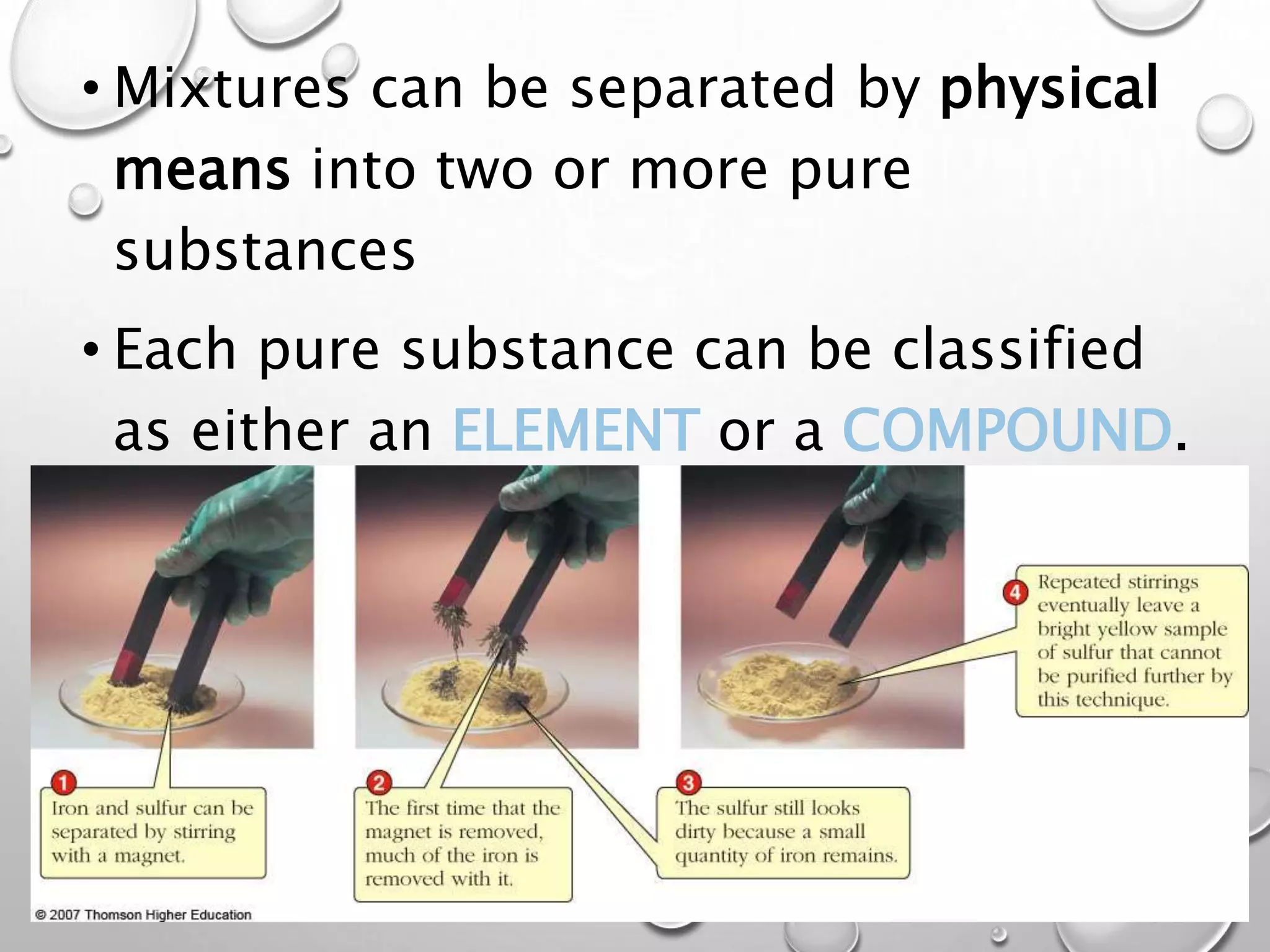
• Mixtures can be separated by physical
means into two or more pure
substances
• Each pure substance can be classified
as either an ELEMENT or a COMPOUND.
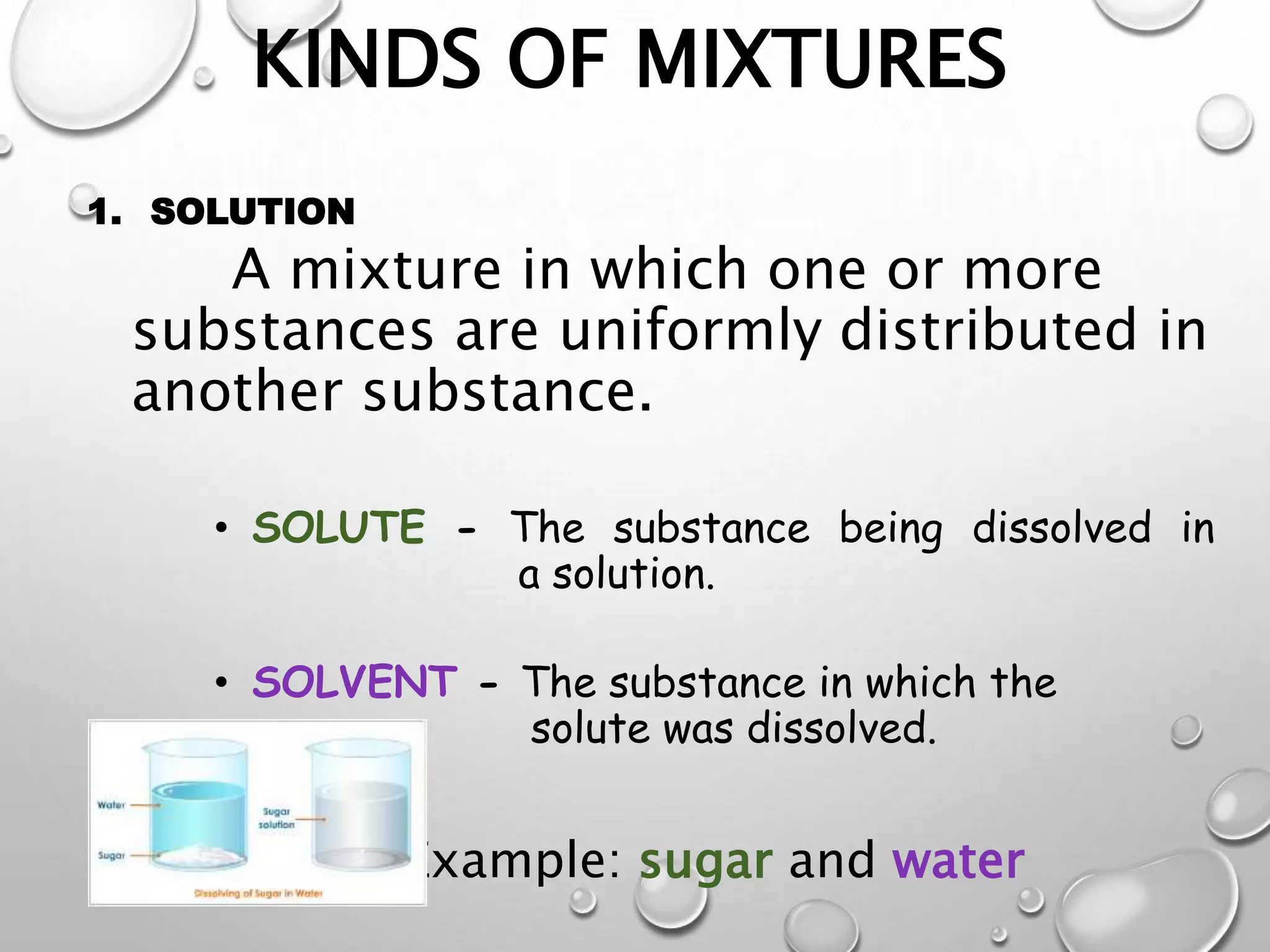
KINDS OF MIXTURES
1. SOLUTION
A mixture in which one or more
substances are uniformly distributed in
another substance.
• SOLUTE - The substance being dissolved in
a solution.
• SOLVENT - The substance in which the
solute was dissolved.
Example: sugar and water
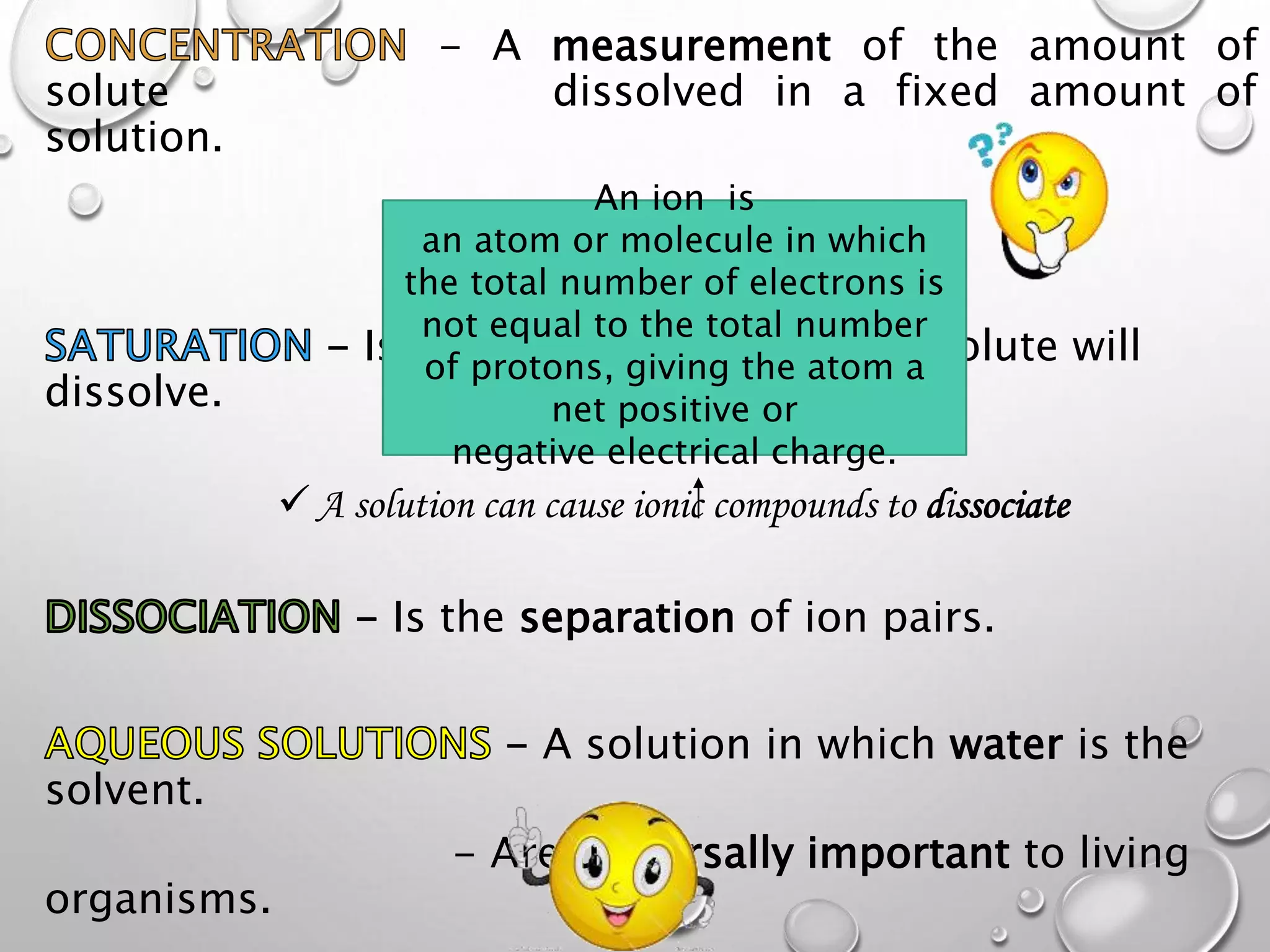
- A measurement of the amount of
solute dissolved in a fixed amount of
solution.
 Solutions can become saturated
- Is the point where no more solute will
dissolve.
 A solution can cause ionic compounds to dissociate
- Is the separation of ion pairs.
- A solution in which water is the
solvent.
- Are universally important to living
organisms.
An ion is
an atom or molecule in which
the total number of electrons is
not equal to the total number
of protons, giving the atom a
net positive or
negative electrical charge.
2. SUSPENSION
- A mixture in which particles
spread through a liquid or a gas but
settle out over time
- The particles in a suspension are
large than solute particles in a solution
Blood is an example of a
suspension
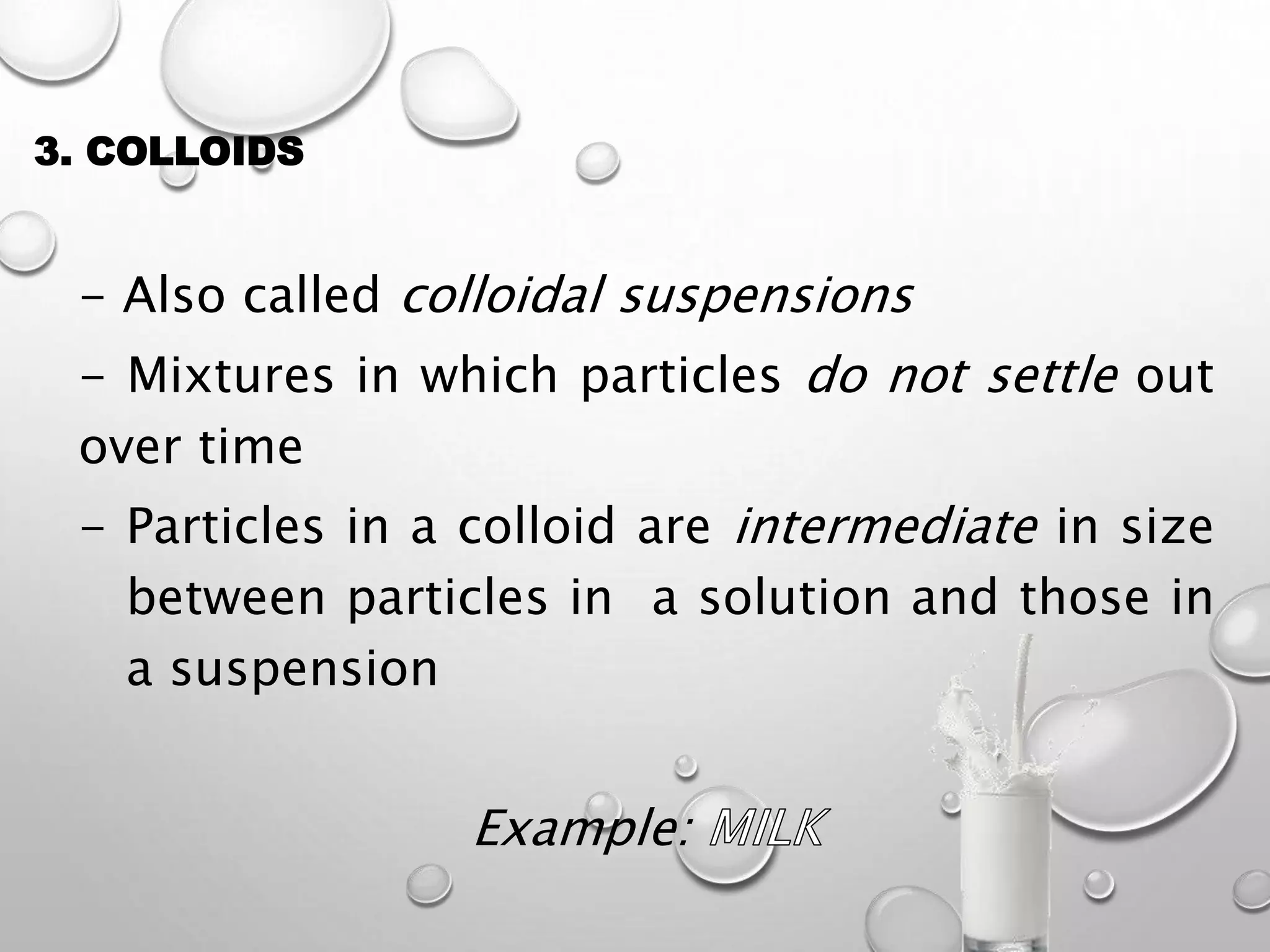
3. COLLOIDS
- Also called colloidal suspensions
- Mixtures in which particles do not settle out
over time
- Particles in a colloid are intermediate in size
between particles in a solution and those in
a suspension
Example:
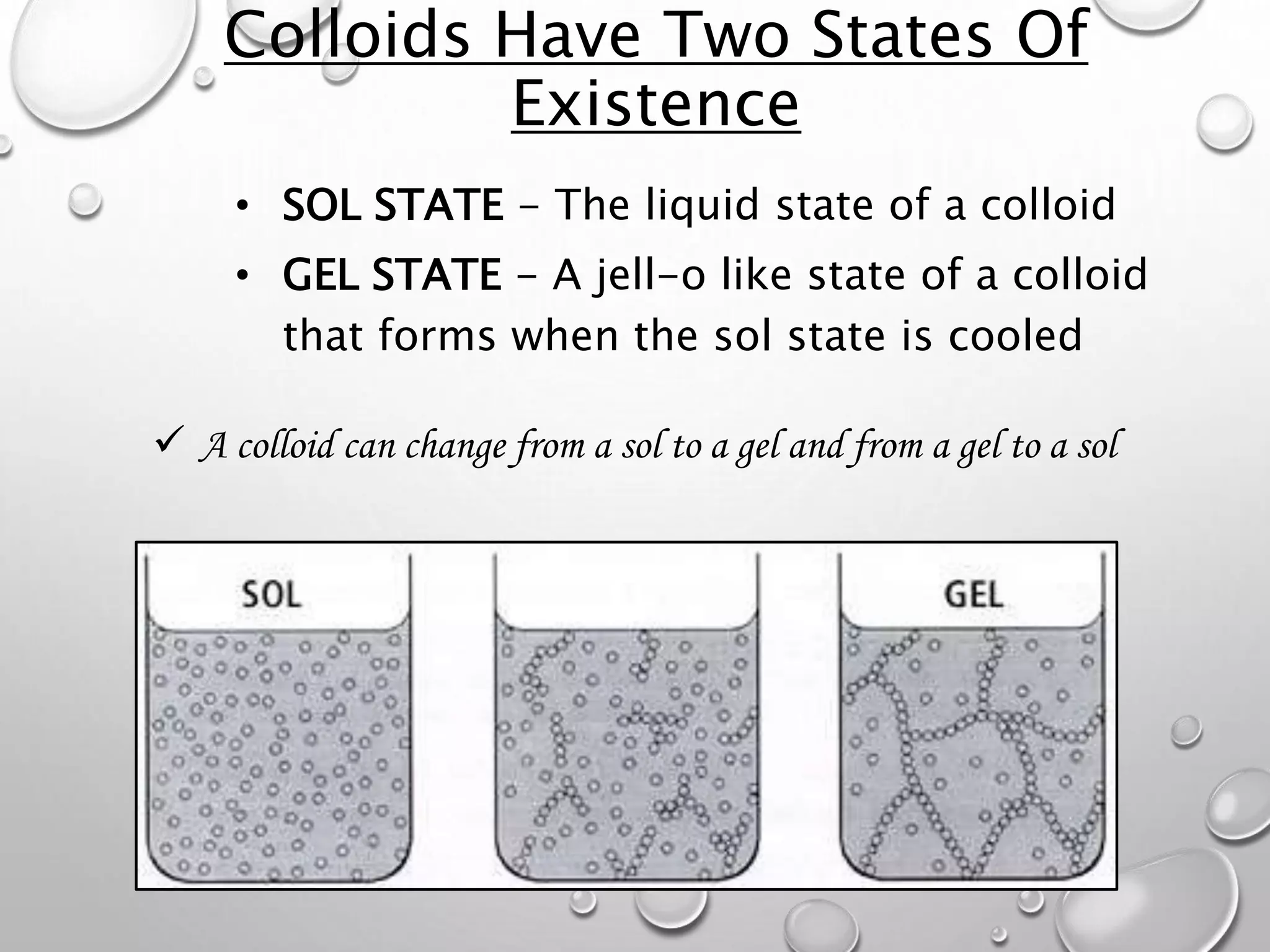
Colloids Have Two States Of
Existence
• SOL STATE - The liquid state of a colloid
• GEL STATE - A jell-o like state of a colloid
that forms when the sol state is cooled
 A colloid can change from a sol to a gel and from a gel to a sol
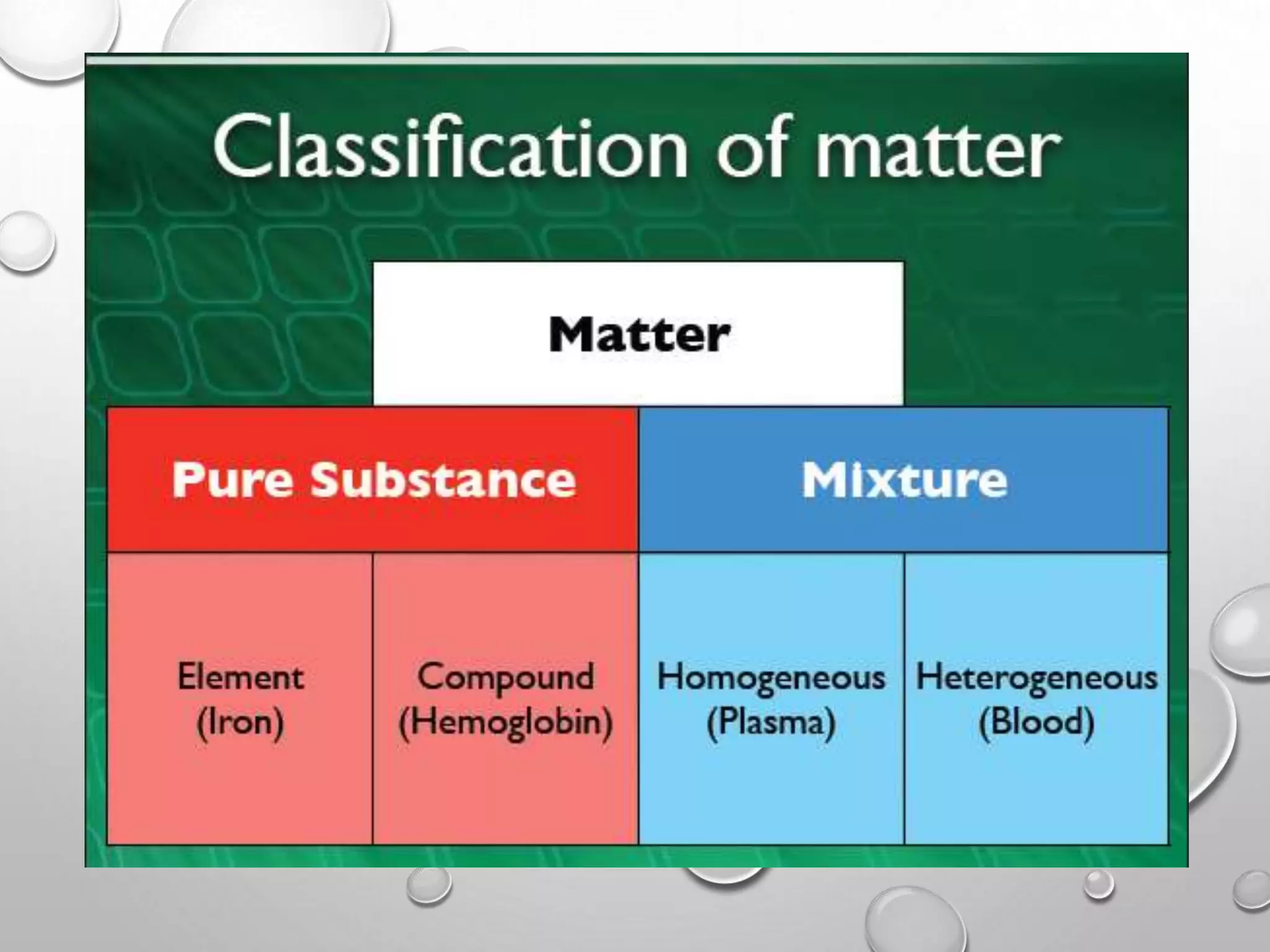
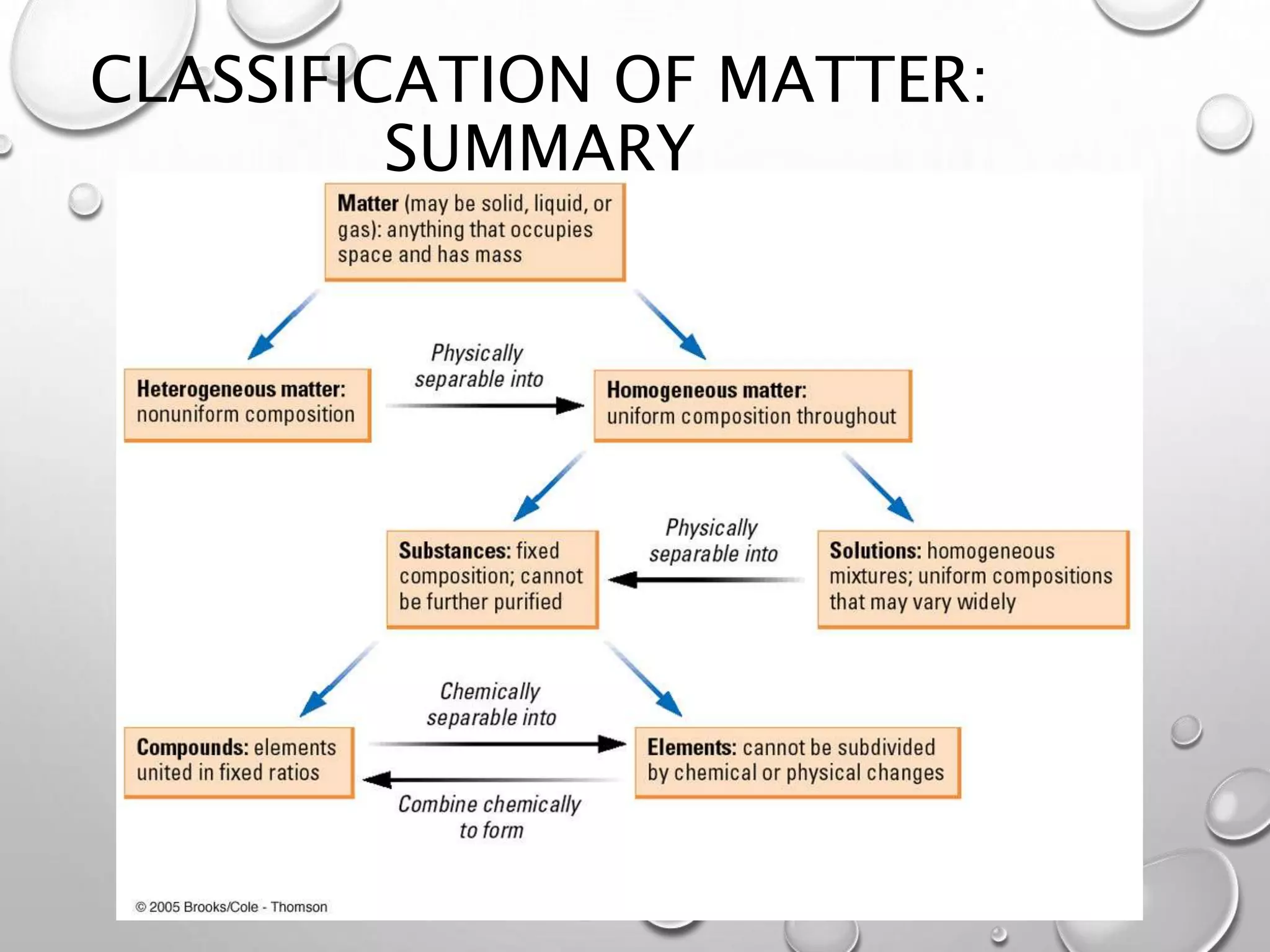
CLASSIFICATION OF MATTER:
SUMMARY

Classification of Matter

  • 1.
  • 2.
  • 3.
    PURE SUBSTANCE A sampleof matter, either an element or a compound, that consists of only one component with definite physical and chemical properties and a definite composition.
  • 4.
  • 5.
  • 6.
    HETEROGENEOUS MIXTURES HETEROGENEOUS: Amixture in which the uneven texture is visible to the naked eye or with a microscope • Properties in one region differ from another
  • 7.
    HOMOGENEOUS MIXTURE (SOLUTION) HOMOGENEOUS: • Completelyuniform • Two or more substances in the same phase • Same properties throughout the sample Example: Salt(NaCl) water(H2O) (solution of sodium chloride dissolved in water)
  • 8.
    • Mixtures canbe separated by physical means into two or more pure substances • Each pure substance can be classified as either an ELEMENT or a COMPOUND.
  • 9.
    KINDS OF MIXTURES 1.SOLUTION A mixture in which one or more substances are uniformly distributed in another substance. • SOLUTE - The substance being dissolved in a solution. • SOLVENT - The substance in which the solute was dissolved. Example: sugar and water
  • 10.
    - A measurementof the amount of solute dissolved in a fixed amount of solution.  Solutions can become saturated - Is the point where no more solute will dissolve.  A solution can cause ionic compounds to dissociate - Is the separation of ion pairs. - A solution in which water is the solvent. - Are universally important to living organisms. An ion is an atom or molecule in which the total number of electrons is not equal to the total number of protons, giving the atom a net positive or negative electrical charge.
  • 11.
    2. SUSPENSION - Amixture in which particles spread through a liquid or a gas but settle out over time - The particles in a suspension are large than solute particles in a solution Blood is an example of a suspension
  • 12.
    3. COLLOIDS - Alsocalled colloidal suspensions - Mixtures in which particles do not settle out over time - Particles in a colloid are intermediate in size between particles in a solution and those in a suspension Example:
  • 13.
    Colloids Have TwoStates Of Existence • SOL STATE - The liquid state of a colloid • GEL STATE - A jell-o like state of a colloid that forms when the sol state is cooled  A colloid can change from a sol to a gel and from a gel to a sol
  • 14.