Chapter 2
MatisonMGraland
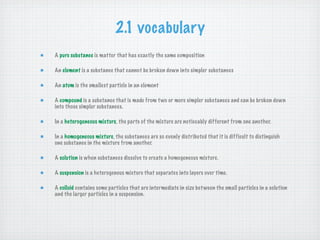
2.1 vocabulary
A pure substance is matter that has exactly the same composition

An element is a substance that cannot be broken down into simpler substances

An atom is the smallest particle in an element

A compound is a substance that is made from t wo or more simpler substances and can be broken down
into those simpler substances.

In a heterogeneous mixture, the parts of the mixture are noticeably different from one another.

In a homogeneous mixture, the substances are so evenly distributed that it is difficult to distinguish
one substance in the mixture from another.

A solution is when substances dissolve to create a homogeneous mixture.

A suspension is a heterogenous mixture that separates into layers over time.

A colloid contains some particles that are intermediate in size bet ween the small particles in a solution
and the larger particles in a suspension.
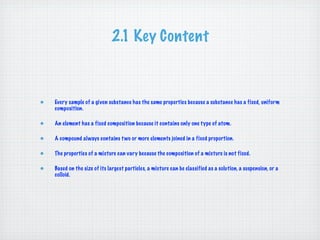
2.1 Key Content


Every sample of a given substance has the same properties because a substance has a fixed, uniform
composition.

An element has a fixed composition because it contains only one type of atom.

A compound always contains t wo or more elements joined in a fixed proportion.

The properties of a mixture can vary because the composition of a mixture is not fixed.

Based on the size of its largest particles, a mixture can be classified as a solution, a suspension, or a
colloid.
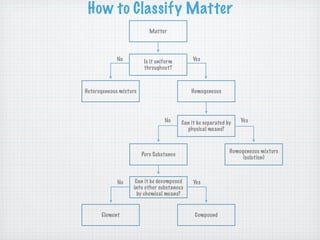
How to Classify Matter
                           Matter


             No          Is it uniform        Yes
                         throughout?


Heterogeneous mixture                        Homogeneous


                                  No     Can it be separated by   Yes
                                           physical means?


                                                              Homogeneous mixture
                        Pure Substance
                                                                   (solution)


             No     Can it be decomposed      Yes
                   into other substances
                     by chemical means?


      Element                                 Compound
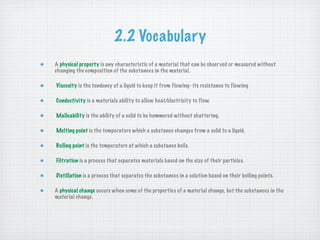
2.2 Vocabulary
A physical property is any characteristic of a material that can be observed or measured without
changing the composition of the substances in the material.

Viscosity is the tendency of a liquid to keep it from flowing- its resistance to flowing

Conductivity is a materials ability to allow heat/electricity to flow.

Malleability is the ability of a solid to be hammered without shattering.

Melting point is the temperature which a substance changes from a solid to a liquid.

Boiling point is the temperature at which a substance boils.

Filtration is a process that separates materials based on the size of their particles.

Distillation is a process that separates the substances in a solution based on their boiling points.

A physical change occurs when some of the properties of a material change, but the substances in the
material change.
2.2 Key Content


Viscosity, conductivity, malleability, hardness, melting point, boiling point, and density are examples of
physical properties.

Physical properties are used to identify a material, to choose a material for a specific purpose, or to
separate the substances in a mixture.

Filtration, and distillation are t wo common separation methods.
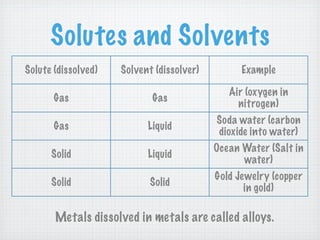
Solutes and Solvents
Solute (dissolved)   Solvent (dissolver)         Example

                                              Air (oxygen in
       Gas                  Gas
                                                nitrogen)
                                           Soda water (carbon
       Gas                 Liquid
                                           dioxide into water)
                                           Ocean Water (Salt in
      Solid                Liquid
                                                 water)
                                           Gold Jewelry (copper
      Solid                 Solid
                                                  in gold)

       Metals dissolved in metals are called alloys.
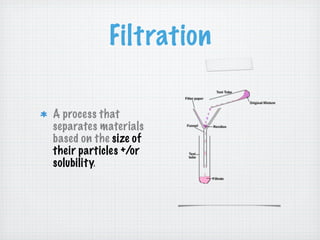
Filtration

A process that
separates materials
based on the size of
their particles +/or
solubility.
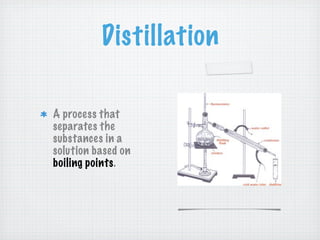
Distillation

A process that
separates the
substances in a
solution based on
boiling points.
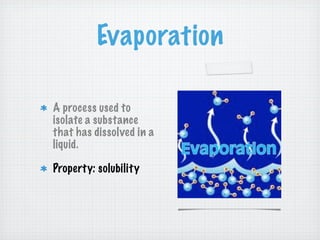
Evaporation

A process used to
isolate a substance
that has dissolved in a
liquid.

Property: solubility
2.3 Vocabulary

A chemical property is any ability to produce a change in the composition of matter.

Flammability is a material’s ability to burn in the presence of oxygen.

Reactivity is the property that describes how readily a substance combines chemically with other
substances.

A chemical change occurs when a substance reacts and forms one or more new substances.

Precipitate is any solid that forms and separates from a liquid mixture.
2.3 key content

Chemical properties can be observed only when the substances in a sample of
matter are changing into different substances.

Three common types of evidence for a chemical change are a change in color,
the production of a gas, and the formation of a recipate.

When matter undergoes a chemical change, the composition of the matter
changes. When matter undergoes a physical change, the compositon of the
matter stays the same.
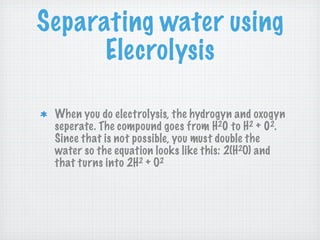
Separating water using
      Elecrolysis

 When you do electrolysis, the hydrogyn and oxogyn
 seperate. The compound goes from H20 to H2 + 02.
 Since that is not possible, you must double the
 water so the equation looks like this: 2(H2O) and
 that turns into 2H2 + O2
Test Review!!!!!!!
What is the difference
bet ween a solution, suspension,
         and colloid?
What is a physical
        property?
What is a physical change?
What is a chemical
        property?
What is a chemical change?
What are the four ways to
  recognize a chemical
        change?
Study Labs as well.
If you have any Questions, post
 them in the comment section
            below!!!
          Happy Studying!!!

Science keynote chapter 2

  • 1.
  • 2.
    2.1 vocabulary A puresubstance is matter that has exactly the same composition An element is a substance that cannot be broken down into simpler substances An atom is the smallest particle in an element A compound is a substance that is made from t wo or more simpler substances and can be broken down into those simpler substances. In a heterogeneous mixture, the parts of the mixture are noticeably different from one another. In a homogeneous mixture, the substances are so evenly distributed that it is difficult to distinguish one substance in the mixture from another. A solution is when substances dissolve to create a homogeneous mixture. A suspension is a heterogenous mixture that separates into layers over time. A colloid contains some particles that are intermediate in size bet ween the small particles in a solution and the larger particles in a suspension.
  • 3.
    2.1 Key Content Everysample of a given substance has the same properties because a substance has a fixed, uniform composition. An element has a fixed composition because it contains only one type of atom. A compound always contains t wo or more elements joined in a fixed proportion. The properties of a mixture can vary because the composition of a mixture is not fixed. Based on the size of its largest particles, a mixture can be classified as a solution, a suspension, or a colloid.
  • 4.
    How to ClassifyMatter Matter No Is it uniform Yes throughout? Heterogeneous mixture Homogeneous No Can it be separated by Yes physical means? Homogeneous mixture Pure Substance (solution) No Can it be decomposed Yes into other substances by chemical means? Element Compound
  • 5.
    2.2 Vocabulary A physicalproperty is any characteristic of a material that can be observed or measured without changing the composition of the substances in the material. Viscosity is the tendency of a liquid to keep it from flowing- its resistance to flowing Conductivity is a materials ability to allow heat/electricity to flow. Malleability is the ability of a solid to be hammered without shattering. Melting point is the temperature which a substance changes from a solid to a liquid. Boiling point is the temperature at which a substance boils. Filtration is a process that separates materials based on the size of their particles. Distillation is a process that separates the substances in a solution based on their boiling points. A physical change occurs when some of the properties of a material change, but the substances in the material change.
  • 6.
    2.2 Key Content Viscosity,conductivity, malleability, hardness, melting point, boiling point, and density are examples of physical properties. Physical properties are used to identify a material, to choose a material for a specific purpose, or to separate the substances in a mixture. Filtration, and distillation are t wo common separation methods.
  • 7.
    Solutes and Solvents Solute(dissolved) Solvent (dissolver) Example Air (oxygen in Gas Gas nitrogen) Soda water (carbon Gas Liquid dioxide into water) Ocean Water (Salt in Solid Liquid water) Gold Jewelry (copper Solid Solid in gold) Metals dissolved in metals are called alloys.
  • 8.
    Filtration A process that separatesmaterials based on the size of their particles +/or solubility.
  • 9.
    Distillation A process that separatesthe substances in a solution based on boiling points.
  • 10.
    Evaporation A process usedto isolate a substance that has dissolved in a liquid. Property: solubility
  • 11.
    2.3 Vocabulary A chemicalproperty is any ability to produce a change in the composition of matter. Flammability is a material’s ability to burn in the presence of oxygen. Reactivity is the property that describes how readily a substance combines chemically with other substances. A chemical change occurs when a substance reacts and forms one or more new substances. Precipitate is any solid that forms and separates from a liquid mixture.
  • 12.
    2.3 key content Chemicalproperties can be observed only when the substances in a sample of matter are changing into different substances. Three common types of evidence for a chemical change are a change in color, the production of a gas, and the formation of a recipate. When matter undergoes a chemical change, the composition of the matter changes. When matter undergoes a physical change, the compositon of the matter stays the same.
  • 13.
    Separating water using Elecrolysis When you do electrolysis, the hydrogyn and oxogyn seperate. The compound goes from H20 to H2 + 02. Since that is not possible, you must double the water so the equation looks like this: 2(H2O) and that turns into 2H2 + O2
  • 14.
  • 15.
    What is thedifference bet ween a solution, suspension, and colloid?
  • 16.
    What is aphysical property? What is a physical change?
  • 17.
    What is achemical property? What is a chemical change?
  • 18.
    What are thefour ways to recognize a chemical change?
  • 19.
  • 20.
    If you haveany Questions, post them in the comment section below!!! Happy Studying!!!