Is Matter Around Us Pure
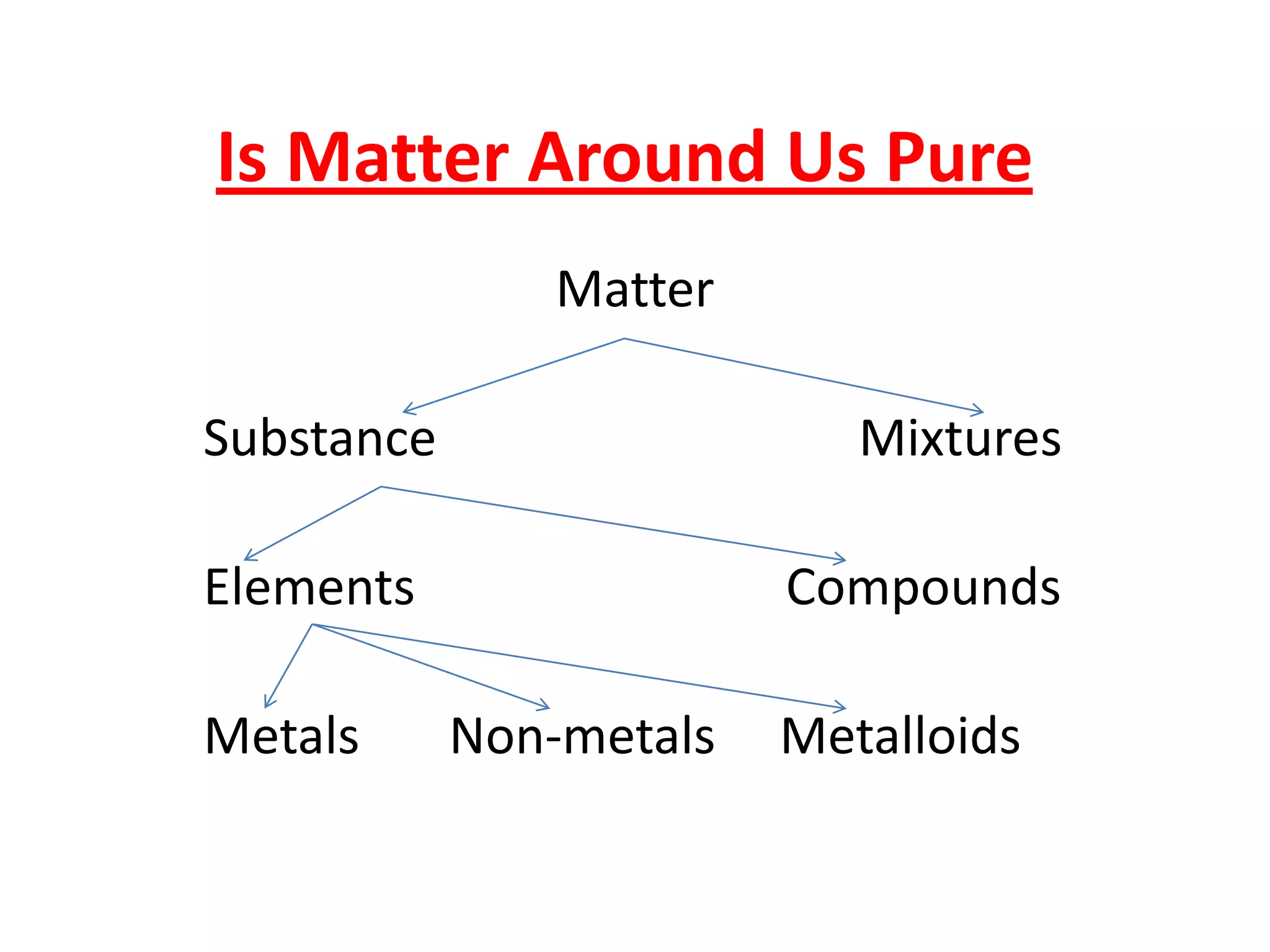
               Matter

Substance                   Mixtures

Elements                 Compounds

Metals      Non-metals   Metalloids
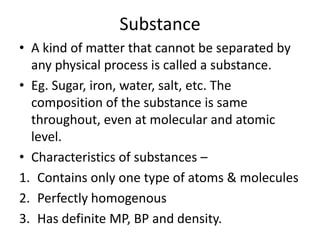
Substance
• A kind of matter that cannot be separated by
  any physical process is called a substance.
• Eg. Sugar, iron, water, salt, etc. The
  composition of the substance is same
  throughout, even at molecular and atomic
  level.
• Characteristics of substances –
1. Contains only one type of atoms & molecules
2. Perfectly homogenous
3. Has definite MP, BP and density.
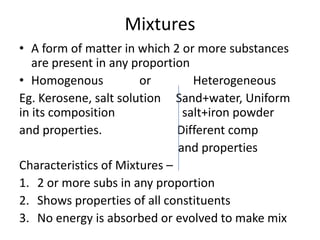
Mixtures
• A form of matter in which 2 or more substances
   are present in any proportion
• Homogenous           or        Heterogeneous
Eg. Kerosene, salt solution Sand+water, Uniform
in its composition             salt+iron powder
and properties.               Different comp
                              and properties
Characteristics of Mixtures –
1. 2 or more subs in any proportion
2. Shows properties of all constituents
3. No energy is absorbed or evolved to make mix
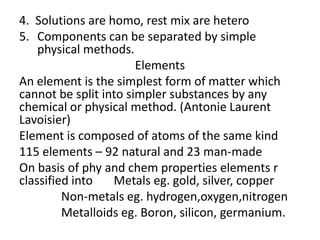
4. Solutions are homo, rest mix are hetero
5. Components can be separated by simple
    physical methods.
                       Elements
An element is the simplest form of matter which
cannot be split into simpler substances by any
chemical or physical method. (Antonie Laurent
Lavoisier)
Element is composed of atoms of the same kind
115 elements – 92 natural and 23 man-made
On basis of phy and chem properties elements r
classified into   Metals eg. gold, silver, copper
         Non-metals eg. hydrogen,oxygen,nitrogen
         Metalloids eg. Boron, silicon, germanium.
Compounds
A compound is made up of 2 or more elements
combined chemically in a definite proportion by
mass.
All compounds r formed as a result of chemical
reaction hence called chemical compounds
Eg. Water is a compound made of hydrogen and
oxygen combined in the ratio of 2:1 by volume.
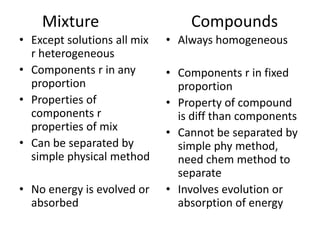
Mixture                      Compounds
• Except solutions all mix   • Always homogeneous
  r heterogeneous
• Components r in any        • Components r in fixed
  proportion                   proportion
• Properties of              • Property of compound
  components r                 is diff than components
  properties of mix          • Cannot be separated by
• Can be separated by          simple phy method,
  simple physical method       need chem method to
                               separate
• No energy is evolved or    • Involves evolution or
  absorbed                     absorption of energy
Types of Mixtures
Solutions           Suspensions       Colloids
                        Solutions
A homogeneous mixture of 2 or more substances is
a solution.
The substance that is dissolved to obtain a solution
is called a solute.
The substance in which the solute is dissolved to
obtain a solution is called the solvent.
In general the component present in larger amount
in the solution is the solvent and the component
that is present in smaller amount in solution is
called the solute.
Eg. of solution
• Sugar in water ( liquid + solid )
• Ethyl alcohol in water ( liquid + liquid )
• Carbon-dioxide and water ( liquid + gas )
• Brass – 70% copper + 305 zinc ( solid +solid )
• Ornaments- gold + copper or silver ( “ )
Solutions in which water is the solvent is called
the Aqueous solutions. (salt solution)
Solutions obtained by dissolving solute in any
other solvent than water is called Nonaqueous
solution.(tincture iodine)
Concentration of solution
The quantity of solute dissolved in the given
mass or volume of the solvent is called the
concentration of the solution.
Mass % of solute
= mass of solute/mass of solution X 100
Solve – To make a saturated solution, 36g of
sodium chloride is dissolved in 100g of water.
Find its concentration.
Conc = M of NaCl/M of solution X 100
      = 36/36 + 100 X 100
      = 36/136 X 100       = 26.5 %
Suspensions
A suspension is a heterogeneous mixture in which
very fine particles of solid are dispersed in any
medium. The fine particles remain suspended in the
medium. Eg. Muddy water, chalk + water, smoke
from chimney.
• Heterogeneous
• Particles are visible to eye or under simple
   microscope.
• Particles have tendency to settle down
   (sedimentation). But fine particles remain
   suspended.
• Large particles can be separated by filtration.
Colloids
A heterogeneous mixture in which very fine particles
which can be observed only under powerful microscope
are dispersed in a continuous medium is called a colloid
or sols.
Eg. Milk, blood, jelly, gum, fog
• Heterogeneous
• particle size is btn 1 to 100nm. 1nm=1/1000000000m
• Colloids are unstable. Particles tend to come together
   and settle.
• It shows Brownian Movement. (zig-zag)
• Tyndall effect – the scattering of light by the particles in
   the colloid.
• Under electric current colloidal particles move to +ve
   electrode. This is Electrophoresis.
Application of Colloids
• In our food. Eg milk, starch, proteins, jelly
• In medicines. Eg calcium and silver is used in
  oral medicines and ointments.
• Raw natural rubber and clay is colloidal in
  nature.
• Deltas at the sea are result of precipitation of
  colloidal clay in the river water.

Is matter around us pure

  • 1.
    Is Matter AroundUs Pure Matter Substance Mixtures Elements Compounds Metals Non-metals Metalloids
  • 2.
    Substance • A kindof matter that cannot be separated by any physical process is called a substance. • Eg. Sugar, iron, water, salt, etc. The composition of the substance is same throughout, even at molecular and atomic level. • Characteristics of substances – 1. Contains only one type of atoms & molecules 2. Perfectly homogenous 3. Has definite MP, BP and density.
  • 3.
    Mixtures • A formof matter in which 2 or more substances are present in any proportion • Homogenous or Heterogeneous Eg. Kerosene, salt solution Sand+water, Uniform in its composition salt+iron powder and properties. Different comp and properties Characteristics of Mixtures – 1. 2 or more subs in any proportion 2. Shows properties of all constituents 3. No energy is absorbed or evolved to make mix
  • 4.
    4. Solutions arehomo, rest mix are hetero 5. Components can be separated by simple physical methods. Elements An element is the simplest form of matter which cannot be split into simpler substances by any chemical or physical method. (Antonie Laurent Lavoisier) Element is composed of atoms of the same kind 115 elements – 92 natural and 23 man-made On basis of phy and chem properties elements r classified into Metals eg. gold, silver, copper Non-metals eg. hydrogen,oxygen,nitrogen Metalloids eg. Boron, silicon, germanium.
  • 5.
    Compounds A compound ismade up of 2 or more elements combined chemically in a definite proportion by mass. All compounds r formed as a result of chemical reaction hence called chemical compounds Eg. Water is a compound made of hydrogen and oxygen combined in the ratio of 2:1 by volume.
  • 6.
    Mixture Compounds • Except solutions all mix • Always homogeneous r heterogeneous • Components r in any • Components r in fixed proportion proportion • Properties of • Property of compound components r is diff than components properties of mix • Cannot be separated by • Can be separated by simple phy method, simple physical method need chem method to separate • No energy is evolved or • Involves evolution or absorbed absorption of energy
  • 7.
    Types of Mixtures Solutions Suspensions Colloids Solutions A homogeneous mixture of 2 or more substances is a solution. The substance that is dissolved to obtain a solution is called a solute. The substance in which the solute is dissolved to obtain a solution is called the solvent. In general the component present in larger amount in the solution is the solvent and the component that is present in smaller amount in solution is called the solute.
  • 8.
    Eg. of solution •Sugar in water ( liquid + solid ) • Ethyl alcohol in water ( liquid + liquid ) • Carbon-dioxide and water ( liquid + gas ) • Brass – 70% copper + 305 zinc ( solid +solid ) • Ornaments- gold + copper or silver ( “ ) Solutions in which water is the solvent is called the Aqueous solutions. (salt solution) Solutions obtained by dissolving solute in any other solvent than water is called Nonaqueous solution.(tincture iodine)
  • 9.
    Concentration of solution Thequantity of solute dissolved in the given mass or volume of the solvent is called the concentration of the solution. Mass % of solute = mass of solute/mass of solution X 100 Solve – To make a saturated solution, 36g of sodium chloride is dissolved in 100g of water. Find its concentration. Conc = M of NaCl/M of solution X 100 = 36/36 + 100 X 100 = 36/136 X 100 = 26.5 %
  • 10.
    Suspensions A suspension isa heterogeneous mixture in which very fine particles of solid are dispersed in any medium. The fine particles remain suspended in the medium. Eg. Muddy water, chalk + water, smoke from chimney. • Heterogeneous • Particles are visible to eye or under simple microscope. • Particles have tendency to settle down (sedimentation). But fine particles remain suspended. • Large particles can be separated by filtration.
  • 11.
    Colloids A heterogeneous mixturein which very fine particles which can be observed only under powerful microscope are dispersed in a continuous medium is called a colloid or sols. Eg. Milk, blood, jelly, gum, fog • Heterogeneous • particle size is btn 1 to 100nm. 1nm=1/1000000000m • Colloids are unstable. Particles tend to come together and settle. • It shows Brownian Movement. (zig-zag) • Tyndall effect – the scattering of light by the particles in the colloid. • Under electric current colloidal particles move to +ve electrode. This is Electrophoresis.
  • 12.
    Application of Colloids •In our food. Eg milk, starch, proteins, jelly • In medicines. Eg calcium and silver is used in oral medicines and ointments. • Raw natural rubber and clay is colloidal in nature. • Deltas at the sea are result of precipitation of colloidal clay in the river water.