
CHAPTER 6
Presented By: Cyra Mae R. Soreda
COMMERCIALLYAND INDUSTRIALLY
IMPORTANCE OF HALIDES
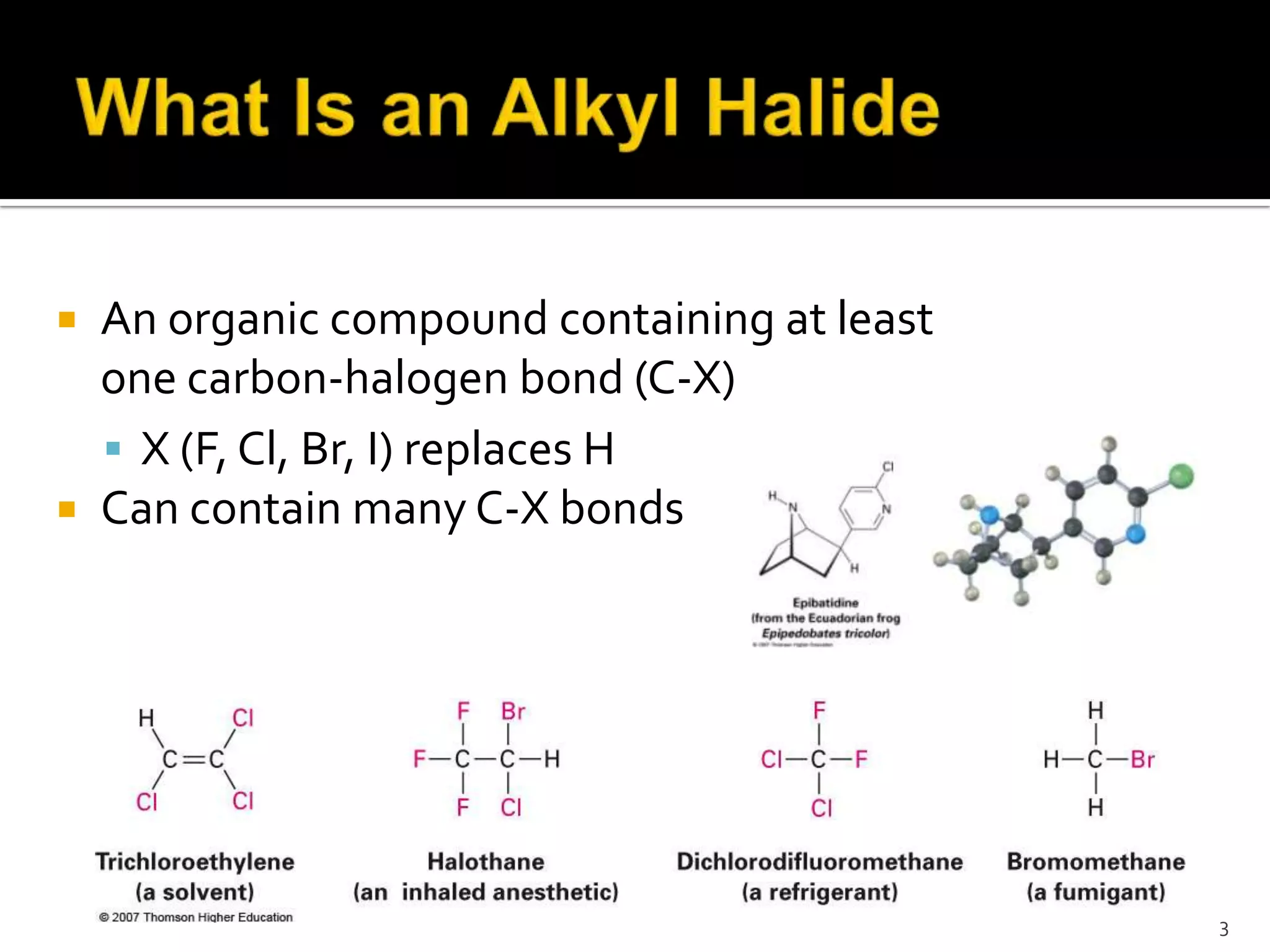
 An organic compound containing at least
one carbon-halogen bond (C-X)
 X (F, Cl, Br, I) replaces H
 Can contain many C-X bonds
3
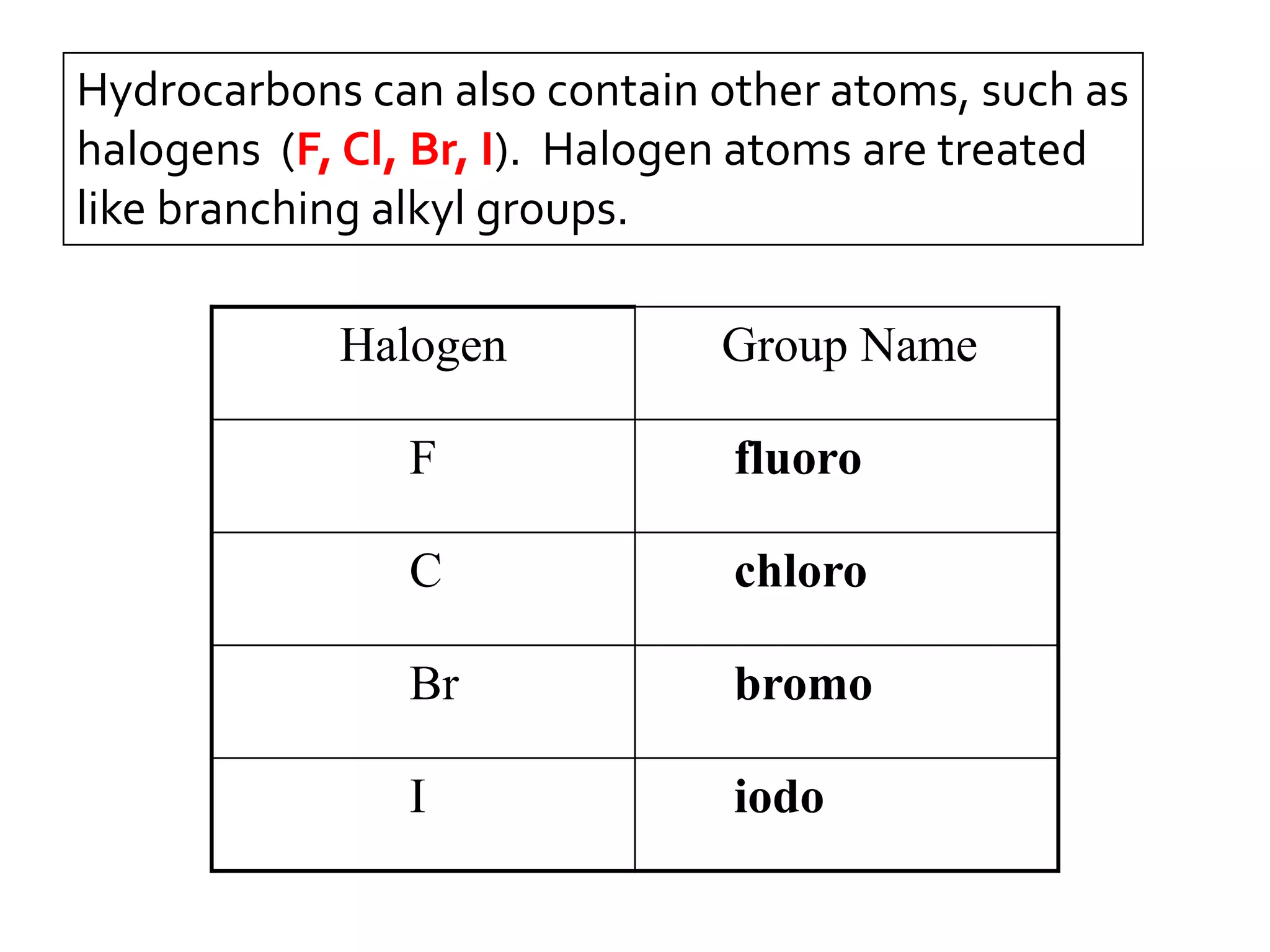
Hydrocarbons can also contain other atoms, such as
halogens (F, Cl, Br, I). Halogen atoms are treated
like branching alkyl groups.
Halogen Group Name
F fluoro
C chloro
Br bromo
I iodo
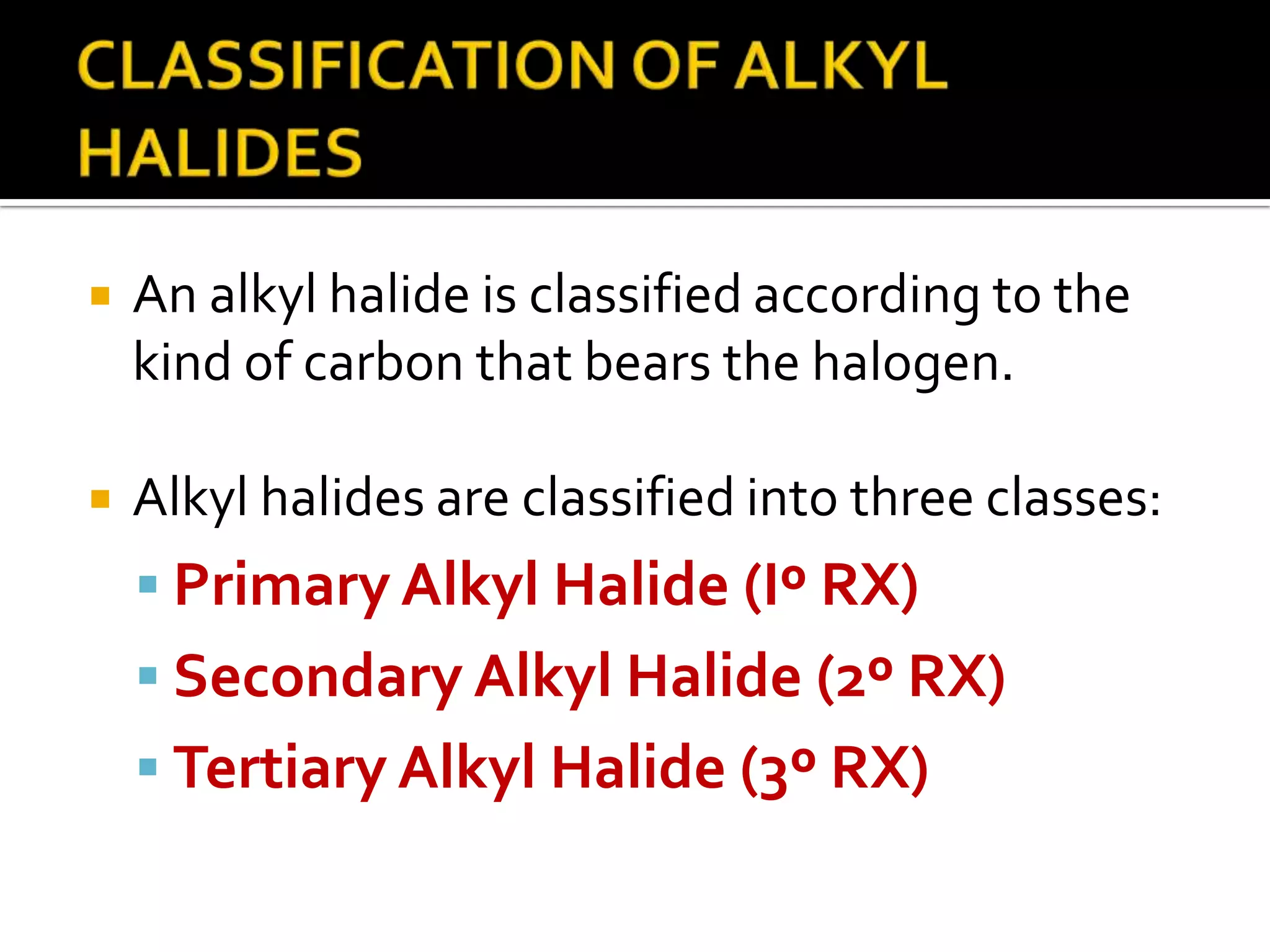
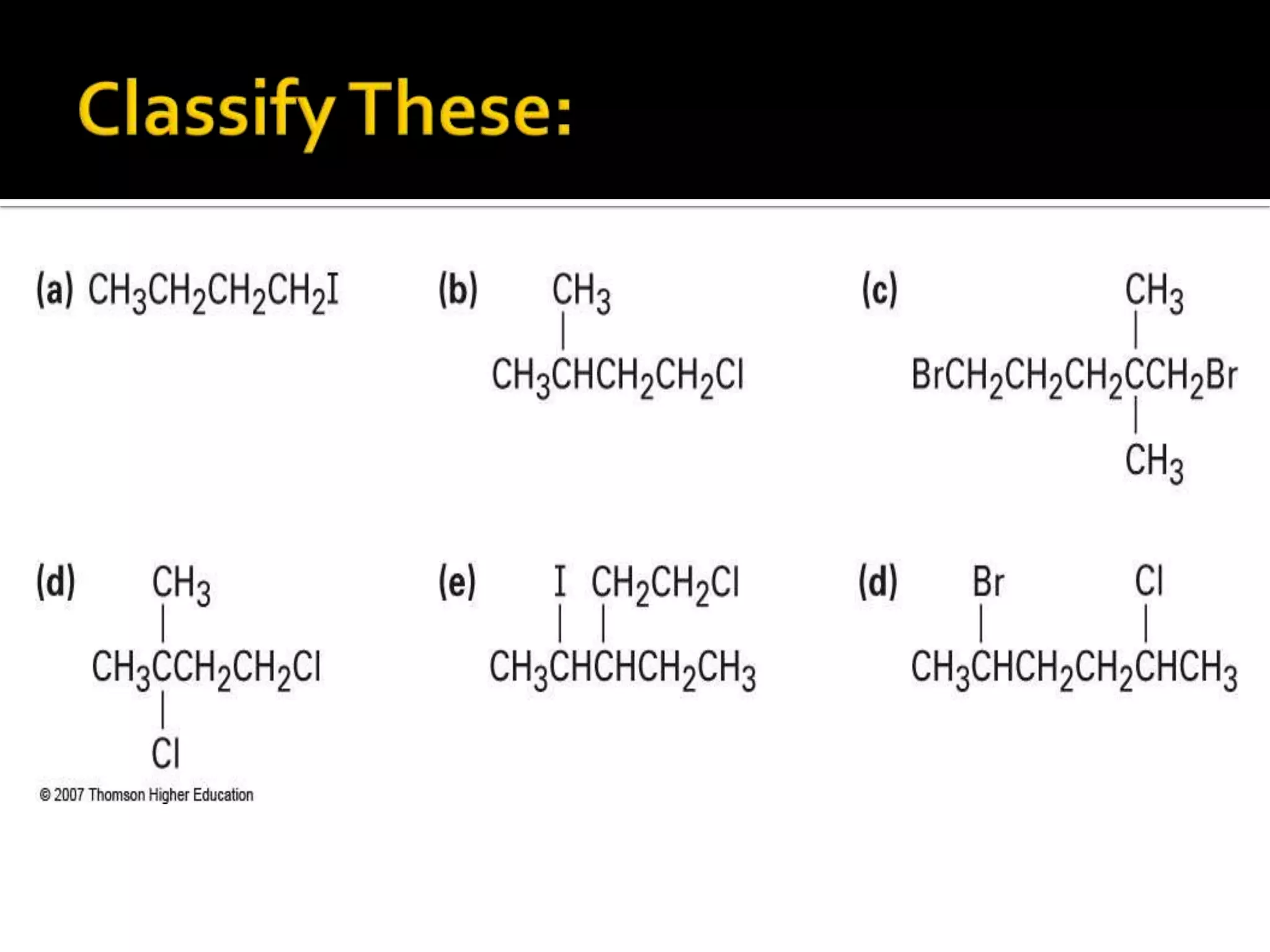
 An alkyl halide is classified according to the
kind of carbon that bears the halogen.
 Alkyl halides are classified into three classes:
 Primary Alkyl Halide (Iº RX)
 Secondary Alkyl Halide (2º RX)
 Tertiary Alkyl Halide (3º RX)
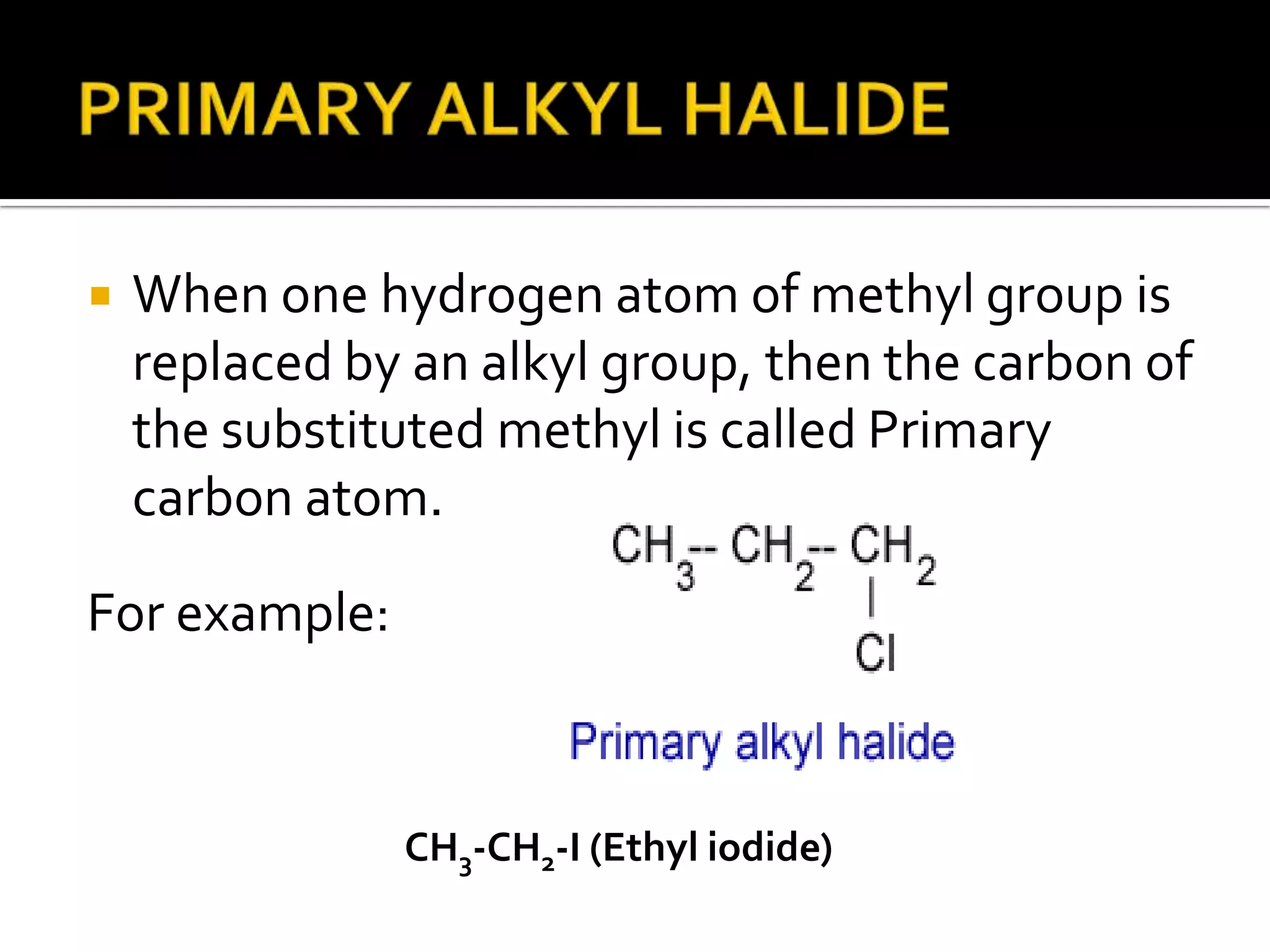
 When one hydrogen atom of methyl group is
replaced by an alkyl group, then the carbon of
the substituted methyl is called Primary
carbon atom.
CH3-CH2-I (Ethyl iodide)
For example:
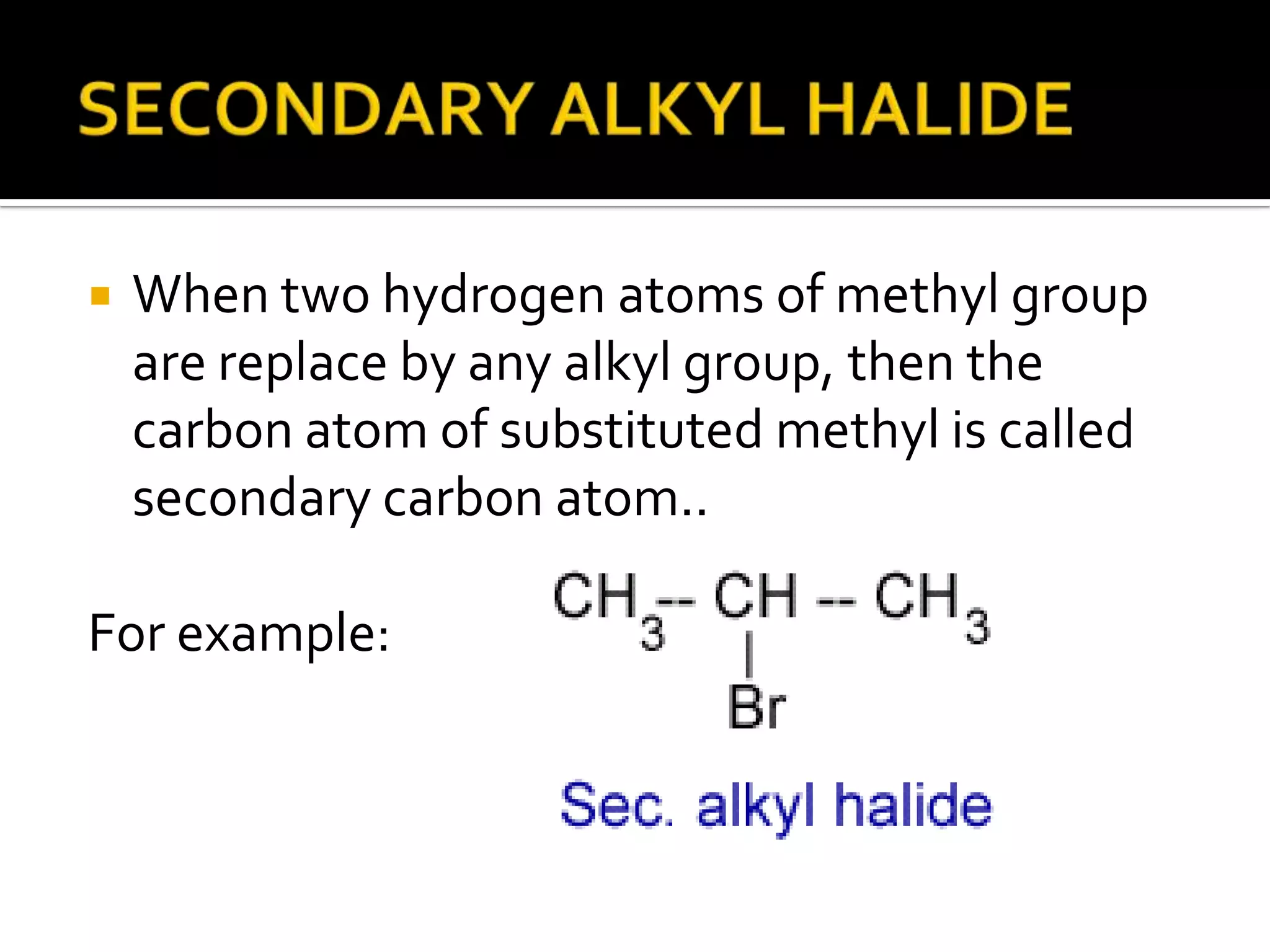
 When two hydrogen atoms of methyl group
are replace by any alkyl group, then the
carbon atom of substituted methyl is called
secondary carbon atom..
For example:
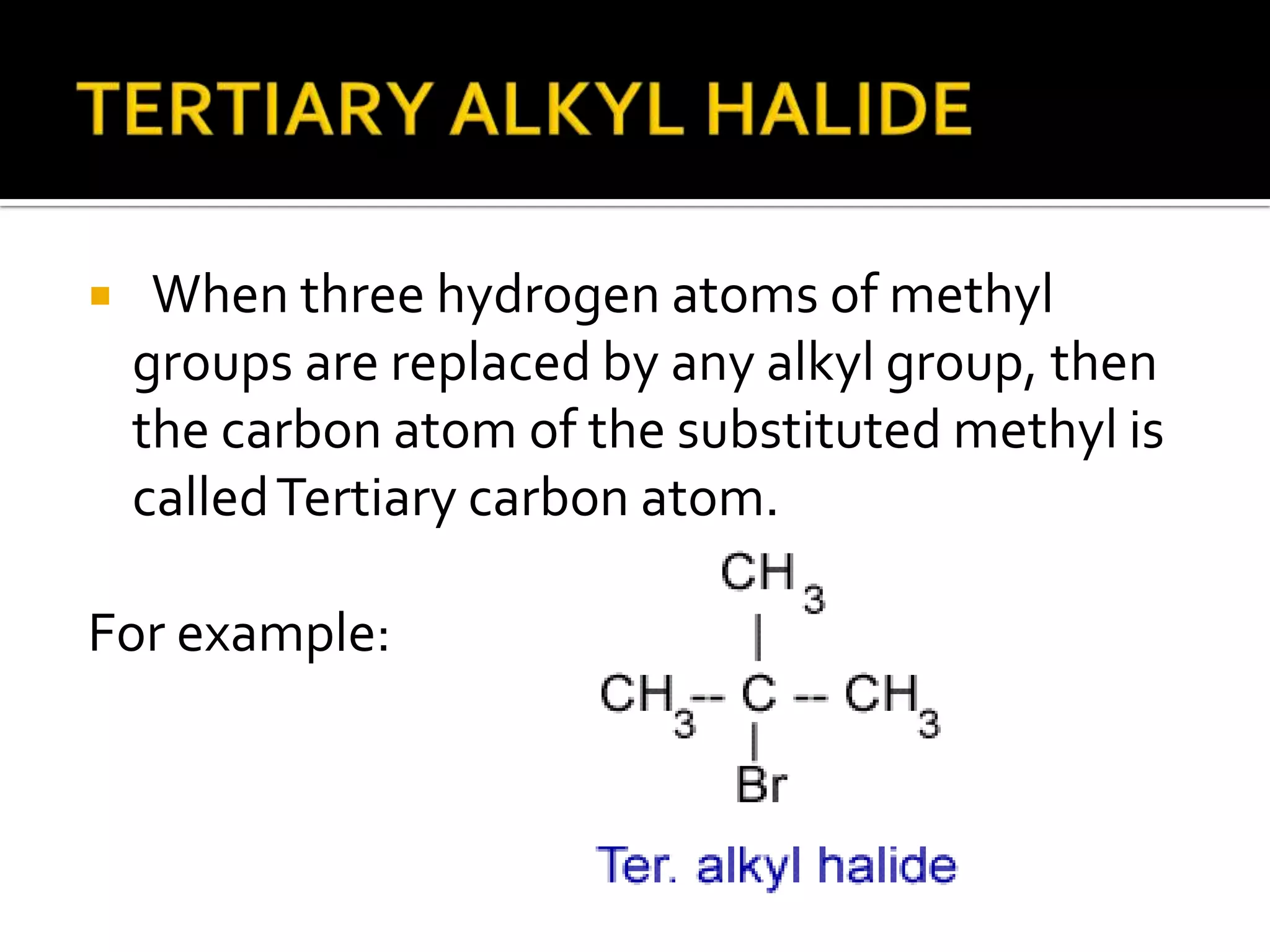
 When three hydrogen atoms of methyl
groups are replaced by any alkyl group, then
the carbon atom of the substituted methyl is
calledTertiary carbon atom.
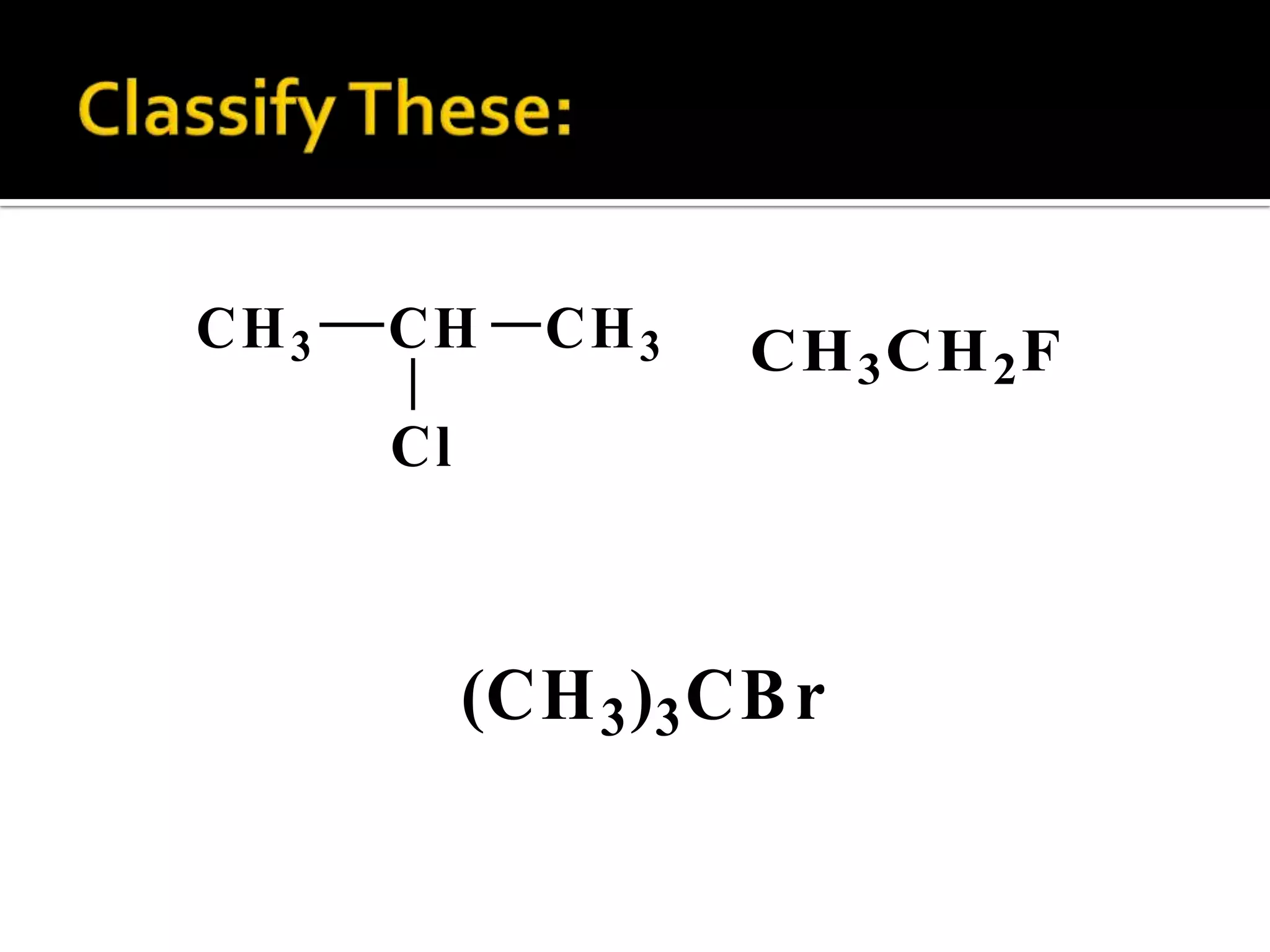
For example:
CH3 CH CH3
Cl
CH3CH2F
(CH3)3CBr
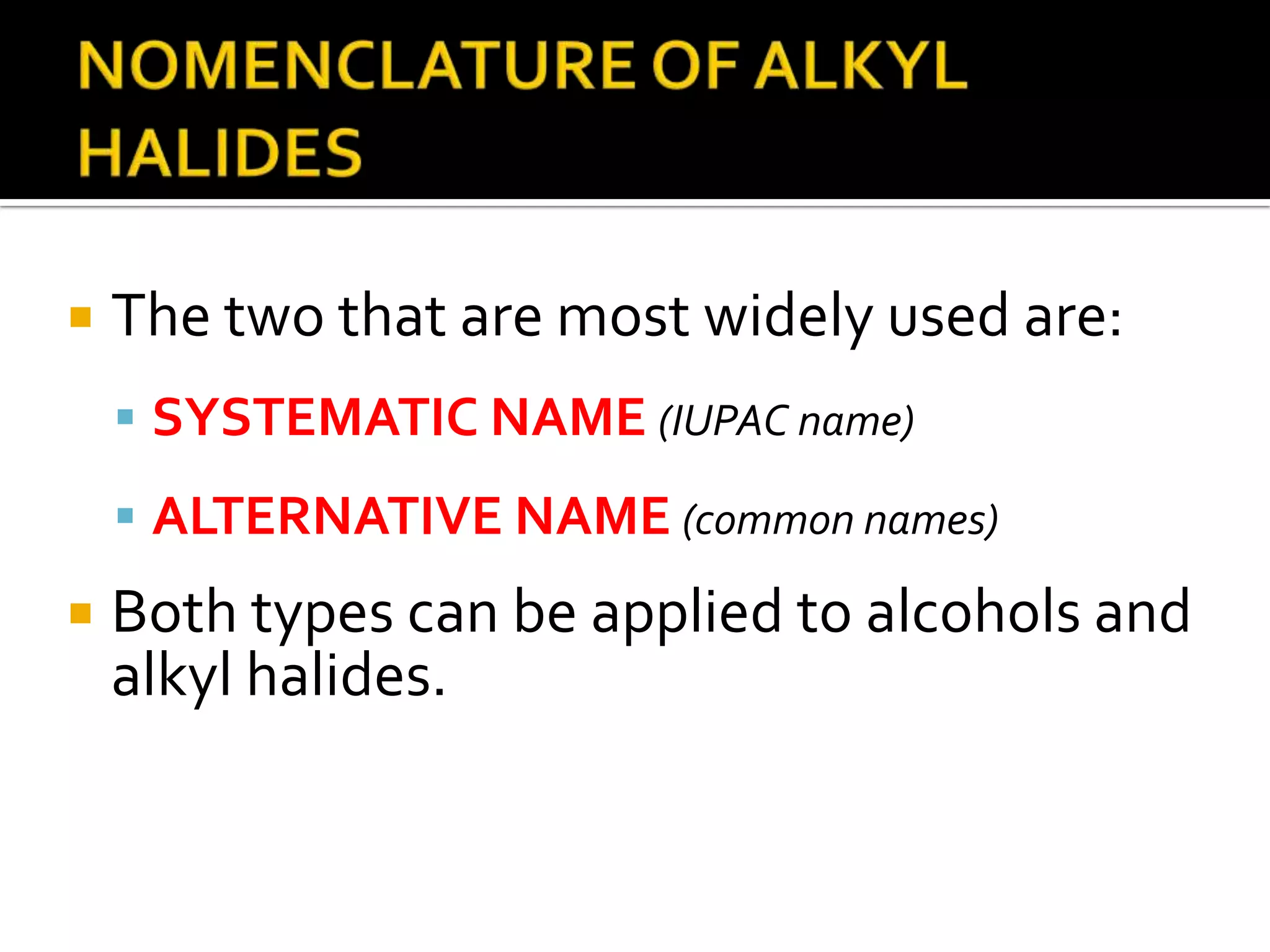
 The two that are most widely used are:
 SYSTEMATIC NAME (IUPAC name)
 ALTERNATIVE NAME (common names)
 Both types can be applied to alcohols and
alkyl halides.
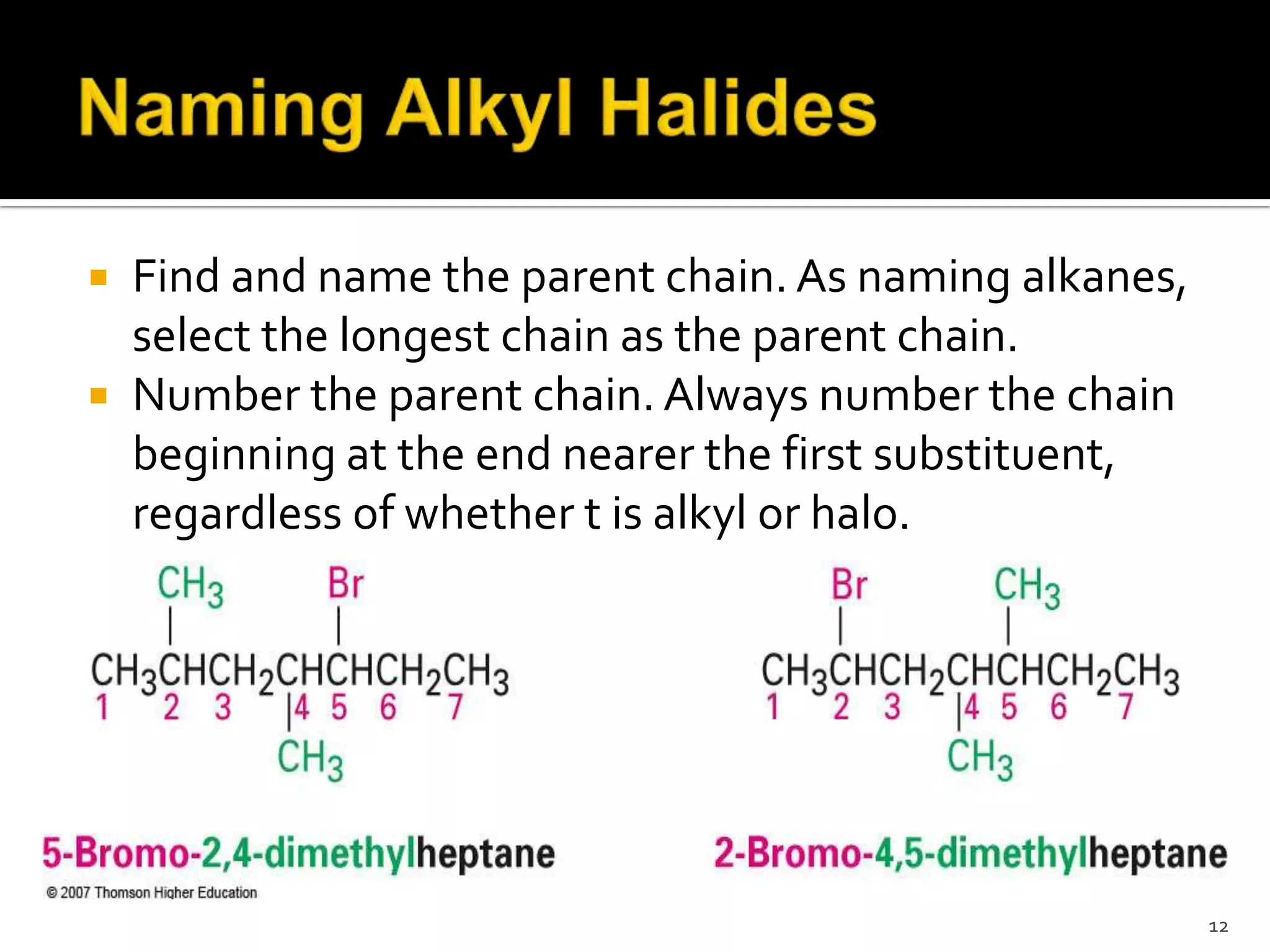
 Find and name the parent chain. As naming alkanes,
select the longest chain as the parent chain.
 Number the parent chain. Always number the chain
beginning at the end nearer the first substituent,
regardless of whether t is alkyl or halo.
12
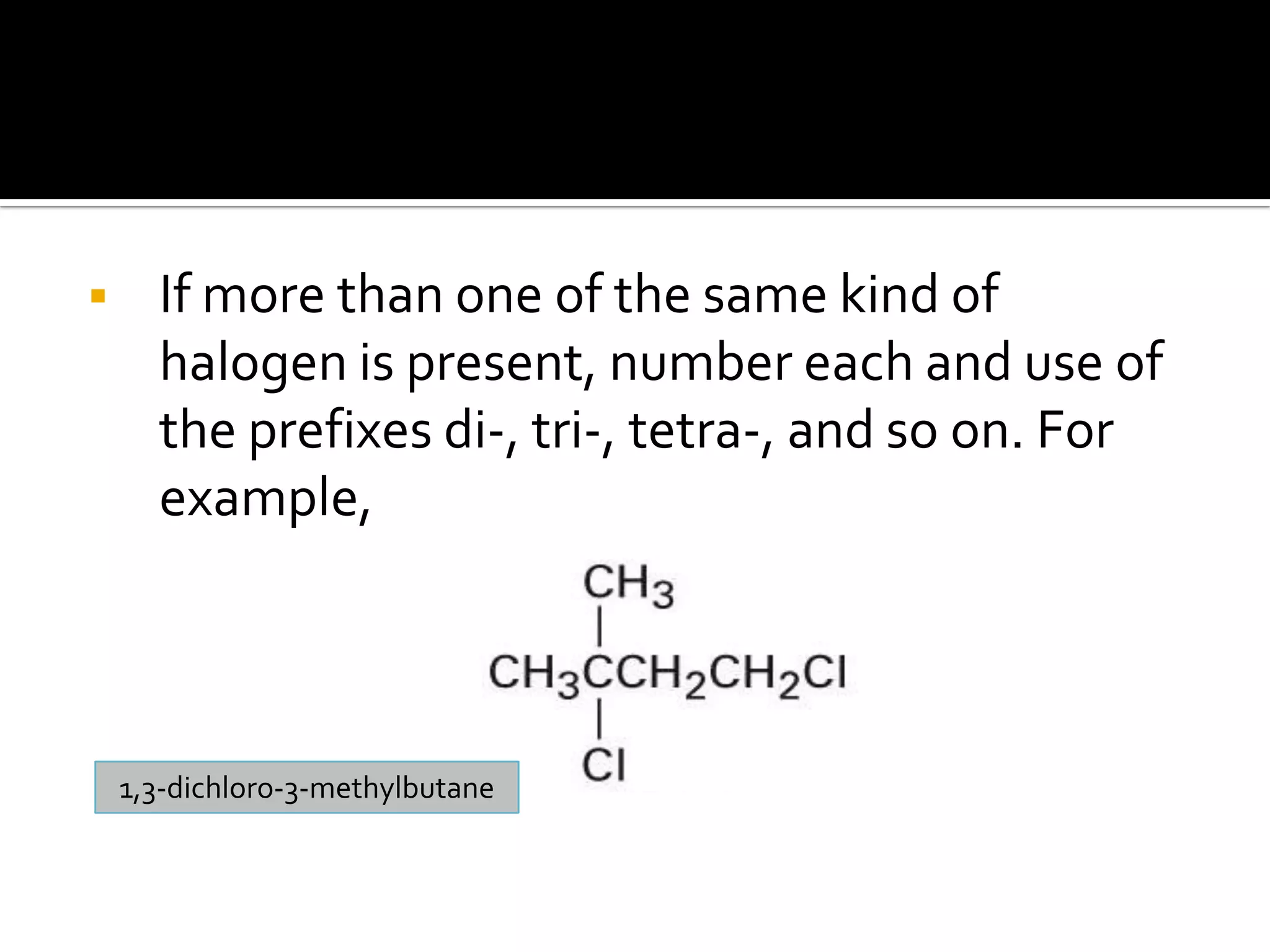
 If more than one of the same kind of
halogen is present, number each and use of
the prefixes di-, tri-, tetra-, and so on. For
example,
1,3-dichloro-3-methylbutane
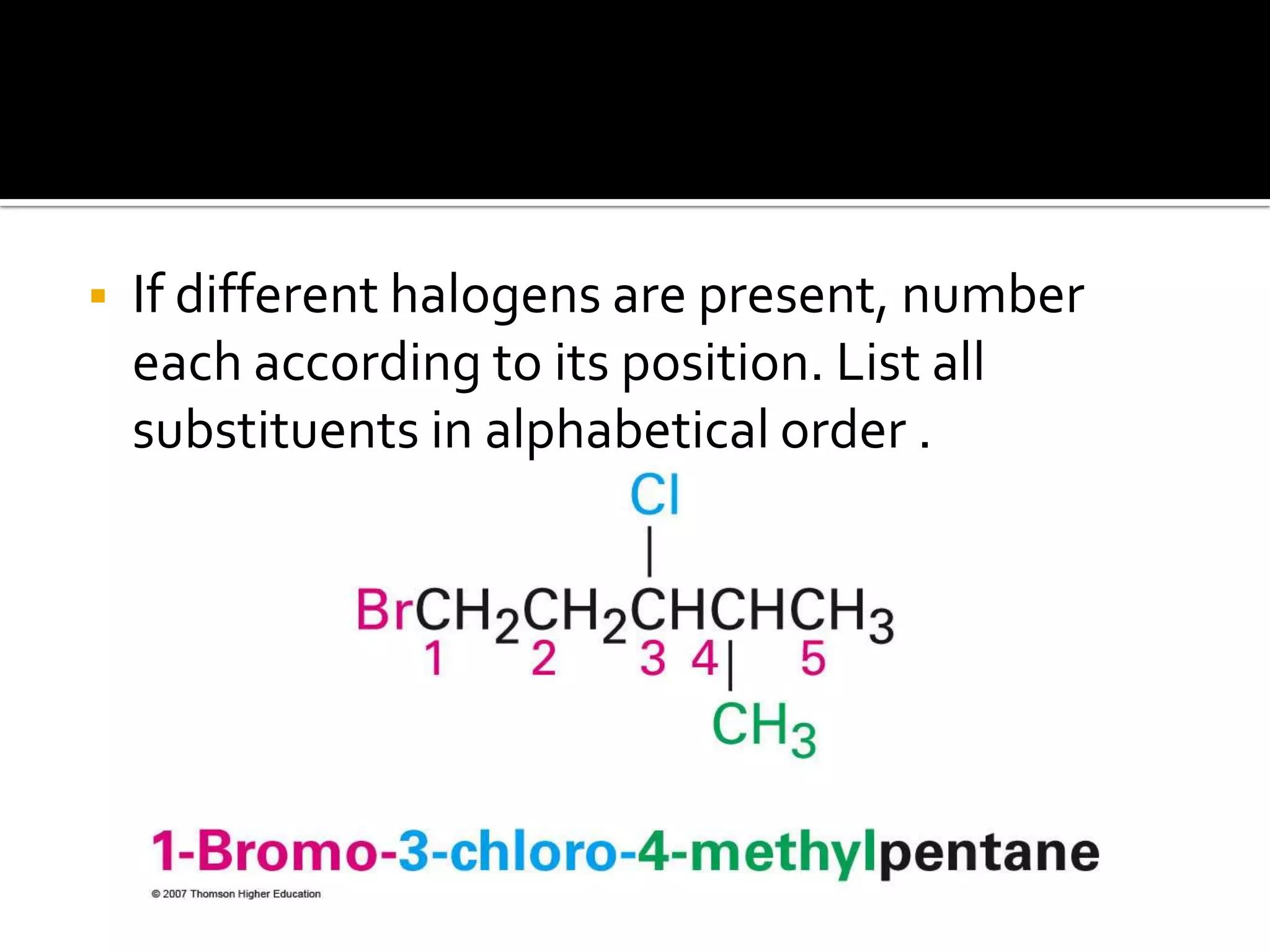
 If different halogens are present, number
each according to its position. List all
substituents in alphabetical order .
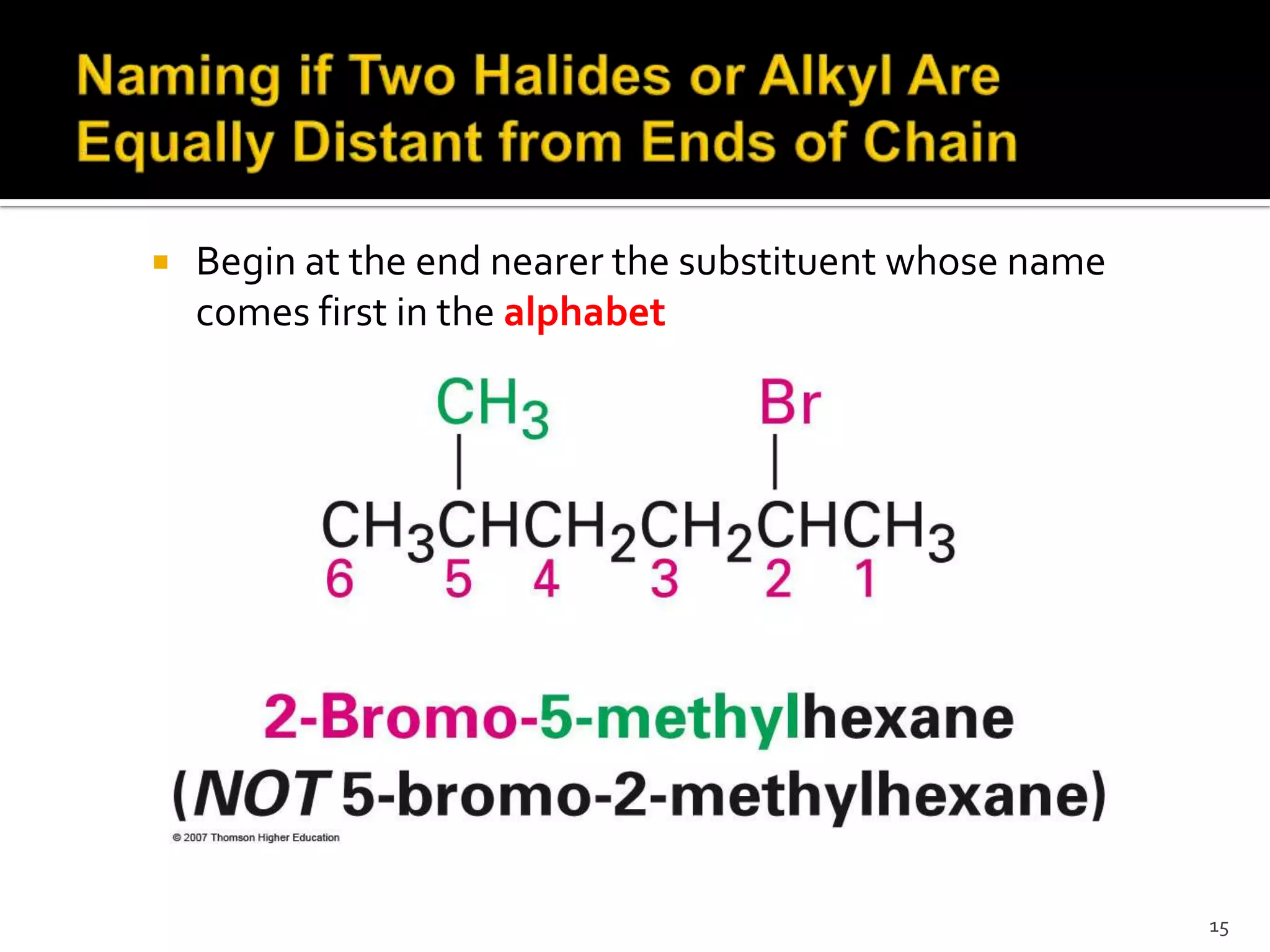
 Begin at the end nearer the substituent whose name
comes first in the alphabet
15
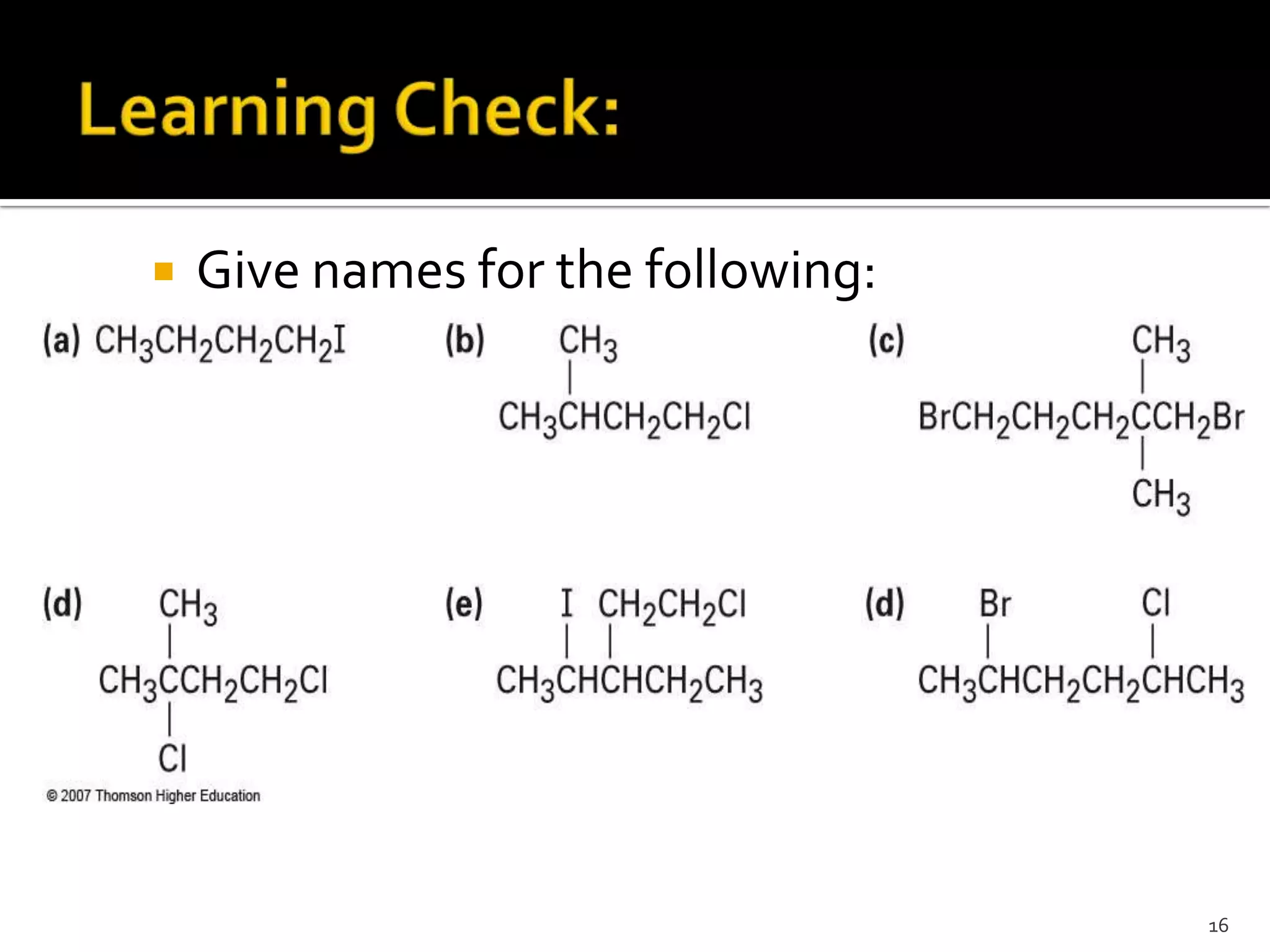
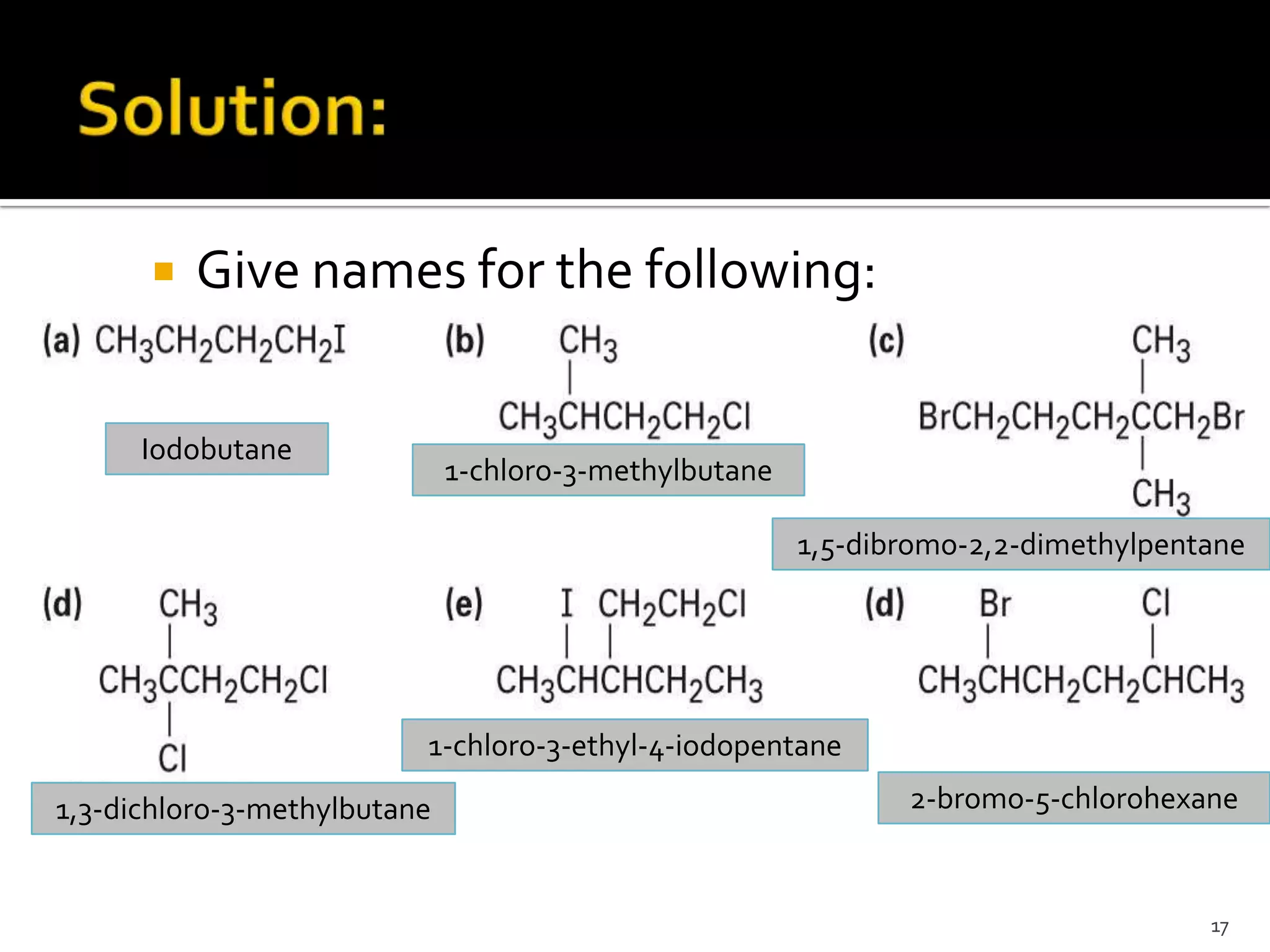
 Give names for the following:
16
 Give names for the following:
17
Iodobutane
1-chloro-3-methylbutane
1,5-dibromo-2,2-dimethylpentane
1,3-dichloro-3-methylbutane
1-chloro-3-ethyl-4-iodopentane
2-bromo-5-chlorohexane
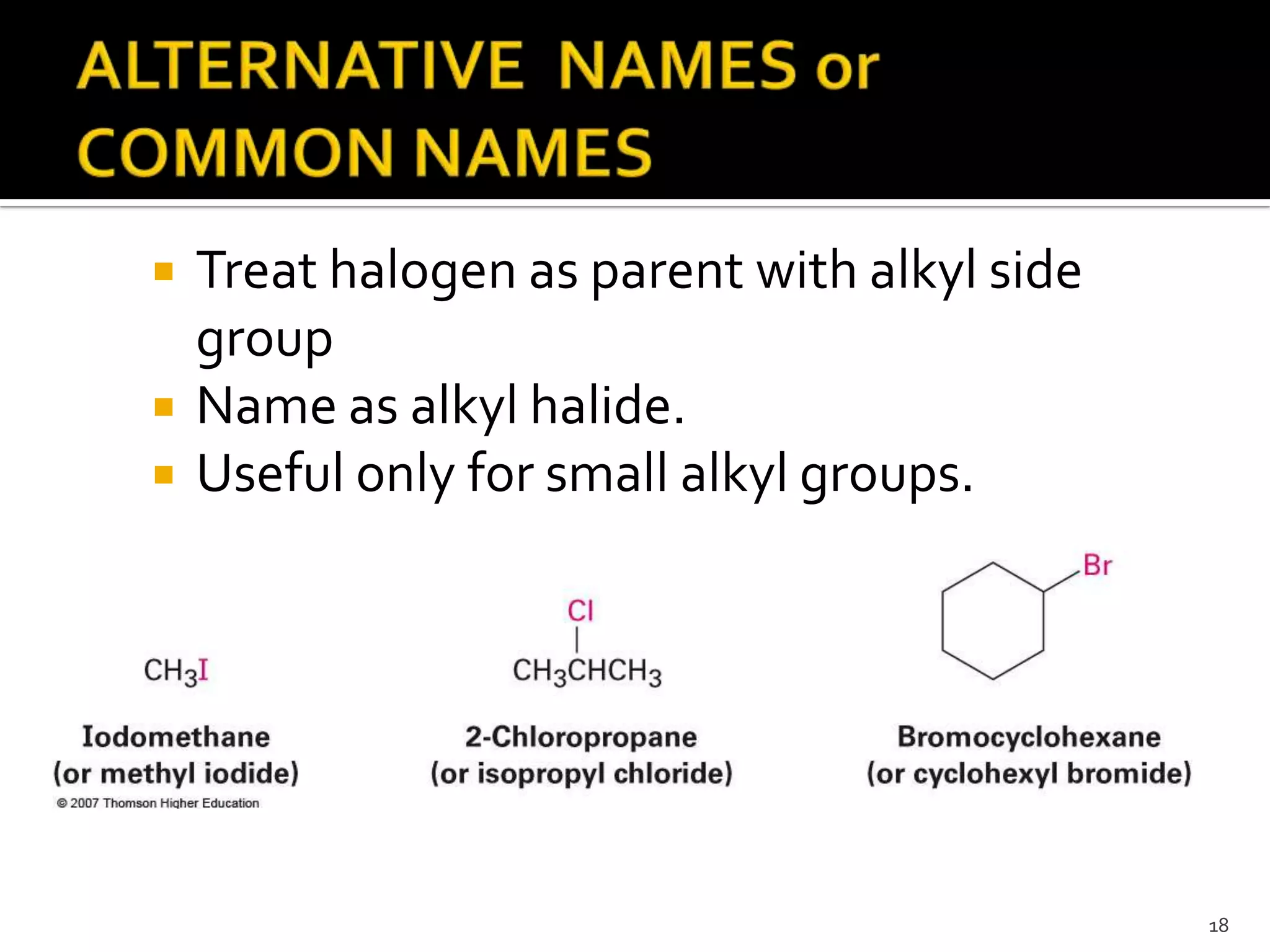
 Treat halogen as parent with alkyl side
group
 Name as alkyl halide.
 Useful only for small alkyl groups.
18
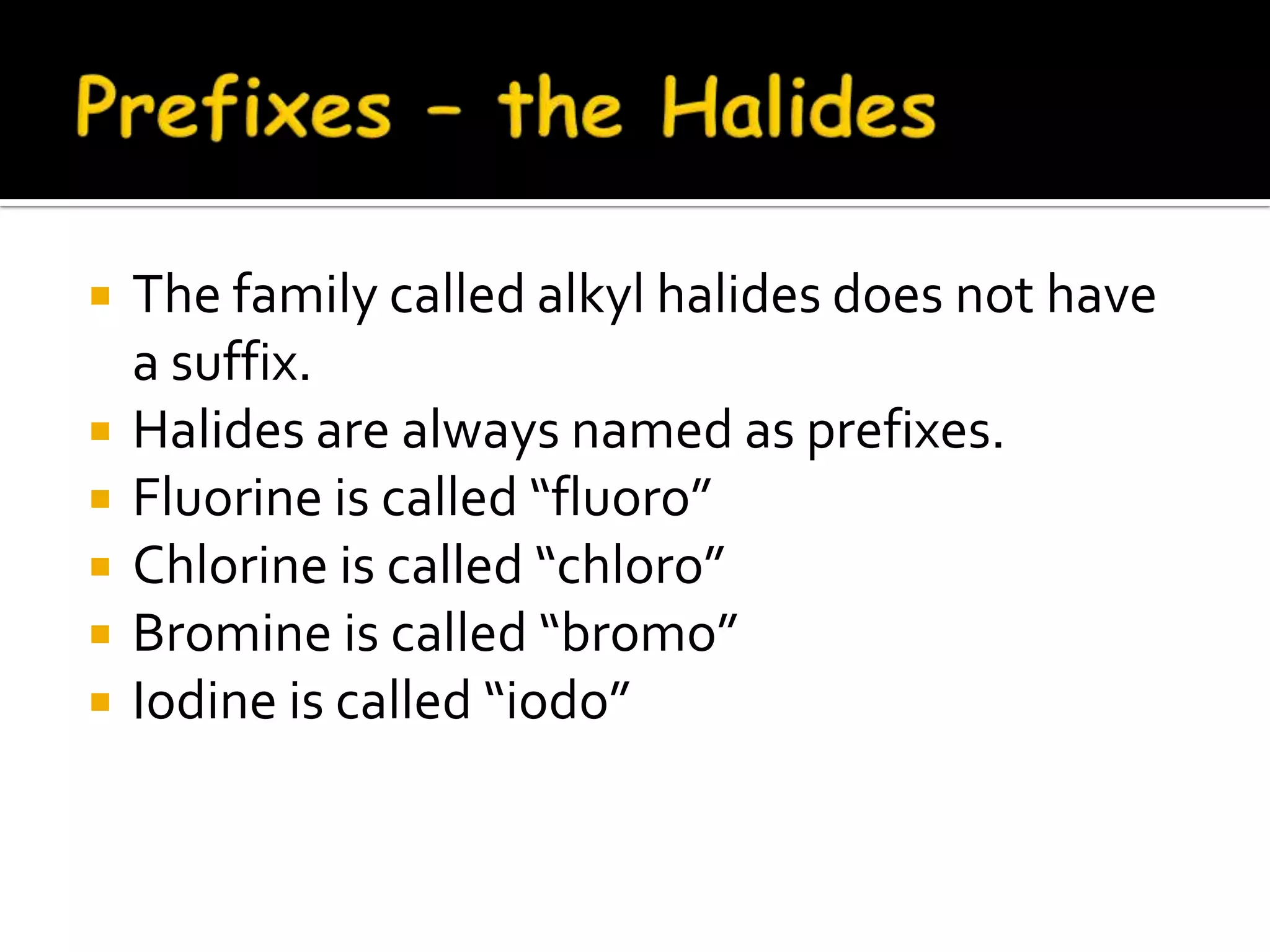
 The family called alkyl halides does not have
a suffix.
 Halides are always named as prefixes.
 Fluorine is called “fluoro”
 Chlorine is called “chloro”
 Bromine is called “bromo”
 Iodine is called “iodo”
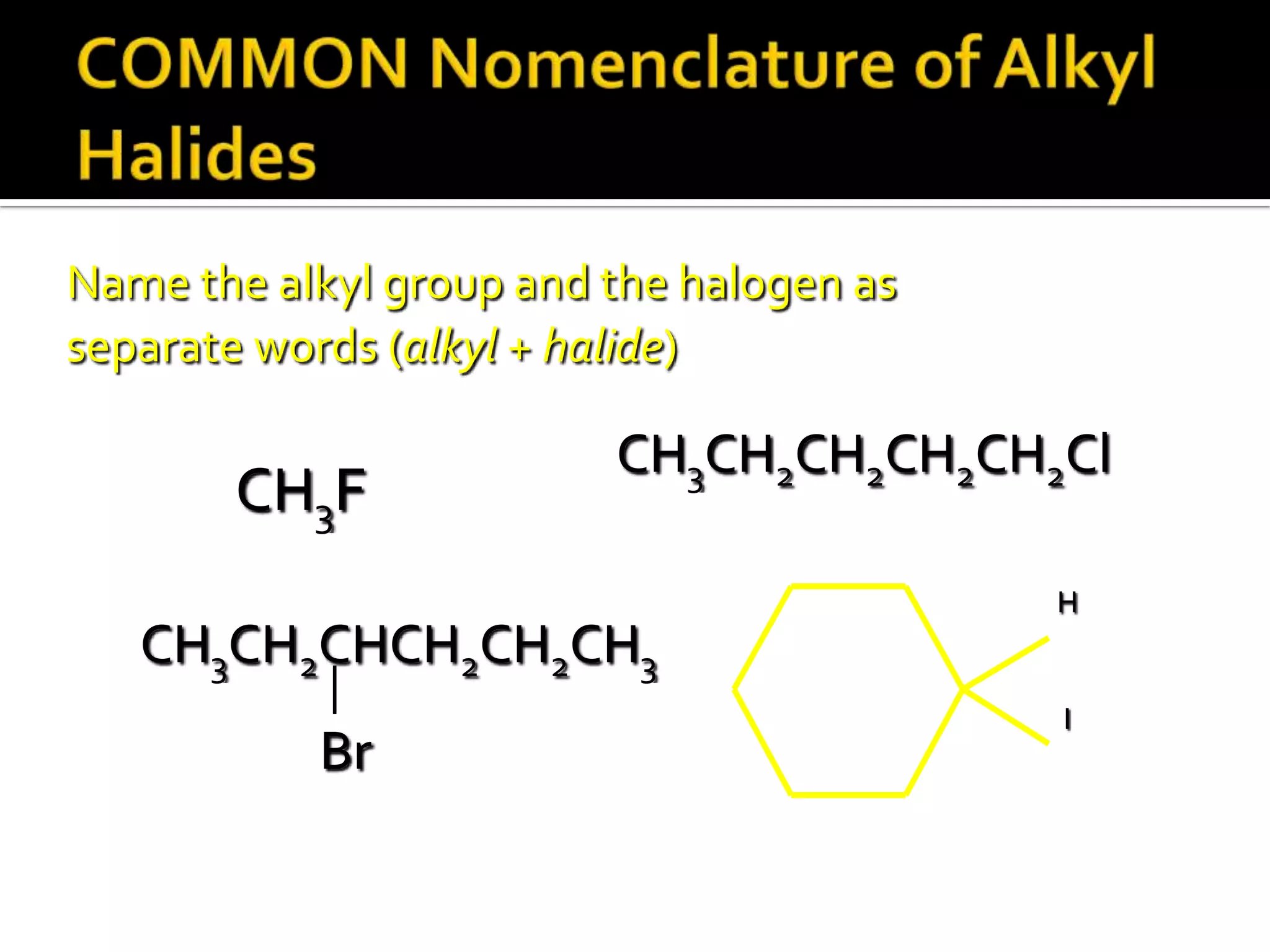
Name the alkyl group and the halogen as
separate words (alkyl + halide)
CH3F
CH3CH2CH2CH2CH2Cl
CH3CH2CHCH2CH2CH3
Br
H
I
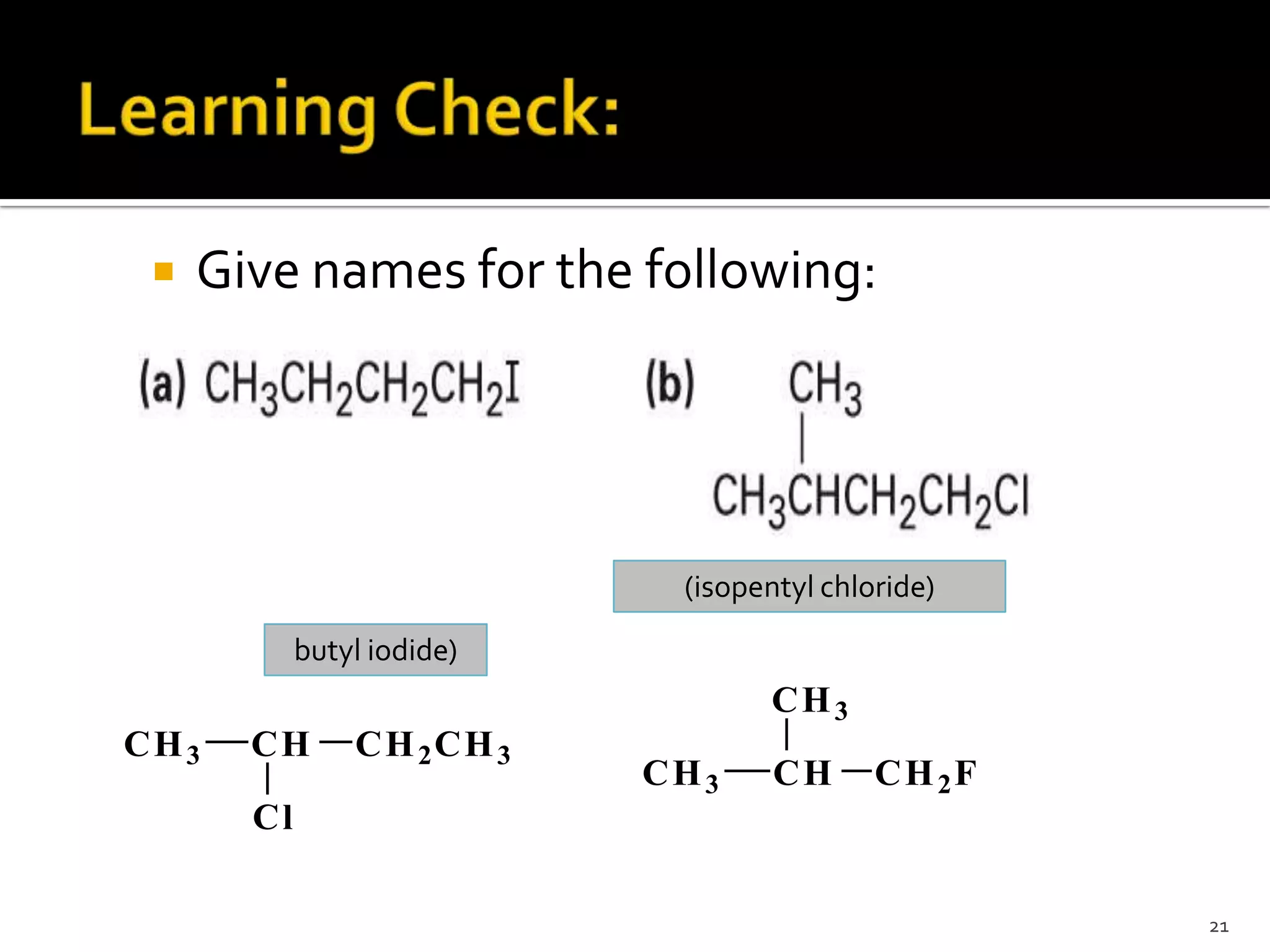
 Give names for the following:
21
butyl iodide)
(isopentyl chloride)
CH3 CH CH2CH3
Cl
CH3 CH
CH3
CH2F
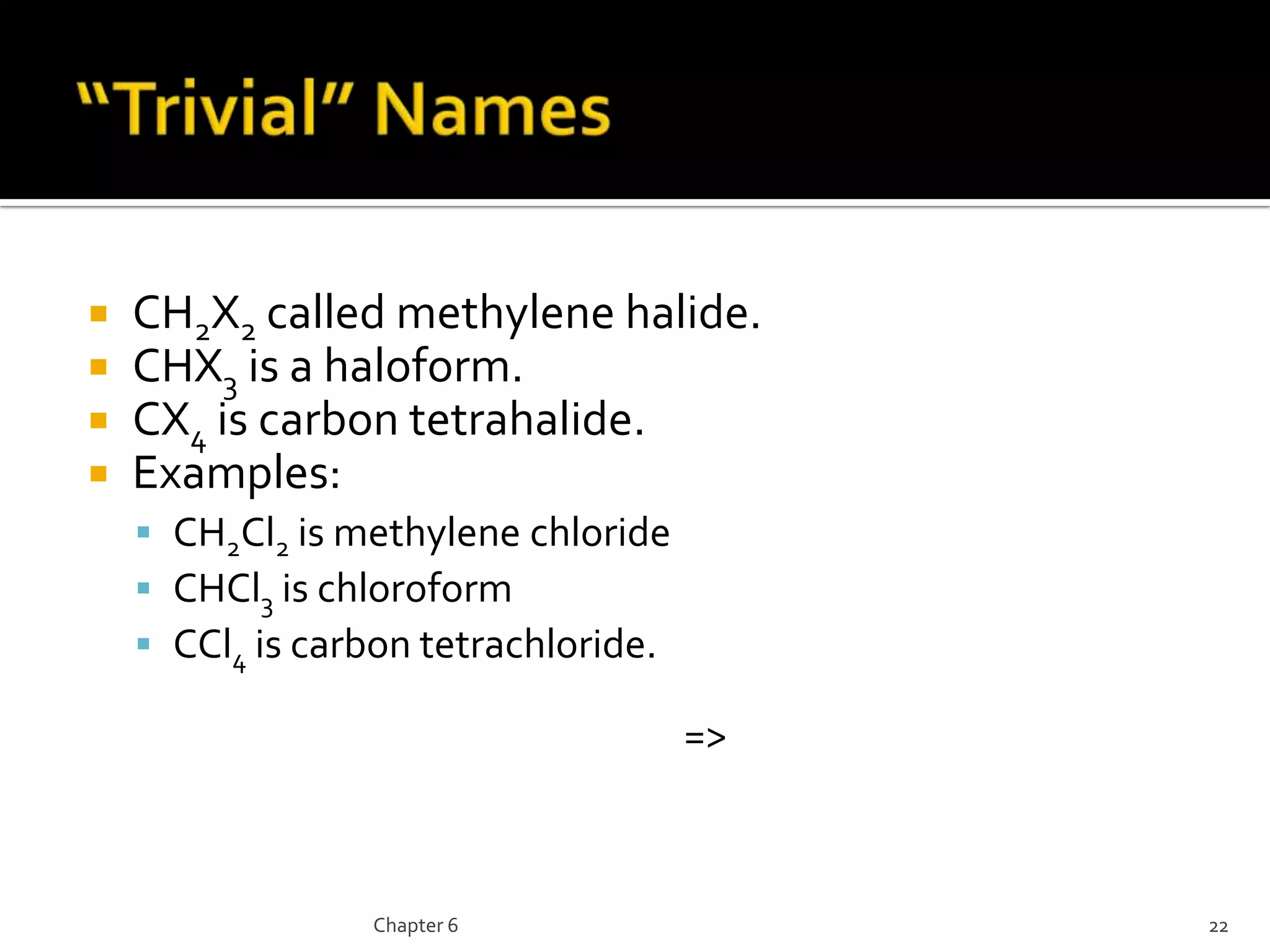
 CH2X2 called methylene halide.
 CHX3 is a haloform.
 CX4 is carbon tetrahalide.
 Examples:
 CH2Cl2 is methylene chloride
 CHCl3 is chloroform
 CCl4 is carbon tetrachloride.
=>
Chapter 6 22
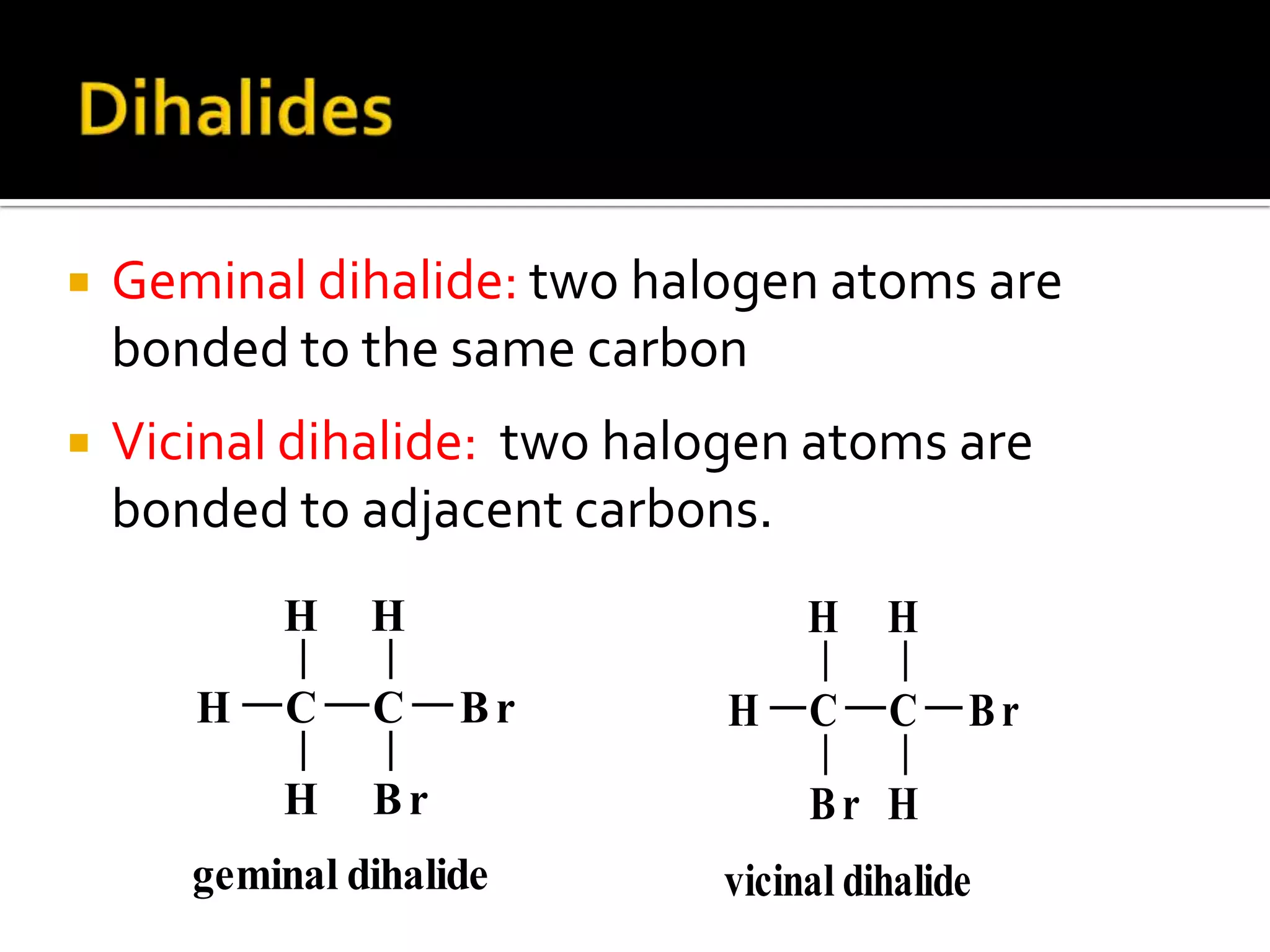
 Geminal dihalide: two halogen atoms are
bonded to the same carbon
 Vicinal dihalide: two halogen atoms are
bonded to adjacent carbons.
C
H
H
H
C
H
Br
Br
geminal dihalide
C
H
H
Br
C
H
H
Br
vicinal dihalide
 Solvents - degreasers and dry cleaning fluid
 Reagents for synthesis of other compounds
 Anesthetic: Halothane is CF3CHClBr
 CHCl3 used originally (toxic and carcinogenic)
 Freons, chlorofluorocarbons or CFC’s
 Freon 12, CF2Cl2, now replaced with Freon 22, CF2CHCl,
not as harmful to ozone layer.
 Pesticides - DDT banned in U.S.
 Some uses:
Fire-resistant solvents
Refrigerants
Pharmaceuticals and precursors
Classification and Nomenclature of Organic Halides

Classification and Nomenclature of Organic Halides

  • 1.
    CHAPTER 6 Presented By:Cyra Mae R. Soreda
  • 2.
  • 3.
     An organiccompound containing at least one carbon-halogen bond (C-X)  X (F, Cl, Br, I) replaces H  Can contain many C-X bonds 3
  • 4.
    Hydrocarbons can alsocontain other atoms, such as halogens (F, Cl, Br, I). Halogen atoms are treated like branching alkyl groups. Halogen Group Name F fluoro C chloro Br bromo I iodo
  • 5.
     An alkylhalide is classified according to the kind of carbon that bears the halogen.  Alkyl halides are classified into three classes:  Primary Alkyl Halide (Iº RX)  Secondary Alkyl Halide (2º RX)  Tertiary Alkyl Halide (3º RX)
  • 6.
     When onehydrogen atom of methyl group is replaced by an alkyl group, then the carbon of the substituted methyl is called Primary carbon atom. CH3-CH2-I (Ethyl iodide) For example:
  • 7.
     When twohydrogen atoms of methyl group are replace by any alkyl group, then the carbon atom of substituted methyl is called secondary carbon atom.. For example:
  • 8.
     When threehydrogen atoms of methyl groups are replaced by any alkyl group, then the carbon atom of the substituted methyl is calledTertiary carbon atom. For example:
  • 10.
  • 11.
     The twothat are most widely used are:  SYSTEMATIC NAME (IUPAC name)  ALTERNATIVE NAME (common names)  Both types can be applied to alcohols and alkyl halides.
  • 12.
     Find andname the parent chain. As naming alkanes, select the longest chain as the parent chain.  Number the parent chain. Always number the chain beginning at the end nearer the first substituent, regardless of whether t is alkyl or halo. 12
  • 13.
     If morethan one of the same kind of halogen is present, number each and use of the prefixes di-, tri-, tetra-, and so on. For example, 1,3-dichloro-3-methylbutane
  • 14.
     If differenthalogens are present, number each according to its position. List all substituents in alphabetical order .
  • 15.
     Begin atthe end nearer the substituent whose name comes first in the alphabet 15
  • 16.
     Give namesfor the following: 16
  • 17.
     Give namesfor the following: 17 Iodobutane 1-chloro-3-methylbutane 1,5-dibromo-2,2-dimethylpentane 1,3-dichloro-3-methylbutane 1-chloro-3-ethyl-4-iodopentane 2-bromo-5-chlorohexane
  • 18.
     Treat halogenas parent with alkyl side group  Name as alkyl halide.  Useful only for small alkyl groups. 18
  • 19.
     The familycalled alkyl halides does not have a suffix.  Halides are always named as prefixes.  Fluorine is called “fluoro”  Chlorine is called “chloro”  Bromine is called “bromo”  Iodine is called “iodo”
  • 20.
    Name the alkylgroup and the halogen as separate words (alkyl + halide) CH3F CH3CH2CH2CH2CH2Cl CH3CH2CHCH2CH2CH3 Br H I
  • 21.
     Give namesfor the following: 21 butyl iodide) (isopentyl chloride) CH3 CH CH2CH3 Cl CH3 CH CH3 CH2F
  • 22.
     CH2X2 calledmethylene halide.  CHX3 is a haloform.  CX4 is carbon tetrahalide.  Examples:  CH2Cl2 is methylene chloride  CHCl3 is chloroform  CCl4 is carbon tetrachloride. => Chapter 6 22
  • 23.
     Geminal dihalide:two halogen atoms are bonded to the same carbon  Vicinal dihalide: two halogen atoms are bonded to adjacent carbons. C H H H C H Br Br geminal dihalide C H H Br C H H Br vicinal dihalide
  • 24.
     Solvents -degreasers and dry cleaning fluid  Reagents for synthesis of other compounds  Anesthetic: Halothane is CF3CHClBr  CHCl3 used originally (toxic and carcinogenic)  Freons, chlorofluorocarbons or CFC’s  Freon 12, CF2Cl2, now replaced with Freon 22, CF2CHCl, not as harmful to ozone layer.  Pesticides - DDT banned in U.S.
  • 25.
     Some uses: Fire-resistantsolvents Refrigerants Pharmaceuticals and precursors