Chapter 21.1 and 2Functional Groups and Classes of Organic Compounds
Define “functional group” and explain why functional groups are important.Identify  and alcohols, alkyl halides, ethers, aldehydes, ketones, carboxylic acids, esters, and amines based on the functional group present in eachExplain the relationships between the properties and structures of compounds with various functional groupsObjectives:
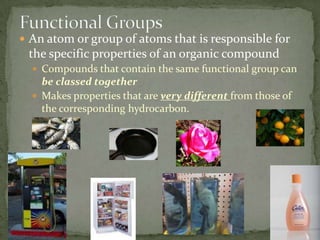
Functional GroupsAn atom or group of atoms that is responsible for the specific properties of an organic compoundCompounds that contain the same functional group can be classed togetherMakes properties that are very different from those of the corresponding hydrocarbon.
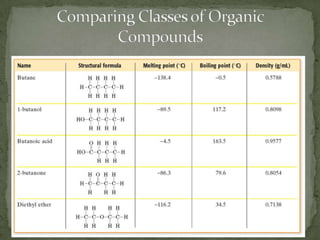
Comparing Classes of Organic Compounds
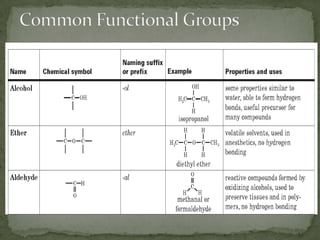
Common Functional Groups
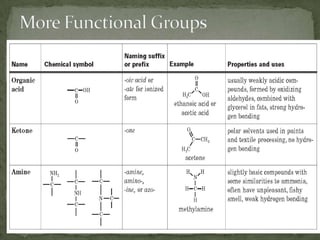
More Functional Groups
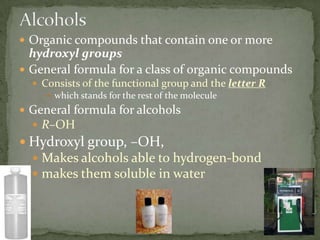
AlcoholsOrganic compounds that contain one or more hydroxyl groupsGeneral formula for a class of organic compoundsConsists of the functional group and the letter Rwhich stands for the rest of the moleculeGeneral formula for alcohols R–OHHydroxyl group, –OH, Makes alcohols able to hydrogen-bondmakes them soluble in water
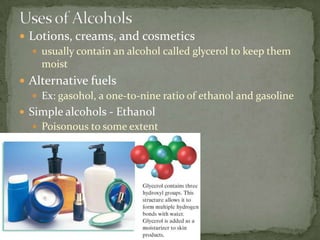
Uses of AlcoholsLotions, creams, and cosmeticsusually contain an alcohol called glycerol to keep them moistAlternative fuelsEx: gasohol, a one-to-nine ratio of ethanol and gasolineSimple alcohols - EthanolPoisonous to some extent
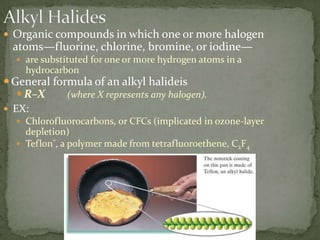
Alkyl HalidesOrganic compounds in which one or more halogen atoms—fluorine, chlorine, bromine, or iodine—are substituted for one or more hydrogen atoms in a hydrocarbonGeneral formula of an alkyl halideisR–X (where X represents any halogen).EX: Chlorofluorocarbons, or CFCs (implicated in ozone-layer depletion)Teflon®, a polymer made from tetrafluoroethene, C2F4
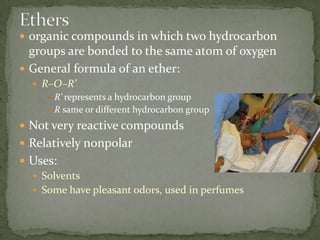
Ethersorganic compounds in which two hydrocarbon groups are bonded to the same atom of oxygenGeneral formula of an ether: R–O–R’R’ represents a hydrocarbon groupR same or different hydrocarbon groupNot very reactive compoundsRelatively nonpolarUses: SolventsSome have pleasant odors, used in perfumes
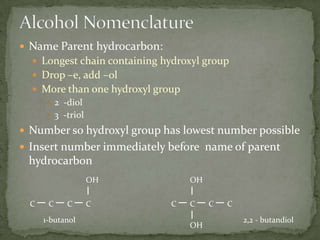
Alcohol NomenclatureName Parent hydrocarbon:Longest chain containing hydroxyl groupDrop –e, add –olMore than one hydroxyl group2  -diol3  -triolNumber so hydroxyl group has lowest number possibleInsert number immediately before  name of parent hydrocarbonOHOHCCCCCCCC1-butanol2,2 - butandiolOH
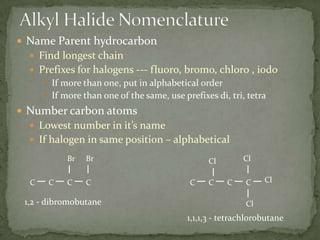
Alkyl Halide NomenclatureName Parent hydrocarbonFind longest chainPrefixes for halogens --- fluoro, bromo, chloro , iodoIf more than one, put in alphabetical orderIf more than one of the same, use prefixes di, tri, tetraNumber carbon atomsLowest number in it’s nameIf halogen in same position – alphabeticalBrBrClClClCCCCCCCC1,2 - dibromobutaneCl1,1,1,3 - tetrachlorobutane
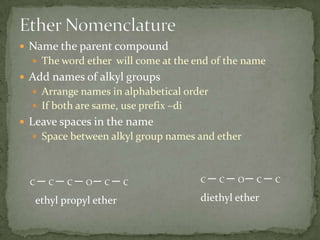
Ether NomenclatureName the parent compoundThe word ether  will come at the end of the nameAdd names of alkyl groupsArrange names in alphabetical orderIf both are same, use prefix –diLeave spaces in the nameSpace between alkyl group names and etherCOCCCCCOCCCdiethyl etherethyl propyl ether
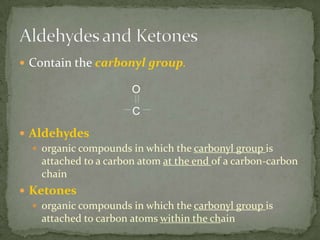
Contain the carbonyl group.Aldehydesorganic compounds in which the carbonyl group is attached to a carbon atom at the end of a carbon-carbon chainKetonesorganic compounds in which the carbonyl group is attached to carbon atoms within the chainAldehydes and Ketones
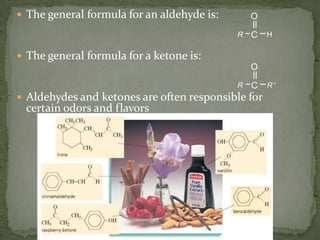
The general formula for an aldehyde is:The general formula for a ketone is:Aldehydes and ketones are often responsible for certain odors and flavors
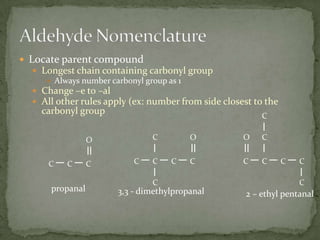
Locate parent compoundLongest chain containing carbonyl groupAlways number carbonyl group as 1Change –e to –alAll other rules apply (ex: number from side closest to the carbonyl groupAldehyde NomenclatureCOCOCOCCCCCCCCCCCCCpropanal3,3 - dimethylpropanal2 – ethyl pentanal
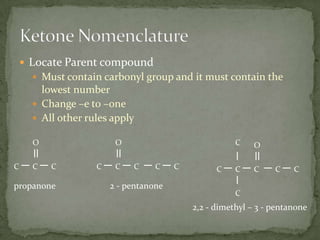
Locate Parent compoundMust contain carbonyl group and it must contain the lowest numberChange –e to –oneAll other rules applyKetone NomenclatureOOCOCCCCCCCCCCCCCpropanone2 - pentanoneC2,2 - dimethyl – 3 - pentanone
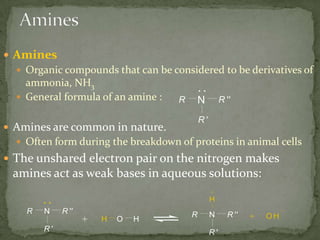
AminesAminesOrganic compounds that can be considered to be derivatives of ammonia, NH3General formula of an amine :Amines are common in nature. Often form during the breakdown of proteins in animal cellsThe unshared electron pair on the nitrogen makes amines act as weak bases in aqueous solutions:
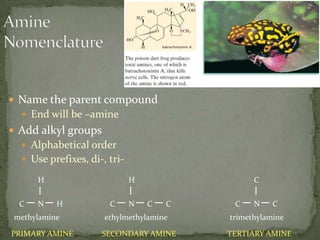
Amine NomenclatureName the parent compoundEnd will be –amineAdd alkyl groupsAlphabetical orderUse prefixes, di-, tri-HHCCHNCCNCCCNmethylamineethylmethylaminetrimethylaminePRIMARY AMINESECONDARY AMINETERTIARY AMINE
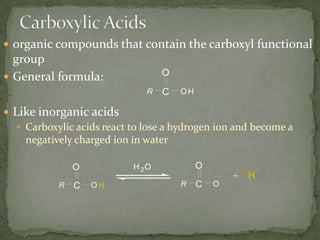
Carboxylic Acidsorganic compounds that contain the carboxyl functional groupGeneral formula:Like inorganic acidsCarboxylic acids react to lose a hydrogen ion and become a negatively charged ion in water
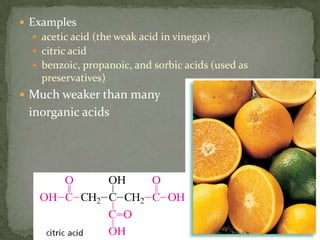
Examplesacetic acid (the weak acid in vinegar)citric acidbenzoic, propanoic, and sorbic acids (used as preservatives)Much weaker than many inorganic acids
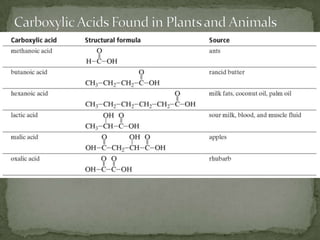
Carboxylic Acids Found in Plants and Animals
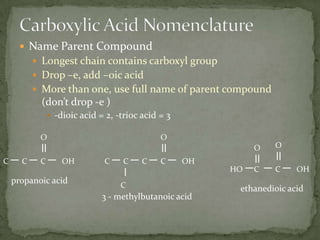
Carboxylic Acid NomenclatureName Parent CompoundLongest chain contains carboxyl groupDrop –e, add –oic acidMore than one, use full name of parent compound (don’t drop -e )-dioic acid = 2, -trioc acid = 3OOOOCCCOHCCOHCCCOHCHOpropanoic acidCethanedioic acid3 - methylbutanoic acid
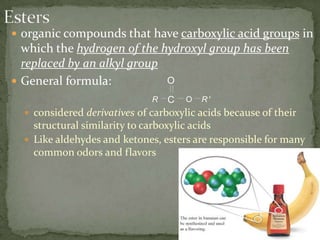
Estersorganic compounds that have carboxylic acid groups in which the hydrogen of the hydroxyl group has been replaced by an alkyl groupGeneral formula:considered derivatives of carboxylic acids because of their structural similarity to carboxylic acidsLike aldehydes and ketones, esters are responsible for many common odors and flavors
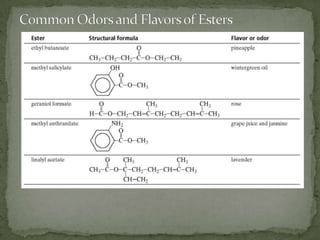
Common Odors and Flavors of Esters
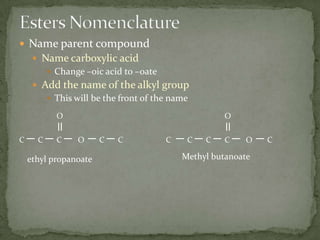
Esters NomenclatureName parent compoundName carboxylic acidChange –oic acid to –oateAdd the name of the alkyl groupThis will be the front of the nameOOCOCCCCCOCCCCMethyl butanoateethyl propanoate

Chapter 21.1 : Functional Groups and Classes of Organic Compounds

  • 1.
    Chapter 21.1 and2Functional Groups and Classes of Organic Compounds
  • 2.
    Define “functional group”and explain why functional groups are important.Identify and alcohols, alkyl halides, ethers, aldehydes, ketones, carboxylic acids, esters, and amines based on the functional group present in eachExplain the relationships between the properties and structures of compounds with various functional groupsObjectives:
  • 3.
    Functional GroupsAn atomor group of atoms that is responsible for the specific properties of an organic compoundCompounds that contain the same functional group can be classed togetherMakes properties that are very different from those of the corresponding hydrocarbon.
  • 4.
    Comparing Classes ofOrganic Compounds
  • 5.
  • 6.
  • 7.
    AlcoholsOrganic compounds thatcontain one or more hydroxyl groupsGeneral formula for a class of organic compoundsConsists of the functional group and the letter Rwhich stands for the rest of the moleculeGeneral formula for alcohols R–OHHydroxyl group, –OH, Makes alcohols able to hydrogen-bondmakes them soluble in water
  • 8.
    Uses of AlcoholsLotions,creams, and cosmeticsusually contain an alcohol called glycerol to keep them moistAlternative fuelsEx: gasohol, a one-to-nine ratio of ethanol and gasolineSimple alcohols - EthanolPoisonous to some extent
  • 9.
    Alkyl HalidesOrganic compoundsin which one or more halogen atoms—fluorine, chlorine, bromine, or iodine—are substituted for one or more hydrogen atoms in a hydrocarbonGeneral formula of an alkyl halideisR–X (where X represents any halogen).EX: Chlorofluorocarbons, or CFCs (implicated in ozone-layer depletion)Teflon®, a polymer made from tetrafluoroethene, C2F4
  • 10.
    Ethersorganic compounds inwhich two hydrocarbon groups are bonded to the same atom of oxygenGeneral formula of an ether: R–O–R’R’ represents a hydrocarbon groupR same or different hydrocarbon groupNot very reactive compoundsRelatively nonpolarUses: SolventsSome have pleasant odors, used in perfumes
  • 11.
    Alcohol NomenclatureName Parenthydrocarbon:Longest chain containing hydroxyl groupDrop –e, add –olMore than one hydroxyl group2 -diol3 -triolNumber so hydroxyl group has lowest number possibleInsert number immediately before name of parent hydrocarbonOHOHCCCCCCCC1-butanol2,2 - butandiolOH
  • 12.
    Alkyl Halide NomenclatureNameParent hydrocarbonFind longest chainPrefixes for halogens --- fluoro, bromo, chloro , iodoIf more than one, put in alphabetical orderIf more than one of the same, use prefixes di, tri, tetraNumber carbon atomsLowest number in it’s nameIf halogen in same position – alphabeticalBrBrClClClCCCCCCCC1,2 - dibromobutaneCl1,1,1,3 - tetrachlorobutane
  • 13.
    Ether NomenclatureName theparent compoundThe word ether will come at the end of the nameAdd names of alkyl groupsArrange names in alphabetical orderIf both are same, use prefix –diLeave spaces in the nameSpace between alkyl group names and etherCOCCCCCOCCCdiethyl etherethyl propyl ether
  • 14.
    Contain the carbonylgroup.Aldehydesorganic compounds in which the carbonyl group is attached to a carbon atom at the end of a carbon-carbon chainKetonesorganic compounds in which the carbonyl group is attached to carbon atoms within the chainAldehydes and Ketones
  • 15.
    The general formulafor an aldehyde is:The general formula for a ketone is:Aldehydes and ketones are often responsible for certain odors and flavors
  • 16.
    Locate parent compoundLongestchain containing carbonyl groupAlways number carbonyl group as 1Change –e to –alAll other rules apply (ex: number from side closest to the carbonyl groupAldehyde NomenclatureCOCOCOCCCCCCCCCCCCCpropanal3,3 - dimethylpropanal2 – ethyl pentanal
  • 17.
    Locate Parent compoundMustcontain carbonyl group and it must contain the lowest numberChange –e to –oneAll other rules applyKetone NomenclatureOOCOCCCCCCCCCCCCCpropanone2 - pentanoneC2,2 - dimethyl – 3 - pentanone
  • 18.
    AminesAminesOrganic compounds thatcan be considered to be derivatives of ammonia, NH3General formula of an amine :Amines are common in nature. Often form during the breakdown of proteins in animal cellsThe unshared electron pair on the nitrogen makes amines act as weak bases in aqueous solutions:
  • 19.
    Amine NomenclatureName theparent compoundEnd will be –amineAdd alkyl groupsAlphabetical orderUse prefixes, di-, tri-HHCCHNCCNCCCNmethylamineethylmethylaminetrimethylaminePRIMARY AMINESECONDARY AMINETERTIARY AMINE
  • 20.
    Carboxylic Acidsorganic compoundsthat contain the carboxyl functional groupGeneral formula:Like inorganic acidsCarboxylic acids react to lose a hydrogen ion and become a negatively charged ion in water
  • 21.
    Examplesacetic acid (theweak acid in vinegar)citric acidbenzoic, propanoic, and sorbic acids (used as preservatives)Much weaker than many inorganic acids
  • 22.
    Carboxylic Acids Foundin Plants and Animals
  • 23.
    Carboxylic Acid NomenclatureNameParent CompoundLongest chain contains carboxyl groupDrop –e, add –oic acidMore than one, use full name of parent compound (don’t drop -e )-dioic acid = 2, -trioc acid = 3OOOOCCCOHCCOHCCCOHCHOpropanoic acidCethanedioic acid3 - methylbutanoic acid
  • 24.
    Estersorganic compounds thathave carboxylic acid groups in which the hydrogen of the hydroxyl group has been replaced by an alkyl groupGeneral formula:considered derivatives of carboxylic acids because of their structural similarity to carboxylic acidsLike aldehydes and ketones, esters are responsible for many common odors and flavors
  • 25.
    Common Odors andFlavors of Esters
  • 26.
    Esters NomenclatureName parentcompoundName carboxylic acidChange –oic acid to –oateAdd the name of the alkyl groupThis will be the front of the nameOOCOCCCCCOCCCCMethyl butanoateethyl propanoate