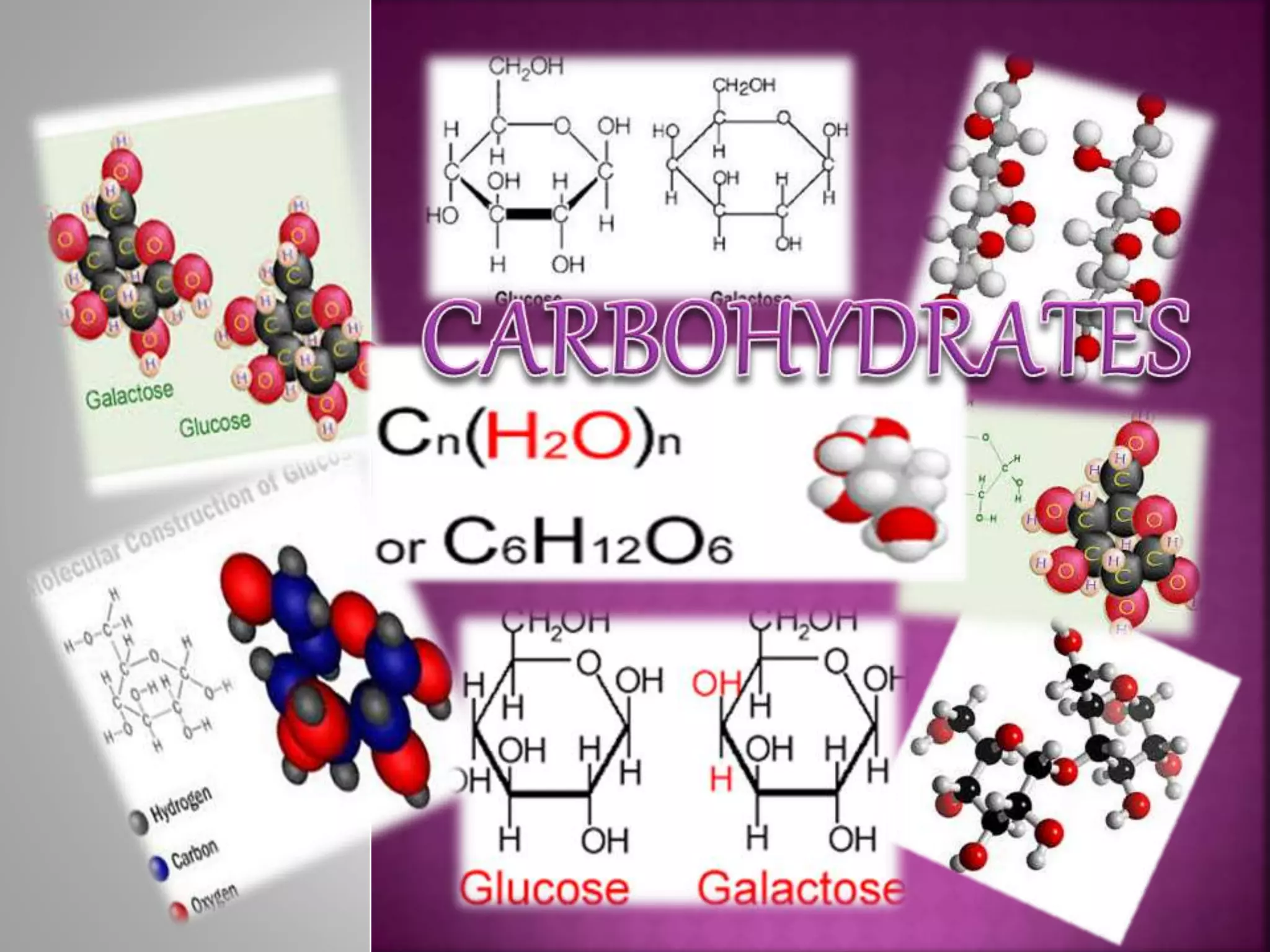
 most abundant compounds on earth
Carbohydrates are made of carbon, hydrogen and
oxygen atoms.
The formula for a carbohydrate is (CH2O)n
The n represents the number of times the CH2O unite
is repeated.
 Monosaccharides
Disaccharides
Polysaccharides
 A Monosaccharide is made up of 1 sugar
unit.
 Monos are reducing sugars.
 The common monosaccharides are :
oGlucose
oFructose
oGalactose
The chemical formula for glucose is
C6H12O6
serves as the essential energy source,
and is commonly known as blood sugar
or dextrose.
Sources of glucose includes starch,
the major storage form of
carbohydrate in plant
•The
structure on
the left is a
simplified
structure of
glucose
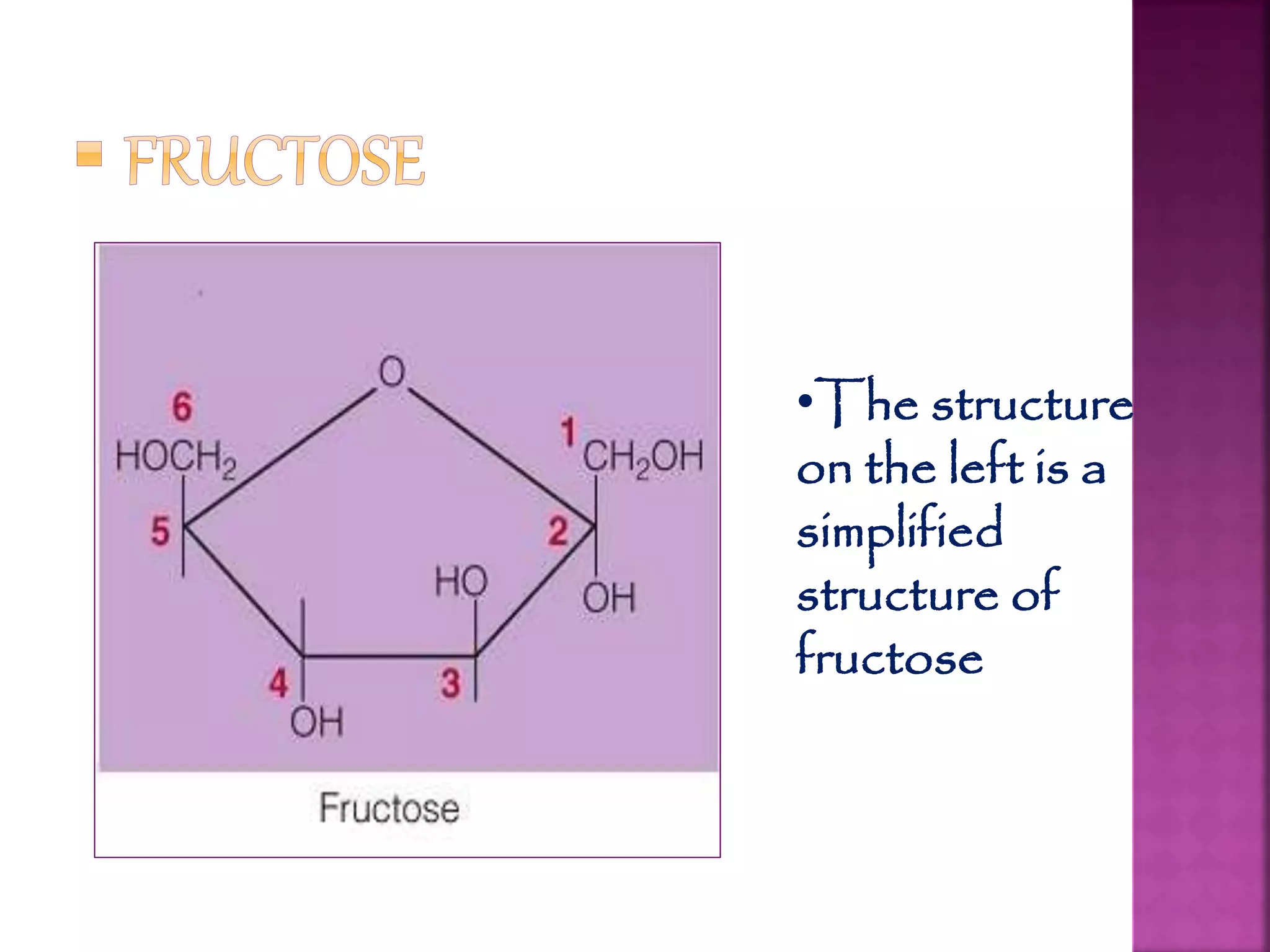
 “fruit sugar”
Fructose is the sweetest, occurs naturally
in honey and fruits, and is added to many
foods in the form of high-fructose corn
syrup.
•The structure
on the left is a
simplified
structure of
fructose
Galactose rarely occurs naturally as a
single sugar.
 Galactose is not normally found in
nature in large quantities, however, it
combines with glucose to form lactose in
milk
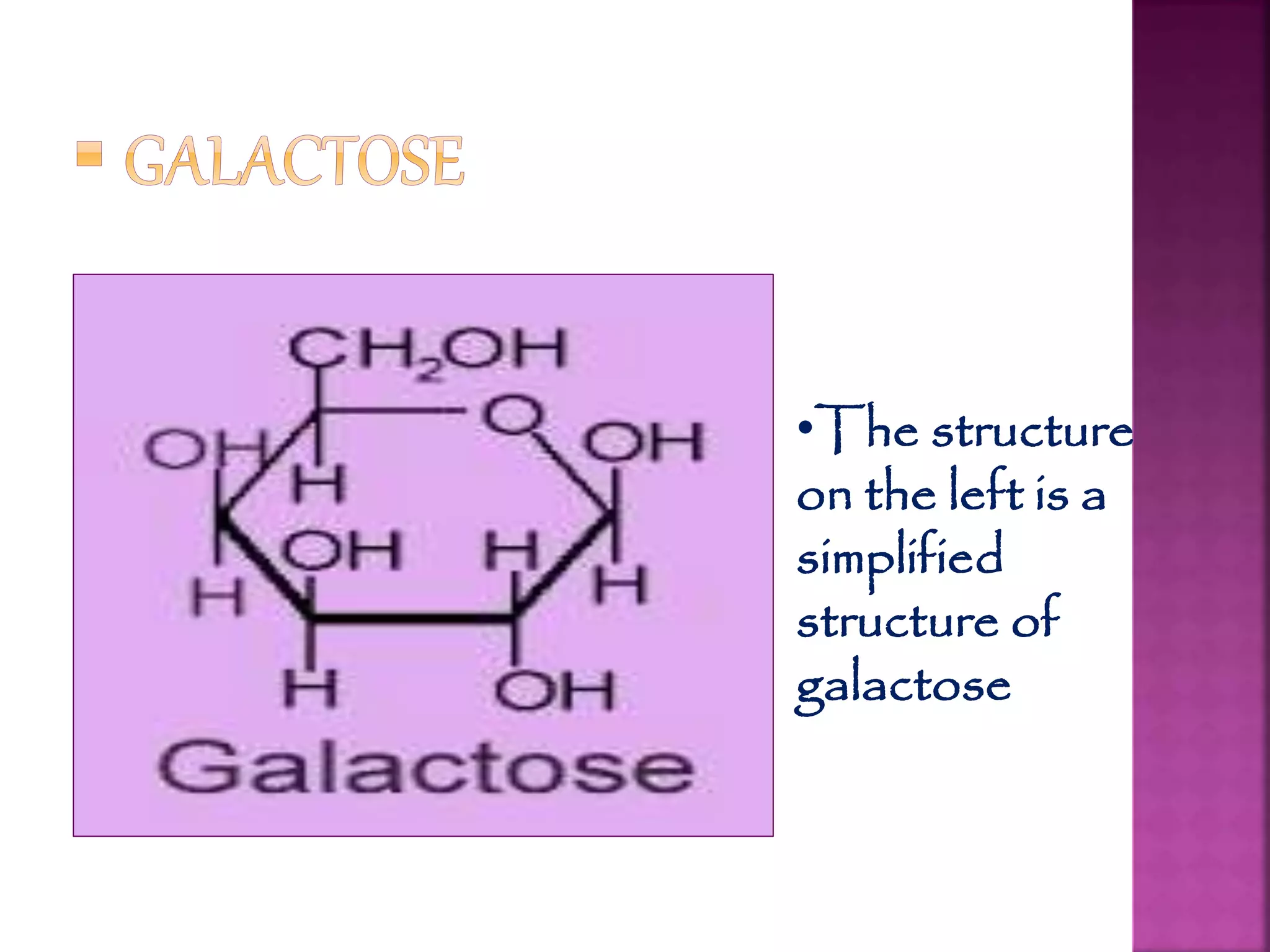
•The structure
on the left is a
simplified
structure of
galactose
 This is when two monosaccharides join to form
a Disaccharide.
 The reaction involves the water been given off.
 means “two sugars”
 formed by a condensation reaction where
one molecule of water condenses or is
released during the joining of two
monosaccharides
The common disaccharides are:
 sucrose
 lactose
 maltose
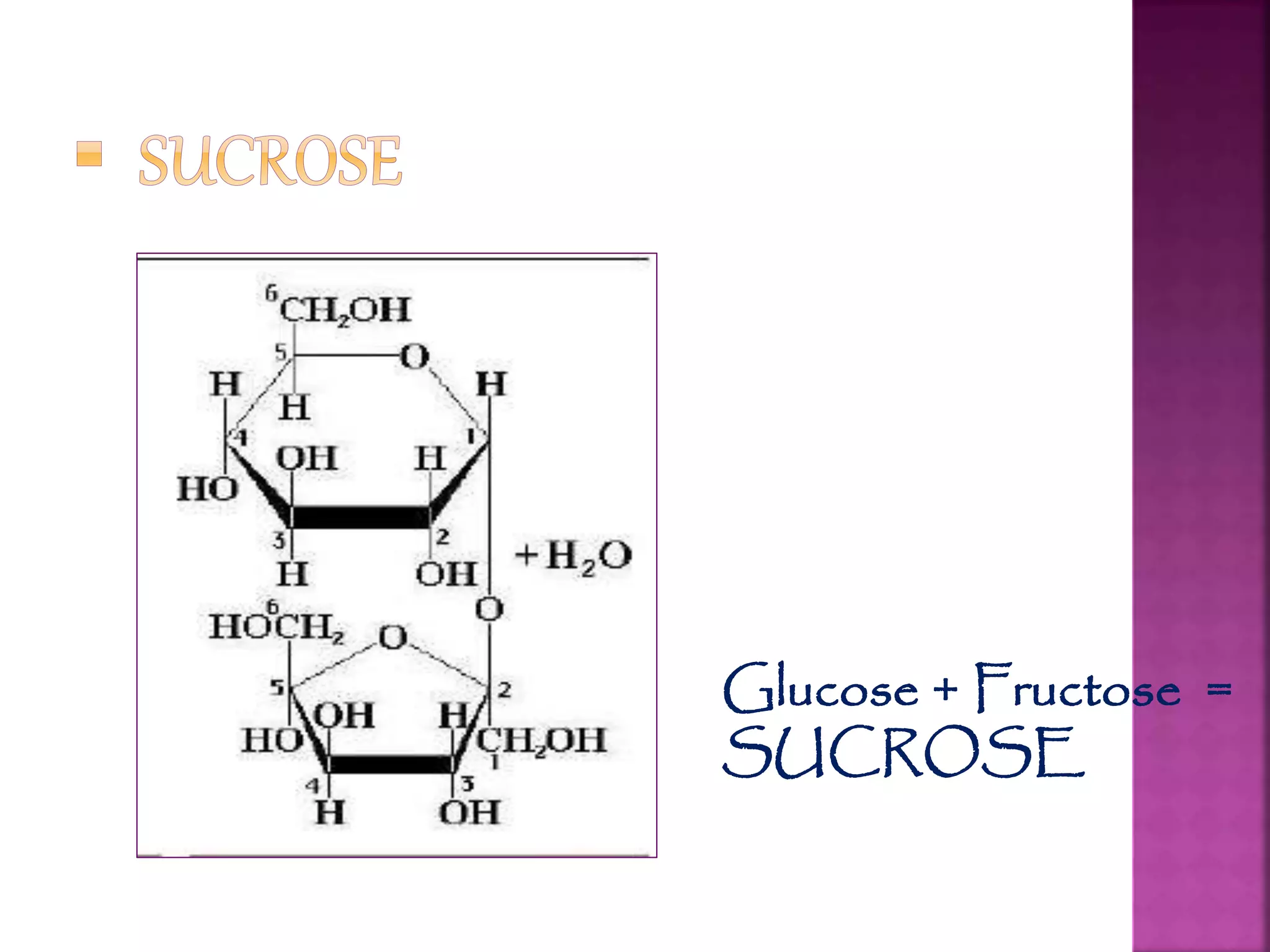
 sucrose is found in common table sugar
It is composed of glucose and fructose
 found naturally in plants: sugarcane,
sugar beets, honey and maple syrup
Glucose + Fructose =
SUCROSE
 “milk sugar”
 it is composed of galactose and glucose
It is found in milk and milk products
 The bond formed between two
monosaccharides is called a beta
glycosidic bond
Glucose + Galactose = LACTOSE
derives its name from its presence in malt,
the juice from sprouted barley and other
cereal grains
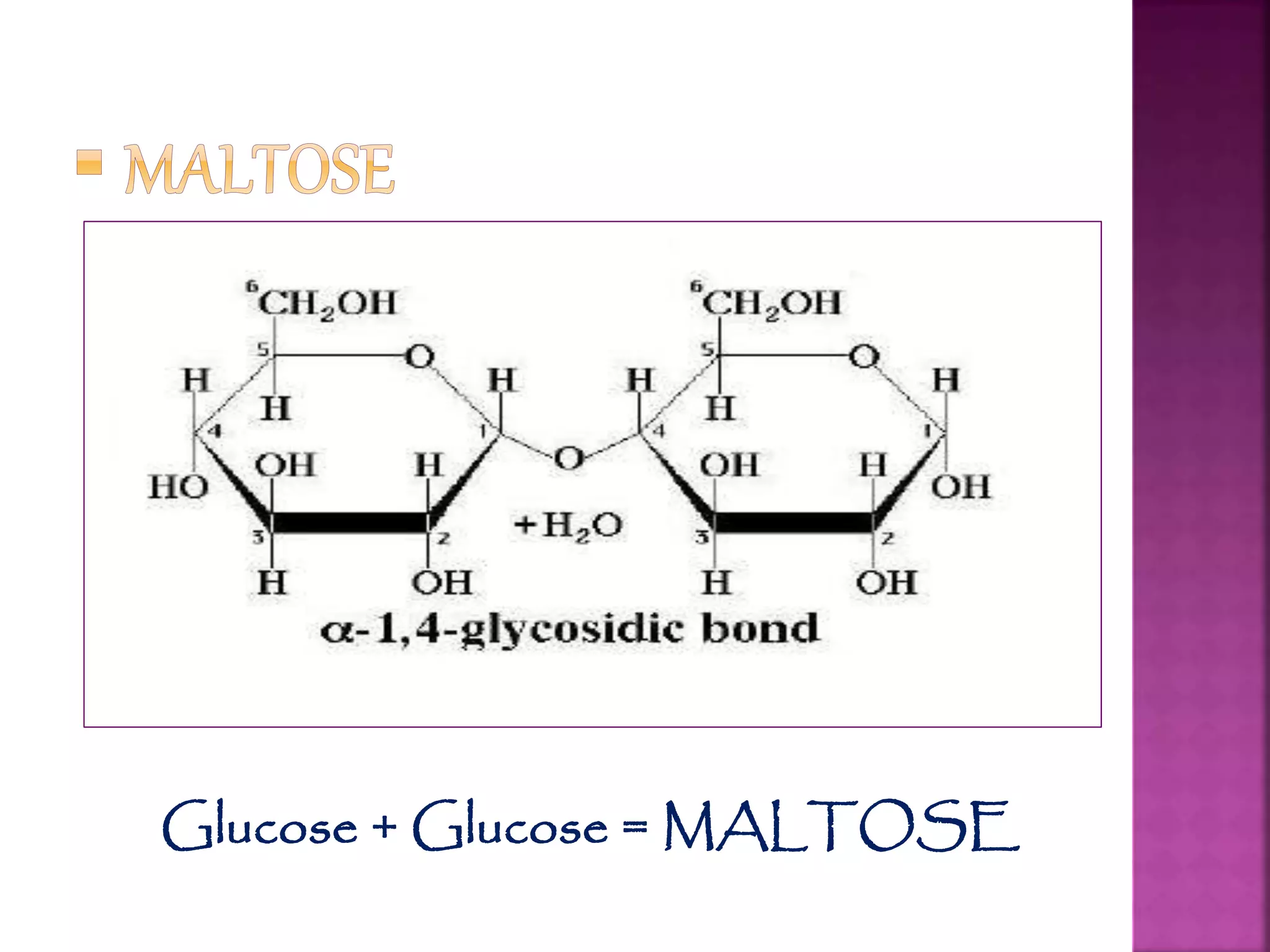
 is the final disaccharide and consists of
two glucose joined by an alpha glycosidic
bond
Glucose + Glucose = MALTOSE
 are usually monomers and consist of
thousands of repeating glucose units.
Types of Polysaccharides
• Starch
• Glycogen
• Cellulose
 the major storage form of carbohydrate in
plants
 Found in rice, corn, barley, potatoes,
tubers, and legumes
 Starch consists of two compounds:
 Amylose – this is made up of a single
chain of α glucose molecules that form
spirals
 amylopectin – this is made up of
branched chains of α glucose
Amylose Amylopectin
• Storage form of glucose in the body
•Provides a rapid release of energy when needed
 form cell walls in plant cells
 also called fiber or ruffage
 The role of cellulose is to impart
strength and rigidity to plant cell walls,
which can withstand high hydrostatic
pressure gradients.
The polysaccharide cellulose is composed of
glucose units connected by β glycosidic bonds
Carbohydrates Basic
Carbohydrates Basic

Carbohydrates Basic

  • 2.
     most abundantcompounds on earth Carbohydrates are made of carbon, hydrogen and oxygen atoms. The formula for a carbohydrate is (CH2O)n The n represents the number of times the CH2O unite is repeated.
  • 3.
  • 4.
     A Monosaccharideis made up of 1 sugar unit.  Monos are reducing sugars.  The common monosaccharides are : oGlucose oFructose oGalactose
  • 5.
    The chemical formulafor glucose is C6H12O6 serves as the essential energy source, and is commonly known as blood sugar or dextrose. Sources of glucose includes starch, the major storage form of carbohydrate in plant
  • 6.
    •The structure on the leftis a simplified structure of glucose
  • 7.
     “fruit sugar” Fructoseis the sweetest, occurs naturally in honey and fruits, and is added to many foods in the form of high-fructose corn syrup.
  • 8.
    •The structure on theleft is a simplified structure of fructose
  • 9.
    Galactose rarely occursnaturally as a single sugar.  Galactose is not normally found in nature in large quantities, however, it combines with glucose to form lactose in milk
  • 10.
    •The structure on theleft is a simplified structure of galactose
  • 11.
     This iswhen two monosaccharides join to form a Disaccharide.  The reaction involves the water been given off.
  • 12.
     means “twosugars”  formed by a condensation reaction where one molecule of water condenses or is released during the joining of two monosaccharides The common disaccharides are:  sucrose  lactose  maltose
  • 13.
     sucrose isfound in common table sugar It is composed of glucose and fructose  found naturally in plants: sugarcane, sugar beets, honey and maple syrup
  • 14.
  • 15.
     “milk sugar” it is composed of galactose and glucose It is found in milk and milk products  The bond formed between two monosaccharides is called a beta glycosidic bond
  • 16.
  • 17.
    derives its namefrom its presence in malt, the juice from sprouted barley and other cereal grains  is the final disaccharide and consists of two glucose joined by an alpha glycosidic bond
  • 18.
  • 19.
     are usuallymonomers and consist of thousands of repeating glucose units. Types of Polysaccharides • Starch • Glycogen • Cellulose
  • 20.
     the majorstorage form of carbohydrate in plants  Found in rice, corn, barley, potatoes, tubers, and legumes  Starch consists of two compounds:  Amylose – this is made up of a single chain of α glucose molecules that form spirals  amylopectin – this is made up of branched chains of α glucose
  • 21.
  • 22.
    • Storage formof glucose in the body •Provides a rapid release of energy when needed
  • 23.
     form cellwalls in plant cells  also called fiber or ruffage  The role of cellulose is to impart strength and rigidity to plant cell walls, which can withstand high hydrostatic pressure gradients.
  • 24.
    The polysaccharide celluloseis composed of glucose units connected by β glycosidic bonds