Classical vs Operant conditioning
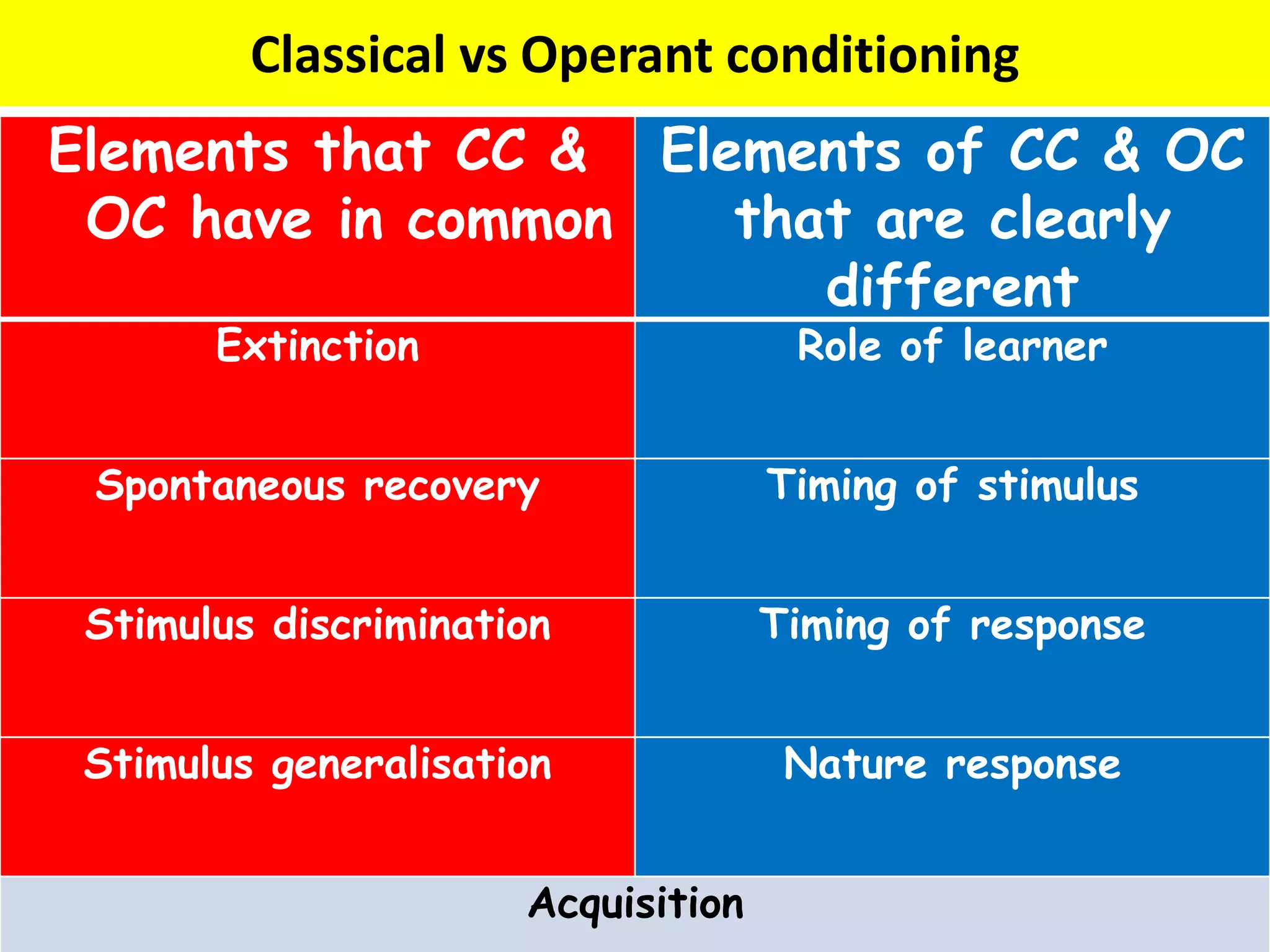
Elements that CC & Elements of CC & OC
 OC have in common    that are clearly
                         different
       Extinction                    Role of learner


 Spontaneous recovery               Timing of stimulus


 Stimulus discrimination            Timing of response


 Stimulus generalisation             Nature response


                      Acquisition
Classical vs Operant conditioning
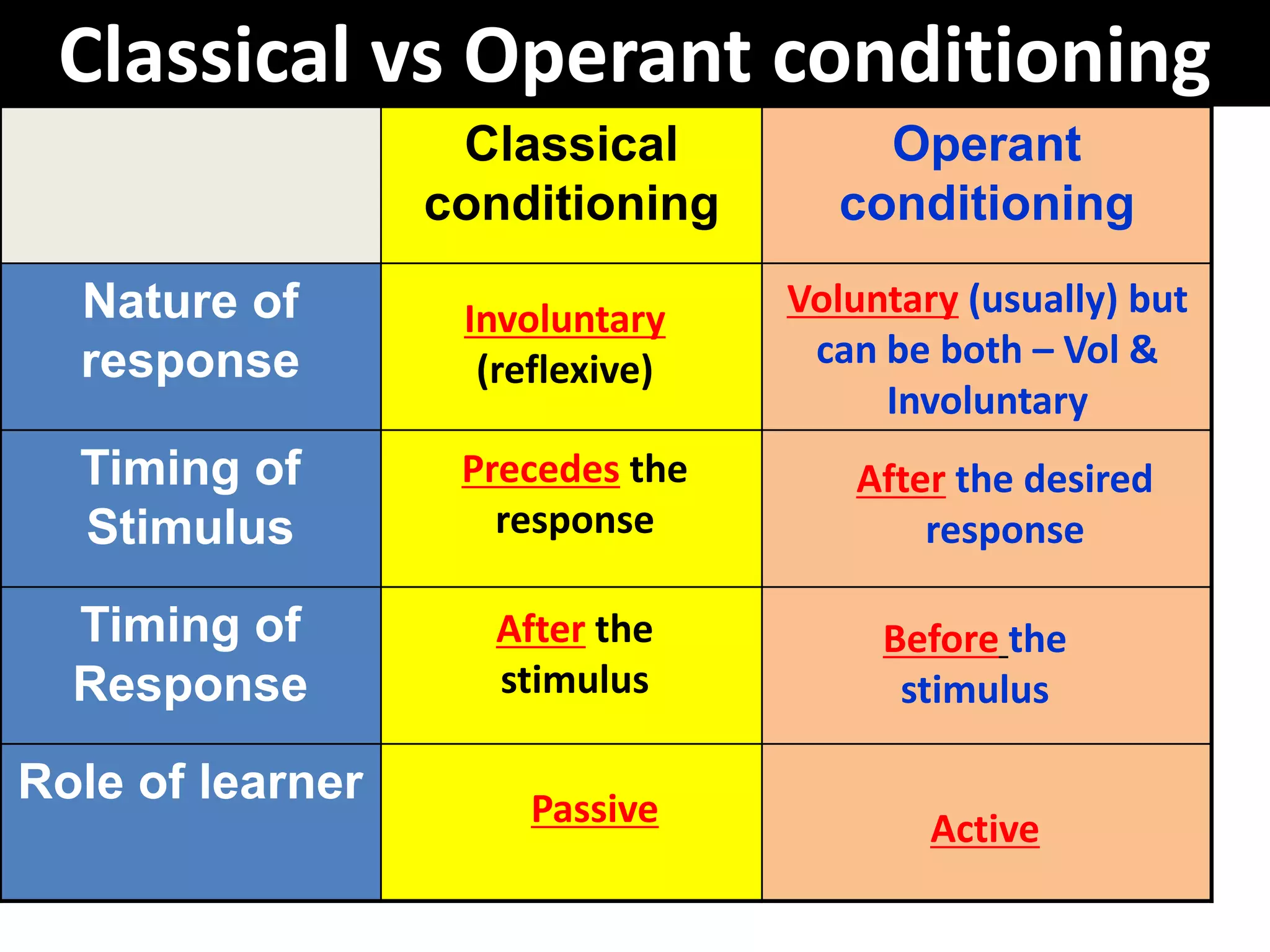
                   Classical          Operant
                  conditioning      conditioning
  Nature of        Involuntary    Voluntary (usually) but
  response          (reflexive)    can be both – Vol &
                                       Involuntary
  Timing of        Precedes the      After the desired
  Stimulus           response            response

  Timing of         After the          Before the
  Response          stimulus            stimulus

Role of learner       Passive             Active
Nature of response
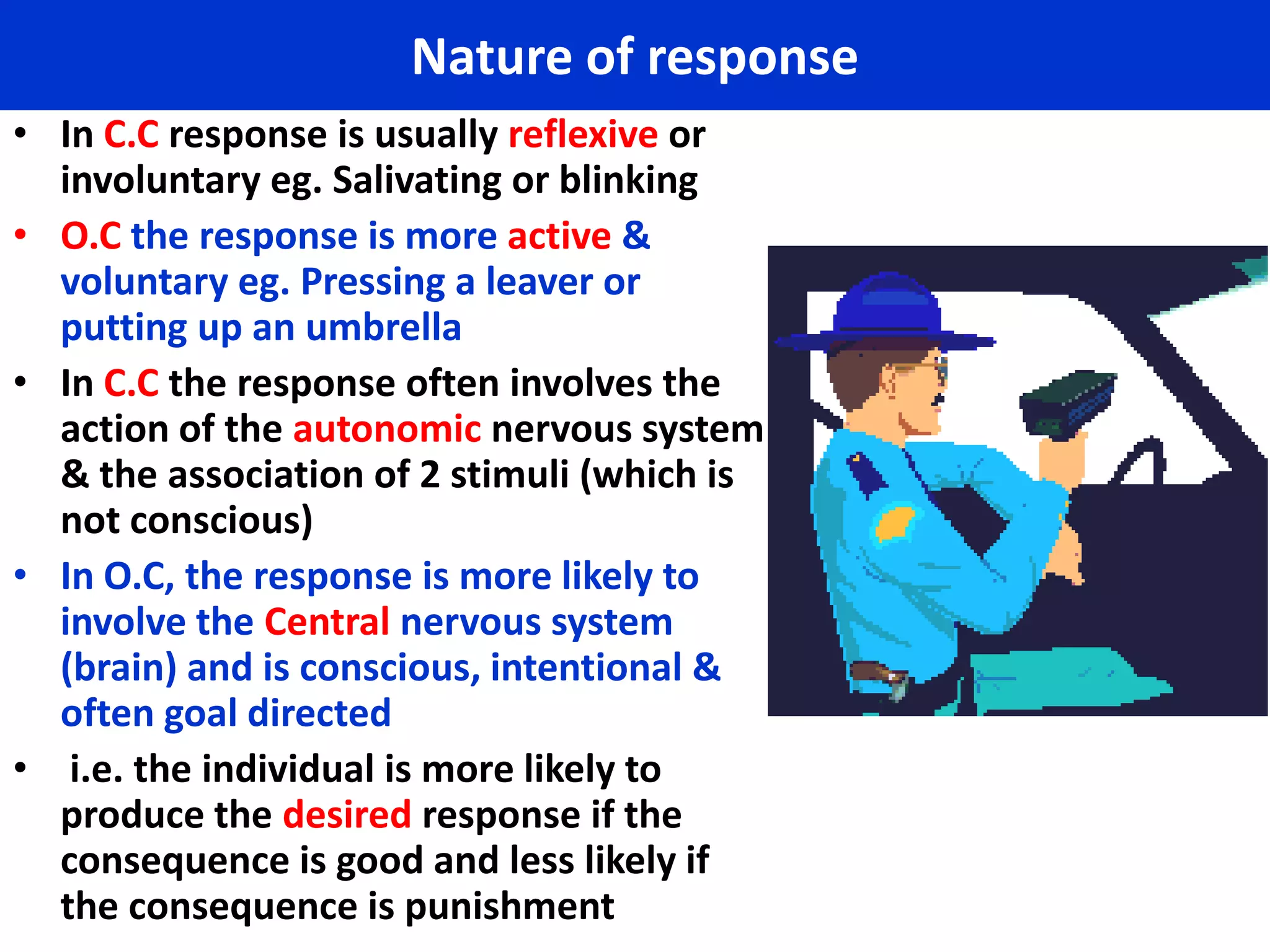
• In C.C response is usually reflexive or
  involuntary eg. Salivating or blinking
• O.C the response is more active &
  voluntary eg. Pressing a leaver or
  putting up an umbrella
• In C.C the response often involves the
  action of the autonomic nervous system
  & the association of 2 stimuli (which is
  not conscious)
• In O.C, the response is more likely to
  involve the Central nervous system
  (brain) and is conscious, intentional &
  often goal directed
• i.e. the individual is more likely to
  produce the desired response if the
  consequence is good and less likely if
  the consequence is punishment
Timing of Stimulus/ Response
• CC; the response (eg. Salivation) depends
  on the presentation of the UCS (meat
  powder) occurring first
• OC; the presentation of the reinforcer (eg.
  Food) depends on the response (pressing
  lever) occurring first. The reinforcement
  strengthens (food) strengthens the
  stimulus-response association
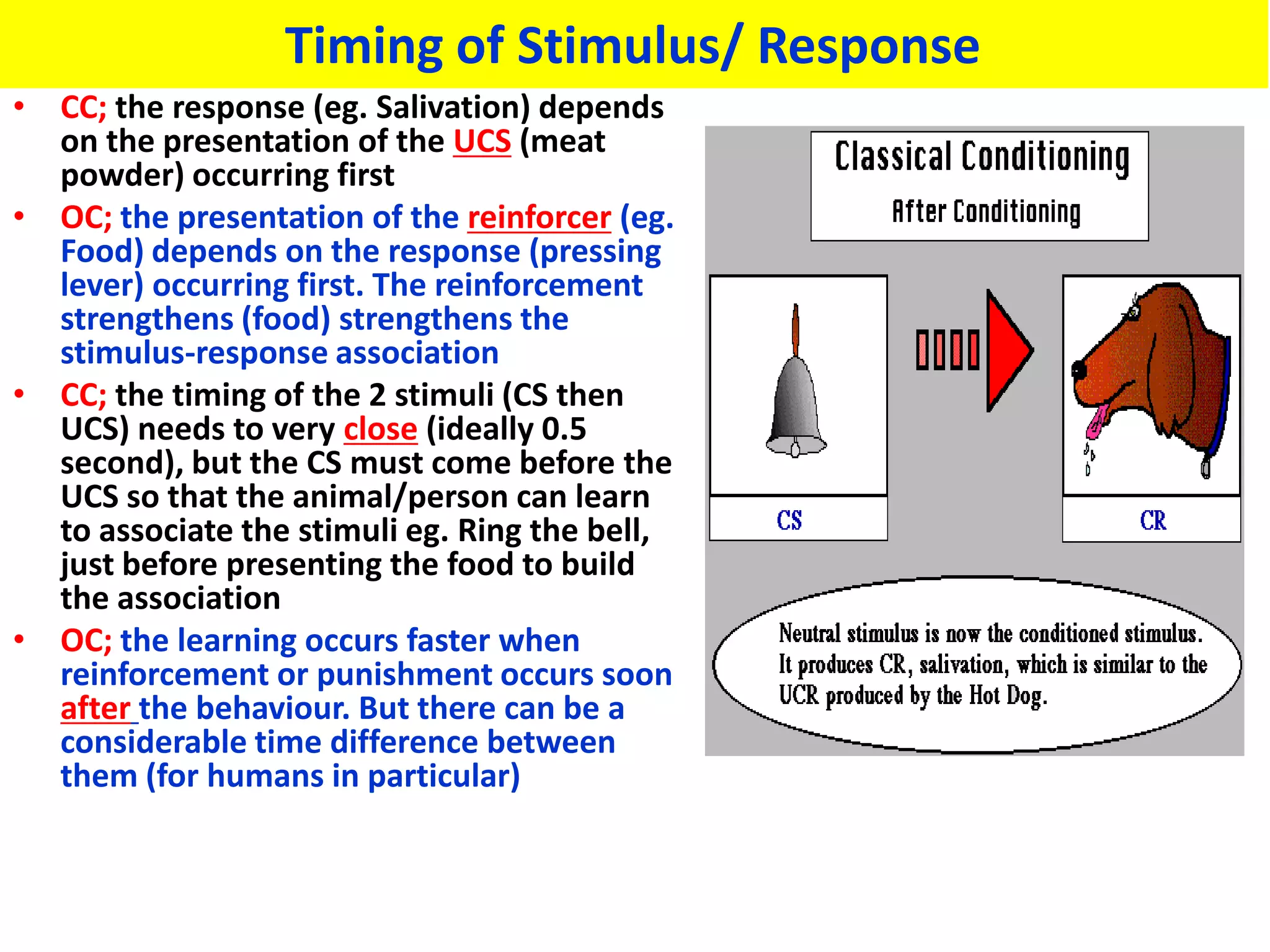
• CC; the timing of the 2 stimuli (CS then
  UCS) needs to very close (ideally 0.5
  second), but the CS must come before the
  UCS so that the animal/person can learn
  to associate the stimuli eg. Ring the bell,
  just before presenting the food to build
  the association
• OC; the learning occurs faster when
  reinforcement or punishment occurs soon
  after the behaviour. But there can be a
  considerable time difference between
  them (for humans in particular)
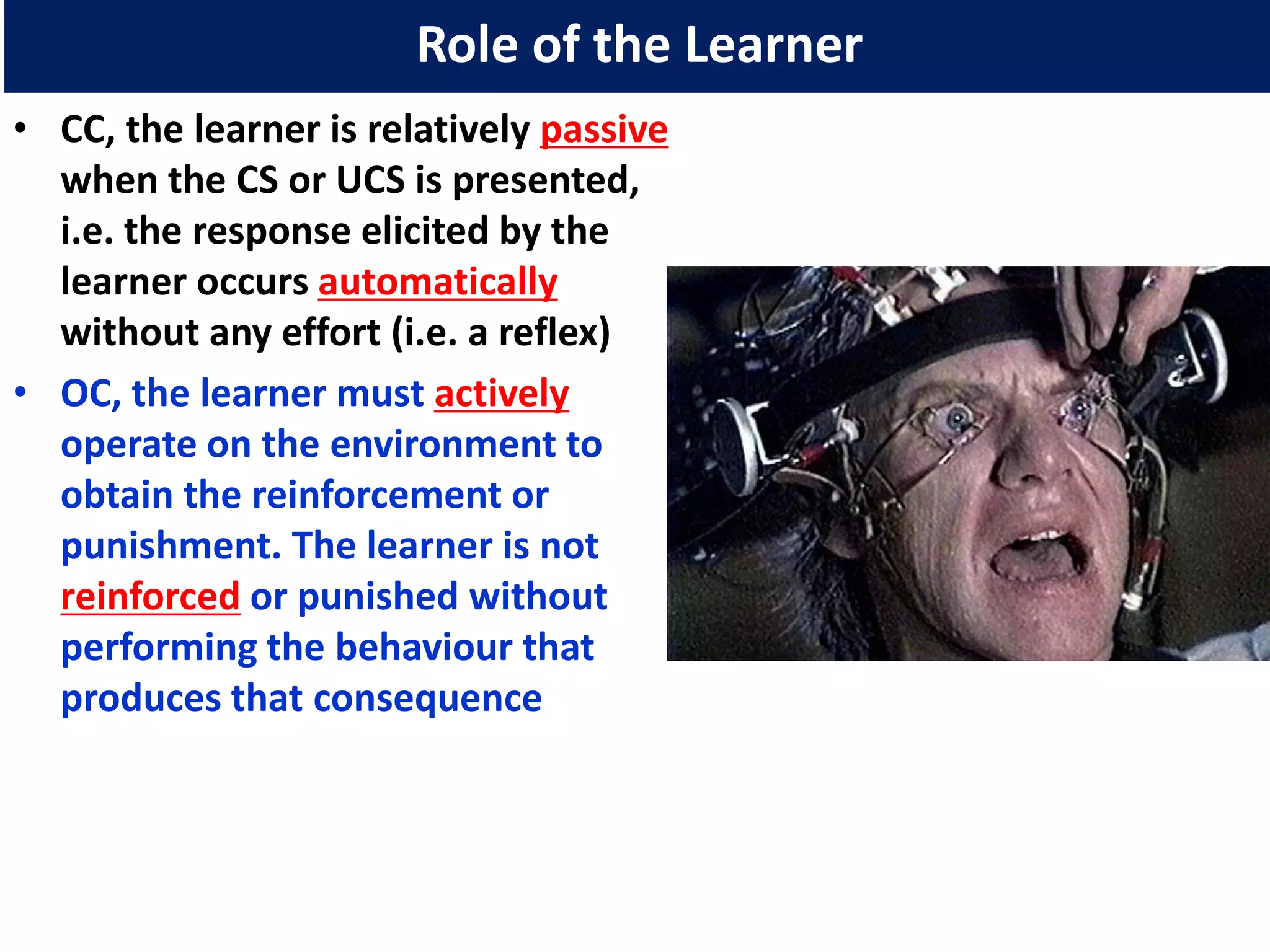
Role of the Learner
• CC, the learner is relatively passive
  when the CS or UCS is presented,
  i.e. the response elicited by the
  learner occurs automatically
  without any effort (i.e. a reflex)
• OC, the learner must actively
  operate on the environment to
  obtain the reinforcement or
  punishment. The learner is not
  reinforced or punished without
  performing the behaviour that
  produces that consequence
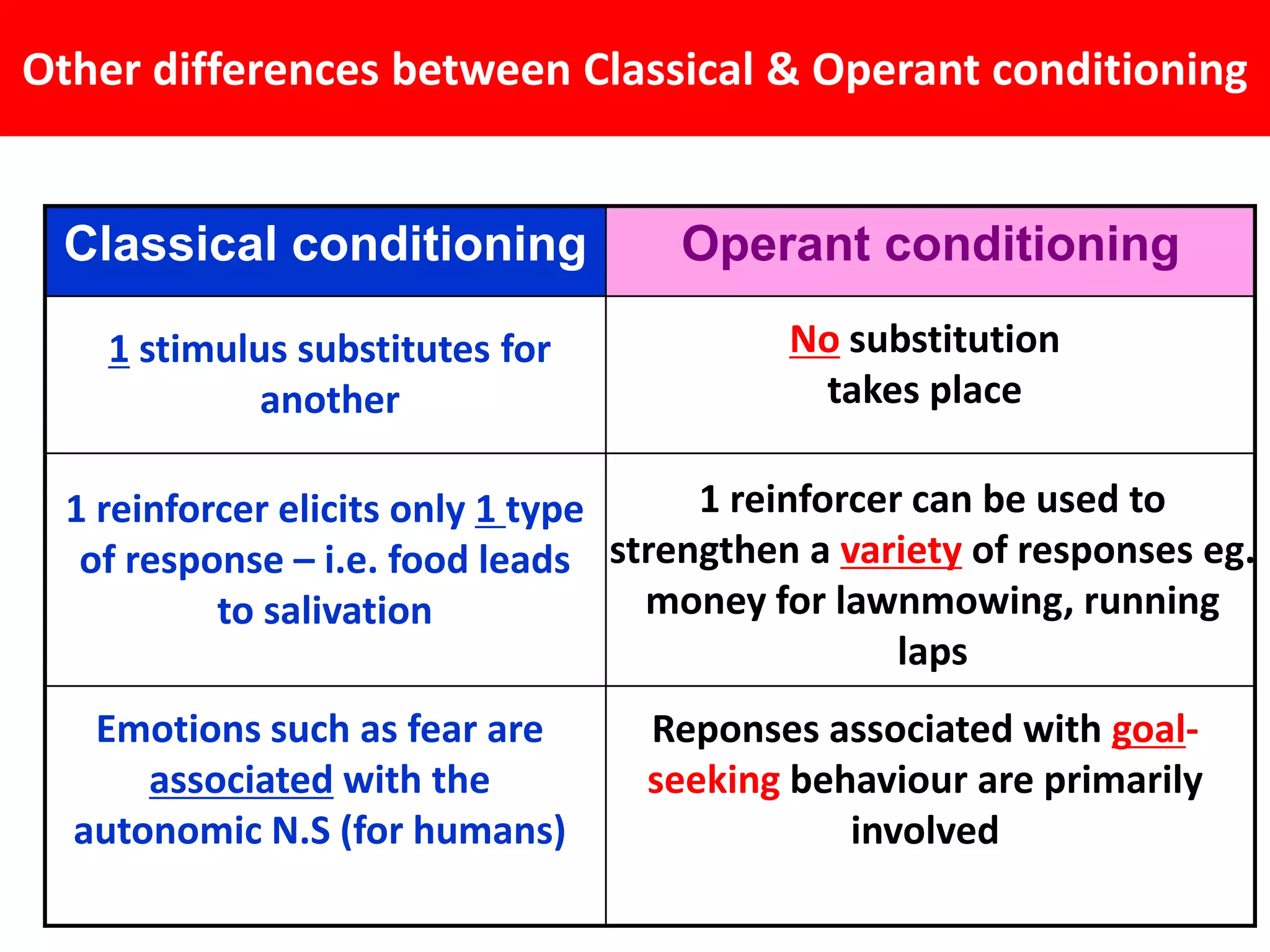
Other differences between Classical & Operant conditioning


 Classical conditioning              Operant conditioning

    1 stimulus substitutes for             No substitution
             another                        takes place

  1 reinforcer elicits only 1 type    1 reinforcer can be used to
   of response – i.e. food leads strengthen a variety of responses eg.
           to salivation           money for lawnmowing, running
                                                  laps
   Emotions such as fear are       Reponses associated with goal-
      associated with the          seeking behaviour are primarily
  autonomic N.S (for humans)                  involved

Classical vs Operant Conditioning

  • 1.
    Classical vs Operantconditioning Elements that CC & Elements of CC & OC OC have in common that are clearly different Extinction Role of learner Spontaneous recovery Timing of stimulus Stimulus discrimination Timing of response Stimulus generalisation Nature response Acquisition
  • 2.
    Classical vs Operantconditioning Classical Operant conditioning conditioning Nature of Involuntary Voluntary (usually) but response (reflexive) can be both – Vol & Involuntary Timing of Precedes the After the desired Stimulus response response Timing of After the Before the Response stimulus stimulus Role of learner Passive Active
  • 3.
    Nature of response •In C.C response is usually reflexive or involuntary eg. Salivating or blinking • O.C the response is more active & voluntary eg. Pressing a leaver or putting up an umbrella • In C.C the response often involves the action of the autonomic nervous system & the association of 2 stimuli (which is not conscious) • In O.C, the response is more likely to involve the Central nervous system (brain) and is conscious, intentional & often goal directed • i.e. the individual is more likely to produce the desired response if the consequence is good and less likely if the consequence is punishment
  • 4.
    Timing of Stimulus/Response • CC; the response (eg. Salivation) depends on the presentation of the UCS (meat powder) occurring first • OC; the presentation of the reinforcer (eg. Food) depends on the response (pressing lever) occurring first. The reinforcement strengthens (food) strengthens the stimulus-response association • CC; the timing of the 2 stimuli (CS then UCS) needs to very close (ideally 0.5 second), but the CS must come before the UCS so that the animal/person can learn to associate the stimuli eg. Ring the bell, just before presenting the food to build the association • OC; the learning occurs faster when reinforcement or punishment occurs soon after the behaviour. But there can be a considerable time difference between them (for humans in particular)
  • 5.
    Role of theLearner • CC, the learner is relatively passive when the CS or UCS is presented, i.e. the response elicited by the learner occurs automatically without any effort (i.e. a reflex) • OC, the learner must actively operate on the environment to obtain the reinforcement or punishment. The learner is not reinforced or punished without performing the behaviour that produces that consequence
  • 6.
    Other differences betweenClassical & Operant conditioning Classical conditioning Operant conditioning 1 stimulus substitutes for No substitution another takes place 1 reinforcer elicits only 1 type 1 reinforcer can be used to of response – i.e. food leads strengthen a variety of responses eg. to salivation money for lawnmowing, running laps Emotions such as fear are Reponses associated with goal- associated with the seeking behaviour are primarily autonomic N.S (for humans) involved