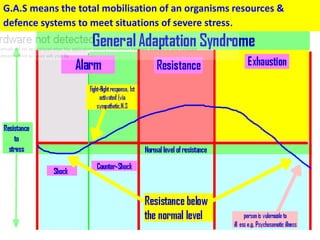
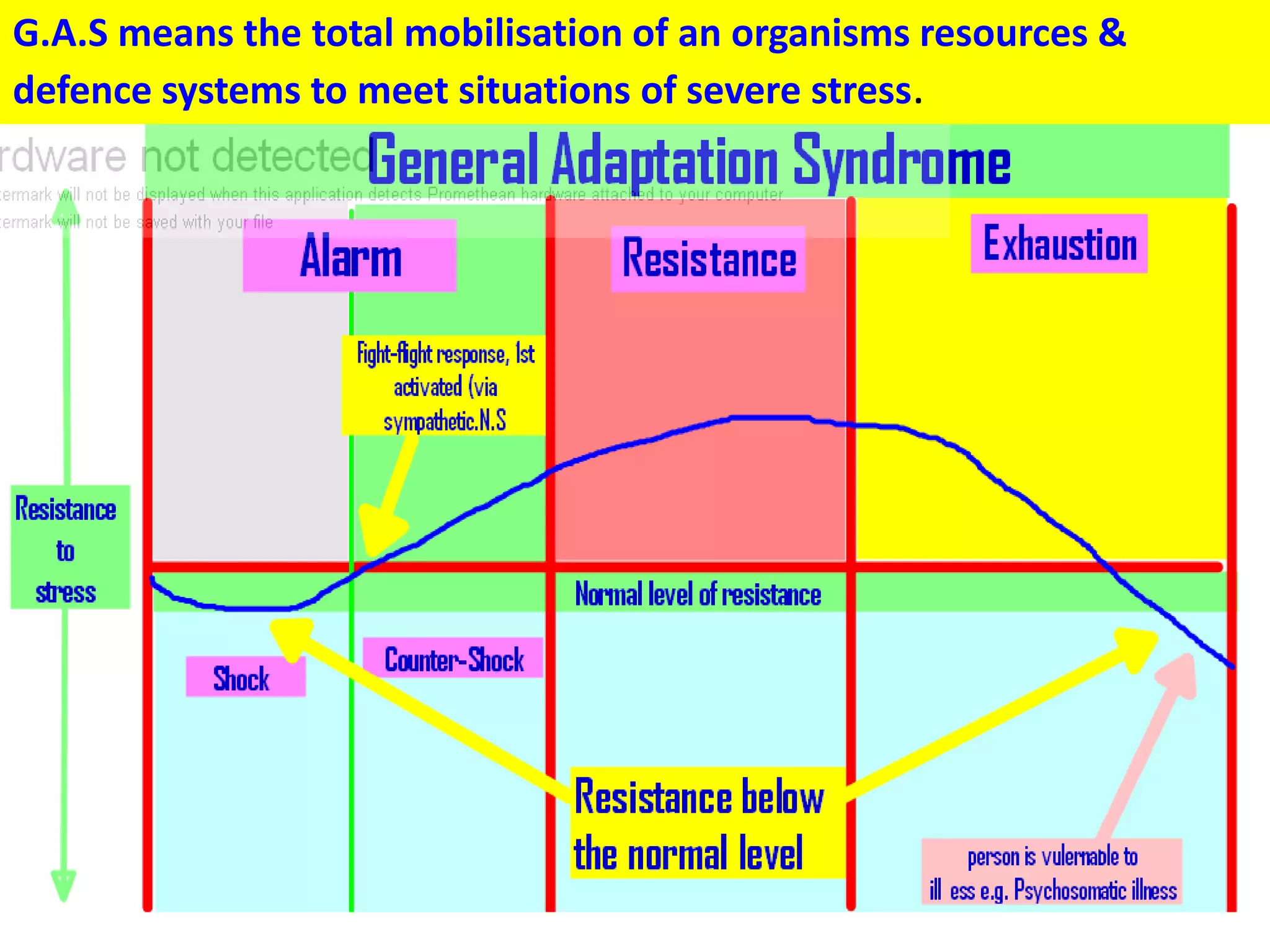
G.A.S means the total mobilisation of an organisms resources &
defence systems to meet situations of severe stress.
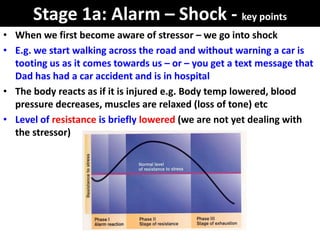
Stage 1a: Alarm – Shock - key points
• When we first become aware of stressor – we go into shock
• E.g. we start walking across the road and without warning a car is
  tooting us as it comes towards us – or – you get a text message that
  Dad has had a car accident and is in hospital
• The body reacts as if it is injured e.g. Body temp lowered, blood
  pressure decreases, muscles are relaxed (loss of tone) etc
• Level of resistance is briefly lowered (we are not yet dealing with
  the stressor)
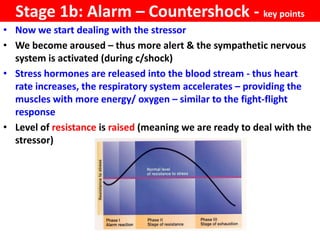
Stage 1b: Alarm – Countershock - key points
• Now we start dealing with the stressor
• We become aroused – thus more alert & the sympathetic nervous
  system is activated (during c/shock)
• Stress hormones are released into the blood stream - thus heart
  rate increases, the respiratory system accelerates – providing the
  muscles with more energy/ oxygen – similar to the fight-flight
  response
• Level of resistance is raised (meaning we are ready to deal with the
  stressor)
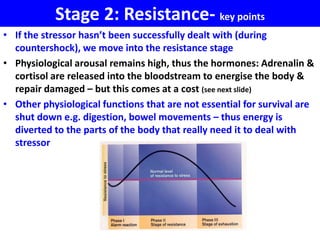
Stage 2: Resistance- key points
• If the stressor hasn’t been successfully dealt with (during
  countershock), we move into the resistance stage
• Physiological arousal remains high, thus the hormones: Adrenalin &
  cortisol are released into the bloodstream to energise the body &
  repair damaged – but this comes at a cost (see next slide)
• Other physiological functions that are not essential for survival are
  shut down e.g. digestion, bowel movements – thus energy is
  diverted to the parts of the body that really need it to deal with
  stressor
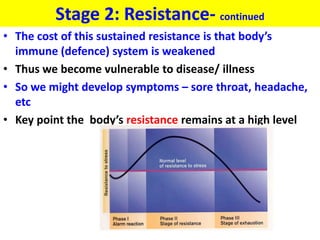
Stage 2: Resistance- continued
• The cost of this sustained resistance is that body’s
  immune (defence) system is weakened
• Thus we become vulnerable to disease/ illness
• So we might develop symptoms – sore throat, headache,
  etc
• Key point the body’s resistance remains at a high level
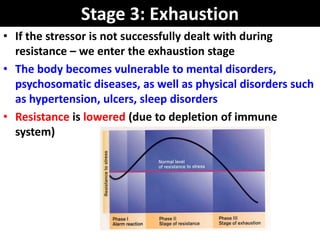
Stage 3: Exhaustion
• If the stressor is not successfully dealt with during
  resistance – we enter the exhaustion stage
• The body becomes vulnerable to mental disorders,
  psychosomatic diseases, as well as physical disorders such
  as hypertension, ulcers, sleep disorders
• Resistance is lowered (due to depletion of immune
  system)
GAS – key points
• Resistance is high: During countershock/ resistance
• Resistance is low: During shock/ exhaustion
• Fight flight response 1st activated: During
  countershock
• Cortisol released: During resistance
• Symptoms developed (sore throat): During resistance
• Illness: During exhaustion
• Strength: the model examined the relationship
  between psychological stressors and our defense
  systems and our consequential physiological health
• Weaknesses: Didn’t factor cognitive appraisal (as
  opposed to transactional model)

GAS - VCE U4 Psych AOS2

  • 1.
    G.A.S means thetotal mobilisation of an organisms resources & defence systems to meet situations of severe stress.
  • 2.
    Stage 1a: Alarm– Shock - key points • When we first become aware of stressor – we go into shock • E.g. we start walking across the road and without warning a car is tooting us as it comes towards us – or – you get a text message that Dad has had a car accident and is in hospital • The body reacts as if it is injured e.g. Body temp lowered, blood pressure decreases, muscles are relaxed (loss of tone) etc • Level of resistance is briefly lowered (we are not yet dealing with the stressor)
  • 3.
    Stage 1b: Alarm– Countershock - key points • Now we start dealing with the stressor • We become aroused – thus more alert & the sympathetic nervous system is activated (during c/shock) • Stress hormones are released into the blood stream - thus heart rate increases, the respiratory system accelerates – providing the muscles with more energy/ oxygen – similar to the fight-flight response • Level of resistance is raised (meaning we are ready to deal with the stressor)
  • 4.
    Stage 2: Resistance-key points • If the stressor hasn’t been successfully dealt with (during countershock), we move into the resistance stage • Physiological arousal remains high, thus the hormones: Adrenalin & cortisol are released into the bloodstream to energise the body & repair damaged – but this comes at a cost (see next slide) • Other physiological functions that are not essential for survival are shut down e.g. digestion, bowel movements – thus energy is diverted to the parts of the body that really need it to deal with stressor
  • 5.
    Stage 2: Resistance-continued • The cost of this sustained resistance is that body’s immune (defence) system is weakened • Thus we become vulnerable to disease/ illness • So we might develop symptoms – sore throat, headache, etc • Key point the body’s resistance remains at a high level
  • 6.
    Stage 3: Exhaustion •If the stressor is not successfully dealt with during resistance – we enter the exhaustion stage • The body becomes vulnerable to mental disorders, psychosomatic diseases, as well as physical disorders such as hypertension, ulcers, sleep disorders • Resistance is lowered (due to depletion of immune system)
  • 7.
    GAS – keypoints • Resistance is high: During countershock/ resistance • Resistance is low: During shock/ exhaustion • Fight flight response 1st activated: During countershock • Cortisol released: During resistance • Symptoms developed (sore throat): During resistance • Illness: During exhaustion • Strength: the model examined the relationship between psychological stressors and our defense systems and our consequential physiological health • Weaknesses: Didn’t factor cognitive appraisal (as opposed to transactional model)