Strategies for coping with
           stress
               Biofeedback


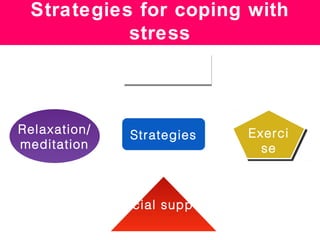
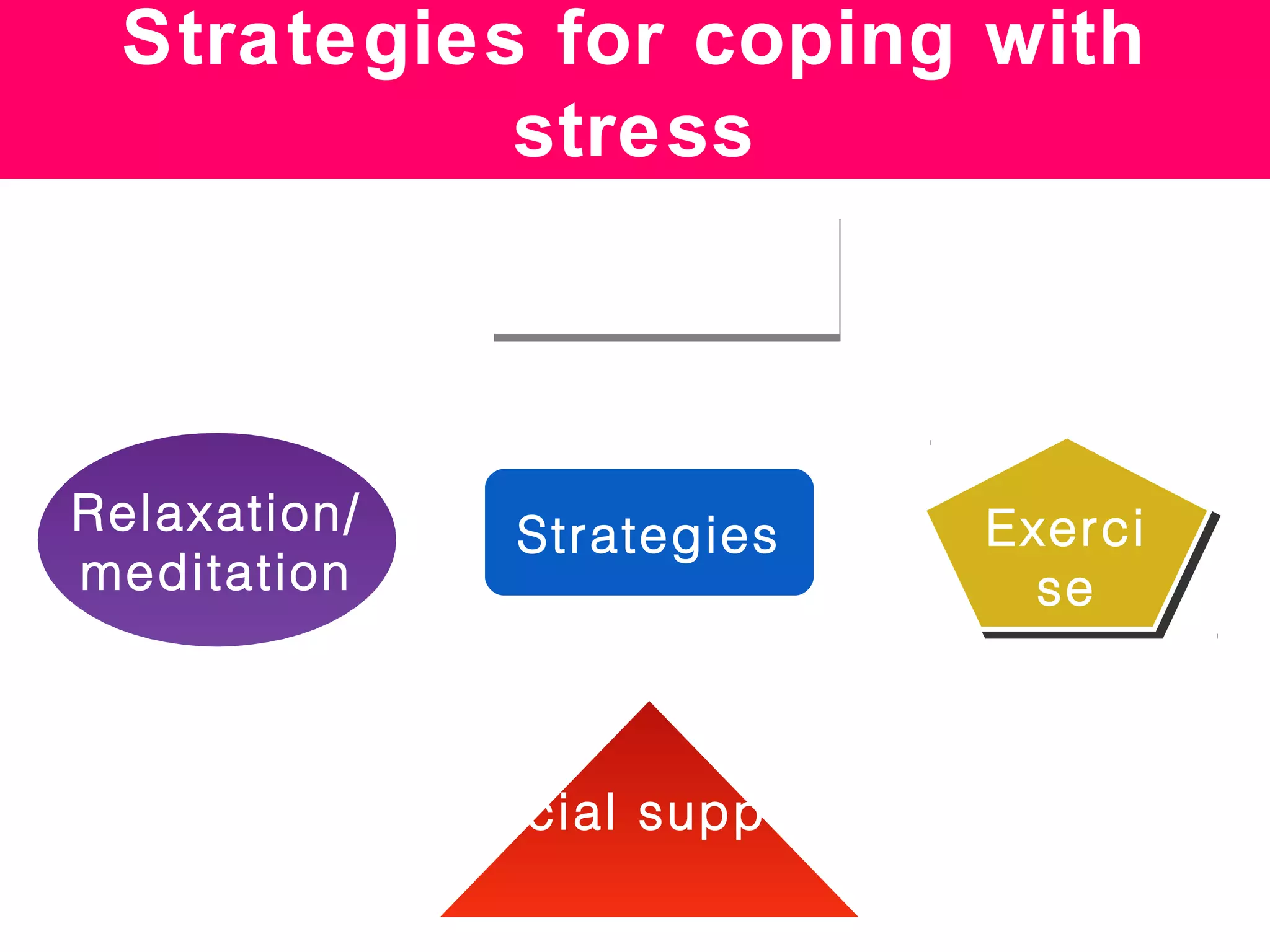
Relaxation/     Strategies     Exerci
                               Exerci
meditation                       se
                                 se


              Social support
Biofeedback
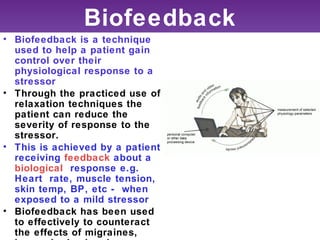
• Biofeedback is a technique
  used to help a patient gain
  control over their
  physiological response to a
  stressor
• Through the practiced use of
  relaxation techniques the
  patient can reduce the
  severity of response to the
  stressor.
• This is achieved by a patient
  receiving feedback about a
  biological response e.g.
  Heart rate, muscle tension,
  skin temp, BP, etc - when
  exposed to a mild stressor
• Biofeedback has been used
  to effectively to counteract
  the effects of migraines,
Biofeedback - the
1.                  process
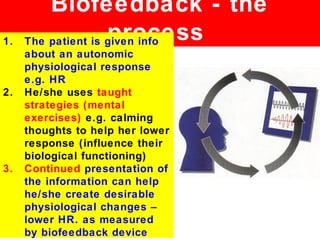
     The patient is given info
     about an autonomic
     physiological response
     e.g. HR
2.   He/she uses taught
     strategies (mental
     exercises) e.g. calming
     thoughts to help her lower
     response (influence their
     biological functioning)
3.   Continued presentation of
     the information can help
     he/she create desirable
     physiological changes –
     lower HR. as measured
     by biofeedback device
Meditation & Relaxation
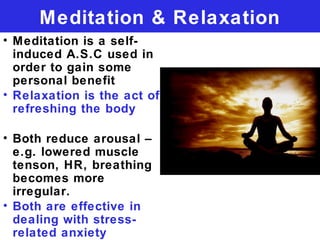
• Meditation is a self-
  induced A.S.C used in
  order to gain some
  personal benefit
• Relaxation is the act of
  refreshing the body

• Both reduce arousal –
  e.g. lowered muscle
  tenson, HR, breathing
  becomes more
  irregular.
• Both are effective in
  dealing with stress-
  related anxiety
Physical exercise
• Involves physical exertion
  to improve one’s physical
  condition.
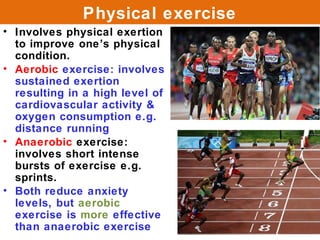
• Aerobic exercise: involves
  sustained exertion
  resulting in a high level of
  cardiovascular activity &
  oxygen consumption e.g.
  distance running
• Anaerobic exercise:
  involves short intense
  bursts of exercise e.g.
  sprints.
• Both reduce anxiety
  levels, but aerobic
  exercise is more effective
  than anaerobic exercise
Benefits of exercise
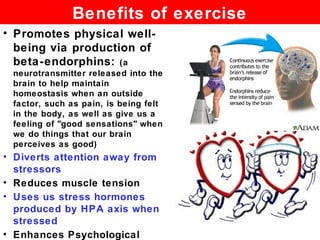
• Promotes physical well-
  being via production of
  beta-endorphins: (a
 neurotransmitter released into the
 brain to help maintain
 homeostasis when an outside
 factor, such as pain, is being felt
 in the body, as well as give us a
 feeling of "good sensations" when
 we do things that our brain
 perceives as good)
• Diverts attention away from
  stressors
• Reduces muscle tension
• Uses us stress hormones
  produced by HPA axis when
  stressed
• Enhances Psychological
Social support
• Help or assistance from people we have a
  stable inter-relationship with – i.e. -
• Tangible assistance – food, money
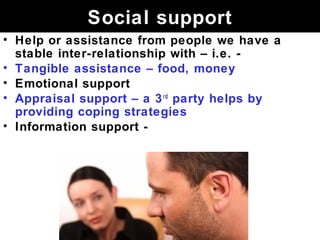
• Emotional support
• Appraisal support – a 3 rd party helps by
  providing coping strategies
• Information support -

Strategies for coping with stress

  • 1.
    Strategies for copingwith stress Biofeedback Relaxation/ Strategies Exerci Exerci meditation se se Social support
  • 2.
    Biofeedback • Biofeedback isa technique used to help a patient gain control over their physiological response to a stressor • Through the practiced use of relaxation techniques the patient can reduce the severity of response to the stressor. • This is achieved by a patient receiving feedback about a biological response e.g. Heart rate, muscle tension, skin temp, BP, etc - when exposed to a mild stressor • Biofeedback has been used to effectively to counteract the effects of migraines,
  • 3.
    Biofeedback - the 1. process The patient is given info about an autonomic physiological response e.g. HR 2. He/she uses taught strategies (mental exercises) e.g. calming thoughts to help her lower response (influence their biological functioning) 3. Continued presentation of the information can help he/she create desirable physiological changes – lower HR. as measured by biofeedback device
  • 4.
    Meditation & Relaxation •Meditation is a self- induced A.S.C used in order to gain some personal benefit • Relaxation is the act of refreshing the body • Both reduce arousal – e.g. lowered muscle tenson, HR, breathing becomes more irregular. • Both are effective in dealing with stress- related anxiety
  • 5.
    Physical exercise • Involvesphysical exertion to improve one’s physical condition. • Aerobic exercise: involves sustained exertion resulting in a high level of cardiovascular activity & oxygen consumption e.g. distance running • Anaerobic exercise: involves short intense bursts of exercise e.g. sprints. • Both reduce anxiety levels, but aerobic exercise is more effective than anaerobic exercise
  • 6.
    Benefits of exercise •Promotes physical well- being via production of beta-endorphins: (a neurotransmitter released into the brain to help maintain homeostasis when an outside factor, such as pain, is being felt in the body, as well as give us a feeling of "good sensations" when we do things that our brain perceives as good) • Diverts attention away from stressors • Reduces muscle tension • Uses us stress hormones produced by HPA axis when stressed • Enhances Psychological
  • 7.
    Social support • Helpor assistance from people we have a stable inter-relationship with – i.e. - • Tangible assistance – food, money • Emotional support • Appraisal support – a 3 rd party helps by providing coping strategies • Information support -

Editor's Notes

  • #2 Social support: appraisal i.e. giving advice for coping strategies Information: from workplace to help managed stress