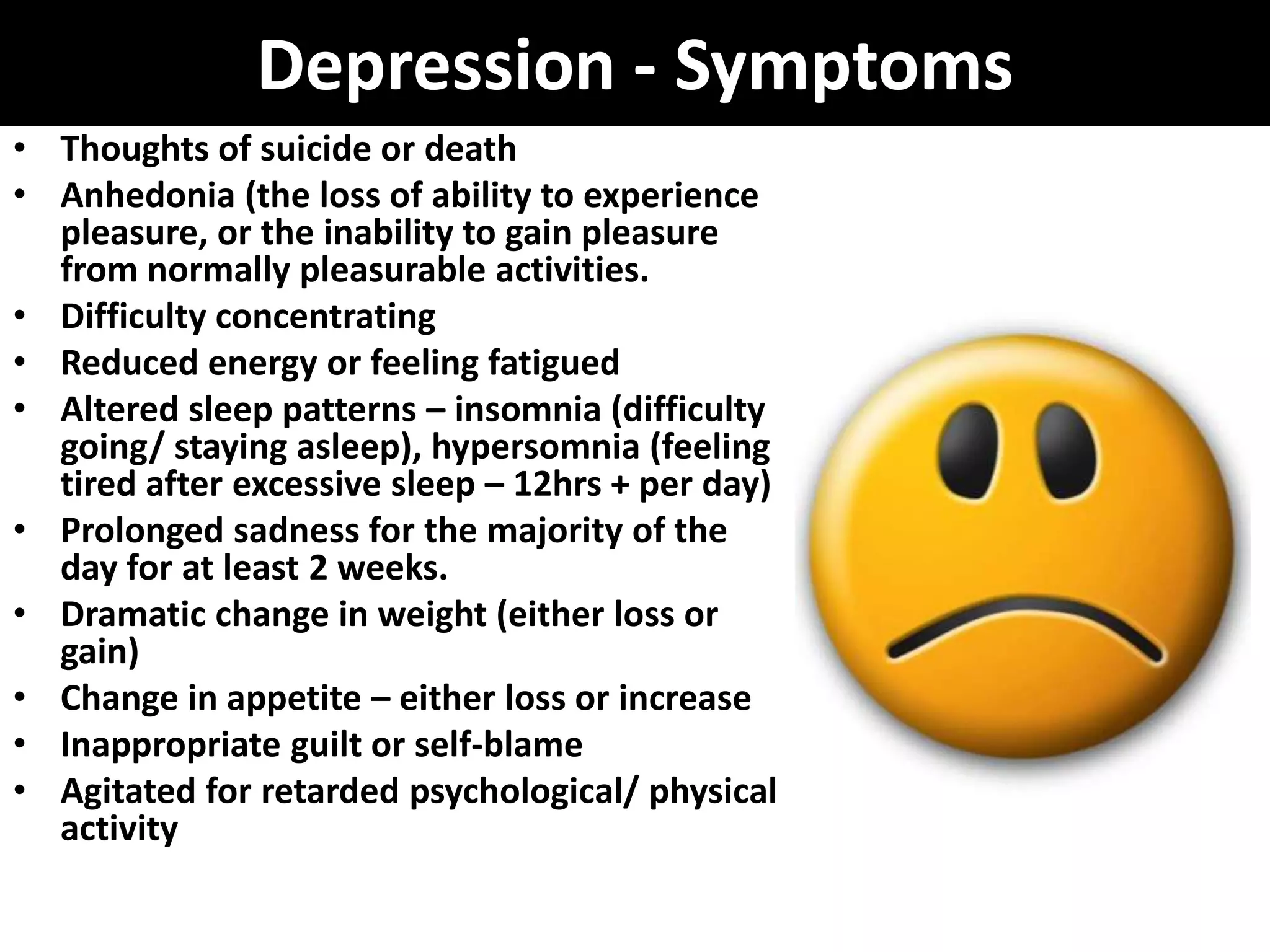
Depression - Symptoms
• Thoughts of suicide or death
• Anhedonia (the loss of ability to experience
  pleasure, or the inability to gain pleasure
  from normally pleasurable activities.
• Difficulty concentrating
• Reduced energy or feeling fatigued
• Altered sleep patterns – insomnia (difficulty
  going/ staying asleep), hypersomnia (feeling
  tired after excessive sleep – 12hrs + per day)
• Prolonged sadness for the majority of the
  day for at least 2 weeks.
• Dramatic change in weight (either loss or
  gain)
• Change in appetite – either loss or increase
• Inappropriate guilt or self-blame
• Agitated for retarded psychological/ physical
  activity
Application of Biopsychosocial framework to
     understanding a Mood disorder: Depression
1: Biological triggers
• Genes – more likely to develop
  depression if a/ both parents
  suffered from mood disorder
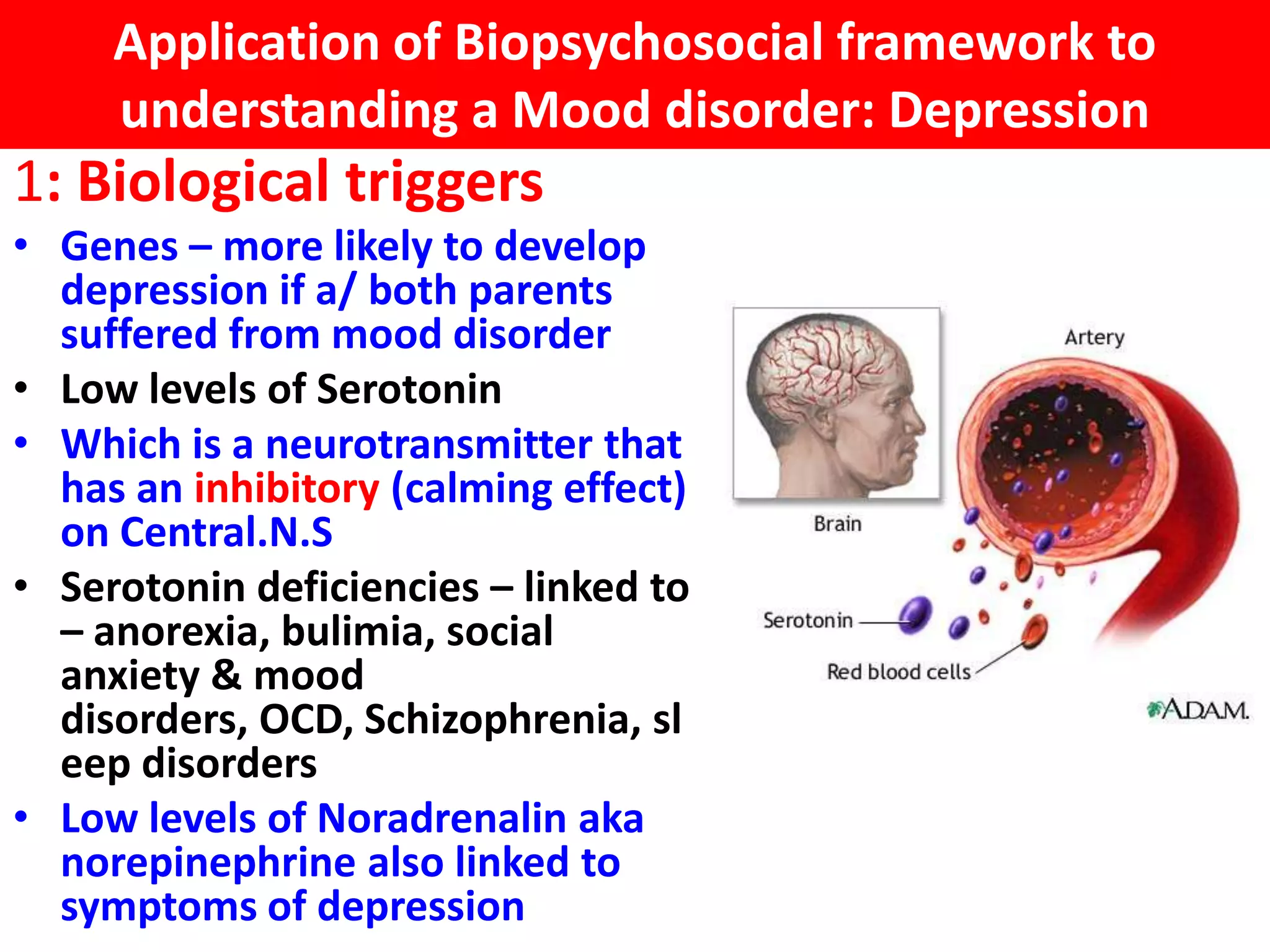
• Low levels of Serotonin
• Which is a neurotransmitter that
  has an inhibitory (calming effect)
  on Central.N.S
• Serotonin deficiencies – linked to
  – anorexia, bulimia, social
  anxiety & mood
  disorders, OCD, Schizophrenia, sl
  eep disorders
• Low levels of Noradrenalin aka
  norepinephrine also linked to
  symptoms of depression
SSRI’s: (Selective Serotonin re-uptake inhibitors)
• Typically mimic the effect of
  serotonin
• Which after 2-6 weeks start to
  take effect
• Short-term side effects:
  anxiety, insomnia, weight gain
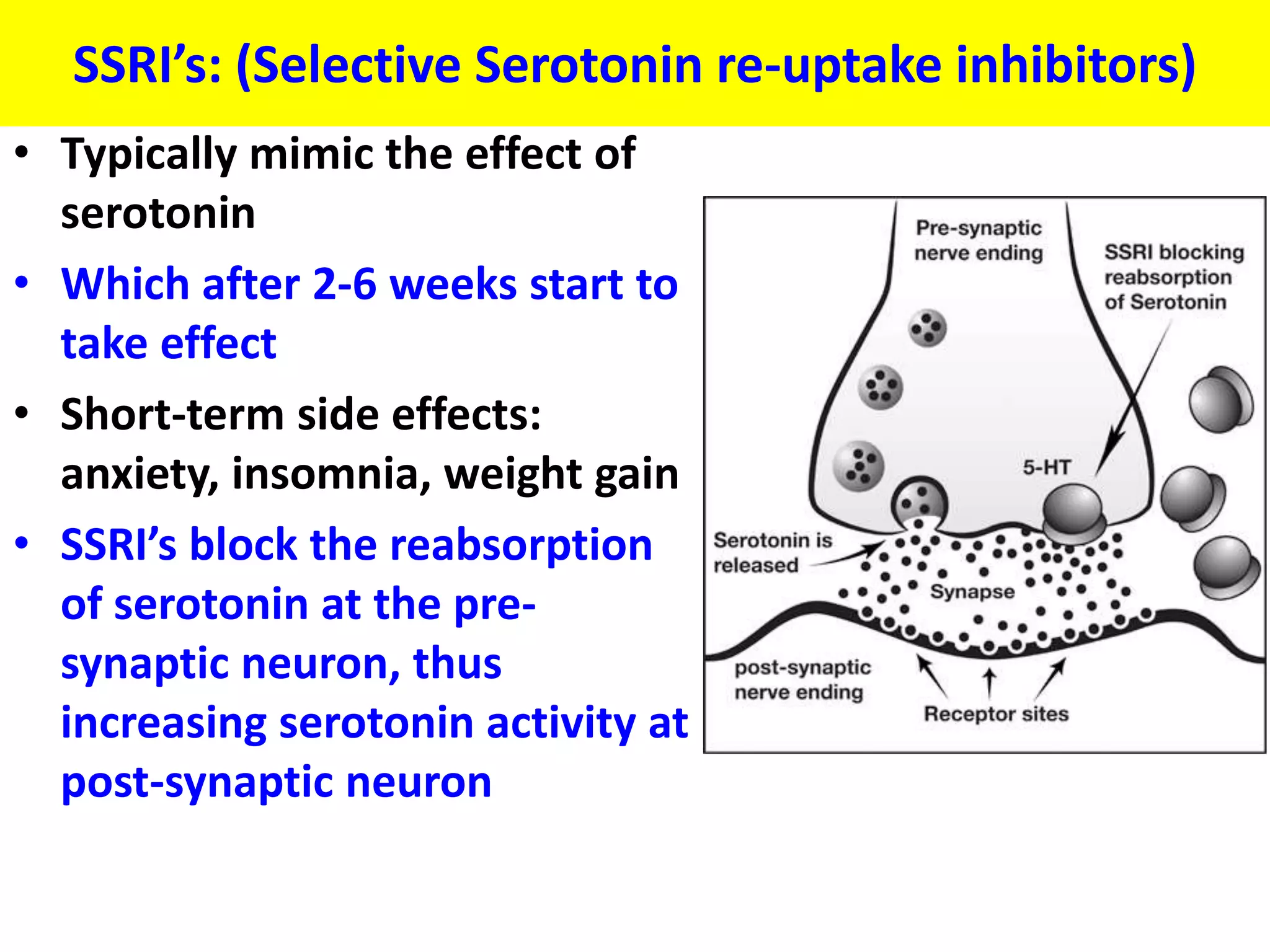
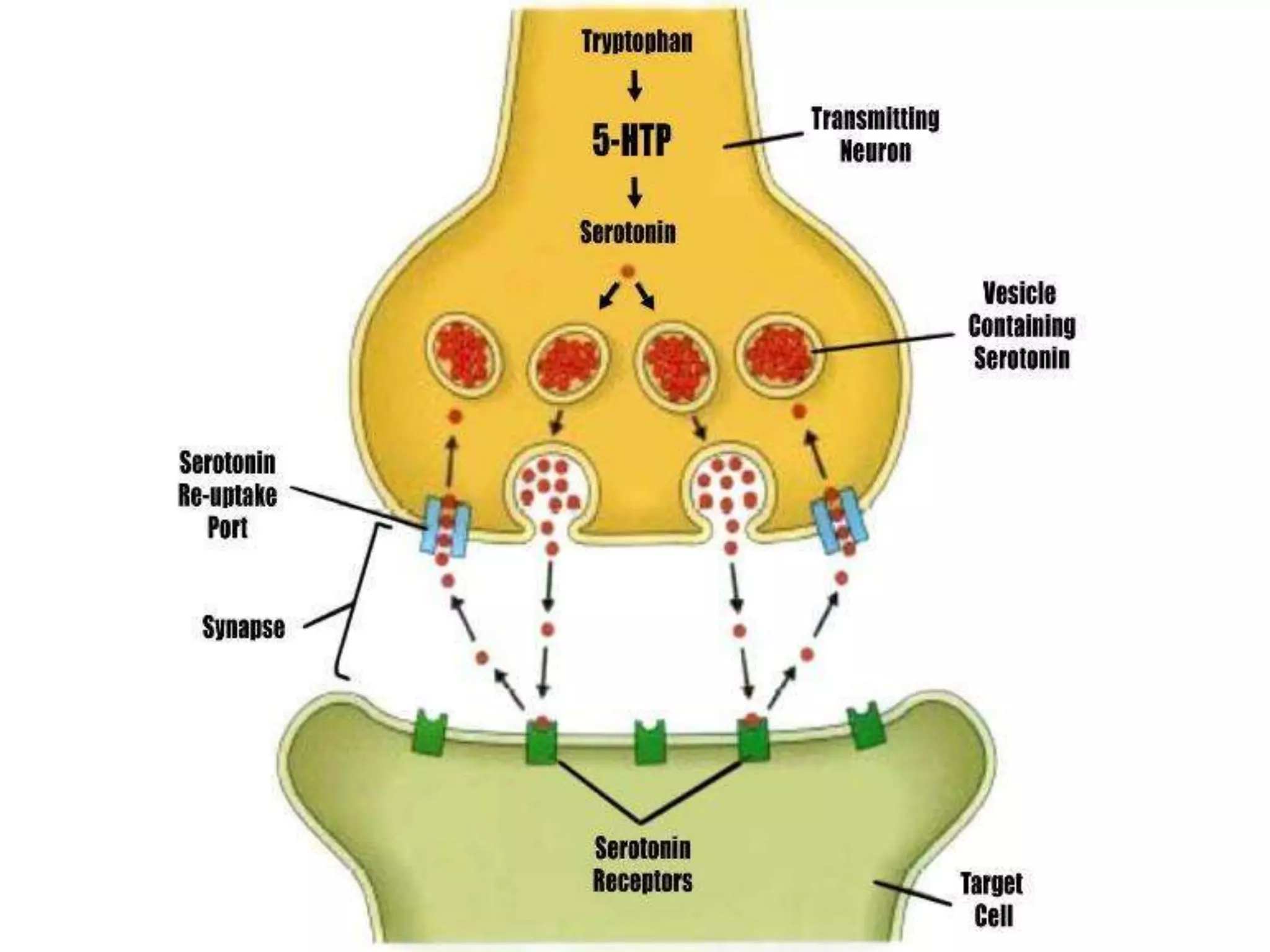
• SSRI’s block the reabsorption
  of serotonin at the pre-
  synaptic neuron, thus
  increasing serotonin activity at
  post-synaptic neuron
Depression and SSRI's

Depression and SSRI's

  • 1.
    Depression - Symptoms •Thoughts of suicide or death • Anhedonia (the loss of ability to experience pleasure, or the inability to gain pleasure from normally pleasurable activities. • Difficulty concentrating • Reduced energy or feeling fatigued • Altered sleep patterns – insomnia (difficulty going/ staying asleep), hypersomnia (feeling tired after excessive sleep – 12hrs + per day) • Prolonged sadness for the majority of the day for at least 2 weeks. • Dramatic change in weight (either loss or gain) • Change in appetite – either loss or increase • Inappropriate guilt or self-blame • Agitated for retarded psychological/ physical activity
  • 2.
    Application of Biopsychosocialframework to understanding a Mood disorder: Depression 1: Biological triggers • Genes – more likely to develop depression if a/ both parents suffered from mood disorder • Low levels of Serotonin • Which is a neurotransmitter that has an inhibitory (calming effect) on Central.N.S • Serotonin deficiencies – linked to – anorexia, bulimia, social anxiety & mood disorders, OCD, Schizophrenia, sl eep disorders • Low levels of Noradrenalin aka norepinephrine also linked to symptoms of depression
  • 3.
    SSRI’s: (Selective Serotoninre-uptake inhibitors) • Typically mimic the effect of serotonin • Which after 2-6 weeks start to take effect • Short-term side effects: anxiety, insomnia, weight gain • SSRI’s block the reabsorption of serotonin at the pre- synaptic neuron, thus increasing serotonin activity at post-synaptic neuron

Editor's Notes

  • #3 Genes: Even more likely if both parents suffered from it (but not cause and affect, there are other social, psychological causes)Thus serotonin has a calming affectNonadrenalin found in the amygdala, and mediates attention, stress response, etc
  • #4 Genes: Even more likely if both parents suffered from it (but not cause and affect, there are other social, psychological causes)Thus serotonin has a calming affectNonadrenalin found in the amygdala, and mediates attention, stress response, etc
  • #5 Genes: Even more likely if both parents suffered from it (but not cause and affect, there are other social, psychological causes)Thus serotonin has a calming affectNonadrenalin found in the amygdala, and mediates attention, stress response, etc