Downloaded 679 times





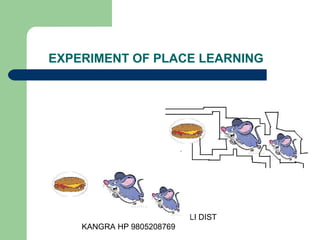



Edward Tolman was an American psychologist who developed the theory of purposive behaviorism. According to Tolman's theory, organisms learn by pursuing signs or cues that lead to a goal, rather than just responding to stimuli. Tolman believed that learning involves acquiring meaningful behaviors through navigation of the environment to achieve goals. He conducted experiments on reward expectancy and place learning in rats to understand how they acquire and use information about their surroundings.


