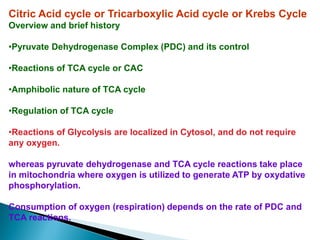
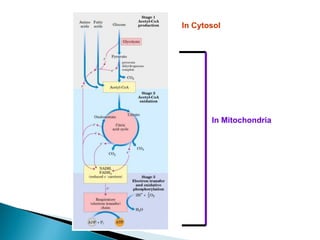
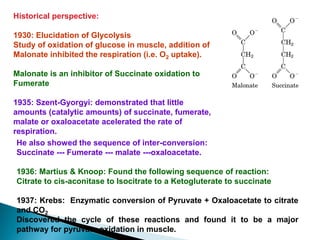
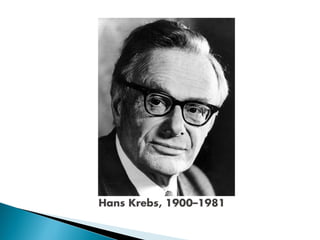
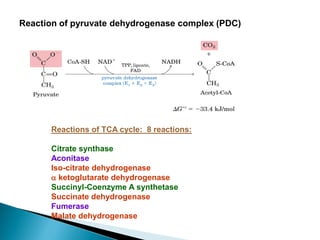
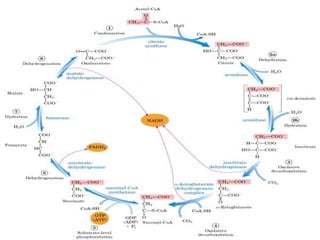
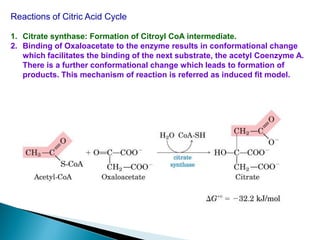
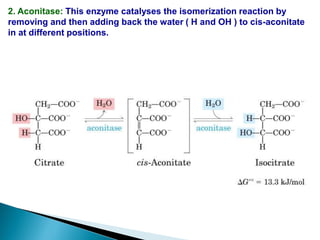
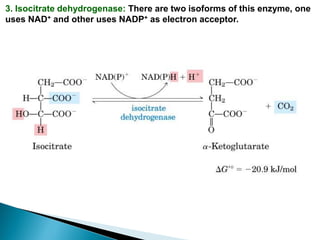
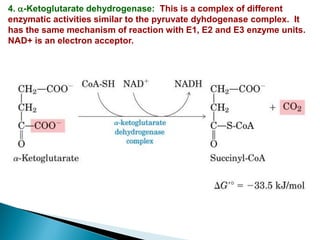
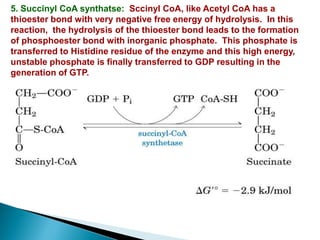
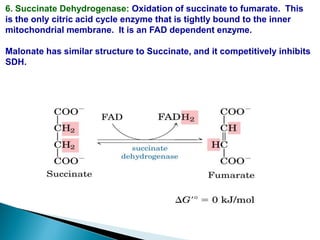
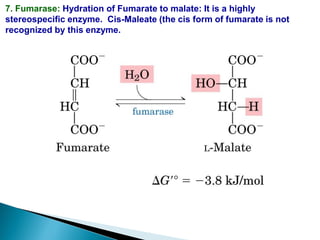
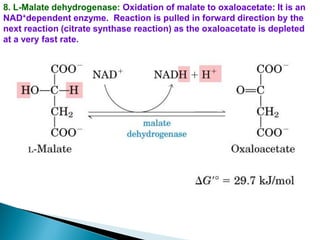
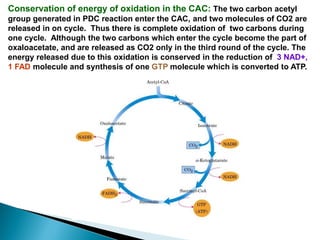
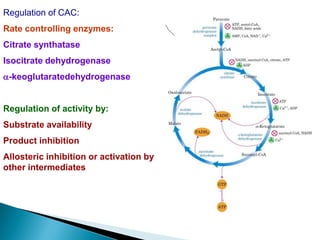
The citric acid cycle (CAC) is a series of chemical reactions in the mitochondria that breaks down food molecules into carbon dioxide. It was discovered in 1937 by Hans Krebs. The cycle consists of 8 steps where pyruvate and acetyl-CoA enter and two molecules of CO2 are released. Energy from the oxidation of acetyl-CoA is conserved as NADH, FADH2, and GTP which can then be used to generate ATP through oxidative phosphorylation. Key regulatory enzymes of the cycle include citrate synthase, isocitrate dehydrogenase, and alpha-ketoglutarate dehydrogenase which are regulated by substrate availability, product inhibition, and allosteric effectors.