TCA cycle and its regulation in
aerobic condition…
HEMA T
MSC Biochemistry
Bharathiar University
2018-2020
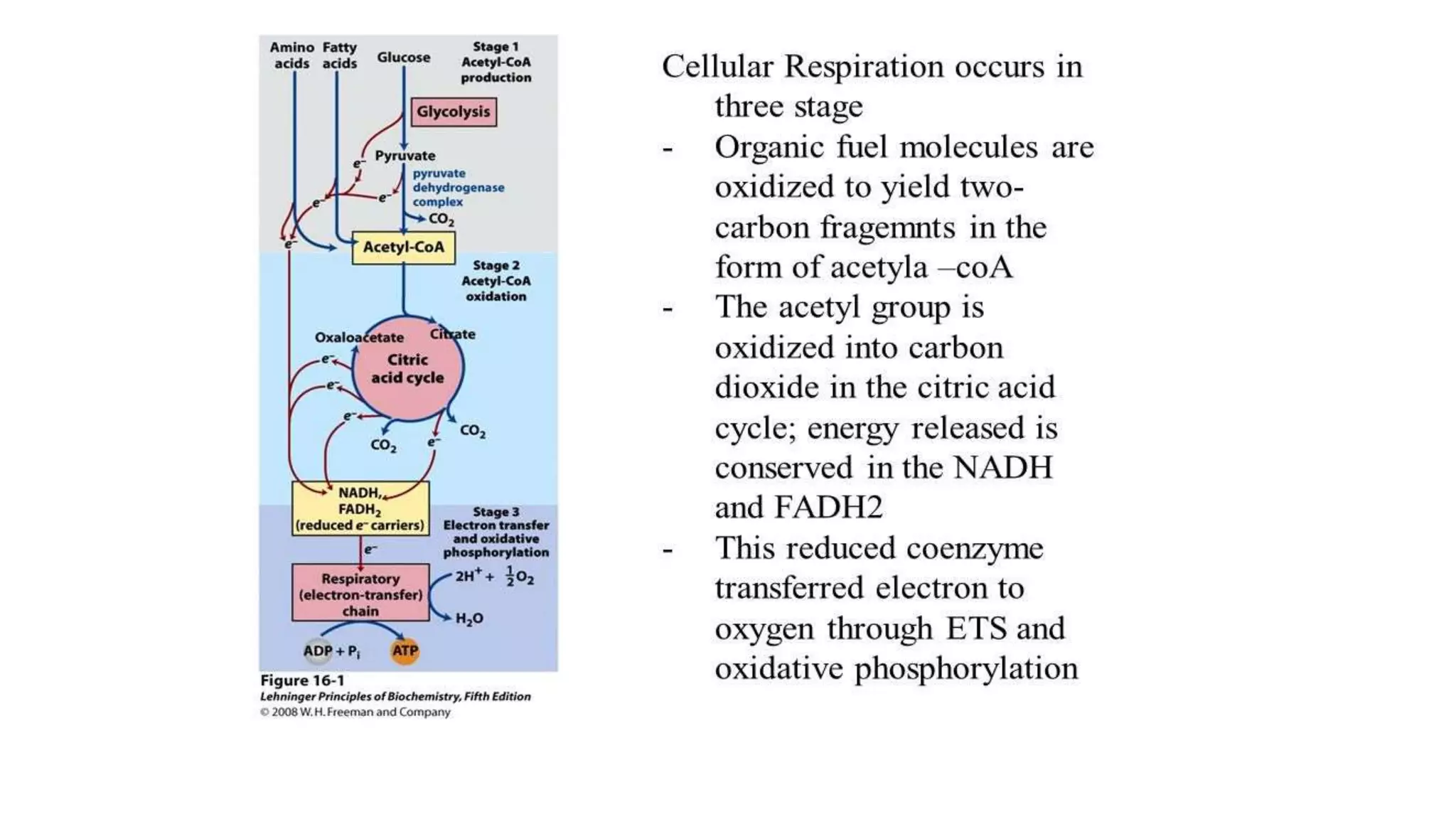
Cellular Respiration
• Molecular processes by which cells consume 02and produce CO2-
processes more precisely termed cellular respiration.
• Cellular respiration occurs in three major stages.
• Acetyl COA production
• Acetyl COA oxidation
• Electron transfer and oxidative phosphorylation.
Pyruvate is 0xidized to Acetyl CoA and CO2
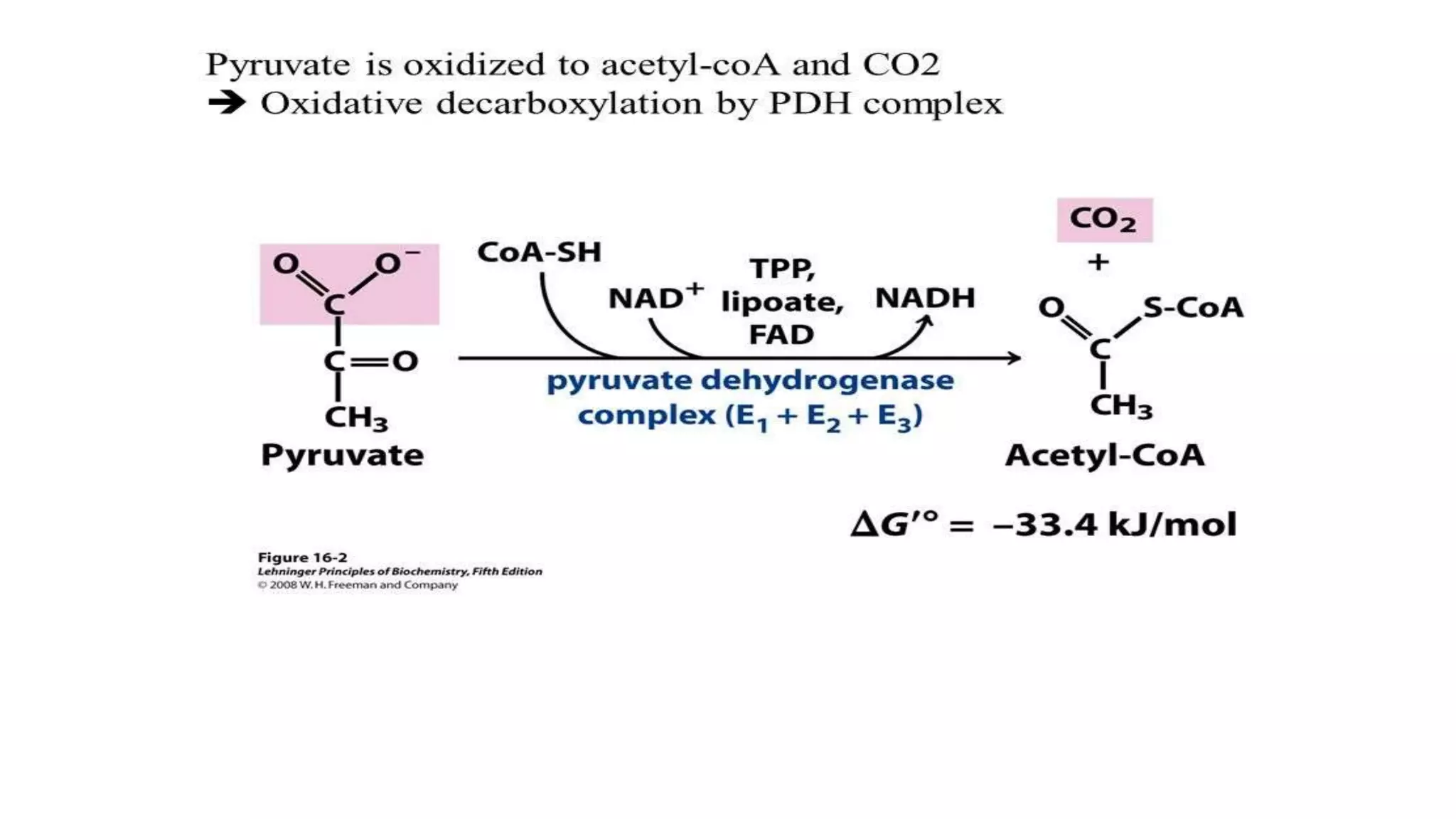
• Pyruvate, the product of glycolysis,is converted to acetyl-CoA, the starting
material for the citric acid cycle, by the pyruvate dehydrogenase complex.
• The overall reaction catalyzed by the pyruvate dehydrogenase complex is an
oxidative decarboxylation, an irreversible oxidation process in which the carboxyl
group is removed from pyruvate as a molecule of CO2 and the two remaining
carbons become the acetyl group of acetyl-CoA.
Reactions of the Citric Acid Cycle
• To begin a turn of the cycle, acetyl-CoA donates its acetyl group to the
four-carbon compound oxaloacetate to form the six-carbon citrate.
• Citrate is then transformed into isocitrate, also a six-carbon molecule,
which is dehydrogenated with loss of CO2 to yield the five-carbon
compound a-ketoglutarate (also called oxoglutarate).
• a-Ketoglutarate undergoes loss of a second molecule of CO2 and ultimately
yields the four-carbon compound succinate.
• Succinate is then enzymatically converted in three steps into the four-
carbon oxaloacetate which is then ready to react with another molecule of
acetyl-CoA. In each turn of the cycle, one acetyl group (two carbons)
enters as acetyl-CoA and two molecules of CO2 leave.
The Citric Acid Cycle Has Eight Steps
• 1. Formation of Citrate The first reaction of the cycle is the
condensation of acetyl-CoA with oxaloacetate to form citrate,
catalyzed by citrate synthase.
2. Formation of Isocitrate via cis-Aconitate The enzyme aconitase (more
formally, aconitate hydratase) catalyzes the reversible transformation of citrate
to isocitrate, through the intermediary formation of the tricarboxylic acid cis-
aconitate, which normally does not dissociate from the active site.
3. Oxidation of Isocitrate to a-Ketoglutarate and CO2 In the next step,
isocitrate dehydrogenase catalyzes oxidative decarboxylation of
isocitrate to form a-ketoglutarate. Mn2+ in the active site interacts with
the carbonyl group of the intermediate oxalosuccinate.
4. Oxidation of a-Ketoglutarate to Succinyl-CoA and CO2 The next step is
another oxidative decarboxyIation, in which a-ketoglutarate is converted
to succinyl-CoA and CO2 by the action of the a-ketoglutarate
dehydrogenase complex; NAD+ serves as electron acceptor and CoA as
the carrier of the succinyl group. The energy of oxidation of a-
ketoglutarate is conserved in the formation of the thioester bond of
succinyl-CoA.
5. Conversion of Succinyl-CoA to Succinate Succinyl-CoA like acetyl-CoA,
has a thioester bond with a strongly negative standard free energy of
hydrolysis (∆G‘o : -36 kJ/mol). In the next step of the citric acid cycle,
energy released in the breakage of this bond is used to drive the
synthesis of a phosphoanhydride bond in either GTP or ATP, with a net
∆G'o of only -2.9 kJ/mol. Succinate is formed in the process.
6. Oxidation of Succinate to Fumarate The succinate formed from
succinyl-CoA is oxidized to fumarate by the flavoprotein succinate
dehydrogenase.
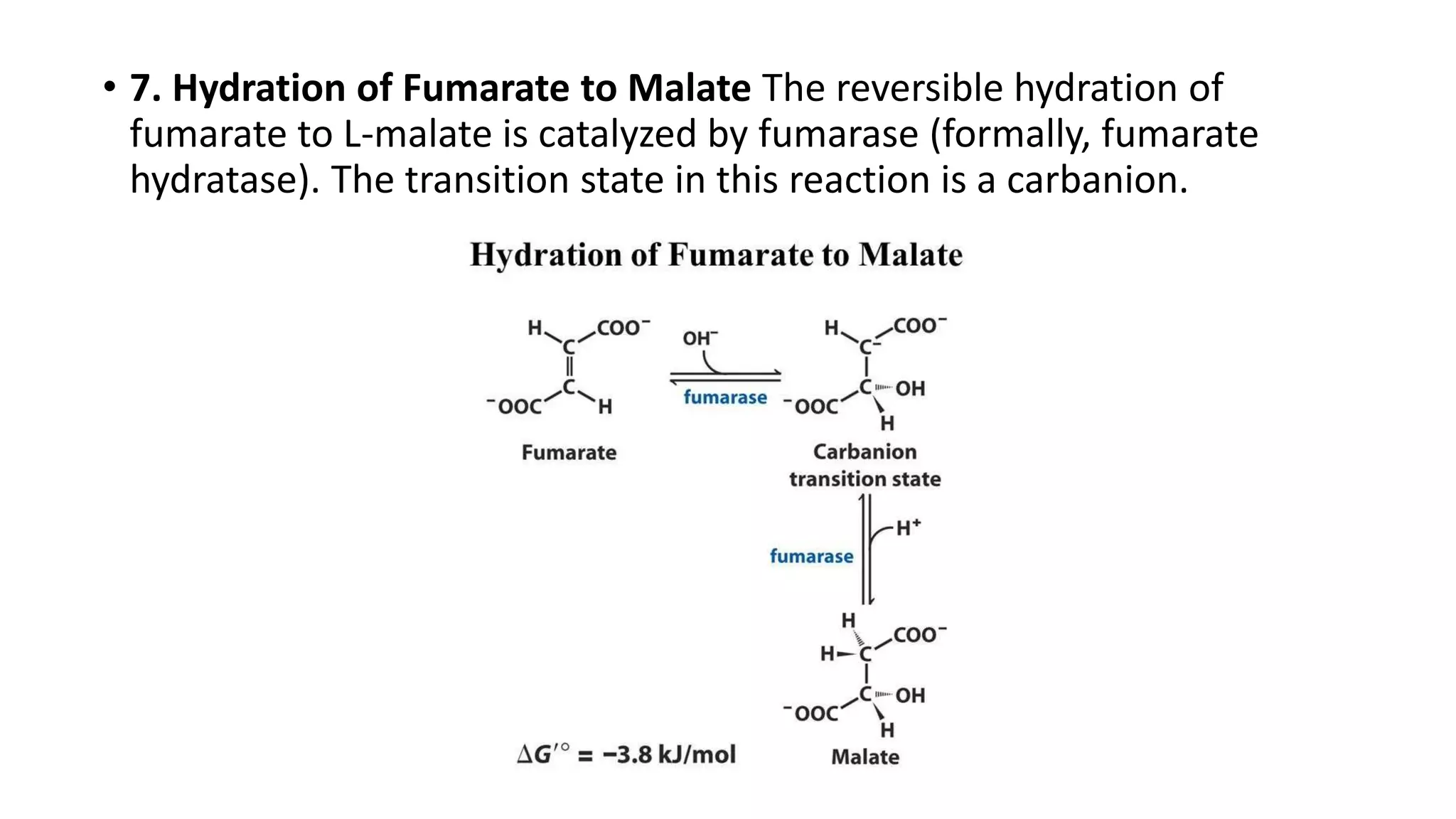
• 7. Hydration of Fumarate to Malate The reversible hydration of
fumarate to L-malate is catalyzed by fumarase (formally, fumarate
hydratase). The transition state in this reaction is a carbanion.
8. Oxidation of Malate to Oxaloacetate In the last reaction of the citric
acid cycle, NAD linked L-malate dehydrogenase catalyzes the oxidation of
L-malate to oxaloacetate.
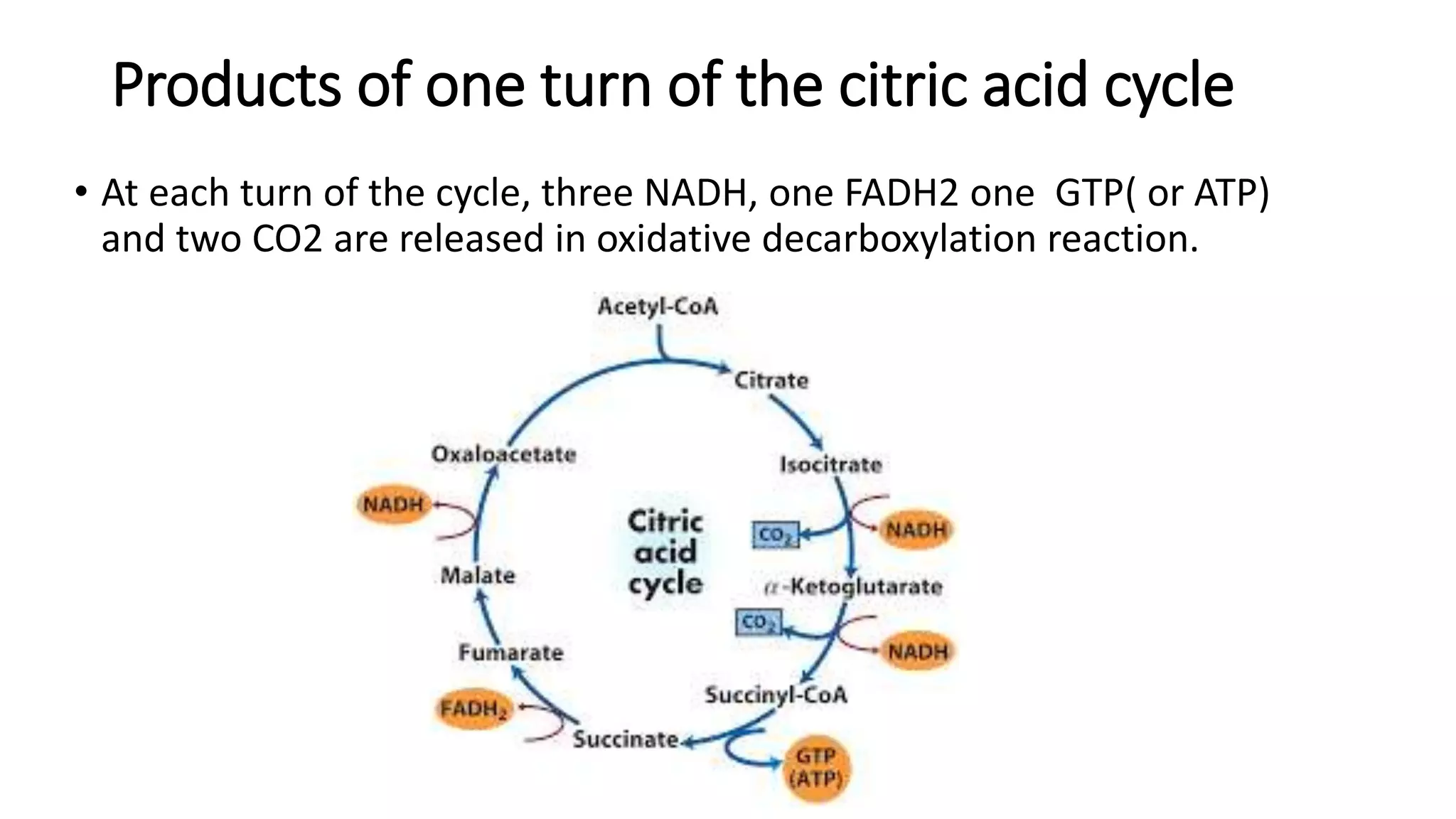
Products of one turn of the citric acid cycle
• At each turn of the cycle, three NADH, one FADH2 one GTP( or ATP)
and two CO2 are released in oxidative decarboxylation reaction.
Regulation of TCA Cycle..
• The flow of carbon atoms from pyruvate into and through the citric
acid cycle is under tight regulation at two levels:
• the conversion of pyruvate to acetyl-CoA, the starting material for the
cycle (the pyruvate dehydrogenase complex reaction), and
• the entry of acetyl-CoA into the cycle (the citrate synthase reaction).
• Acetyl- CoA is also produced by pathways other than the PDH
complex reaction-most cells produce acetyl-CoA from the oxidation of
fatty acids and certain amino acids.
• The cycle is also regulated at the isocitrate dehydrogenasea nd o-
ketoglutarate dehydrogenasree actions.
Production of Acetyl-CoA by the Pyruvate
Dehydrogenase Complex is Regulated by Allosteric
and Covalent Mechanisms
The Citric Acid Cycle is Regulated at its Three
Exergonic steps
• The flow of metabolites through the citric acid cycle is under stringent
regulation.
• Three factors govern the rate of flux through the cycle: substrate
availability, inhibition by accumulating products, and allosteric
feedback inhibition of the enzymes that catalyze early steps in the
cycle.
• Each of the three strongly exergonic steps in the cycle-those catalysed
by citrate synthase, isocitrate dehydrogenase, and a-ketoglutarate
dehydrogenase can become the rate-Iimiting step under some
circumstances.
• The availability of the substrates for citrate synthase (acetyl-CoA and
oxaloacetate) varies with the metabolic state of the cell and
sometimes Iimits the rate of citrate formation.
• NADH, a product of isocitrate and a-ketoglutarate oxidation,
accumulates under some conditions, and at high [NADH]/[NAD+] both
dehydrogenase reactions are severely inhibited by mass action.
• Similarly, in the cell, the malate dehydrogenase reaction is essentially
at equilibrium (that is, it is substrate-limited), and when
[NADH]/[NAD*] is high the concentration of oxaloacetate is low,
slowing the first step in the cycle.
• Product accumulation inhibits all three limiting steps of the cycle:
succinyl-CoA inhibits a-ketoglutarate dehydrogenase(and also citrate
synthase); citrate blocks citrate synthase; and the end product, ATP,
inhibits both citrate synthase and isocitrate dehydrogenase.
THANK YOU

Citric acid cycle/ TCA cycle/ Kreb's cycle

  • 1.
    TCA cycle andits regulation in aerobic condition… HEMA T MSC Biochemistry Bharathiar University 2018-2020
  • 2.
    Cellular Respiration • Molecularprocesses by which cells consume 02and produce CO2- processes more precisely termed cellular respiration. • Cellular respiration occurs in three major stages. • Acetyl COA production • Acetyl COA oxidation • Electron transfer and oxidative phosphorylation.
  • 4.
    Pyruvate is 0xidizedto Acetyl CoA and CO2 • Pyruvate, the product of glycolysis,is converted to acetyl-CoA, the starting material for the citric acid cycle, by the pyruvate dehydrogenase complex. • The overall reaction catalyzed by the pyruvate dehydrogenase complex is an oxidative decarboxylation, an irreversible oxidation process in which the carboxyl group is removed from pyruvate as a molecule of CO2 and the two remaining carbons become the acetyl group of acetyl-CoA.
  • 7.
    Reactions of theCitric Acid Cycle • To begin a turn of the cycle, acetyl-CoA donates its acetyl group to the four-carbon compound oxaloacetate to form the six-carbon citrate. • Citrate is then transformed into isocitrate, also a six-carbon molecule, which is dehydrogenated with loss of CO2 to yield the five-carbon compound a-ketoglutarate (also called oxoglutarate). • a-Ketoglutarate undergoes loss of a second molecule of CO2 and ultimately yields the four-carbon compound succinate. • Succinate is then enzymatically converted in three steps into the four- carbon oxaloacetate which is then ready to react with another molecule of acetyl-CoA. In each turn of the cycle, one acetyl group (two carbons) enters as acetyl-CoA and two molecules of CO2 leave.
  • 8.
    The Citric AcidCycle Has Eight Steps • 1. Formation of Citrate The first reaction of the cycle is the condensation of acetyl-CoA with oxaloacetate to form citrate, catalyzed by citrate synthase.
  • 9.
    2. Formation ofIsocitrate via cis-Aconitate The enzyme aconitase (more formally, aconitate hydratase) catalyzes the reversible transformation of citrate to isocitrate, through the intermediary formation of the tricarboxylic acid cis- aconitate, which normally does not dissociate from the active site.
  • 10.
    3. Oxidation ofIsocitrate to a-Ketoglutarate and CO2 In the next step, isocitrate dehydrogenase catalyzes oxidative decarboxylation of isocitrate to form a-ketoglutarate. Mn2+ in the active site interacts with the carbonyl group of the intermediate oxalosuccinate.
  • 11.
    4. Oxidation ofa-Ketoglutarate to Succinyl-CoA and CO2 The next step is another oxidative decarboxyIation, in which a-ketoglutarate is converted to succinyl-CoA and CO2 by the action of the a-ketoglutarate dehydrogenase complex; NAD+ serves as electron acceptor and CoA as the carrier of the succinyl group. The energy of oxidation of a- ketoglutarate is conserved in the formation of the thioester bond of succinyl-CoA.
  • 12.
    5. Conversion ofSuccinyl-CoA to Succinate Succinyl-CoA like acetyl-CoA, has a thioester bond with a strongly negative standard free energy of hydrolysis (∆G‘o : -36 kJ/mol). In the next step of the citric acid cycle, energy released in the breakage of this bond is used to drive the synthesis of a phosphoanhydride bond in either GTP or ATP, with a net ∆G'o of only -2.9 kJ/mol. Succinate is formed in the process.
  • 13.
    6. Oxidation ofSuccinate to Fumarate The succinate formed from succinyl-CoA is oxidized to fumarate by the flavoprotein succinate dehydrogenase.
  • 14.
    • 7. Hydrationof Fumarate to Malate The reversible hydration of fumarate to L-malate is catalyzed by fumarase (formally, fumarate hydratase). The transition state in this reaction is a carbanion.
  • 15.
    8. Oxidation ofMalate to Oxaloacetate In the last reaction of the citric acid cycle, NAD linked L-malate dehydrogenase catalyzes the oxidation of L-malate to oxaloacetate.
  • 16.
    Products of oneturn of the citric acid cycle • At each turn of the cycle, three NADH, one FADH2 one GTP( or ATP) and two CO2 are released in oxidative decarboxylation reaction.
  • 17.
    Regulation of TCACycle.. • The flow of carbon atoms from pyruvate into and through the citric acid cycle is under tight regulation at two levels: • the conversion of pyruvate to acetyl-CoA, the starting material for the cycle (the pyruvate dehydrogenase complex reaction), and • the entry of acetyl-CoA into the cycle (the citrate synthase reaction). • Acetyl- CoA is also produced by pathways other than the PDH complex reaction-most cells produce acetyl-CoA from the oxidation of fatty acids and certain amino acids. • The cycle is also regulated at the isocitrate dehydrogenasea nd o- ketoglutarate dehydrogenasree actions.
  • 18.
    Production of Acetyl-CoAby the Pyruvate Dehydrogenase Complex is Regulated by Allosteric and Covalent Mechanisms
  • 20.
    The Citric AcidCycle is Regulated at its Three Exergonic steps • The flow of metabolites through the citric acid cycle is under stringent regulation. • Three factors govern the rate of flux through the cycle: substrate availability, inhibition by accumulating products, and allosteric feedback inhibition of the enzymes that catalyze early steps in the cycle. • Each of the three strongly exergonic steps in the cycle-those catalysed by citrate synthase, isocitrate dehydrogenase, and a-ketoglutarate dehydrogenase can become the rate-Iimiting step under some circumstances.
  • 21.
    • The availabilityof the substrates for citrate synthase (acetyl-CoA and oxaloacetate) varies with the metabolic state of the cell and sometimes Iimits the rate of citrate formation. • NADH, a product of isocitrate and a-ketoglutarate oxidation, accumulates under some conditions, and at high [NADH]/[NAD+] both dehydrogenase reactions are severely inhibited by mass action. • Similarly, in the cell, the malate dehydrogenase reaction is essentially at equilibrium (that is, it is substrate-limited), and when [NADH]/[NAD*] is high the concentration of oxaloacetate is low, slowing the first step in the cycle. • Product accumulation inhibits all three limiting steps of the cycle: succinyl-CoA inhibits a-ketoglutarate dehydrogenase(and also citrate synthase); citrate blocks citrate synthase; and the end product, ATP, inhibits both citrate synthase and isocitrate dehydrogenase.
  • 22.