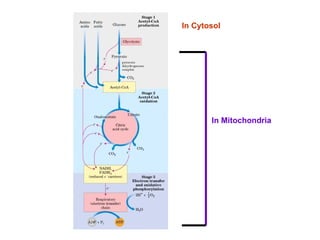
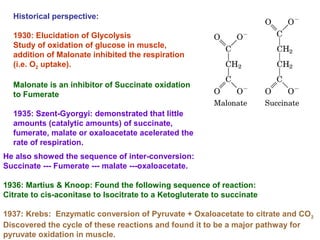
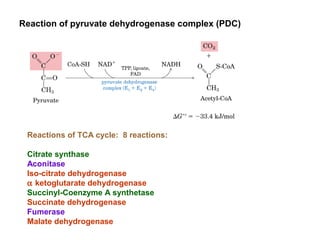
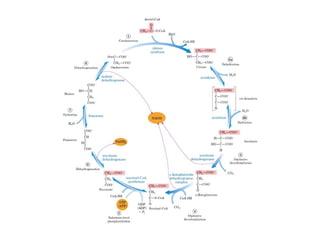
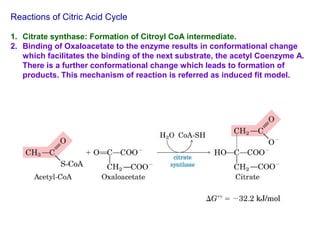
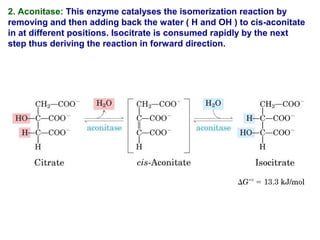
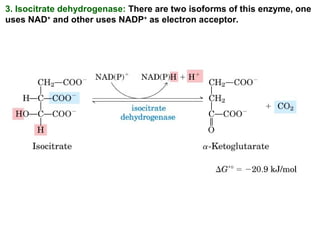
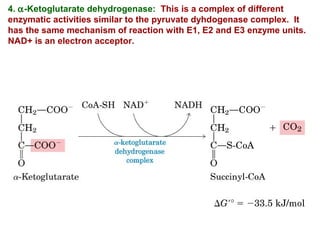
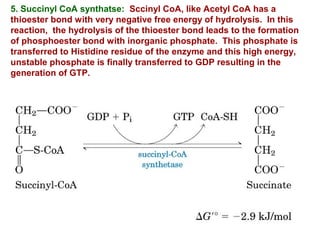
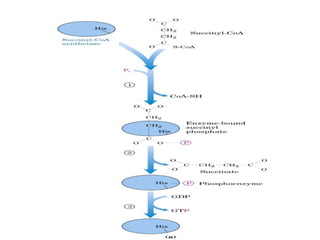
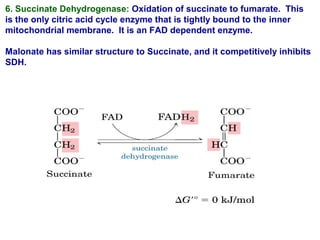
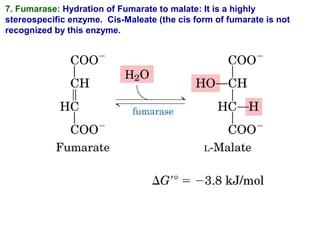
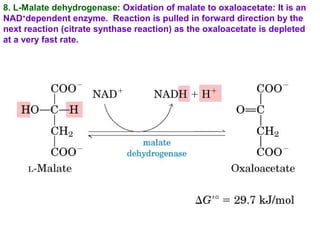
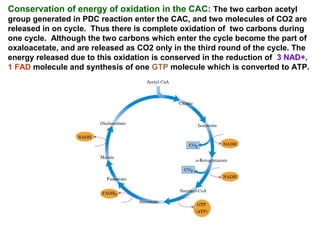
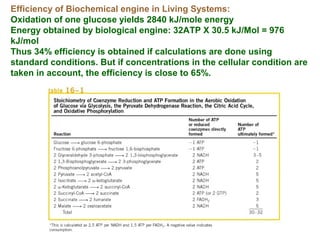
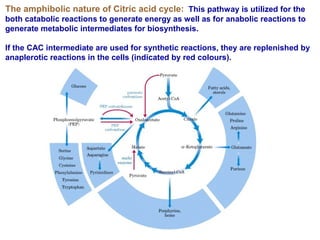
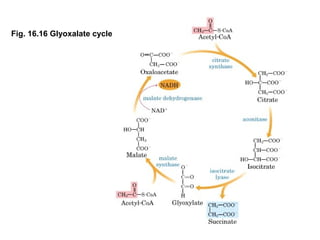
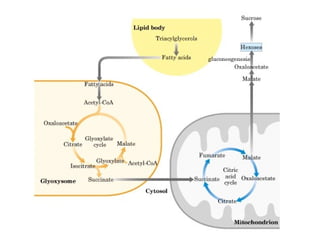
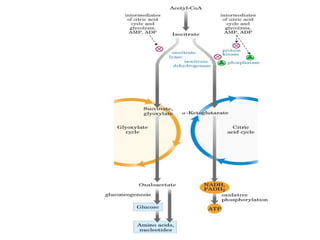
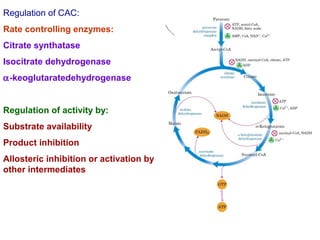
The citric acid cycle is a series of chemical reactions in the mitochondria that break down food molecules into carbon dioxide. It is also known as the Krebs cycle or tricarboxylic acid cycle. The cycle consists of 8 steps that oxidize acetate derived from carbohydrates, fats, and proteins into carbon dioxide. This releases energy in the form of GTP, reduced co-enzymes like NADH and FADH2 that are used to generate ATP through oxidative phosphorylation. The cycle plays a key role in cellular respiration and the production of energy.