Introduction of
biochemistry
Biochemistry slides
BIOCHEMISTRY SLIDES
Chemistry of life
Biochemistry :
Biochemistry is the study of the chemical
processes in living organisms. It deals
with the structure and functions of
cellular components such as proteins,
carbohydrates, lipids, nucleic acids and
other biomolecules.
BIOCHEMISTRY SLIDES
Chemistry of life
chemical properties of
important biological molecules,
like proteins
chemistry of enzyme-catalysed
reactions.
biochemistry of cell metabolism and
the endocrine system
biochemistry of genetics (DNA
and RNA)
Biochemistry of protein synthesis
Biochemistry of cell membrane
transport.
Biochemistry of signal transduction
Biochemistry studies
BIOCHEMISTRY SLIDES
Chemistry of life
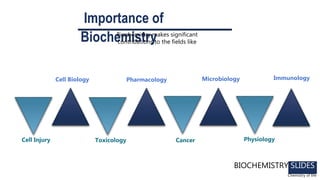
Importance of
Biochemistry
Biochemistry makes significant
contributions to the fields like
Cancer
Cell Biology
Physiology
Immunology
Microbiology
Pharmacology
Toxicology
Cell Injury
BIOCHEMISTRY SLIDES
Chemistry of life
Carbohydrates means hydrated carbons.
Carbohydrates are poly- hydroxy aldehydes or ketones, or
substances that yield such compounds on hydrolysis.
Carbohydrates
BIOCHEMISTRY SLIDES
Chemistry of life
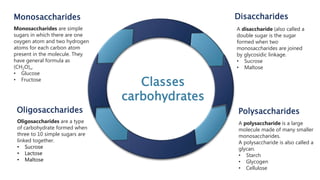
Disaccharides
Oligosaccharides Polysaccharides
Classes
carbohydrates
Monosaccharides
Monosaccharides are simple
sugars in which there are one
oxygen atom and two hydrogen
atoms for each carbon atom
present in the molecule. They
have general formula as
(CH2O)n.
• Glucose
• Fructose
Oligosaccharides are a type
of carbohydrate formed when
three to 10 simple sugars are
linked together.
• Sucrose
• Lactose
• Maltose
A disaccharide (also called a
double sugar is the sugar
formed when two
monosaccharides are joined
by glycosidic linkage.
• Sucrose
• Maltose
A polysaccharide is a large
molecule made of many smaller
monosaccharides.
A polysaccharide is also called a
glycan.
• Starch
• Glycogen
• Cellulose
Lipids
They are large number and diverse
group of organic compounds
composed of fatty acids and glycerol
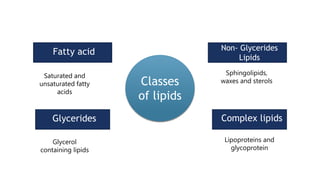
Classes
of lipids
Non- Glycerides
Lipids
Fatty acid
Glycerides Complex lipids
Saturated and
unsaturated fatty
acids
Glycerol
containing lipids
Sphingolipids,
waxes and sterols
Lipoproteins and
glycoprotein
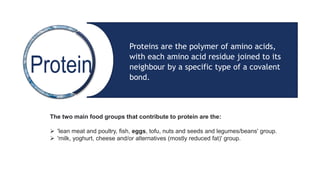
Protein
Proteins are the polymer of amino acids,
with each amino acid residue joined to its
neighbour by a specific type of a covalent
bond.
The two main food groups that contribute to protein are the:
 'lean meat and poultry, fish, eggs, tofu, nuts and seeds and legumes/beans' group.
 'milk, yoghurt, cheese and/or alternatives (mostly reduced fat)' group.
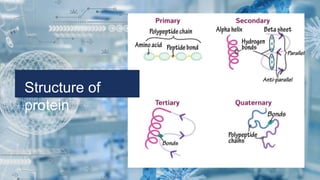
Structure of
protein
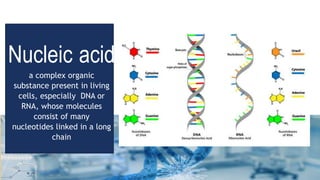
Nucleic acid
a complex organic
substance present in living
cells, especially DNA or
RNA, whose molecules
consist of many
nucleotides linked in a long
chain
Thanks for
watching
BIOCHEMISTRY SLIDES
Chemistry of life

Introduction to biochemistry // Biochemistry

  • 1.
  • 2.
    Biochemistry : Biochemistry isthe study of the chemical processes in living organisms. It deals with the structure and functions of cellular components such as proteins, carbohydrates, lipids, nucleic acids and other biomolecules. BIOCHEMISTRY SLIDES Chemistry of life
  • 3.
    chemical properties of importantbiological molecules, like proteins chemistry of enzyme-catalysed reactions. biochemistry of cell metabolism and the endocrine system biochemistry of genetics (DNA and RNA) Biochemistry of protein synthesis Biochemistry of cell membrane transport. Biochemistry of signal transduction Biochemistry studies BIOCHEMISTRY SLIDES Chemistry of life
  • 4.
    Importance of Biochemistry Biochemistry makessignificant contributions to the fields like Cancer Cell Biology Physiology Immunology Microbiology Pharmacology Toxicology Cell Injury BIOCHEMISTRY SLIDES Chemistry of life
  • 5.
    Carbohydrates means hydratedcarbons. Carbohydrates are poly- hydroxy aldehydes or ketones, or substances that yield such compounds on hydrolysis. Carbohydrates BIOCHEMISTRY SLIDES Chemistry of life
  • 6.
    Disaccharides Oligosaccharides Polysaccharides Classes carbohydrates Monosaccharides Monosaccharides aresimple sugars in which there are one oxygen atom and two hydrogen atoms for each carbon atom present in the molecule. They have general formula as (CH2O)n. • Glucose • Fructose Oligosaccharides are a type of carbohydrate formed when three to 10 simple sugars are linked together. • Sucrose • Lactose • Maltose A disaccharide (also called a double sugar is the sugar formed when two monosaccharides are joined by glycosidic linkage. • Sucrose • Maltose A polysaccharide is a large molecule made of many smaller monosaccharides. A polysaccharide is also called a glycan. • Starch • Glycogen • Cellulose
  • 7.
    Lipids They are largenumber and diverse group of organic compounds composed of fatty acids and glycerol
  • 8.
    Classes of lipids Non- Glycerides Lipids Fattyacid Glycerides Complex lipids Saturated and unsaturated fatty acids Glycerol containing lipids Sphingolipids, waxes and sterols Lipoproteins and glycoprotein
  • 9.
    Protein Proteins are thepolymer of amino acids, with each amino acid residue joined to its neighbour by a specific type of a covalent bond. The two main food groups that contribute to protein are the:  'lean meat and poultry, fish, eggs, tofu, nuts and seeds and legumes/beans' group.  'milk, yoghurt, cheese and/or alternatives (mostly reduced fat)' group.
  • 10.
  • 11.
    Nucleic acid a complexorganic substance present in living cells, especially DNA or RNA, whose molecules consist of many nucleotides linked in a long chain
  • 12.