Changing Number of Kingdoms

Chapter 17.3- Domains and Kingdoms
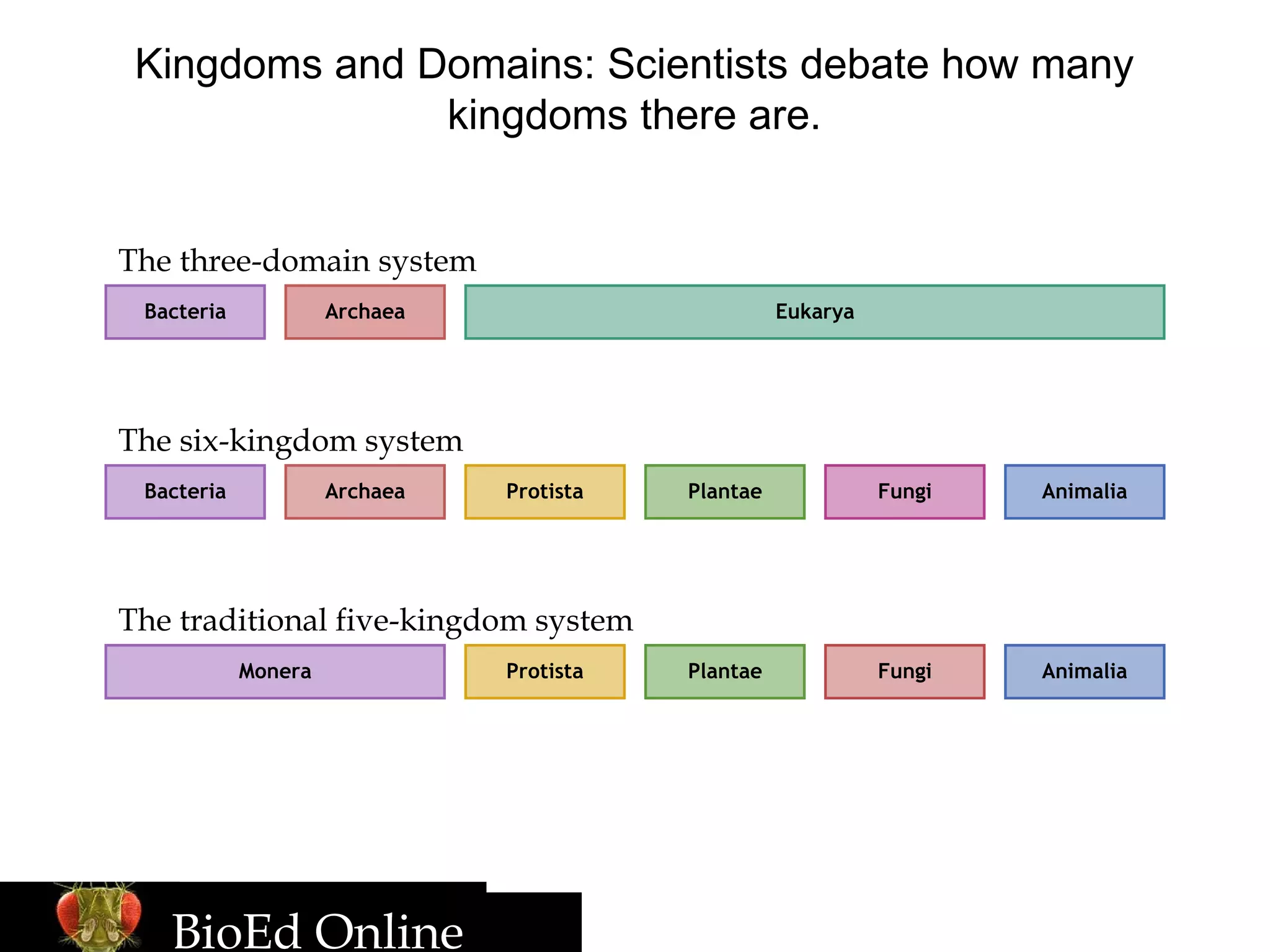
Kingdoms and Domains: Scientists debate how many
               kingdoms there are.


The three-domain system
 Bacteria            Archaea                        Eukarya


The six-kingdom system
 Bacteria            Archaea   Protista   Plantae             Fungi   Animalia


The traditional five-kingdom system
            Monera             Protista   Plantae             Fungi   Animalia


   BioEd Online
Domains

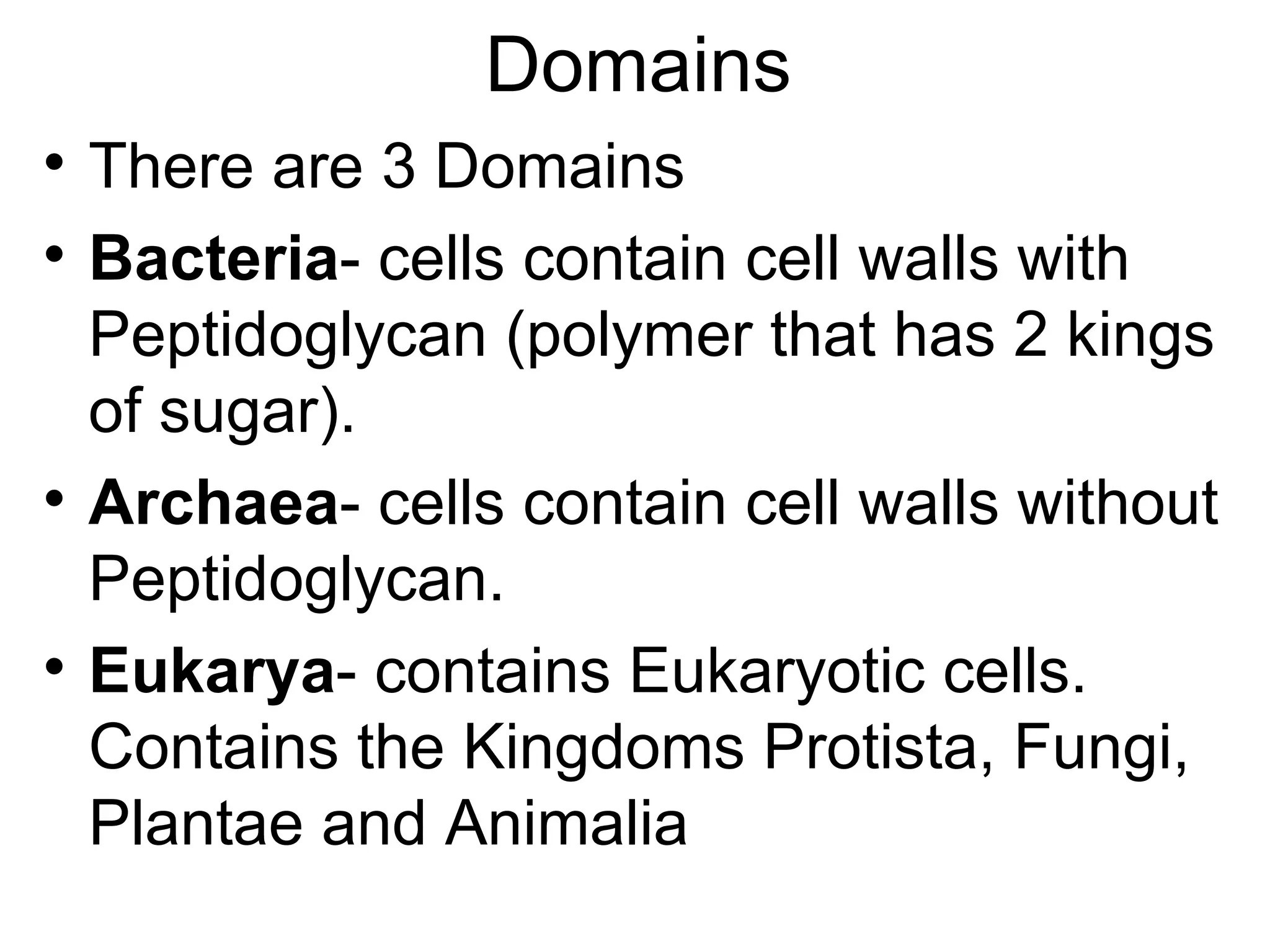
    There are 3 Domains

    Bacteria- cells contain cell walls with
    Peptidoglycan (polymer that has 2 kings
    of sugar).

    Archaea- cells contain cell walls without
    Peptidoglycan.

    Eukarya- contains Eukaryotic cells.
    Contains the Kingdoms Protista, Fungi,
    Plantae and Animalia
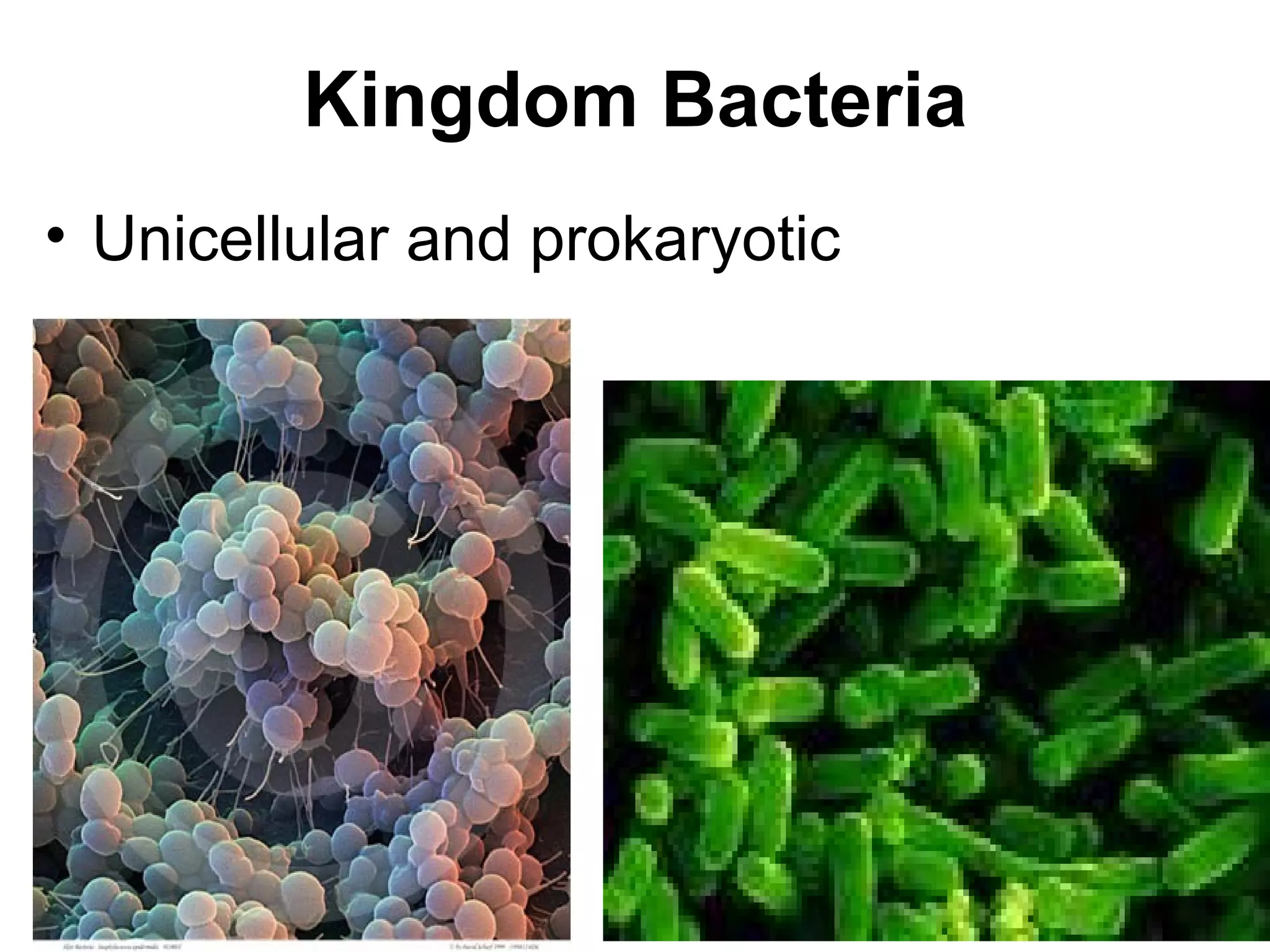
Kingdom Bacteria
• Unicellular and prokaryotic
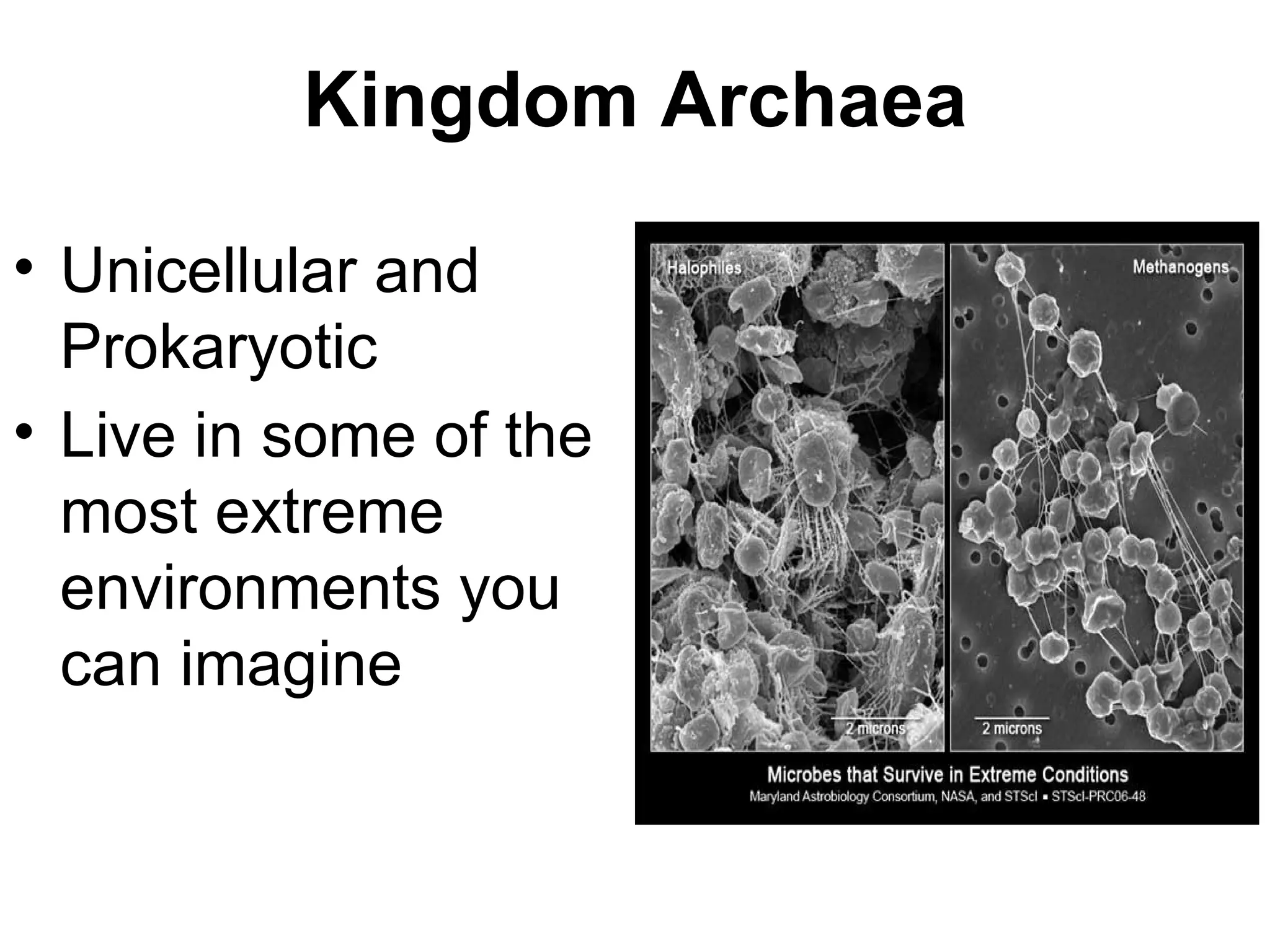
Kingdom Archaea

• Unicellular and
  Prokaryotic
• Live in some of the
  most extreme
  environments you
  can imagine
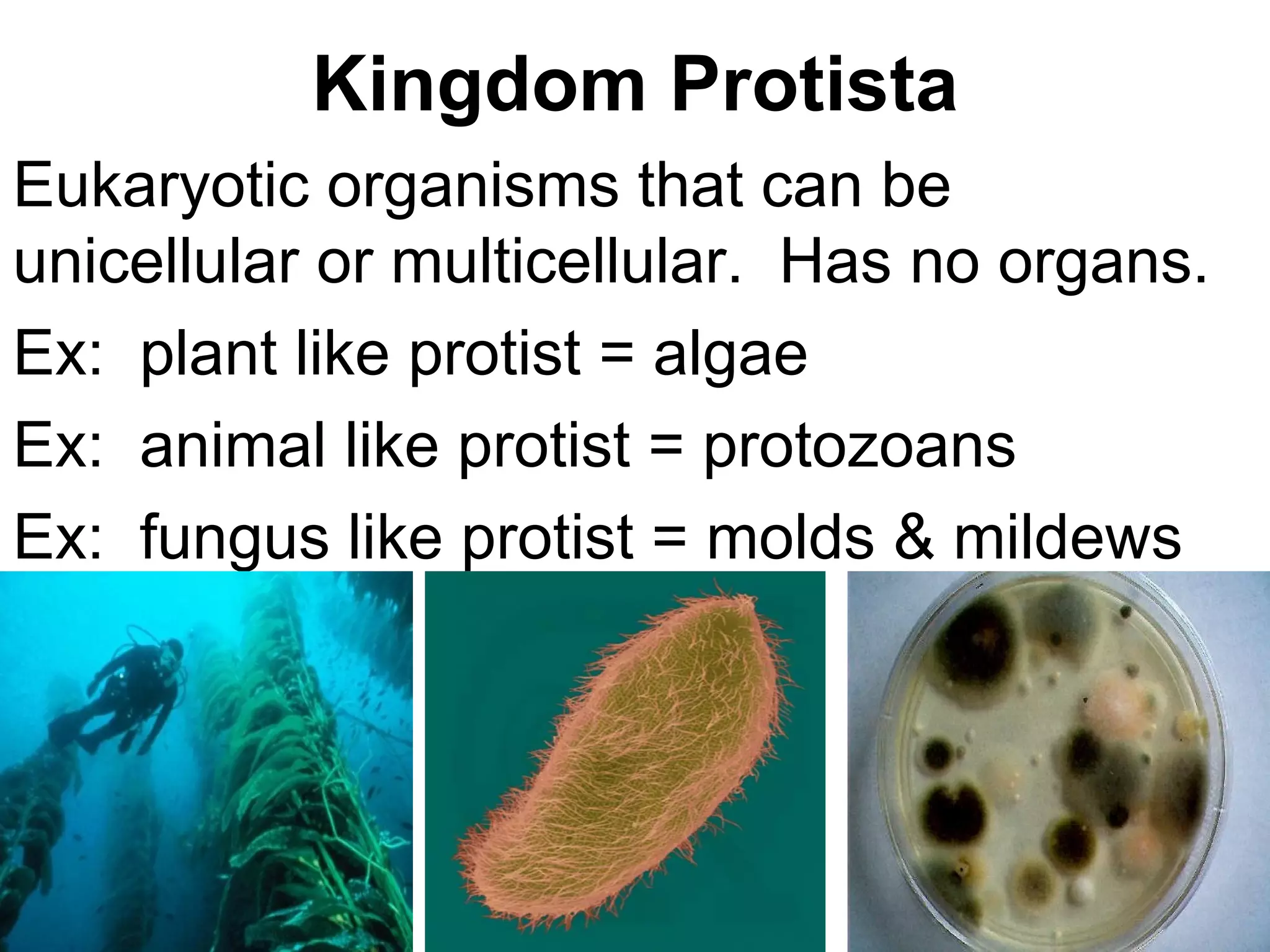
Kingdom Protista
Eukaryotic organisms that can be
unicellular or multicellular. Has no organs.
Ex: plant like protist = algae
Ex: animal like protist = protozoans
Ex: fungus like protist = molds & mildews
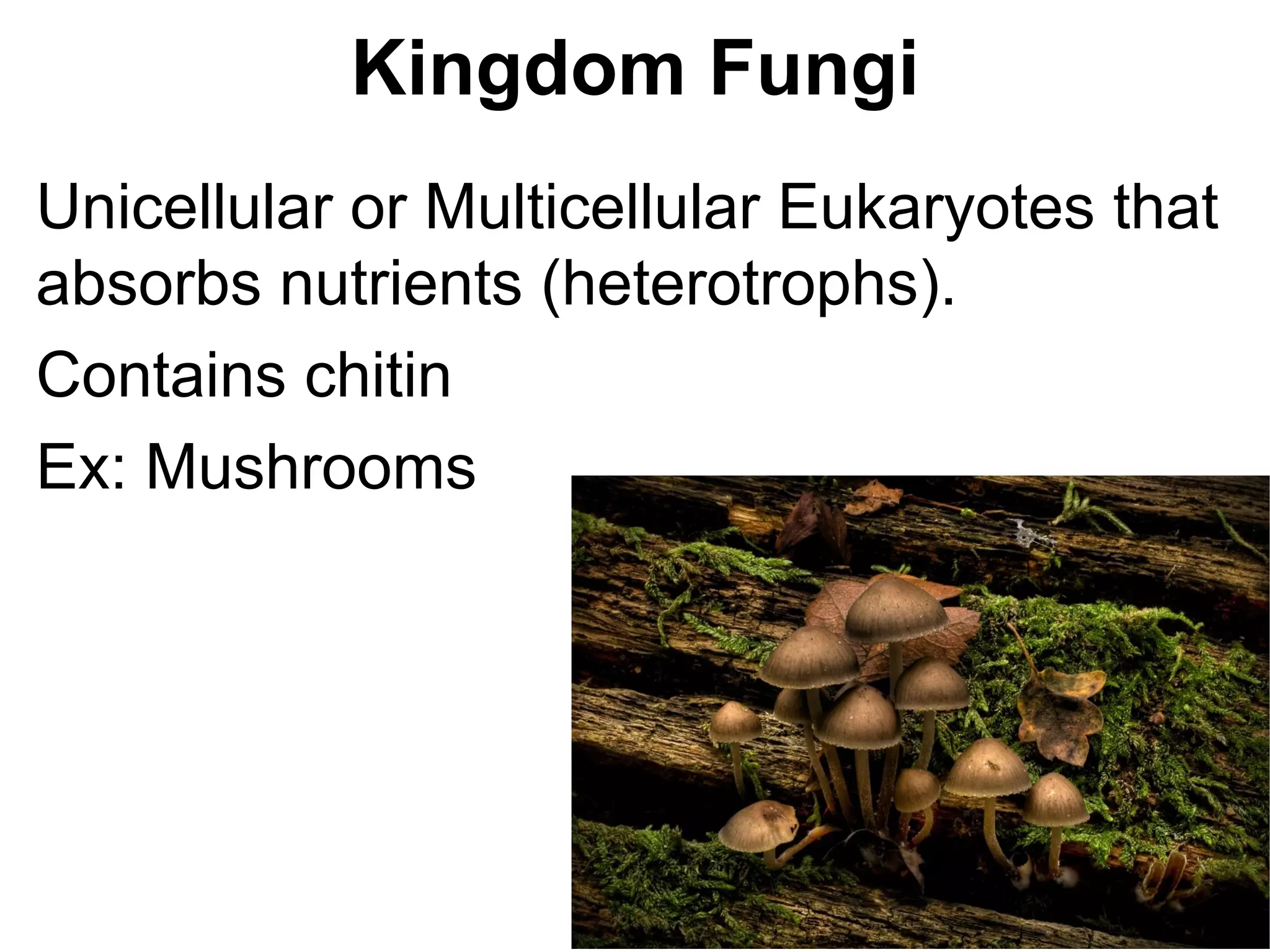
Kingdom Fungi
Unicellular or Multicellular Eukaryotes that
absorbs nutrients (heterotrophs).
Contains chitin
Ex: Mushrooms
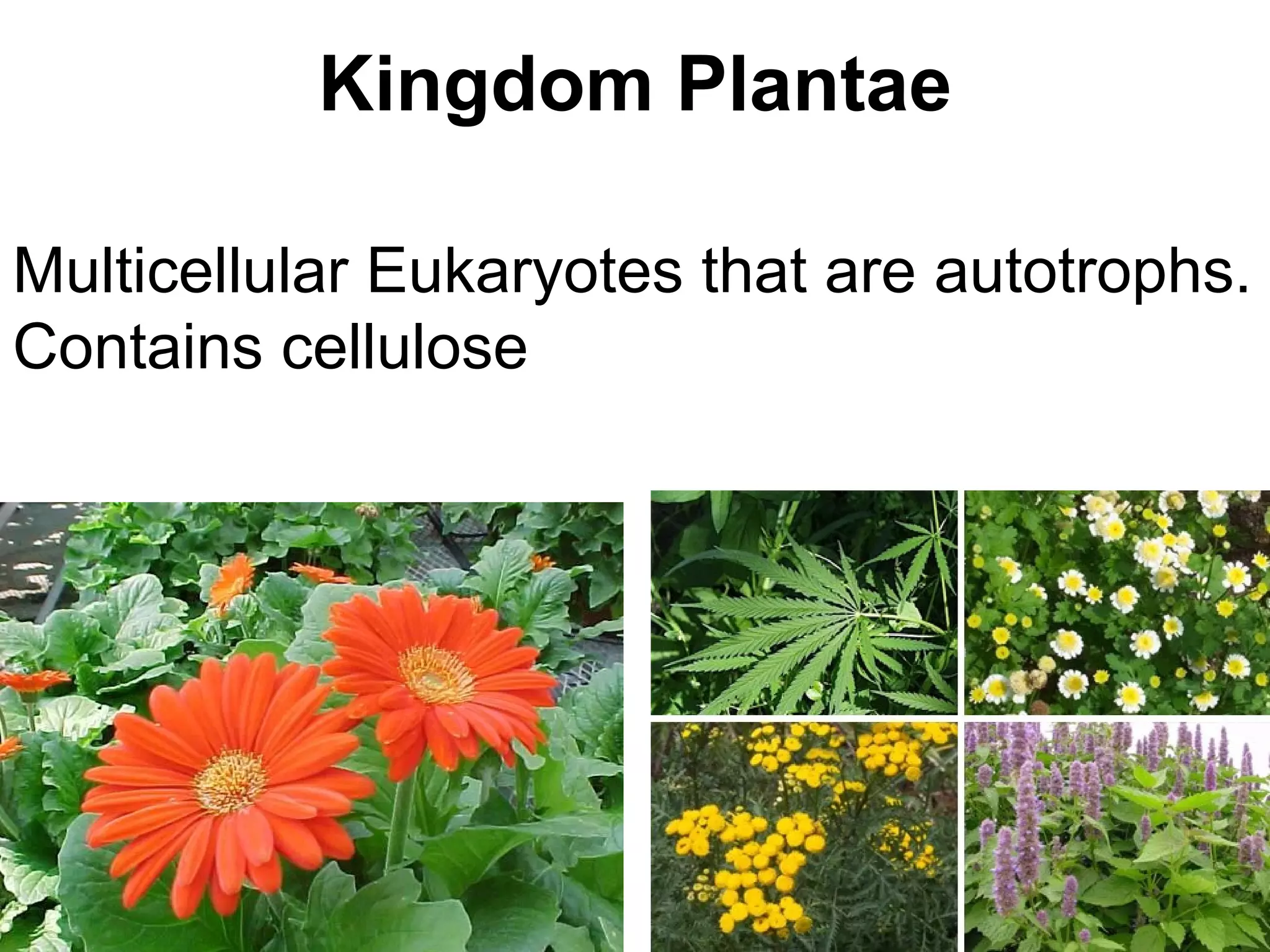
Kingdom Plantae

Multicellular Eukaryotes that are autotrophs.
Contains cellulose
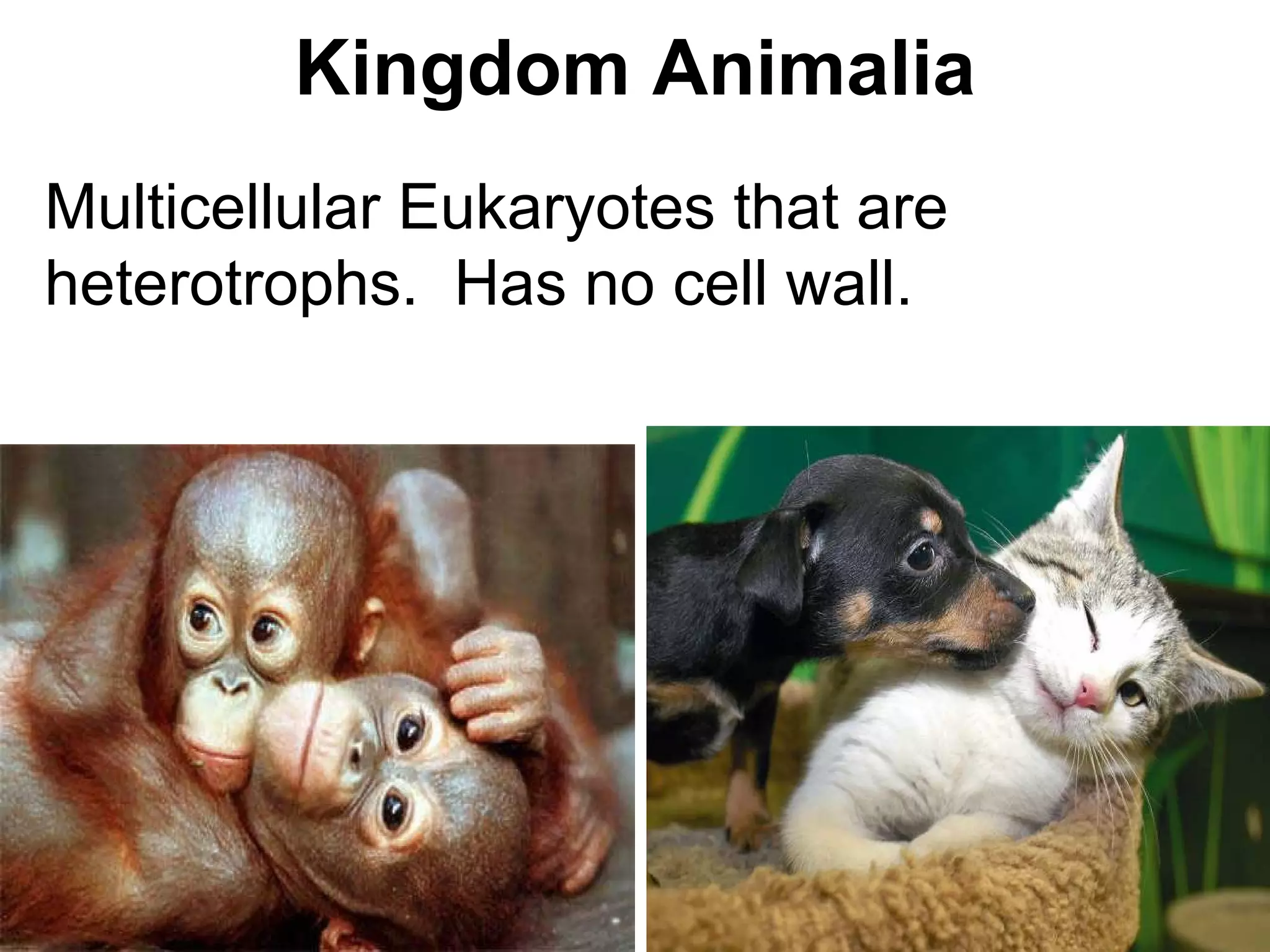
Kingdom Animalia
Multicellular Eukaryotes that are
heterotrophs. Has no cell wall.
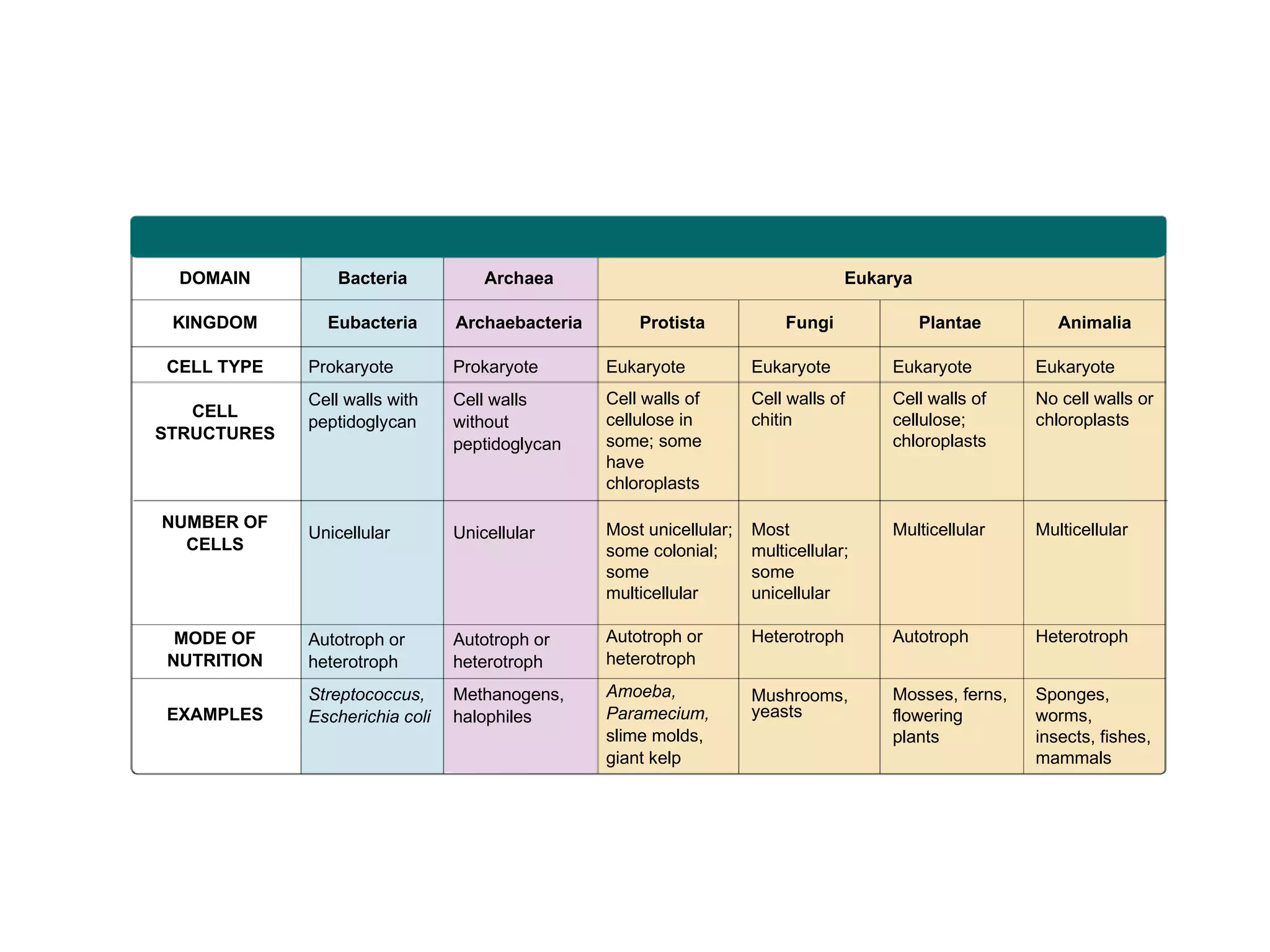
DOMAIN         Bacteria           Archaea                                        Eukarya

 KINGDOM       Eubacteria       Archaebacteria       Protista            Fungi               Plantae       Animalia

CELL TYPE    Prokaryote         Prokaryote       Eukaryote           Eukaryote         Eukaryote        Eukaryote
             Cell walls with    Cell walls       Cell walls of       Cell walls of     Cell walls of    No cell walls or
   CELL                                          cellulose in        chitin            cellulose;       chloroplasts
             peptidoglycan      without
STRUCTURES                                       some; some                            chloroplasts
                                peptidoglycan
                                                 have
                                                 chloroplasts

NUMBER OF                                        Most unicellular;   Most              Multicellular    Multicellular
             Unicellular        Unicellular
  CELLS                                          some colonial;      multicellular;
                                                 some                some
                                                 multicellular       unicellular

 MODE OF     Autotroph or       Autotroph or     Autotroph or        Heterotroph       Autotroph        Heterotroph
NUTRITION    heterotroph        heterotroph      heterotroph

             Streptococcus,     Methanogens,     Amoeba,             Mushrooms,        Mosses, ferns,   Sponges,
EXAMPLES     Escherichia coli   halophiles       Paramecium,         yeasts            flowering        worms,
                                                 slime molds,                          plants           insects, fishes,
                                                 giant kelp                                             mammals

Chpt. 17.3- Domains and Kingdoms

  • 1.
    Changing Number ofKingdoms Chapter 17.3- Domains and Kingdoms
  • 2.
    Kingdoms and Domains:Scientists debate how many kingdoms there are. The three-domain system Bacteria Archaea Eukarya The six-kingdom system Bacteria Archaea Protista Plantae Fungi Animalia The traditional five-kingdom system Monera Protista Plantae Fungi Animalia BioEd Online
  • 3.
    Domains  There are 3 Domains  Bacteria- cells contain cell walls with Peptidoglycan (polymer that has 2 kings of sugar).  Archaea- cells contain cell walls without Peptidoglycan.  Eukarya- contains Eukaryotic cells. Contains the Kingdoms Protista, Fungi, Plantae and Animalia
  • 4.
  • 5.
    Kingdom Archaea • Unicellularand Prokaryotic • Live in some of the most extreme environments you can imagine
  • 6.
    Kingdom Protista Eukaryotic organismsthat can be unicellular or multicellular. Has no organs. Ex: plant like protist = algae Ex: animal like protist = protozoans Ex: fungus like protist = molds & mildews
  • 7.
    Kingdom Fungi Unicellular orMulticellular Eukaryotes that absorbs nutrients (heterotrophs). Contains chitin Ex: Mushrooms
  • 8.
    Kingdom Plantae Multicellular Eukaryotesthat are autotrophs. Contains cellulose
  • 9.
    Kingdom Animalia Multicellular Eukaryotesthat are heterotrophs. Has no cell wall.
  • 10.
    DOMAIN Bacteria Archaea Eukarya KINGDOM Eubacteria Archaebacteria Protista Fungi Plantae Animalia CELL TYPE Prokaryote Prokaryote Eukaryote Eukaryote Eukaryote Eukaryote Cell walls with Cell walls Cell walls of Cell walls of Cell walls of No cell walls or CELL cellulose in chitin cellulose; chloroplasts peptidoglycan without STRUCTURES some; some chloroplasts peptidoglycan have chloroplasts NUMBER OF Most unicellular; Most Multicellular Multicellular Unicellular Unicellular CELLS some colonial; multicellular; some some multicellular unicellular MODE OF Autotroph or Autotroph or Autotroph or Heterotroph Autotroph Heterotroph NUTRITION heterotroph heterotroph heterotroph Streptococcus, Methanogens, Amoeba, Mushrooms, Mosses, ferns, Sponges, EXAMPLES Escherichia coli halophiles Paramecium, yeasts flowering worms, slime molds, plants insects, fishes, giant kelp mammals

Editor's Notes

  • #3 Kingdoms and Domains In the 18 th Century, organisms were considered to belong to one of two kingdoms, Animalia or Plantae. As biologists gathered more information about the diverse forms of life on Earth, it became evident that the two-kingdom system did not accurately reflect relationships among different groups of organisms, and the number of kingdoms increased. In 1969, Robert Whittaker proposed a five-kingdom system consisting of monerans, protists, fungi, plants and animals. In the last few years, comparative studies of nucleotide sequences of genes coding for ribosomal RNA and other proteins have allowed biologists to recognize important distinctions between bacteria and archaebacteria. The graphic on this slide illustrates the phylogenetic relationships drawn from this information using a three-domain and a six-kingdom arrangement, compared to the traditional five kingdom system. References Woese, C. R. & Fox, G. E. (1977). Phylogenetic structure of the prokaryotic domain: the primary kingdoms. Proceedings of the National Academy of Sciences of the United States of America. 74(11), 5088-90.