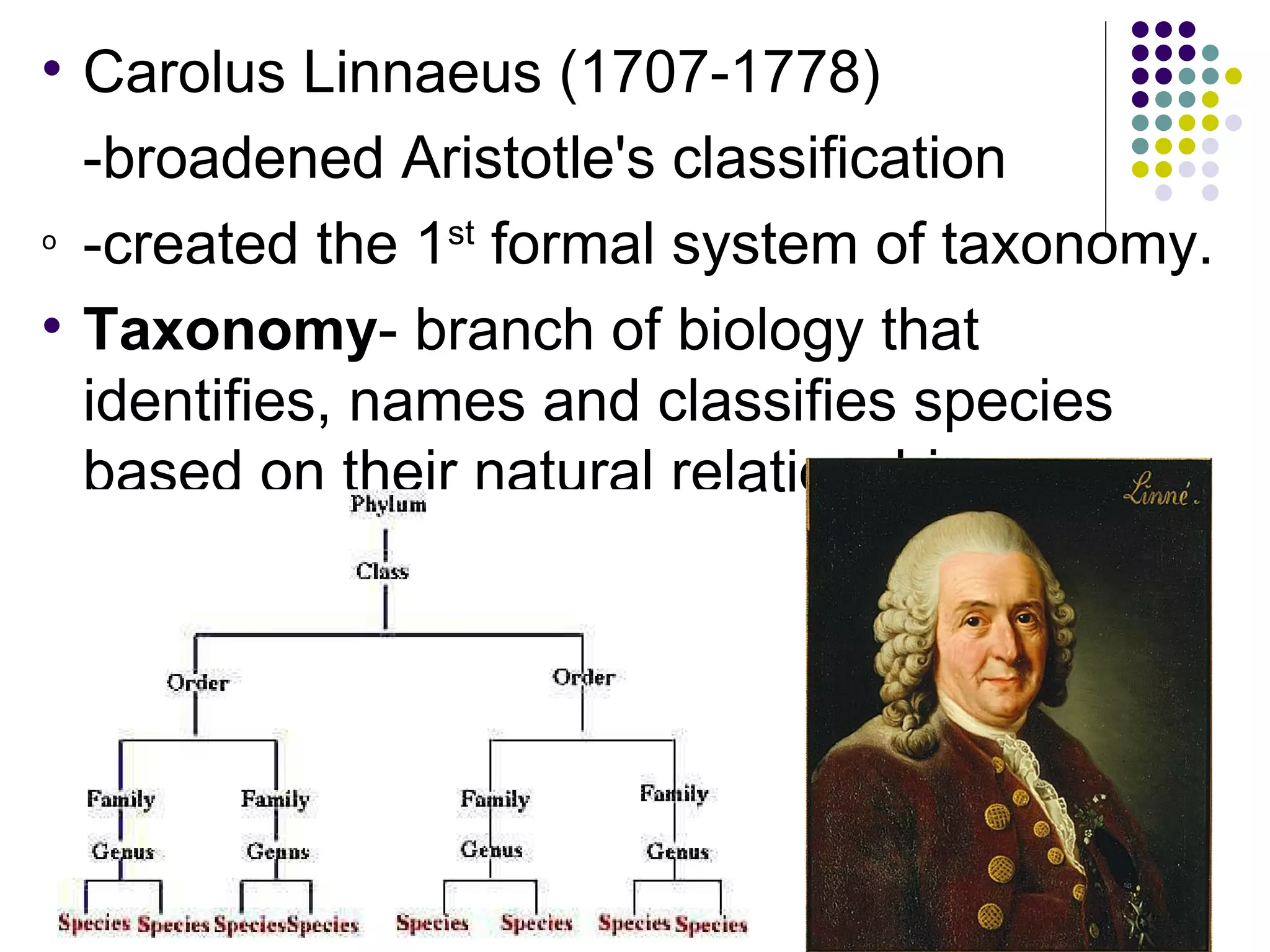
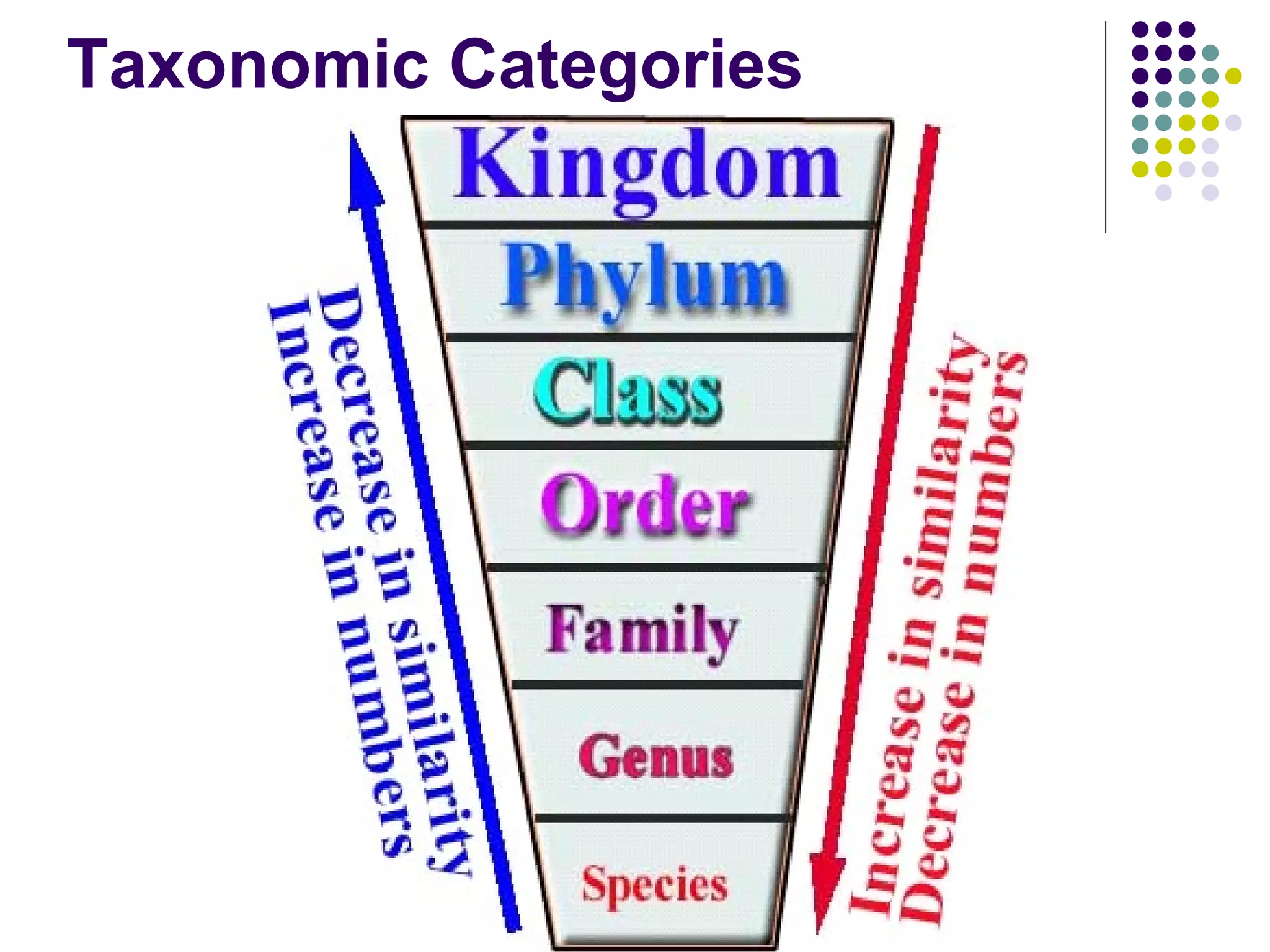
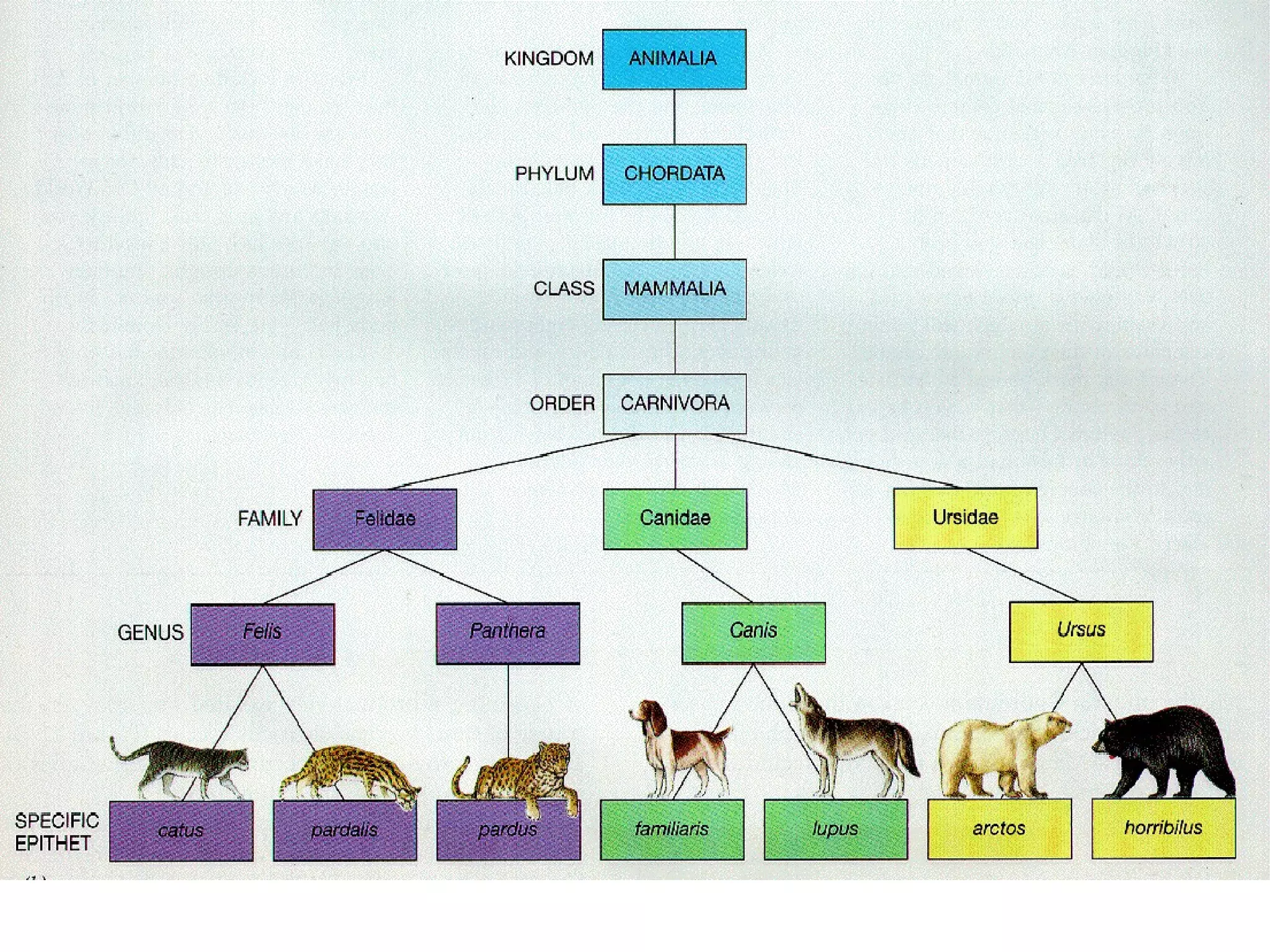
Aristotle first classified organisms as either animals or plants, with plants grouped by size and animals by whether they had blood. Linnaeus broadened Aristotle's system and created the first formal taxonomy, grouping organisms into a binominal nomenclature with a genus and species name. The taxonomic categories from most specific to broad are species, genus, family, order, class, phylum, kingdom, and domain.
Classification - groupingobjects or organisms based on a set of criteria. Aristotle's System- Classified organisms as either animals or plants. Plants were classified by size (trees, shrubs or herbs). Animals were classified as “bloodless” or “ red-blooded”.
3.
Carolus Linnaeus (1707-1778)-broadened Aristotle's classification -created the 1 st formal system of taxonomy. Taxonomy - branch of biology that identifies, names and classifies species based on their natural relationships.
4.
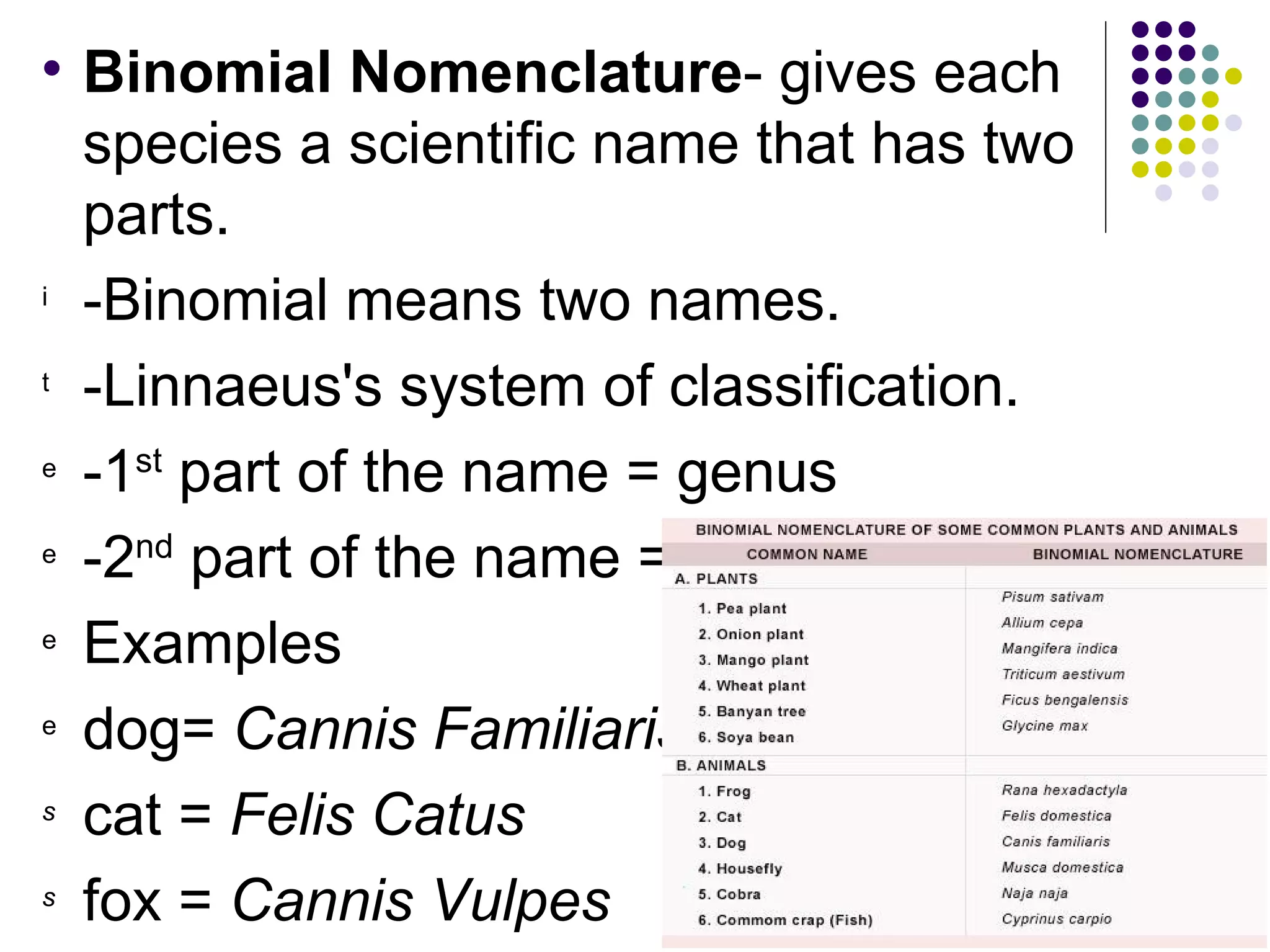
Binomial Nomenclature -gives each species a scientific name that has two parts. -Binomial means two names. -Linnaeus's system of classification. -1 st part of the name = genus -2 nd part of the name = species Examples dog= Cannis Familiaris cat = Felis Catus fox = Cannis Vulpes
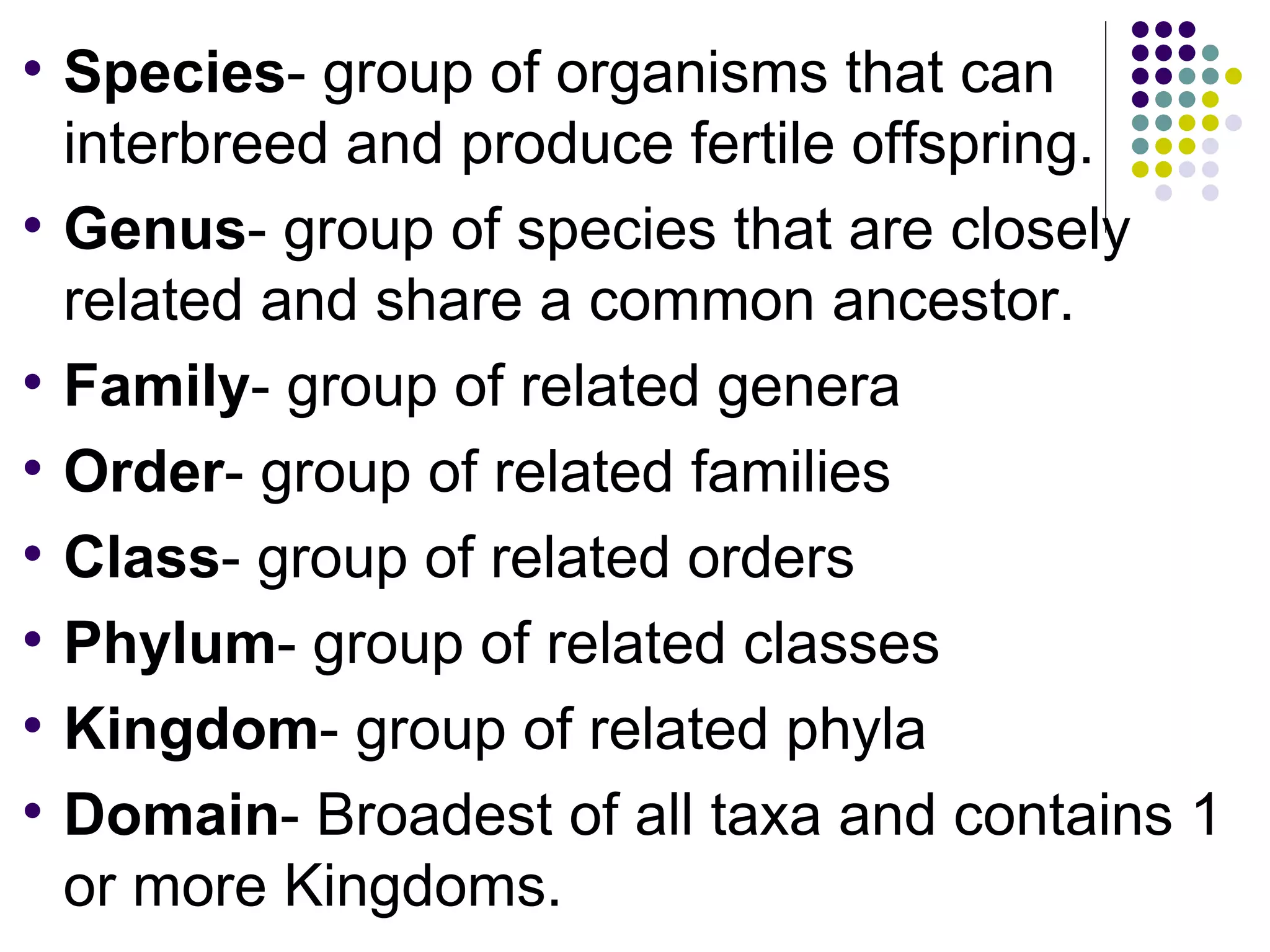
Species - groupof organisms that can interbreed and produce fertile offspring. Genus - group of species that are closely related and share a common ancestor. Family - group of related genera Order - group of related families Class - group of related orders Phylum - group of related classes Kingdom - group of related phyla Domain - Broadest of all taxa and contains 1 or more Kingdoms.
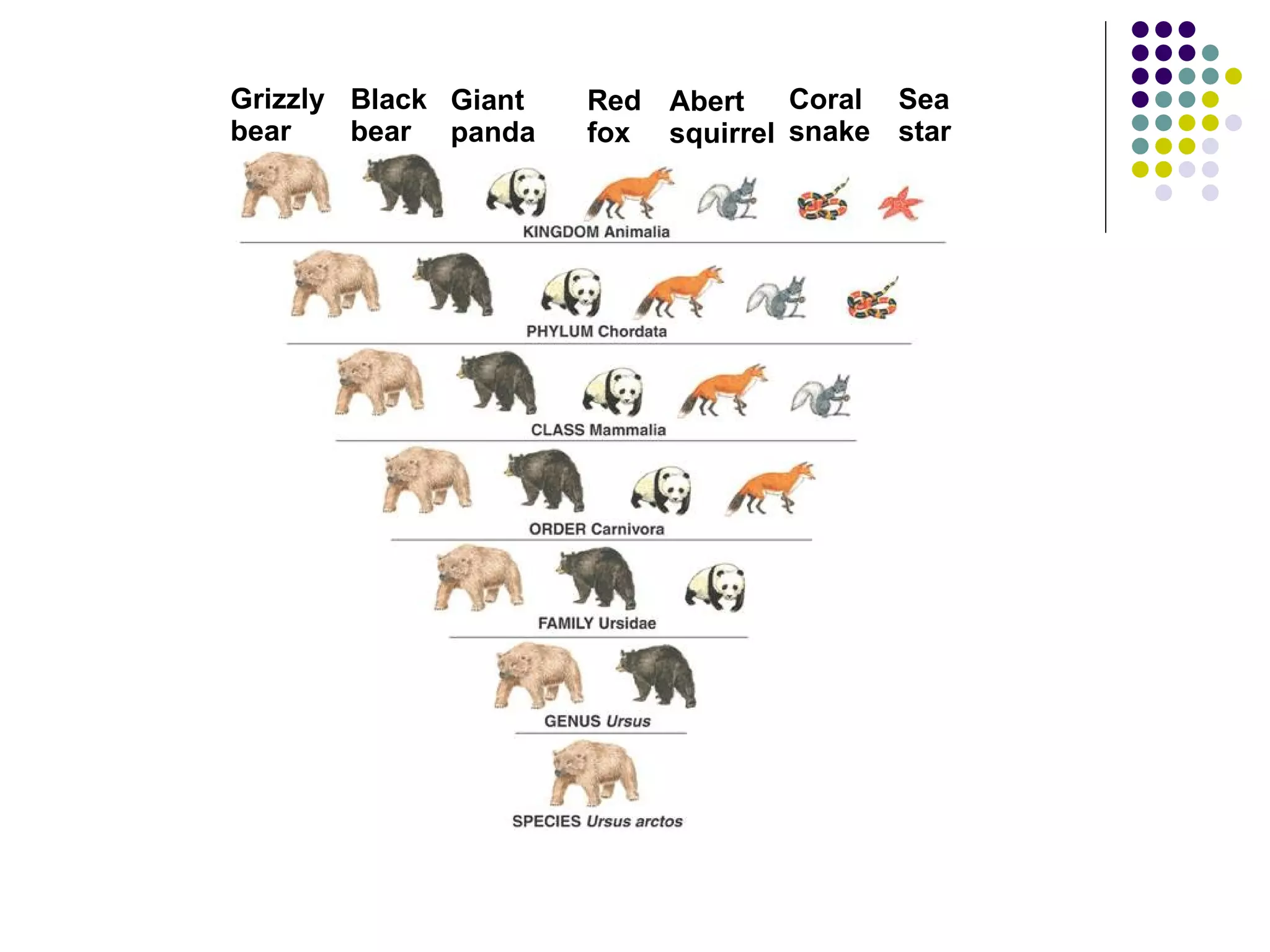
Red fox Grizzly bear Black bear Giant panda Sea star Coral snake Abert squirrel
Editor's Notes
#10 Linnaeus’s hierarchical system of classification uses seven taxonomic categories. This illustration shows how a grizzly bear, Ursus arctos , is grouped within each taxonomic category. Only some representative species are illustrated for each category above the species level.