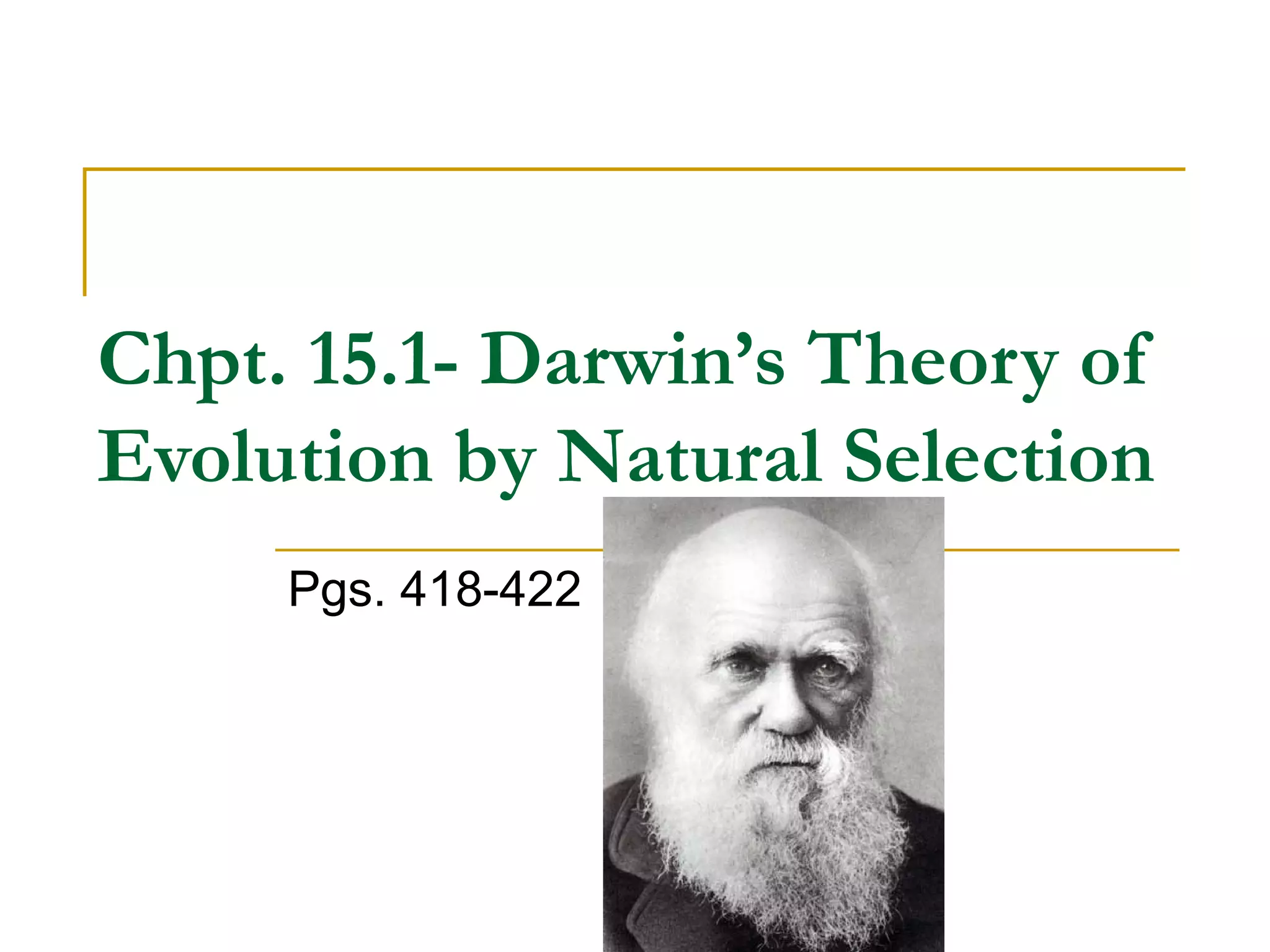
Chpt. 15.1- Darwin’s Theory of Evolution by Natural Selection Pgs. 418-422
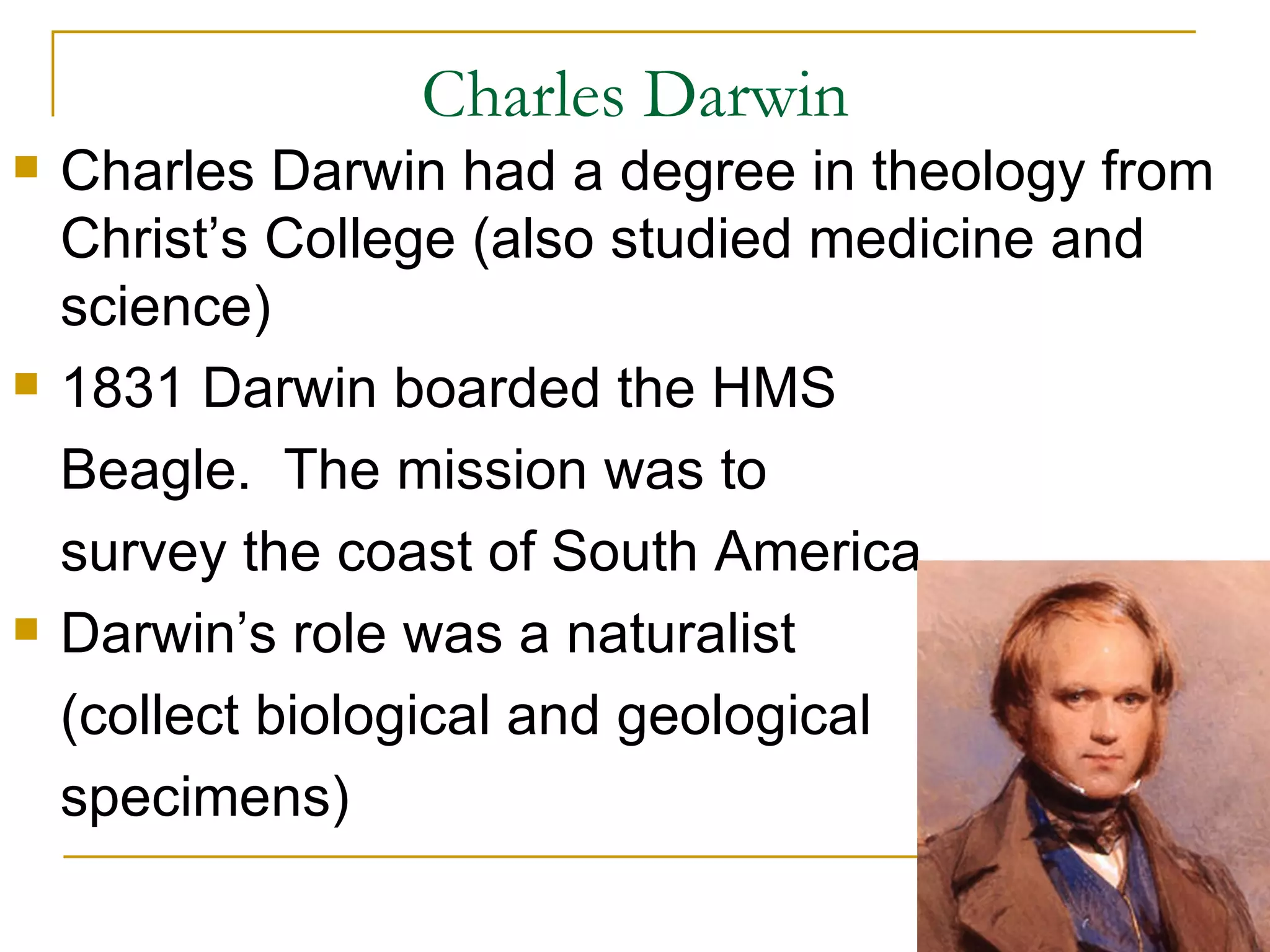
Charles Darwin Charles Darwin had a degree in theology from Christ’s College (also studied medicine and science) 1831 Darwin boarded the HMS  Beagle.  The mission was to  survey the coast of South America. Darwin’s role was a naturalist (collect biological and geological  specimens)
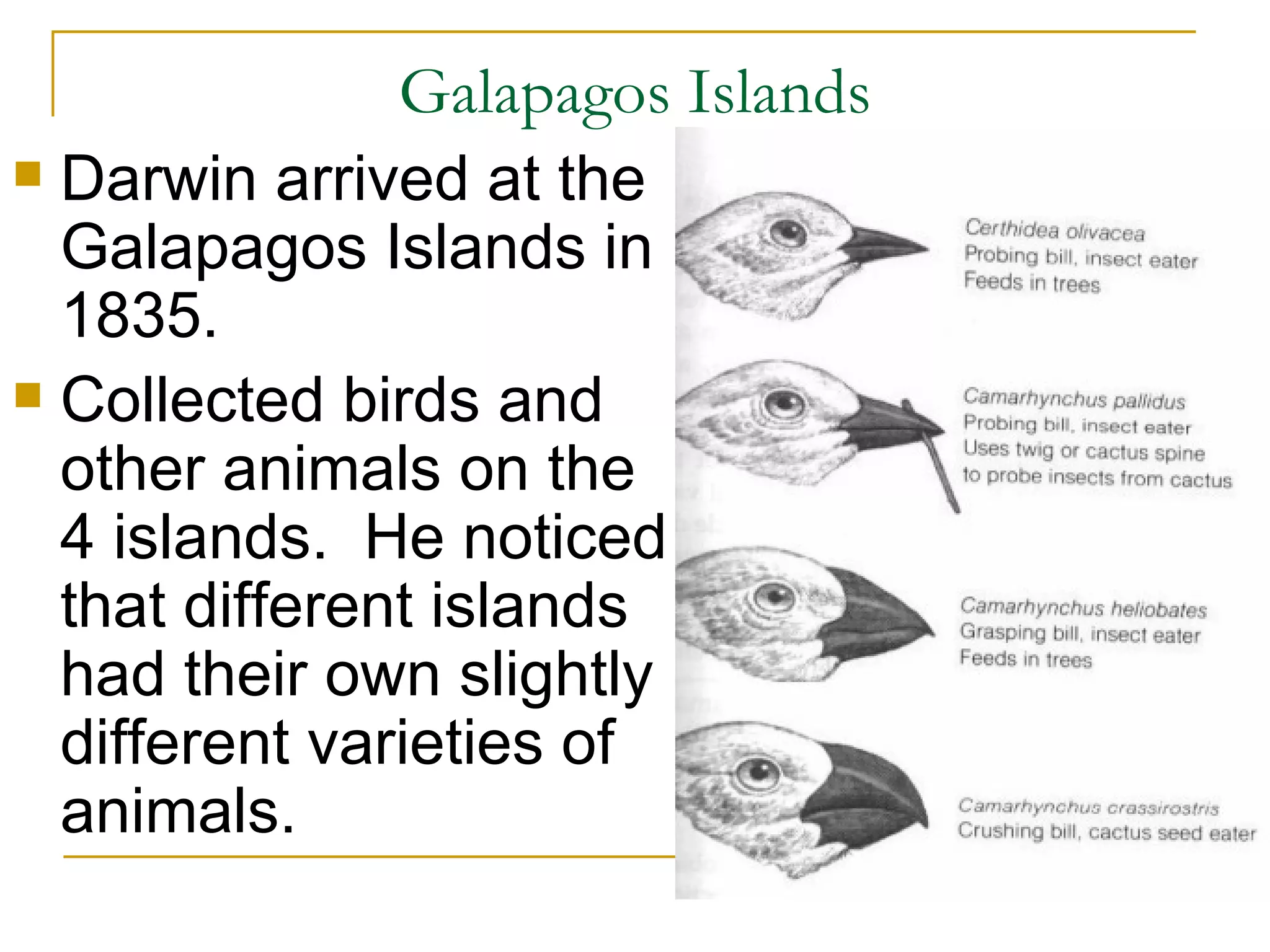
Galapagos Islands Darwin arrived at the Galapagos Islands in 1835. Collected birds and other animals on the  4 islands.  He noticed that different islands had their own slightly different varieties of animals.
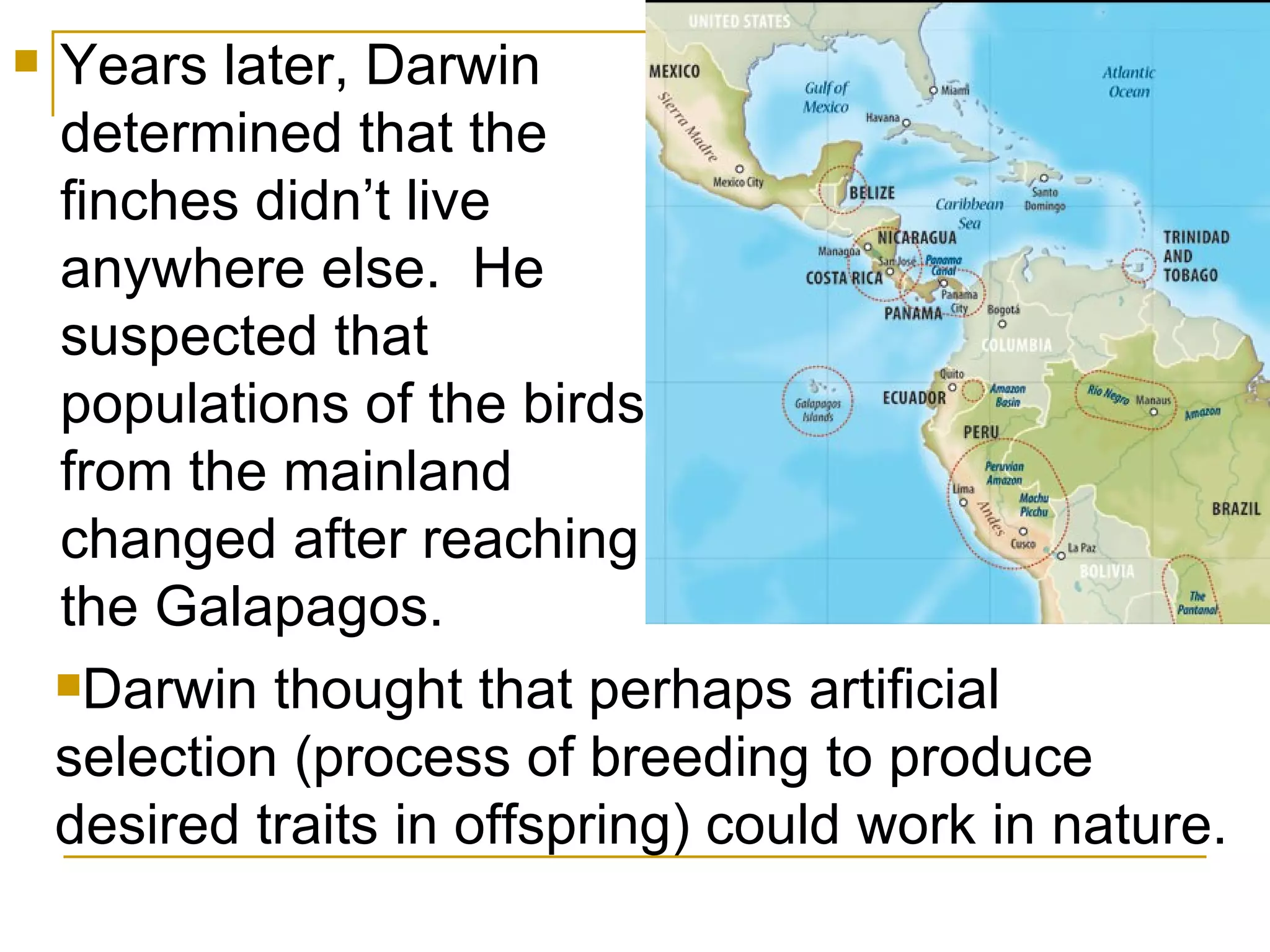
Years later, Darwin determined that the finches didn’t live anywhere else.  He suspected that populations of the birds from the mainland changed after reaching the Galapagos. Darwin thought that perhaps artificial selection (process of breeding to produce desired traits in offspring) could work in nature.
Natural Selection Natural selection-  The process whereby organisms better adapted to their environment tend to survive and produce more offspring.  If you don’t adapt, you’ll die. 4 Principles to Darwin’s theory of evolution by natural selection. 1.  Variation 2.  Heredity 3.  Overproduction 4.  Reproductive Advantage
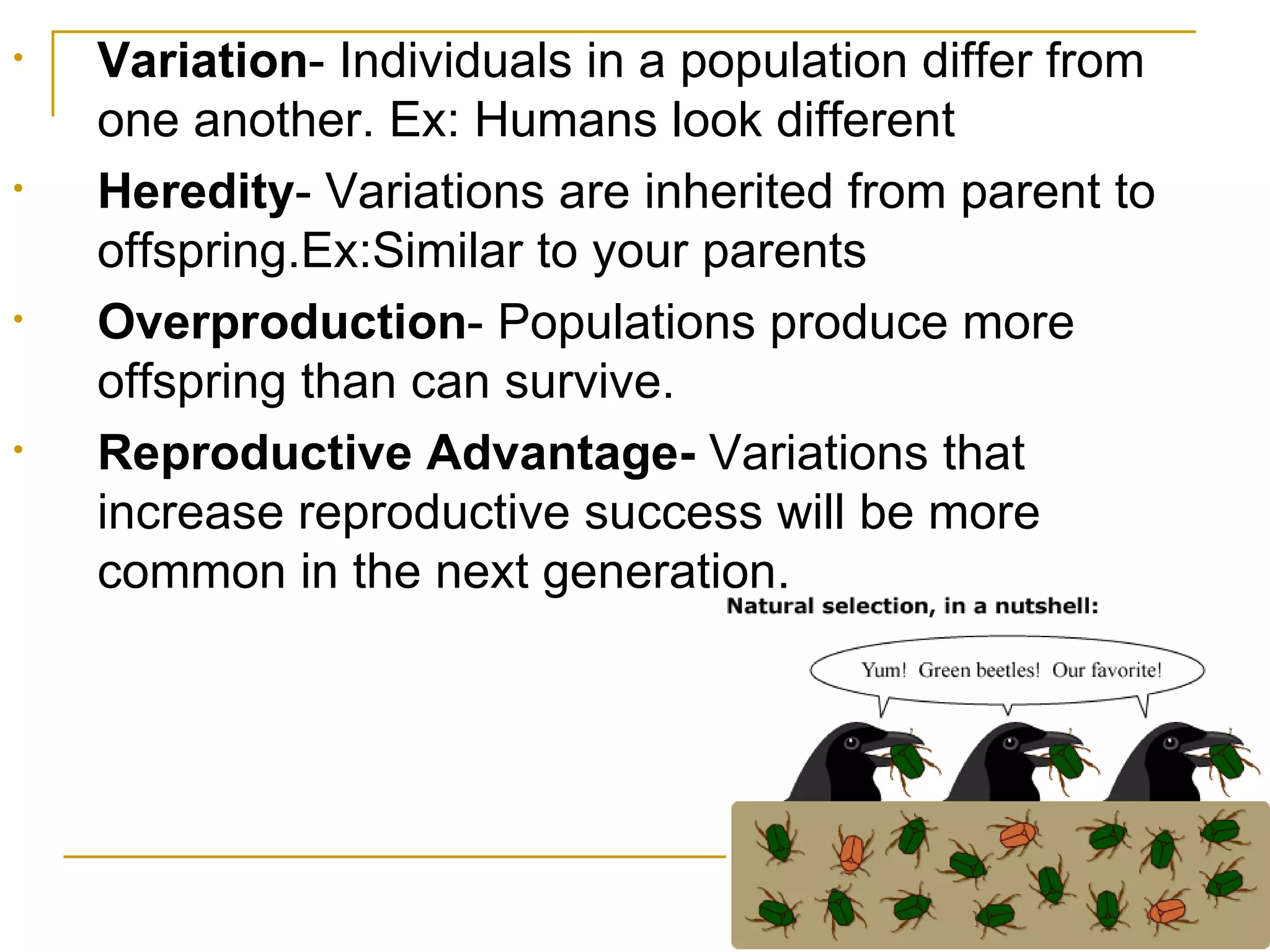
Variation - Individuals in a population differ from one another. Ex: Humans look different Heredity - Variations are inherited from parent to offspring.Ex:Similar to your parents Overproduction - Populations produce more offspring than can survive. Reproductive Advantage-  Variations that increase reproductive success will be more common in the next generation.
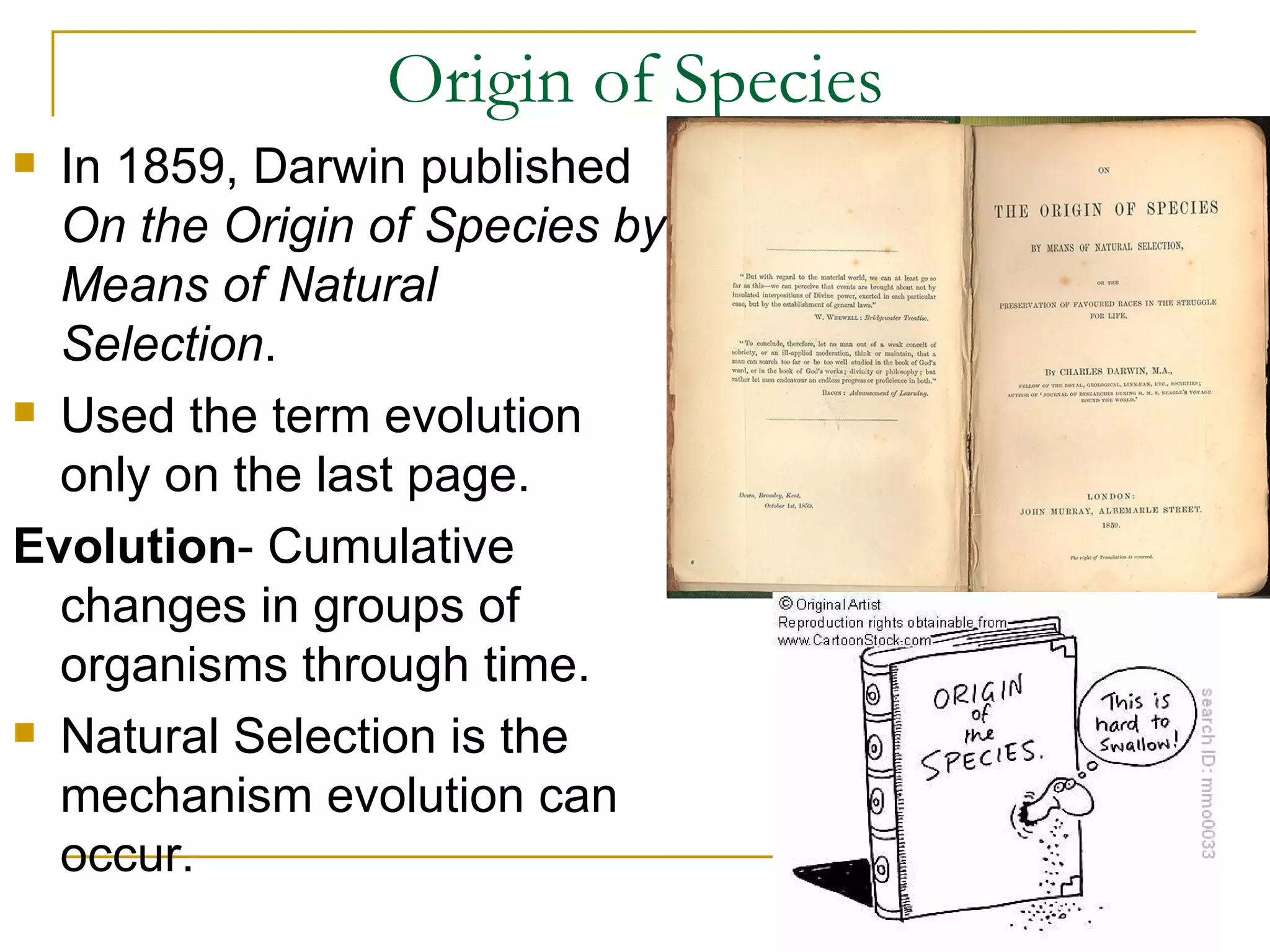
Origin of Species In 1859, Darwin published  On the Origin of Species by Means of Natural Selection .  Used the term evolution only on the last page. Evolution - Cumulative changes in groups of organisms through time. Natural Selection is the mechanism evolution can occur.

Chpt. 15.1

  • 1.
    Chpt. 15.1- Darwin’sTheory of Evolution by Natural Selection Pgs. 418-422
  • 2.
    Charles Darwin CharlesDarwin had a degree in theology from Christ’s College (also studied medicine and science) 1831 Darwin boarded the HMS Beagle. The mission was to survey the coast of South America. Darwin’s role was a naturalist (collect biological and geological specimens)
  • 3.
    Galapagos Islands Darwinarrived at the Galapagos Islands in 1835. Collected birds and other animals on the 4 islands. He noticed that different islands had their own slightly different varieties of animals.
  • 4.
    Years later, Darwindetermined that the finches didn’t live anywhere else. He suspected that populations of the birds from the mainland changed after reaching the Galapagos. Darwin thought that perhaps artificial selection (process of breeding to produce desired traits in offspring) could work in nature.
  • 5.
    Natural Selection Naturalselection- The process whereby organisms better adapted to their environment tend to survive and produce more offspring. If you don’t adapt, you’ll die. 4 Principles to Darwin’s theory of evolution by natural selection. 1. Variation 2. Heredity 3. Overproduction 4. Reproductive Advantage
  • 6.
    Variation - Individualsin a population differ from one another. Ex: Humans look different Heredity - Variations are inherited from parent to offspring.Ex:Similar to your parents Overproduction - Populations produce more offspring than can survive. Reproductive Advantage- Variations that increase reproductive success will be more common in the next generation.
  • 7.
    Origin of SpeciesIn 1859, Darwin published On the Origin of Species by Means of Natural Selection . Used the term evolution only on the last page. Evolution - Cumulative changes in groups of organisms through time. Natural Selection is the mechanism evolution can occur.