2.3 Cycling of Matter
3 Important Materials That Cycle
Through Ecosystems
 Water
 Carbon
 Nitrogen
 As well as sulfur, calcium, and
phosphorus among others
Energy is lost:
 at each transition from one trophic
level to the next
 But the sun replenishes the energy
 Matter is recycled!
 Matter in the form of nutrients
also moves through the
organisms at each trophic level
 The atoms of elements that
make up the bodies of organisms
alive today are the same atoms
that have been on Earth since
life began
Water cycle
 plants absorb water through roots
 animals drink water or get it from food
 water is lost through respiration, excretion
and decomposition of dead organisms
 Animated water cycle
6
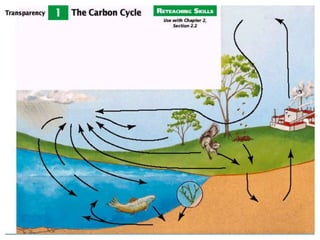
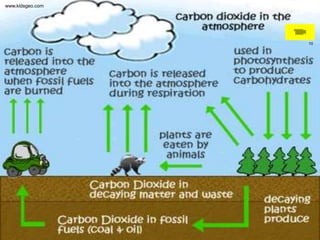
The Carbon Cycle
 carbon is found as CO2 in the
atmosphere & ocean
 producers (terrestrial & aquatic) use CO2
in photosynthesis to make sugar
 photosynthesis = CO2 + H2O -> carbs.
 respiration & decay return CO2 to the
atmosphere
 burning returns CO2 to atmosphere
10
www.kidsgeo.com
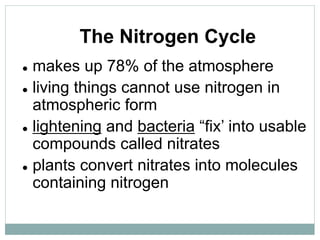
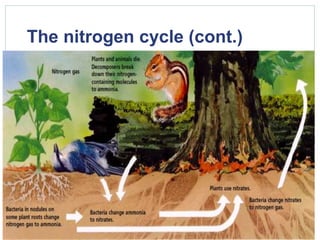
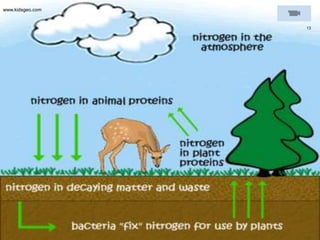
The Nitrogen Cycle
 makes up 78% of the atmosphere
 living things cannot use nitrogen in
atmospheric form
 lightening and bacteria “fix’ into usable
compounds called nitrates
 plants convert nitrates into molecules
containing nitrogen
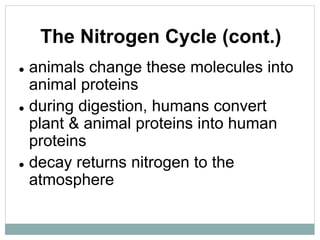
The Nitrogen Cycle (cont.)
 animals change these molecules into
animal proteins
 during digestion, humans convert
plant & animal proteins into human
proteins
 decay returns nitrogen to the
atmosphere
The nitrogen cycle (cont.)
13
www.kidsgeo.com
The Phosphorus Cycle
 short term cycle - plants use
phosphorus from the soil into body
tissues
 animals get phosphorus by eating
plants
 decay returns phosphorus to the
soil
The Phosphorus Cycle
 long term cycle - phosphorus
washed into the sea becomes
incorporated into rock
 years later rock containing
phosphorus is exposed -
phosphorus is released

Chpt.2.3

  • 1.
  • 2.
    3 Important MaterialsThat Cycle Through Ecosystems  Water  Carbon  Nitrogen  As well as sulfur, calcium, and phosphorus among others
  • 3.
    Energy is lost: at each transition from one trophic level to the next  But the sun replenishes the energy  Matter is recycled!
  • 4.
     Matter inthe form of nutrients also moves through the organisms at each trophic level  The atoms of elements that make up the bodies of organisms alive today are the same atoms that have been on Earth since life began
  • 5.
    Water cycle  plantsabsorb water through roots  animals drink water or get it from food  water is lost through respiration, excretion and decomposition of dead organisms  Animated water cycle 6
  • 7.
    The Carbon Cycle carbon is found as CO2 in the atmosphere & ocean  producers (terrestrial & aquatic) use CO2 in photosynthesis to make sugar  photosynthesis = CO2 + H2O -> carbs.  respiration & decay return CO2 to the atmosphere  burning returns CO2 to atmosphere
  • 9.
  • 11.
    The Nitrogen Cycle makes up 78% of the atmosphere  living things cannot use nitrogen in atmospheric form  lightening and bacteria “fix’ into usable compounds called nitrates  plants convert nitrates into molecules containing nitrogen
  • 12.
    The Nitrogen Cycle(cont.)  animals change these molecules into animal proteins  during digestion, humans convert plant & animal proteins into human proteins  decay returns nitrogen to the atmosphere
  • 13.
  • 14.
  • 16.
    The Phosphorus Cycle short term cycle - plants use phosphorus from the soil into body tissues  animals get phosphorus by eating plants  decay returns phosphorus to the soil
  • 17.
    The Phosphorus Cycle long term cycle - phosphorus washed into the sea becomes incorporated into rock  years later rock containing phosphorus is exposed - phosphorus is released