Downloaded 32 times





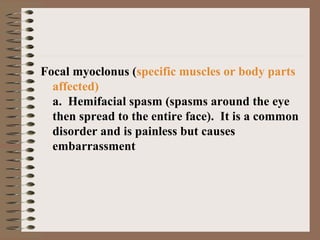


![• Etiology is unknown but it is thought to be
related to BG disorder. Interesting feature is
normal voice for nonlinguistic phonation
[laughing, crying and unemotional (talking to
children and pets)/emotionally charged
vocalizations]](https://image.slidesharecdn.com/hyperkineticdysarthria-150509093402-lva1-app6892/85/Hyperkinetic-dysarthria-40-320.jpg)

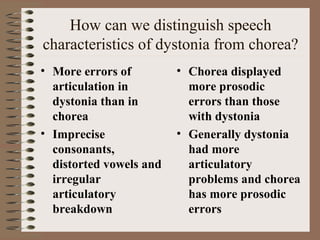


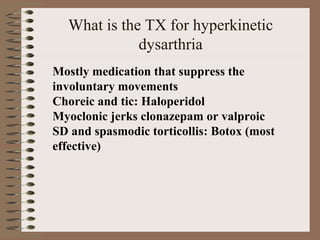


This document discusses hyperkinetic dysarthria, which refers to speech impairments caused by involuntary movements affecting the basal ganglia. Hyperkinetic dysarthria can result from conditions that cause chorea, myoclonus, tics, essential tremor, or dystonia. These conditions are characterized by unpredictable and uncontrollable movements of the muscles involved in speech. Chorea specifically involves smooth, dancing-like movements and can be caused by disorders like Sydenham's chorea, stroke, or tardive dyskinesia. Dystonia causes sustained, abnormal muscle contractions and can affect the neck (spasmodic torticollis), face, or vocal folds (spasmodic dysph


