Cholesterol
What Is It?
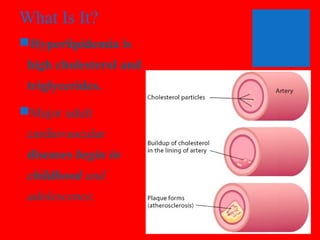
Hyperlipidemia is
high cholesterol and
triglycerides.
Major adult
cardiovascular
diseases begin in
childhood and
adolescence.
What Is Cholesterol?

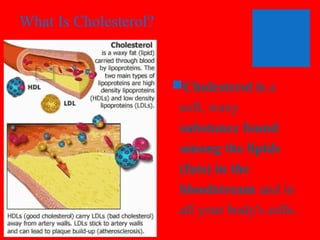
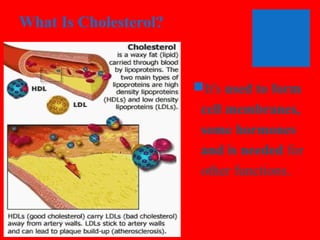
Cholesterol is a
soft, waxy
substance found
among the lipids
(fats) in the
bloodstream and in
all your body's cells.
What Is Cholesterol?

It's used to form
cell membranes,
some hormones
and is needed for
other functions.
What Is Cholesterol?
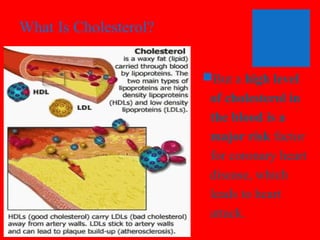
But a high level
of cholesterol in
the blood is a
major risk factor
for coronary heart
disease, which
leads to heart
attack.
What is LDL Cholesterol?
Low-density lipoprotein is the major
cholesterol carrier in the blood.
If too much LDL cholesterol circulates in
the blood, it can slowly build up in the
walls of the arteries feeding the heart and
brain.
It can form plaque, a thick, hard deposit
that can clog those arteries.
What is HDL Cholesterol?

About 1/3 of blood cholesterol is carried
by HDL.
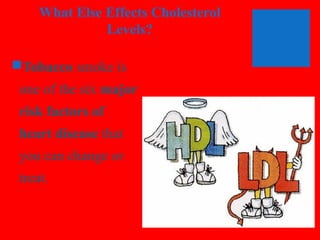
HDL tends to carry cholesterol away from
the arteries and back to the liver, where it's
passed from the body.
What is HDL Cholesterol?
HDL removes excess cholesterol from plaques
and thus slows their growth.
HDL cholesterol is known as "good"
cholesterol because a high HDL level seems to
protect against heart attack.
Where Do I Get Cholesterol?
2

Ways:

The body produces varying amounts, usually
about 1,000 milligrams a day.
Foods also can contain cholesterol.
Foods from animals (especially egg yolks,
meat, poultry, shellfish and whole- and
reduced-fat milk and dairy products) contain
it.
Where Do I Get Cholesterol?
Foods from plants (fruits, vegetables,
grains, nuts and seeds) don't contain
cholesterol.
The body makes all the cholesterol it needs,
so people don't need to consume it.
What Else Effects Cholesterol
Levels?
Tobacco smoke is
one of the six major
risk factors of
heart disease that
you can change or
treat.
What Else Effects Cholesterol
Levels?
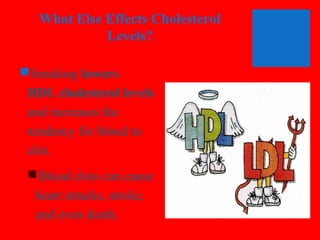
Smoking lowers
HDL cholesterol levels
and increases the
tendency for blood to
clot.
Blood clots can cause
heart attacks, stroke,
and even death.
How Can I Lower My Cholesterol?

Choose healthy fats (oils), limit saturated fat,
and avoid trans fat.
The total amount of fat you eat, whether high
or low, isn't really linked with disease. What
really matters is the type of fat you eat.
How Can I Lower My Cholesterol?
The "bad" fats—saturated and trans fats—
increase the risk for certain diseases.
The "good" fats—monounsaturated and
polyunsaturated fats—lower disease risk.
Choosing foods without cholesterol and adding
whole grains also helps.
Will Physical Activity Help?
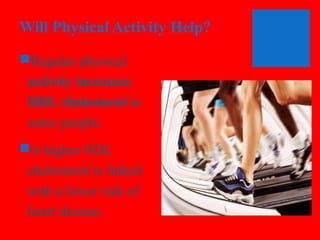
Regular physical
activity increases
HDL cholesterol in
some people.
A higher HDL
cholesterol is linked
with a lower risk of
heart disease.
Will Physical Activity Help?
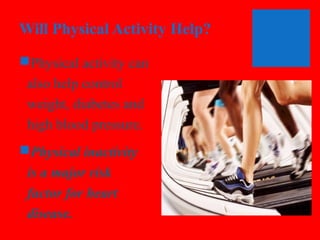
Physical activity can
also help control
weight, diabetes and
high blood pressure.
Physical inactivity
is a major risk
factor for heart
disease.
Where Should the Levels Be?
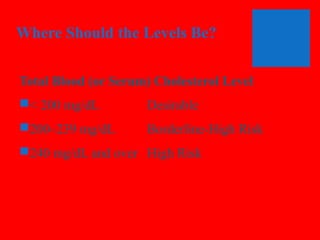
Total Blood (or Serum) Cholesterol Level
< 200 mg/dL

Desirable

200–239 mg/dL

Borderline-High Risk

240 mg/dL and over High Risk
Where Should the Levels Be?
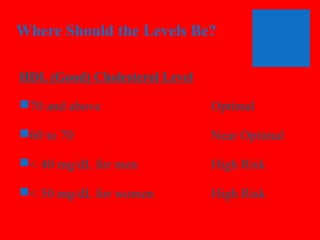
HDL (Good) Cholesterol Level
70 and above

Optimal

60 to 70

Near Optimal

< 40 mg/dL for men

High Risk

< 50 mg/dL for women

High Risk
Where Should the Levels Be?
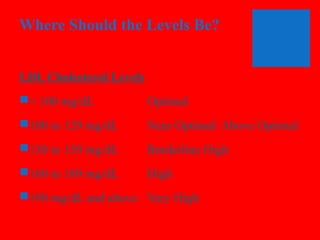
LDL Cholesterol Levels
< 100 mg/dL

Optimal

100 to 129 mg/dL

Near Optimal/ Above Optimal

130 to 159 mg/dL

Borderline High

160 to 189 mg/dL

High

190 mg/dL and above Very High

Cholesterol

  • 2.
  • 3.
    What Is It? Hyperlipidemiais high cholesterol and triglycerides. Major adult cardiovascular diseases begin in childhood and adolescence.
  • 4.
    What Is Cholesterol? Cholesterolis a soft, waxy substance found among the lipids (fats) in the bloodstream and in all your body's cells.
  • 5.
    What Is Cholesterol? It'sused to form cell membranes, some hormones and is needed for other functions.
  • 6.
    What Is Cholesterol? Buta high level of cholesterol in the blood is a major risk factor for coronary heart disease, which leads to heart attack.
  • 7.
    What is LDLCholesterol? Low-density lipoprotein is the major cholesterol carrier in the blood. If too much LDL cholesterol circulates in the blood, it can slowly build up in the walls of the arteries feeding the heart and brain. It can form plaque, a thick, hard deposit that can clog those arteries.
  • 8.
    What is HDLCholesterol? About 1/3 of blood cholesterol is carried by HDL. HDL tends to carry cholesterol away from the arteries and back to the liver, where it's passed from the body.
  • 9.
    What is HDLCholesterol? HDL removes excess cholesterol from plaques and thus slows their growth. HDL cholesterol is known as "good" cholesterol because a high HDL level seems to protect against heart attack.
  • 10.
    Where Do IGet Cholesterol? 2 Ways: The body produces varying amounts, usually about 1,000 milligrams a day. Foods also can contain cholesterol. Foods from animals (especially egg yolks, meat, poultry, shellfish and whole- and reduced-fat milk and dairy products) contain it.
  • 11.
    Where Do IGet Cholesterol? Foods from plants (fruits, vegetables, grains, nuts and seeds) don't contain cholesterol. The body makes all the cholesterol it needs, so people don't need to consume it.
  • 12.
    What Else EffectsCholesterol Levels? Tobacco smoke is one of the six major risk factors of heart disease that you can change or treat.
  • 13.
    What Else EffectsCholesterol Levels? Smoking lowers HDL cholesterol levels and increases the tendency for blood to clot. Blood clots can cause heart attacks, stroke, and even death.
  • 14.
    How Can ILower My Cholesterol? Choose healthy fats (oils), limit saturated fat, and avoid trans fat. The total amount of fat you eat, whether high or low, isn't really linked with disease. What really matters is the type of fat you eat.
  • 15.
    How Can ILower My Cholesterol? The "bad" fats—saturated and trans fats— increase the risk for certain diseases. The "good" fats—monounsaturated and polyunsaturated fats—lower disease risk. Choosing foods without cholesterol and adding whole grains also helps.
  • 16.
    Will Physical ActivityHelp? Regular physical activity increases HDL cholesterol in some people. A higher HDL cholesterol is linked with a lower risk of heart disease.
  • 17.
    Will Physical ActivityHelp? Physical activity can also help control weight, diabetes and high blood pressure. Physical inactivity is a major risk factor for heart disease.
  • 18.
    Where Should theLevels Be? Total Blood (or Serum) Cholesterol Level < 200 mg/dL Desirable 200–239 mg/dL Borderline-High Risk 240 mg/dL and over High Risk
  • 19.
    Where Should theLevels Be? HDL (Good) Cholesterol Level 70 and above Optimal 60 to 70 Near Optimal < 40 mg/dL for men High Risk < 50 mg/dL for women High Risk
  • 20.
    Where Should theLevels Be? LDL Cholesterol Levels < 100 mg/dL Optimal 100 to 129 mg/dL Near Optimal/ Above Optimal 130 to 159 mg/dL Borderline High 160 to 189 mg/dL High 190 mg/dL and above Very High