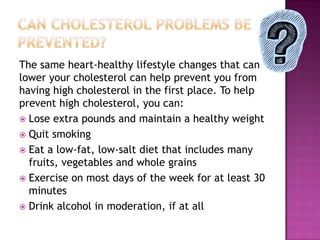
The same heart-healthy lifestyle changes that can
lower your cholesterol can help prevent you from
having high cholesterol in the first place. To help
prevent high cholesterol, you can:
 Lose extra pounds and maintain a healthy weight
 Quit smoking
 Eat a low-fat, low-salt diet that includes many
fruits, vegetables and whole grains
 Exercise on most days of the week for at least 30
minutes
 Drink alcohol in moderation, if at all
You're more likely to have high cholesterol that can
lead to heart disease if you have any of these risk
factors:
 Smoking. Cigarette smoking damages the walls of
your blood vessels, making them likely to
accumulate fatty deposits. Smoking may also
lower your level of HDL, or "good," cholesterol.
 Obesity. Having a body mass index (BMI) of 30 or
greater puts you at risk of high cholesterol.
 Poor diet. Foods that are high in cholesterol,
such as red meat and full-fat dairy products, will
increase your total cholesterol. Eating saturated
fat, found in animal products, and trans fats,
found in some commercially baked cookies and
crackers, also can raise your cholesterol level.
 Lack of exercise. Exercise helps boost your
body's HDL "good" cholesterol while lowering
your LDL "bad" cholesterol. Not getting
enough exercise puts you at risk of high
cholesterol.
 High blood pressure. Increased pressure on
your artery walls damages your arteries,
which can speed the accumulation of fatty
deposits.
 Diabetes. High blood sugar contributes to
higher LDL cholesterol and lower HDL
cholesterol. High blood sugar also damages
the lining of your arteries.
 Family history of heart disease. If a parent or
sibling developed heart disease before age
55, high cholesterol levels place you at a
greater than average risk of developing heart
disease.
High Density Lipoproteins Low Density Lipoproteins
Healthy cholesterol
 Normal range is 40-59
MG/DL
 It removes harmful
bad cholesterol from
where it doesn't
belong. High HDL
levels reduce the risk
for heart disease .
Lousy cholesterol
 Normal range is 60-129
MG/DL
 Can slowly build up in
the inner walls of the
arteries that feed the
heart and brain. If a
clot forms and blocks a
narrowed artery, heart
attack or stroke can
result.
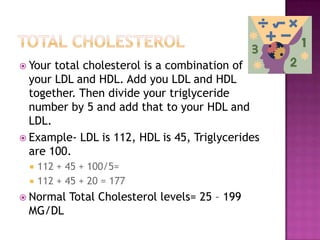
 Your total cholesterol is a combination of
your LDL and HDL. Add you LDL and HDL
together. Then divide your triglyceride
number by 5 and add that to your HDL and
LDL.
 Example- LDL is 112, HDL is 45, Triglycerides
are 100.
 112 + 45 + 100/5=
 112 + 45 + 20 = 177
 Normal Total Cholesterol levels= 25 – 199
MG/DL
 Occasionally, Total Cholesterol can appear
too high due to an excellent HDL.
 From the last example:
 Example- LDL is 112, HDL is 68, Triglycerides are
100.
 112 + 72 + 100/5=
 112 + 72 + 20 = 204
 Although 204 is slightly elevated, in this
situation, the number is normal.
 Look up your numbers from the last
OilerWELL assessment, or your results from a
doctor’s visit.
 If not, there are several approaches to
improving them. You and your doctor can
decide on the best treatment plan for you.
 Options are Dietary and Lifestyle changes
and medication therapy.
 Continue on this module and see what
treatments you might be interested in.
The new cholesterol guidelines decrease the
focus on target ranges for cholesterol numbers
and shift to an assessment of the patient’s
overall risk of developing cardiac disease when
making a treatment plan.
The guidelines identify four groups of patients
with the greatest risk that would benefit from
treatment with medication in the statin family
of drugs.
 • Individuals with atherosclerotic
(progressive thickening and hardening of the
walls of the arteries)cardiovascular disease
 • Individuals with LDL cholesterol levels at
or above 190 mg/dL
 • Individuals with diabetes aged 40-75
with moderately elevated LDL levels
 • Individuals with a 10 year risk score at or
greater than 7.5% using a specific online risk
assessment calculator
No matter what the guidelines say, your
medical treatment plan should be developed
by you and your physician based on a thorough
physical exam and medical history.
 http://answers.ask.com/health/other/how_i
s_total_cholesterol_calculated
 http://www.webmd.com/cholesterol-
management/hdl-cholesterol-the-good-
cholesterol
 http://www.heart.org/HEARTORG/Conditions
/Cholesterol/AboutCholesterol/About-
Cholesterol_UCM_001220_Article.jsp

Basics of cholesterol

  • 3.
    The same heart-healthylifestyle changes that can lower your cholesterol can help prevent you from having high cholesterol in the first place. To help prevent high cholesterol, you can:  Lose extra pounds and maintain a healthy weight  Quit smoking  Eat a low-fat, low-salt diet that includes many fruits, vegetables and whole grains  Exercise on most days of the week for at least 30 minutes  Drink alcohol in moderation, if at all
  • 4.
    You're more likelyto have high cholesterol that can lead to heart disease if you have any of these risk factors:  Smoking. Cigarette smoking damages the walls of your blood vessels, making them likely to accumulate fatty deposits. Smoking may also lower your level of HDL, or "good," cholesterol.  Obesity. Having a body mass index (BMI) of 30 or greater puts you at risk of high cholesterol.  Poor diet. Foods that are high in cholesterol, such as red meat and full-fat dairy products, will increase your total cholesterol. Eating saturated fat, found in animal products, and trans fats, found in some commercially baked cookies and crackers, also can raise your cholesterol level.
  • 5.
     Lack ofexercise. Exercise helps boost your body's HDL "good" cholesterol while lowering your LDL "bad" cholesterol. Not getting enough exercise puts you at risk of high cholesterol.  High blood pressure. Increased pressure on your artery walls damages your arteries, which can speed the accumulation of fatty deposits.
  • 6.
     Diabetes. Highblood sugar contributes to higher LDL cholesterol and lower HDL cholesterol. High blood sugar also damages the lining of your arteries.  Family history of heart disease. If a parent or sibling developed heart disease before age 55, high cholesterol levels place you at a greater than average risk of developing heart disease.
  • 7.
    High Density LipoproteinsLow Density Lipoproteins Healthy cholesterol  Normal range is 40-59 MG/DL  It removes harmful bad cholesterol from where it doesn't belong. High HDL levels reduce the risk for heart disease . Lousy cholesterol  Normal range is 60-129 MG/DL  Can slowly build up in the inner walls of the arteries that feed the heart and brain. If a clot forms and blocks a narrowed artery, heart attack or stroke can result.
  • 8.
     Your totalcholesterol is a combination of your LDL and HDL. Add you LDL and HDL together. Then divide your triglyceride number by 5 and add that to your HDL and LDL.  Example- LDL is 112, HDL is 45, Triglycerides are 100.  112 + 45 + 100/5=  112 + 45 + 20 = 177  Normal Total Cholesterol levels= 25 – 199 MG/DL
  • 9.
     Occasionally, TotalCholesterol can appear too high due to an excellent HDL.  From the last example:  Example- LDL is 112, HDL is 68, Triglycerides are 100.  112 + 72 + 100/5=  112 + 72 + 20 = 204  Although 204 is slightly elevated, in this situation, the number is normal.
  • 10.
     Look upyour numbers from the last OilerWELL assessment, or your results from a doctor’s visit.
  • 11.
     If not,there are several approaches to improving them. You and your doctor can decide on the best treatment plan for you.  Options are Dietary and Lifestyle changes and medication therapy.  Continue on this module and see what treatments you might be interested in.
  • 12.
    The new cholesterolguidelines decrease the focus on target ranges for cholesterol numbers and shift to an assessment of the patient’s overall risk of developing cardiac disease when making a treatment plan. The guidelines identify four groups of patients with the greatest risk that would benefit from treatment with medication in the statin family of drugs.
  • 13.
     • Individualswith atherosclerotic (progressive thickening and hardening of the walls of the arteries)cardiovascular disease  • Individuals with LDL cholesterol levels at or above 190 mg/dL  • Individuals with diabetes aged 40-75 with moderately elevated LDL levels  • Individuals with a 10 year risk score at or greater than 7.5% using a specific online risk assessment calculator
  • 14.
    No matter whatthe guidelines say, your medical treatment plan should be developed by you and your physician based on a thorough physical exam and medical history.
  • 15.
     http://answers.ask.com/health/other/how_i s_total_cholesterol_calculated  http://www.webmd.com/cholesterol- management/hdl-cholesterol-the-good- cholesterol http://www.heart.org/HEARTORG/Conditions /Cholesterol/AboutCholesterol/About- Cholesterol_UCM_001220_Article.jsp