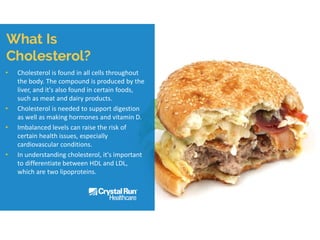


• Cholesterol is found in all cells throughout
the body. The compound is produced by the
liver, and it's also found in certain foods,
such as meat and dairy products.
• Cholesterol is needed to support digestion
as well as making hormones and vitamin D.
• Imbalanced levels can raise the risk of
certain health issues, especially
cardiovascular conditions.
• In understanding cholesterol, it's important
to differentiate between HDL and LDL,
which are two lipoproteins.
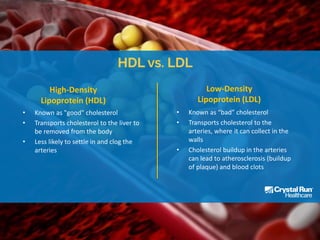
High-Density
Lipoprotein (HDL)
• Known as "good" cholesterol
• Transports cholesterol to the liver to
be removed from the body
• Less likely to settle in and clog the
arteries
Low-Density
Lipoprotein (LDL)
• Known as “bad” cholesterol
• Transports cholesterol to the
arteries, where it can collect in the
walls
• Cholesterol buildup in the arteries
can lead to atherosclerosis (buildup
of plaque) and blood clots
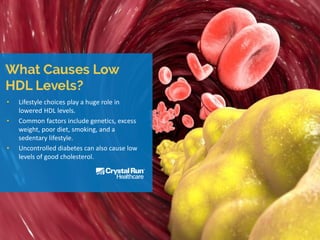
• Lifestyle choices play a huge role in
lowered HDL levels.
• Common factors include genetics, excess
weight, poor diet, smoking, and a
sedentary lifestyle.
• Uncontrolled diabetes can also cause low
levels of good cholesterol.
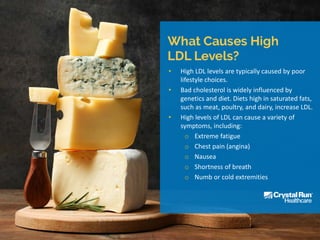
• High LDL levels are typically caused by poor
lifestyle choices.
• Bad cholesterol is widely influenced by
genetics and diet. Diets high in saturated fats,
such as meat, poultry, and dairy, increase LDL.
• High levels of LDL can cause a variety of
symptoms, including:
o Extreme fatigue
o Chest pain (angina)
o Nausea
o Shortness of breath
o Numb or cold extremities
• Low levels of HDL are connected to all
sorts of health risks including:
o Heart disease
o Cardiovascular disease
o Peripheral vascular disease
o Stroke
o Diabetes
• Having low HDL levels means high LDL
levels, which increases the risk of
plaque buildup throughout the
arteries.
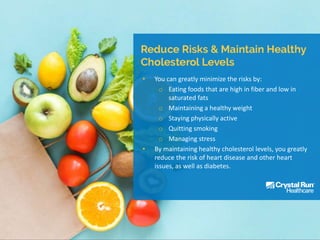
• You can greatly minimize the risks by:
o Eating foods that are high in fiber and low in
saturated fats
o Maintaining a healthy weight
o Staying physically active
o Quitting smoking
o Managing stress
• By maintaining healthy cholesterol levels, you greatly
reduce the risk of heart disease and other heart
issues, as well as diabetes.
• Balanced HDL and LDL levels is important for
heart and total health. You want higher HDL
levels and lower LDL levels.
• High levels of “bad” cholesterol greatly
increases the risk of poor cardiovascular
health.
• Cholesterol levels can be rebalanced by
making healthy lifestyle choices, such as
exercising on a routine basis and eating a
healthy diet. Quitting smoking can also
minimize risks and symptoms.
• Have your cholesterol levels checked by your
doctor to ensure your HDL and LDL are in a
healthy range.
• Crystal Run Healthcare offers various
cardiology services to protect you from
the severe consequences of heart disease.
• We specialize in preventative care and
early diagnosis, thanks to a team of skilled
cardiologists, all of whom are board
certified.
• We're the only regional practice to offer
state-of-the-art imaging and diagnostic
services, including cardiac
electrophysiology, and immediate access
to a state-of-the-art catheterization lab.
• You can easily book an appointment with
many Crystal Run Healthcare physicians
through the website or contact us if you
need additional assistance.
1. https://www.verywellhealth.com/what-causes-low-hdl-cholesterol-levels-698078
2. https://www.health.harvard.edu/blog/low-levels-of-hdl-the-good-cholesterol-appear-
connected-to-many-health-risks-not-just-heart-disease-2016110210626
3. https://medlineplus.gov/medlineplus-videos/cholesterol-good-and-bad/
4. https://www.healthline.com/health/hdl-vs-ldl-cholesterol
5. https://www.mayoclinic.org/diseases-conditions/high-blood-cholesterol/symptoms-
causes/syc-20350800

HDL vs. LDL Cholesterol

  • 2.
    • Cholesterol isfound in all cells throughout the body. The compound is produced by the liver, and it's also found in certain foods, such as meat and dairy products. • Cholesterol is needed to support digestion as well as making hormones and vitamin D. • Imbalanced levels can raise the risk of certain health issues, especially cardiovascular conditions. • In understanding cholesterol, it's important to differentiate between HDL and LDL, which are two lipoproteins.
  • 3.
    High-Density Lipoprotein (HDL) • Knownas "good" cholesterol • Transports cholesterol to the liver to be removed from the body • Less likely to settle in and clog the arteries Low-Density Lipoprotein (LDL) • Known as “bad” cholesterol • Transports cholesterol to the arteries, where it can collect in the walls • Cholesterol buildup in the arteries can lead to atherosclerosis (buildup of plaque) and blood clots
  • 4.
    • Lifestyle choicesplay a huge role in lowered HDL levels. • Common factors include genetics, excess weight, poor diet, smoking, and a sedentary lifestyle. • Uncontrolled diabetes can also cause low levels of good cholesterol.
  • 5.
    • High LDLlevels are typically caused by poor lifestyle choices. • Bad cholesterol is widely influenced by genetics and diet. Diets high in saturated fats, such as meat, poultry, and dairy, increase LDL. • High levels of LDL can cause a variety of symptoms, including: o Extreme fatigue o Chest pain (angina) o Nausea o Shortness of breath o Numb or cold extremities
  • 6.
    • Low levelsof HDL are connected to all sorts of health risks including: o Heart disease o Cardiovascular disease o Peripheral vascular disease o Stroke o Diabetes • Having low HDL levels means high LDL levels, which increases the risk of plaque buildup throughout the arteries.
  • 7.
    • You cangreatly minimize the risks by: o Eating foods that are high in fiber and low in saturated fats o Maintaining a healthy weight o Staying physically active o Quitting smoking o Managing stress • By maintaining healthy cholesterol levels, you greatly reduce the risk of heart disease and other heart issues, as well as diabetes.
  • 8.
    • Balanced HDLand LDL levels is important for heart and total health. You want higher HDL levels and lower LDL levels. • High levels of “bad” cholesterol greatly increases the risk of poor cardiovascular health. • Cholesterol levels can be rebalanced by making healthy lifestyle choices, such as exercising on a routine basis and eating a healthy diet. Quitting smoking can also minimize risks and symptoms. • Have your cholesterol levels checked by your doctor to ensure your HDL and LDL are in a healthy range.
  • 9.
    • Crystal RunHealthcare offers various cardiology services to protect you from the severe consequences of heart disease. • We specialize in preventative care and early diagnosis, thanks to a team of skilled cardiologists, all of whom are board certified. • We're the only regional practice to offer state-of-the-art imaging and diagnostic services, including cardiac electrophysiology, and immediate access to a state-of-the-art catheterization lab. • You can easily book an appointment with many Crystal Run Healthcare physicians through the website or contact us if you need additional assistance.
  • 10.
    1. https://www.verywellhealth.com/what-causes-low-hdl-cholesterol-levels-698078 2. https://www.health.harvard.edu/blog/low-levels-of-hdl-the-good-cholesterol-appear- connected-to-many-health-risks-not-just-heart-disease-2016110210626 3.https://medlineplus.gov/medlineplus-videos/cholesterol-good-and-bad/ 4. https://www.healthline.com/health/hdl-vs-ldl-cholesterol 5. https://www.mayoclinic.org/diseases-conditions/high-blood-cholesterol/symptoms- causes/syc-20350800